
Mar 25
📣Call for Reading:
#Article
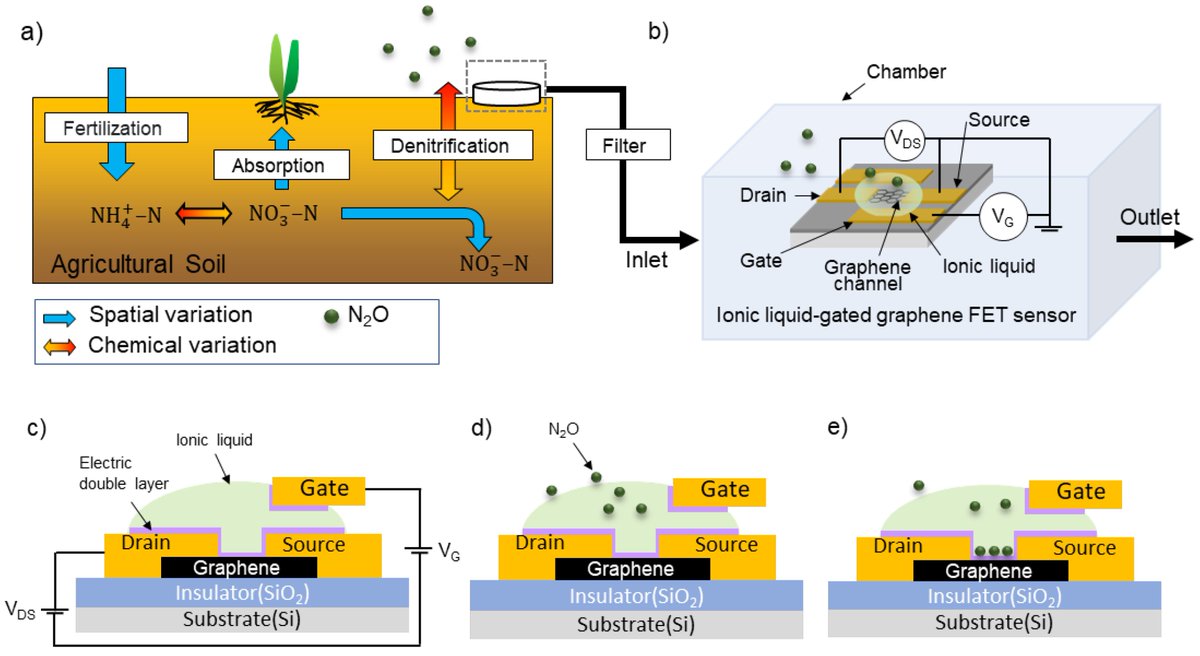
Basic Characteristics of Ionic Liquid-Gated Graphene FET Sensors for Nitrogen Cycle Monitoring in Agricultural Soil
by Naoki Shiraishi et al.
mdpi.com/2079-6374/15/1/55
#IonicLiquid #GrapheneFET #NitrogenCycle
#biosensors #mdpi #openaccess
1
1
3
80

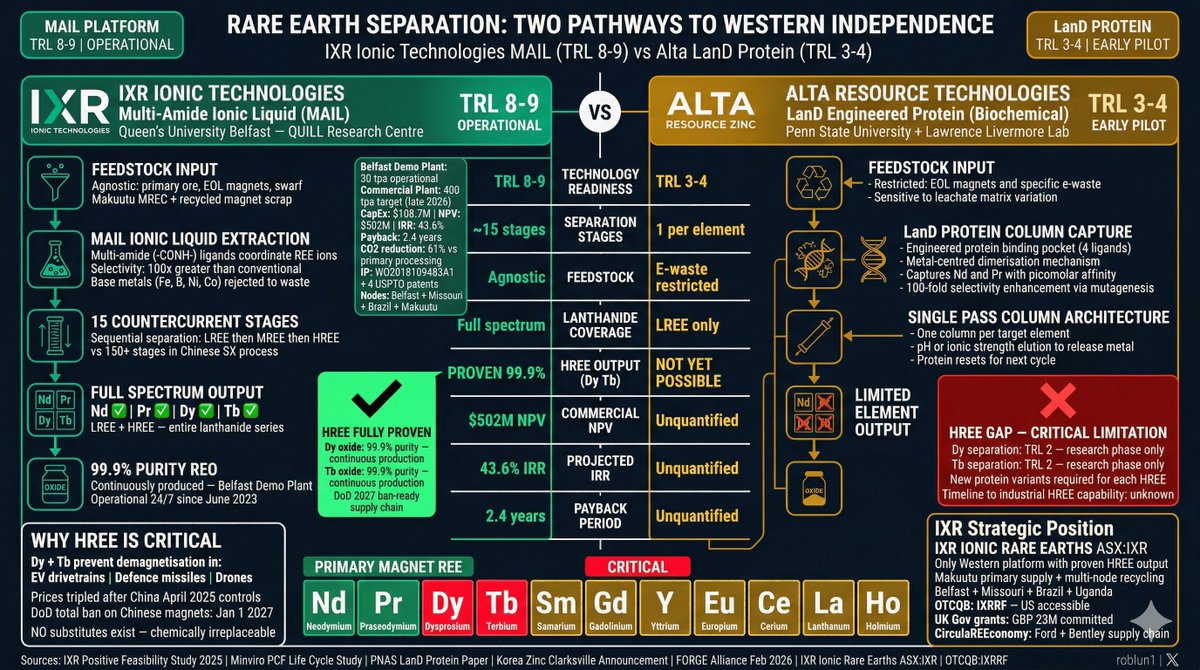
🧵 Two technologies are racing to break China's grip
on Rare Earth separation.
One is cutting-edge biology. 🧬
altatech.io/
One is cutting-edge chemistry. ⚗️
ionictechnologies.com/
Only ONE can separate the elements that actually
matter for defence. Here's the breakdown 👇
These two technologies are unlikely to compete directly in the near term.
Alta's biochemical columns will anchor the LREE-heavy consumer e-waste recycling niche around Korea Zinc's Tennessee infrastructure.
IXR's feedstock-agnostic, multi-node MAIL architecture — fuelled by the Makuutu primary deposit and scaled through Belfast, Missouri and Brazil — is uniquely positioned to serve the Western defence and advanced automotive sectors that specifically require HREE independence.
🌏 THE PROBLEM FIRST:
China controls 85% of global REE processing.
In April 2025 they weaponised that control.
By June 2025 — 1 kg of Dy exported globally.
ONE kilogram. For the entire planet. 🌍
Dy and Tb prices TRIPLED in 3 months.
The DoD responds: total ban on Chinese magnets
effective January 1, 2027. ⏰
The West desperately needs its own separation
technology. Two contenders have emerged. ⬇️
🧬 ALTA RESOURCE TECHNOLOGIES
(Korea Zinc JV — Boulder, Colorado)
The platform: synthetic biology applied to
mineral separation. Genuinely revolutionary science.
🧬 HOW ALTA'S PROTEIN SEPARATION WORKS
Alta licensed foundational technology from Lawrence Livermore National Laboratory and developed it with Penn State researchers.
The concept: instead of using synthetic organic chemicals to bind rare earth ions in a solvent, use custom-engineered proteins designed with a molecular affinity for a single target metal.
A bacterium called Methylorubrum extorquens
evolved a protein — LanD — that naturally
seeks out and binds rare earth elements.
Scientists at Penn State and Lawrence Livermore
Lab engineered it to achieve:
✅ 100x selectivity enhancement for Nd and Pr
✅ Entirely aqueous — no toxic solvents
✅ Room temperature operation
✅ CIA's In-Q-Tel is an investor 🕵️
The columns work like biochemical
chromatography — picture a protein-coated
filter that physically grabs only the element
it was engineered for as the REE solution
flows through. Then pH adjustment releases
it as a pure stream. Elegant. 👏
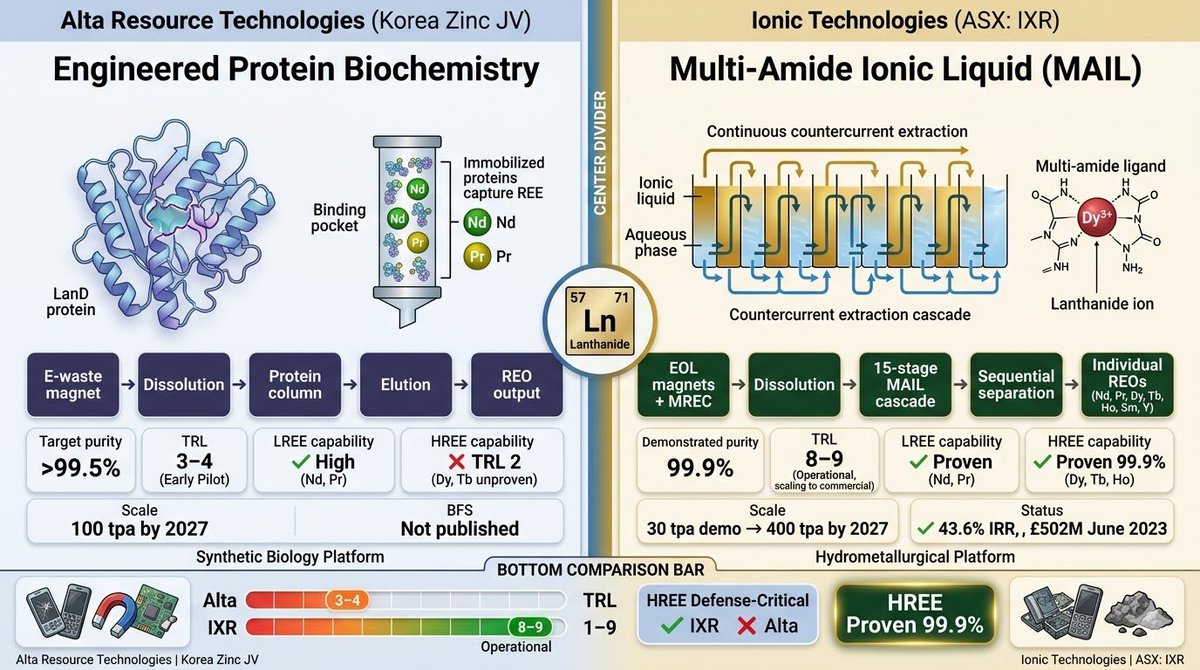
The process:
1️⃣ Waste NdFeB magnets from EVs, electronics, and data centres are dissolved into an acidic solution (Korea Zinc's Pedal Point e-waste network provides the feedstock across 4 US facilities)
2️⃣ The dissolved REE mixture flows through columns packed with immobilised engineered proteins
3️⃣ The target ion (e.g. Nd³⁺ or Dy³⁺) binds selectively to the protein — while other elements pass through
4️⃣ Column conditions are shifted to release the captured metal as a purified stream
5️⃣ Repeated per element → individual high-purity REOs
Think of it as a molecular lock-and-key, but the lock is a genetically engineered protein, and the key is a specific rare earth ion. A different protein, a different key — that's how you target different elements in the REE series.
Alta claims >99.5% purity targets and markets it as cleaner and simpler than conventional solvent extraction. Their JV with Korea Zinc targets 100 metric tons/year REO by 2027, starting with Nd, Pr, Dy, Tb. 🎯
The problem? 🔴
The LanD protein evolved for LIGHT rare earths.
Nd? ✅ Pr? ✅
Dy? ❌ — TRL 2 — research phase only
Tb? ❌ — TRL 2 — research phase only
Dy and Tb are the EXACT elements that tripled
in price. The EXACT elements the DoD needs.
The EXACT elements that prevent magnets from
demagnetising in missiles and EV motors.
Alta is LREE-first. TRL 3-4. Early pilot stage.
Impressive science. But the HREE gap is real.
🔹 Novelty and IP moat — Engineered proteins are a fundamentally new separation paradigm. If they work at scale with low protein production costs, the selectivity ceiling is theoretically very high. Different protein = different element. Modular plug-and-play for any metal.
🔹 US strategic positioning — Korea Zinc brings Tennessee smelter infrastructure, Pedal Point e-waste collection, and DoD optics. Alta brings biotech IP. The combined JV narrative fits perfectly into the Trump administration's domestic critical minerals agenda.
🔹 Clean process optics — No conventional organic solvents at all. In a world where ESG and permitting matter, a biotech-clean separation story is easy to communicate to investors, regulators, and tech company offtake partners.
━━━━━━━━━━━━━━━━━━━━━━━━━━━━━━━━━━━━
🔩 HOW IXR's MAIL PLATFORM WORKS
Ionic Technologies' MAIL process — developed at Queen's University Belfast's world-renowned QUILL (Queen's University Ionic Liquid Laboratories) research centre — operates as a continuous multi-stage solvent extraction circuit, but replaces classical toxic organic extractants (like Cyanex or D2EHPA) with proprietary multi-amide ligands.
These ligands are highly selective coordination chemistry molecules designed to discriminate between:
✅ REEs vs base metals (Fe, B, Ni, Co)
✅ Light REEs (Nd, Pr, Sm) vs Heavy REEs (Dy, Tb, Ho, Y) based on ionic radius and bonding geometry
The end-to-end process:
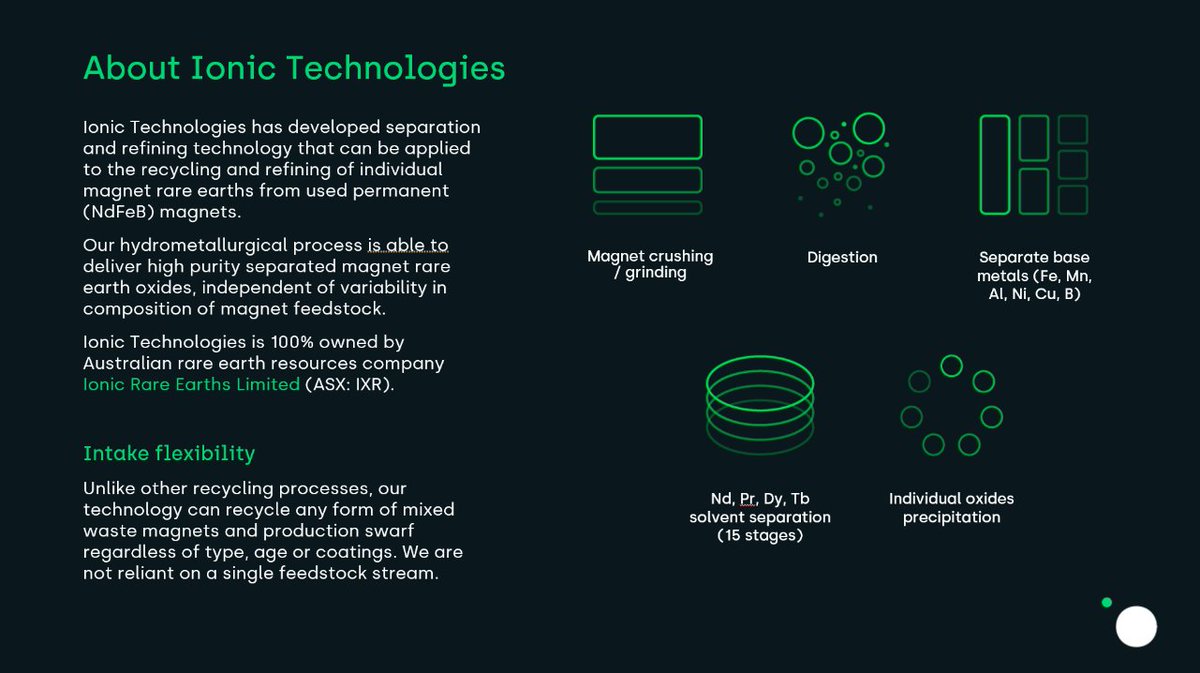
1️⃣ Collection & Dissolution — EOL magnets (any grade, oxidised, coated, contaminated) or MREC from mining leached into acid solution
2️⃣ MAIL Extraction — proprietary ligands selectively capture REEs from the Fe/B/Ni matrix across a 10–15 stage continuous cascade
3️⃣ Sequential Separation — first LREEs (Nd, Pr), then MREEs (Sm, Eu, Gd), then HREEs (Dy, Tb, Ho, Y) separated as discrete fractions
4️⃣ Precipitation & Calcination — individual REO fractions crystallised as oxalates or hydroxides, then fired to final oxide powders
5️⃣ QA & dispatch — each oxide tested to spec before supply to downstream alloy makers
The ligands are recyclable in a closed loop — they don't leave the system. No volatile organic solvents. No toxic effluent. Low water. Low CO₂.
⚗️ IXR IONIC TECHNOLOGIES 🇦🇺🇬🇧
(wholly owned by ASX:IXR — Belfast, Northern Ireland)
The platform: Multi-Amide Ionic Liquid (MAIL)
chemistry — engineered at Queen's University Belfast.
Instead of proteins, MAIL uses ionic liquids —
molten salts stable at room temperature —
fitted with synthetic amide handles (-CONH-)
that coordinate specifically with lanthanide ions.
The physics: the handles exploit the lanthanide
contraction — that tiny but measurable shrinkage
in ionic radius across the REE series — to
distinguish between elements with 100x MORE
selectivity than conventional Chinese methods. 🔬
Result: you need only ~15 separation stages.
China needs 150 .
Full spectrum capability:
Nd ✅ | Pr ✅ | Dy ✅ | Tb ✅ | Sm ✅ | Gd ✅
ALL of them. Including the critical HREE. 💪
🧵The Belfast Demonstration Plant has been
running CONTINUOUSLY 24/7 since JUNE 2023. 🏭
→ 30 tonnes per annum of complex magnet feed
→ Individually separated Nd, Pr, Dy, Tb oxides
→ Purity: 99.9% — continuously
→ IXR = first Western recycled REO producer ever
→ Independently validated by Minviro PCF study
→ Positive feasibility study published
→ UK Government: GBP 23M in grants committed
→ Ford and Bentley supply chain integrated ✅
That is TRL 8-9. Period. ✅
🔷 It's already working, continuously, right now. Belfast has been running 24/7 since 2024. No other facility outside China or Japan can say that about separated magnet REO production. Alta's protein tech is promising but pre-commercial.
🔷 Full HREE series coverage — IXR separates Dy, Tb, Ho, Sm and Y as distinct streams at 99.9% purity. Critical for defence SmCo magnets, for aerospace, for HEV motors. Alta has disclosed Dy/Tb ambitions but has not publicly shown full HREE suite separation at plant scale.
🔷 Feed-agnostic = larger addressable market. MAIL processes both recycled magnets AND primary MREC from mineral deposits (like IXR's own Makuutu project). That dual feedstock capability means Ionic Technologies is relevant to miners, recyclers, and OEMs simultaneously. Alta today is fundamentally a magnet-waste play.
🔷 Proven protein-free chemistry — Ionic liquids and amide ligands don't denature, don't require sterile operating conditions, and don't depend on a protein supply chain. At industrial scale, that's a meaningful operational simplicity advantage.
🔑 THE BOTTOM LINE:
These two technologies won't directly compete
in the near term.
Alta will likely anchor the LREE consumer
e-waste niche around Korea Zinc's Tennessee
infrastructure. Good for Nd and Pr recycling.
IXR MAIL is the only Western platform today
that can deliver defence-grade Dy and Tb
at 99.9% purity from a continuously operating
facility. 🏆
With 9 months to the DoD 2027 Chinese magnet
ban — that difference is not academic.
It is strategic. 🔴🌍
🌍 THE BIG PICTURE
The Western world needs REO separation desperately. China controls >85% of global separation capacity. Both of these technologies represent genuine attempts to break that dependency — and they're not competing for the same customers today.
Alta Korea Zinc is a US e-waste and data-centre-waste loop story.
IXR Ionic Technologies is a globally deployable, feed-agnostic, sovereign-grade separation platform story.
As Dy and Tb prices outside China sit above $1,000/kg and $4,500/kg respectively, the economics of both platforms are compelling
🔗 Sources:
1. Korea Zinc / Alta JV → chargedevs.com/newswire/kore…
2. IXR Technology Platform → ionicre.com/ionic-technologi…
3. IXR BFS & Belfast grants → ionicre.com/investors/asx-an… IXR PDFs 02967174, Reuters UK grant article
4. Alta biochemistry → altatech.io/about DCVC Alta Resource Technologies profile
5. Korea Zinc Tennessee smelter → Recycling Today Clarksville smelter article Korean press on US rare earth venture
$IXR 🇦🇺 #IXRRF #RareEarths #CriticalMinerals
#REE #Neodymium #Dysprosium #Terbium
#MAIL #IonicLiquid #IXR #ASX #Makuutu
#KoreaZinc #AltaResource #Separation
#DefenseSupplyChain #China #ExportControls
#EnergyTransition #EV #PermanentMagnets
#CriticalMinerals2026 #FORGE #Belfast 🧲⚗️🧬🌍
1
1
8
495

👏Recent Article👏
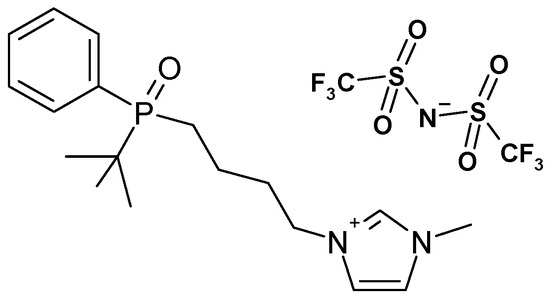
“Highly Selective and Efficient Transport of Au(III), Pt(IV), and Pd(II) from Hydrochloric Acid Across #PolymerInclusionMembranes Containing Ionic Liquid as Ion Carrier”
by Iwona Zawierucha from @UJDCzestochowa, et al.
🖇️mdpi.com/3751446
#IonicLiquid
1
2
77

21 Dec 2025
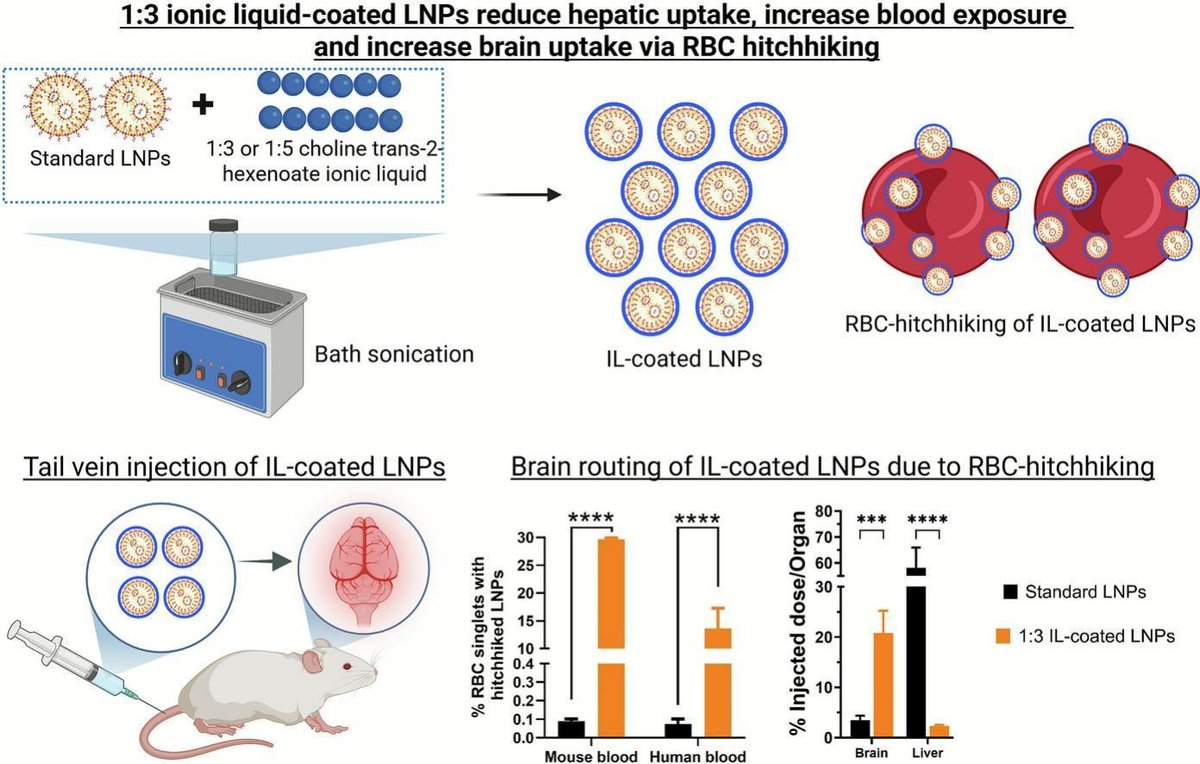
Ionic liquid-coated lipid nanoparticles demonstrate prolonged circulation and brain uptake via red blood cell hitchhiking.
| Devika S Manickam @UTHealthHouston |
[50 days' free access]
#IonicLiquid #LipidNanoparticle
kwnsfk27.r.eu-west-1.awstrac…
10
384
20 Nov 2025
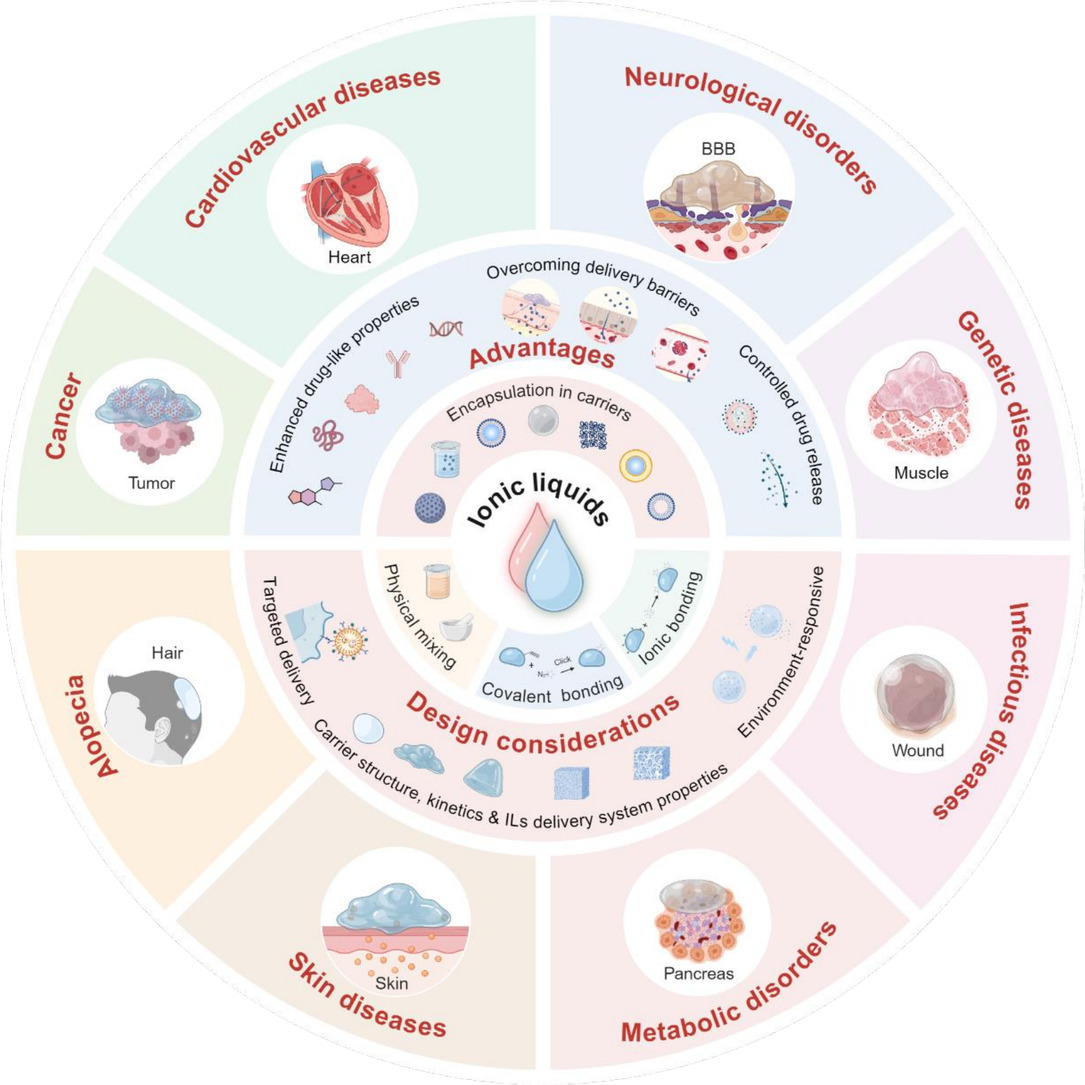
Ionic liquids revolutionizing drug delivery: Recent advances and emerging opportunities.
| Zhongjian Chen @Tongji_Uni |
[50 days' free access]
#IonicLiquid
kwnsfk27.r.eu-west-1.awstrac…
1
3
235
16 Oct 2025
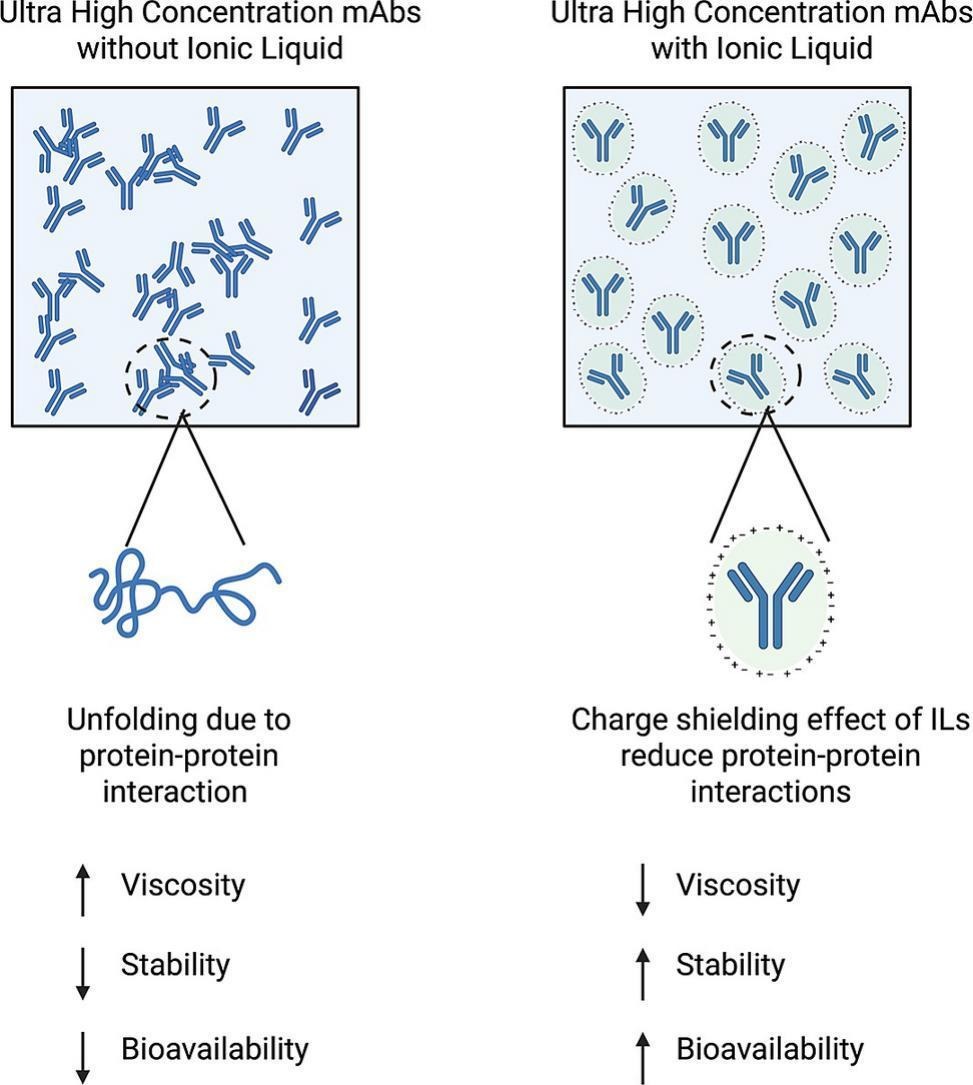
Ultra-high concentration low-viscosity subcutaneous antibody formulations using ionic liquids.
| Samir Mitragotri @hseas | @SMitragotri
[50 days' free access]
#IonicLiquid #formulation #viscosity
kwnsfk27.r.eu-west-1.awstrac…
1
4
208
28 Sep 2025
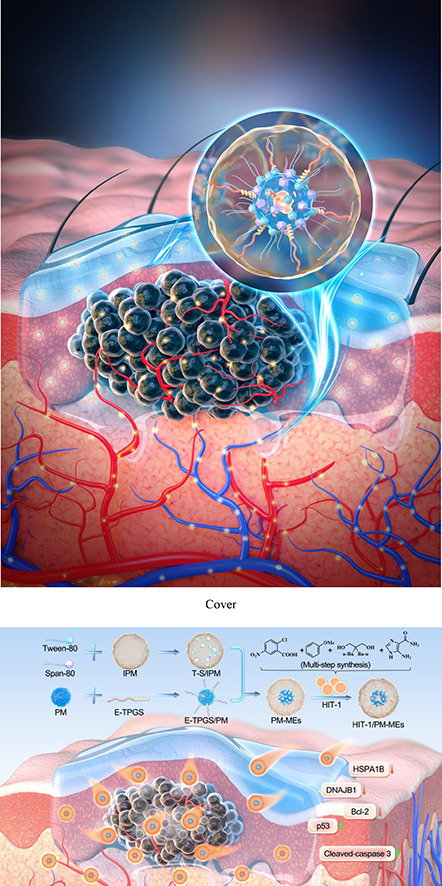
An ionic liquid nanoemulsion transdermal delivery system for targeted melanoma therapy.
| Jiaheng Zhang @HIT_China |
[50 days' free access]
#nanoemulsion #IonicLiquid #melanoma
kwnsfk27.r.eu-west-1.awstrac…
2
5
292

30 Jul 2025
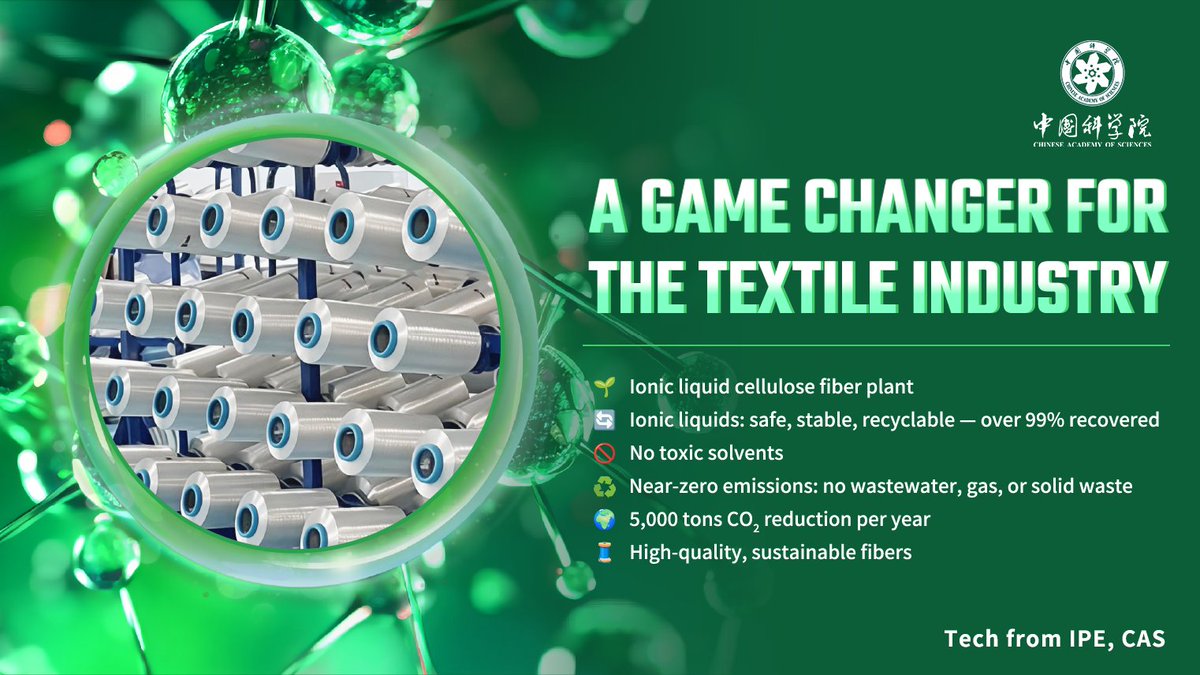
What if your clothes were as clean for the planet as they are for you? 👕🌍
China has launched the world's first 1,000-ton ionic liquid cellulose fiber plant, using safe, recyclable solvents to create sustainable fibers — with near-zero emissions.
The technology was developed by Prof. Zhang Suojiang's team from the Institute of Process Engineering (IPE) of the Chinese Academy of Sciences.
Check out the infographic to see how ionic liquids are redefining textiles: cleaner, safer, greener.
For more details: english.cas.cn/newsroom/rese…
#CAS #IPE #IonicLiquid #Fiber #SustainableFashion #GreenInnovation #EcoFriendlyTextiles
2
149
15 Jun 2025
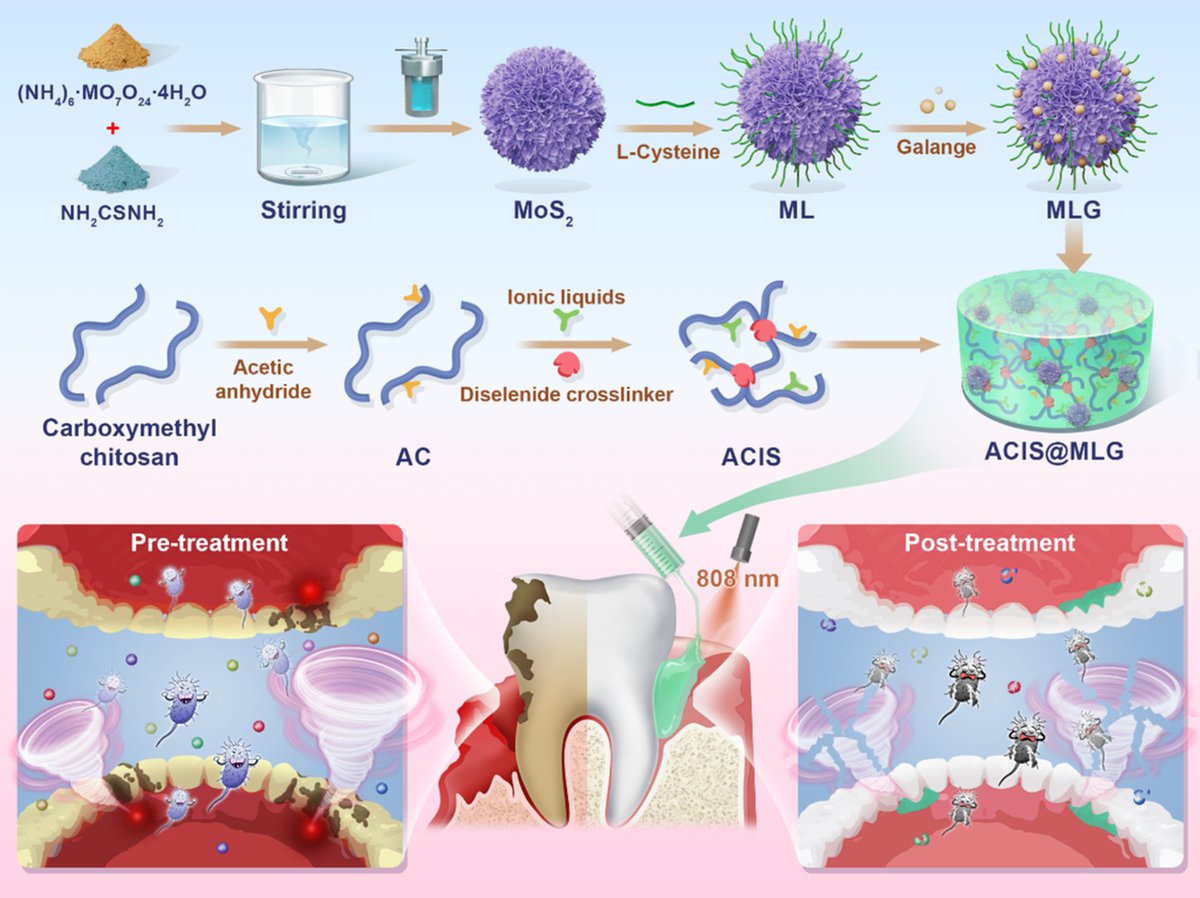
Tailored regulation of ferroptosis in periodontitis using thermosensitive ionic liquid hydrogel based on galangin/L-cysteine-decorated MoS2 nanoflowers.
| Shuangying Gui, Anhui Univ. of Chinese Medicine |
[50 days' free access]
#IonicLiquid
kwnsfk27.r.eu-west-1.awstrac…
2
314
17 May 2025
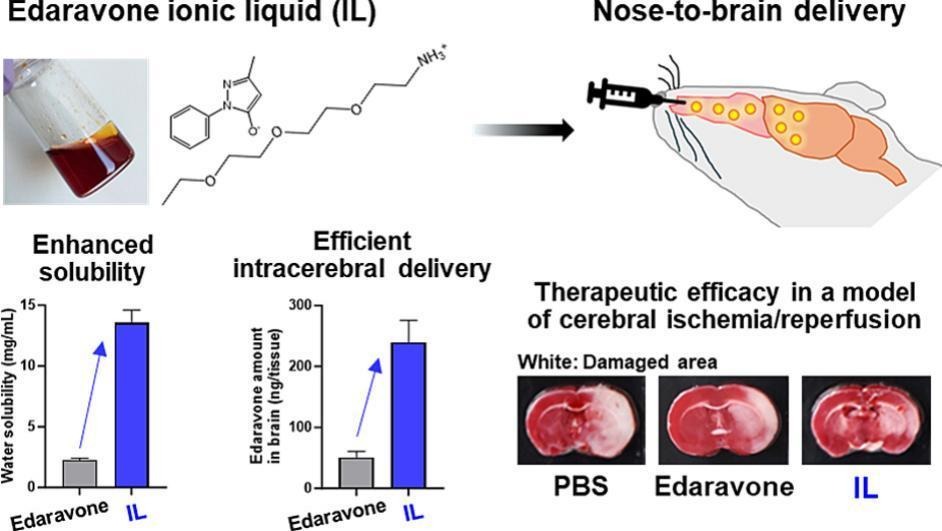
Intracerebral delivery of the ionic liquid form of edaravone via nose-to-brain delivery route for treating cerebral ischemia/reperfusion injury.
| Tatsuya Fukuta, Wakayama Medical Univ. |
[50 days' free access]
#IntracerebralDelivery #IonicLiquid
kwnsfk27.r.eu-west-1.awstrac…
1
7
438

13 May 2025
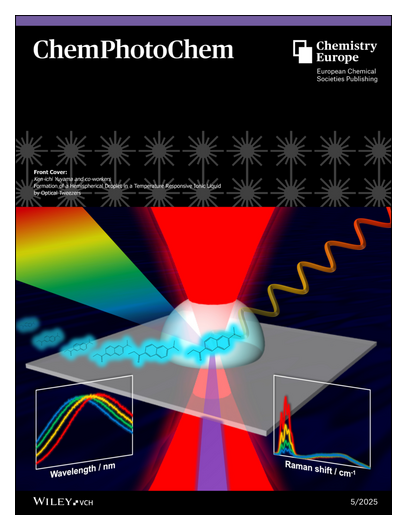
#ChemPhotoChem #OnTheCover Formation of a Hemispherical Droplet in a Temperature Responsive #IonicLiquid by Optical Tweezers (ChemPhotoChem 5/2025) (Ken-ichi Yuyama and co-workers) onlinelibrary.wiley.com/doi/… • onlinelibrary.wiley.com/doi/…
1
3
542

9 May 2025
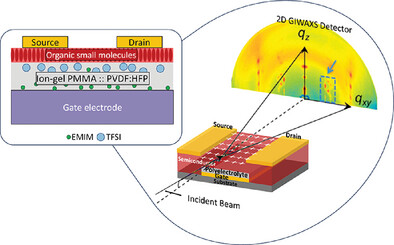
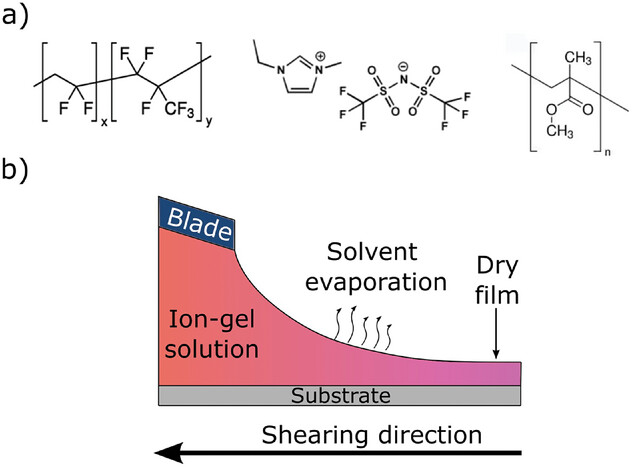
New paper: "Solution-Shearing of Highly Smooth Ion-Gel Thin Films: Facilitating the Deposition of Organic Semiconductors for Ion-Gated Organic Field Effect Transistors" by Perez Andrade et al. doi.org/10.1002/aelm.2024003…
#OSC #GIWAXS #IonicLiquid
@AdvPortfolio @tudresden_de
2
3
86

21 Feb 2025
Towards Surface-Enhanced #HomogeneousCatalysis: Tailoring the Enrichment of Metal Complexes at #IonicLiquid Surfaces (Hans-Peter Steinrück and co-workers) #AngewandteReview #openaccess 🔓 onlinelibrary.wiley.com/doi/…
4
2,289

13 Feb 2025
Crowded room today for Jia's succesfull PhD Stage Transfer Exam on "The Effect of #IonicLiquid on #CellMechanics" @NanosurfAFM #DriveAFM @cytosurge #FluidFM @zeiss_micro #AxioObserver7 @UCD_physics @UCD_Conway @ucdscience @UCD_Research @ucddublin @Researchirel
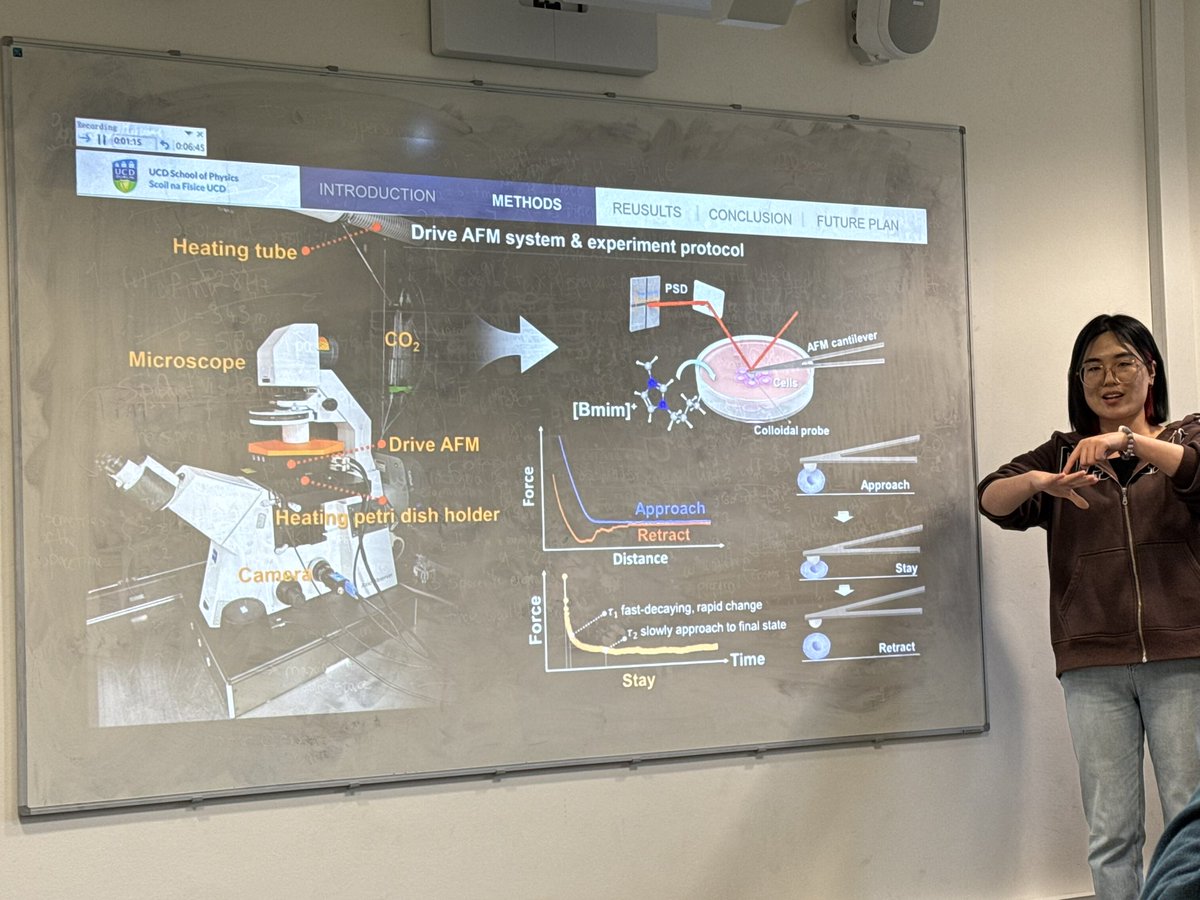
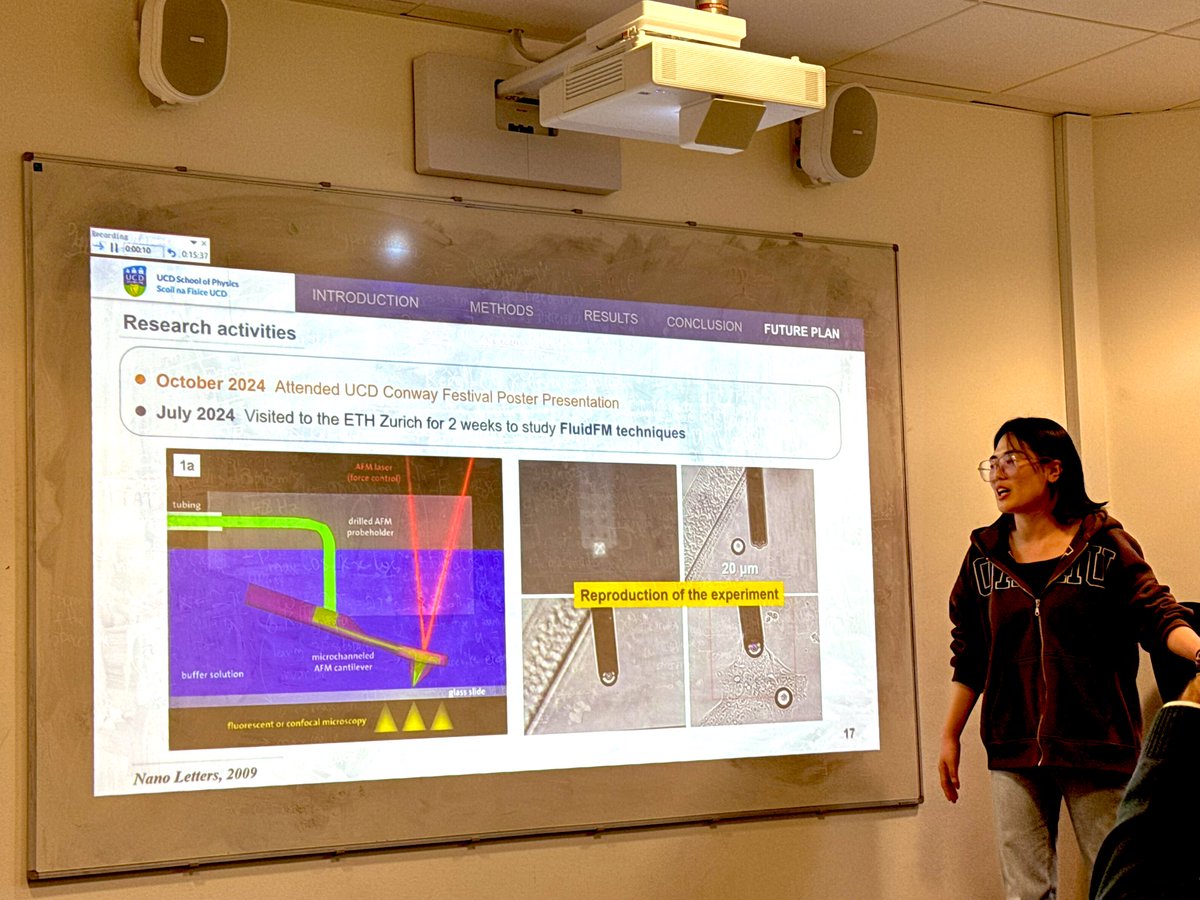
1
3
17
544

31 Dec 2024
🔥 Read our Paper
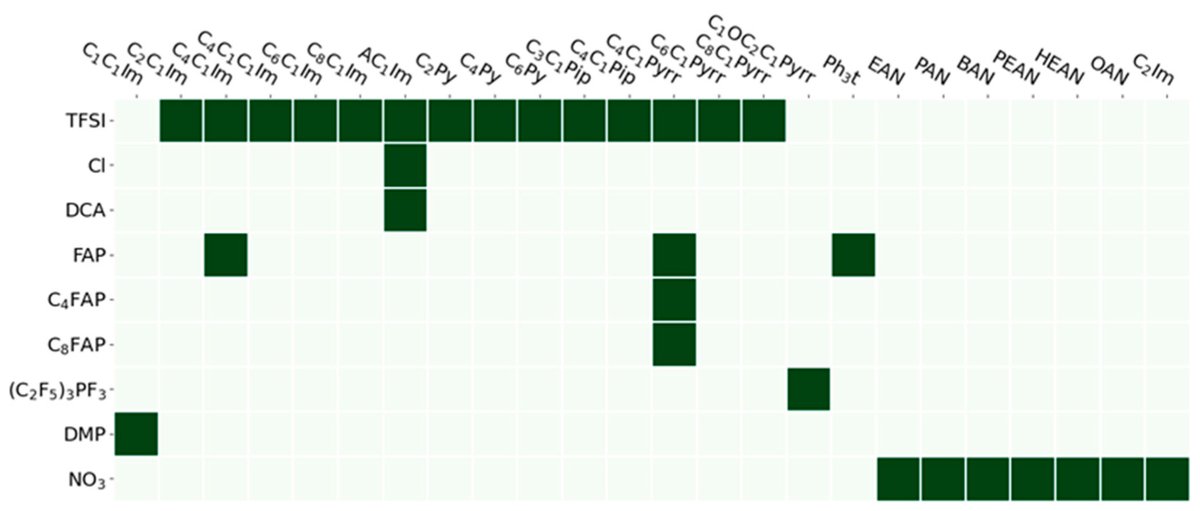
📚 Comprehensive Analysis of the Acute Toxicity of Ionic Liquids Using Microtox® Bioassays
🔗 mdpi.com/2076-3417/14/6/2480
👨🔬 by Dr. Juan José Parajó et al.
🏫 @UniversidadeUSC
#ionicliquid #AcuteToxicity #Microtoxtest
1
53

Development of a highly conductive and stable #MetalOrganicFramework-encapsulated #IonicLiquid (IL@MOF) electrolyte system for quasi-solid-state Li–CO2 #batteries. #AirCathode
Read more here: go.acs.org/bXh
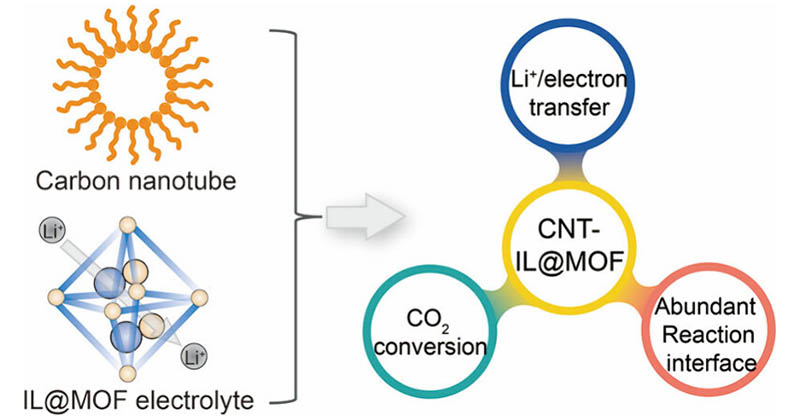
ALT TOC image from the article
1
7
1,286
7 Dec 2024
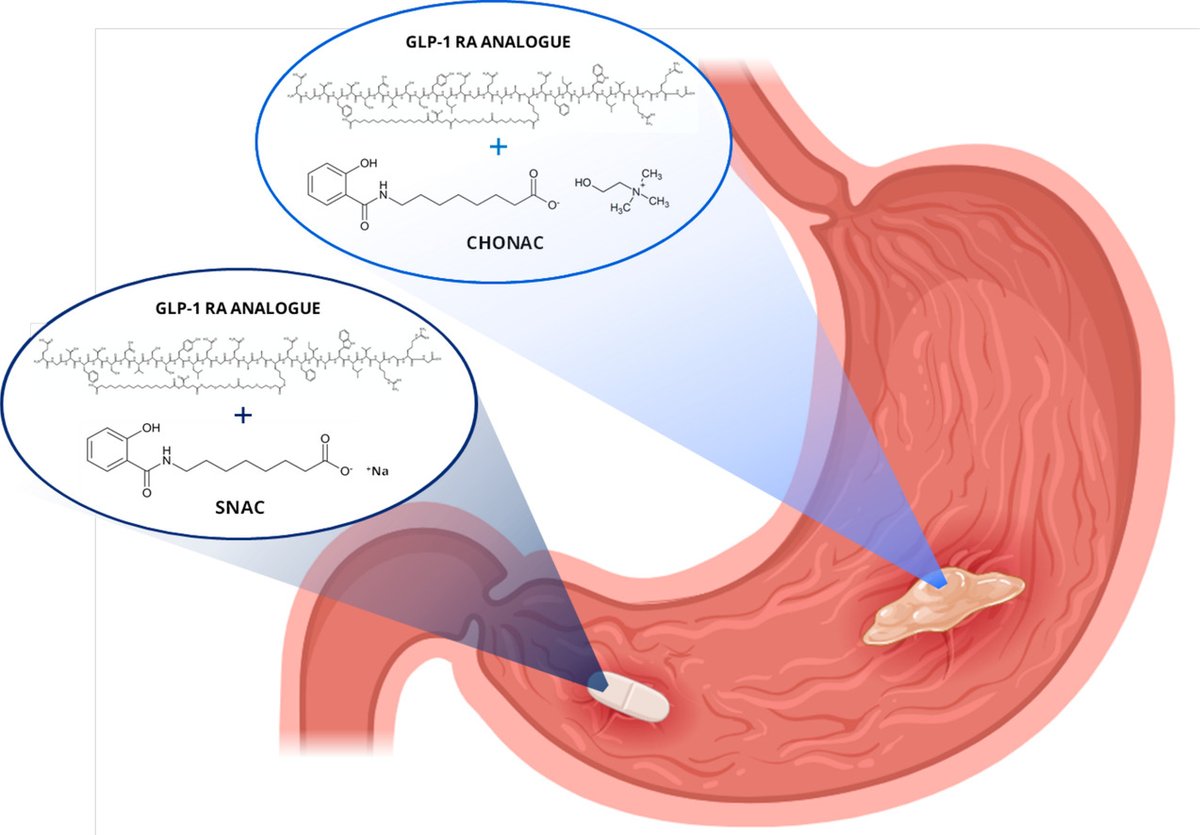
Salcaprozate-based ionic liquids for GLP-1 gastric delivery: A mechanistic understanding of in vivo performance.
| René Rebollo @novonordisk |
[50 days' free access]
#OralDelivery #PeptideDelivery #IonicLiquid #PermeationEnhancer
kwnsfk27.r.eu-west-1.awstrac…
3
11
488
5 Nov 2024
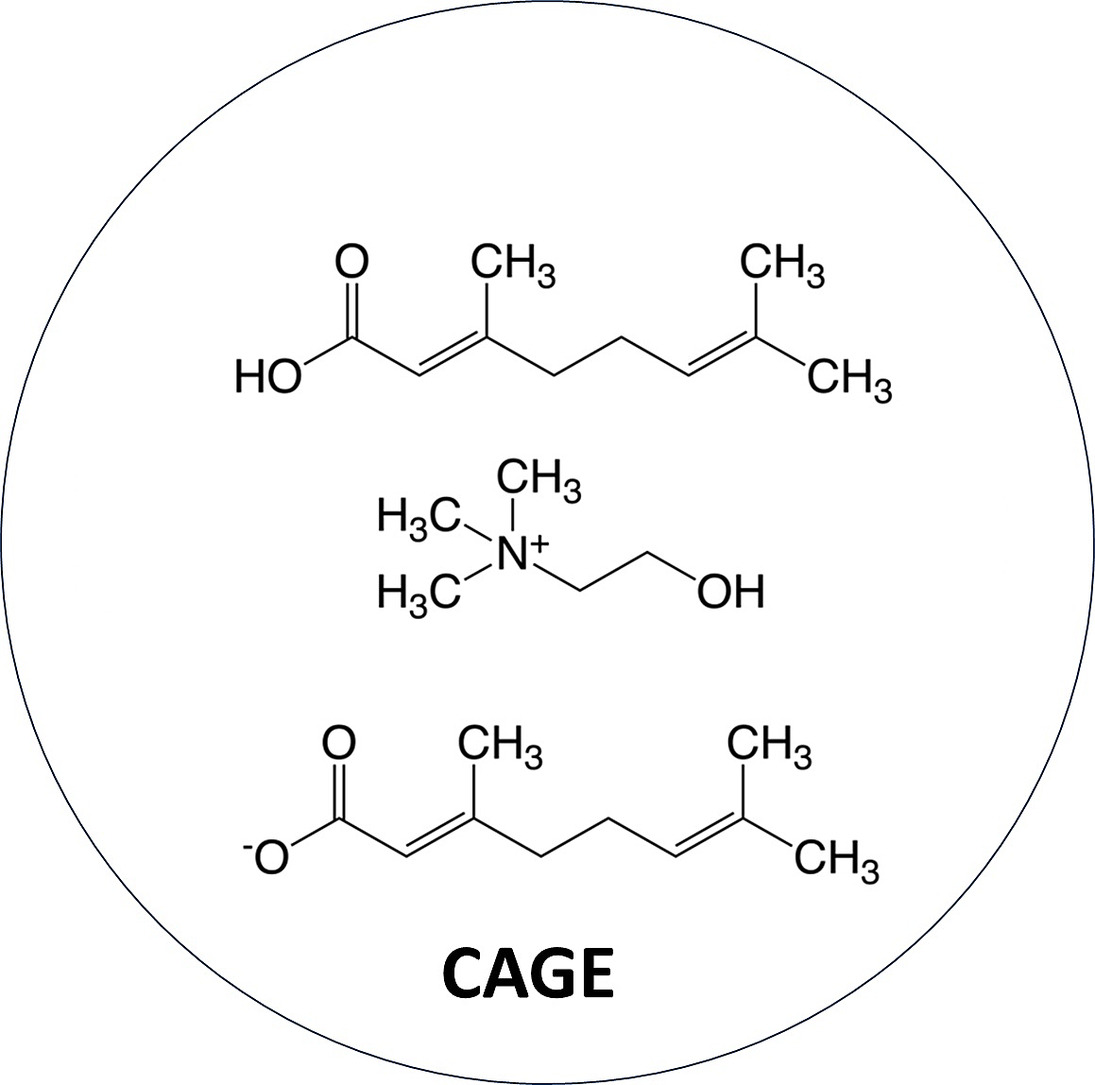
Choline geranate (CAGE): A multifaceted ionic liquid for drug delivery.
| Samir Mitragotri @hseas | @SMitragotri
[50 days' free access]
#IonicLiquid #CholineGeranate
kwnsfk27.r.eu-west-1.awstrac…
2
6
559
27 Oct 2024
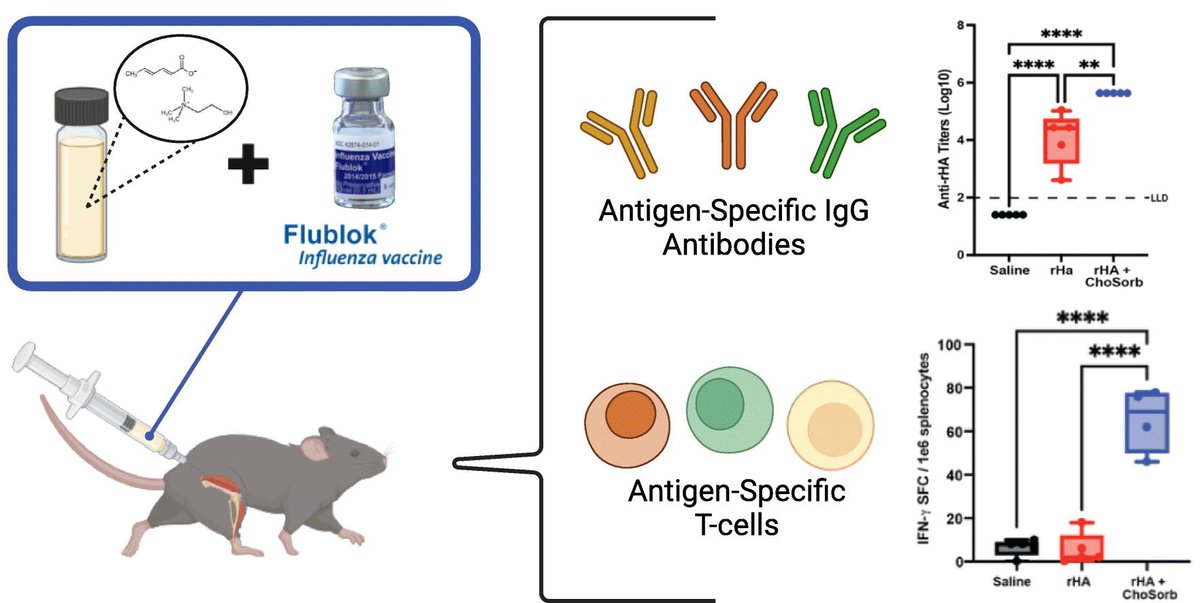
An ionic liquid-based adjuvant for modulating cellular and humoral immune responses.
| Samir Mitragotri @hseas |
#IonicLiquid #adjuvant
doi.org/10.1016/j.jconrel.20…
1
7
546
27 Oct 2024
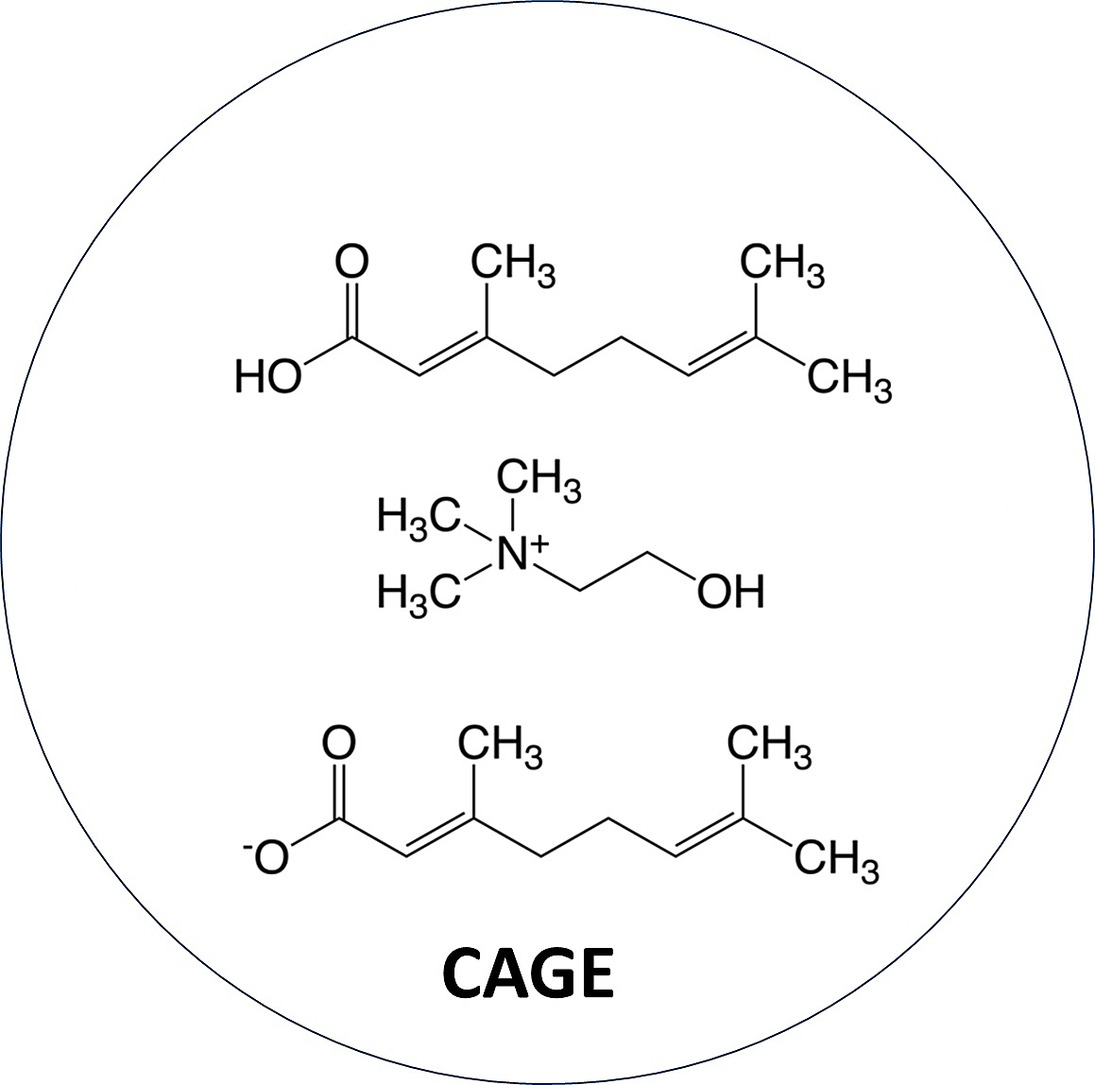
Choline geranate (CAGE): A multifaceted ionic liquid for drug delivery.
| Samir Mitragotri @hseas |
#IonicLiquid #CholineGeranate
doi.org/10.1016/j.jconrel.20…
2
14
1,396