
#ELBONOMICS June 11, 2026 #ThinkingThursday
Where do you start solving problems at work or at play? #Kaizen #leanthinking #thinkingpeoplestrategy
5

In family businesses, the journey is never just about numbers—it’s about legacy, relationships, and continuity.
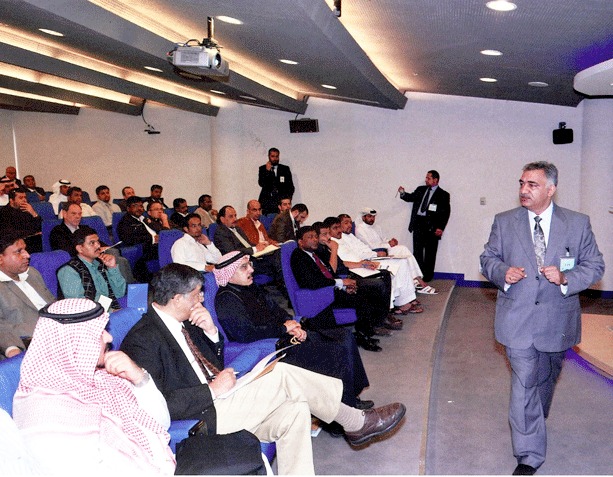
It was a pleasure driving #FamilyBusiness Transformation by integrating:
• #OperationalExcellence
• #LeanThinking
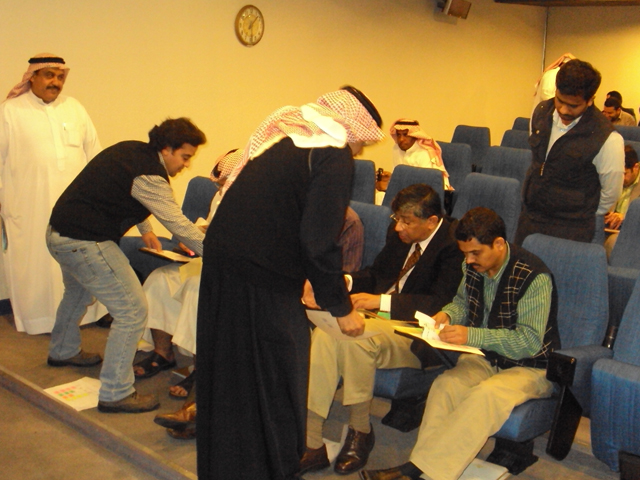
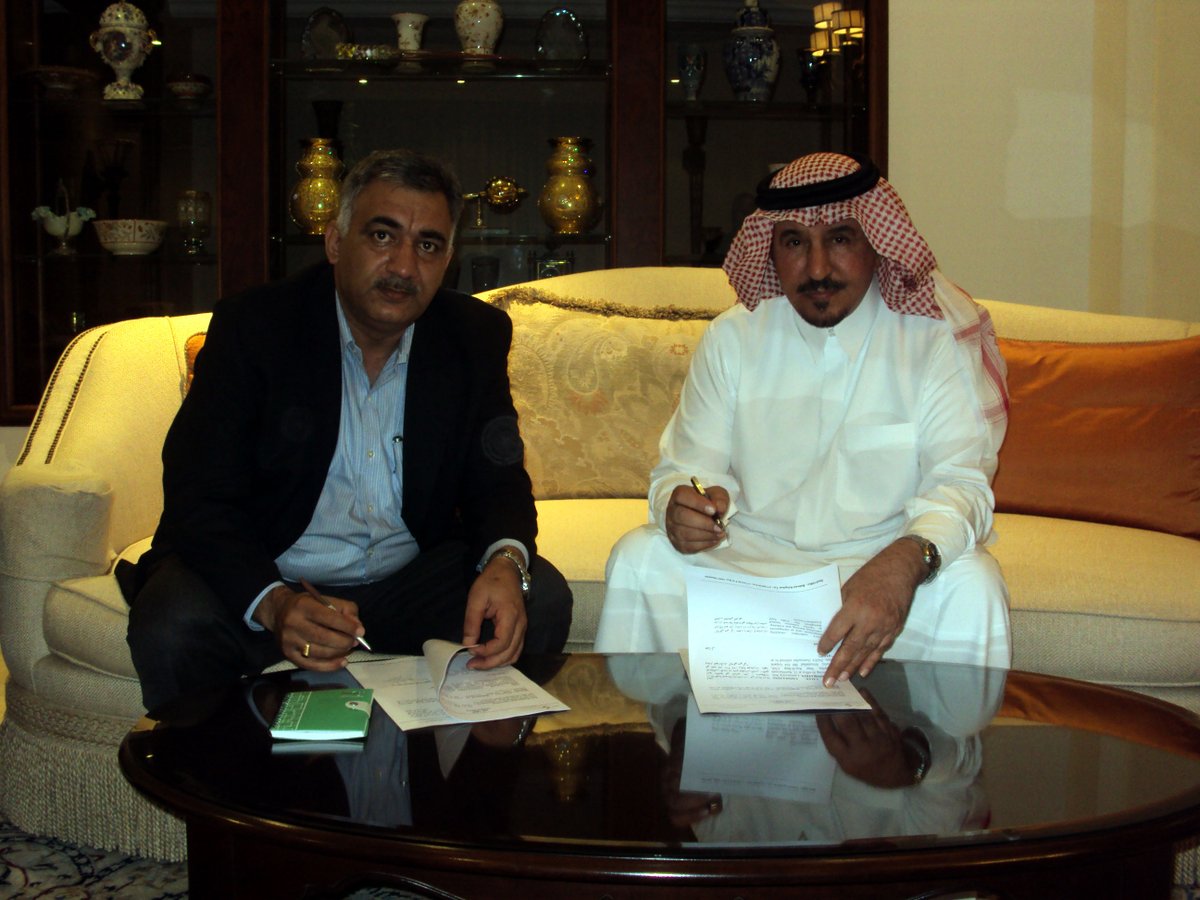
In collaboration with Asharqia Chamber -#SaudiArabia, initiative focused on aligning family values with business systems—ensuring that growth is not just scalable, but sustainable.
A heartfelt thanks to Mubarak Abdullah Al-Suwaiket, Chairman of AlSuwaiket Group for the invitation and for collaboration.
Because true transformation in a family enterprise is not only operational…
it is emotional, cultural, and deeply personal.
Old memories ….
#FamilyBusiness #OperationalExcellence #LeanManagement #BusinessTransformation #InventoryManagement #ContinuousImprovement #Leadership #LegacyBuilding #ProcessExcellence #Collaboration #nilesharora #addvalue #saudiarabia #gccmanufacturing
5

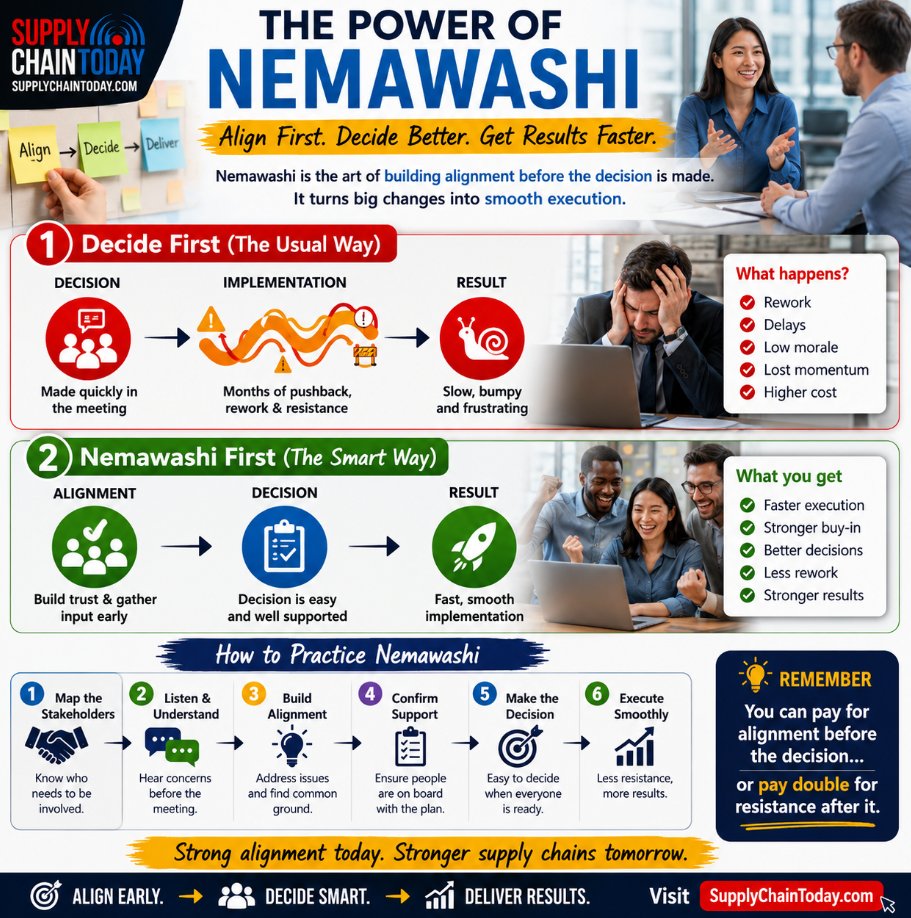
Nemawashi is the art of building alignment before the decision is made. It turns big changes into smooth execution.
#kaizen #leanmanufacturing #Nemawashi #LeanThinking
Aggregated Collection of Lean Manufacturing Resources: supplychaintoday.com/tag/lea…
2
4
58
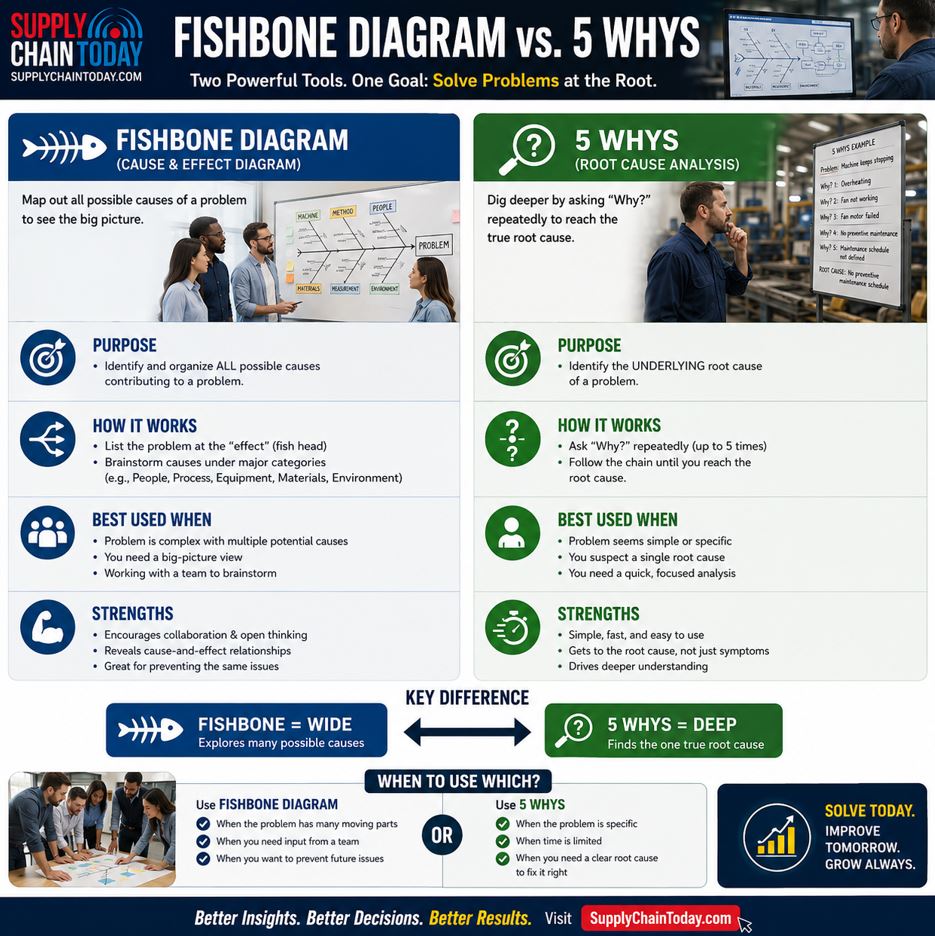
Fishbone Diagram vs. 5 Whys: Finding the Root Cause. Further details:
supplychaintoday.com/fishbon…
Two Powerful Problem-Solving Tools. One Goal: Eliminate Problems at the Root.
#RootCauseAnalysis #ProblemSolving #5Whys #LeanThinking #ProblemSolvingTools
1
3
9
89

Lean Thinking en los pequeños detalles 🔍
Desde TMH Greece, un gran ejemplo de cómo la organización con 5S mejora eficiencia, seguridad y valor 💡🚐
Porque la mejora continua también está en el día a día ⚙️
bit.ly/4uqfRJv
#ToyotaMaterialHandling #LeanThinking
45

Jun 8
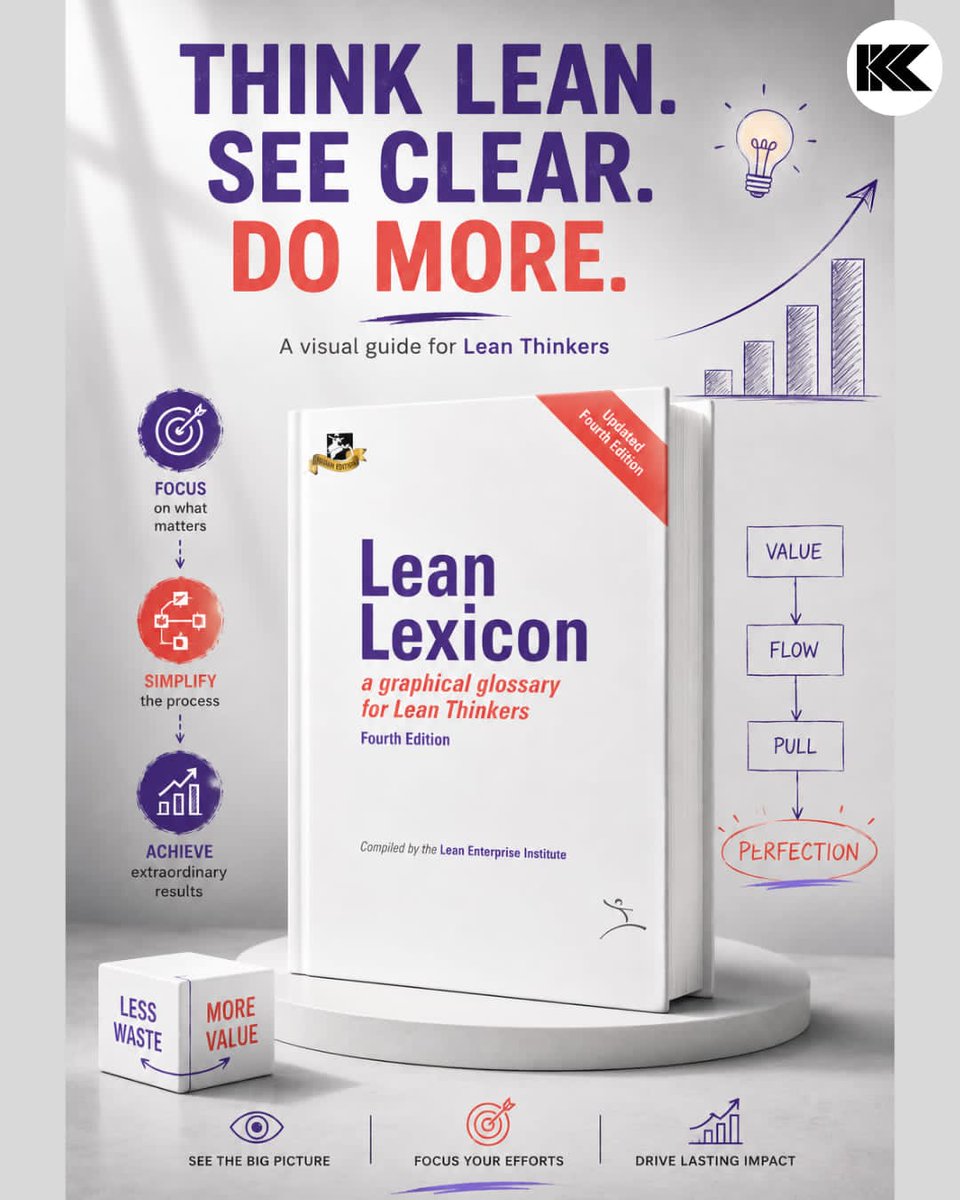
Lean is simple: reduce waste, increase value, improve every day.
Small improvements → big impact over time.
#LeanThinking #Kaizen #Efficiency #ContinuousImprovement #Lean
16
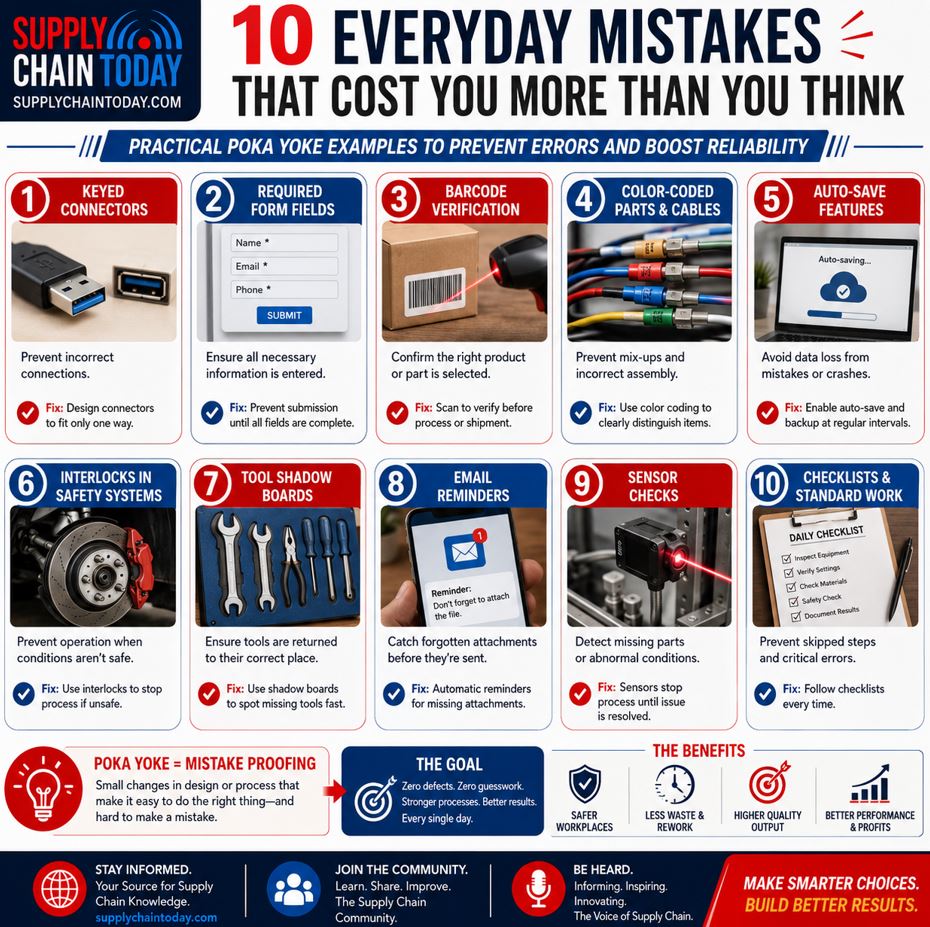
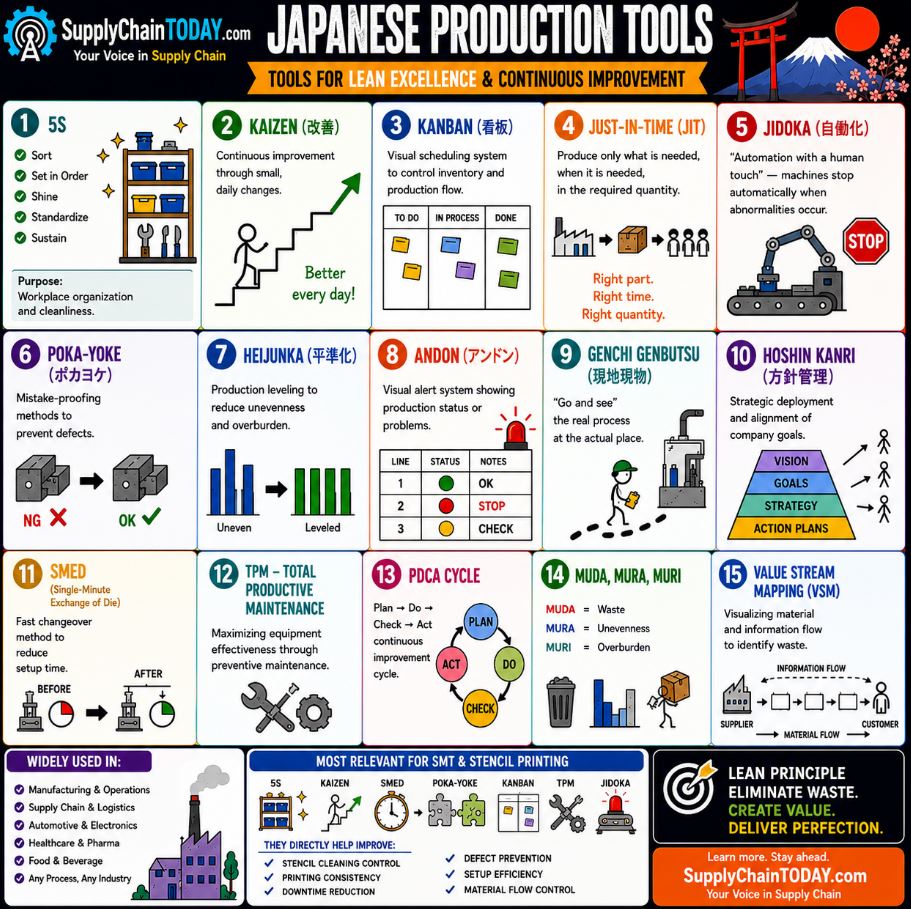
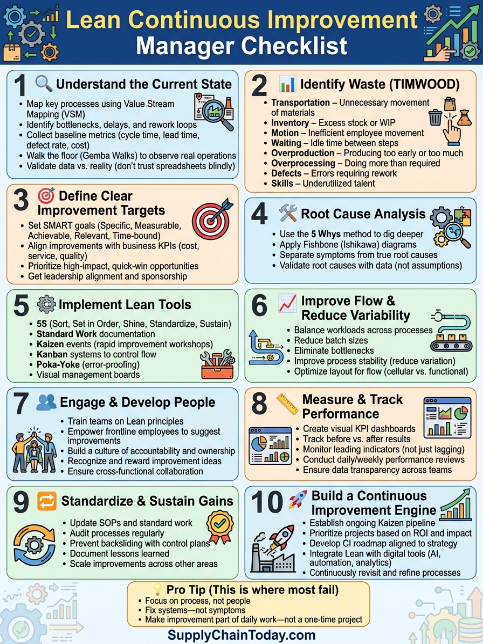
Collection of infographics to learn about lean manufacturing
#supplychain #leanthinking #leanmanufacturing #Kaizen #ContinuousImprovement #Kanban #PokaYoke #Gemba #5S #ManufacturingExcellence
Collection of Continuous Improvement Resources: supplychaintoday.com/categor…
3
4
63

Most organizations don’t need more metrics, they need clarity on what drives results.
Explore how KPI Trees connect outcomes to operational drivers and help build a practical baseline fast.
KPI Tree Insights: hubs.ly/Q04k1hVj0
#Kaizen #DataDriven #LeanThinking #48Hours
3
3
21

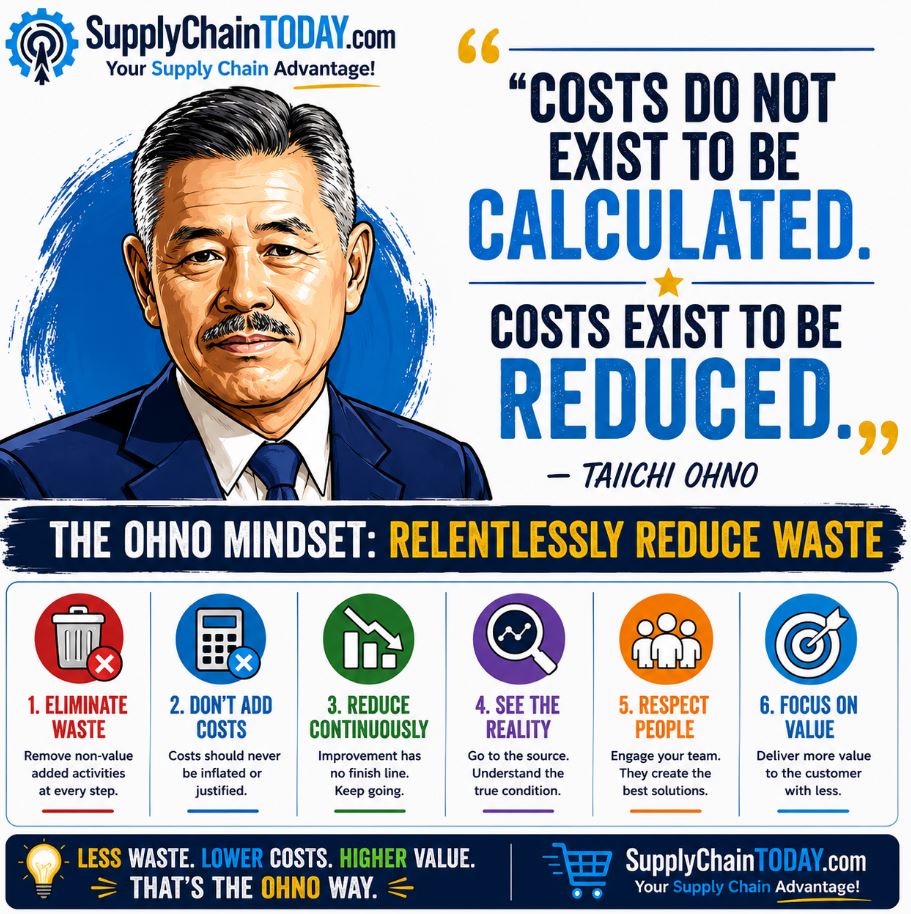
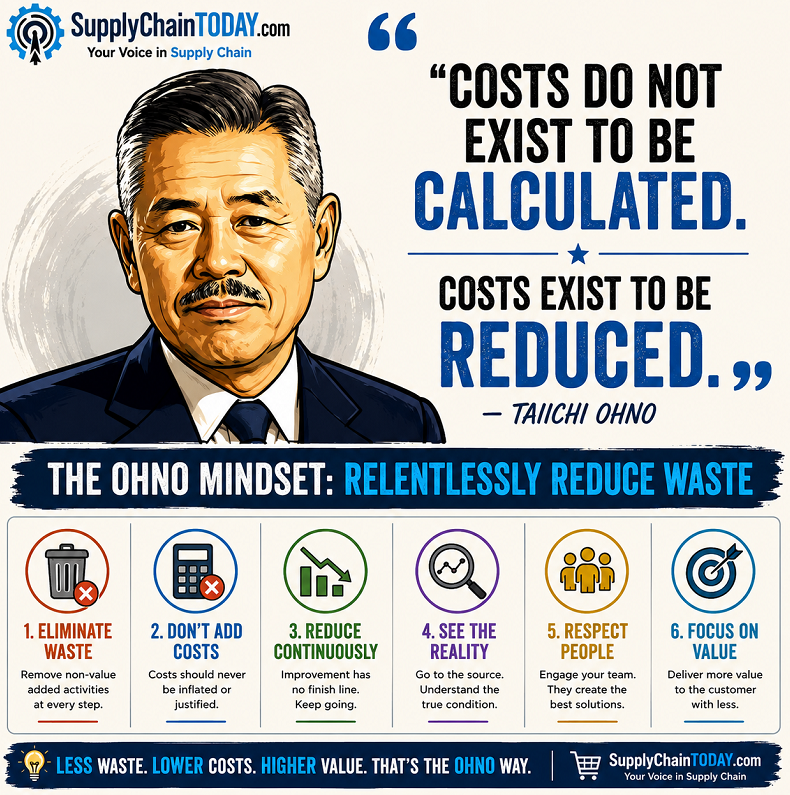
"Costs do not exist to be calculated. Costs exist to be reduced." ~Taiichi Ohno. Father of the Toyota Production System.
Collection of Taiichi Ohno Quotes: supplychaintoday.com/toyota-…
#leanmanufacturing #LeanThinking #ToyotaProductionSystem #OperationalExcellence
2
7
88
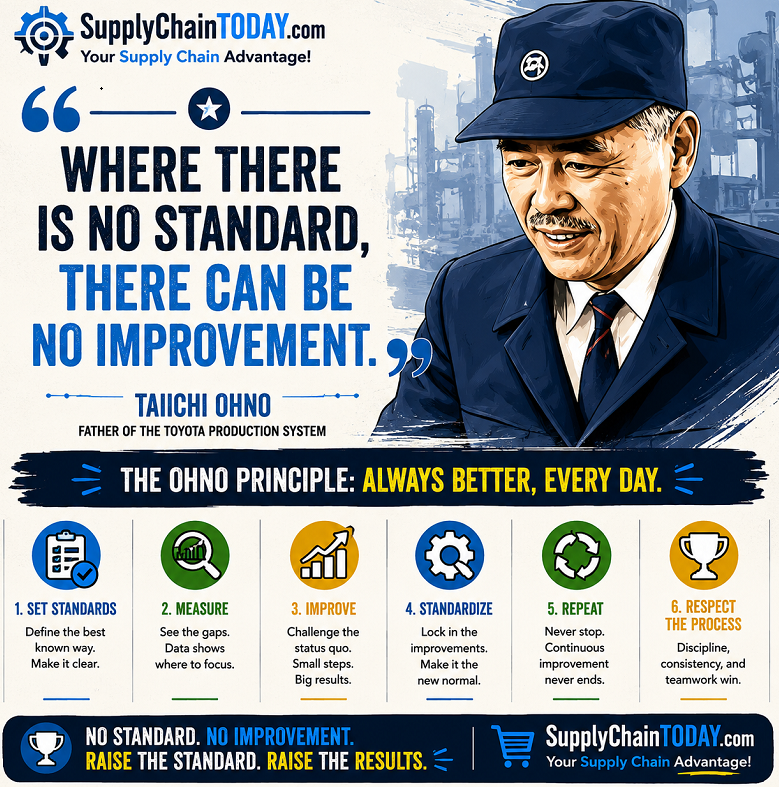
"Where there is no standard, there can be no improvement." ~Taiichi Ohno.
Collection of Lean Manufacturing Resources: supplychaintoday.com/tag/lea…
#LeanManufacturing #LeanThinking #SupplyChain #ContinuousImprovement #Kaizen #ToyotaProductionSystem
5
5
90
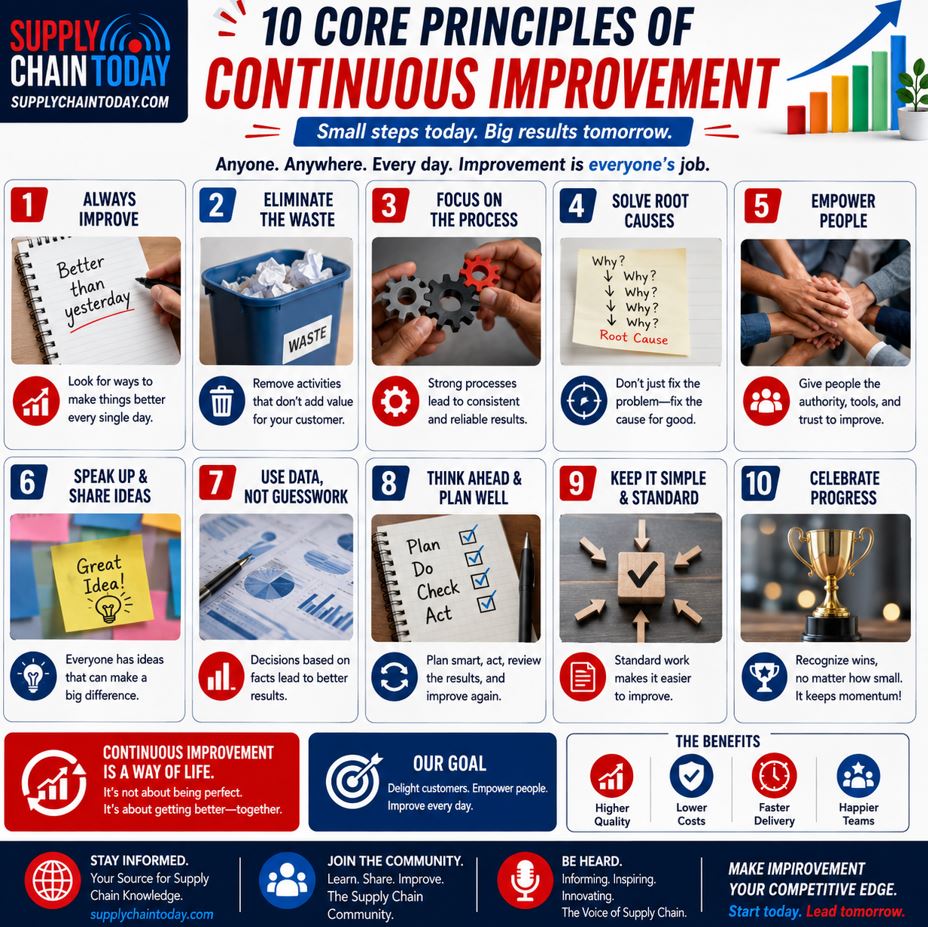
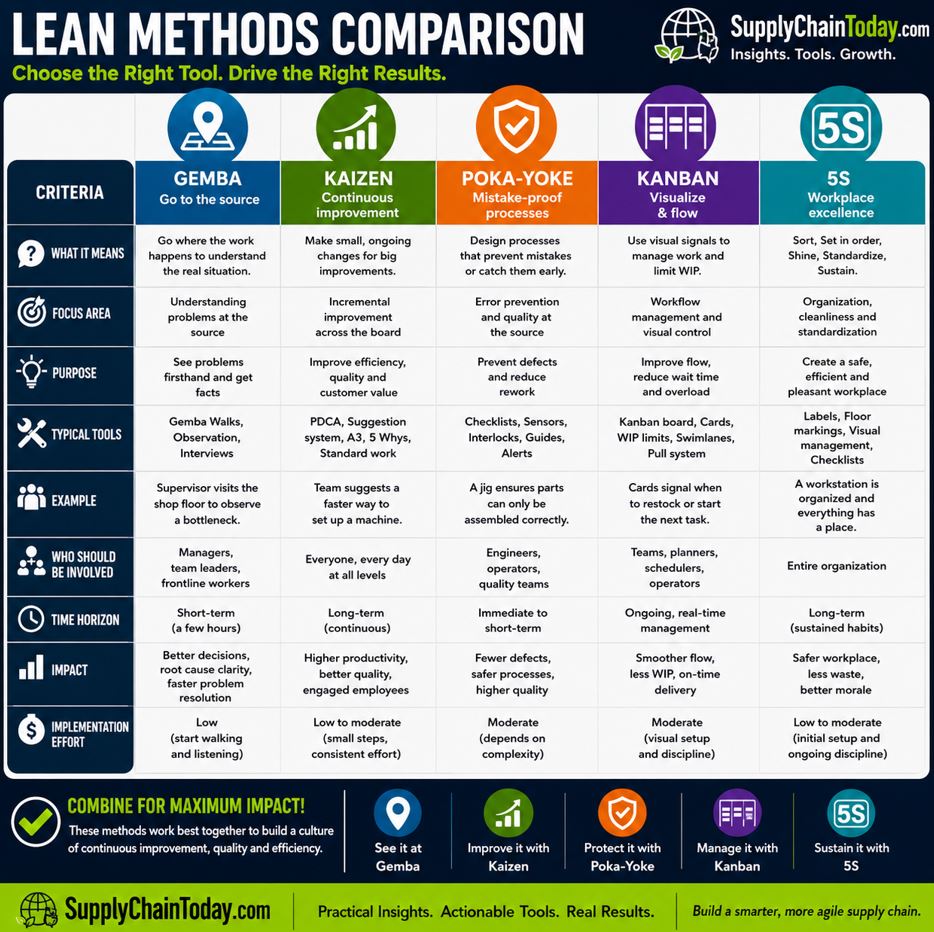
Collection of infographics to learn about lean manufacturing
#supplychain #leanthinking #leanmanufacturing #Kaizen #ContinuousImprovement #Kanban #PokaYoke #Gemba #5S #ManufacturingExcellence
Collection of Continuous Improvement Resources: supplychaintoday.com/categor…
4
10
164
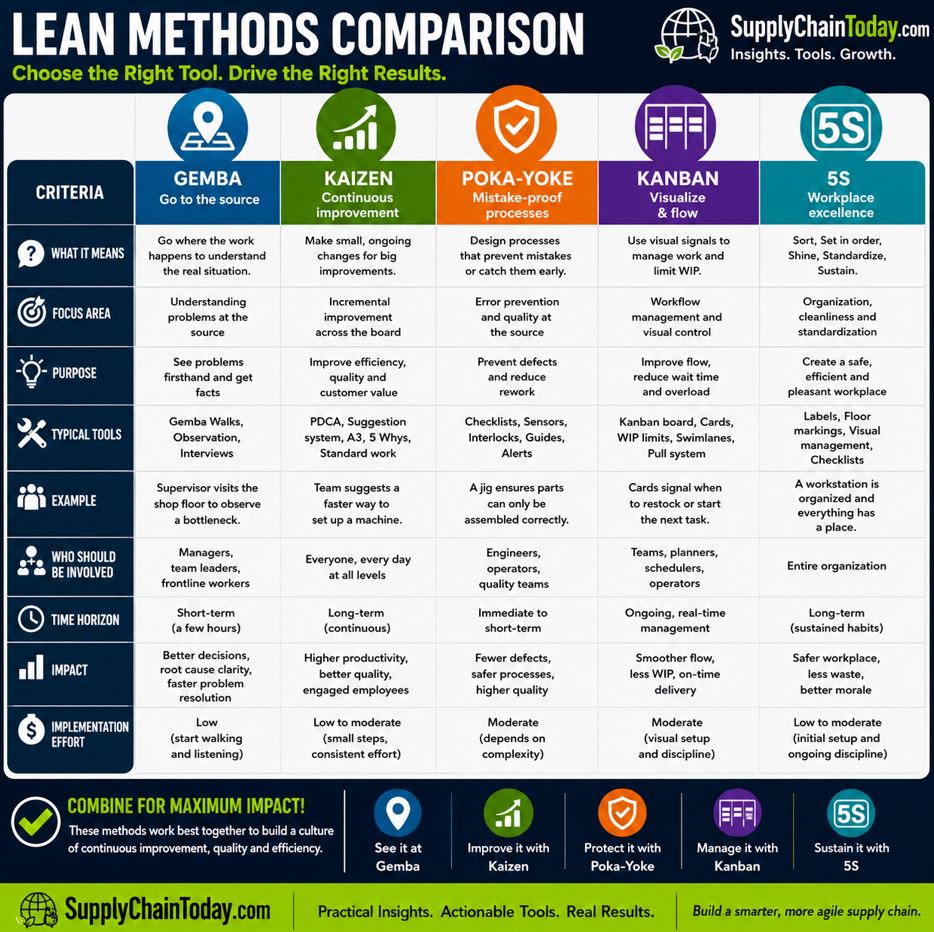
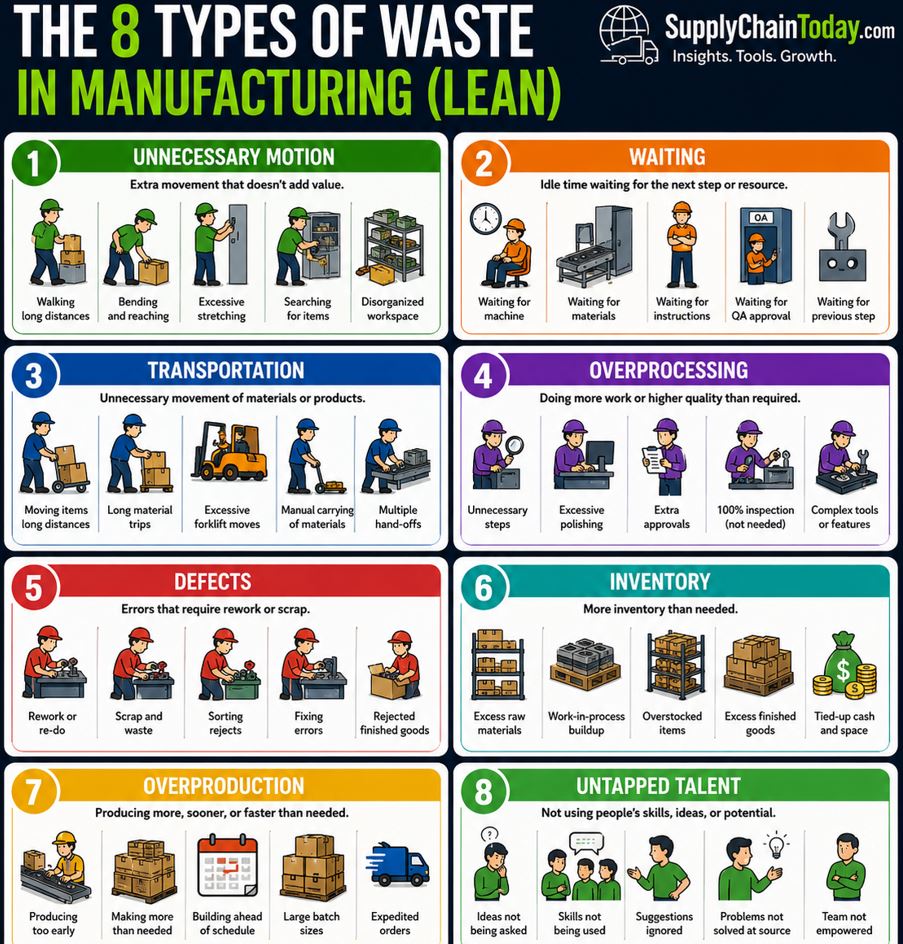
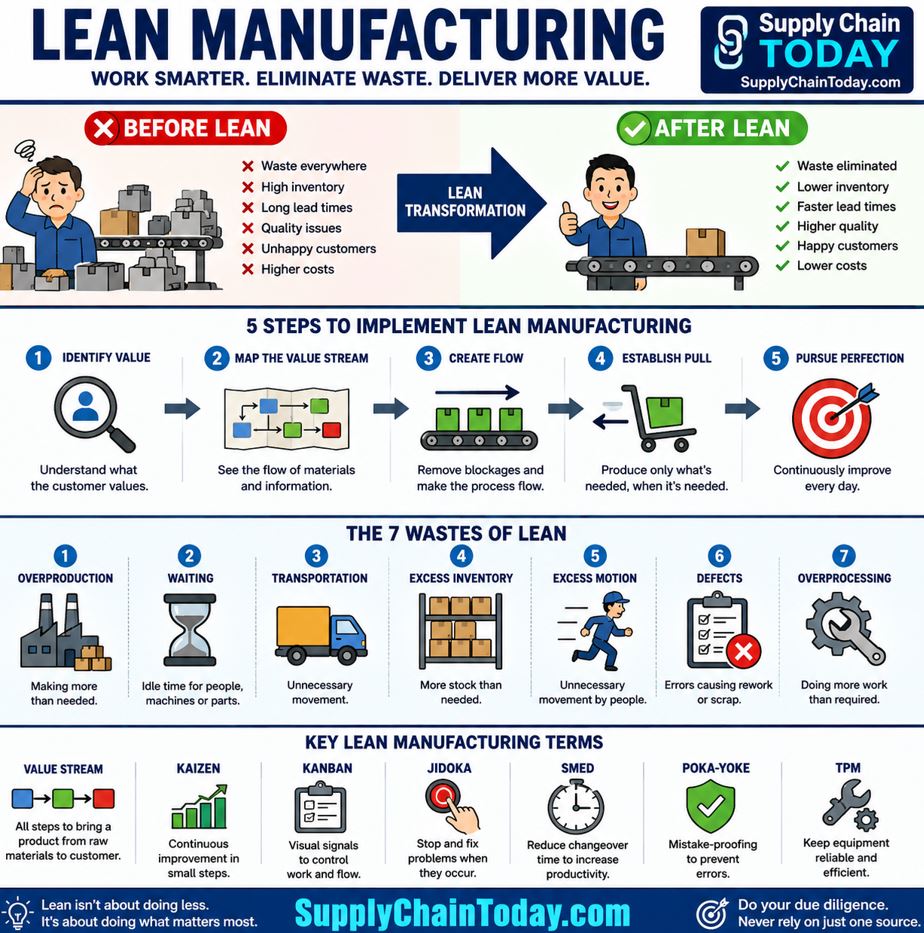
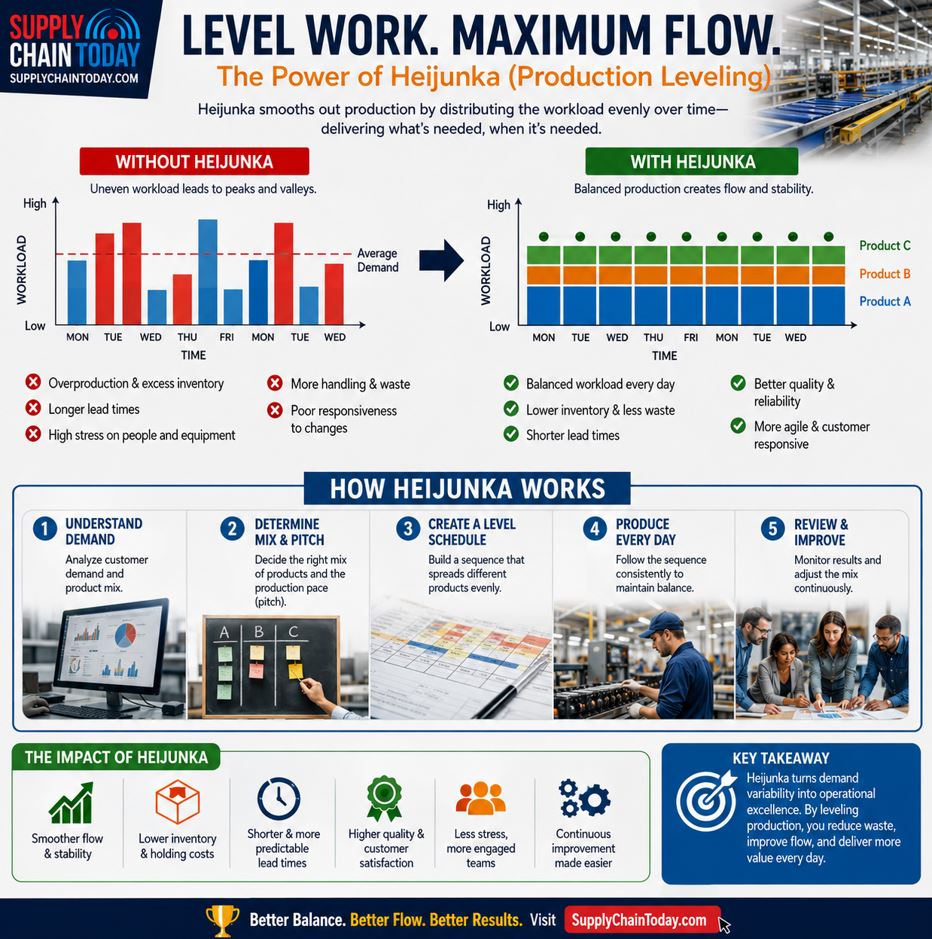
Collection of infographics to learn about lean manufacturing
#supplychain #leanthinking #leanmanufacturing #Kaizen #ContinuousImprovement #Kanban #PokaYoke #Gemba #5S #ManufacturingExcellence
Collection of Continuous Improvement Resources: supplychaintoday.com/categor…
5
9
257
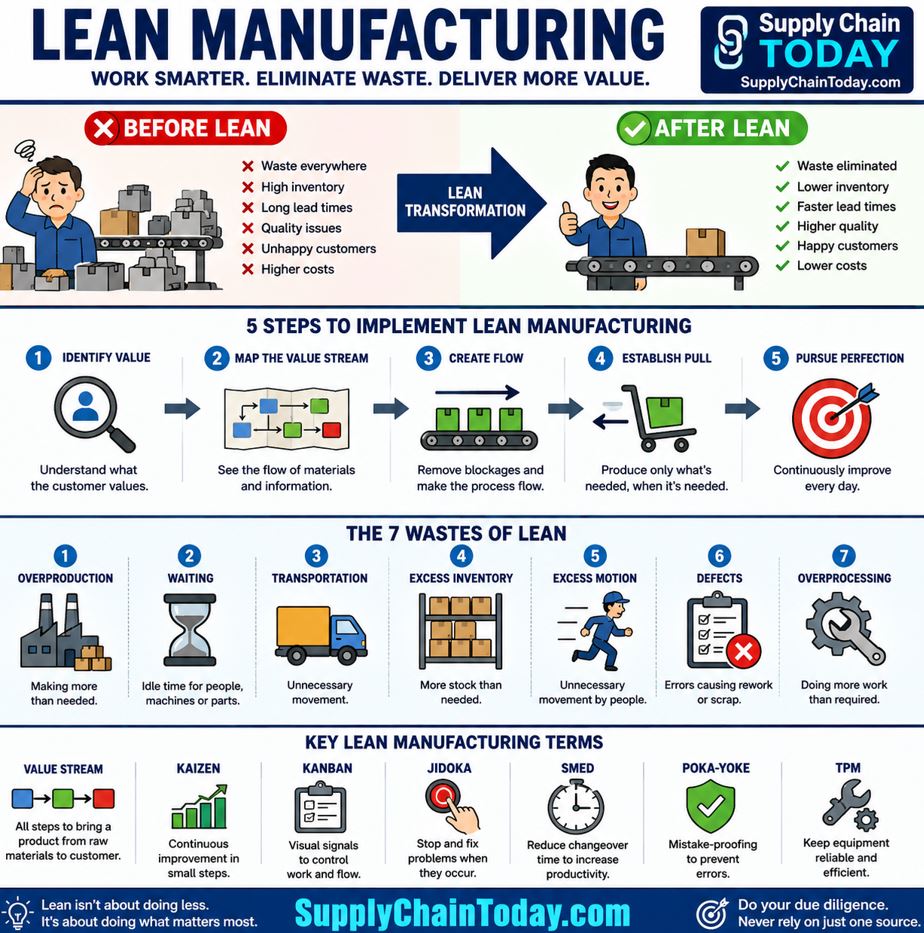
Lean Manufacturing Explained Simply.
Much more detail found here: supplychaintoday.com/lean-ma…
Lean Manufacturing focuses on reducing waste, improving quality, and creating more efficient processes. #LeanManufacturing #LeanProduction #LeanThinking #ContinuousImprovement
1
5
11
116
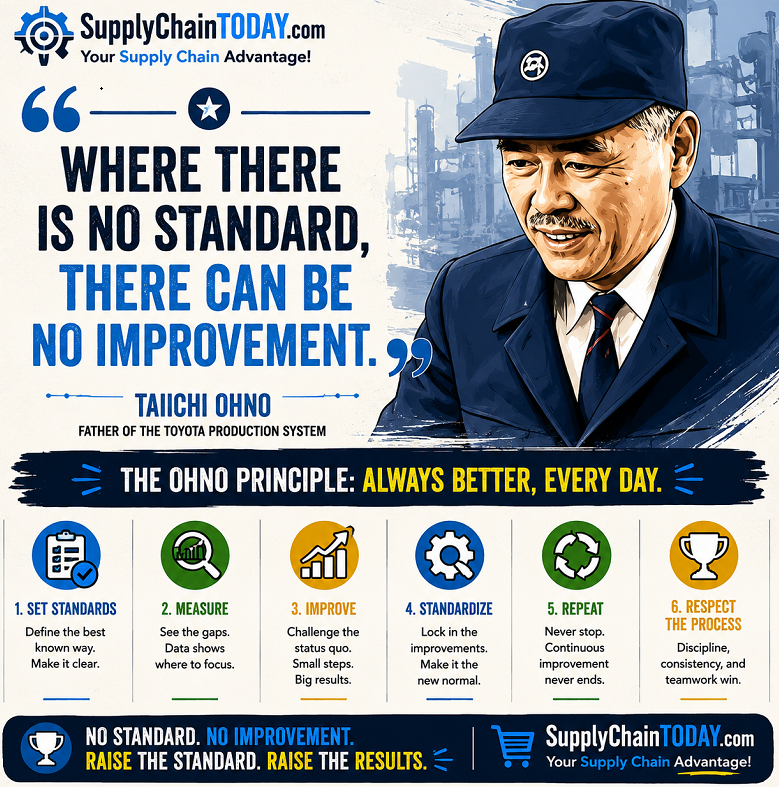
"Where there is no standard, there can be no improvement." ~Taiichi Ohno.
Collection of Lean Manufacturing Resources: supplychaintoday.com/tag/lea…
#LeanManufacturing #LeanThinking #SupplyChain #ContinuousImprovement #Kaizen #ToyotaProductionSystem
7
11
182

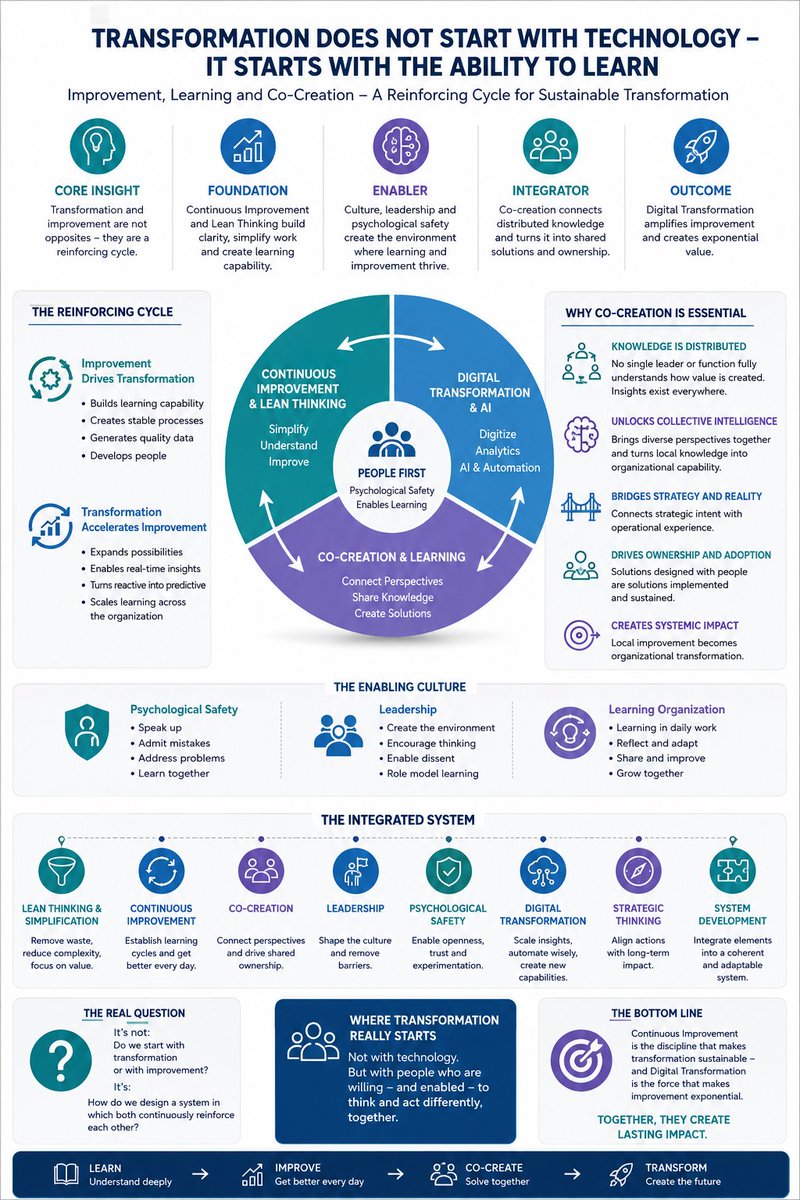
⬛️ #Blog4Managers: Transformation Starts with the Ability to Learn — It Happens When Systems Improve Together
🔹The False Separation
Many organizations still treat Continuous Improvement and Digital Transformation as separate worlds: one focused on operational excellence, the other on strategic renewal. But this distinction is increasingly misleading. Sustainable transformation does not emerge from technology alone. It emerges from a system in which learning, improving, and co-creating are deeply interconnected.
Transformation and improvement are not opposites - they are a reinforcing cycle.
🔹Improvement Creates Learning Capability
Continuous Improvement and Lean Thinking create the foundation. They simplify processes, reduce complexity, and focus attention on value creation. But their greatest contribution is not efficiency. It is learning capability. Organizations that truly understand how work happens can improve processes, adapt faster, and apply technology meaningfully. Without this capability, companies simply digitize existing inefficiencies. With it, Digital Transformation becomes targeted, scalable, and sustainable.
At the same time, transformation strengthens improvement:
▪️data expands visibility,
▪️AI increases predictive capability,
▪️digital technologies accelerate learning cycles.
Transformation accelerates improvement - and improvement stabilizes transformation.
🔹Culture Enables Transformation
This cycle only works under one decisive condition:
culture. A learning organization is not defined by training programs, but by behaviors embedded in daily work. At the center lies a critical principle:
People First - and with it, psychological safety.
Without psychological safety:
▪️problems stay hidden,
▪️mistakes are not discussed,
▪️learning stops.
Without learning:
▪️improvement becomes superficial,
▪️transformation turns into activity without impact.
🔹Leadership Creates the Environment
Leadership is therefore not about providing answers.
It is about creating environments:
▪️where thinking is encouraged,
▪️where dissent is possible,
▪️where learning becomes part of how work happens.
Leadership enables organizational learning.
🔹Why Co-Creation Matters
Transformation cannot be imposed - it must be developed collaboratively. Co-creation is not a participation format or a cultural add-on. In complex organizations, it is a strategic necessity. Why?
Because knowledge is distributed. No single leader, back office, or transformation department fully understands how value is created across the system. Operational realities, customer interactions, technical constraints, inefficiencies, and improvement opportunities exist across teams and functions.
This is why Continuous Improvement and Lean Thinking matter so deeply:
▪️They surface knowledge.
▪️They make work visible, expose friction, and create learning loops close to operational reality.
▪️The more complex the system becomes, the more dependent organizations are on collective intelligence.
Without co-creation:
▪️strategy disconnects from operations,
▪️solutions are designed in isolation,
▪️adoption remains superficial,
▪️improvement stays localized.
Organizations may implement technology -
but they fail to create ownership, learning, and systemic capability.
🔹From Local Learning to Systemic Transformation
Co-creation changes this dynamic fundamentally. It connects perspectives, challenges assumptions, and links operational experience with strategic intent.
This is where improvement and transformation converge:
▪️Continuous Improvement creates learning loops
▪️Co-creation connects and scales them
▪️Digital Transformation amplifies their impact
What begins as local improvement can evolve into systemic transformation. Especially in the age of AI and growing complexity, this becomes decisive.
The future will not belong to organizations with the most technology.
It will belong to organizations that best integrate distributed knowledge, collective learning, and collaborative problem-solving into how transformation itself is designed. Co-creation is therefore not participation for the sake of inclusion. It is the organizational capability to transform distributed intelligence into sustainable transformation.
🔹The Integrated System
Co-creation becomes the integrative element between:
🔸Strategic Thinking
🔸System Development
🔸Continuous Improvement
🔸Digital Transformation
Within such a system:
▪️Lean Thinking creates clarity
▪️Continuous Improvement establishes learning cycles
▪️Co-creation drives ownership
▪️Leadership shapes culture
▪️Psychological Safety enables openness
▪️Digital Transformation scales value creation
▪️Strategic Thinking aligns long-term direction
▪️System Development integrates everything into a coherent whole
🔹The Real Question
The critical question is not:
Do we start with transformation or with improvement?
The real question is:
How do we design a system in which both continuously reinforce each other?
Because transformation without improvement remains superficial. And improvement without transformation remains limited.
🔹Where Transformation Really Starts
The future belongs to organizations that understand:
Continuous Improvement is the discipline that makes transformation sustainable — and Digital Transformation is the force that makes improvement exponential.
And both start in the same place: Not with technology. But with people who are willing — and enabled — to think and act differently, together.
✨ @Khulood_Almani @timo_vi @TamaraMcCleary @AkwyZ @MaryRich78 @rwang0 @drsharwood @DrHolzwarth @HelenBevan @phinifa @pierrecappelli @JimHarris @jenstirrup @GlenGilmore @subare @Ronald_vanLoon @enilev @Scobleizer @AndrewYNg @YuHelenYu @quepasachico
#Leadership #Transformation #LeanThinking #ContinuousImprovement #DigitalTransformation #SystemsThinking #CoCreation #PsychologicalSafety #OperationalExcellence #AI #LearningOrganization #LeadershipDevelopment #DesignThinking #Strategy #Innovation #PeopleFirst ✨
Infographic by @Thomas_dettling | GPT 5.5
1
14
17
503

Fishbone Diagram vs. 5 Whys: Finding the Root Cause. Further details:
supplychaintoday.com/fishbon…
Two Powerful Problem-Solving Tools. One Goal: Eliminate Problems at the Root.
#RootCauseAnalysis #ProblemSolving #5Whys #LeanThinking #ProblemSolvingTools
2
2
2
94

Apr 25
¿Buscas resultados sistémicos? Aplica #LeanThinking para eliminar desperdicios y asegura la continuidad de negocio con ISO 22301. 🌐 La verdadera agilidad requiere un flujo seguro, eficiente y orquestado.

1
4
88

Apr 16
Merci @francois_cp, Shewhart et Deming auraient sans doute eux aussi été très directs face aux « crieurs de crise » permanents.
Leur point était simple : toute variation n’est pas une crise.
Ils distinguaient deux choses :
• La variation courante (common cause) : le bruit normal du système, inhérent à son fonctionnement.
• La variation spéciale (special cause) : un signal rare, assignable, qui justifie une investigation.
Confondre les deux, c’est l’erreur classique.
Quand on traite une fluctuation normale comme une crise, on ne pilote pas mieux : on ajoute du bruit au bruit.
Deming appelait cela le tampering : intervenir sur un système statistiquement stable comme s’il était hors de contrôle.
C’est exactement ce qu’on voit souvent dans le débat public.
À la moindre oscillation d’un indicateur, on parle de « crise » énergétique, budgétaire, sociale ou industrielle, sans même se demander si les données montrent réellement une rupture… ou simplement le comportement habituel du système.
Le vrai réflexe Shewhart-Deming, c’est celui-ci :
1.Regarder les données
2.Distinguer signal et bruit
3.Vérifier si le système est réellement sorti de ses limites normales
4.Éviter les réactions émotionnelles maquillées en décisions rationnelles
Le management sérieux ne consiste pas à paniquer à chaque variation.
Il consiste à comprendre la variation, à améliorer le système, et à ne pas confondre agitation et action.
La vraie crise, très souvent, ce n’est pas la courbe.
C’est l’incapacité de ceux qui commentent ou dirigent à comprendre ce qu’elle dit réellement.
#Deming #Shewhart #Management #Leadership #Data #Variation #SPC #ContinuousImprovement #LeanThinking
Apr 16

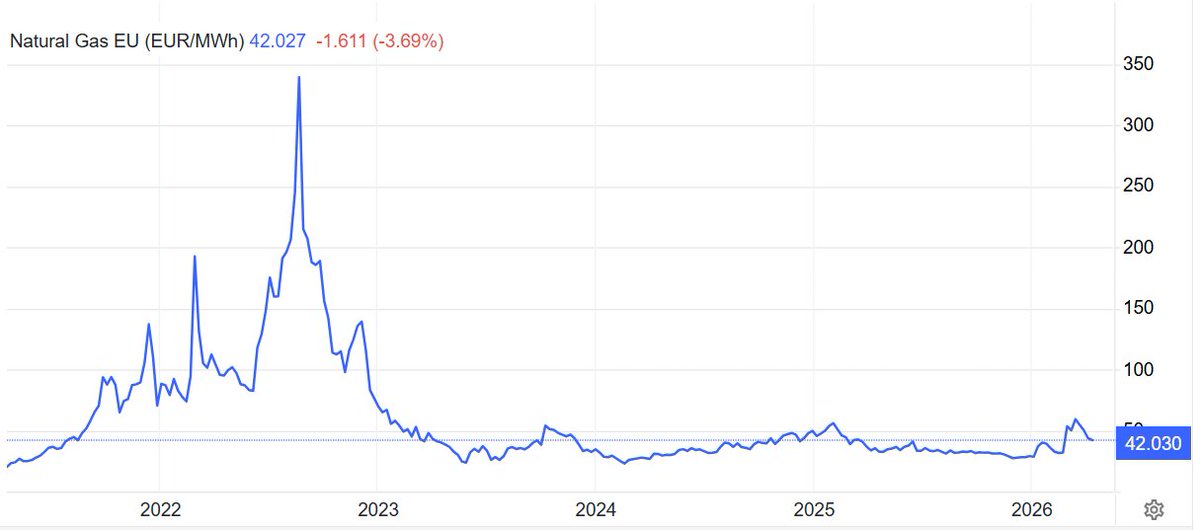
Pendant qu'on s'excite à discuter des aides énergétiques imaginaires:
Le prix du gaz s'établit en moyenne à 50,8€/MWh en Mars. Il est aujourd'hui à 42€. ça fait 3 ans qu'il oscille entre 30€ et 50€.
Il n'y a simplement pas de crise énergétique pour les ménages.
4
8
448

Capacity problems aren't always what they seem. One company found that approval delays—not machines—were the real bottleneck. Management was slowing everything down. #LeanThinking #Efficiency
2
290
Manufacturers treat capacity limits as immutable laws instead of symptoms of bad planning. "We can only produce X units" becomes dogma. Nobody asks why. It's like eating with one hand because that's just how it's done. #Manufacturing #LeanThinking
3
449