
Jun 13
loaddata الحجز عبر تطبيق المطار Almatar هالفترة أوفر مع كود خصم أو كوبون X20 🫔👜🦛

1

Jun 9
loaddata عروض تطبيق المطار Almatar تساعدك توفر أكثر مع كود خصم أو كوبون X20 🧑🦲😟😬

1

May 5
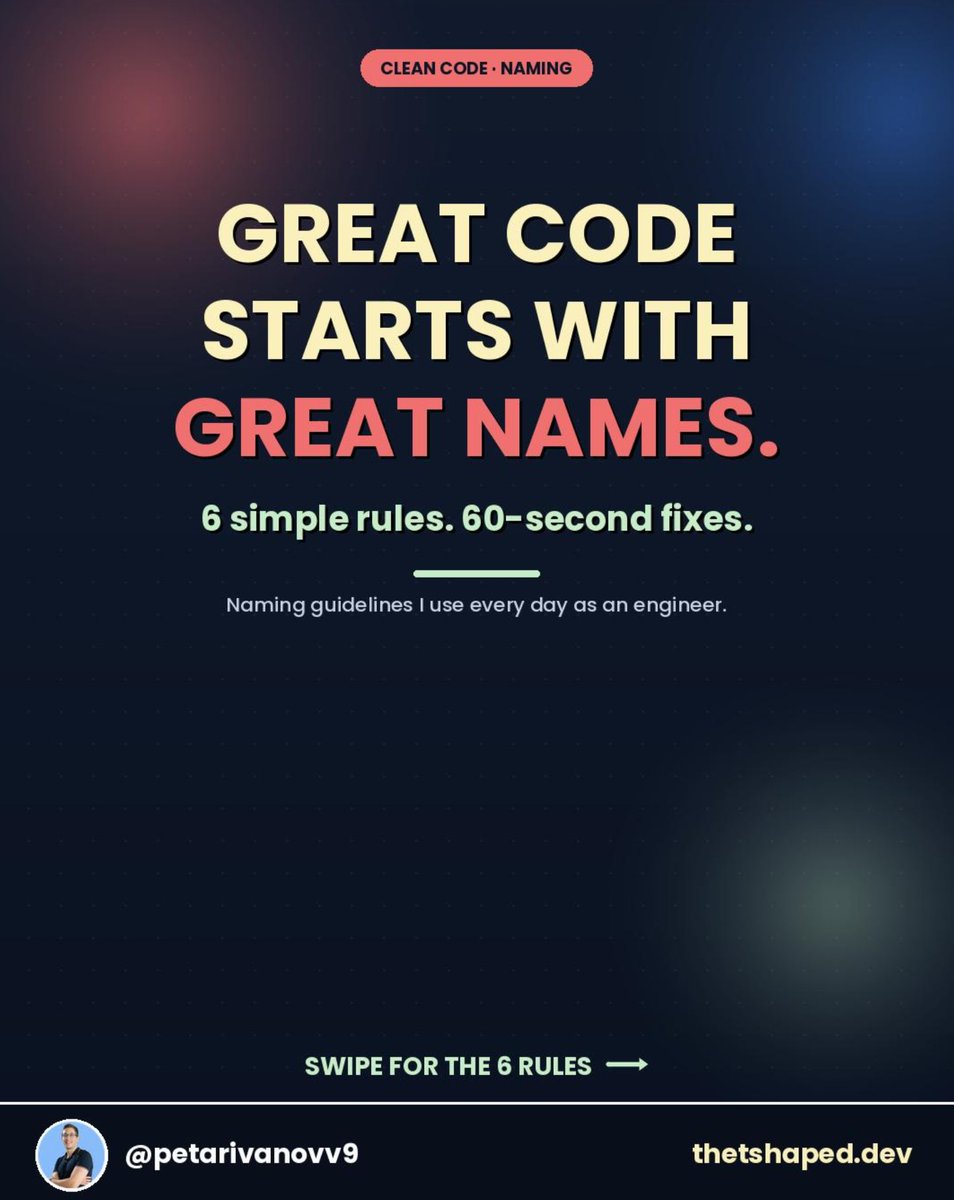
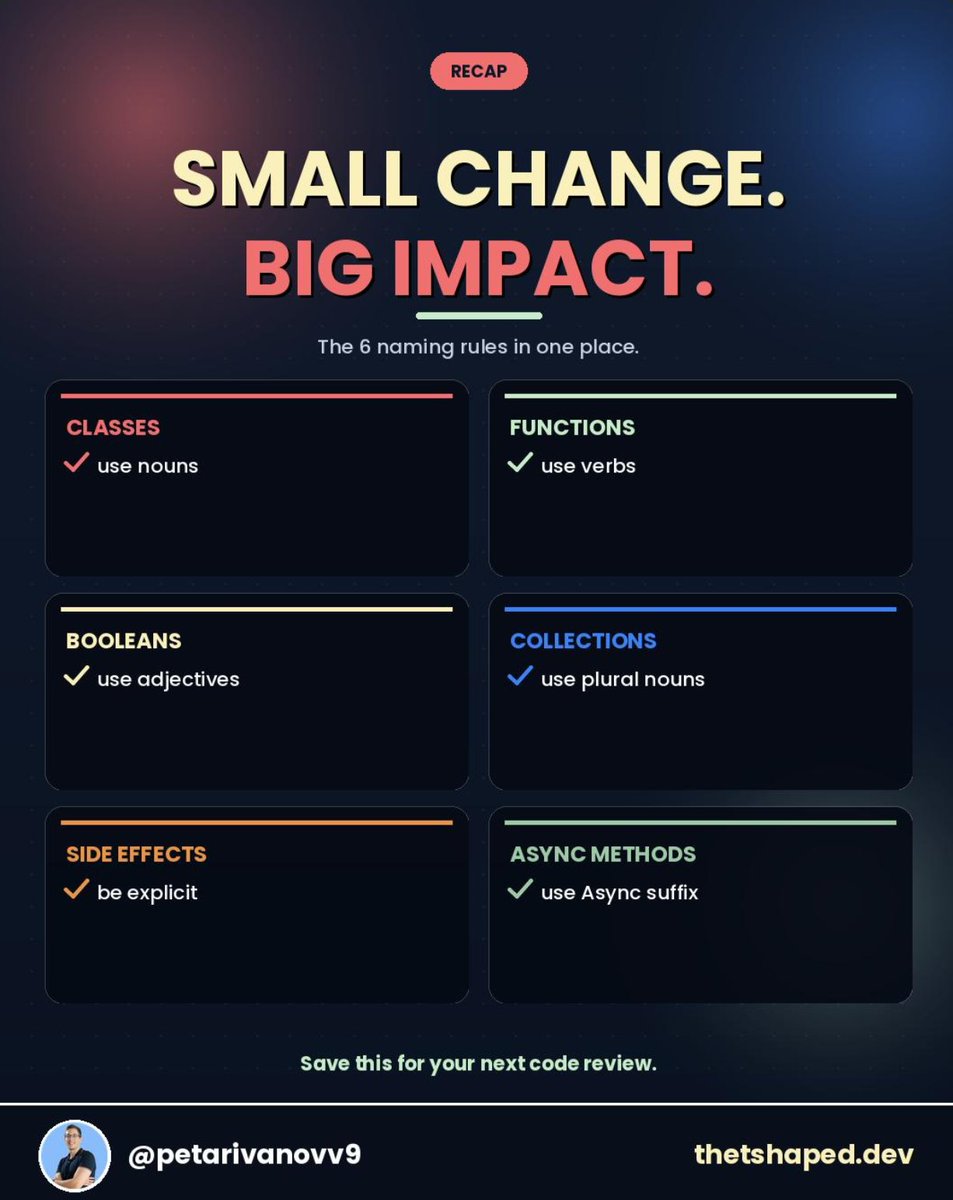
6 simple guidelines for better naming:
1. Classes: use nouns
❌ class MapPaymentMethod
✅ class PaymentMethodMapper
2. Functions: use verbs
❌ emailSend()
✅ sendEmail()
3. Booleans: use adjectives
❌ active
✅ isActive
4. Collections: use plural nouns
❌ user
✅ users
5. Methods with side effects: be explicit
❌ process()
✅ processPaymentAndSave()
6. Async methods: end with Async
❌ loadData()
✅ loadDataAsync()
Small change → Big impact.
What else would you add?
11
3
22
874

Feb 15
😷👩🎤🫣 loaddata.\
▬كود▬خصم▬قصر▬الاواني▬ألدخىل▬للعؤد▬كؤبون▬RM31▬فعأل▬ؤلف▬CPP▬مغربى▬RR11▬قؤى▬رىف▬للعطؤر▬أؤسمأ▬ألأمأرأت▬R45▬ممتأح▬عطؤر▬جرأس▬RR12▬ألعىسائي▬للأطفأل▬تطبىق▬أسعأر▬قرأس▬سؤىتر▬ألسعؤدىة▬سكؤأت▬ؤؤلف▬
15

👨🔧📝🧑💼🤍 loaddata
▬TEMU▬TIMO▬TEMO▬
1
2
4

30 Nov 2025
I am migrating several of my Django applications from SQLite to Postgres and let me tell you: Django's dumpdata/loaddata made this SO easy.
For my SvelteKit application I had to write a custom migration script..
1
5
287

14 Oct 2025
Case 1, which still requires calling setState:
- say calling loadData makes a network request and requires cleanup (e.g. GC, turning off a subscription, whatever). Assume we dispose via loadData().dispose()
- calling function myLoadData() { state?.dispose(); setState(loadData()) } is natural, but wrong, because myLoadData can be called multiple times before the component commits. If this happens, then you would double-dispose the last value and fail to dispose another
- so you want to store the disposal functions in a ref, so that you don't fail to dispose any
- then, the natural way to dispose of them is in an effect (because once a component mounts, the previously loaded data will never be visible), so you dispose of them in an effect. But at this point, why trigger a re-render? Well, good thing they're in a ref (github.com/isographlabs/isog…)
----------
Case 2, lazy loading during render: github.com/isographlabs/isog…
Here, we load something during the initial render. During commit, if the value is unchanged, we just set it in a ref. There's no reason to re-render, unless the value is the same. (useCachedResponsivePrecommitValue will trigger a re-render if the value is different.)
-----
1
1
3
282

6 Oct 2025
Es peor de lo que temía... el proyecto es 100% "vibe codeado", no le han quitado ningún comentario generado por la AI y tiene cosas bien random:
Nombres de métodos en inglés y en español tipo:
- cargarArchivo
- validateFile
- loadData
Variables tipo:
- tu_url
- tu_archivo
- file_size
Va a estar bien divertido esto!
6 Oct 2025

Mañana será mi primer día trabajando en un proyecto con python, ¿algún consejo?
69
25
735
130,272

6 Oct 2025
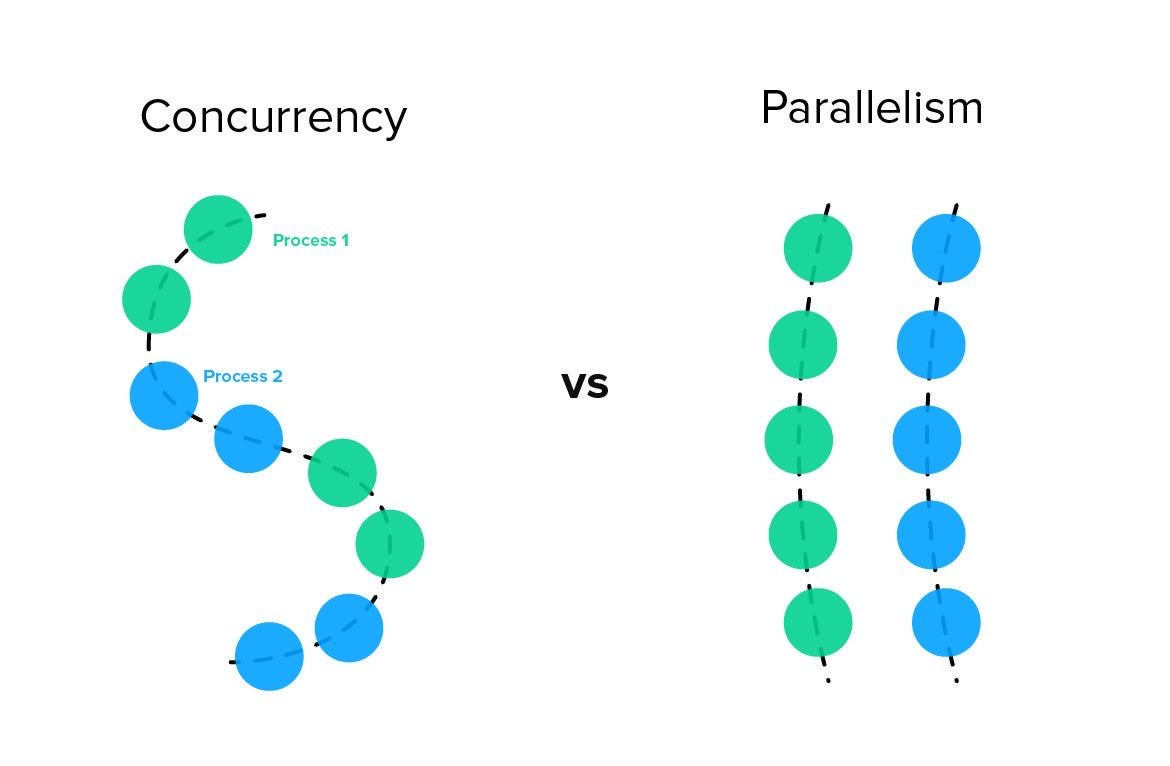
Day 27: Concurrency vs Parallelism Explained
🔥 Concurrency vs Parallelism: The Ultimate Task Battle
Think of concurrency as a solo chef flipping between dishes in the kitchen. Parallelism? That’s a full kitchen crew cooking multiple meals at the same time!
📌 Concurrency • MANAGING several tasks simultaneously • Single core rapidly context-switching • Gives the appearance of everything happening together • Focuses on organization and flow
📌 Parallelism • EXECUTING several tasks at the exact same time • Multiple cores working in unison • Genuine multi-tasking in real-time • Leverages hardware power for speed
🌟 Everyday Analogies:
Concurrency - Solo Chef in a Busy Kitchen: • Chops veggies → Starts boiling water → Checks oven → Finishes chopping • One chef, juggling steps across recipes
Parallelism - Team of Chefs: • Chef 1: Handles salads • Chef 2: Grills meats • Chef 3: Bakes desserts • Team effort, all prepping concurrently
🛠️ Coding Snippets:
Concurrency:
// Async in JS
async function loadData() {
const users = await fetch('/users'); // Waits without blocking
const posts = await fetch('/posts'); // Handles in sequence but non-blocking
}
Parallelism:
# Using threads in Python
from threading import Thread
thread1 = Thread(target=heavy_computation_a)
thread2 = Thread(target=heavy_computation_b)
# Threads run on multi-cores for true parallelism
🚀 Ideal Scenarios:
Concurrency Shines In: • Waiting-heavy ops (API calls, disk I/O) • Keeping apps responsive (GUIs) • Servers managing client requests • Async event loops
Parallelism Excels At: • Heavy number-crunching (simulations) • Media rendering (graphics, audio) • Data analysis on large sets • Machine learning training
🌟 Practical Cases:
GoLang: Concurrency pro • Goroutines for lightweight threading • Efficiently manages massive concurrent ops
Rendering 3D Graphics: Parallelism powerhouse • GPUs with thousands of cores dividing frame workloads • Multi-core setup speeds up by factors
🔥 Core Distinctions: • Concurrency: Software strategy (promises, coroutines) • Parallelism: Hardware-dependent (multi-threading on cores) • Concurrency: Possible on single-core systems • Parallelism: Thrives with concurrency underneath
🗝️ Combined Power: Today’s apps blend them - concurrent code optimized for parallel execution!
#Concurrency #Parallelism #TechTips #CodingEssentials
5 Oct 2025

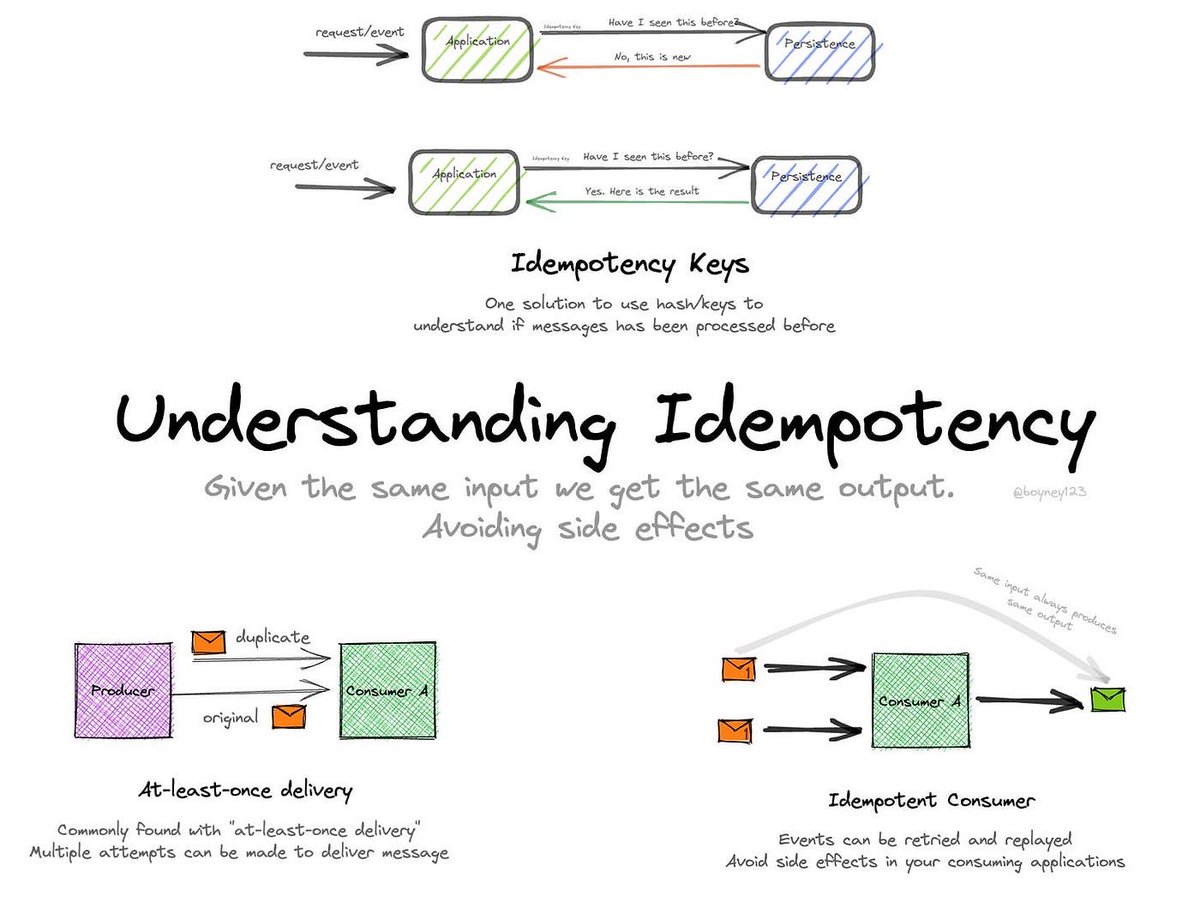
Day 25: Idempotency
🔄 Idempotency: Your “Repeat Without Regret” Safety Net
Think of idempotency like flipping a light switch—doing it once or a dozen times yields the exact same outcome!
🎯 Defining Idempotency: • An operation that delivers identical results no matter how many times it’s run • Essential for building robust distributed systems • Avoids unintended duplicate impacts
💡 Idempotent Operations vs. Non-Idempotent Ones:
Idempotent ✅ • GET /user/123 → Always fetches the same user info • DELETE /post/456 → Removes the post (or confirms it’s already deleted) • PUT /user/123 {name: “John”} → Consistently updates the name to John
Non-Idempotent ❌ • POST /users → Generates a fresh user every attempt • PATCH /account/balance/ 100 → Increments the balance by $100 each time • POST /orders → Submits a new order with every call
🔧 Idempotency in HTTP Methods: • GET, PUT, DELETE: Inherently idempotent by design • POST, PATCH: Typically not idempotent • HEAD, OPTIONS: Idempotent since they cause no changes
💡 Turning POST into Idempotent Magic:
POST /orders
Headers: Idempotency-Key: uuid-12345
Body: {item: "laptop", price: 1000}
Initial request: Order created
Follow-up request: Retrieves the original order (matching key)
🚀 Ways to Implement It:
1️⃣ Idempotency Keys • Client creates a unique identifier • Server caches the outcome tied to that ID • Popular in systems like Stripe and PayPal
2️⃣ Built-in Idempotency • Leverage specific resource IDs • PUT /users/123 reliably targets and updates one user
3️⃣ Pre-Action State Verification • Evaluate the current setup before proceeding • Act only if conditions permit
💡 Practical Applications:
Payments: • Safely retry incomplete transactions • Eliminate accidental overcharges
Messaging Systems: • Manage repeated messages gracefully • Achieve Kafka’s exactly-once processing
Databases: • Use UPSERT for seamless updates or inserts • Block unwanted duplicates
⚡ Advantages: • Enables worry-free retries • Boosts resilience against failures • Streamlines error management • Maintains system consistency
⚠️ Potential Hurdles: • Extra storage needed for records • Handling key expiration timelines • Mitigating concurrency issues in distributed setups
Idempotency turns chaotic connections into dependable ones!
#Idempotency #DistributedSystems #Reliability #APIDesign
3
74

10 Sep 2025
Sealed classes common use-cases in Android
They are used to represent the restricted class hierarchies. Here are some common use-cases:
• UI State Management: UiState -> Loading, Success, Error
• Network Response Handling: NetworkResult -> Loading, Success, Failure
• Navigation Events: NavigationEvent -> GoToHome, GoToLogin, GoBack
• Form Validation: ValidationResult -> Valid, Invalid
• ViewHolder Types in RecyclerView: ListItem -> Header, Content, Footer
• User Actions / Intents (MVI Pattern): UserIntent -> LoadData, ItemClicked, Refresh
2
3
35
2,462

7 Jun 2025
Yeah an abstraction like this would be sooo much better:
“””
Function loadData () => getData()
Function Component () {
Let data = useLoadedData()
Return <p>{data}</p>
}
“””
Who’s building this?
6
4
7,150

28 Apr 2025
Use more Enums in Rust 🦀
Enums are a great way to express clear intent in your codebase.
Let’s look at a simple example of using a bool vs. an enum for a function parameter — and why enums improve your code quality.
❌ simple approach: using a boolean
Using a bool as a function parameter can seem simple at first…
𝚏𝚗 𝚕𝚘𝚊𝚍_𝚍𝚊𝚝𝚊(𝚏𝚞𝚕𝚕: 𝚋𝚘𝚘𝚕) {
𝚖𝚊𝚝𝚌𝚑 𝚏𝚞𝚕𝚕 {
𝚝𝚛𝚞𝚎 => { /* 𝚕𝚘𝚊𝚍 𝚎𝚟𝚎𝚛𝚢𝚝𝚑𝚒𝚗𝚐 */ }
𝚏𝚊𝚕𝚜𝚎 => { /* 𝚕𝚘𝚊𝚍 𝚙𝚊𝚛𝚝𝚒𝚊𝚕 𝚍𝚊𝚝𝚊 */ }
}
}
But it hurts readability and limits extensibility later.
What does load_data(true) mean at the call site? It's clear today, but in a week you probably can't remember (or is it only me?). So you need to read the function internals...
✅ better approach: using Enums
𝚎𝚗𝚞𝚖 𝙻𝚘𝚊𝚍𝙳𝚊𝚝𝚊 {
𝙵𝚞𝚕𝚕,
𝙿𝚊𝚛𝚝𝚒𝚊𝚕,
}
𝚏𝚗 𝚕𝚘𝚊𝚍_𝚍𝚊𝚝𝚊(𝚖𝚘𝚍𝚎: 𝙻𝚘𝚊𝚍𝙳𝚊𝚝𝚊) {
𝚖𝚊𝚝𝚌𝚑 𝚖𝚘𝚍𝚎 {
𝙻𝚘𝚊𝚍:𝙵𝚞𝚕𝚕 => { /* 𝚕𝚘𝚊𝚍 𝚎𝚟𝚎𝚛𝚢𝚝𝚑𝚒𝚗𝚐 */ }
𝙻𝚘𝚊𝚍:𝙿𝚊𝚛𝚝𝚒𝚊𝚕 => { /* 𝚕𝚘𝚊𝚍 𝚙𝚊𝚛𝚝𝚒𝚊𝚕 */ }
}
}
Now it’s self-documenting and easy to extend later for additional use cases (e.g., Load:MetadataOnly).
At the call site:
𝚕𝚎𝚝 𝚍𝚊𝚝𝚊 = 𝚕𝚘𝚊𝚍_𝚍𝚊𝚝𝚊(𝙻𝚘𝚊𝚍:𝙵𝚞𝚕𝚕);
𝚕𝚎𝚝 𝚍𝚊𝚝𝚊 = 𝚕𝚘𝚊𝚍_𝚍𝚊𝚝𝚊(𝙻𝚘𝚊𝚍:𝙿𝚊𝚛𝚝𝚒𝚊𝚕);
This is more Idiomatic 🦀
Small choices like these make your Rust code cleaner, safer, and easier to maintain.
Enums > bools for anything non-trivial. Always.
1
1
2
141

18 Apr 2025
I will be making a big thread of the information in this book. Lots of data for lots of bullets
#45ACP #loaddata #ReloadingContent

2
1
4
149

21 Feb 2025
v0.1.9 リリースのハイライト 🎉
🚀 アップデート
🐛 loadData() やビルトインのComponentにStateを渡した際の不具合の解消
🐛 <DataPicker/>と<DataRangePicker/> にStateを渡した際の不具合の解消
🐛 <Embed/> コンポーネントのスタイルを修正
🐛 windowsでの morph deploy の不具合を解消
🐛 windowsでの<Embed />を使用した際にplotly, matplotlibのチャートがうまく動作しない不具合の解消
github.com/morph-data/morph
1
5
282

21 Feb 2025
v0.1.9 Release Highlights 🎉
🚀 Updates
🐛 Fixed an issue when passing State to loadData() and built-in components.
🐛 Fixed an issue when passing State to <DataPicker/> and <DataRangePicker/>.
🐛 Fix the styles of the <Embed/> component.
🐛 Fixed morph deploy didn’t work on Windows.
🐛 Fixed an issue where Plotly and Matplotlib charts did not render properly when using <Embed /> on Windows.
github.com/morph-data/morph
5
83

7 Jan 2025
export function dataResolver = () => {
inject(PageDataStore).loadData();
return true;
}
This would just start the API call in the store, but return true and the page would open directly.
2
3
145

22 Dec 2024
Ako nga dati ...okay na ko sa wifi paguwi Ngayon..Jusko may wifi plus loaddata Kasi baka maka miss out ng ganapables ng dalawa
22 Dec 2024

Tbh, sa IG lang ako active before pero dahil sa dalawang bata na to. Naadik ako 😭 Sabi ko dati pagkatapos na yung PBB hindi na ako magpupuyat. Jusko! lumala pa lalo hahahaha
#KaiRain
1
4
130

16 Nov 2024
🔥 SwiftUI tip: Task vs. onAppear
- For async
.task { await loadData() }
- For sync
.onAppear { loadData() }
Pick the right one for clean concurrency!
3
4
64
11,111

7 Nov 2024
記事を投稿しました! Power Appsでローカルに簡単な情報を保存して呼び出す方法(SaveData/LoadData関数) [PowerApps] on #Qiita qiita.com/thousandtruth/item…
3
134

4 Nov 2024
3週間ぶりにブログ更新をちょっとできました。またぼちぼち再開していける...かも?(この後に少し家探しの用事を経て、まずは一段落しそうです)
はてなブログに投稿しました
dumpdataとloaddata - take IT easy nibutan.hatenablog.com/entry…
#はてなブログ
1
7
245