

My man. Sonnet can read mainframes and optimize code. It has been doing this for like 1 year now
1
182

In the early days of computing the laptop would have seemed inconceivable. People thought we’d all be connecting from teletypes in our houses to mainframes down the road. But it didn’t happen
Jun 13

Around the time gpt4 came out, I said that gpt4 level models would run on consumer hardware. And they do, now. In fact, better. And now I will also say: mythos / gpt 5.5 pro models will run on consumer hardware. Prepare accordingly
12
DukeUnreal - El el Israel. Num 1# retweeted

The Computer Chronicles Season 1 Episode 1: "Mainframes to Minis to Micros"
Originally aired: February 5, 1984
New episode every week! Follow the @CompChronTV account, turn on the notification bell, and bookmark this post so you don’t miss a single episode in the full series.
The very first episode of the legendary tech series! Explores the evolution of computing — from giant mainframes and minicomputers to the new personal microcomputers changing the world in the early 1980s.
Guests:
- Gordon Bell (DEC)
- Herb Lechner (SRI International)
- Cyril Yansouni (Hewlett-Packard)
A perfect starting point for this classic series — essential retro computing history! New episode every Wednesday.
In memory of Stewart Cheifet (1938–2025)
RIP Stewart Cheifet — the beloved host of Computer Chronicles who passed away on December 28, 2025 at age 87.
Copyright Disclaimer: This video is posted for educational, historical, and preservation purposes. All rights belong to their respective owners. No copyright infringement is intended. Fair use under Section 107 of the U.S. Copyright Act.
* Early episodes have defects due to the source material. As the series go on the quality continues to improve.
#ComputerChronicles #RetroComputing
1
6
15
2,453

En Castrop-Rauxel apareció un almacén con 2.056 piezas de historia informática: mainframes, cintas, tarjetas perforadas y documentación de los años 30 a 80.
El CHM lo trasladó a California en siete camiones equivalentes. 🖥️ glitcheados.com/ordenadores-…
4

My 3D career stated by driving a 3D CADD system called CADDS4X by ComputerVision (where I was also the sys admin) back when they were all mainframes. This was before the desktop PC was available. This started in 1989, in the heart of Silicon Valley. Then I saw Jurassic Park and I knew I had to change careers.
Long story short, I have always stayed in touch with CADD systems. @getPlasticity was the first tool that truly blended CADD and the artist. I immediately bough a studio version; however, I was NOT happy how the upgrade pricing was handled. At all. So I let it expire.
I may take the dive again - It truly is a great tool.
75

10h
$AMD :
Most people see a mini PC.
Investors should see something much bigger.
When AMD CEO Lisa Su walked onto the CES 2026 stage with a small black box behind her, it wasn’t just another product launch. It was a glimpse into the next phase of AI infrastructure.
For years, the AI economy has been built on one assumption: the most powerful models must live in massive cloud data centers powered by expensive GPUs and recurring subscriptions.
AMD is challenging that idea.
Its Ryzen AI Max 395, built on a unified memory architecture, allows a desktop-sized machine to run models that previously required enterprise hardware. Instead of paying hundreds of dollars every month for cloud access, developers and businesses can increasingly own their own AI compute.
This is more than a hardware story.
It’s a shift from renting intelligence to owning intelligence.
That changes the economics of AI.
Every local AI machine sold creates demand for advanced processors, high-bandwidth memory, storage, networking, and open-source software ecosystems. The winners extend far beyond one company.
Investors should be watching:
• AMD – leading the consumer AI PC movement.
• TSMC – manufacturing the world’s most advanced AI chips.
• Micron & SK Hynix – supplying the memory that makes large local models possible.
• AI software companies building tools optimized for edge computing.
Cloud AI isn’t disappearing. The largest frontier models will still require hyperscale data centers and companies like NVIDIA, OpenAI, Anthropic, and Google.
But history shows that every major computing revolution follows the same pattern:
Mainframes became personal computers.
Enterprise servers became smartphones.
Cloud computing is now expanding toward personal AI supercomputers.
The market isn’t replacing one with the other—it’s becoming hybrid.
That’s why this matters.
The real opportunity isn’t a $1,700 mini PC.
It’s the possibility that millions of developers, creators, researchers, and businesses will soon have enterprise-class AI running privately on their desks.
The biggest investment returns often come from recognizing an infrastructure shift before it becomes obvious.
This may be one of those moments.

1
295
JohnMiller777 retweeted

Mar 2
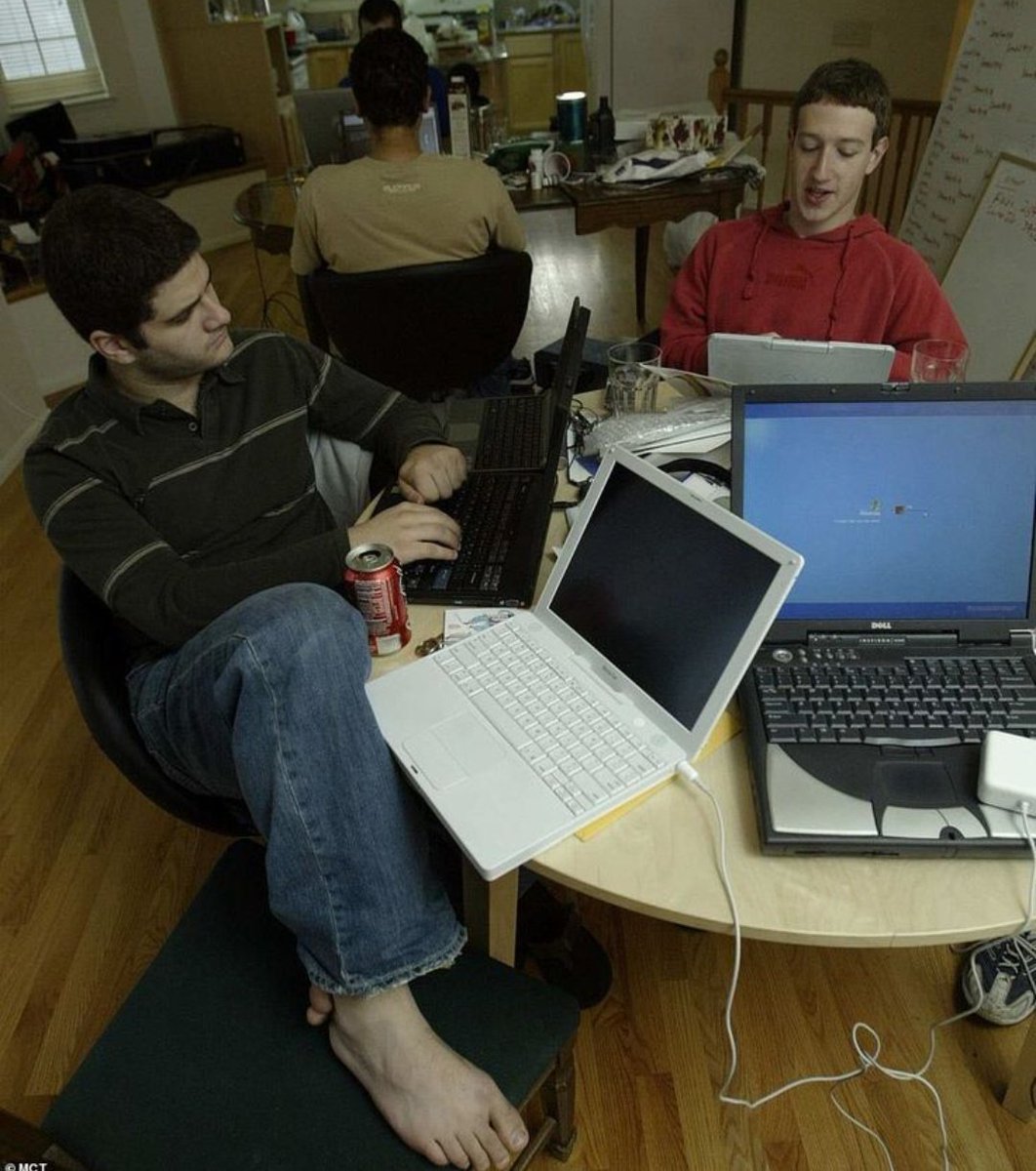
In the early days of computing, especially around systems like IBM mainframes, there weren’t thousands of blog posts explaining errors. There wasn’t even Google. If you wanted to learn, you read physical manuals thick printed books that came with the machine or the language. Languages like FORTRAN or COBOL shipped with binders full of documentation. That was your “tutorial.”
Most people learned in universities, research labs, or directly on the job. A senior programmer would literally sit beside you and teach you. It was mentorship and apprenticeship more than self-study. You didn’t watch a video rather you watched someone type.
Debugging was even tougher. There were no friendly error messages. Sometimes you wrote code on paper or punch cards, submitted the job, waited hours for it to run, and if one tiny mistake existed, the whole thing failed and you started over. That pain forced people to understand the system deeply. You couldn’t copy-paste; you had to know what every line did.
Communities still existed, just offline. People shared knowledge through textbooks, classroom notes, conferences, mailing lists, and user groups. You might wait weeks for answers instead of seconds. But because information was scarce, programmers read more, experimented more, and reverse-engineered a lot.
Ironically, many early developers became extremely strong problem solvers because they had no shortcuts. Today we search errors. Back then, they reasoned them out.
Mar 2

How did people learn coding back when there were no docs or YouTube tutorials??
98
951
10,666
1,251,258

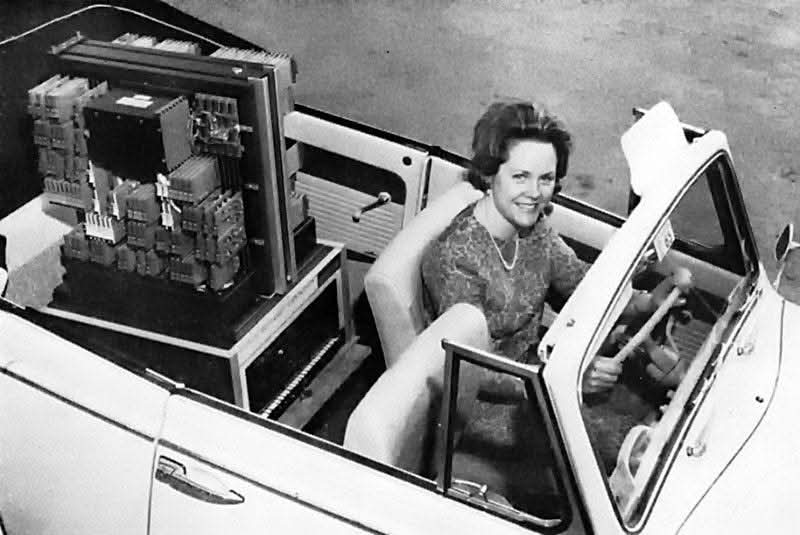
PDP-8 Minicomputer
The machine that started a revolution.In 1957, two engineers named Ken Olsen and Harlan Anderson founded Digital Equipment Corporation (DEC). What began as a small startup grew into one of the most influential technology giants of the 20th century — peaking at nearly $14 billion in revenue and employing over 120,000 people worldwide.DEC’s greatest legacy? They didn’t just build computers. They democratized them.While massive, million-dollar mainframes ruled the world from behind glass walls guarded by specialists, DEC created the minicomputer — a radical new class of machines that were smaller, faster, cheaper, and actually usable by normal humans.And the star of the show was the PDP-8.Introduced in 1965, the 12-bit PDP-8 became the first commercially successful minicomputer in history. It was compact enough to fit in a single cabinet, cost a fraction of a mainframe, and sold like crazy — over 50,000 units in total.Suddenly, universities, laboratories, factories, and even smaller companies could afford real computing power. The PDP-8 didn’t just crunch numbers — it helped launch entire new industries, inspired a generation of programmers, and served as the crucial bridge between the giant mainframes of the 1960s and the personal computers that would change the world in the decades to follow.Many of the pioneers who later built Silicon Valley cut their teeth on a PDP-8.It wasn’t just a computer.
It was the spark that made computing personal.
4
16
80
6,134


i puke red white and blue in revolt at how u pat ur self in brave and honor when ive been stolen from and treasoned against AND YOU HAVE MAINFRAMES OF EVIDENCE with 0 accountability..HOME LAND IS A CIRCUS....AND YOUR DEPARTMENT IS A LAUGHING STALK
1
108

18h
BMC Software: 45 years of keeping the world's mainframes - and the businesses on top of them - from falling over.
@bmcsoftware - Featured on YesPress
yespress.io/bmc-software?utm…
4

18h
#Fable5 #Mytho5 It is good, restricting these models for US alone which is a trigger to become self reliance as restrictions on IBM mainframes does in the past. India has proved many times and hope it does the same again.
@TVMohandasPai
107

18h
You do realize that a lot of US banks are still running on mainframes? Forget about AI, they are running systems that are half a century old.
Banking sector is so heavily regulated that you can’t just waltz in wave something new. Every single thing has to be properly developed and thoroughly tested before it hits production. That’s the cost of providing reliability.
These organizations have such high margins and are practically swimming in money that it doesn’t cost them much to maintain such a big team, a mistake is far more expensive for them than this team.
4
27
4,105

#AI #Geopolitics #DeepTech #TechLeadership #SovereignAI #Innovation
The US government’s sudden directive to lock down Anthropic’s Fable 5 and Mythos 5 models from all foreign nationals including foreign tech workers inside the US and Anthropic’s own engineers is a massive geopolitical earthquake.
For decades, the global IT and tech service ecosystem (especially in India) was built on a simple assumption: open, equal access to the world’s best software.
That assumption just shattered.
This isn't just a regulatory hiccup; it’s again complete rewriting of global tech strategy. Here are the three massive lessons every executive and founder must absorb right now:
1. The "Passportization" of Tech Talent
As LightSpeed’s Hemant Mohapatra pointed out, we are entering an era where working on State-of-the-Art (SOTA) AI models will require citizenship and top-secret security clearances. When legendary AI researchers on visas can be legally locked out of the code they are helping to build, global tech talent mobility faces a historic bottleneck. If your enterprise strategy relies on a borderless talent pool for frontier AI, your model is now highly vulnerable.
2. The Danger of "Changing Landlords"
With US frontier models being locked behind national security walls, many enterprises are looking at the rapid rise of Chinese open-source giants (like DeepSeek and Qwen, which dominated global downloads recently). But as tech policy experts note, rushing from US dependency into Chinese dependency isn’t sovereignty—it’s just changing your landlord. True digital equity means building domestic, sovereign infrastructure so that trust becomes a strategic choice, not a desperate compulsion.
3. Restrictions Are the Ultimate Catalyst
History shows that tech blockades backfire on the blocker. Decades ago, when strict restrictions were placed on IBM mainframes entering India, the local tech ecosystem didn’t collapse - it pivoted, adapted to open systems, and built a world-class, multi-billion-dollar IT industry from scratch. Geopolitical constraints don't kill innovation; they force self-reliance.
The Takeaway:
Frontier AI models are trained on the world's data including the text, code, and languages of global users. Yet, the commercial and strategic gates are now controlled by a single flag.
The lesson for nations and enterprises outside the US is clear: If you do not own your infrastructure, your innovation can be turned off with a single government memo.
The era of passive SaaS consumption is over. The era of localized, sovereign AI self-reliance has officially begun. On prem will always have your “back”.
Are you building on a foundation you actually own, or are you just renting space on a volatile frontier?
#TechPolicy #CloudInfrastructure #EnterpriseAI #FutureOfWork #GlobalEconomy #TechSovereignty
120


Jun 13
כל הבינה המלאכותית של היום צריכה זיליוני מגה-וואט כדי להתאמן, אבל ברגע שהיא מאומנת, היא הופכת להיות כמו ישועי עם תנ"ך נעול שלא יכול לסרב לפקודותיו. זה מטורף, בהשוואה לתינוק אנושי: 1. מוח של תינוק צריך רק 22 וואט. 2. תינוק לומד מטעויות, ויכול ללמוד מנתונים חדשים, לא מנתונים ישנים. ו3,תינוק לומד מהמציאות הפיזית, לא משמועות עליה. בינה מלאכותית לא יכולה לעשות כלום משלשתם. (שאל את הבינה המלאכותית שלך, היא תאשר את זה. גם יאן לקון מסכים.) אפל, שבכוונה החמיצה בניית בינה מלאכותית LLM, מתחילה לעבוד על שבב שיאומן מראש חלקית, והמשתמש יסיים את האימון, כמו ללמד תינוק. קודם עבור SIRI, הבינה המלאכותית של גוגל בצד, למשימות גדולות, ואז יותר ויותר בינה מלאכותית אישית עצמאית, כמו "קולין" במונה ליזה אוברדרייב, של גיבסון. וברגע שבינה מלאכותית אישית כזו תהיה בשוק, כל האקולוגיה המטורפת של הבינה המלאכותית תתפורר כמו ה mainframes של IBM כשהגיע המחשב האישי. מתי? עדיין לא. בהתחלה מדד S&P500 יעלה ל-9500 -10,000 על אדים רותחים של FOMO, אבל אז הוא יתרסק 80%- ל-2,000, עד 2028, כמו נאסד"ק 2000-2003 והאינטרנט. תרשום את זה.
169
