
May 27
Stolpe ut en match kan vara otur. Men enorma minuspoäng mellan kolumnerna ”förväntade poäng” ”faktiska poäng” säsong efter säsong betyder att man gör något väldigt fel.
Alla minns KKs förra säsong i Allsvenskan, högst xG ändå åkte de ur. Vi förra året med hög minusstapel i vad vi tog jämfört med vad vi borde tagit baserat på underliggande matchdata.
Ribban i cupfinalen. Fofanas skänk mot gais. Ramträffarna i derbyt. Den extremt låga effektiviteten i perioder där vi förväntas göra mål. Det är inte otur! Det är en väsentlig komponent i hur man blir framgånsrik som vi verkar ha ignorerat i vår strategi. För att det är för svårt/luddigt iom att det inte är mätbart?
Jag har skrivit detta många gånger de senaste dagarna, tjatigt. Men jag tycker mig inte se eller höra många andra lyfta den aspekten. Man knyter näven och hoppas ”turen” vänder, de underliggande siffrorna ser ju ändå så bra ut.
4
5
2,749

Mar 26
Nice. Vi som fortfarande jobbar med Administrativ Databehandling (ADB) tackar Turbo Pascal för våra karriärer. Skrev mycket i det, bland annat ett program som skulle hjälpa pappa med tipsraden om jag inte minns fel, men det var så meckigt att skriva in all matchdata...
1
2
114

Mar 19
Repo is available at github.com/OpenVRS/counter-s…
Contains matchdata samples, ways to update it as well as own network in the markdown files.
Own Network is pretty essential as its how much a team is worth in OPPN, valve dont display it though.
1
19
8,433
Mar 19
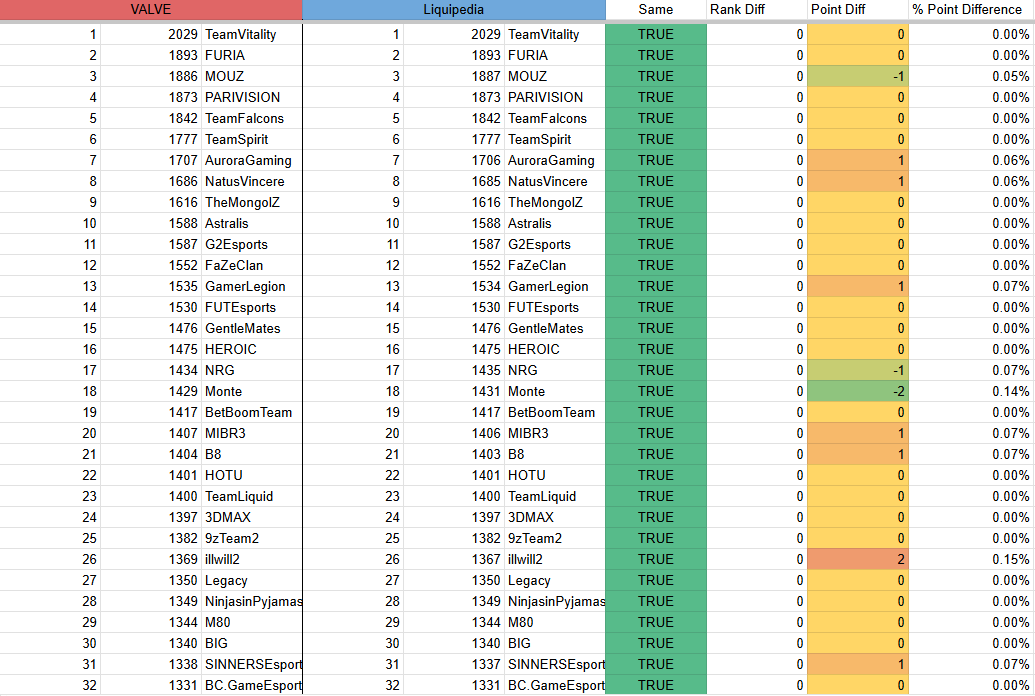
VRS is great because Valve provided an open-source model, but the model is pretty useless as theres no data to actually test it
I decided to change that and recreated the matchdata within 0.04% of Valves data. Repo link🔗in the comments
VRS should be open and accessible for all
6
13
327
30,236
Mar 1
HLTV's breakdown has two primary issues for calculating points(its still very very good from a fan perspective)
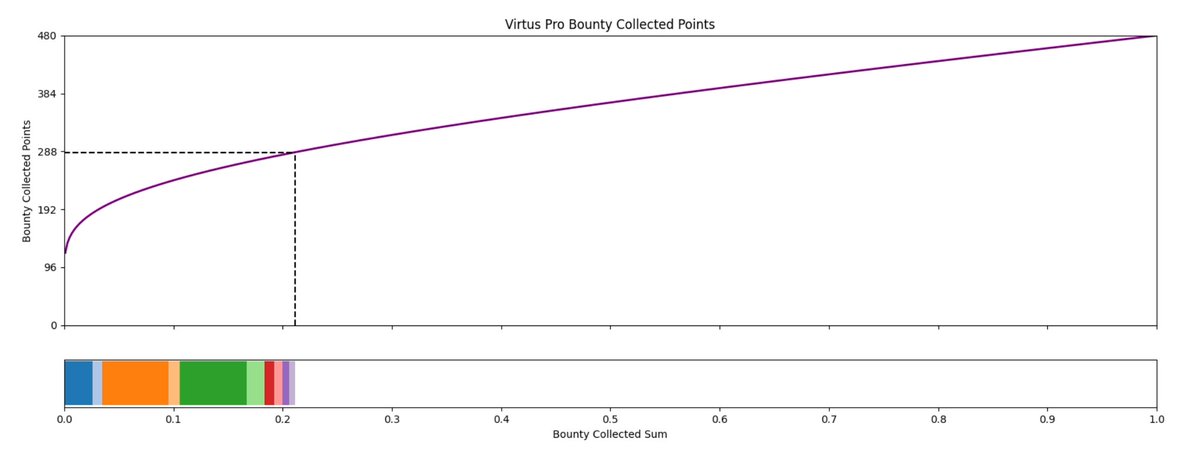
The first one is bounty where its portrayed as a linear function, with the most points being allocated to the highest weight. In reality, both BOFF and BCOL are using the curveFunction so its not a linear relationship. In most ways you look at it the first record in the snapshot (i.e the earliest) is your first bump and on the curve thatll award the most points. After that your returns are diminishing.
Below is shown VP's BCOL gain back in Oct 2025, where the orange and green bars will be what HLTV represents as the most points. In reality its actually the dark blue. There is no good way for HTLV to show this (particularly the issue of what is the actual start point) so I think they handle it correctly for 99% of use cases which is for fans, its just a bit confusing for teams.
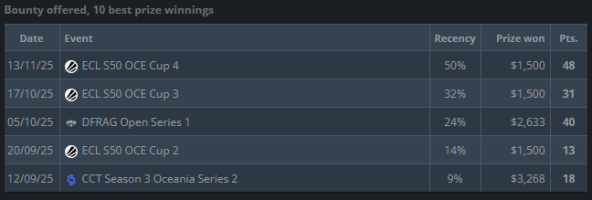
I had a fan raise to me recently SemperFi's breakdown by chance as shown below for BOFF, in which theyd assumed the minimum $3k you get at EPL would award >93 points. Unfortunately that isnt true due to the diminishing returns of the curveFunction as shown above. This is where some of the complexity and misconceptions of VRS occur.
The bigger issue, and its one absolutely HLTV cannot solve and cannot represent so again not their fault this is misrepresented, is the anchor.
Every single VRS match is connected, either through H2H or Phase 2 and Phase 3 calcs with udpating clamps / updating opponent offering. Some of the opponent offering can be calculated (BOFF) but ownNetwork is a key component of how much your opponent will be worth and it isnt represented in Valve's breakdown nor HLTV's. At BLAST Bounty for example, you cant work out half of what an opponents worth as there is no public display of ownNetwork.
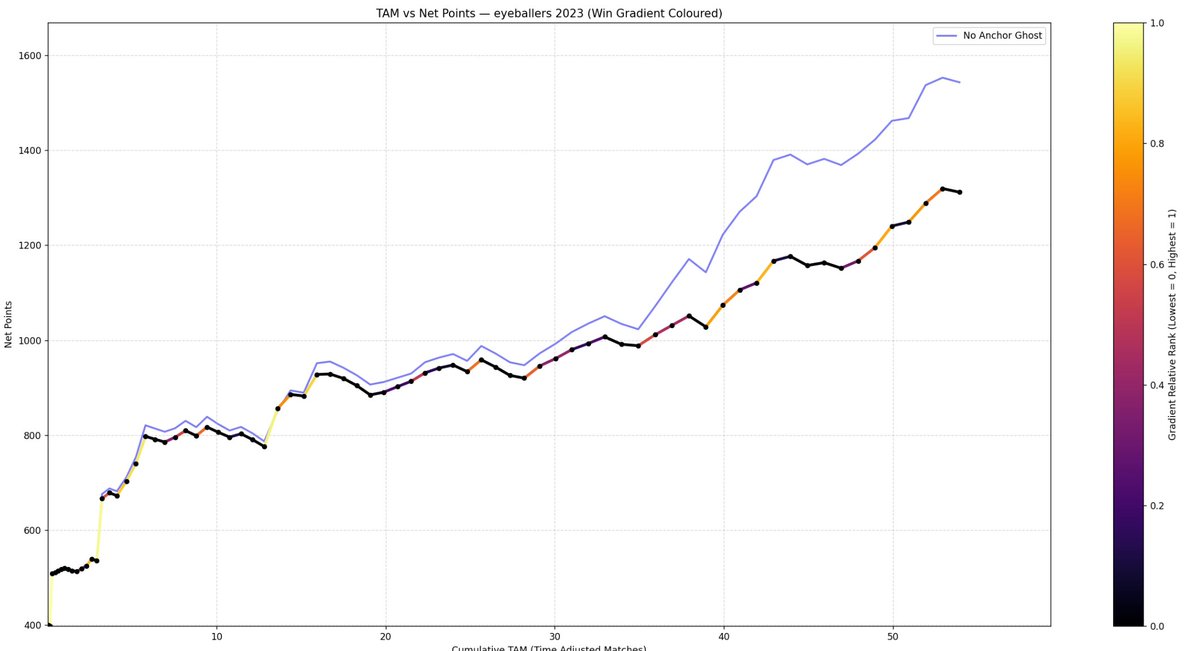
This anchor then is what restricts your growth and is entirely undisplayed. On paper a LANW should grant you 48 points, but this is not what occurs. The anchor reduces your gain.
Here is eyeballers from oct 2025 compared to their true gain and the ghost blue line if the anchor didnt exist
There isnt a way to solve this analytically due to the connection of every match unless you write an equation for hours to do an incredibly simple calculation. The only real solution is populating your own matchdata so you can run it through valves model to see the before and after, you can also inser tfuture matches with probability-based or predetermined results to calculate the outcome, this is how my major predictions have been working. This is the only real way to calculate actual point change and gain.
If you want to work out if two events are worth roughly more than the other for your context its a semi easy calculation ina google sheet when you account for your own situation. It can still get a bit more subsurface though where Liquid's optimal LAN for the major is very different to 100T's (chances are theyre at the same one anyway). For anything more complex though where youre trying to beat out other teams (i.e the major quals), if an event will actually get you over the line and just the whole picture in general, you need the matchdata.
4
316

Jan 22
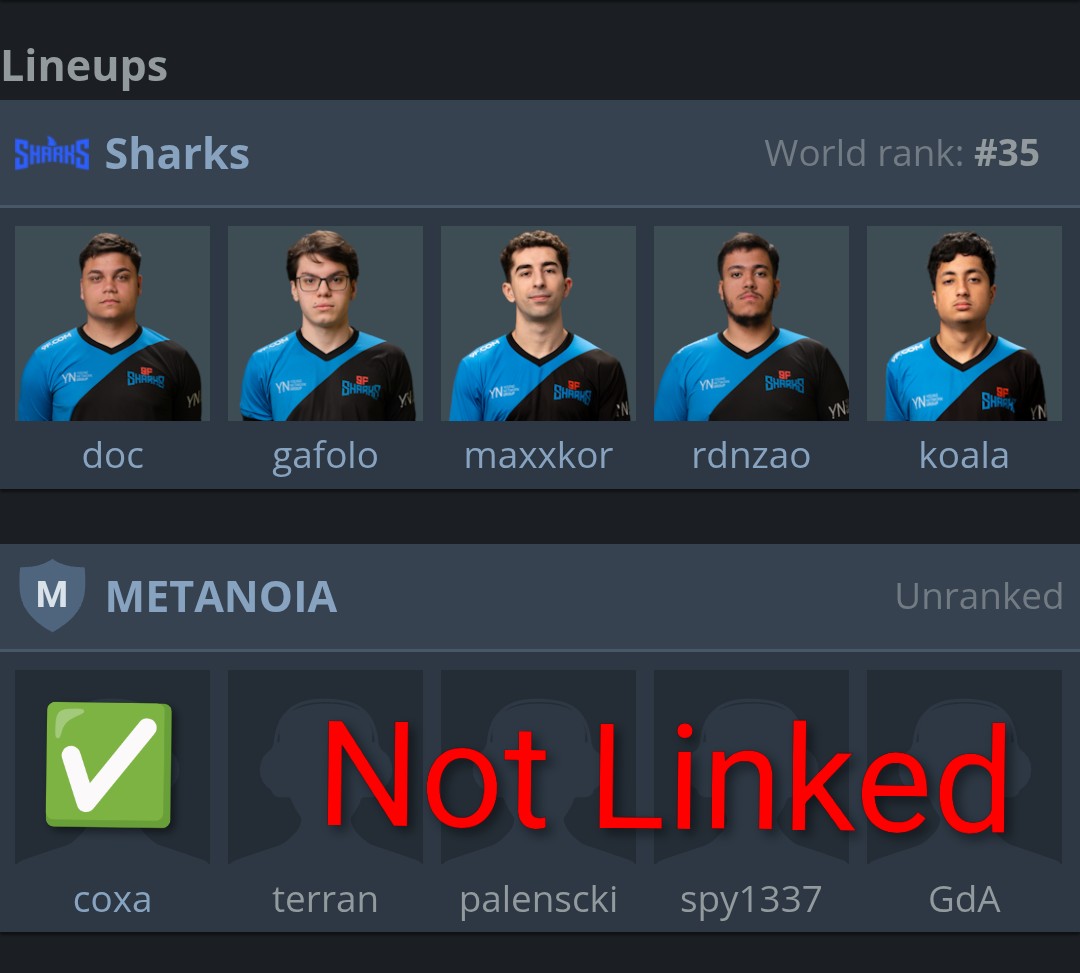
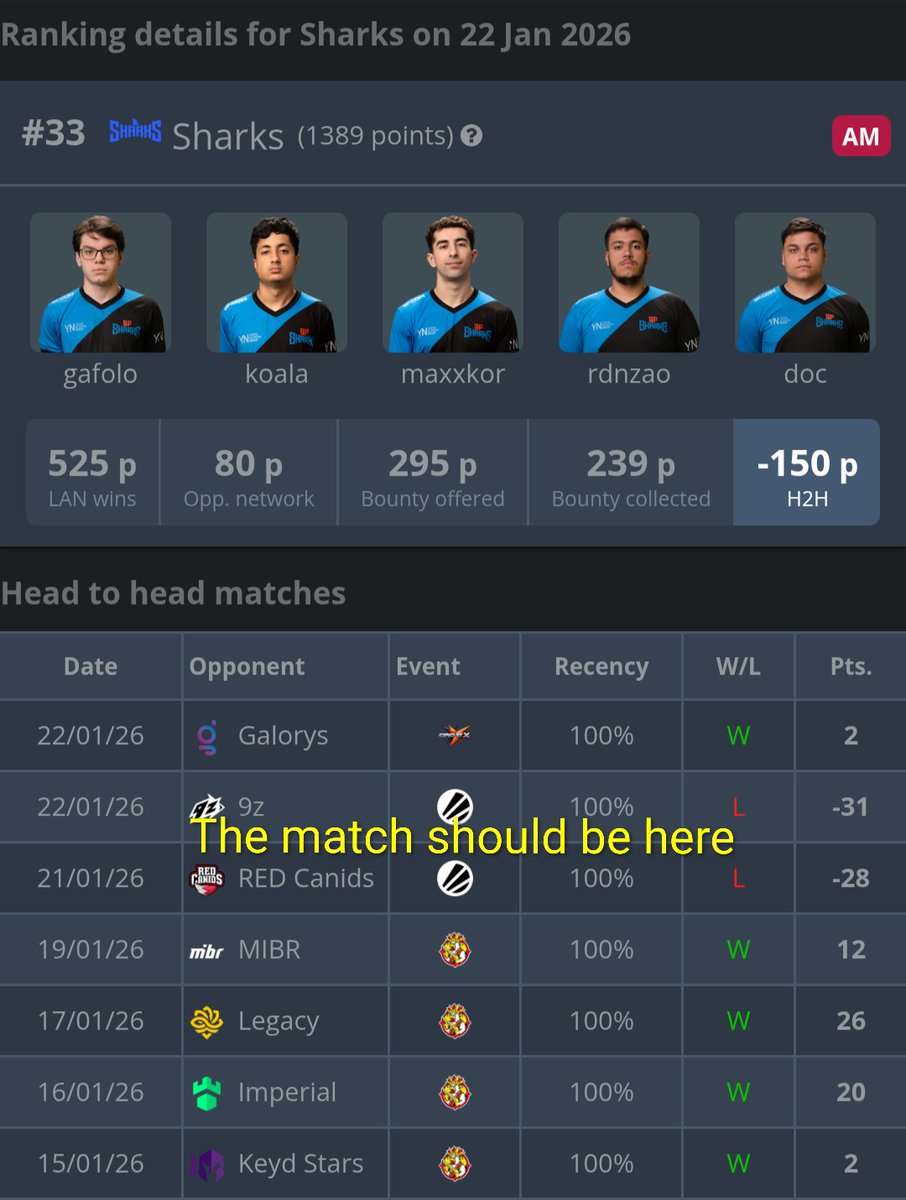
Hey @HLTVorg maybe there is a bug with this match hltv.org/matches/2389431/mat…
It isn't included in the VRS and may be treated as an Incomplete Match (<5 players), as maybe only one player is linked.
I hope matchdata is being served correctly to Valve and only affects this match.
1
2
26
12,631

Jan 6
Yes it counted.
In fact the last match of the event was the last match to be counted towards the ranking before cut-off.
I think it was released around 19 CET, but the way VRS works, it is the end timestamp of the last match to be within the matchData file which decides the decay of all other matches.
So technically the end timestamp of the 3rd place game in Riga became the cut-off this month.
6
795

15 Dec 2025
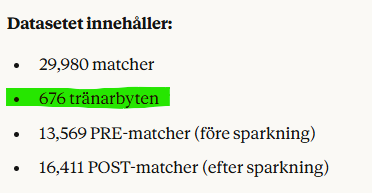
Om man synkar datasetet med matchdata från gamla 538.com med transfermarkts tärnarbyten för topp 5-herrligorna och respektive 2a-serie mellan 2017-22 när de slutade gjordes det 676 tränarbyten. Då är dessutom alla som var interim borttagna. Det har ändå något.
1
2
476
22 Sep 2025
I primarily use the LiquipediaDB API
liquipedia.net/api-terms-of-…
This allowed me to build the original matchdata set (through quite a painful process), and then you can create brackets with a parent match to the next match and so on for all future events.
1
2
1,595

5 Sep 2025
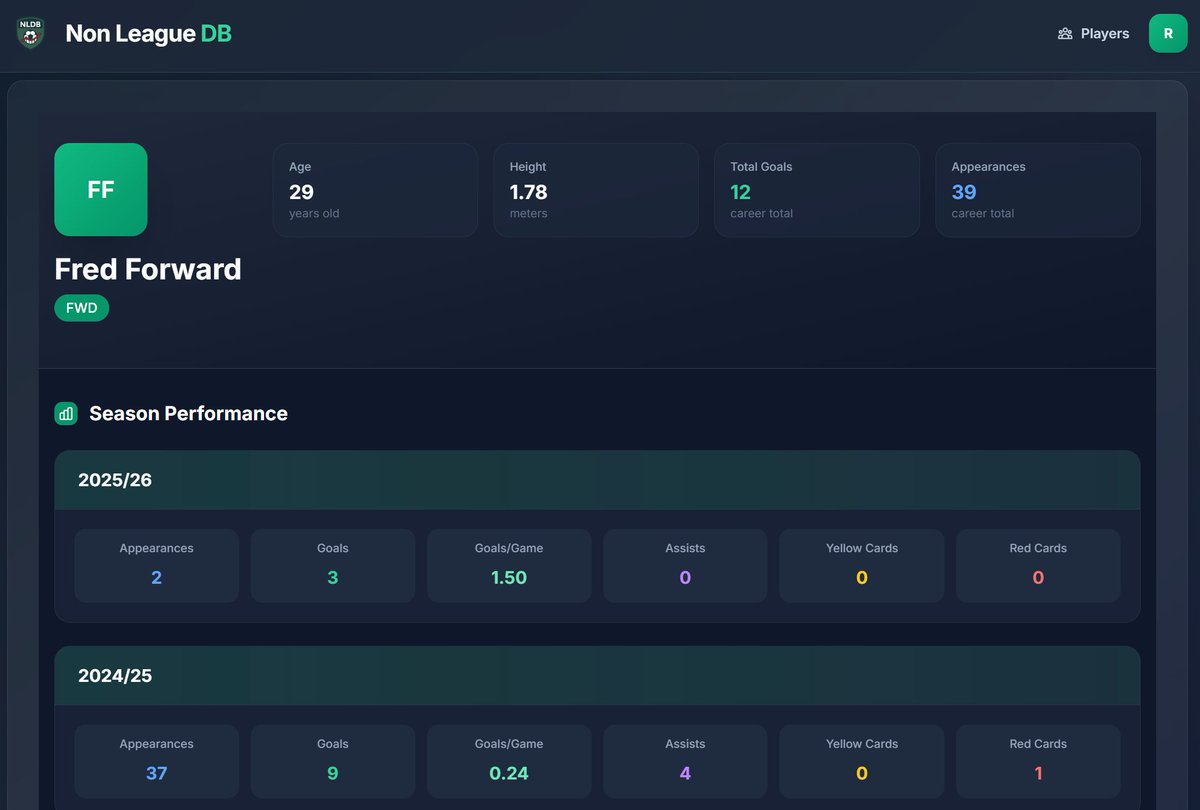
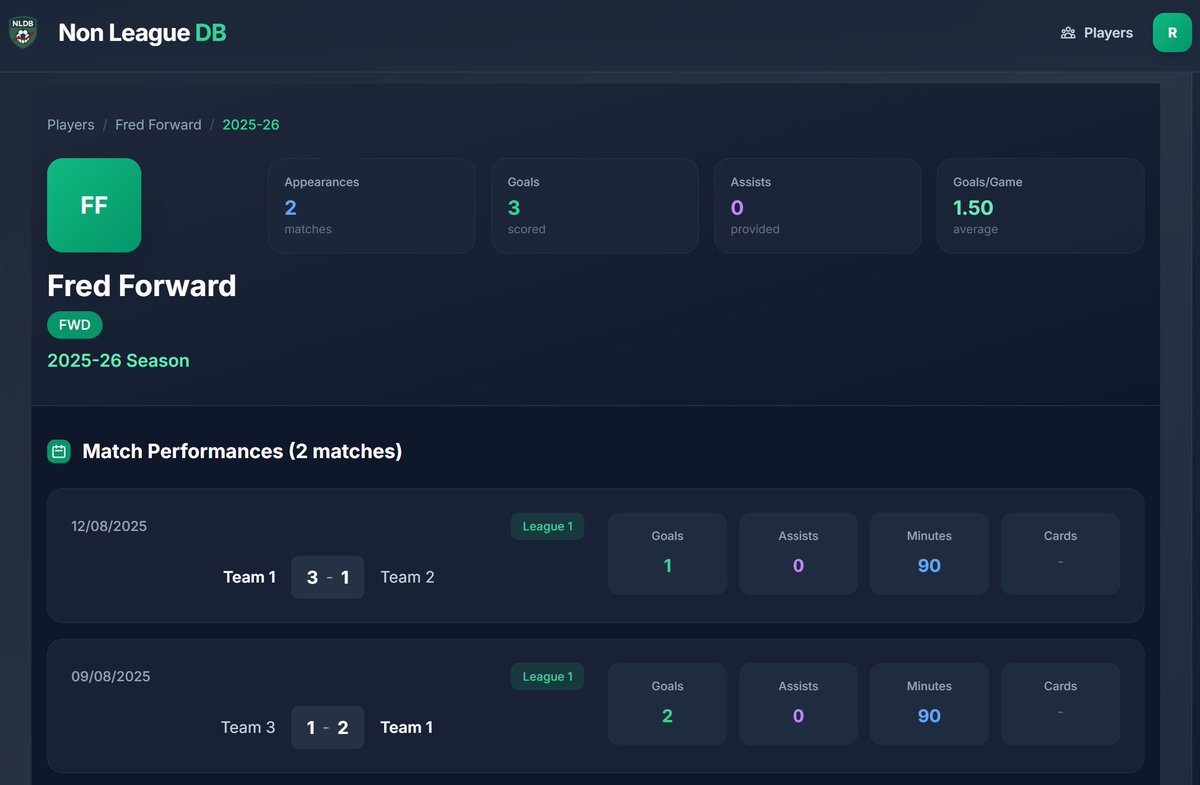
A sneak peek at the amazing work being done on player profiles and individual match data. Keep watching this space
nonleaguedb.com
#NonLeague #MatchData
2
4
849
20 Aug 2025
I run the original ranking.
Then for all relevant future events I create a pathing, then simulate all matches. Input this new data into the matchdata and run another ranking.
Run this 50,000 times at the total of 15,000,000 match combinations (120,000 sims in total)
Then calculate the observed rate a team finished in the top 16.
1
5
522
14 Aug 2025
VRS prediction tool has been updated to allow simulation of event & rankings time, as well as fixed to stakes and improving the logic of bracket progression. Also an extra week of matchdata
You will have to pull these updates to your local branch
4
658

29 Jul 2025
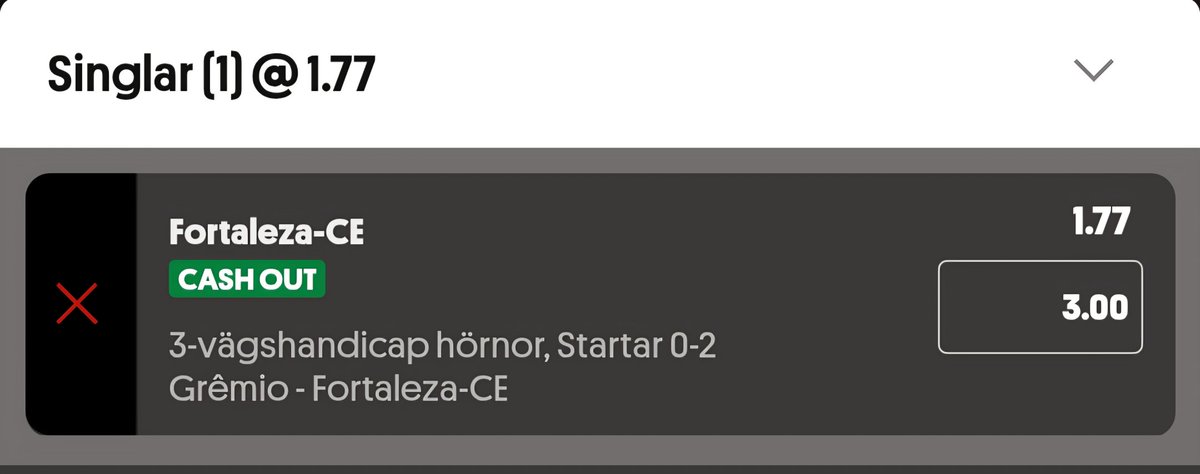
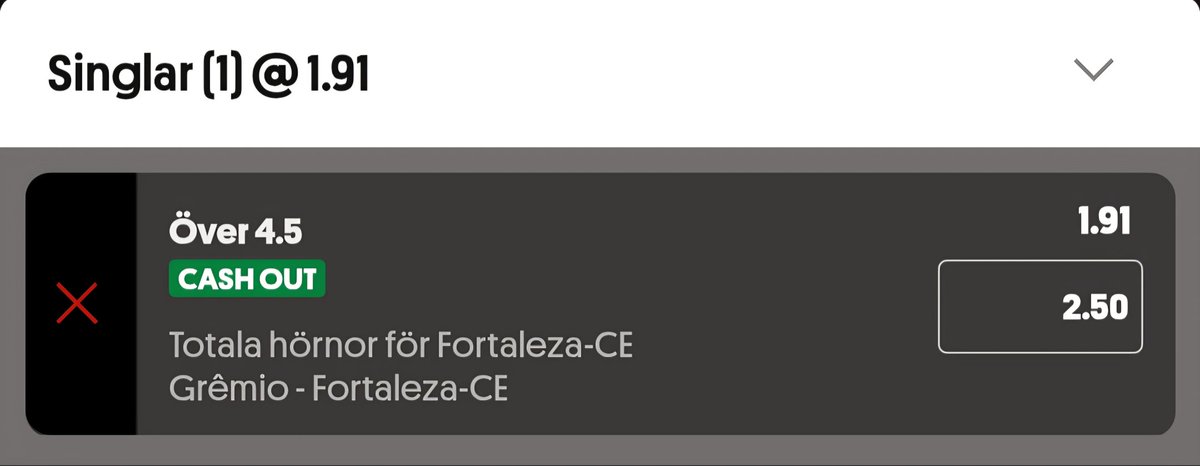
Serie A ⚽️🏆🇧🇷
Hörnspel ×2 (bild)
xU/10U i insatsruta
Alla Kambibolag ⚠️
Med stöd av underliggande siffror & analyserad matchdata plockas ett par smålir fram här.
1
5
947
21 Jul 2025
If its not a direct order from Valve towards HLTV that play-ins must be weighted as having zero prize pool, rather than their actual prize pool, then HLTV could indeed just report the actual prize pool for an event in the matchData to Valve and "fix" this issue.
(If there is a consensus this is wrong)
Technically speaking, HLTV has the power as they provide the data to Valve.
Legally and financially could be another matter 😉
Some kind of agreement probably exists between the 2 🤔
But like I wrote, you get the feeling that Valve doesnt care much about VRS as long as it produces some kind of ranking.
There is some mysterious person at Valve pushing the button to create another invite ranking each month though.. maybe that person has an opinion or maybe its just someone completely uninterested in CS that has that task each month..
2
3
934

16 Mar 2025
正規表現の記述は
str = "りんごを食べる"
str.sub(/りんご/,"みかん")
str = "みかんを食べる"
みかんに置き換えることができます。
str = "りんご、みかん"
str.match(/りんご/)
この場合、MatchDataが返されます。
#テックキャンプ #プログラミング学習 #未経験エンジニア
2
455

30 Sep 2024
✨ #RubyMine 2024.3 EAP 3 Is Out!
🔸Proc and MatchData debugger inspections are shown correctly
🔸Correct incompatible nilability reports
🔸Inlay hints with a color preview for Tailwind CSS
🔸File names and paths to the Resolve merge conflict dialog
Learn: jb.gg/wjwm85

4
490

12 Apr 2024
BK Häcken fortsätter att använda GPS-trackingsystemet STATSport 🐝
Under fjolåret bytte BK Häcken till STATSport, där såväl dam- som herrlaget kunnat analysera tränings- och matchdata på ett effektivt sätt.
📺 Se hela inslaget med fystränare Joel Dahlberg ⤵️
#bkhäcken
6
892


12 Jan 2024
Not an array but a MatchData object; and since Ruby 3.2 MatchData can be deconstructed via `in`
2
209

1 Nov 2023
#Data for #Match2024 Applicants!
✨ Like, Share & Save.
✅ TheMatchGuy.com
#residencymatch #matchapplication #residencymatchstatistics #matchdata #residencymatchdata #eras #img #medicine #medicalschool #medstudent #usmle #usa
1
8
2,555