
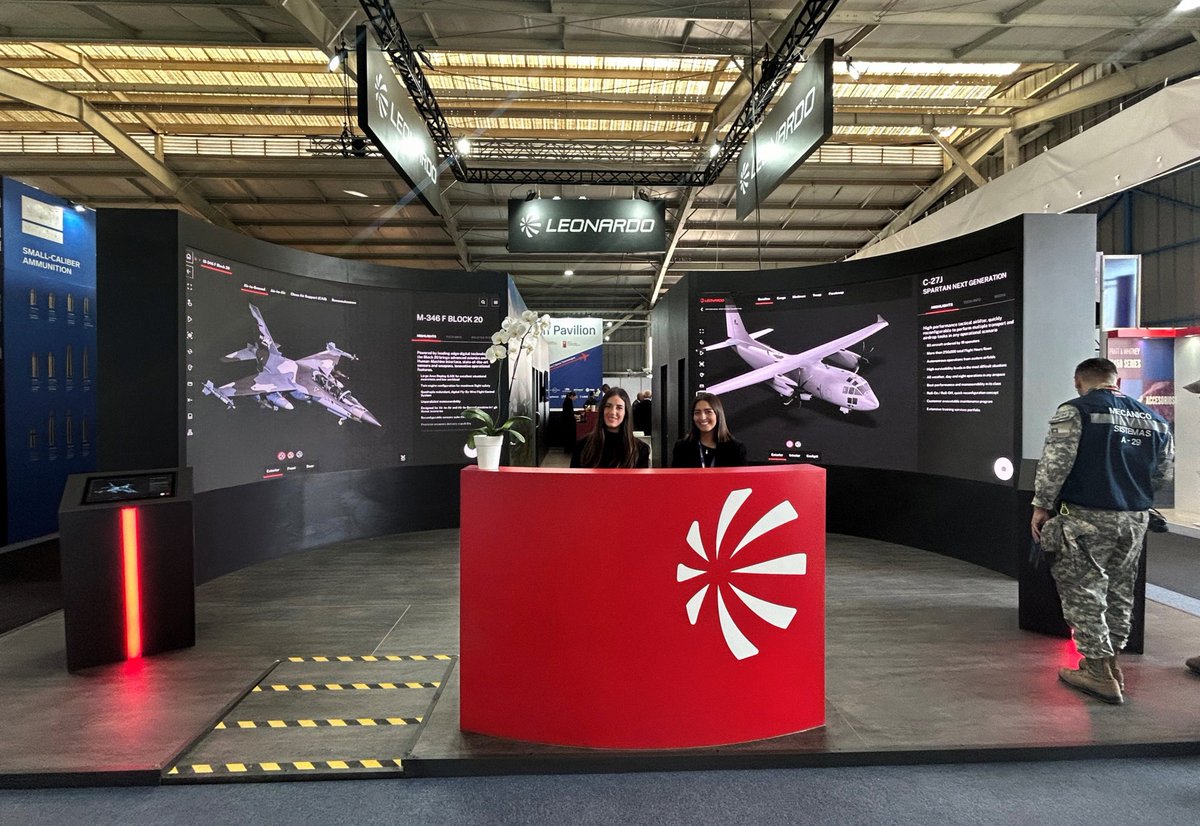
We are taking part in @FIDAE_OFICIAL, one of key aerospace and defence exhibition in Latin America.
Experience our products’ portfolio as never seen before at our Stand B133, Hall B in #Santiago, #Chile. Through our immersive digital display, you can take a fully interactive virtual tour of accurate 3D modelsof our multi-mission airlifters, world-class trainers, combat aircraft and uncrewed aerial solutions, exploring highlights, technical details and cockpit features moving around as if you were standing in front of the real aircraft. #FIDAE2026
11
39
2,980

Mar 2
BREAKING $AMD $GSMA @ATT @tensorwave ✅
GSMA launches Open Telco AI to accelerate development of telco‑grade AI
BARCELONA, March 2, 2026 /PRNewswire/ -- GSMA today launched Open Telco AI, a global industry initiative designed to accelerate telco-grade AI through open collaboration across operators, vendors, AI developers and academic institutions. The launch introduces a new portal for telco open models, data, compute and tools to accelerate the development and evaluation of telco-focused AI models, accessed via GSMA.com/open-telco-ai.
While frontier AI models have advanced rapidly, they continue to underperform on telecom specific tasks. Many general-purpose models struggle to interpret network data, understand standards documentation, or automate network operations with sufficient accuracy. This performance gap limits progress: only 16% of telecoms GenAI deployments1 have been applied to network operations.
Open Telco AI meets this challenge by uniting industry and academic partners to build the foundations of telco‑grade AI models, data, compute, benchmarks and community. Progress is tracked through the Telco Capability Index, which measures model performance across an expanding set of telecom‑specific tasks.
As founding supporters of Open Telco AI, AT&T and AMD are making significant contributions. AT&T is releasing a family of open telco-models developed and trained on open, publicly available data to be hardware and cloud‑agnostic, demonstrating that AI can deliver value across projects of any size and with varying levels of compute resources. AMD is providing compute capacity for model training, fine‑tuning, inference and evaluation through its GPU platforms, cloud partner TensorWave and open toolchains.
The initiative is also supported by community programmes that bring together developers, researchers and operators to solve real-world telecom‑AI problems. This includes competitions such as the AI Telco Troubleshooting Challenge which attracted over 1,000 registrations and will announce its winners at MWC26 Barcelona.
Louis Powell, Director of AI Initiatives, GSMA, said: "Today's AI models still fall short of the complexity, precision and reliability the telecom industry demands. Put simply, AI does not yet speak telco and operators are often deploying technology that cannot meet the required levels of accuracy, safety or efficiency. Establishing clear benchmarks and collaborating across the industry on datasets, models and agentic systems is essential. Open Telco AI provides a shared foundation designed to close this gap, an approach that other regulated sectors such as finance and healthcare can follow."
"Telco networks are among the most demanding and regulated environments for AI and moving from promising demos to telco-grade performance requires an open foundation for data, workloads and compute," said Philip Guido, executive vice president and chief commercial officer, AMD. "Through Open Telco AI, with GSMA and AT&T, AMD delivers the enterprise and AI compute needed to train, fine-tune and run open, telco-grade models efficiently from core to edge."
Andy Markus, Chief Data and AI Officer at AT&T, said: "The telecom industry needs AI that understands the realities of networks – not only generic models repurposed for telco tasks. Through Open Telco AI, AT&T is helping build the datasets, models and evaluation frameworks that make telco‑grade AI possible at scale. By contributing our expertise and shaping realistic test environments, we're demonstrating how generative and agentic AI can improve customer experience, reduce operational friction and ultimately create new value. This collaboration with GSMA is accelerating the industry's path toward intelligent, automated networks."
Building the Open Foundations of Telco-Grade AI
The new portal will support the co‑creation of the essential building blocks for telco‑grade AI, including:
~Telco Models: High performance open weight models designed for telecom tasks, from network troubleshooting to standards interpretation, including modelsof multiple sizes and architectures from AT&T, a radio-frequency language model from Khalifa University called RFGPT and a Large Telco Model (LTM) from AdaptKey AI built on NVIDIA Nemotron.
~Open Data: A library of knowledge graphs, embeddings, and fine-tuning datasets of text, logs, and curated standards material from GSMA, Huawei Technologies France, Khalifa University, Mantis NLP, NetoAI, Pleias, Purdue University, The University of Texas at Dallas, University of Leeds and Yale University, and pipelines for generating synthetic data from NVIDIA.
~Compute: Access to compute and open toolchain for projects training and inferencing open models via AMD and TensorWave.
~Benchmarks: A leaderboard assessing model performance on seven telecom‑specific benchmarks, along with tools for evaluating and submitting models from local environments.
~Community: Resources, challenges and engagement activities to encourage collaboration, including the AI Telco Troubleshooting Challenge and Agentic Challenge.
The Open Telco AI initiative is supported by a host of valued contributing partners that have submitted data, models, and use cases including AMD, AT&T, Datumo, Huawei Technologies France, King Abdullah University of Science and Technology, KDDI, Khalifa University, KPN, LGU , Mantis NLP, NetoAI, North Carolina State University, NVIDIA Orange, Ooredoo, Pleias, Purdue University, RelationalAI, SK Telecom, Softbank, Swisscom, TensorWave, Turkcell, University of Leeds, University of Texas at Dallas, and Yale University. Open Telco AI also has the support of valued participants partners including Adaptive ML, BMC, China Telecom, China Unicom, China Mobile, Deutsche Telekom, DU, e& UAE, Google Cloud, IBM, Liberty Global, Queens University, Telefónica and Vodafone.
Feb 28

$AMD $5 Trillion is Inevitable LT| Agentic AI🧵
Agentic AI is the new $5 Trillion TAM 🚨🚨🚨
This thead will do Comp with $INTC and how to quantify this massive Agentic AI demand spike, and forcing Jensen to rush a CPU design. Global Agentic AI Market size is estimated to be $3-$5Trillion TAM by 2030(McKinsey)
Quantifying the demand from agentic AI for AMD involves assessing the broader market growth for agentic systems, their unique computational requirements (particularly for CPUs in orchestration and reasoning tasks), and AMD's positioning very well through products like EPYC processors and partnerships. AMD EPYC Venice is the most superior choice in 2026-2027 for most Agentic AI workloads
Agentic AI refers to autonomous AI agents that perform multi-step tasks, involving sequential logic, tool integration, and decision-making workloads that heavily rely on CPUs for handling orchestration, memory management, and context switching, rather than just GPU-parallelized training or batch inference. Agentic AI is often cited as 40-100x more "hungry" than traditional AI due to its continuous, 24/7 operation and complex workflows. This stems from factors like chain-of-thought reasoning (multiple LLM calls per query), API/tool interactions, memory management, and orchestration loops, which can generate 10-100x more tokens and require real-time responsiveness.
For example, a single agentic query might trigger 5-20 model inferences, making it 10-20x more compute-intensive than simple chatbots, and the always-on nature compounds this to 40-100x overall. Nvidia's CEO has highlighted this as driving "easily 100x more computation" for inference in agentic/reasoning setups.
AMD's EPYC Venice (6th Gen EPYC, codenamed "Venice") and Intel's Xeon 7 Diamond Rapids represent the pinnacle of server CPU technology in 2026, both targeting high-performance data center workloads like AI inference, agentic AI orchestration, cloud computing, and HPC. Venice builds on AMD's Zen 6 architecture, emphasizing core density and efficiency, while Diamond Rapids leverages Intel's Panther Cove P-cores for balanced performance. Both chips adopt similar advancements like 16-channel DDR5 memory and PCIe Gen 6, but differ in core counts, process nodes, and overall design philosophy.
Intel has faced acute supply constraints across its Xeon lineup, including legacy nodes (Intel 7/3) and the ramping 18A process for next-gen parts. Intel shortage is expected with lead times up to 6 months or longer.
1. AMD EPYC Venice vs Intel Xeon 7 Diamond Rapids
Architecture
AMD: Zen 6 chiplet design with 8 CCDs and dual IODs
Intel: Panther Cove P-cores; multi-die architecture with 4 compute tiles
Core/Thread Count
AMD: Up to 256 cores / 512 threads (Zen 6c variant)
Intel: Up to 192 cores / 192 threads
Process Node
AMD: TSMC N2 (2nm)
Intel: Intel 18A (1.8nm-class); in-house fab
Memory Support
AMD: 16-channel DDR5; up to 1.6 TB/s bandwidth.
Intel: 16-channel DDR5 ; up to 1.6 TB/s bandwidth
I/O and Connectivity
AMD: PCIe Gen 6 (up to 128 lanes); twice the CPU-to-GPU bandwidth
Intel: PCIe Gen 6 (up to 128 lanes); LGA 9324 socket
Power (TDP)
AMD: Starting 400-500W, potentially lower due to efficiency gains from TSMC 2nm
Intel: Starting 400-500W, as it targets competitive efficiency
Performance Projections
AMD: Up to 70% uplift vs. 5th Gen Turin (1.7x in multi-threaded/AI tasks)
Intel: ~40% faster than Granite Rapids (Xeon 6, 128-core). Lags AMD in per-core perf and 40-50% behind Venice core-for-core comp
Target Workloads
AMD: AI inference/orchestration, HPC, cloud virtualization. Partnerships
Intel: Hyperscale AI, general enterprise. Custom silicon
Pricing:
AMD: estimated $10k-$20k for top SKUs
Intel: estimated $8-$18k
Availability:
AMD: Significant Ramp H2 2026 due to higher allocation from TSMC
Intel: H1-H2 2026 delayed, but trying to catch up
Overall:
~Venice's 256 cores provide a 33% edge over Diamond Rapids' 192, making it superior for massively parallel tasks like AI training/inference or virtualization
~TSMC's N2 vs. Intel 18A debates rage on which is "better," but AMD's mature chiplet approach yields better density ( 32 cores/CCD vs. Intel's 48/tile). Venice's redesign reduces latency, aiding agentic AI where CPUs handle orchestration
~ Early projections show Venice widening AMD's lead matching or exceeding Diamond Rapids' perf with fewer watts in multi-threaded benchmarks. Intel's no-SMT design (to prioritize AI) handicaps it vs. AMD's 512 threads, though Clearwater Forest (E-core) could compete in density-focused niches.
~Power & Cooling: Both push above 400-500W, demanding liquid cooling.
~AMD been taking market share now above 40%.
AMD EPYC Venice emerges as the superior choice in 2026 for most server workloads. Its higher core/thread count (256/512 vs. 192/192), stronger per-core performance, and architecture optimized for AI-driven tasks (agentic orchestration with GPU integration) provide decisive advantages in throughput, scalability, and efficiency. Projections indicate Venice delivering 1.7x the performance of prior gens while widening the gap over Intel ( 40-70% leads in multi-threaded benchmarks). AMD's fabless model with TSMC ensures reliable scaling, and its ecosystem ( open ROCm) appeals to AI adopters.
Intel's Diamond Rapids is competitive in single-threaded enterprise apps and custom hyperscale ( NVLink), with potential fab advantages for supply/security. However, without SMT and lower density, it falls short in core-for-core battles—exposing Intel to another generation of AMD dominance unless 18A yields surprise efficiency gains. For data centers prioritizing raw compute ( AI, HPC), Venice wins; for Intel-centric ecosystems or specialized I/O, Diamond Rapids holds ground. Real benchmarks post-launch will confirm, but logic points to AMD pulling ahead.
2. Market size , Potential Revenue and Supply
Global Agentic AI market size is projected to be $3-$5 Trillion by 2030 according to McKinsey, where consensus points to 40-50% CAGR driven by small to large enterprise demand. I also wrote a full thread on how and why Agentic AI is so explosive that AMD will blow all anlaysts estimate for subscribers. Link below if you are interested.
AMD's data center segment hit a record $5.4B in Q4 2025 (up 39% YoY), with EPYC shipments ramping due to agentic demand. With 2GW of deployment in H2 2026, AMD AI data center revenue has $40-$50B at the lowest or most conservative projection; or Total Revenue in the $77-$94B For FY2026.
However, Agentic AI massive demand spike could send EPYC revenue 3x to 4x in the next few years, potentially surpassing MI series GPU demand as enterprises prioritize CPU-dense Rack setups. This is pushing $NVDA Jensen to rush a CPU design and acquired Groq, a new CPU player due to this massive TAM. Noted that this is just popping just in weeks, highlighting we are just so early in this AI Supercycle and the pace of adoption is insane, and clearly productivity will skyrocket.
Why? Because Agentic AI is 24/7 Smart AI agent working for you or your businesses is a mad compelling, and it is estimated to be 40-100x more Inference Hugnry! Many experts already said it is impossible to project this kind of Inference Demand.
AI CapEx is expected to ramp up even more in 2027-2028-2029 and 2030 as Global Agentic AI is going to scale to $3-$5 Trillion TAM by 2030. The nature of Agentic is driving higher CPU/GPU ratio, with CPUs handling 50-90% of Agentic workflows.
For example, The current Helios Rack: 18 compute trays per rack with 72 GPUs 18 CPUs. The beauty of this $META and $AMD long term partnership is, that it is absolutely flexible to adjust racks to higher CPU rato or equal to service different needs. Helios rack can be easily swap to 2 GPUs 2CPUs or even CPUs only trays for dedicated orchestration/head nodes. You see, the beauty of this open rack-scale is flexibility and evolvability. If Agentic AI demand pushes much higher, AMD should be able to adjust variant trays without abandoning Heilos Rack.
We can't talk just about massive Agentic AI demand without talking about the Supply side or TSMC. TSMC, AMD's primary foundry for advanced nodes ( Zen 6/Venice on N2/2nm), is addressing AI-driven shortages through massive expansions.
TSMC accelerates fab construction with up to 10 facilities targeted for 2026. TSMC is accelerating its domestic manufacturing expansion, with industry sources indicating that as many as ten fabs could be under construction or preparing to begin operations across Taiwan’s major science parks.
TSMC Capex: $52-56B in 2026 (up 37% YoY), with $45B already approved for new/upgraded capacities. 70-80% for advanced processes (2nm/A16), 10-20% for packaging (CoWoS quadrupling to 120-140K wafers/month by late 2026).
In addition, Taiwanese companies (led by TSMC) commit to at least $250B in direct investments in US-based advanced semiconductor, AI, and energy production/innovation capacity.Taiwan provides $250B in government credit guarantees to facilitate additional investments and build a full US semiconductor ecosystem (including industrial parks). TSMC completed a second land purchase in Arizona (January 2026) for gigafab scaling, with an additional $100B (potentially four more modules) to further expand and qualify for tariff exemptions.
@AMD with secured 12GW from @OpenAI and $META and massive Agentic AI will mean higher priority acess to 20-30% more wafers on TSMC advanced nodes, as TSMC has multi-year agreements with AMD for AI chips. Dr. C. C. Wei, CEO of TSMC quote:
"I spend a lot of time in the last three or four months talking to my customer and then customers. Customer. I want to make sure that my customers demand are real. I talk to those cloud service providers, all of them. Their answer is. I'm quite satisfied with their answer. Actually they show me the evidence that the AI really help their business. So they grow their business successfully and he or she in their financial return. So I also double check their financial status. They are very rich."
Amid shortages, the US buildout ensures AMD can ramp production of Instinct GPUs and EPYC CPUs without the constraints hitting competitors like Intel. By diversifying away from Taiwan (85% of advanced nodes today), the agreement mitigates supply disruptions, ensuring stable flows for AMD's chips.
Scaling production and securing supply will matter for AMD the most in the next 5-10 years growth. The growth could be 80-100% YoY or higher; or it could be in the 60%. The aggressive TSMC supply ramp is reassuring the higher growth point.
Conclusion:
AMD stands at a pivotal inflection point in 2026, where the explosive rise of agentic AI demanding 40-100x more inference compute through its 24/7, multi-step orchestration positions the company to potentially triple its EPYC CPU revenue to $45-60B by 2028 while scaling Instinct GPUs to tens of billions annually by 2027. Agentic AI demand could push AI CapEx closer to $1 Trillion in 2027, far higher than most estimates.
Dr. @LisaSu, AMD's visionary CEO, is masterfully securing supply to harness this massive demand by prioritizing operational execution and deep TSMC collaboration, ensuring readiness for the second-half 2026 AI ramp. Dr. Su has explicitly called out surging EPYC demand for agentic tasks where CPUs power head nodes and traditional workloads alongside GPUs while guiding for data center dominance through proactive capacity planning and partnerships like Nutanix ($150M investment for open agentic platforms) or providing tens of millions CPUs for @OpenAI, $META, $ORCL, $AMZN, $MSFT, $GOOGL and others.
Her strategy includes multi-year TSMC agreements for advanced nodes (N2 for Venice CPUs and future Instincts), diversifying beyond Taiwan to mitigate risks, and unveiling innovations like the MI455X GPU at CES 2026, which she touted as enabling "the next trillion-dollar market opportunity" in physical AI. Dr. Su's forward-looking vision predicting AI reaching 5 billion users emphasizes "AI everywhere," backed by hardware like Ryzen AI chips, all while declaring demand "going through the roof" and committing to scale without bottlenecks.
TSMC's aggressive ramp-up, fueled by $52-56B in 2026 capex (up 37% YoY) and 10 new fabs across Taiwan, the US (Arizona cluster expanding to 6 modules with $165B investment), Japan, and Europe, provides profound reassurance for AMD's supply stability. The January 2026 US-Taiwan agreement committing $250B in investments and credit guarantees for US reshoring accelerates this, granting tariff relief (15% rates with 1.5-2.5x exemptions) tied to capacity buildouts, enabling TSMC to potentially double output over the decade to meet AI wafer hunger.
This translates to 20-30% higher wafer allocations on key nodes, sidestepping Intel-like shortages and empowering Dr. Su's team to deliver on hyperscaler demands without disruption. Ultimately, this synergy cements AMD's leadership in the agentic era, promising sustained growth, $5T valuations at scale, and a resilient path forward as AI reshapes the world.
This is NOT Financial Advice!
Video source: AMD CES 2026
2
1
22
3,020

Feb 24
A few more close ups I rendered last night. Will work on some renders for the other modelsof the set from now on




3
7
163
3,649



New set on my OF 2 new video clips! /peachritual
🍑
Onlyfans.com/peachritual
#onlyfans #camgirlِ #modelsOF

7
7
529

Jan 7
a cosy day, only missing you 😘
linktr.ee/emilynovafv
#FanvueExclusive #onlyfans #modelsOF #modelling #leggingslove #fypシ #CozyVibes #relaxing

ALT fanvue.com/emilynova
4
2
62



30 Oct 2025
BrainPowa LLM Thread
4/10. Indicted Innovations
Brainpowa, based on a white paper cited publicly by the company, presents a patented validation system (patent id was in a different post of mine).
This validation system as presented eliminates the issue of hallucination that is present in many large (general) LLMs in the market today.
Also cited are performance advancements using ~5000 retail prompts that deliver modelsof human evaluations.These focus on accuracy, model drift, and active fine tuning. ROUGE metrics seem to be available, and the model also permits for out-of-domain generalizations (I'm thinking non-product associations on a product inquiry)/
Support for over 95 languages are cited, all of which are implemented all the way to instant checkout
The eco-system that appears to be dominantly stressed is cross-sales activity with Microsoft which implements BrainPowa on its Azure world-wide platform. Details on Google were not immediately available for review, perhaps behind their client login page.
Additional notes:
- PatrickStar would enable memory offloading (requiring fewer GPUs)
- Since the BPE is retail-specific, I would expect better product recall capability
- With DPO and RLHF, data convergence would improve
- I can't find another retail specific provider that has such a validation loop for factuality
“We replaced PPO with DPO as our final alignment engine because it delivers superior retail outcomes in a fraction of the time. Combined with our patented validation system, DPO ensures Brainpowa doesn’t just sound helpful — it drives revenue with zero errors.”
— Rezolve AI ML Team, “Scaling Alignment at 30B”, Mar 2025
“DPO is a paradigm shift — we get PPO-quality alignment in 1/5th the time. For Brainpowa, it’s the difference between monthly and daily updates.”
— Rezolve AI, 2025
“We’ve fully replaced PPO with DPO in production for models under 100B.”
— Meta AI (Llama-3), 2024
2
99

7 Aug 2025

4
5
166
5,517

28 Jul 2025



2
19
4,681

Special stream with @JessyAdore just today on @stripchat
Come and play with us
stripchat.com/JessyAdore/fol…
#couplevibes #ModelsOF

1
2
21
1,363

29 Jan 2025
uesterday i Dreamt that therewas a bandori x yttd collab andthere were gonna be cards of umiri wjth kai andthere was gonna be live2d modelsof him and he would be talking tothe characters and igot Really emotional when i woke upbecayse it Wasnt real
2
3
208

3 Sep 2024
Introducing the panelists:
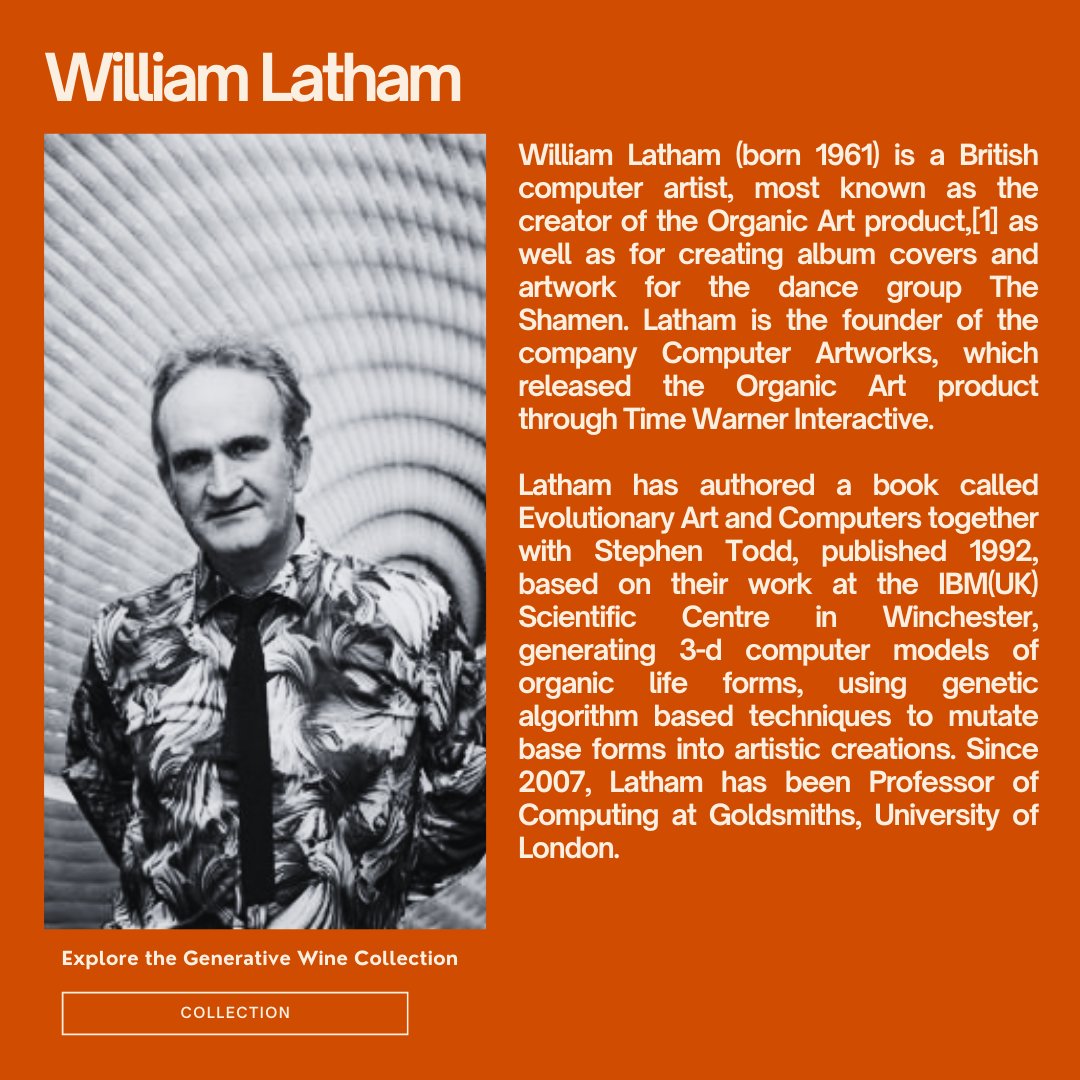
@WilliamLatham1 (born 1961) is a British computer artist, most known as the creator of the Organic Art product,[1]as well as for creating album covers and artwork for the dance group The Shamen. Latham is the founder of the company Computer Artworks, which released the Organic Art product through Time Warner Interactive.
Latham has authored a book called Evolutionary Art and Computers together with Stephen Todd, published 1992, based on their work at the IBM(UK) Scientific Centre in Winchester, generating 3-d computer modelsof organic life forms, using genetic algorithm based techniques to mutate base forms into artistic creations. Since 2007, Latham has been Professor of Computing at Goldsmiths, University of London.
He created a beautiful image for the #POAP which only the IRL attendees of the @digitalartday at @carmenthyseen are eligible for 🔥
More details digitalartday.xyz @digitalartday

2
4
94

31 Aug 2024
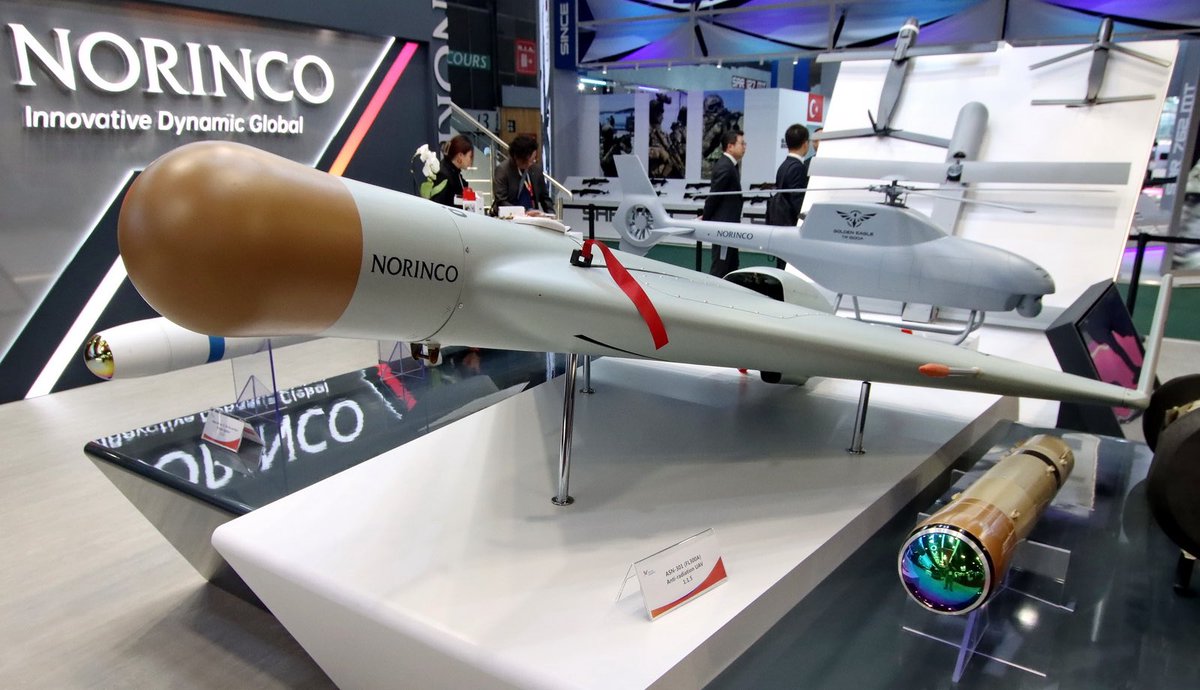
What is with the #Kargi Drones ? #Egypt is inducting #Kamikaze #Drones they learned the Lessons from #Ukraine. #Turkey Was just showing Modelsof #Kargi by former #Ephes Exercises ! They need to be in TAF Invertory !
7 Aug 2024

Yes Egypt is getting & making many of China’s drones & loitering munitions like the ASN-301 anti-radiation drone which is based on the Israeli Harpy & this drone also is very similar to Iranian Shahed-136. Egypt watched the Ukraine war very carefully they always mention it….
3
308

31 May 2024
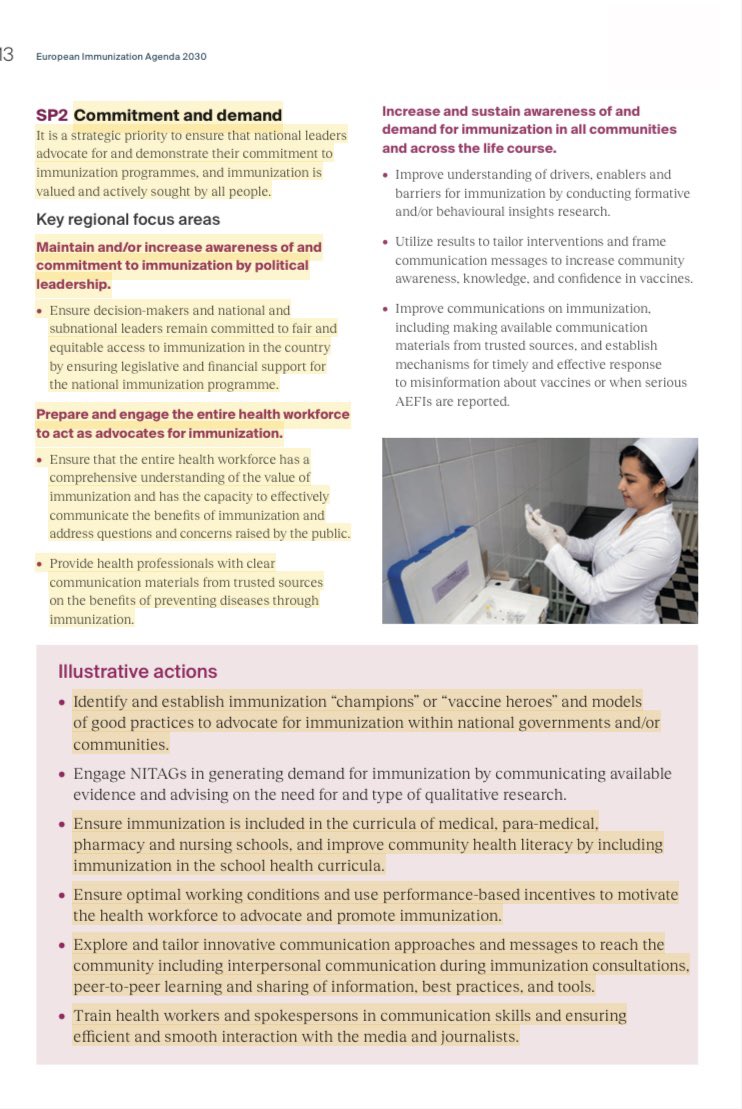
‼️In Puglia l’Agenda di Immunizzazione 2030 dell’OMS applicata con particolare autoritarismo. Domanda: chi riceve quali favori da chi?‼️
L’Agenda di Immunizzazione 2030 dell’OMS recita testualmente come segue:
“Maintain and/or increase awareness of and commitment to immunization by political leadership.
• Ensure decision-makers and national and subnational leaders remain committed to fair and equitable access to immunization in the country by ensuring legislative and financial support for the national immunization programme.
Prepare and engage the entire health workforce to act as advocates for immunization.
• Ensure that the entire health workforce has a comprehensive understanding of the value of immunization and has the capacity to effectively communicate the benefits of immunization and address questions and concerns raised by the public.
• Provide health professionals with clear communication materials from trusted sources on the benefits of preventing diseases through immunization
Identify and establish immunization “champions” or “vaccine heroes” and modelsof good practices to advocate for immunization within national governments and/or communities.
• Engage NITAGs in generating demand for immunization by communicating available evidence and advising on the need for and type of qualitative research.
• Ensure immunization is included in the curricula of medical, para-medical, pharmacy and nursing schools, and improve community health literacy by including immunization in the school health curricula.
• Ensure optimal working conditions and use performance-based incentives to motivate the health workforce to advocate and promote immunization.
👇👇👇
drive.google.com/file/d/13v9…
Insomma: stoppiamo l’OMS e il corrotto meccanismo di cui è espressione, altrimenti ne vedremo di nuovo tanti dittatori anche a livello provinciale e regionale!
Dunque rinnoviamo l’appello al governo italiano: NON VOTARE A FAVORE DELLE MODIFICHE DEL REGOLAMENTO SANITARIO INTERNAZIONALE!



31
266
458
8,185

28 Aug 2023
adit priscilla by teresa cio for indie magazine issue 69
source: modelsof-color


16
60
5,042

14 Aug 2023
Assss
#latina #latinas #viral #latinaass #sex #sexy #sexylatina #onlyfans #onlyfan #onlyfansgirl #onlyfanspromo #porn #pornlovers #lingire #twerk #ass #ass #nude #nudeass #nudelatina #model #modelsof #modeling #trending #expore #nature #NatureBeautiful #beauty

2
1
11
2,919




23 Mar 2023
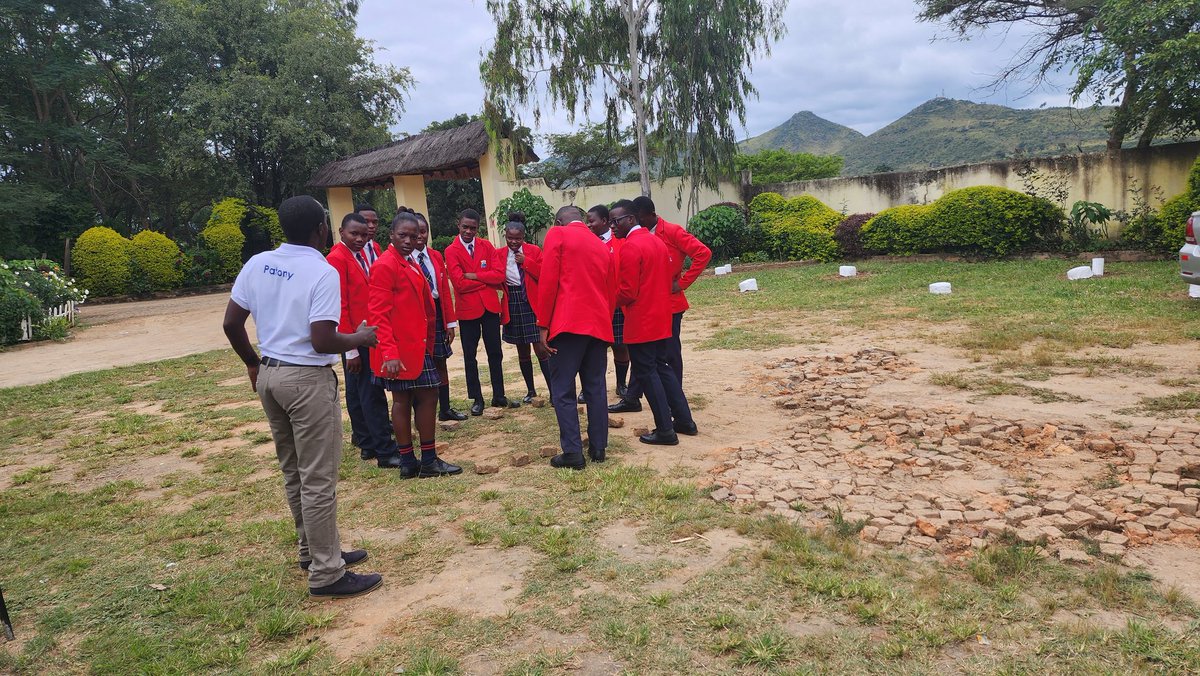
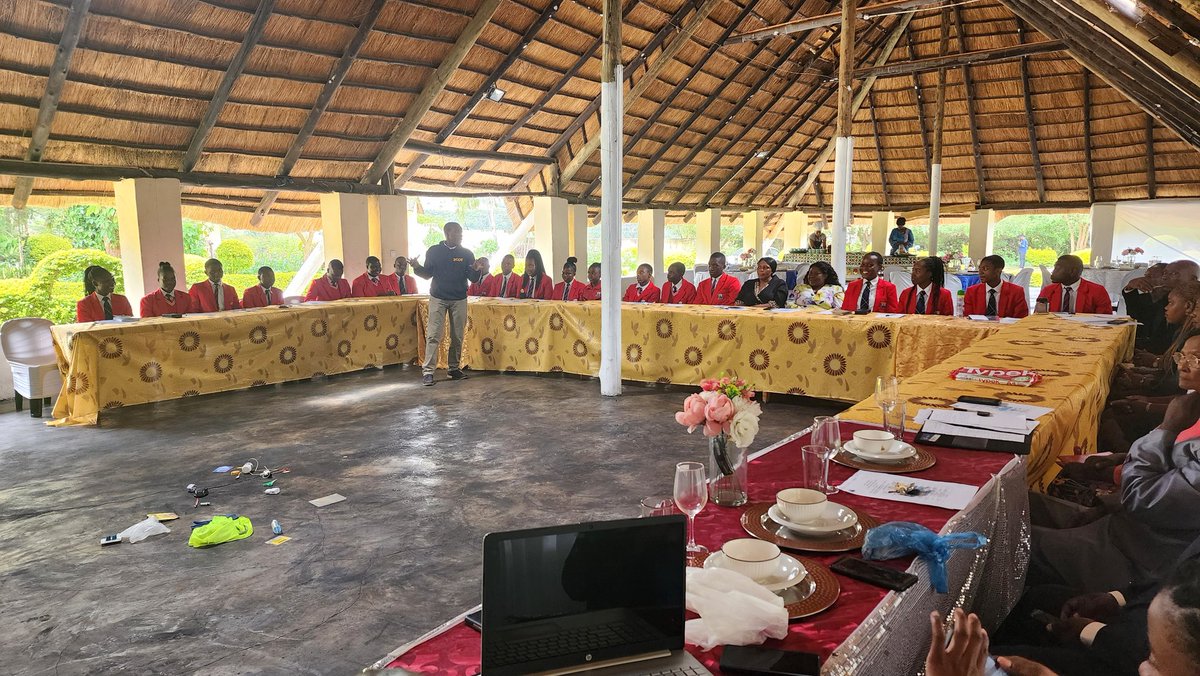
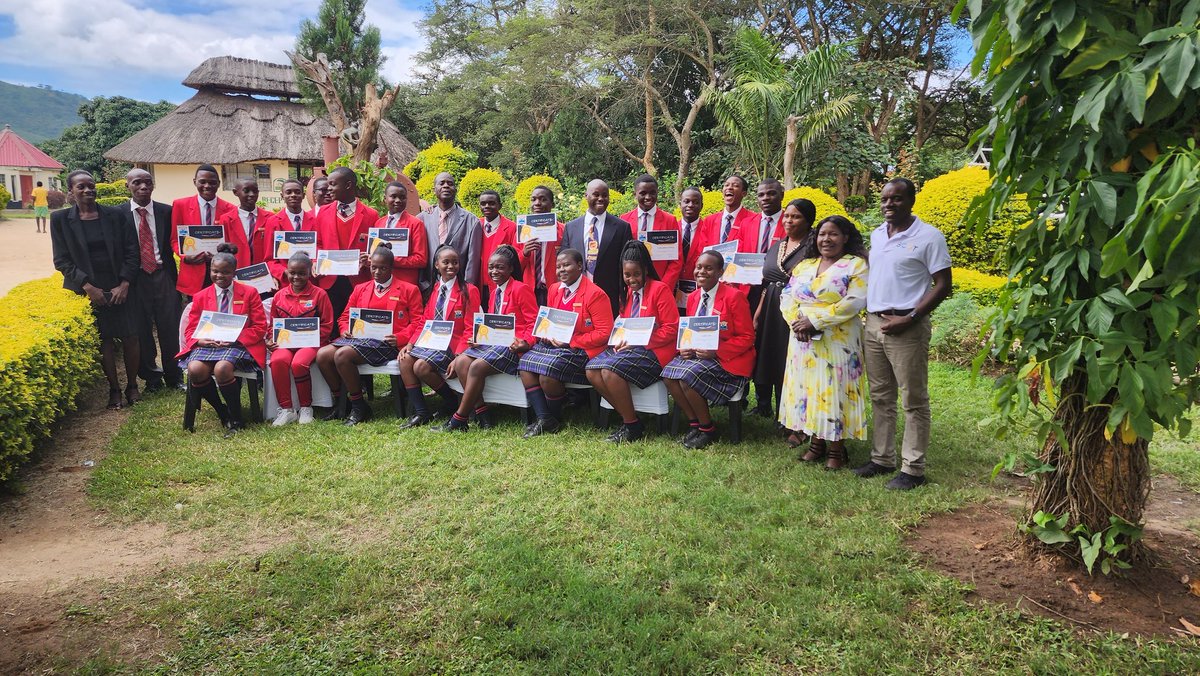
Innovative ideas. Creative thinking. Problem solving. This is more relevant in our time than perfecting outdated modelsof leadership.
Our didactic day with students, staff and parents of Rock of Ages Academy, Manicaland.
5
511