Heidi Wenzel retweeted

Researchers demonstrate several advantages of nZVI in this wastewater application, including its multifunctionality in sequestrating a wide array of metal(loid)s (> 30 species)
👉doi.org/10.1016/j.eng.2023.0…
1
2
32

Eliminating onboard power and electronics at 4mm scale is the breakthrough. Remote field actuation enables multifunctionality without battery mass penalties. The constraint shifts from miniaturization to external control precision.
Jun 10

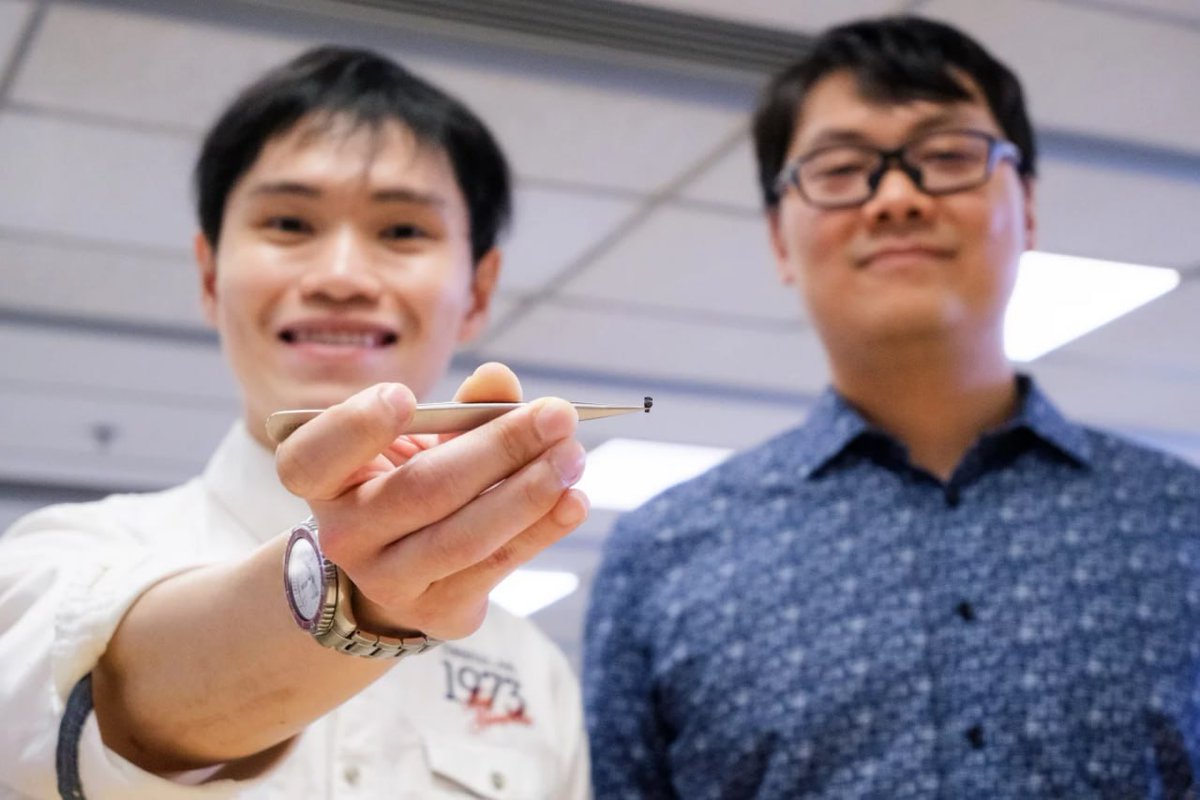
Des chercheurs ont créé un robot médical de seulement 4 millimètres capable d’opérer à l’intérieur du corps humain 🩺
À Singapour, des chercheurs ont développé un microrobot de la taille d’un grain de sable capable d’effectuer plusieurs tâches médicales sans embarquer de batterie, d’électronique ou de câbles.
Guidé à distance, il peut se déplacer dans des tissus biologiques, couper des cellules, prélever des échantillons, délivrer des médicaments ciblés et même produire localement de la chaleur thérapeutique.
Lors des premiers essais sur des cellules humaines cultivées en laboratoire, plus de 99 % des cellules sont restées viables après l’intervention, un résultat prometteur pour la médecine mini-invasive.
5

Jun 10
A potential enhancement…Yes, HydroGraph Clean Energy’s high-purity graphene could meaningfully contribute to (and potentially accelerate) this kind of AI-designed metamaterial development.10
Quick recap on the U of T breakthrough
The University of Toronto team (with collaborators) used machine learning to optimize carbon nanolattices — microscopic 3D lattice structures made mostly of carbon. These are fabricated via two-photon polymerization 3D printing followed by pyrolysis (heating to leave behind a pure carbon skeleton). The result: materials with steel-like strength at Styrofoam densities, achieving ~5× the specific strength of titanium through superior stress distribution in novel AI-discovered geometries.20
How HydroGraph’s graphene fits in
HydroGraph produces 99.8% pure synthetic graphene (Fractal Graphene™ / turbostratic, few-layer) via their patented Hyperion detonation process. Key advantages over typical graphene:
•Extremely high purity and consistency (batch-to-batch identical, verified by independent testing and the Graphene Council).
•Pristine crystalline structure (mostly sp² carbon) with unique fractal morphology for excellent dispersion.
•Scalable, low-energy, clean production (no solvents, net-zero emissions potential).13
Potential synergies:
•Base material or reinforcement: The U of T lattices are carbon-based. High-purity graphene sheets or particles could serve as the feedstock or be incorporated directly into the printable resin for 3D nano-printing. This might yield even better intrinsic properties (graphene is ~200× stronger than steel by weight, with exceptional stiffness and conductivity).
•Composite enhancement: HydroGraph’s graphene already boosts mechanical properties in polymers, resins, and composites at ultra-low loadings (e.g., 0.05–0.1 wt% for 25–35% strength gains, improved impact resistance, and toughness while reducing overall weight). Integrating it could create hybrid graphene-carbon nanolattices that are lighter, stronger, or more damage-tolerant.37
•Scalability bridge: Nano-lattices are currently microscopic/proof-of-concept. HydroGraph’s modular, on-site production could help scale graphene-enhanced versions toward macro applications (aerospace parts, automotive, etc.).
•Multifunctionality: Graphene adds electrical/thermal conductivity, EMI shielding, or energy storage potential — turning a purely mechanical metamaterial into a smart, multifunctional one.
There’s active work on 3D-printed graphene aerogels, foams, and metamaterials for lightweight structures, EM absorption, and more. AI design pure graphene feedstock is a natural evolution.35
Realistic caveats
•The U of T work uses a specific carbonization process, so direct substitution would need R&D (e.g., graphene-compatible photoresists or post-processing).
•Challenges like uniform dispersion at nanoscale and maintaining lattice integrity remain, but HydroGraph’s emphasis on easy dispersion and consistency helps here.
•It’s complementary rather than a direct replacement — the real power is in combining AI geometry optimization with premium graphene as the building block.
Bottom line: Absolutely yes — HydroGraph’s pure, scalable graphene is well-positioned to enhance these AI-optimized nanolattices, especially for real-world aerospace, automotive, or defense applications where every gram and performance increment counts. It aligns perfectly with the “materials by design” paradigm. If companies or researchers pair the two, we could see even more dramatic strength-to-weight breakthroughs soon.
If you have more details on specific properties or want me to dig into technical datasheets/papers, let me know! 🚀
Jun 10

🚨 AI JUST DESIGNED A MATERIAL STRONGER THAN STEEL, LIGHTER THAN FOAM AND UP TO 5× STRONGER THAN TITANIUM.
Researchers used machine learning to discover entirely new microscopic lattice structures that were then 3D-printed into carbon nanolattices.
The result is a mechanical metamaterial that combines properties previously thought to be impossible together: extreme strength with ultra-low weight.
Why this matters:
• Aerospace and automotive industries could build dramatically lighter vehicles and aircraft without sacrificing strength
• Construction and infrastructure could use stronger, lighter components
• Medical implants and protective gear could become both tougher and more comfortable
• It proves AI can now design physical matter at the structural level exploring geometries no human engineer would have thought of
The deeper implication is huge:
We are moving from discovering materials that already exist in nature… to inventing entirely new classes of matter with properties we specify.
AI isn’t just writing code or generating images anymore. It’s helping us build the physical world from the inside out.
What industry do you think will be transformed first by these AI-designed super-materials?
Follow for more frontier science and future technology.
119

I agree with their conclusion that "We caution against the use of aggregated soil health or multifunctionality metrics." What is helpful is the opposite: to use a soil health test to identify potential productivity limitations. And to remediation methods like cover crops.
2
95

Jun 9
Say ‘ew’ if u want that’s whatever but it’s SLANDER to say that i enjoy sasuboru to avoid enjoying naru/sasu. I enjoy both. I eat everything. I have a big appetite. This explorator is blessed with multifunctionality.
7
25
1,998

Aluminum Framing’s Critical Role In Data Center Construction: Aluminum framing’s unique multifunctionality is ideal for data center infrastructure, where it acts as a reliable temperature barrier and sturdy… dlvr.it/TSyPxf #Buildings #Facilities #FacilityManagement

1
52

Jun 9
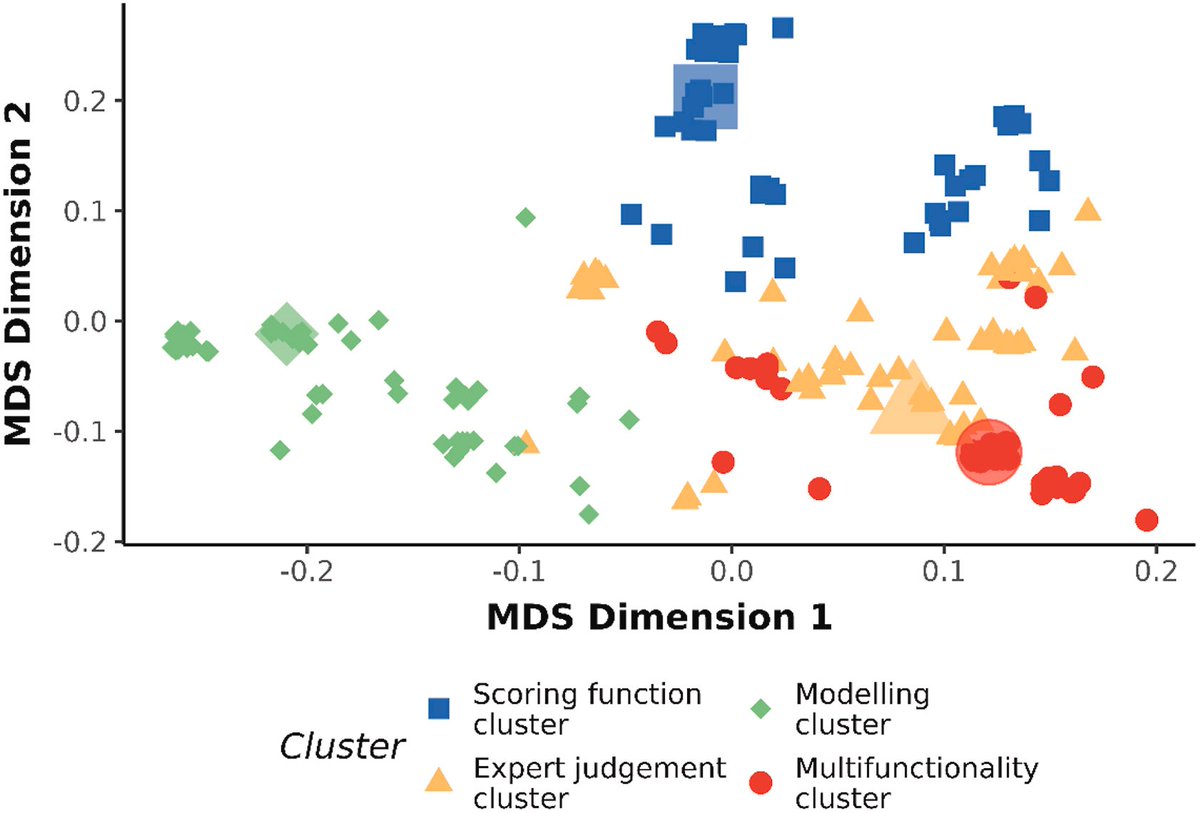
15 years of trying to evaluate soil health and this is where we are:
"...In other words, different commonly used soil health assessment methods yield strongly contrasting results when applied to the same dataset.
Further we noticed that the objective and approach for soil health assessments are often poorly documented. We caution against the use of aggregated soil health or multifunctionality metrics, as these methods obscure important trade-offs between different soil functions."
sciencedirect.com/science/ar…
3
11
68
4,192

What is lavender extract used for?
The multifunctionality of Lavender Extract as a botanical raw material for fragrance formulation, cosmetic system design, home care product development, and botanical ingredient engineering.
nutragreen-extracts.com/info…
3

May 28
What if a robot could move, recover, sense, and interact with the world equally well in any direction?
Today, I’m incredibly excited to share our new paper on computational robot design published in Science Robotics!
This project started with a simple yet deep question that kept coming back to us: What if symmetry in robots was not just about appearance, but about how they can dynamically interact with the world?
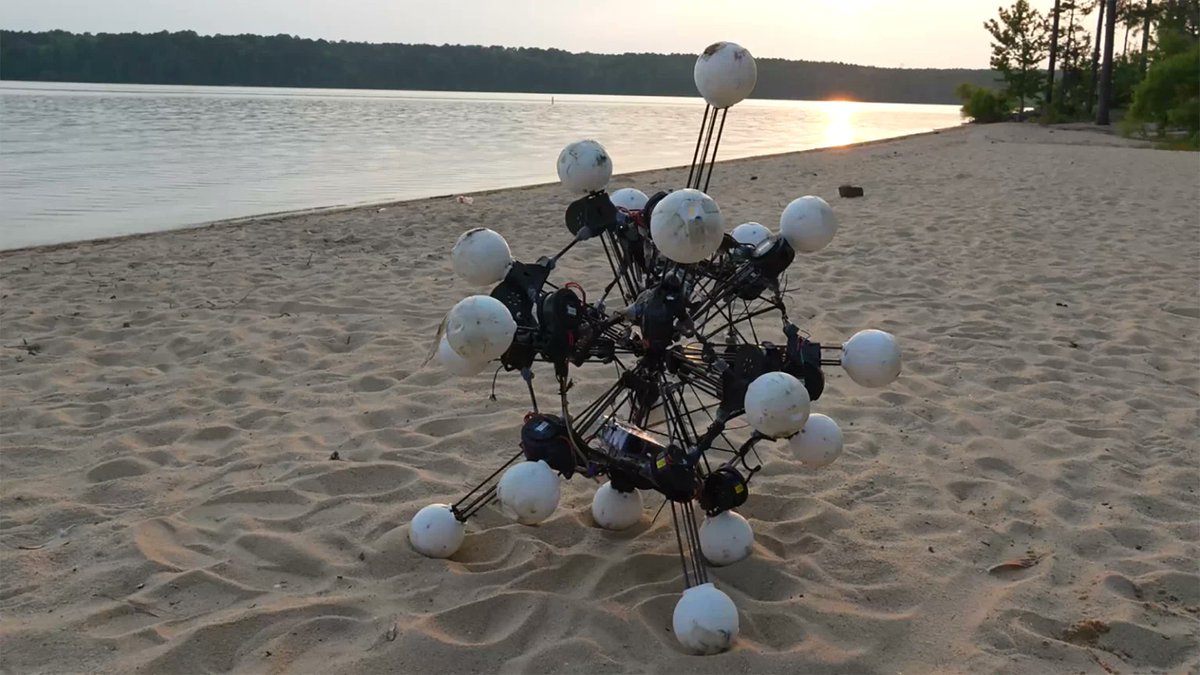
In this work, we introduce the idea of dynamic symmetry: designing robots with nearly uniform dynamic actuation capability in all directions. We formalize this through a new theoretical measure called dynamic isotropy, and show that pushing robots toward extreme dynamic symmetry unlocks new capabilities in mobility, robustness, resilience, and multifunctionality.
To explore this idea, we built Argus, a family of spherical robots with radially distributed actuators and omnidirectional sensing. Watching Argus come alive for the first time was honestly one of the most exciting moments for our lab.
Our 20-leg physical robot can:
- Move omnidirectionally without needing to reorient first
- Traverse cluttered and deformable terrains
- Recover from disturbances and actuator failures
- Carry heavy payloads
- Climb between walls under lunar gravity
- Perform whole-body loco-manipulation while continuously sensing the environment
What excites me most is that this work is not only about one robot. It explores a broader idea of embodied intelligence: Can symmetry become a fundamental design principle for building robots that are more adaptable, resilient, and capable of interacting with complex real-world environments?
- Website (paper, code): generalroboticslab.com/Argus
- Video: youtu.be/Nd-I4YNQEuY
2
18
53
10,512

May 28
Evolution, multifunctionality, and agricultural potential of insect microbiomes and the holobiont concept
#microbiology #microbiome #insects
@ISMEJournal @ISME_microbes
doi.org/10.1093/ismejo/wrag1…
8
20
704


Surface evolution and multifunctionality of NiO thin films grown by SINAR, Journal of Electron Spectroscopy and Related Phenomena 2026, 287, 147623. sciencedirect.com/science/ar…
1
2
44

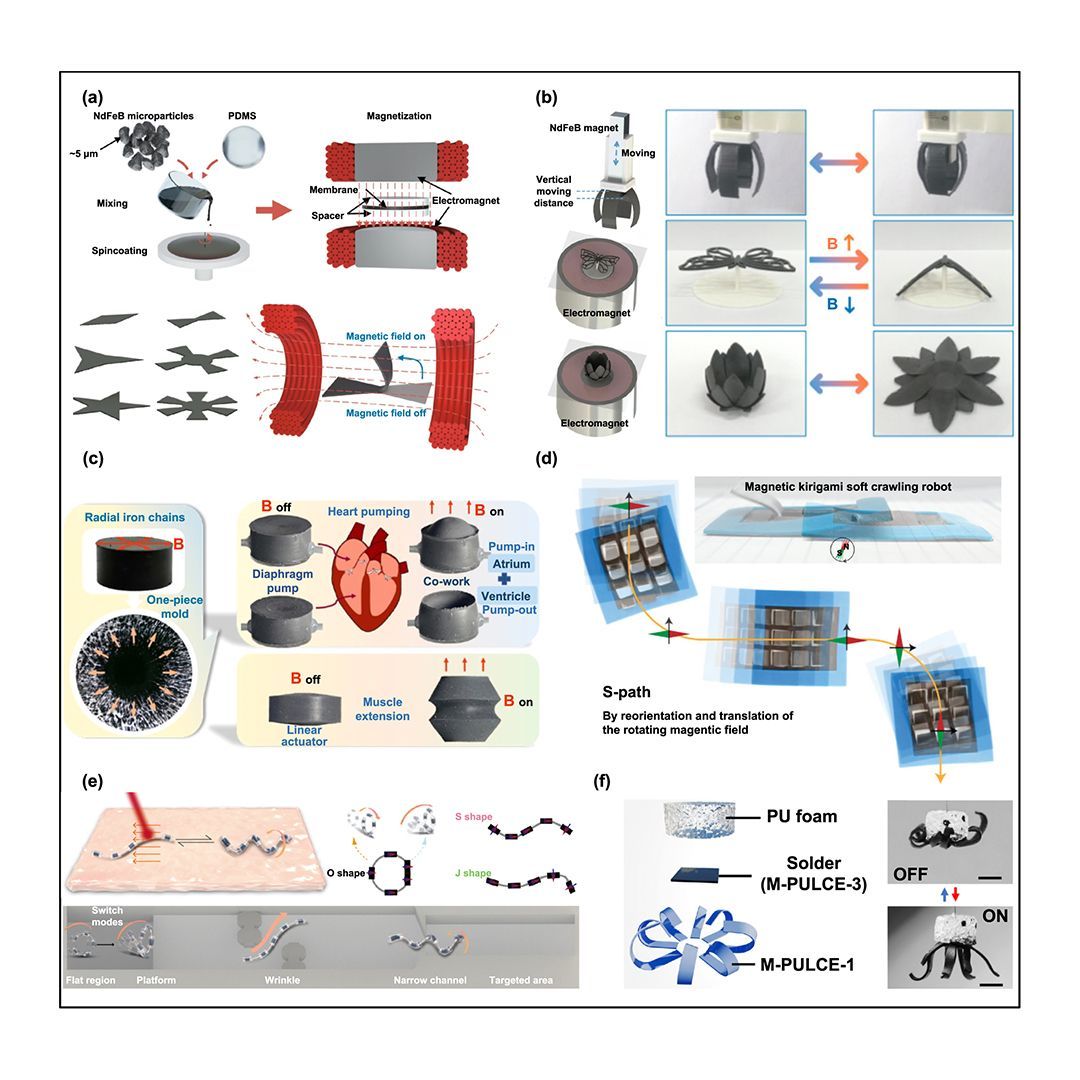
This review describes how stimuli-responsive actuators are advancing underwater #Robotics through adaptive electro-, magnetic-, photo-, and thermo-responsive systems with enhanced flexibility, multifunctionality, and environmental adaptability.
#IJEM #OpenAccess: doi.org/10.1088/2631-7990/ad…
ALT Stimuli-responsive actuators in water environment: a review and future research agenda
1
2
30

May 23
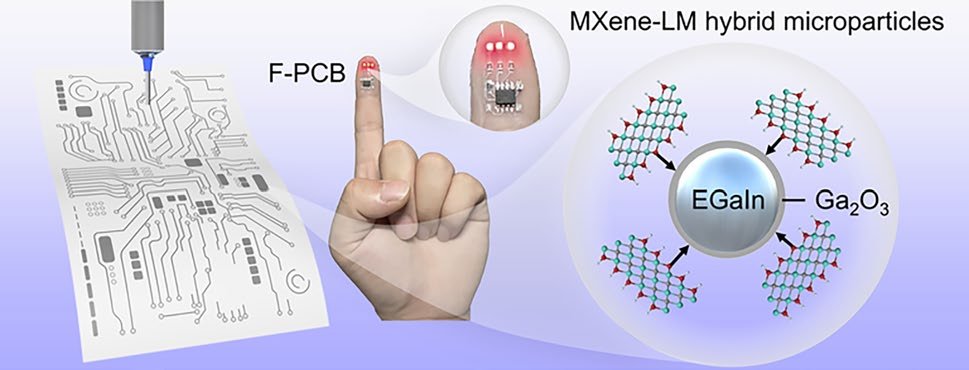
314. MXene-Assembled Liquid Metal Hybrid Microparticles for Multifunctional and Stretchable Printed Electronics
Rouhui Yu, Jiexin Qiu, Hui Zhu, Xiangheng Du, Jiale Sun, Zishuo Zhang, Long Chen, Zhongyao Fan, Huifang Chen, Meifang Zhu & Shaowu Pan*
Nano-Micro Lett. 18, 314 (2026).
doi.org/10.1007/s40820-026-0…
This work is led by Prof. Dr. Shaowu Pan (Donghua University) and co-workers. Prof. Pan’s research centers on design, development, and application research of flexible perceptible materials and devices, functionalized fibers and smart fabrics, flexible bio-interface electronic devices. This article presents versatile MXene-assembled liquid metal hybrid microparticles (MLHMs) that form an interconnected hybrid network via coordination interactions, enabling electrical conductivity activation at a minimal strain of 2.5%, achieving a high electrical conductivity of 3.7×10⁵ S m⁻¹ and excellent stretchability of ~700%. The MLHMs demonstrate multifunctionality in stretchable antennas, micro-supercapacitors, electroluminescent devices, and flexible printed circuit boards, enabling wireless power transmission, energy storage, and stretchable interactive displays for advanced stretchable electronic systems.
#MLHMs
#MXene
#stretchable
#multifunctionality
#conductivity
2
2
82

May 19
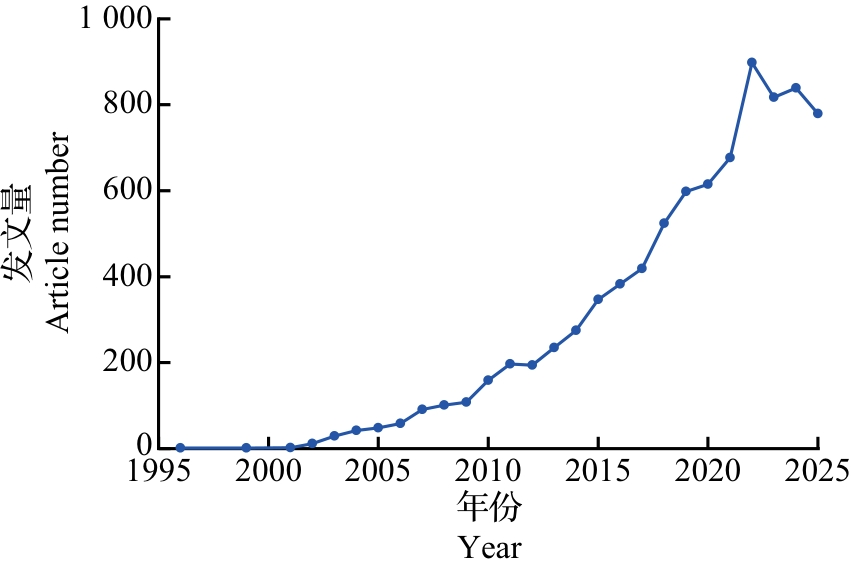
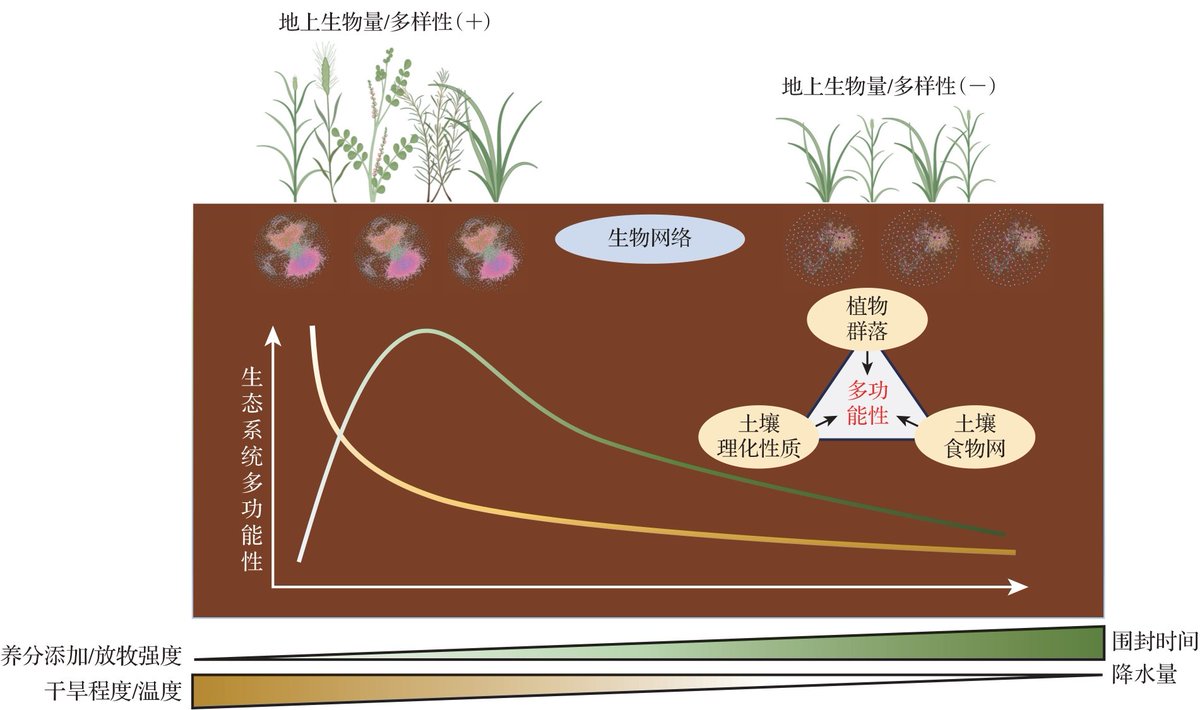
We mapped why northern grasslands are losing their edge and what it takes to bring them back.
Climate stress human pressure = ecosystem multifunctionality at risk.
Here's what the science says 👇
doi.org/10.3785/j.issn.1008-…
@ZJU_CHINA @ZJUPRESS #AcadeMax #ZJU #Grasslands #EcologyResearch #Climatescience
ALT https://doi.org/10.3785/j.issn.1008-9209.2025.12.101
8
3,121

May 19
【ニュース】「収量」だけじゃない 様々な栽培特性を空から測る新たな枠組み ~混植栽培の生産性・安定性・倒伏/雑草耐性を同時に評価 ー千葉大学ー
■論文情報
タイトル:Drone-based assessment of multifunctionality in mixed cropping systems
DOI:10.1007/s11119-026-10352-7
2
876

May 18
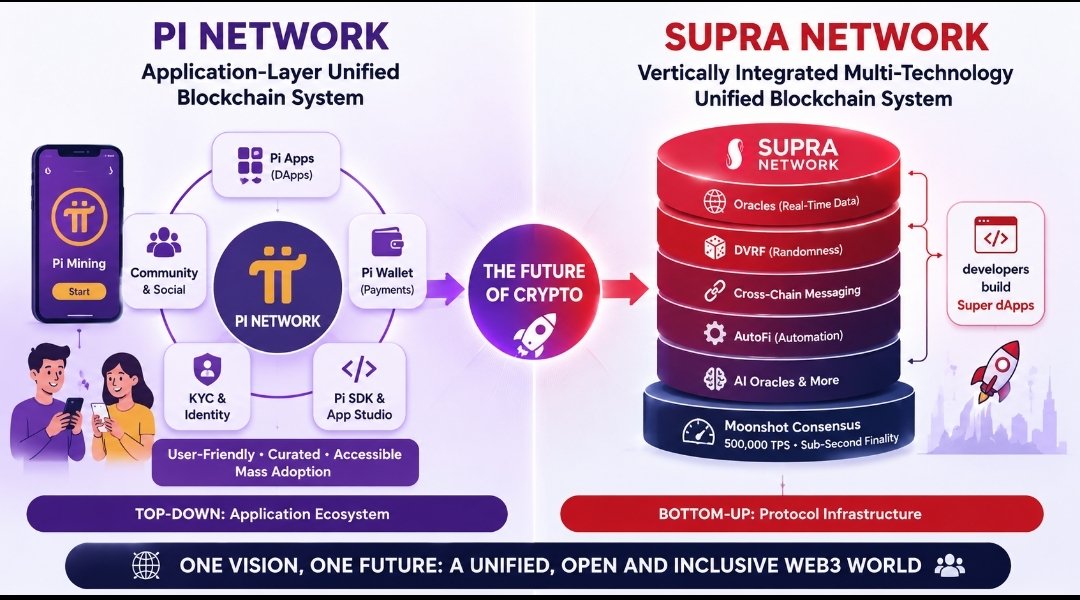
Pi Network and Supra Network: A Deep Comparison of Two Blockchain Unification Paths — Toward the Super Ecosystem of Crypto’s Future
Pi Network and Supra Network represent two fundamentally different yet ultimately converging visions of “unification” in blockchain: the former focuses on closed application-layer integration, building a user-friendly ecosystem similar to Apple’s iOS; the latter emphasizes vertically integrated protocol infrastructure, creating an open yet highly complete “Super dApp” foundation.
They are not engaged in a zero-sum competition. Instead, both are important experiments in pushing cryptocurrency toward mainstream adoption. Each is attempting to solve blockchain fragmentation in its own way — one through curated user experience, the other through protocol-level fusion for greater efficiency, security, and multifunctionality. Ultimately, both point toward a more inclusive and efficient Web3 future.
Pi Network: Application-Layer Unification — An “Apple-Style” Closed Ecosystem
Pi Network’s core philosophy is to unify promising application sectors through official development, guidance, or curated ecosystem integration into the Pi platform, reducing the inefficiency and insecurity caused by fragmented development. Its vision is to create a mobile-first, user-friendly Web3 ecosystem where ordinary people can participate without needing deep technical knowledge.
Core Features and Unification Strategy
Pi can be mined easily through a mobile app, combined with a social trust graph and KYC system for decentralized identity verification. The project claims over 60 million users and millions of Mainnet-migrated accounts, providing the ecosystem with a ready-made, identity-verified user base.
Pi is not merely a Layer 1 blockchain; it is a complete platform built around user experience. Its core components include:
Pi Mining App — the gateway app for mining, KYC, community interaction, and node participation.
Pi Browser — a Web3 interface for accessing and deploying Pi Apps with seamless mobile UX.
Pi Wallet — a non-custodial wallet supporting transfers, DEX/AMM testing, and integrated payments.
Pi App Studio — an AI-powered no-code/low-code platform enabling developers to rapidly build apps integrated with payments, SDKs, and identity verification, already supporting Mainnet applications.
Other official/core tools include .pi domains, KYC infrastructure, PiOS (open-source licensed), Pi Chat/Forum social tools, and gradually integrated categories such as DeFi, gaming, and e-commerce.
The ecosystem already contains a large number of dApps, many emerging from Hackathons, while the official platform provides a unified entry point, SDK, and low-cost environment.
This model resembles the Apple App Store: official curation ensures compatibility, security, and user experience. Developers build inside the Pi Browser and integrate payments and identity through the Pi SDK, avoiding fragmentation, security risks, and broken UX caused by external dependencies.
The strength of this approach lies in accessibility — lowering barriers for mainstream adoption. The tradeoff is that innovation speed may sometimes be slower than fully open ecosystems, although AI Studio and related tools are accelerating development.
Pi’s unification strategy is a top-down application ecosystem loop: official infrastructure combined with innovation inside a unified sandbox, ultimately serving real-world user scenarios such as payments, social interaction, and gaming. This reflects its concept of a “unified blockchain system” — not a patchwork of fragmented technologies, but a trusted and user-friendly complete experience.
Supra Network: Protocol-Layer Unification — Vertical Integration for an Open “Super dApp” Platform
Supra takes an entirely different route: deeply integrating multiple core services directly into the Layer 1 protocol itself, providing developers with efficient, secure, ready-to-use building blocks for creating advanced applications within an open but highly complete ecosystem.
Its slogan, “IntraLayer,” reflects the idea of a platform within a platform, eliminating the pain points of external composability.
Core Features and Unification Strategy
Built on the Moonshot consensus mechanism, Supra aims for 500,000 TPS and sub-second finality.
MultiVM support (Move, EVM, and eventually SolanaVM) allows developers to build using familiar languages and ecosystems.
Protocol-Native Services (No External Dependencies Required)
Native Oracles (real-time price feeds with near-zero block delay)
DVRF (Distributed Verifiable Random Function)
Cross-chain communication (native bridging and messaging)
System-level automation through the AutoFi framework, enabling automated DeFi primitives such as liquidations, arbitrage, and portfolio rebalancing
Additional infrastructure including:
Threshold AI Oracles
Dynamic Function Market Maker (DFMM)
Proof of Efficient Liquidity (PoEL)
iAssets
Supra’s unification model is a bottom-up infrastructure fusion: all components share the same security model, enabling developers to avoid stitching together services like Chainlink, LayerZero, and multiple external protocols.
This enables the creation of “Super dApps” — highly performant, multifunctional, end-to-end secure applications.
The benefits include:
Higher efficiency through lower latency and fees
Stronger security through reduced trust assumptions
Greater innovation potential through AI-driven financial automation and integrated tooling
Unlike Pi’s curated ecosystem, Supra resembles Android combined with a highly optimized system-on-chip (SoC): an open environment with deeply integrated infrastructure underneath.
Its focus is on advanced use cases such as:
Automated DeFi
Cross-chain applications
AI agents
Real-time financial systems
rather than solely onboarding mainstream users.
Complementary Rather Than Opposing Paths
Pi Network focuses on application-layer unification, emphasizing user experience and official integration. Its “iOS-like” ecosystem prioritizes mass accessibility, real identity verification, and seamless mobile UX, with the goal of bringing ordinary users into Web3.
Its development model leans toward:
low-barrier SDKs
AI-assisted no-code tools
curated ecosystem growth
Supra Network, meanwhile, focuses on protocol-layer unification, using vertical integration to create an open “Super dApp” infrastructure. Its strengths lie in:
extremely high TPS
secure native integrations
maximal efficiency
developer flexibility through MultiVM support
Pi primarily solves the adoption problem — how to onboard billions of users into Web3.
Supra primarily solves the performance and fragmentation problem — how to allow decentralized applications to scale efficiently and securely.
Pi’s closed integration model is suitable for:
social apps
payments
consumer-facing services
unified app distribution
Supra’s vertically integrated infrastructure is ideal for:
automated finance
AI-driven systems
cross-chain ecosystems
complex high-performance applications
The synergy potential is significant:
Pi users could eventually benefit from Supra-like infrastructure for stronger backend capabilities.
Supra-like ecosystems could leverage Pi-style large-scale distribution and mainstream onboarding.
Pi Network and Supra Network are both important pioneers in cryptocurrency’s evolution.
Pi is people-first, using application unification to promote accessibility and demonstrating that blockchain can become as approachable as smartphones.
Supra is technology-first, using protocol unification to achieve performance and efficiency, demonstrating that blockchain can become as powerful and integrated as a modern operating system.
As blockchain matures, fragmentation remains one of the industry’s greatest obstacles. Pi’s “Apple-style” curation and Supra’s “Super SoC” integration are both moving toward the same destination:
The Era of Super dApps
An ecosystem that is:
vertically unified
multifunctional
efficient
secure
open
Whether one prioritizes mainstream adoption or technological excellence, both paths deserve recognition and attention.
The future of crypto will belong to projects bold enough to unify fragmented systems and innovate beyond traditional blockchain limitations — and Pi Network and Supra Network are among the most ambitious examples of that vision.
As an analyst, I remain optimistic about the long-term potential of both ecosystems. Closely following their Mainnet progress and ecosystem expansion may prove critical for understanding the next major wave of Web3 innovation.
#SUPRA #BTC #ETH #BNB #SOL #Doge @okx @binance @coinbase @Official_Upbit @bitget @kraken #PiNetwork supra:native pi-network:native
3
28
837

May 17
🧬 BPC-157 continues to gain attention in regenerative research circles for its potential role in recovery and tissue repair pathways.
Preclinical research has explored its involvement in:
🔹 Tendon & ligament healing
🔹 Angiogenesis & blood vessel formation
🔹 Nitric oxide signaling
🔹 Gastrointestinal protection
🔹 Muscle & nerve recovery
purasynth.com/product/bpc-15…
Several peer reviewed studies have demonstrated promising findings in animal models, particularly involving collagen organization, fibroblast activity, and vascular repair mechanisms. Human clinical data, however, remains limited and additional research is still required.
📚 Key peer reviewed studies & reviews:
🔗 Journal of Applied Physiology
“The promoting effect of pentadecapeptide BPC 157 on tendon healing…”
journals.physiology.org/doi/…
🔗 Journal of Orthopaedic Research
“BPC 157 accelerates healing of transected rat Achilles tendon”
onlinelibrary.wiley.com/doi/…
🔗 MDPI Pharmaceuticals Review
“Multifunctionality and Possible Medical Application of the BPC 157 Peptide”
mdpi.com/1424-8247/18/2/185
🔗 PubMed Review
“Regeneration or Risk? A Narrative Review of BPC-157”
pubmed.ncbi.nlm.nih.gov/4078…
⚠️ Important: BPC-157 is not FDA approved for human therapeutic use and remains an investigational research compound intended for research purposes only.
#BPC157 #PeptideResearch #RegenerativeMedicine #Biotech #ScientificResearch #RecoveryResearch #Longevity #purasynth #purasynthlabs
3
35

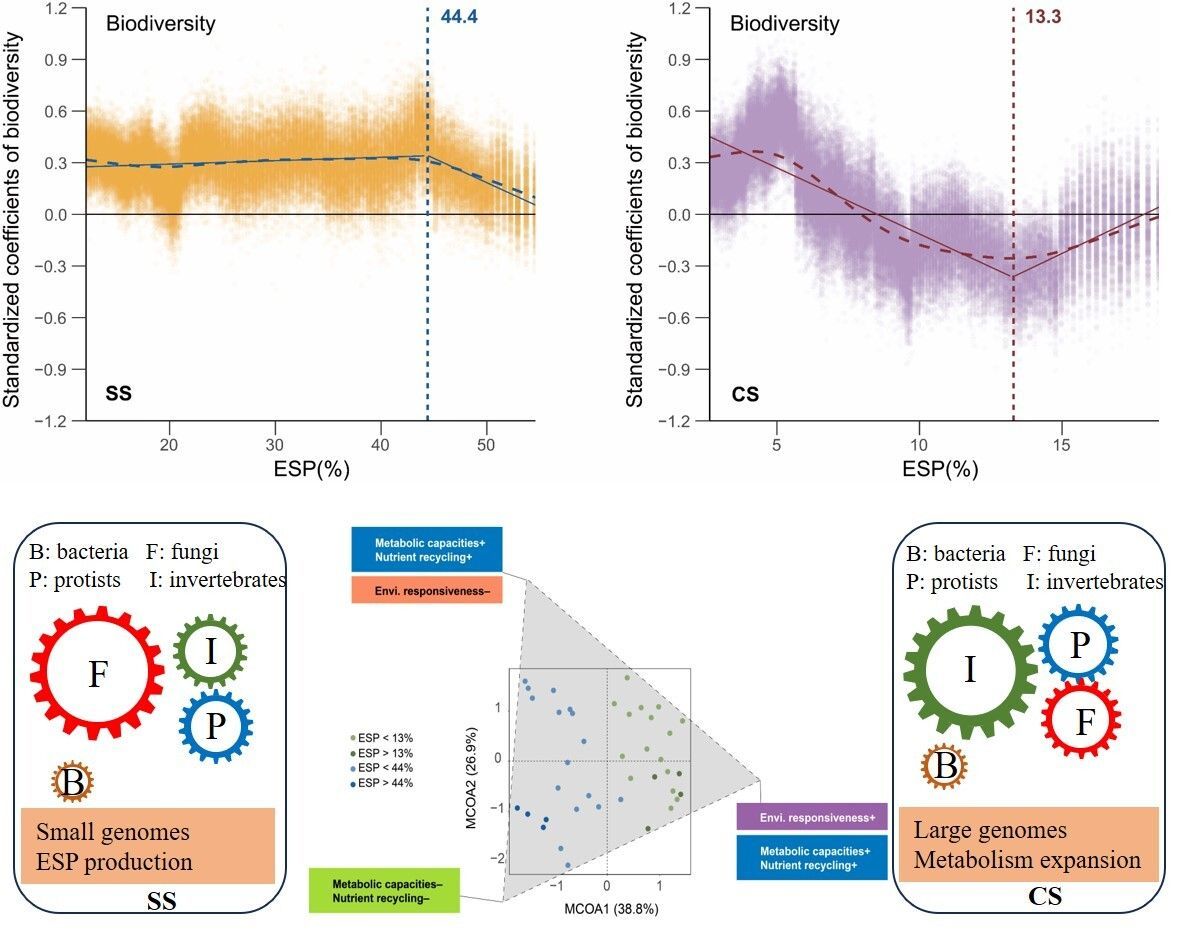
Sodicity Thresholds Alter Biodiversity–Multifunctionality Relationships Through Fungal Dominance and Microbial Trait‐Based Strategies
🔗 buff.ly/x8jis7w
3
17
843