
Honoring the spirit reflected in the flag that continues to inspire innovation, opportunity, and the freedom to build, create, and dream bigger. 🇺🇸✨
Today we celebrate the values that drive progress and the technologies that help carry those ideas farther than ever before.
#NationalFlagDay #FlagDay #AmericanInnovation #TechnologyDriven #DigitalFreedom #FutureForward #InnovationNation #TechCommunity #NetworkTechnology #SSDNodes
29

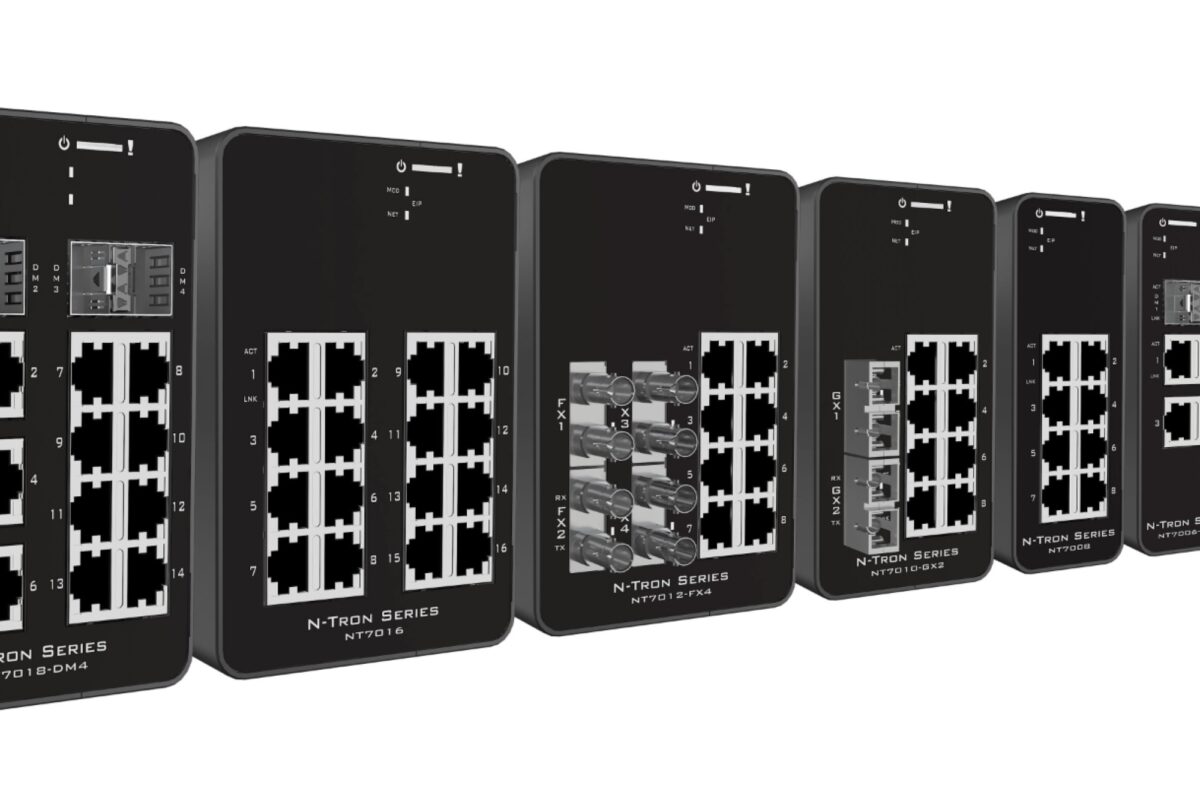
𝗛𝗠𝗦 𝗹𝗮𝘂𝗻𝗰𝗵𝗲𝘀 𝗡-𝗧𝗿𝗼𝗻 𝗡𝗧𝟳𝟬𝟬𝟬 𝗦𝗲𝗿𝗶𝗲𝘀
Read more: oemupdate.com/news/hms-launc…
#HMSLaunch #NT7000Series #NTron #NetworkSolutions #IndustrialNetworking #RapidRecovery #MinimizeDowntime #TechInnovation #NetworkTechnology #StartupEfficiency
23

Kesintisiz ve güçlü ağ altyapısı için doğru switch seçimi kritik öneme sahiptir.
#Longline #NetworkSwitch #GigabitSwitch #NetworkInfrastructure #EnterpriseNetwork #DataCenter #SwitchSolutions #Elektromarka #NetworkTechnology #ITInfrastructure
6
25


22 Apr 2025
Today SIM IP announced the successful completion of a Patent Purchase Agreement (PPA) with @FusionLayer.
The agreement grants SIM IP full ownership of a cutting-edge Cloud Computing, Virtual Networking and IP Address Management patent portfolio, further strengthening our position as a premier entity in the international IP market.
prnewswire.com/news-releases…
#SIMIP #Innovation #IP #Patent #CloudComputing #NetworkTechnology

1
4
122

28 Feb 2025
Did you know?
IP/MPLS optimizes traffic, reduces latency & boosts security—powering modern high-performance networks!
#HFCL #IPMPLS #NetworkTechnology

1
1
5
387

13 Feb 2025
CTOs at CSPs worldwide are constantly evolving their networks, implementing next-generation technology and architecture to stay ahead.
At ECT, we support:
✅ VoLTE, 5G, and next-gen IMS for seamless communication
✅ Fully virtualized deployments managed via leading VNF platforms
✅ Containerization for scalability (Red Hat OpenShift, Kubernetes, AWS)
✅ Legacy system migration to reduce technical debt and consolidate services
But the real game-changer? Telecoms Low Code.
With TLC, CSPs can rapidly develop, optimize, and integrate network services via APIs, all while increasing agility and reducing complexity. Instead of losing value to OTT players, CSPs can drive innovation from within.
💡 Want to future-proof your network? Let’s connect!
ect-telecoms.com/why-csps-ch…
#Telecom #CSP #5G #LowCode #Innovation #NetworkTechnology
1
50

13 Jan 2025
✨✨✨Review of Mr. Miles Guo's Live Breaking News (2021.03.11)
In 2021, the CCP virus crushed all the bubble economic cycles of the United States and Western capitalism, causing a sharp downturn—this is the first point. Second, the real estate, virtual economy, and bubble economy in the United States and the West led to major social and political changes, shifting drastically to the right—an extreme rightward shift. All left-leaning #ideologies collapsed. Third, this economic crash triggered a comprehensive and reflective reversal of thinking on the economy. The era of life sciences, #AItechnology, #networktechnology, and space technology emerged will fundamentally transform human life......👇
#CCPvirus #thebubbleeconomiccycles #Westerncapitalism
12
13
153

25 Dec 2024
🔒 Be the Shield in the Digital World! 🌐
🚀 Step into the future with our BSc (Hons) in Network Technology & Cybersecurity program!
#BradfordInternationalAlliance #Cybersecurity #NetworkTechnology #BScProgram #SecureYourFuture #BlendedLearning

1
12

18 Dec 2024
Dive into personalized learning at @BeldenInc's global Customer Innovation Centers. Join us as #Belden navigates the world of evolving #networktechnology. Click here to amplify your potential: #BeldenCIC #training sprou.tt/1R4fr9uUOwK
3
49

29 Nov 2024
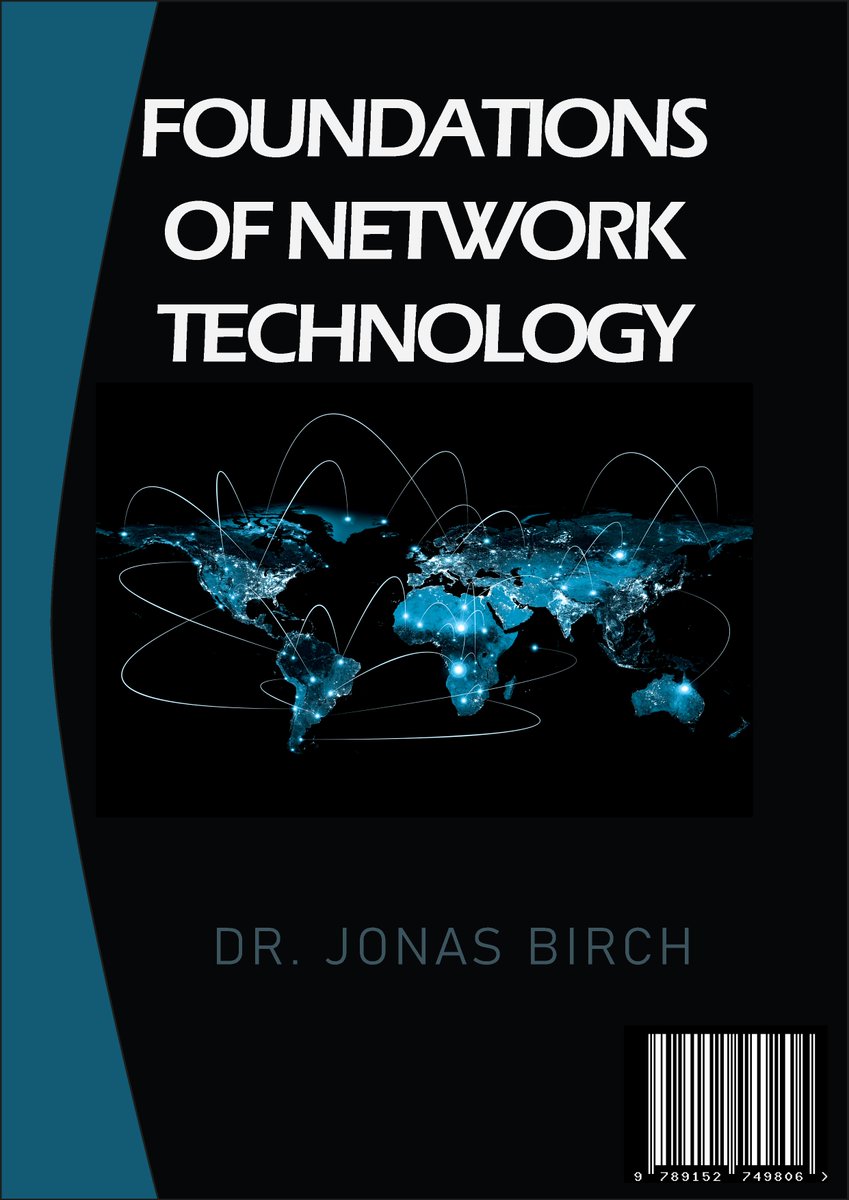
Now my book is published. Check it out:
books.doctorbirch.com
#networking #books #networktechnology #networkprogramming #internet
7
303
29 Nov 2024
Did you know that I've written a swedish book about network technology? Published a few years ago. It's been translated to english now and will be released world-wide as an e-book this weekend.
Perhaps already tomorrow. I hope you all gonna read it.
JB
#networking #networktechnology #networkprogramming #books
1
11
405


16 Sep 2024
📢 Check out the latest innovations in #EU #networktechnology with the Newsletter/Newsflash combo from Smart Networks and Services Joint Undertaking (@6G_SNS)! 🚀
⭐ NEWSFLASH | lnkd.in/e4HqbM3M
⭐ NEWSLETTER | lnkd.in/ezj_RRz6
@Digital_EU @connectivityEU

4
69

6 Sep 2024
iPhone 16 Rumors: Will Wi-Fi 7 Change Everything?
#AppleEvent #iPhoneXVI #WiFi7 #TechRumors #SmartphoneUpgrade #Connectivity #NetworkTechnology #Gadgets #AppleNews #FutureTech
1
4
1,988

27 Aug 2024
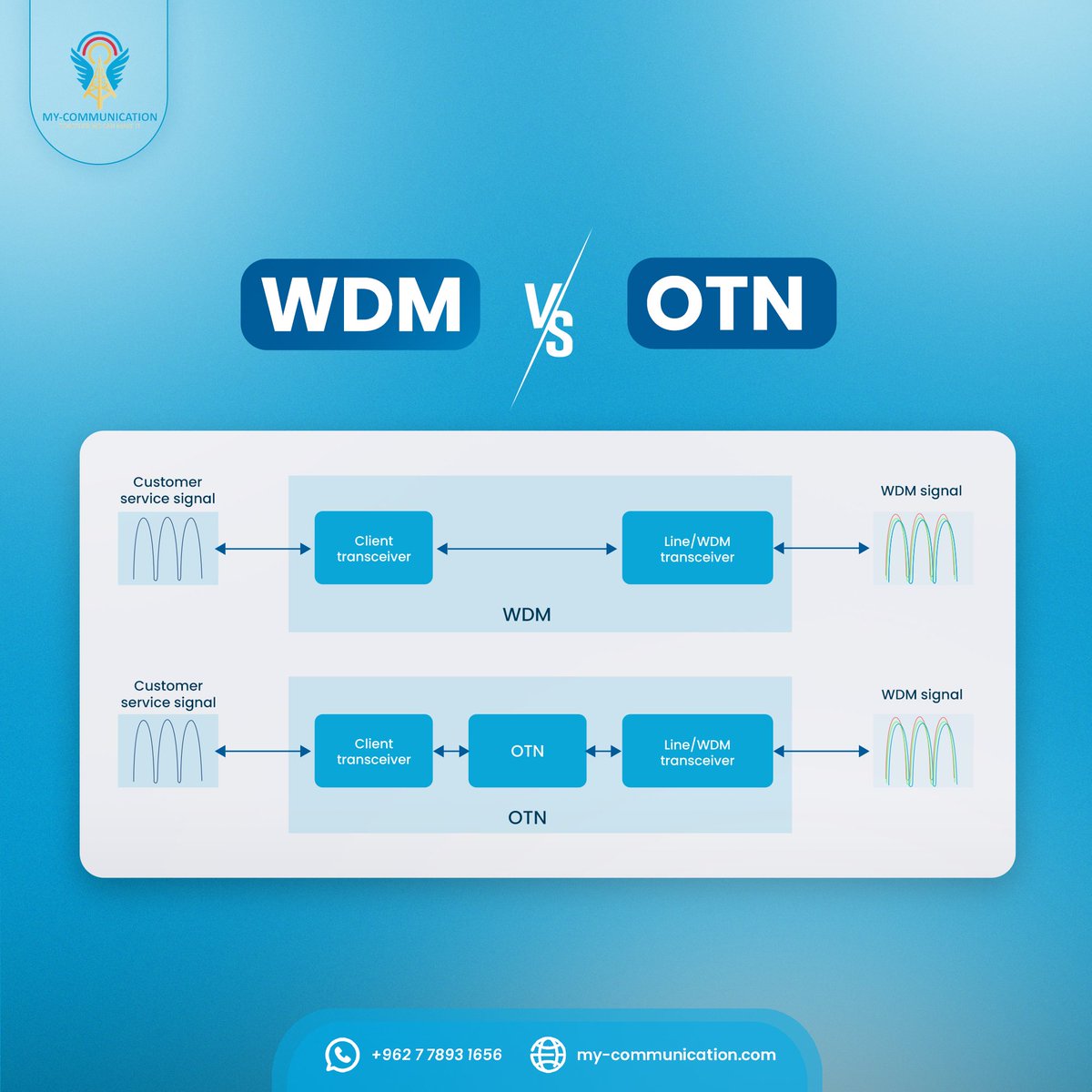
WDM (Wavelength Division Multiplexing) and OTN (Optical Transport Network) are both optical networking technologies, but they have several key differences:
Layer of operation: WDM operates solely in the optical layer, while OTN encompasses both optical and electrical layers.
Service transmission: In traditional WDM networks, one wavelength can transmit only one service. In contrast, OTN allows multiple services to be transmitted on a single wavelength simultaneously.
Network architecture: Traditional WDM sites typically have only OTU (Optical Transport Unit) boards for wavelength conversion. OTN sites have separate tributary and line boards, as well as electrical cross-connect boards.
Protection capabilities: WDM provides only optical-layer protection, while OTN offers both optical and electrical-layer protection. OTN's robust overhead and monitoring capabilities enhance network self-healing and reliability.
Service support and integration: OTN supports a wider range of services and offers higher board integration compared to WDM.
Resource allocation: OTN can flexibly schedule and allocate channel resources through electrical-layer cross-connection grooming, improving bandwidth utilization.
Frame structure: WDM has no corresponding frame structure, whereas OTN has a complete frame structure.
Cost: OTN network construction costs are generally higher due to the extensive use of electrical-layer boards, while WDM sites have lower costs as they use fewer electrical-layer boards.
Application scenarios: Traditional WDM is mainly applied to the access layer at the network edge as OTM (Optical Terminal Multiplexer) sites. OTN networks are used for large-granularity services in the aggregation and core layers as OADM (Optical Add-Drop Multiplexer) sites.
Networking modes: WDM typically uses point-to-point, chain, star, and ring topologies. OTN generally employs ring and mesh network topologies.
Monitoring and management: OTN provides enhanced capabilities for monitoring, management, operation, and maintenance of services compared to WDM, which primarily ensures signal transmission without extensive supervision mechanisms.
In summary, while WDM focuses on multiplexing optical signals of different wavelengths into a single fiber, OTN builds upon WDM technology by adding a comprehensive framework for managing and transporting various types of traffic with improved efficiency, flexibility, and reliability.
#WDM
#OTN
#OpticalNetworking
#Telecom
#NetworkInfrastructure
#FiberOptics
#Telecommunications
#NetworkTechnology
#WavelengthDivisionMultiplexing
#OpticalTransportNetwork
#TechInnovation
#DataTransmission
#NetworkEngineering
#TelecomIndustry
#NextGenNetworks
4
370

22 Aug 2024
🚀 Unlock the Power of Big Data! 🌐 From data collection and storage to advanced analysis and visualization, Big Data is revolutionizing industries.
#BigData #DataScience #CloudComputing #HRKtrainings #DataVisualization #TechInnovation #DataAnalysis #Research #NetworkTechnology

1
44
14 Aug 2024
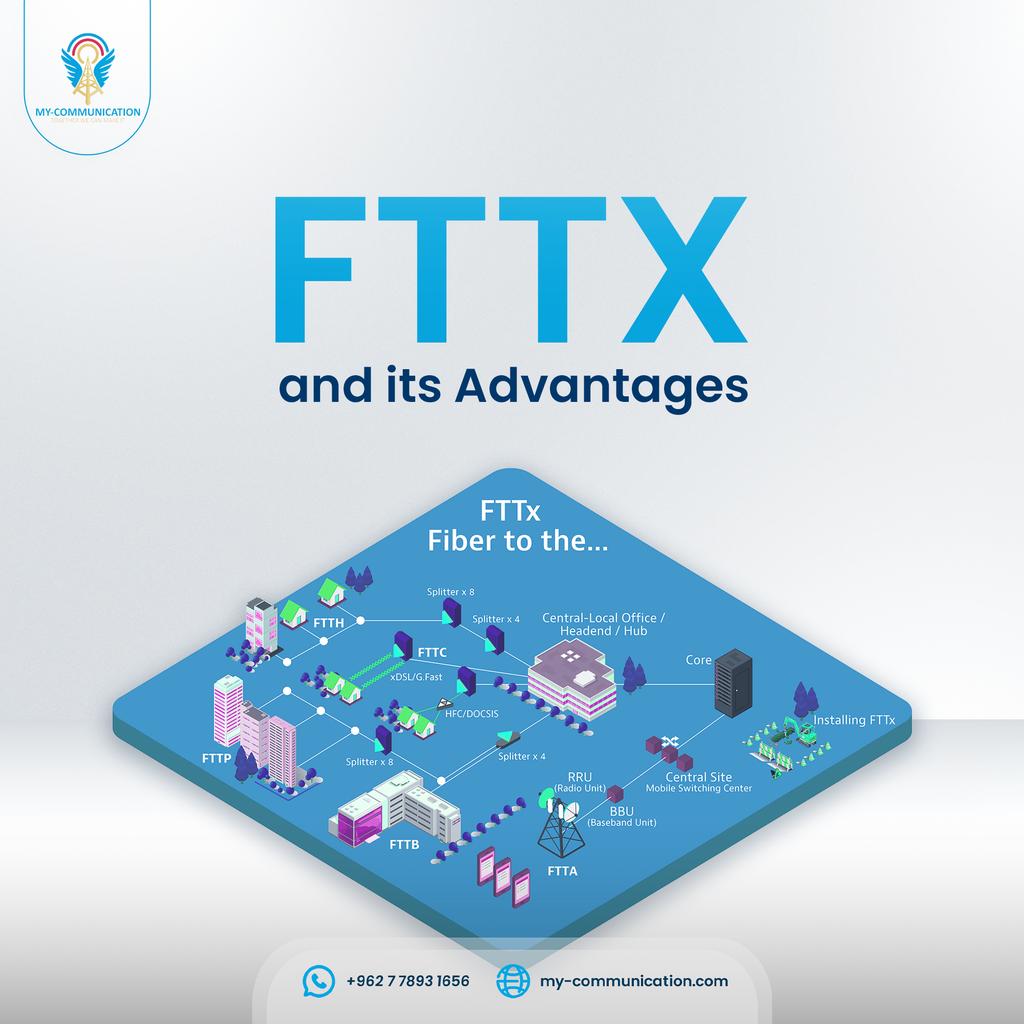
FTTx, or Fiber to the X, refers to a broadband network architecture that uses optical fiber to deliver high-speed data services directly to various end points like residences, businesses, or individual desktops. This technology enhances connectivity speeds and bandwidth over traditional metal wire transmissions like copper.
Types of FTTx Architectures:
1. FTTH (Fiber to the Home): Directly connects fiber to individual homes. As of 2023, over 40% of global internet users benefit from FTTH, with adoption rates soaring in Asia-Pacific and Europe.
2. FTTP (Fiber to the Premises): Similar to FTTH, but includes larger buildings or campuses. This approach is common in business environments requiring extensive data capacity.
3. FTTC (Fiber to the Curb): Extends fiber to poles or boxes near the user’s location, typically within 300 meters, using copper wires for the final connection. This method is a cost-effective solution for areas with existing copper infrastructure.
4. FTTN (Fiber to the Node): Involves fiber extended to a street cabinet which could be several kilometers away from the user’s premises, using existing copper or coaxial cable for final connections.
Advantages of FTTx:
- Speed and Reliability: Fiber optics provide significantly higher speeds and more reliable service compared to copper lines. Users experience fewer interruptions and lower latency.
- Future-Proofing: Fiber networks are scalable, allowing for enhancements without major changes to the existing infrastructure. This makes FTTx a future-proof investment for growing communities and businesses.
- Economic Benefits: Implementing fiber can drive economic growth in regions, boosting business operations and supporting new technologies like smart cities and IoT.
Statistics to Consider:
- The global FTTx market is projected to grow from $9.2 billion in 2021 to over $14.31 billion by 2026, at a CAGR of 8.1%.
- As of the latest surveys, countries like South Korea, Japan, and Sweden lead with the highest FTTH penetration rates, significantly above the global average.
FTTx is more than just a technology; it's a critical infrastructure for enabling the next generation of digital applications. As we look forward, the continuous expansion of FTTx will play a fundamental role in shaping a connected and technologically advanced global society.
#FTTx#FTTH #FTTP
#FTTC #FTTN#FiberOptics
#Broadband #HighSpeedInternet
#DigitalInfrastructure#FutureProof
#Connectivity#SmartCities
#IoTeX #GlobalConnectivity
#NextGenTechnology#TechInnovation
#InternetOfThings#FiberToTheHome
#NetworkTechnology
2
228
13 Aug 2024
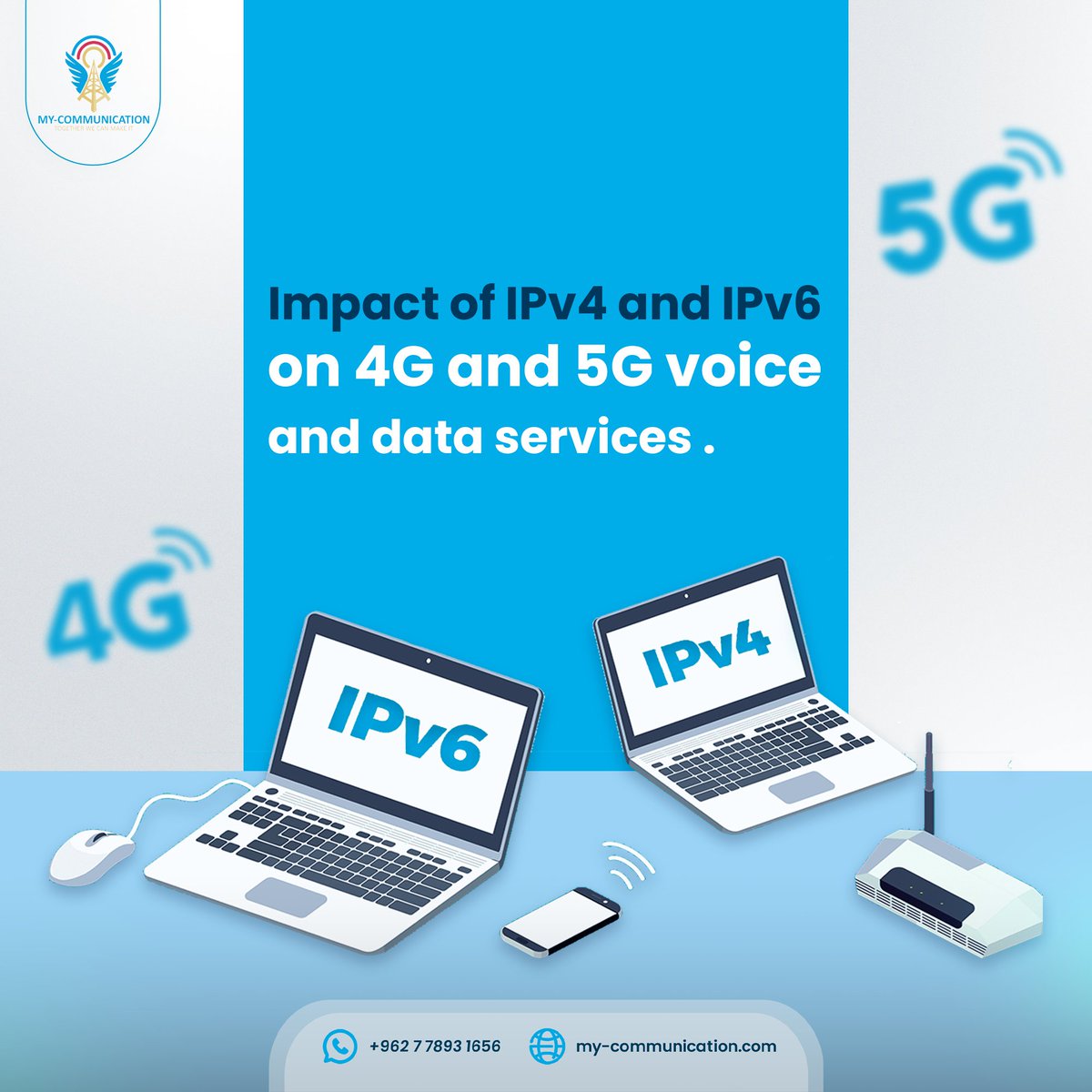
IPv4 and IPv6 significantly influence the deployment and efficiency of voice and data services in 4G and 5G networks, enhancing capabilities and addressing the limitations of earlier network technologies.
IPv6 Benefits:
- IPv6 offers substantial improvements over IPv4, particularly beneficial for voice and data services.
- The transition to IPv6 addresses IPv4's exhaustion by providing a nearly limitless address space, which is crucial as more devices connect to the internet.
- For VoIP services, IPv6 eliminates the need for Network Address Translation (NAT), which can interfere with voice call connectivity and quality. NAT often causes issues like one-way voice phenomena where a call is connected but only one party can hear the other.
- IPv6's larger address space allows each device to have a unique, globally routable address, improving the setup and quality of VoIP connections. Additionally, IPv6 supports more secure and efficient routing and addressing, including automatic address configuration and enhanced quality of service, which are critical for the performance demands of modern multimedia services.
IPv4 and IPv6 in 4G and 5G Networks:
In dual-mode 4G and 5G operations, IPv6 plays a pivotal role by ensuring seamless and more efficient user plane services.
- The architecture of these networks takes advantage of IPv6 to handle traffic at scale, providing essential services such as traffic management and network slicing, which are integral for maintaining the quality of service across both network types. This setup is crucial for supporting the diverse and bandwidth-intensive applications typical in 4G and 5G scenarios.
VoIP and IPv6:
IPv6 inherently supports better security and configuration features compared to IPv4, which are advantageous for VoIP applications. It offers built-in capabilities for encryption and authentication, which enhance the security of voice communications.
Furthermore, IPv6 facilitates improved operation of network support functions, such as multicast communication, which is more efficient than the broadcast communication used in IPv4. These capabilities allow IPv6 to support high-demand network functions more effectively, reducing the overhead on network resources and enhancing overall service delivery.
Overall, IPv4 and IPv6 not only facilitate the basic functionality of voice and data transmission over 4G and 5G networks but also enhance the security, efficiency, and scalability of these services, addressing both current needs and future expansions.
Here are some hashtag suggestions in English that would be suitable for your post on Platform X (formerly Twitter):
#IPv6
#NetworkEvolution #4G#5G
#VoIP#IPv4 #TechInnovation
#Telecom#NetworkSecurity #FutureOfNetworkin#NetworkTechnology #DataServices #DigitalTransformation#TechTrends
2
258

23 Jul 2024
Thanks Mr. Daniel, the international GCV ambassador from China region for providing the following information
"Pi "Enshi Prefecture" NetworkTechnology Co. Ltd.GCV Ecological International Trade "World Selenium Capital" Enshi Selenium-rich Products Trading Center
@dannierche80682
8
35
179
1,972