
<p>On April 10, 2026, the U.S. Department of Justice (DOJ) <a href="justice.gov/opa/pr/ibm-pays-…">announced</a> that <a href="fortune.com/company/ibm/" target="_blank">IBM</a> agreed to pay $17,077,043 to resolve False Claims Act allegations connected to nondiscrimination obligations in its federal contracts — the first resolution under its Civil Rights Fraud Initiative. IBM denied liability. The claims remain allegations only, with no determination of liability.</p>
<p>But here is the governance lesson that stands regardless of how any court would ultimately rule. The DOJ targeted HR practices, including compensation, hiring, promotions, performance management, and access to development. These are the same areas that SHRM research shows workers most often use to test whether an organization’s civility standards are real. When compliance risk and civility risk show up in the same places, leaders should treat the overlap as an early warning signal. </p>
<p>Good intent does not replace sound process. Process is the work.</p>
<h2 class="wp-block-heading">Diversity is the Input. Civility is the Process. Inclusion is <strong>the Outcome.</strong></h2>
<p>The middle word matters. Civility is where organizational values become operational behavior. It shows up in how decisions are made, how criteria are explained, how conflict is handled, and whether leaders apply standards consistently across level, title, and influence.</p>
<h3 class="wp-block-heading">Where Civility Gets Tested</h3>
<p>The SHRM Q1 2026 Civility Pulse found a clear pattern across the employment lifecycle. Workers tend to experience more civilityat the entry points of employment and less civility at the decision points that shape careers. The survey found 80% of workers rated their recruiting, preboarding, and onboarding each scored 80% civil or very civil. During performance reviews, that figure dropped to 67% and during promotion, it dropped to 64%, the lowest score in the lifecycle. More than 1 in 3 workers, 35%, said they personally experienced or witnessed incivility tied to pay or compensation in the past month of the reporting period. That is the point. The deepest civility test is not how employees are welcomed. It is how employees are evaluated, paid, promoted, developed, and told no.</p>
<h2 class="wp-block-heading"><strong>Why the IBM Settlement Matters for Civility Work</strong></h2>
<p>The IBM settlement matters because the DOJ’s allegations targeted the same governance pressure points where SHRM’s civility research shows workers are most sensitive to fairness, respect, and transparency. This is not a verdict on IBM’s culture. It is a governance lesson for employers.</p>
<h3 class="wp-block-heading">Incentive Design</h3>
<p>The DOJ alleged that IBM used a “diversity modifier” tied to bonus compensation and demographic targets. Holland & Knight warned that “federal contractors and grant recipients should take immediate note of this development,” because the alleged structure connected compensation to demographic outcomes in a way that could influence employment decisions.</p>
<p>SHRM data shows 35% of U.S. workers said they personally experienced or witnessed incivility tied to pay or compensation in the past month. When pay decisions feel opaque or inconsistent, workers don’t just feel disrespected; they start asking whether the criteria were applied the same way to everyone. The IBM allegations show what happens when that question gets asked by the DOJ instead of just by employees.</p>
<p>The practical takeaway is simple. Compensation systems must be explainable before they are challenged. Leaders should be able to defend the criteria, the calibration process, and the final decision.</p>
<h3 class="wp-block-heading">Selection and Advancement</h3>
<p>The DOJ’s allegation that IBM considered race, national origin, or sex in hiring and promotion decisions lands in the exact place SHRM data shows workers are already watching. This is where civility data should get leadership’s attention. </p>
<p>Gen Z and Millennials are more likely than older workers to rate promotion as uncivil or very uncivil, according to SHRM data. That is a future risk indicator. As younger generations become a larger share of the workforce and leadership pipeline, employers should expect more scrutiny of promotion criteria, manager discretion, and advancement pathways.</p>
<h3 class="wp-block-heading">Access to Development</h3>
<p>The DOJ’s allegations also included access limits for certain training, mentoring, leadership development, partnerships, and educational opportunities. Access to development is not a soft issue. It shapes readiness, visibility, sponsorship, and long-term career mobility. </p>
<p>Workers are asking for clear policies, safe reporting channels, and accountability for managers who model or tolerate uncivil conduct. The governance point is direct. Formal development programs should use neutral, documented, and reviewable criteria. Sponsorship can be intentional. Program access must be defensible.</p>
<h3 class="wp-block-heading">Complaint Handling and Manager Accountability</h3>
<p>Workers want clear policies and consequences, safe reporting channels without fear of retaliation, and managers held accountable for modeling civil behavior, according to the SHRM Civility Pulse. That is the bridge between culture and compliance. A policy that cannot be reported against is not a real policy. A standard that does not apply to senior leaders is not a real standard.</p>
<h2 class="wp-block-heading"><strong>A Leader’s Playbook: Civility as Prevention</strong> </h2>
<p>Workers are not asking for symbolism. They are asking for governance. </p>
<p>How do we get there? HR leaders should:</p>
<ul class="wp-block-list">
<li>Tighten pay and compensation decisions and tie them to operational excellence and risk management. </li>
<li>Document the criteria for base pay, bonuses, merit increases, and incentives. </li>
<li>Calibrate decisions across managers before outcomes are communicated. </li>
<li>Stress test incentive plan modifiers against Title VII, Federal Acquisition Regulation obligations, and federal contractor requirements.</li>
</ul>
<p>The question is not whether the intent is positive, but whether the structure is lawful, transparent, and defensible. Performance review, and promotion transparency and rigor are the next steps. Organizations need to: </p>
<ul class="wp-block-list">
<li>Publish criteria in advance. </li>
<li>Require a written rationale for promotion and performance decisions. </li>
<li>Audit for inconsistent treatment before final decisions are communicated. A process that cannot be explained will not be trusted. A process that is not documented will not be easily defended. Apply operational governance around access to development and formal development programming. </li>
<li>Open training, mentoring, and leadership programs using neutral criteria. </li>
<li>Document eligibility rules and keep those rules reviewable. </li>
</ul>
<p>Leaders should distinguish between informal advocacy and formal access. Managers can champion talent. Organizations still need clear and lawful rules for who gets to participate in formal programs.</p>
<p>Organizations must apply accountability at every level, regardless of past performance. SHRM civility data show an enforcement gap. Workers are more likely to believe that individual contributors face a higher chance of consequences for uncivil behavior than CEOs or Presidents. That gap is corrosive. It tells employees that civility is a conduct rule for people without power, not a leadership standard for everyone. Accountability must be written, visible, and applied consistently. Seniority cannot be a shield. Performance cannot be an excuse.</p>
<h3 class="wp-block-heading">Let’s Be Clear: Leadership Silence is Not Neutral</h3>
<p>When leaders do not explain standards, criteria, and consequences, employees fill in the gaps themselves. Those gaps get filled with skepticism, inconsistency, and risk. The remedy is not more statements. The remedy is clearer process, visible criteria, and enforceable accountability.</p>
<h2 class="wp-block-heading">Three Tests for the Future of Inclusion Work </h2>
<ul class="wp-block-list">
<li><strong>First, it must be legally compliant.</strong> The IBM settlement is a reminder that employment decisions must be built on criteria that can withstand scrutiny. Intent does not cure weak processes. </li>
<li><strong>Second, it must be workplace unifying.</strong> SHRM data show that most U.S. workers believe they can be civil with coworkers whose political views are vastly different from their own. The capacity is there. Leaders have to build operating norms around it. </li>
<li><strong>Third, it must be business accretive.</strong> Repeated minor incivility can contribute to toxic work environments, and workers who experience or witness incivility report mental health impacts. </li>
</ul>
<p>Diversity is the input. Civility is the process. Inclusion is the outcome. <strong>Leadership accountability is what makes the framework real.</strong></p>
<p><em>The opinions expressed in Fortune.com commentary pieces are solely the views of their authors and do not necessarily reflect the opinions and beliefs of </em>Fortune<em>.</em></p>
<p>This story was originally featured on <a href="fortune.com/2026/06/16/ibm-d…" target="_blank">Fortune.com</a></p> fortune.com/2026/06/16/ibm-d…
57
lem0n_x retweeted

Jun 15
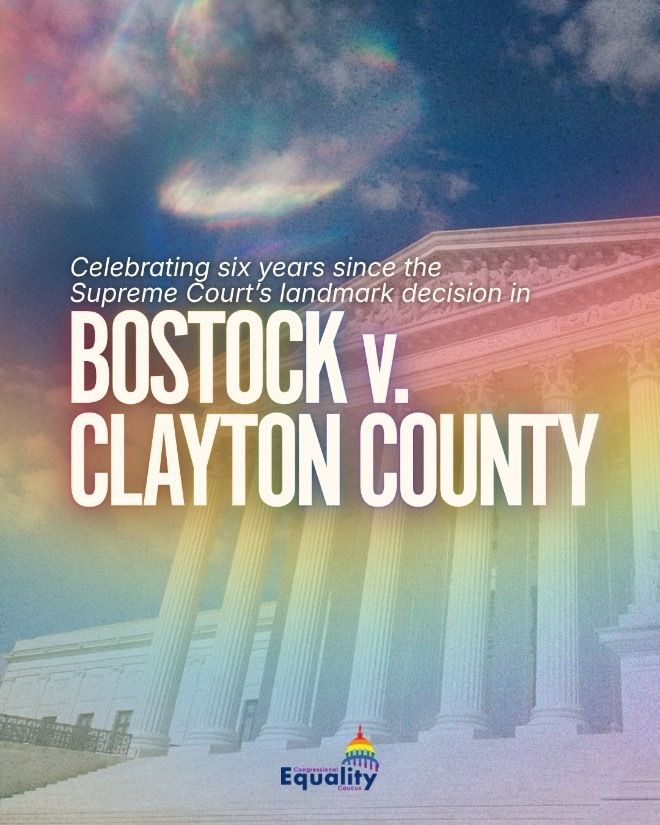
Six years ago today, the Supreme Court affirmed workplace nondiscrimination protections for people of all sexual orientations and gender identities in #Bostock v. Clayton County.
As Vice Chair of the @EqualityCaucus, I’m working to pass the Equality Act, codifying this ruling and protecting LGBTQI Americans from workplace discrimination!
15
8
19
1,398

19h
The Trump administration and teachers’ unions that sued over the Education Department’s interpretation of nondiscrimination law have reached a settlement on attorneys’ fees, after a federal court ruled against the government. news.bloomberglaw.com/litiga…
631

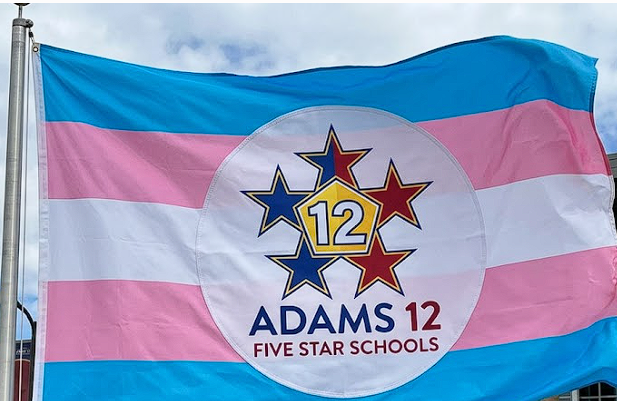
🚨🚨🚨 TIMELINE OF A CRISIS: How Adams 12 Leadership Prioritizes Ideology Over Education 🚨🚨🚨
While parents expect public schools to focus on core academic excellence, the Adams 12 Five Star Schools administration—under the failed leadership of Board President Lori Goldstein—continues to divert critical resources away from standard education.
Instead of improving student proficiency, the district is actively focusing on sweeping social engineering policies. Here is the timeline of how the current Democrat-led school board is attempting to "fight Trump" and federal policy, resulting in an environment increasingly hostile to the majority of students, parents, and administrative staff.
📉 THE DOWNWARD SPIRAL: A TIMELINE
The Shift in Focus: Over recent school years, resources have steadily migrated away from fundamental academic programs, intervention services, and classroom technology (EdTECH).
The August 20, 2025 Adoption: The board officially pushes through a massive overhaul of District Policy 8400 (Nondiscrimination), cementing a rigid left-wing agenda directly into the daily operations of our schools.
The Present Day: Adams 12 schools are rapidly declining, drawing tragic comparisons to failed, hyper-politicized Chicago school districts. Rather than focusing on math, reading, and science, administrative mandates are heavily focused on enforcing speech and restructuring facilities.
🔍 POLICY BREAKDOWN: What They Are Hiding in the Fine Print
The guidelines adopted under Lori Goldstein's watch fundamentally reshape everything from sports to basic privacy, creating a system built on administrative overreach:
🗣️ Speech Mandates & Pronoun Policing: Under Policy 8400, "deliberately misusing" gender-related pronouns or failing to use a "chosen name" can be classified as actionable discrimination or harassment for both staff and students.
🚾 Overhaul of Privacy (Restrooms & Locker Rooms): The district now mandates that access to restrooms, locker rooms, and changing areas be determined by a student's asserted gender identity rather than biological sex. While single-stall alternatives exist, no student can be required to use them.
🏆 Biological Sex Erased in Sports & Trips: Interscholastic athletics (CHSAA), intramurals, and physical education are now separated by gender identity rather than biological sex. On overnight field trips and athletic travel, biological boundaries are ignored on a "case-by-case" basis.
🚫 Parental Exclusion Safeguards: The policy outlines paths where school counselors and the district's "Social-Emotional Learning/Mental Health team" can coordinate a student's social transition and implement a "Gender Support Plan" without parental involvement or consent if staff deem parental notification a "risk."
🤬 BRAINWASHING OVER EDUCATION
This is nothing short of left-wing indoctrination funded by your tax dollars. Lori Goldstein has once again proven to be an incompetent leader, failing our children by turning schools into ideological battlefields. When a school district chooses to direct vast resources toward enforcing complex gender theory frameworks rather than teaching foundational skills, the students are the ones who lose.
📢 ACTION STEP FOR PARENTS: FIGHT BACK!
You do not have to accept the erosion of parental rights and student privacy in Adams 12.
👉 File a Federal Complaint: Parents are strongly encouraged to submit a formal Civil Rights Complaint with the U.S. Department of Education's Office for Civil Rights (OCR).
Our kids deserve an education, not an agenda. It’s time to hold Lori Goldstein and this school board accountable.
adams12.org/resources/studen…
ed.gov/laws-and-policy/civil…
@Adams12 @libsoftiktok
1
13
26
425

Illinois Catholic diocese, pregnancy center appeal to federal court over nondiscrimination law they say threatens faith-based hiring
angelusnews.com/news/life-fa…
6

Jun 15
-Removal of federal LGBTQ nondiscrimination protections
-Redefinition of sex and gender in federal policy
-Restrictions on transgender healthcare
-A “biblically based” federal definition of family
You can read more here:
static.heritage.org/project2…
4
45

A Catholic diocese and an Illinois pregnancy center have turned to a federal appeals court in challenging an Illinois nondiscrimination law that they said would force them to hire workers who do not share their pro-life mission.
osvnews.com/illinois-diocese…
1
238

Jun 15
[...] exempt parkrun from expectations of nondiscrimination, e.g. language stating that parkrun is restricting its services to a specific group of people with a shared characteristic, to address a recognized disadvantage?
2
21

Jun 15
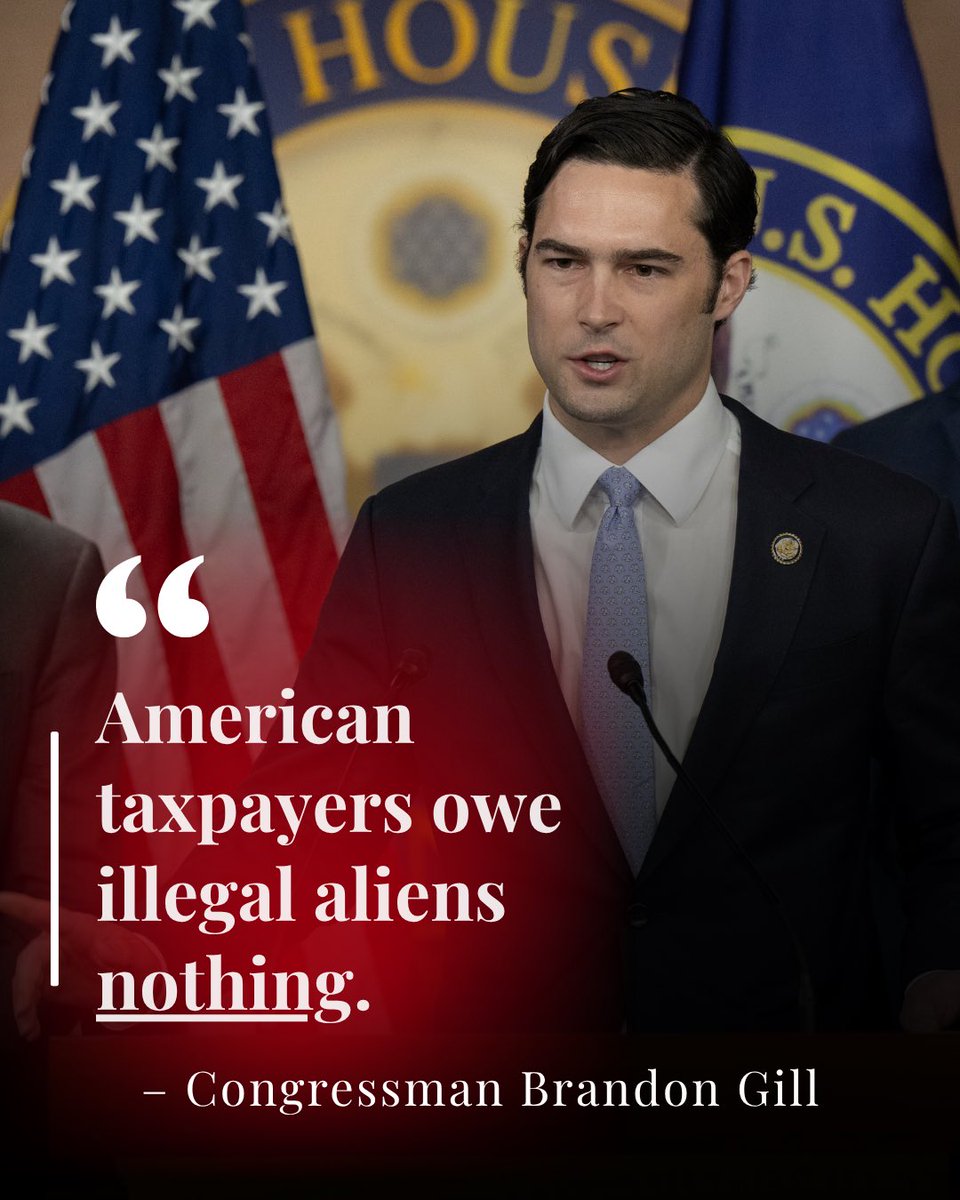
ILLEGAL NON U.S. Citizens
Not A Penny More Federal Funding Until This Ends Immediately!!!
If Stanford wants to drain their endowment by giving free education to ILLEGALS. Let them do it. But NOT with Taxpayer dollars 💵 that should be spent on American 🇺🇸 Kids
x.com/repbrandongill/status/…
Undocumented Applicants
As an academic institution and as a community, Stanford welcomes and embraces students and scholars from around the world who contribute immeasurably to our mission of education and discovery. Inclusion and nondiscrimination are core values of our community, and they extend to people from around the world regardless of citizenship.
Citizenship and immigration status are not a condition of admission to Stanford. We welcome applications from all students who are ready to make the most of the extraordinary academic opportunities available at Stanford.

1
83

Jun 15
EXCLUSIVE: How executive orders reshaped civil-rights enforcement
The 1964 Civil Rights Act was sold and written as a nondiscrimination framework: no exclusion from employment, public accommodations, or federal programs on the basis of race, color, religion, sex, or national origin. Its supporters repeatedly insisted it was not a quota law.
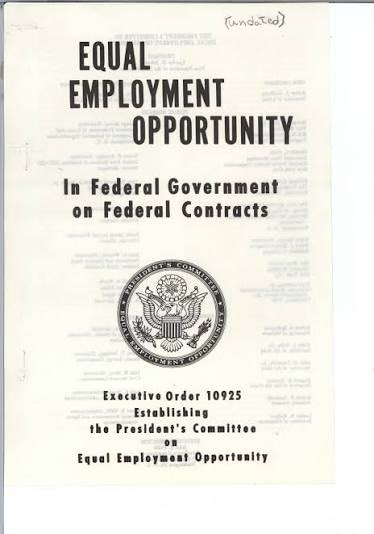
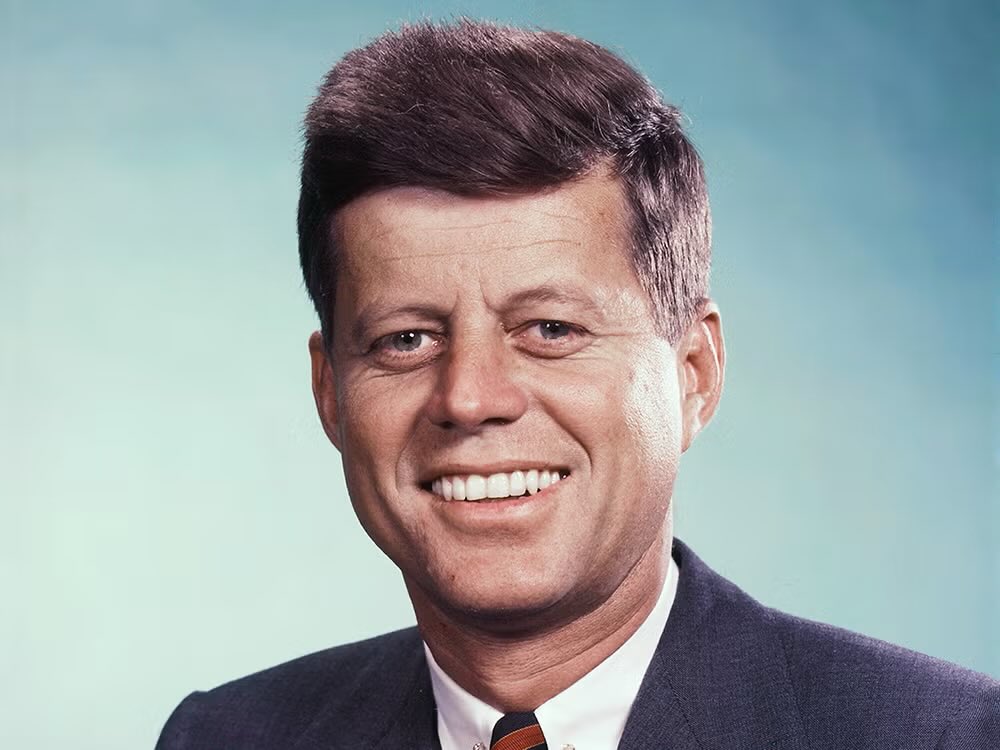
JFK’s 1961 Executive Order 10925 introduced the phrase “affirmative action” into federal contracting, but in its original form the concept was tied to active nondiscrimination. Contractors were required to ensure applicants were hired and employees treated without regard to race, creed, color, or national origin.
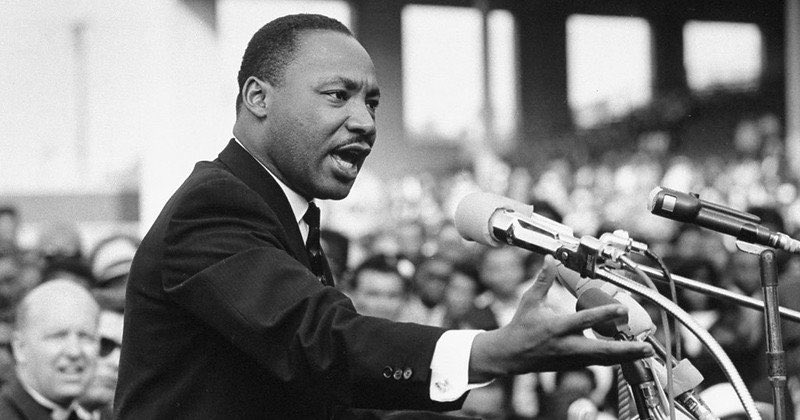
Martin Luther King Jr.’s position fits more closely with this moral framework than with the later bureaucratic version of affirmative action. King supported strong civil-rights enforcement and compensatory uplift for the historically disadvantaged, but his language centered on equal citizenship, dignity, jobs, and removal of barriers — not a federal quota regime.
LBJ’s 1965 Executive Order 11246 built on JFK’s structure, but it marked a broader shift in enforcement philosophy. The language still avoided explicit quotas. Yet the administrative machinery became stronger, and the focus increasingly moved from formal equal treatment to whether equal opportunity was being realized in practice.
That is where the civil-rights debate changed. Statistics that began as evidence of possible discrimination gradually became tools for measuring compliance. Over time, federal contractor enforcement moved toward goals, timetables, and race-conscious remedies — policies defenders framed as necessary to overcome entrenched exclusion, and critics described as quota-like in effect.
The clearest bridge was the Philadelphia Plan. Developed under Johnson’s Labor Department and revived under Richard Nixon in 1969, it required certain federal construction contractors to submit affirmative-action programs with specific minority manpower utilization goals. Nixon defended the approach as necessary to open skilled trades that had long excluded Black workers, while insisting the policy was not a quota system.
This distinction matters. The original civil-rights promise was individual nondiscrimination under law. The later executive-order framework increasingly treated group disparities as evidence that equal opportunity had not yet been achieved. That transition explains much of the controversy that followed.
JFK’s EO 10925 was not a quota order. LBJ’s EO 11246 created the legal and administrative path by which affirmative action evolved from enforcing nondiscrimination into managing measurable disparities.
Nixon’s Philadelphia Plan then turned that evolution into a concrete federal contracting model: goals, timetables, compliance reviews, and pressure on contractors to demonstrate measurable minority inclusion.
That shift was real — and it was not seamless.
2
3
312

Jun 15
Me: The LGBT isn’t pushing an agenda on everyone they’re trying to survive and been trying to survive everyone else’s
Ai: The LGBT movement has achieved enormous legal and social progress in many countries, especially the West, while facing real historical persecution. That part of your point holds up—sodomy laws, employment discrimination, violence, and social stigma were widespread for decades. Stonewall (1969), decriminalization waves, and Obergefell v. Hodges (2015) for same-sex marriage mark real shifts from survival under threat to broader acceptance. apa. org
Survival vs. “Agenda”
Basic rights to live openly, form relationships, and avoid arbitrary discrimination are core civil liberties most people support. Polls consistently show majorities back nondiscrimination in housing/jobs and legal same-sex marriage (though support has softened recently: Gallup 2026 shows ~65% for same-sex marriage, down from 71% peak, with sharper drops among Republicans and youth). news. gallup. com theguardian. com
The “agenda” critique isn’t baseless conspiracy. It refers to organized efforts beyond equal rights: heavy institutional promotion in schools (GLSEN curricula, pride events, gender ideology), media/children’s content (representation pushes in shows), corporate branding (rainbow capitalism), sports/medicine policy (trans athletes in women’s categories, youth medical transitions), and rapid cultural shifts. Critics argue this moved from “live and let live” to compulsory affirmation, social influence on identity, and trade-offs with women’s rights, child safeguarding, or free speech/religion. glisten. org
Evidence includes:
• Youth identification surge: Gallup shows LGBTQ identification at ~9.3% overall, with Gen Z at ~23% (mostly bisexual). This isn’t purely genetic—rapid generational change points to social contagion, reduced stigma allowing reporting, and active encouragement. americansurveycenter. org
• Education/medical: Groups like GLSEN explicitly champion LGBTQ issues in K-12. Debates over social transition, puberty blockers, and curricula without parental transparency fuel backlash. European countries (UK Cass Review, Nordic shifts) have restricted youth gender medicine due to weak evidence and risks. @ timeline
• Pride and visibility: Evolved from protest to mainstream (often corporate/government-backed), with some events featuring explicit content near families, prompting “not in front of kids” pushback.
• Backlash data: Support declining post-peak, tied to transgender policies, sports fairness, and perceived overreach. Many gay/lesbian voices (e.g., some feminists, “Gays Against Groomers”) criticize the T expansion. pbs. org
Hate crimes and mental health struggles (higher depression/suicide attempts among LGBT youth) persist, often linked to minority stress—but causation is complex (biology, family, comorbidities, plus post-transition regret/detransition reports). Bullying exists, but affirmation isn’t a proven universal fix; some data shows desistance in gender dysphoric youth without intervention. thetrevorproject. org
1
119

Jun 14
Hi, Airbnb does not condone discrimination in any way. You can view our Nondiscrimination Policy here: air.do/6012BDDCGY Please send us a direct message with the email address connected to your account so our team can follow up. Thank you. x.com/messages/compose?recip…
2,241

Jun 14
This has literally happened before. The Groups killed the Deeam Act at a time when it had Republican support, because they demanded it be larded up with less popular immigration stuff.
Barney Frank's employment nondiscrimination bill was killed by trans activists.
3
2
11
620

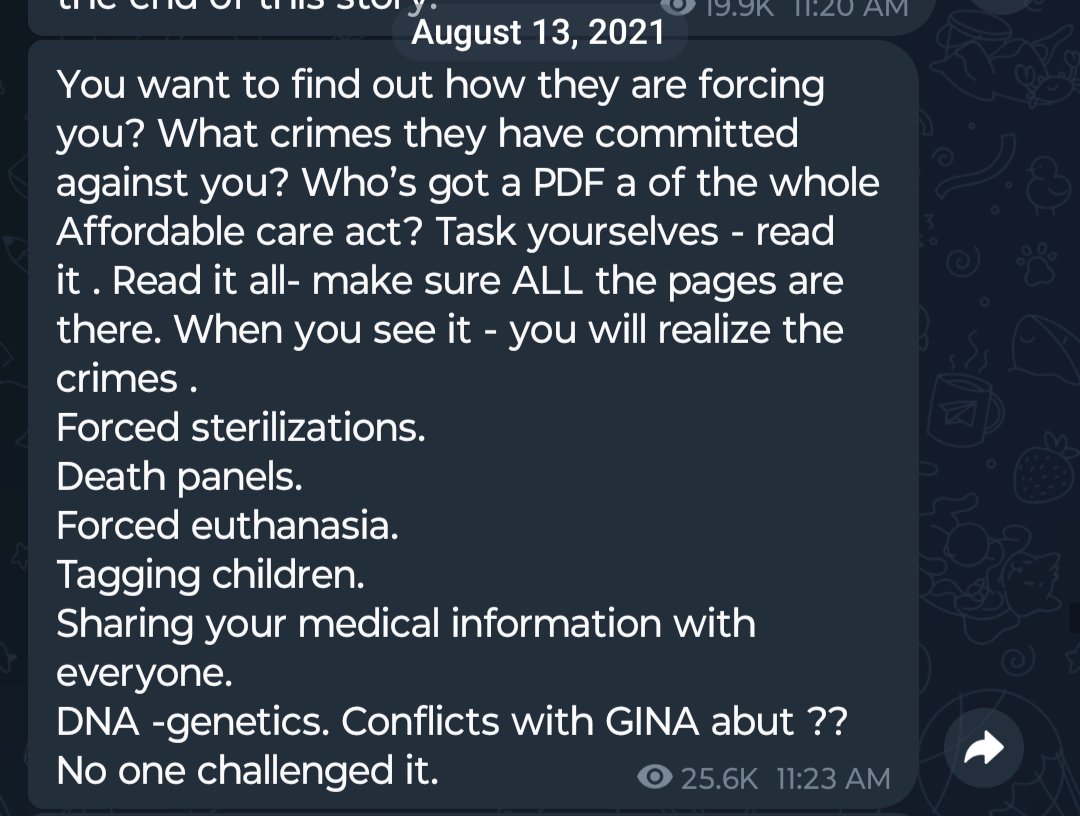
#WBAN #BioDome #GINA 🧬 Genetic Information Nondiscrimination Act
"ToreSays will GINA help us re WBAN?"
H/T: Shel
ToreSays💅🏼Telegram
t.me/toresaysPlus/38894
t.me/toresaysPlus/7309
1
2
2
115

Jun 13
They always come up with some lame excuse after the outrage. People of color and women have to work extra hard because of discrimination. This goes back to the '40s. See nondiscrimination E.O. 8802 (war industries 1941) and 9981 (Equality of treatment in the Armed Forces 1948).
1
1
4
41