
Jun 13
Why do tech companies keep repeating the same bugs? A deep dive into the baffling UX inconsistencies that keep making it to release. Watch the full breakdown here. #UX #TechNews #SoftwareBugs #UI
3


Jun 11
The Daily Tech Digest - June 11, 2026 explores what it takes to build AI‑native leadership teams, just as software begins to prove its own security through autonomous verification.
#IdentityRisk #PostCloud #Strategy #SolutionArchitecture #EnterpriseArchitecture #DataManagement #Passkeys #SoftwareBugs #Leadership #AIRisk #VibeCoding #Resilience
links.kannan-subbiah.com/202…
1
9

Jun 10
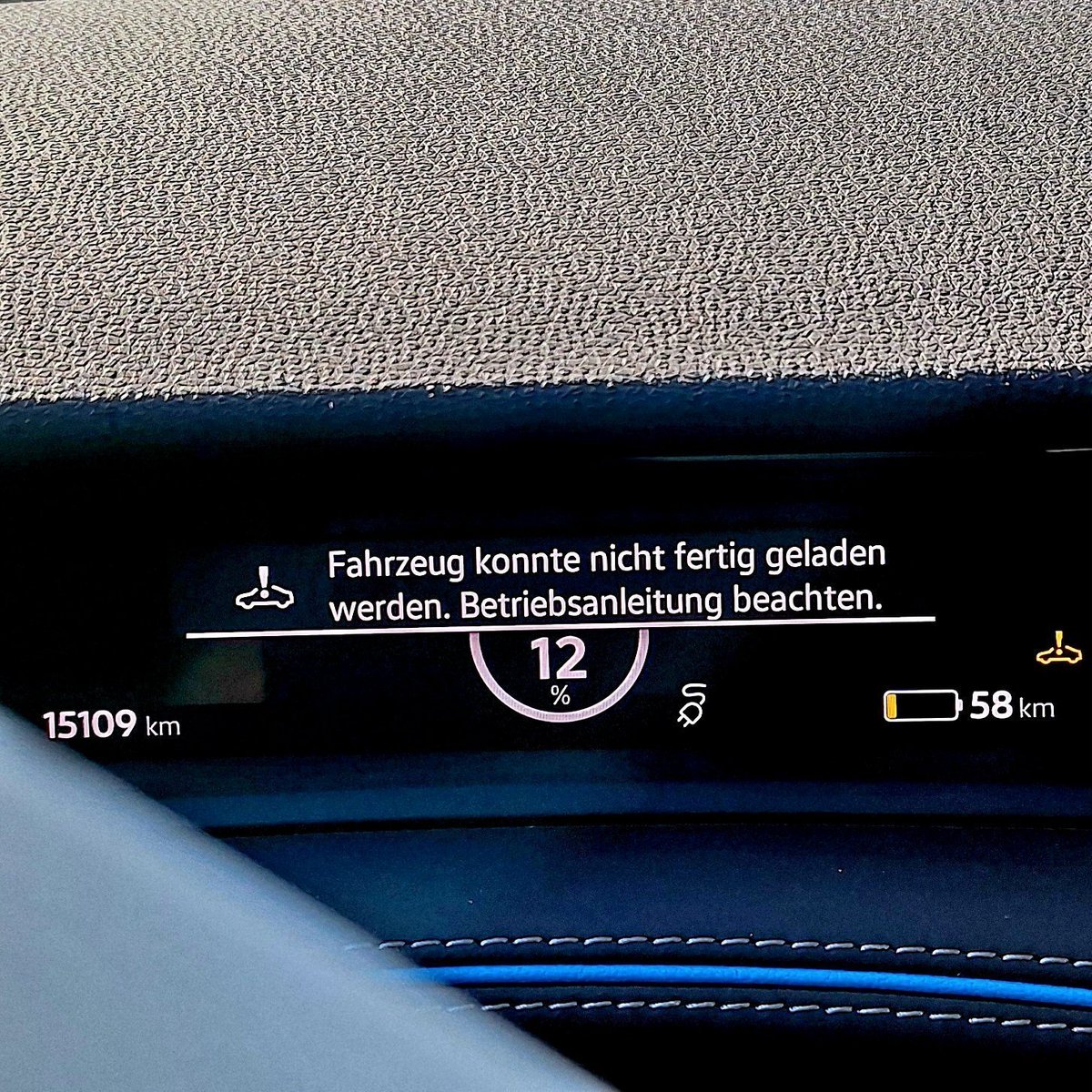
Kann ich ein Lied von singen.
Ladeabbrüche, Softwarebugs, spinnende Fensterheber, nicht schließende Türen, Klappern, irrlichternde Assistenten, fehlerhafte Navi-Ortung, unfähiger Service.
1
1
90


Apr 26
$4.5 billion.
That's what one company lost in a single software breach.
The uncomfortable part: it wasn't bad luck. It's how we write code.
I break it down, no jargon, in EP01 of TAU Decoded:
youtu.be/G08Z1_XGzfg?si=Jv8X…
#TAUNet #FormalVerification #SoftwareBugs
1
5
411

Apr 3
Hier ist jemand kurz davor, seinen Jahresverdienst für Werkstattaufenthalte, billiges Plastik, unnötige Abos und Softwarebugs zu verschwenden.
Was machen wir mit ihm?
Apr 3

Liebe Elektrofahrer, hat jemand von Euch Erfahrungen mit ID.4, Ioniq 5 oder Enyaq gemacht? Will endlich vom geliebten Diesel-Touran auf Strom umsteigen und bräuchte mal ein paar Meinungen von Euch.
27
1
80
9,818

Mar 22
Die deutschen Hersteller schiessen sich selber ab. Scheiss Motoren, im 180er Benz zb nen 1.3er Renaultmotor, viel billiges Plastik und nur noch Touch,nur 1 Jahr Garantie und 1 Gewährleistung, Softwarebugs und das mit Apothekerpreisen, läuft nicht und das ist gut so.
1
12
375

Mar 12
In der Tat ist USA das Fels in der Brandung. Jedoch reicht das für d. Turnaround nicht aus. Wichtig ist, dass Porsche bis 2027 die Softwarebugs in den Griff bekommt u. China sich stabilisiert. Ich würde es dieser ikonischen Marke wünschen.
Danke für die fundierte Rückmeldung.
2
152

Jan 26
It's not procrastination, it's called "debugging" 😆 Who else spends hours staring at code trying to figure out why it won't work? #codinglife #softwarebugs #developerstruggles

2
1
2
33

Jan 19
Ich auch nicht, ist aber leider das übliche "Kugelfisch-Gehabe" wenn es um Venture Capital geht. Die haben IMHO versäumt, sich einen entsprechenden Industriepartner mit exzessivem R&D Knowhow ins Boot zu holen. Softwarebugs kommen ja in den besten Unternehmen vor,
2
4
213

The best type of bug - the one that flashes 3 motivational quotes/second 😂
#softwarebugs #bugbash #Motivationalquote #careerclarity
3
47

5 Aug 2025
Google’s "LLM-based vulnerability researcher Big Sleep found and reported 20 flaws in various popular open source software."
#ai #softwarebugs #Google techcrunch.com/2025/08/04/go…
2
54

10 Jun 2025
Struggling with #SoftwareBugs? #AI & #MachineLearning are transforming Root Cause Analysis (RCA), making it faster & easier!💡Discover with Bart Pawlowski how AI helps teams fix issues quicker for higher quality #software👉n9.cl/h7xjrz Ticket👉n9.cl/zz7dd

1
2
42

11 May 2025
Der Grund ist momentan unbekannt. Das haben Fehler auf Softwareseite zunächst so an sich und ist ärgerlich. BMW wird den Fehler letztlich finden. Teslaalexander hat genug zu meckern, wenn er sich mit den Softwarebugs von Tesla beschäftigt.
1
19

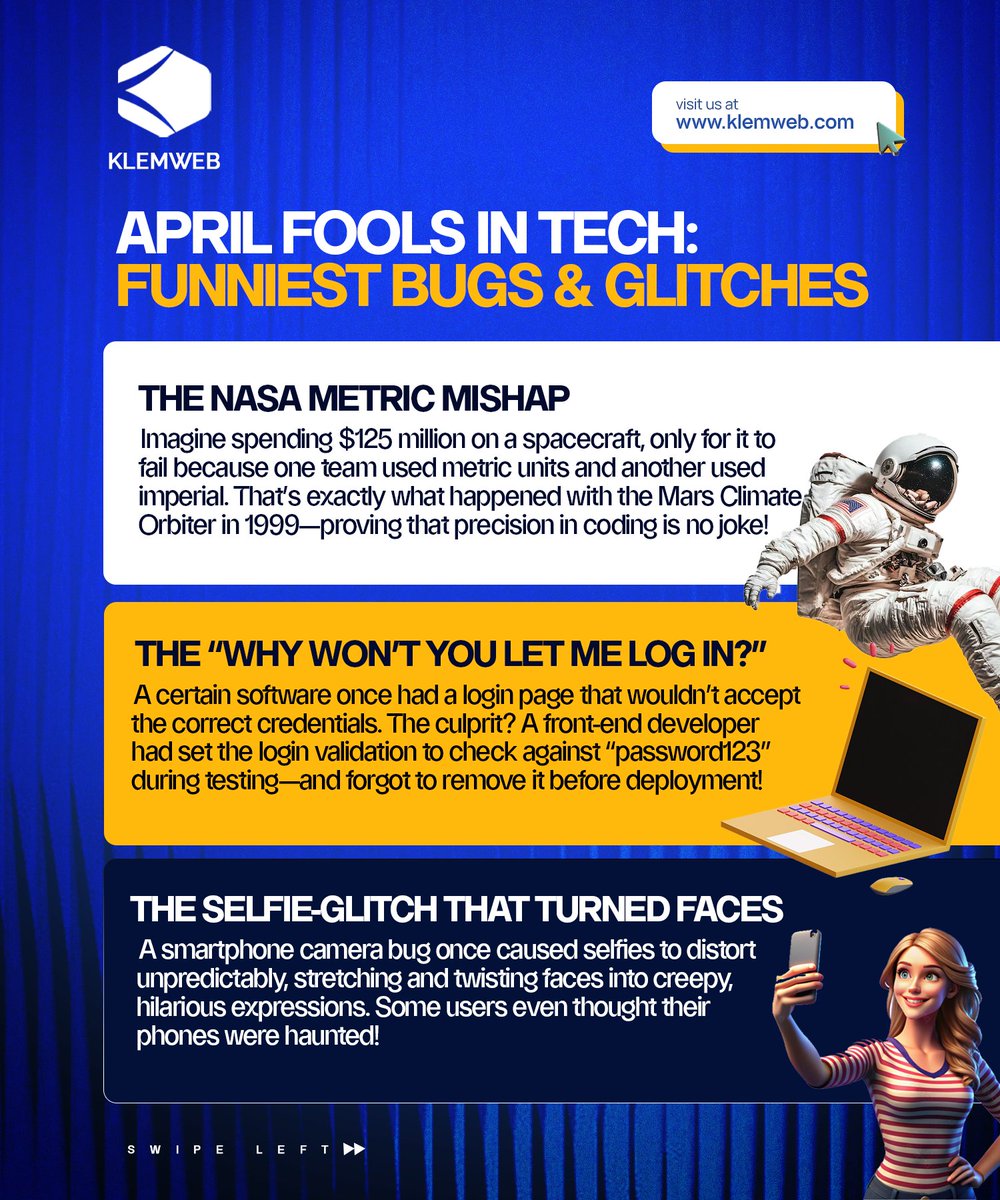
April Fools in Tech: Funniest Bugs & Glitches
Bugs can be frustrating, but they also remind us of the fun side of tech.
#AprilFools #TechFails #SoftwareBugs #FunnyGlitches

2
2
45


14 Mar 2025
[Problems of Bitcoin]
1.Scalability Issues:
- Low Transaction Processing Speed:
Bitcoin can only process about 7 transactions per second (TPS). In contrast, Visa handles thousands of transactions per second. This limits its use for large-scale commercial applications.
#BitcoinScalability #LowTPS
- Block Size Limitation:
The 1MB block size limit (slightly improved with SegWit) causes network congestion and longer processing times as transaction volume increases.
#BlockSizeLimit #NetworkCongestion
2.High Transaction Fees
When the network is congested, users must pay higher fees to prioritize their transactions. This makes it inefficient for microtransactions.
#HighFees #MicrotransactionFail
3.Energy Consumption
- Proof of Work (PoW):
Bitcoin uses a Proof of Work mechanism for mining, consuming vast amounts of electricity. As of 2023, the Bitcoin network’s annual energy consumption rivals that of some small countries (e.g., Argentina).
#ProofOfWork #EnergyHog
- Environmental Controversy:
Increased carbon emissions have led to criticism for its negative environmental impact.
#BitcoinCarbon #EcoCriticism
4.
Volatility
Bitcoin’s price is highly volatile, making it difficult to use as a stable store of value or payment method. For example, it’s common for prices to fluctuate by 10-20% in a single day.
#BitcoinVolatility #PriceSwings
5. Association with Illicit Activities
Bitcoin’s high level of anonymity has led to its use in dark web transactions and illegal activities (e.g., drugs, hacking ransoms). While not fully anonymous, its difficulty to trace is seen as a problem.
#DarkWebBitcoin #IllicitUse
6.Centralized Mining
Although Bitcoin aims for decentralization, mining is dominated by a few large mining pools. For instance, China or specific companies have controlled significant portions of the hashrate in the past.
#CentralizedMining #HashrateControl
- 51% Attack Risk:
Theoretically, if 51% of miners collude, they could manipulate the network.
#51Attack #NetworkRisk
7. Lack of User-Friendliness
- Complex Wallet Management:
Losing a private key means permanently losing funds, and setting up and using it is challenging for beginners.
#WalletComplexity #KeyLoss
- Irrecoverability:
Unlike banks, there’s no password reset option, so accidentally losing access means no recovery.
#NoRecovery #UserError
8. Regulatory Uncertainty
Governments worldwide are attempting to ban or regulate Bitcoin (e.g., China’s mining ban). This creates legal instability and increases investor anxiety.
#BitcoinRegulation #LegalRisk
9.Economic Limitations
- Lack of Functionality as Currency:
Its deflationary nature (capped at 21 million coins) encourages hoarding rather than spending, making it inefficient as a practical payment method according to critics.
#DeflationaryFlaw #HoardingIssue
- Lack of Consumer Protection:
There’s no recourse for fraud or hacking victims, unlike with banks or credit cards.
#NoProtection #CryptoScams
10. Technical Vulnerabilities
- Quantum Computing Threat:
If quantum computers become widely available in the future, Bitcoin’s encryption (SHA-256, ECDSA) could potentially be broken.
#QuantumThreat #CryptoSecurity
- Software Bugs:
Bugs in Bitcoin Core software could endanger the entire network if discovered.
#SoftwareBugs #NetworkVulnerability
11. Social Issues
- Wealth Concentration:
Early adopters and large holders (whales) own most of Bitcoin, potentially exacerbating wealth inequality.
#WealthGap #BitcoinWhales
- Limited Financial Inclusion:
Regions without internet or technological access cannot use Bitcoin, limiting its global inclusivity
12. Difficulty in Upgrading
As a decentralized system, protocol upgrades (e.g., SegWit, Taproot) are slow and require difficult community consensus, leading to criticism that technological progress is hindered.
#Bitcoin #BitcoinProblem
74
22 Dec 2024
LOL. Der Audi ist der größte Mist-Hobel auf dem eAuto Markt. Viel Spaß mit den Softwarebugs und mehrwöchigen Werkstatt-Aufenthalten im Jahr.
1
2
127

19 Dec 2024
7 Most Common Engineering Bugs and How to Avoid Them
Explore common software bugs and prevention strategies, featuring real-world examples like the Ariane 5 rocket failure.
🔗 hubs.la/Q0300V-p0
#Engineering #SoftwareBugs #AITestingTools #AIAgent
2
2
49