
Subside - Makoa Shelf DLC is INCREDIBLE! youtu.be/6gO6soQBoEU?si=aLxa… via @YouTube @MetaQuestVR @Khena_B #Subside #SubsideDLC #DLC #VR #Steam #PSVR2 #QuestCreatorPartner #Quest3
1
29

Such anger will not simply go away. It’s a pent up frustration of 35 years. Many of those throwing eggs remember only this since birth. But, it will naturally subside. Intense intervention will create unrest. It’s a natural vent.
2

I’m really not ok.
Yesterday I thought maybe my writing was coming back.
Maybe my flare was finally starting to subside.
Then today it all came crashing down again.
One step forward, three steps back.
I miss everyone & appreciate all the good vibes!
8
3
61
423

Mildest dose of reaction is causing tremors in the minds of TMC leaders when they deserve many time more than this. TMC leaders atrocities on Hindus unforgettable and whatever punishments is given cannot subside their atrocities.
13
Sakthi vel chandrasekaran 🖤 retweeted

3times * 10ml x 5 years. Probably your burning will subside.

1
2
3
282


The liberal vision is totalising and their only agenda post WW2 has been to conclude that their vision is the only one. Hopefully a post liberal world where decay, degeneracy & delusion subside, we will be able to look at visions that don’t conclude whites and all males are evil
3
90

16 June 2026 – Today in History
1652
From the diary of Jan van Riebeeck:
The wind blew from the southwest and, although not explicitly stated, the day appears to have been overcast and wet. The waves in Table Bay were described as enormous. The wind only began to subside late in the afternoon.
1653
From the diary of Jan van Riebeeck:
Daybreak brought a pleasantly warm and sunny day to the Cape. Three cattle were traded from the indigenous people.
1654
From the diary of Jan van Riebeeck: The entries for 15–18 June 1654 were recorded together under 15 June. The weather was simply described as pleasant.The galleon Roode Vos had been sent to Madagascar on 8 May 1654 to obtain provisions for the Cape because the homeward-bound fleet had bypassed the Cape and sailed to Saint Helena. The ship Tulp had been sent to Saint Helena to intercept the fleet and had recently returned. However, provisions remained critically low, and Tulp was dispatched to Madagascar to seek additional supplies. At that stage, the Cape had only about two months' worth of provisions remaining.
1655
From the diary of Jan van Riebeeck: The entries for 16 and 17 June 1655 were recorded together. The wind blew from the west on both days, and the weather was described as pleasant.
1656
From the diary of Jan van Riebeeck:
The morning brought a warm and pleasant day.The stable hands released the horses unusually early. Barely had the animals been turned out when a lion seized the largest stallion in the herd. Later that afternoon, while Van Riebeeck was walking through the Company's gardens, a huge lion suddenly appeared only about forty paces away. An alarm was raised. Several soldiers and many of Harry's people quickly arrived. Harry's men attempted to corner the lion in a ravine on the slopes of Table Mountain by using sheep as bait. The lion charged. Several assegais were thrown without success. One soldier fired but missed completely. Shortly afterward, a marksman killed the lion with a remarkable shot to the head:
"A splendid shot with three bullets straight into its head, causing it to fall dead immediately."Afterward, the lion was skinned. Remains of the stallion and parts of a porcupine were found in its stomach.The lion weighed 426 Dutch pounds and measured five and a half feet from head to tail.
1657
From the diary of Jan van Riebeeck:Daybreak brought another warm and pleasant day. Van Riebeeck visited the new vegetable gardens and inspected the ploughing operations.
Sunday, 16 June 1658
From the diary of Jan van Riebeeck:
A light southwesterly breeze blew a t dawn. The ship Prins Wilhelm had departed the Netherlands on 20 Janu ary 1658. Seventeen sailors out of a complement of 472 had died during the voyage, while another seventy suffered severely from scurvy.Workers on Robben Island supplied the ship with penguins and other provisions. Rijck Overhage n, who supervised activities on Robben Island, sent a letter expressing gratitude for a salary increase. He also reported losses among the sheep due to bad weather, including constant rain, cold, and strong winds. Rabbits were breeding successfully, and vegetable seed was requested.
1659
From the diary of Jan van Riebeeck:
Daybreak was dark and cloudy with intermittent rain. The wind shifted constantly. Free burghers returned from Dassen Island with a small quantity of seal oil. Their primary mission had been to obtain processed seal meat.They reported that the sheep shed on Robben Island appeared to have been destroyed by wind. Van Riebeeck immediately dispatched the vessel Shappenjacht to investigate. Additional personnel, including a carpenter, were sent to begin repairs if necessary. Carrot, beetroot, and spinach seeds were also sent so that the island could eventually become self-sufficient.
1835
Memoirs of Voortrekker J.H. Hatting: Hatting wrote that British soldiers generally knew little about frontier warfare. Many were employed building forts during the frontier wars. After peace had been concluded with the Xhosa, the authorities captured Hintsa ka Khawuta and held him prisoner against his will. When Hintsa later attempted to escape, he was shot dead. This incident led to a renewed frontier war lasting six months. At the end of the conflict, frontier farmers were compelled to surrender their horses to British forces. Many had to walk home carrying only their saddles and muzzle-loading rifles.Some took as long as seven months to return to their farms. Hatting recalled:
"Emaciated, exhausted, feet worn raw, clothes torn, burned by the sun, without hats or shoes, many people returned home..."Many frontier farmers only learned upon their return that slavery had been abolished. Although compensation was later offered, they felt they received very little benefit. Hatting believed these grievances gradually nurtured a spirit of resistance among the people.
Friday, 16 June 1837
From the diary of Louis Tregardt:The previous evening, chaos erupted unexpectedly near Strijdom's wagon. Louis initially feared someone had fallen into the fire, but the cause was quite different: Willem and Louw had come to blows over Botha's adopted stepdaughter, Hendrina. Pieta intervened and separated them. Strijdom then attempted to strike Louw with a wooden beam, but Louis stopped him. The following day, several men cut poles in the veld. Carolus fitted two wheel rims. Renosterarm built a screen for Louis, who offered him a cowhide in payment. Botha was likely constructing a Cape-style hut, although the diary does not explicitly state this.
1838
No diary entry was recorded on this day by Reverend Erasmus Smit.Saturday,
16 June 1838
From the diary of Erasmus Smit:Hans "Dons" de Lange, his son-in-law Izak van Niekerk, and Lukas Meyer returned safely from a journey to Port Natal.
16 June 1900
Second Boer War – Day 249Lord Roberts issued Proclamation No. 5 of 1900, which effectively gave official approval to the British scorched-earth policy. Farms, some towns, and even churches were burned. Livestock was confiscated or destroyed. Large quantities of Afrikaner cultural property and family possessions were either destroyed or removed.
The greatest tragedy, however, was the loss of life in the concentration camps, where thousands of men, women, and children died.
The text specifically commemorates the heavy losses suffered by many South African families, including the Botha, Coetzee, De Beer, Du Plessis, Erasmus, Fourie, Jacobs, Joubert, Kruger, Nel, Pretorius, Prinsloo, Smit, Van der Merwe, Venter, and Viljoen families.
16 June 1901
Second Boer War – Day 614The government of the South African Republic was located at Kalbasfontein, northeast of Bethal.
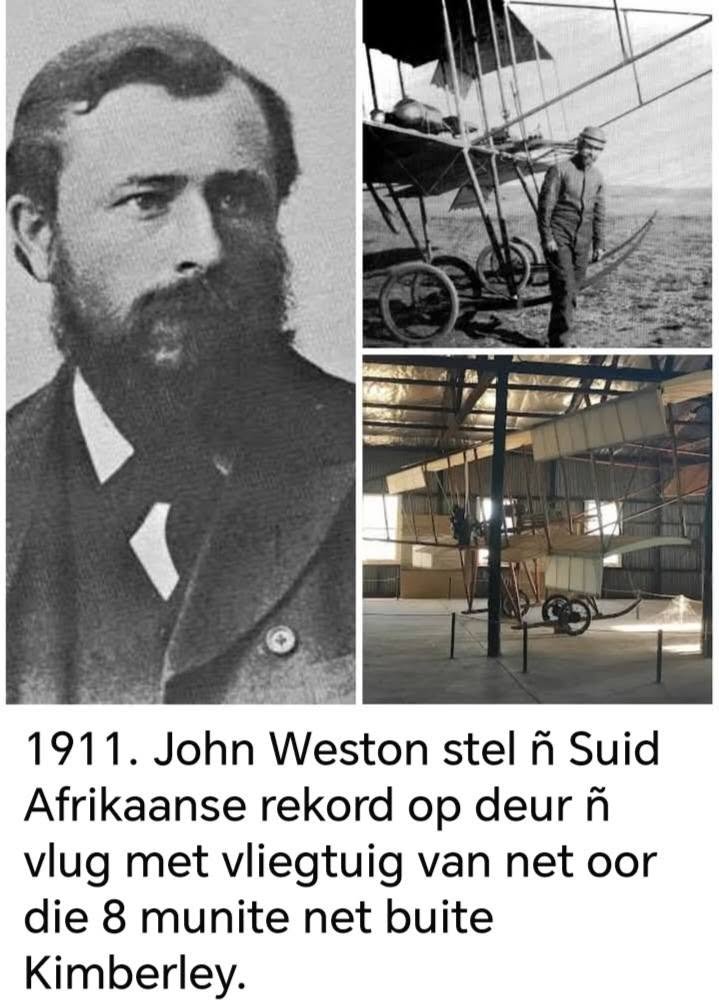
1911
John Weston set a South African aviation record by flying a powered aircraft for eight and a half minutes before landing.The flight took place near Kimberley in a Weston Farman biplane powered by a 50-horsepower Gnome engine.
1975
The naval base at Simon's Town Naval Base was formally transferred from Britain to South Africa, ending an agreement that had been in effect since 1955.
1976
The Soweto Uprising began, sparked by opposition to the compulsory use of Afrikaans in Black schools.
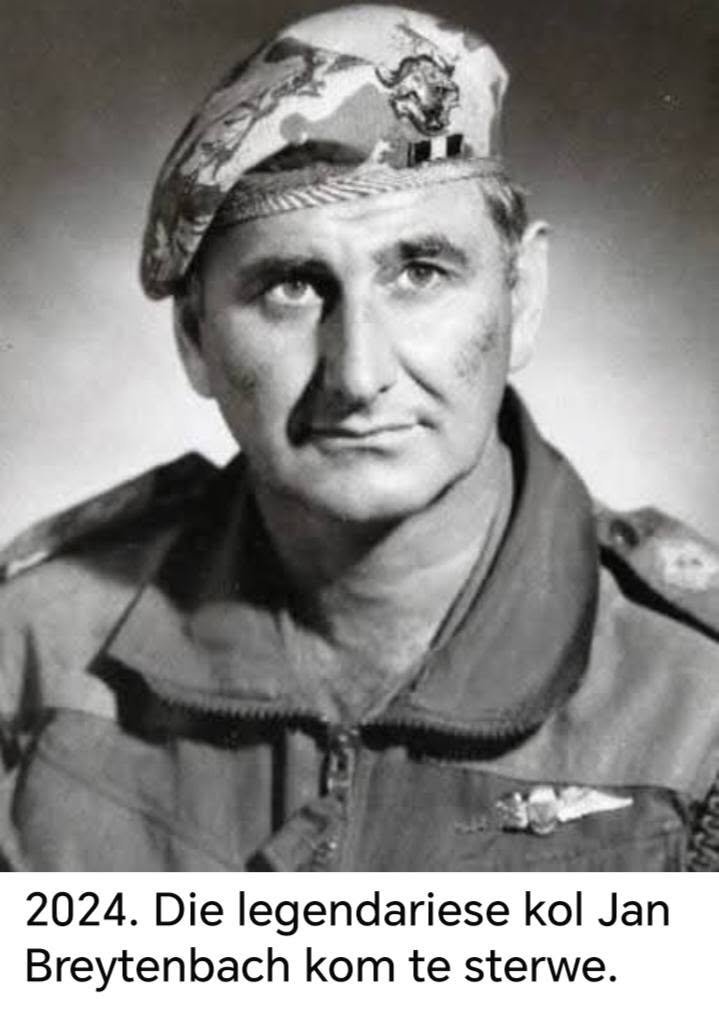
2024
Colonel Jan Dirk Breytenbach died at the age of 91.
He is remembered as the founder of several South African special forces units, including 1 Reconnaissance Commando (the Recces) and 32 Battalion, and as a commander of 44 Parachute Brigade.
He is remembered as a soldier who, together with his men, repeatedly undertook some of the most demanding and dangerous military operations of his era.


1
11
232

there's is this place I call home,
in the present moment, where past and future subside, and the only thing that exists is bliss.
I kind of like it.
1
20

The Trickster Instinct
Mastering the trickster instinct is essential not only for commerce but also for warfare.
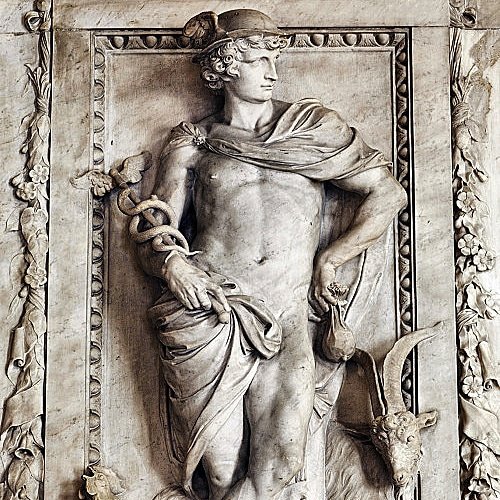
Both Alexander the Great and Julius Caesar mastered the arts of psychological warfare, bluffing, and deception. In the ancient world, this kind of military cleverness had a Greek name: mêtis — a combination of cunning, dissimulation, and opportunism (the classical quality of the trickster, exemplified by Odysseus).
The true trickster side of Alexander and Caesar appeared in their military tactics, designing brilliant traps in which deception was the primary weapon.
1. Alexander the Great
The supreme example of Alexander acting as a strategic trickster occurred at the Battle of the Hydaspes River (326 BC), in India, against King Porus.
Porus possessed a massive army and an apparently insurmountable barrier: hundreds of war elephants lined up along the opposite bank of a swollen and turbulent river during the monsoon season. Attempting to cross under Porus's watchful eyes would have been suicidal. What Alexander did instead was a psychological game that lasted for weeks.
A. The Logistical Bluff
He ordered massive food convoys to arrive at his camp and spread rumors that he intended to wait until winter for the river to subside.
B. The Noisy "Celebration"
Every night, Alexander ordered his cavalry to ride up and down the riverbank, blowing trumpets, shouting, and making as much noise as possible.
At first, Porus moved his elephants and troops in response to the commotion. After weeks of the same routine without any actual attack, Porus concluded: "It is merely a bluff meant to exhaust me," and stopped reacting to the disturbances.
C. The Silent Strike
Once the Indian army had become completely conditioned and relaxed by the repetitive noise, Alexander chose a night of violent storms, whose thunder concealed the sounds of real movement.
He left a double in the main camp with the campfires still burning to deceive enemy scouts, then secretly marched with his best troops 27 kilometers upstream, crossed the river in secret, and caught Porus completely off guard from the rear the following morning.
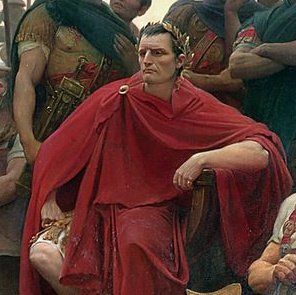
2. Julius Caesar
Julius Caesar operated at a level of audacity that bordered on insanity, constantly using the enemy's own perceptions against them.
A. The Siege of Alesia (52 BC)
Against the Gauls led by Vercingetorix, Caesar found himself in a bizarre situation: he was besieging a fortified city when a massive Gallic relief army (four times larger than his own) arrived and began surrounding him from the outside. He became the besieger who was besieged.
Rather than retreat, Caesar constructed two lines of fortifications: one facing inward to keep Vercingetorix trapped, and another facing outward to defend against the relief army. During the coordinated Gallic assault from both inside and outside, Caesar's defenses came close to breaking.
Caesar then resorted to pure theater of war. He donned his famous bright red cloak (paludamentum), making himself visible from nearly a kilometer away, gathered only a few remaining cohorts and cavalrymen, and rode outside the fortifications, creating the impression that he was leading a massive reinforcement force that did not actually exist.
The Gauls saw the red cloak, believed a large Roman army was flanking them from the rear, panicked, and retreated, causing the siege to collapse in Caesar's favor.
"All warfare is based on deception. When capable, feign incapacity; when near, make the enemy believe you are far away."
— Sun Tzu
Although these words were written by Sun Tzu, Alexander and Caesar practiced them perfectly without ever having read The Art of War.
4
150

2h
I can still vividly remember having to put my boy Bruno down. It’ll be 5 years this December.
He was the first dog that was my own (and then shared with my eventual wife). I went through so much with him.
I don’t think I’ll ever fully get over it, but I’m able to look back and have happiness override the sadness through reflecting on all the joy and love that he filled my heart with.
You can feel it through your post that your dog was very much loved, and I’m sure he knew it! Hopefully, in time, the pain and sadness you feel today will subside and you’ll be able to look back and only smile from all of the good times you shared with him.
Much love and respect to you man. 💙




3
46

“Subsided” is the past tense and past participle of the verb subside, which means to become less intense, violent, or strong, or to sink and settle to a lower level. Perhaps you should use the correct word if you want to be taken seriously.
6
G retweeted

🎙️@jasonrmcintyre: "The Brunson hate is gonna keep going. It's not gonna subside, ever. People are gonna say 'gimme SGA'. Well, we just watched SGA against the Spurs and he couldn't do anything."
🎧 FULL EPISODE: bit.ly/3xTJYl3
8
3
17
7,657

Stop antagonizing the Church of Jesus Christ and your depression will subside. Read the account of Alma the younger in the Book of Mormon and see how it can relate to your journey.
1
51

Don't rush it, yet.
Energy prices could stay high for months, (even) a year after US-Iran deal, economists warned.
Inflation across Asian economies will also take time to subside, reports Nikkei Asia.
Depressing news but be cautious to stay alert, Malaysia included.
Trump is f*cking 80 years old. His may be calling shots just as good as Biden.
asia.nikkei.com/business/mar…
32

@PeepMomma Did you get any of my messages,I haven’t heard from you ,I miss you ! I hope you are doing well ! I’m not doing so great,just praying 🙏🏻 the pain will subside at least a little bit! Plus all the other things ,side effects from the IV antibiotics !
3


4 to 6 SPCX per TSLA is an appropriate exchange. The SPCX hype will subside and the TESLA hype will rise this year
1
1
36