JG7MER / Ackee📡📶 retweeted

Jun 7
新着記事!『AI を活用した次世代のテスト自動化 - TestComplete に Vision AI を搭載』をエクセルソフト ブログに掲載しています。
#SmartBear #TestComplete #VisionAI #テスト自動化 #ソフトウェアテスト
xlsoft.com/jp/blog/blog/2026…
1
2
39

QA Automation Engineer - TestComplete - Software Technology - Trinidad, Colorado, United States
qualityassurancejobs.com/job…
5
May 21
5/27 (水) に開催 !
テスト自動化ツール TestComplete オンライン ハンズオン セミナー
SmartBear TestComplete は、デスクトップ アプリ、Web アプリ、モバイル アプリに対応した GUI のテスト自動化ツールで、ノーコードで比較的簡単にテストを自動化することができます。
本セミナーでは基本的な操作方法をレクチャーし、ハンズオンの参加型で操作を習得できますので、テストの自動化をご検討されている方はお気軽にご参加ください。
ぜひご参加下さい! お申し込みはこちら👇
xlsoft.com/jp/products/semin…
#SmartBear #TestComplete #テスト自動化 #ソフトウェアテスト

1
2
65

Mar 26
El sistema que vendemos lleva mínimo 2 meses de capacitación, necesitas saber SQL, manejo del motor Firebird y dependiendo el área cosas como el uso del testcomplete, etc, dudo que dures 6 meses laburando para mí con la idiotez que dijiste
2
5
790


3 Aug 2025
I’ve been in Software test engineering for over a decade.
🧪 I’ve seen test automation evolve from:
➡️ Basic shell/Python scripts
➡️ Record-and-play tools like selenium IDE, QTP, TestComplete
➡️ Selenium test suites that broke when any UI element changed
Then came the shift to code:
✅ pytest for fast backend/API tests
✅ JUnit/TestNG for scalable test suites
✅ We automated assertions, mocked services, tested logic early
🔁 CI/CD became the norm — tests ran on every commit Tests were no longer “extra.” They were essential.
Then came the browser revolution: 🚀 Tools like Cypress and Playwright gave us:
Parallel runs
Automatic waits
Reduced flakiness
Dev-friendly test flows
I still remember the first time I saw 50 UI tests run in under 2 minutes. Magic. ✨
🌐 Then in terms of performance testing:
JMeter ruled for a while
Then came k6: modern, scriptable, DevOps-ready We started testing scale, not just correctness.
But today?
I’m witnessing something wild.
🤖 Agent-vs-Agent Testing is here.
One AI agent simulates a user
The other is the system under test (AI chatbot, AI voice agent,)
LLMs like GPT act as judges, evaluating responses for: Correctness Tone Helpfulness Real intent match
We’re no longer asserting status codes or UI clicks.
We’re testing language, intent, and experience.
🧠 The test automation stack is no longer just a pyramid. It’s a feedback loop — powered by AI.
🎥 Want to see Agent-vs-Agent testing in action? Check the attached video
#QA #TestAutomation #LLM #AgentTesting #Cypress #Playwright #pytest #JMeter #k6 #DevOps #AI #SoftwareTesting #BuildInPublic #TestingCommunity
3
198

8 Jun 2025
Here are direct links to some of the most relevant AI-powered testing and QA tools for indie game projects:
modl:test (AI-driven automated game testing): modl.ai
modl:play (AI-powered gameplay balancing and player simulation): modl.ai
Applitools Autonomous (AI-based visual and functional testing): applitools.com
PlaytestCloud (real-player playtesting and feedback for mobile games): playtestcloud.com
Appium (open-source mobile UI automation): appium.io
Selenium (cross-platform automated testing): selenium.dev
TestComplete (automated UI testing): smartbear.com/product/testco…
Unity Test Framework (UTF) (automated testing for Unity projects): docs.unity3d.com/Packages/co…
Jenkins (continuous integration and automated test orchestration): jenkins.io
Each tool has its own strengths, so you can pick the ones that best fit your workflow and platform needs.
8

2 Jun 2025
LOL. I was involved with AQTime and TestComplete so I can guess the horror were it written in perl... that justs insidiously deviant. Just like a Furry
1
2
35

1 Oct 2024
Software testing is the process of evaluating and verifying that a software application or system meets the specified requirements and works as expected. It involves the execution of software/system components to identify any errors, gaps, or missing requirements. Here are the main aspects and types of software testing:
### Types of Software Testing
1. **Manual Testing**: Involves manually executing test cases without using any automated tools.
2. **Automated Testing**: Uses automation tools (e.g., Selenium, JUnit, PyTest) to execute pre-scripted tests.
### Testing Levels
1. **Unit Testing**: Tests individual components (e.g., functions, methods) in isolation. Example tools: JUnit, PyTest.
2. **Integration Testing**: Focuses on interactions between integrated components or systems. Example tools: JUnit, TestNG.
3. **System Testing**: Verifies the complete system as a whole to ensure it meets specified requirements.
4. **Acceptance Testing**: Validates the software against business requirements and is often the last step before release. It may involve User Acceptance Testing (UAT).
### Testing Methods
1. **Black Box Testing**: Tests the software from the user’s perspective without knowledge of the internal code structure.
2. **White Box Testing**: Involves testing internal code logic, often done by developers. It ensures code coverage.
3. **Gray Box Testing**: A combination of black-box and white-box testing, focusing on both internal and external aspects.
### Functional Testing
- Focuses on the functionality of the software.
- Example types: Smoke Testing, Sanity Testing, Regression Testing.
### Non-Functional Testing
- Focuses on performance, usability, and security.
- Example types: Load Testing, Stress Testing, Security Testing, Performance Testing.
### Tools for Testing
- **Unit Testing**: PyTest, JUnit, NUnit
- **Automation**: Selenium, Cypress, TestComplete
- **Performance Testing**: JMeter, LoadRunner
- **CI/CD Integration**: Jenkins, GitLab CI, CircleCI
### Importance of Testing
- **Detect Defects Early**: Identifying issues early reduces costs and effort.
- **Ensure Product Quality**: Ensures that the final product meets the user’s expectations and requirements.
- **Maintain Security**: Testing helps discover vulnerabilities that could be exploited.
- **Improve Performance**: Identifies bottlenecks or resource-heavy operations.
270
5
142
2,490

20 Sep 2024
Software testing tools help automate and streamline the process of testing applications, ensuring they are functioning as expected. Here are some widely used categories and tools for software testing:
1. Test Automation Tools
These tools automate repetitive tasks such as regression testing, functional testing, and UI testing.
Selenium: A popular tool for automating web browsers. It supports multiple browsers and languages.
Cypress: A fast and reliable testing framework for web applications, particularly suited for end-to-end testing.
TestComplete: Provides functional UI testing, supporting desktop, web, and mobile applications.
Appium: Primarily used for automating mobile applications on Android and iOS platforms.
Katalon Studio: An all-in-one test automation solution supporting web, API, mobile, and desktop testing.
199
6
109
1,011

26 Jul 2024
SmartBear is hiring for TestComplete C Backend Engineer
Expected Salary: 12-18 LPA
Apply here:
smartbear.com/company/career…
JUSPAY is hiring for Software Development Engineer
Expected Salary: 12-24 LPA
Apply here:
linkedin.com/jobs/view/39827…
2
2
9
4,249
26 Jun 2024
CRED is hiring for SDET - backend
Expected Salary: 15-30 LPA
Apply here:
linkedin.com/jobs/view/39592…
SmartBear is hiring for TestComplete C Backend Engineer
Expected Salary: 10-20 LPA
Apply here:
smartbear.com/company/career…
Entain is hiring for Software Development Engineer in Test I (SDET I)
Expected Salary: 12-16 LPA
Apply here:
apply.entaincareers.com/vaca…
NxtWave is hiring for Technical Content Writer Intern
Stipend: 20k - 25k per month
Apply here:
cuvette.tech/app/public/inte…
Jar is hiring for SDE 1 - Backend
Expected Salary: 15-25 LPA
Apply here:
jobs.lever.co/jar-app/3f5f81…
Dentsu is hiring for SQL Developer
Expected Salary: 6-10 LPA
Apply here:
dentsuaegis.wd3.myworkdayjob…
Babynama is hiring for Frontend Developer Intern
Stipend: ₹ 15K - 20K per month
Apply here:
cuvette.tech/app/public/inte…
Ayna is hiring for Full Stack Developer Intern
Expected Stipend: 20k - 25k per month
Apply here:
wellfound.com/jobs/3042763-f…
Fortive is hiring for Data Analyst - Remote
Salary: 4-8 LPA
Apply here:
fortive.eightfold.ai/careers…
Schbang is hiring for Jr. Frontend Engineer
Apply here:
linkedin.com/jobs/view/38833…
Cyborgwave is hiring for Web Developer Intern - Remote
Apply here:
linkedin.com/jobs/view/39583…
YoursthatSenior is hiring for Full Stack Engineer
Apply here:
linkedin.com/jobs/view/39592…
Artmac is hiring for Junior Software Developer
Apply here:
linkedin.com/jobs/view/39587…
Futr Energy is hiring for Web Developer
Apply here:
linkedin.com/jobs/view/39588…
3
22
227
26,339

30 Jan 2024
TestCompleteは使い勝手的にはUFTやらRanorexやらと近いけれども、
Windowsアプリの自動化するのに個人的な操作感が一番いいのがUFTなんだなー。
とはいえUFTは全部盛りなので、デスクトップだけ自動化したいよ、ってときはTestCompleteがトータル安く済むかもしれない。
1
1
4
682

30 Jan 2024
牛頭さん
いつもありがとうございます!
TestCompleteは名前は知っているのですが、使ったことがありません。
申し訳ありません。
一通りのGUI自動テストのようですね。
買い切りなので、Autifyなどの月々払いと違い、リーズナブルで使えそうですね。
うまくお答えできず、申し訳ありません。
1
1
2
152
17 Jan 2024
【開催まであと 3 日/参加無料/オンライン】#SmartBear テスト自動化ツール TestComplete オンラインセミナー
TestComplete の基本機能の説明および、サンプル アプリケーションを使用したテスト シナリオの作成、チェックポイントの設定、データドリブン テストの作成をハンズオン形式で体験いただけます。xlsoft.com/jp/products/semin…

2
251

23 Dec 2023
Top Automation Testing Tools-
✅ Selenium
✅ Appium
✅ SoapUI
✅ Cypress
✅ Lambda Test
✅ Katalon
✅ Cucumber
✅ Test Rigor
✅TestComplete
✅ HP UFT
#testing
To know more about the advantages and disadvantages of these tools
Check out this blog- thinkitive.com/blog/top-10-a…
2
120

12 Oct 2023
Top 10 Software Testing Tools for Developers
1. Cypress
2. Katalon Studio
3. LambdaTest
4. Perfecto
5. Serenity
6. Selenium
7. TestComplete
8. TestRail
9. Xray
10. Zephyr Enterprise
1
1
6
350

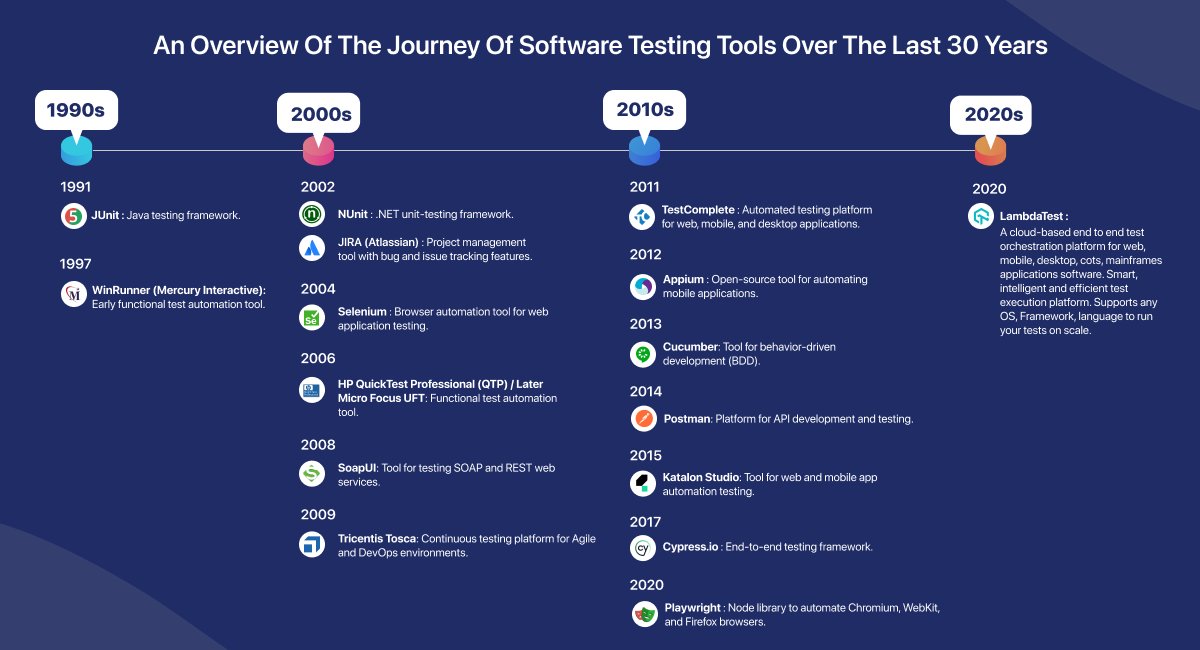
Software Testing Tools Landscape in last 30 years.
#softwaretesting #automationTesting #QA #softwaredevelopment #junit #java #winrunner #nunit #jira #selenium Selenium #QTP #UFT @OpenText #soapUI @SmartBear @Tricentis #tricentistosca #testcomplete #appium @AppiumDevs #cucumber Cucumber #postman @getpostman #katalaon @KatalonPlatform Studio Cypress.io #cypress @playwrightweb #playwright #lambdaTest @lambdatesting
1
28
39
6,435

6 Jun 2023
Want elite software testing skills?
Choose tools that boost your game:
•TestComplete: Automate web, desktop & mobile.
•Katalon Studio: Free, intuitive automation for new testers.
•Selenium & Appium: Automation made simple for web & mobile.
3
187