Citizen-thinker. I’m like a cuttlefish. Call me Kevin. #science #COVID #openschools #philosophy #literature #photography
Joined March 2011
- Tweets 16,414
- Following 1,216
- Followers 2,080
- Likes 19,296
644 Photos and videos









Pinned Tweet

14 Nov 2020
Containment of COVID is a fool's errand. Why? In order for containment to work, it has to work everywhere. Not just in this or that neighborhood, but in all neighborhoods. Not just in this or that county, but in all counties. 1/x
45
203
858
Interpolations retweeted

The Iranian navy, which has been destroyed eight times, has apparently closed the Strait of Hormuz again, because the United States, for the seventh time, won the war that wasn’t a war, so now the United States has to open the Strait of Hormuz that was already open before the not-war began.
The not-war began because Iran had uranium that was totally, completely, beautifully obliterated, so they can’t build the nuclear bomb they weren’t building, which is why the United States had to start the not-war it definitely didn’t start.
Now the United States, which has nuclear weapons, is threatening to use nuclear weapons to stop Iran from getting nuclear weapons, because nuclear weapons are far too dangerous for countries with nuclear weapons to allow other countries to have.
If the United States saw the United States doing what the United States does in other countries, the United States would invade the United States to liberate the United States from the tyranny of the United States.
2,705
34,512
103,442
3,524,919
May 25
Synchronicity!
I’m reading Comedia in the morning and In the Cafe of lost Youth by P. Modiano in the evening and discovered this epigram in the latter, attributed to Guy Debord:”…
1/2
1
58
May 25
“ at the halfway point of the journey, making up real life, we were surrounded by a gloomy melancholy, one expressed by so very many derisive and sorrowful words in the café of the lost youth.”
2/2
37
Dear, Professor Pinker, please speak cogently about the cruelty and callousness of US Mid-East policy in Gaza, Lebanon, and Iran.
On a separate note, I grew up with the Blick brothers—both now deceased—and know which one took a bite out of the cop’s ear.
May 7

I discussed the limits of empathy in The Better Angels of Our Nature, but it's still a powerful force in the decline of violence and expansion of well-being, and I find the new right-wing contempt for empathy ("toxic empathy," "suicidal empathy") contemptible. With a presidential administration that delights in cruelty and callousness, an excess of empathy is the least of our problems.
83
Finished: Kreutzer Sonata.
Highly recommend if you love Tolstoy, unreliable narration, and malice, humor, and ideas in prose.
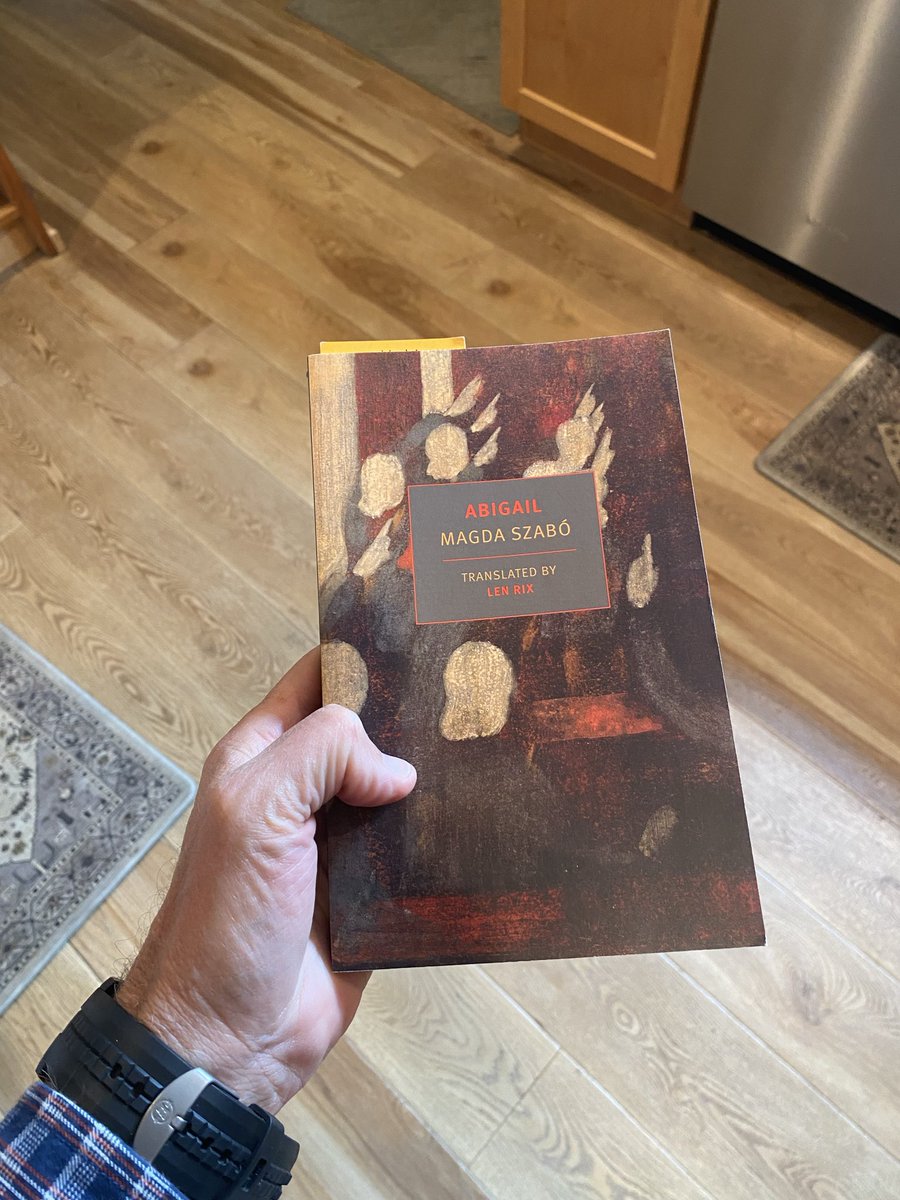
Up next: Abigail by Magda Szabo, an NYRB Classics edition.
#nyrbclassics #nyrb
71
As Pozdnyshev in The Kreutzer Sonata stabs his wife in the side beneath her ribs in an unhinged fit of rage and jealousy with “a curved Damascus blade,” so too does Tolstoy shiv sexuality in the Afterward in a manic bipolar attempt to kill conjugal love.
63
Correct.
Closure or pinched choke point is a *consequence* of the war.
A consequence, not a cause.
May 4

Let me take this opportunity to remind people that the Strait was free and open for transit, prior to the illegal US & Israel assault on Iran.
77
Tolstoy Fans—
In the Kreutzer Sonata, Pozdnyshev tells a story about a moral come-apart in a train carriage—where he routinely loses his ability to distinguish intrusive thoughts from reality—while riding in a train carriage with a perfect stranger.
Mental mayhem ensues.
27
Reading: Kreutzer Sonata
Loving it
Especially the combo of malice and humor in social indictment
Immoderate and delicious
29
1
1
187
Apr 28
Reading:
On love and—obliquely—mentorship
Mentorship, always mentorship
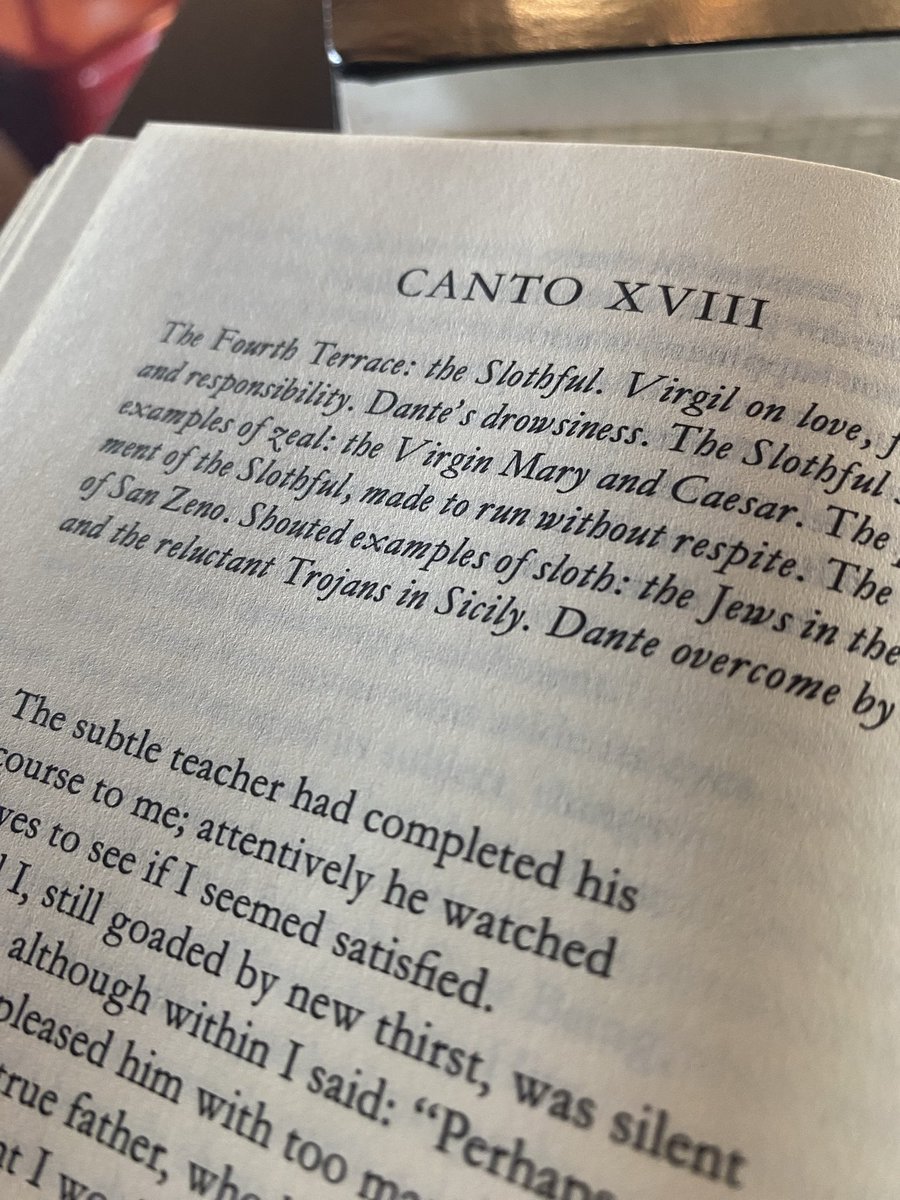
What a fine epic poem!
17
Apr 25
Do you agree with 1 and 2, @S_Mahendrarajah?
Thank you, both.
Apr 25

Trump realizes he has no strong military options in Iran and is instead going for a game of economic chicken. He is also unwilling to make the concessions needed to open the Straits of Hormuz, so we are stuck:
1) The naval blockade is the centerpiece. The US isn't just blocking the Strait of Hormuz. It is also hunting Iran's "shadow fleet" across the Indian Ocean, intercepting ships smuggling oil to China and dual-use materials back to Iran. It is working and Iran's regime is feeling serious damage.
2) Iran's oil industry faces potentially irreversible damage. Storage tanks at Kharg Island and oil fields are full, Israel destroyed most petrochemical refining capacity, and Iran is being forced to reduce pumping. If wells go inactive for months, they lose internal pressure and require extremely costly, lengthy rehabilitation.
3) The US froze $344 million in cryptocurrency accounts used by the IRGC. Iran's crypto holdings are estimated at $7-8 billion, roughly half controlled by the Revolutionary Guards. Israeli hackers reportedly stole $90 million from IRGC crypto accounts a year earlier. The US is also sanctioning small Chinese refineries using smuggled Iranian oil.
4) Iran's bet is that global energy pain and Trump's sinking poll numbers ahead of midterms will force him to back down. Trump's bet is that he can secure a "victory deal" that reverses the political damage.
5) Israel is skeptical that economic warfare alone can break a regime as extreme as Tehran's, arguing that only devastating strikes on national infrastructure will force Iran to give up its nuclear and missile capabilities.
This may or may not work in terms of getting concession from Iran. But Trump is playing with the entire global economy, which may go into recession between this and the growing influence of AI on the job market.
44
Apr 23
The secret heart beat of Dante’s Comedia isn’t God.
It’s Beatrice.
The love of Beatrice, reciprocated.
Between moralized passion and love of God, the human animal-poet will always choose moralized passion.
The body demands it.
50
Apr 22
A good post, worth reading.
Apr 22

Trump is wise to have extended the ceasefire indefinitely. Bombing Iran isn’t going to extract more concessions.
But neither will the U.S. blockade.
It’s a game of Chicken in the Strait of Hormuz, and everyone knows who will back down first: Trump, if he has any sense left.
That’s *not* because of his history of TACOs but because of the structure of the situation between the U.S. and Iran. Any rational U.S. president would and should back down to reopen Hormuz. If anything,Trump may be *less* willing to fold because he’s so sensitive about his reputation.
But staying in an unwinnable fight just to save face isn’t strength — it’s weakness.
The structure of the situation favors Iran, not the U.S., because Iran has so much less to lose by keeping Hormuz closed.
The U.S. and the rest of the world have everything to lose, because an indefinite Hormuz closure will eventually trigger a global economic meltdown. According to many industry sources, we might already be over the precipice of irreversible economic harm.
Forget the midterms — the potential economic consequences swamp that in importance. It could ruin more than Trump’s presidency or legacy — it could ruin the U.S. economy in balance-of-power-shifting ways, given how much more oil intensive U.S. economic output is compared to peers like China.
For Iran, a prolonged blockade will sting, but exorbitant oil prices will make it easier to export oil overland, through smuggling and other channels. In 2024, over $1 billion dollars worth of Iranian oil was smuggled over the border to Pakistan. High prices existential political stakes for Iran will open up all sorts of adaptations for selling Iranian oil to the highest bidder.
But even if the U.S. blockade stopped all Iranian oil sales, Iran will not collapse. It is fighting for its sovereignty as a country — and the U.S. war has only strengthened its regime. Iran doesn’t need massive oil revenues to continue resisting and menacing Hormuz. Just look at how the Houthis have outlasted withering U.S. bombing campaigns for years, despite possessing the resource base of Yemen, an impoverished county over which they haven’t even consolidated full control.
Iran is used to privation. It is used to economic shocks. It has endured them for years under the force of U.S. sanctions, and its more motivated to resist than ever.
So Trump’s blockade is a losing fight. The only question is how long will it take Trump to realize he needs to scale back his maximalist negotiating demands, and how much economic suffering will we all endure until he accepts reality?
@defpriorities
73
Apr 22
C. McCarthy, Willa Cather, Knut Hamsun, George Eliot, Jim Harrison
Apr 21

Woolf, García Márquez, Bolaño, Pynchon, latest is Vollmann
2
92
Apr 17
Rule of thumb: Most things Trump says can be safely ignored

Iran says enriched uranium "not going to be transferred," denying a claim by President Trump that the Islamic Republic had agreed to hand it over. cbsn.ws/4vDDaBj
35
Apr 17
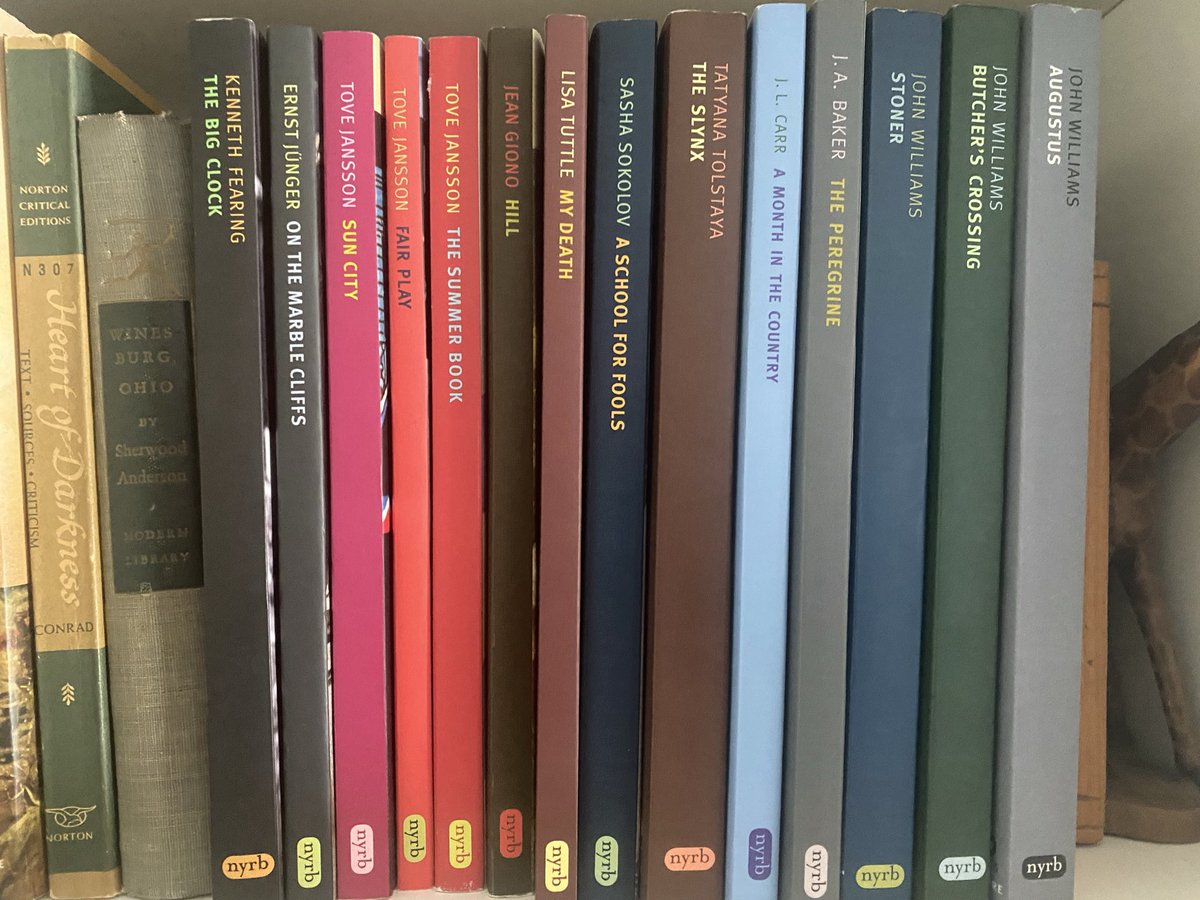
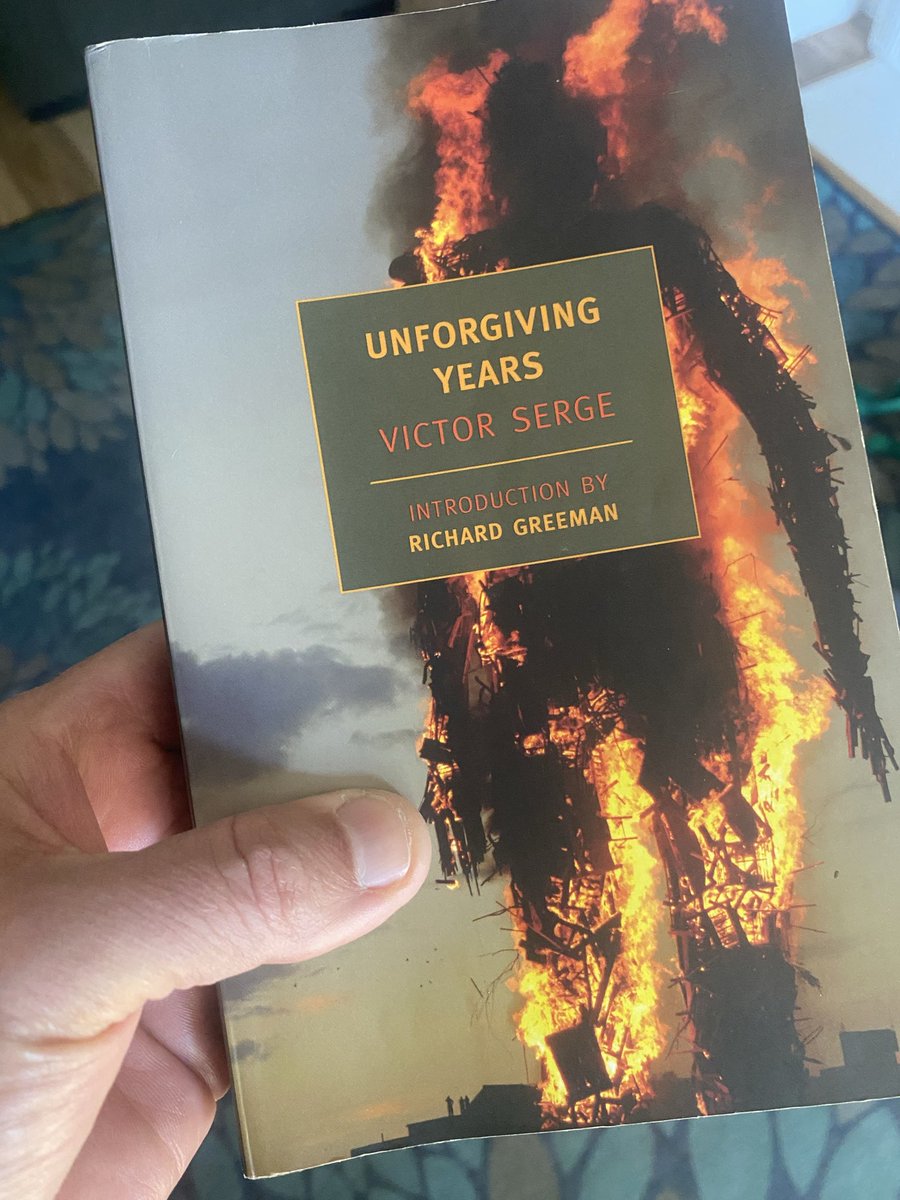
I’m chipping away at the NYRB Classics lineup. The editorial mission aligns with my literary biases. There isn’t a title yet that I haven’t enjoyed. Currently reading Unforgiving Years by V. Serge and appreciate the timeliness of its major theme: collapse of social trust.
1
39
Apr 15
Whether you agree or disagree with him, @policytensor is one of the critical voices the age of chaos and multipolarism. He’s generous with his time on Spaces and recommend tuning in one day soon.

1
87
Apr 14
Another good read
Apr 14

Why the Iran ceasefire may have shifted the dynamics back in Trump's favor
Diplomacy between Washington and Tehran has not yet unraveled, despite JD Vance’s theatrical departure from last week’s talks in Islamabad. Trump now signals that the two sides could reconvene within days in the Pakistani capital. Whether negotiators return to the table or continue their exchanges through quieter, remote channels before the ceasefire lapses, one reality appears to have shifted: Trump has clawed back a measure of momentum—and with it, leverage—over Iran, largely by virtue of the ceasefire. Here’s why.
Trump entered this moment politically cornered and strategically constrained. Surging gasoline prices were inflicting acute domestic pain, eroding his standing at home. More critically, he faced a barren escalation ladder. Each conceivable move—strikes on Iran’s oil infrastructure, attacks on civilian targets, the seizure of Persian Gulf islands, or covert operations to capture enriched uranium—carried the near-certainty of forceful Iranian retaliation. Such responses would not merely match his escalation but compound it, deepening his economic exposure, amplifying political risk, and entangling him further in a perilous and unwinnable strategic bind.
Nor could he simply extricate the United States from the conflict on his own terms. Absent an understanding with Tehran, Iran retained both the capacity and the incentive to continue targeting Israel and vulnerable U.S. assets across the Gulf. Trump needed Iran’s permission to get out of the war.
The ceasefire, however, has subtly altered that equation. Trump may no longer need a formal nod from Tehran to step back. If he disengages now—without a comprehensive agreement—Iran will almost certainly maintain its grip over the Strait of Hormuz, a strategic setback for Washington. Yet Tehran is unlikely to resume direct military operations against U.S. targets in the Persian Gulf. To do so, in the absence of renewed American strikes, would cast Iran as the aggressor, inviting severe and potentially coordinated repercussions—not only from Washington but from wary global powers such as Russia and China.
Moreover, the balance of needs has tilted. Iran now appears to need an agreement more than the United States does. Trump has already secured his central objective—the escape from a war he was ill-advised to begin—while Iran, despite accruing leverage through its command of the Strait, remains far from realizing its broader ambitions: meaningful sanctions relief, a definitive and enduring end to hostilities, and perhaps even the contours of a more stable, constructive relationship with Washington.
Tehran’s decision to dispatch its largest, most senior, and most expansive delegation to Islamabad for direct talks with the American vice president reflected a striking confidence—that it occupied its strongest negotiating position vis-à-vis the United States since 1979. Yet to convert that moment of perceived ascendancy into little more than a cessation of U.S. bombardment would fall short of its aspirations. Even if Washington were to acquiesce to Iran’s control of the Strait, such an outcome would pale against the far more consequential gains Tehran believes are within reach.
Instead, Iran needs to translate this leverage not only into a durable end to the war, but ideally, into a new peace: One that delivers sweeping sanctions relief and inaugurates a more stable, mutually defined economic and political relationship with Washington. Such an arrangement would serve as a bulwark against renewed conflict. The economic imperative is especially stark: sanctions relief is indispensable to reconstruct a country now burdened with damage running into the hundreds of billions of dollars.
As I have argued before, sanctions relief is not merely an economic demand—it is a strategic necessity. Without it, Iran risks a condition of chronic erosion, a slow but steady weakening that would leave it exposed. That vulnerability, in turn, could invite further attacks. It was, after all, the misperception of Iranian weakness that helped open the window for initial strikes.
But Trump does not, in any fundamental sense, require any of this. The United States can endure without a formal agreement with Iran and without the benefits of an economic relationship with Tehran. To be sure, a negotiated settlement would better serve long-term American interests: the nuclear constraints Trump seeks can only be credibly secured at the negotiating table. Abruptly abandoning diplomacy while leaving Iran in undisputed control of the Strait would also unsettle key regional allies. Yet these are strategic preferences, not immediate necessities.
Trump’s calculus is far more transactional and far less patient. He can point to the damage already inflicted on Iran’s nuclear infrastructure and conventional forces, proclaim a hollow victory, and disengage. He has already emphasized that the United States no longer depends on Persian Gulf oil, insulating it from the direct economic consequences of Iran’s toll regime. As a result, the burden shifts outward: the Strait becomes a problem for European and Asian powers—countries that Trump has noted declined to rally to his side when he sought their help in prying the waterway from Tehran’s grip.
The window now open offers Tehran a chance to convert battlefield leverage into lasting strategic gain. To let it close would mean forfeiting not just incremental progress, but the possibility of reshaping its economic and geopolitical position. By contrast, the United States, having already secured a tenuous exit ramp through the ceasefire, has less at stake in the short term. Walking away, therefore, is politically and strategically easier for Trump than for his Iranian counterparts. Both can live with diplomatic failure, but Tehran has more gains to lose.
How Tehran chooses to navigate this narrowing corridor—whether it presses its advantage or overplays its hand—will be interesting to see.
85