Exploring digital highways and byways...
Joined September 2009
- Tweets 3,846
- Following 215
- Followers 185
- Likes 1,434
306 Photos and videos







DJ retweeted
"If the regime refused to conduct detailed and credible negotiations about ending its nuclear program today, it’s certainly not going to feel more pressured to do so 60 days into its second life as the country that beat America."--From today's newsletter.

5
24
68
2,215
DJ retweeted

Jun 10
We Asked AI To Simulate What Would Happen If AOC Was Forced To Learn Economics
Made with @grok.
1,065
3,536
28,776
23,557,884
DJ retweeted

Jun 10
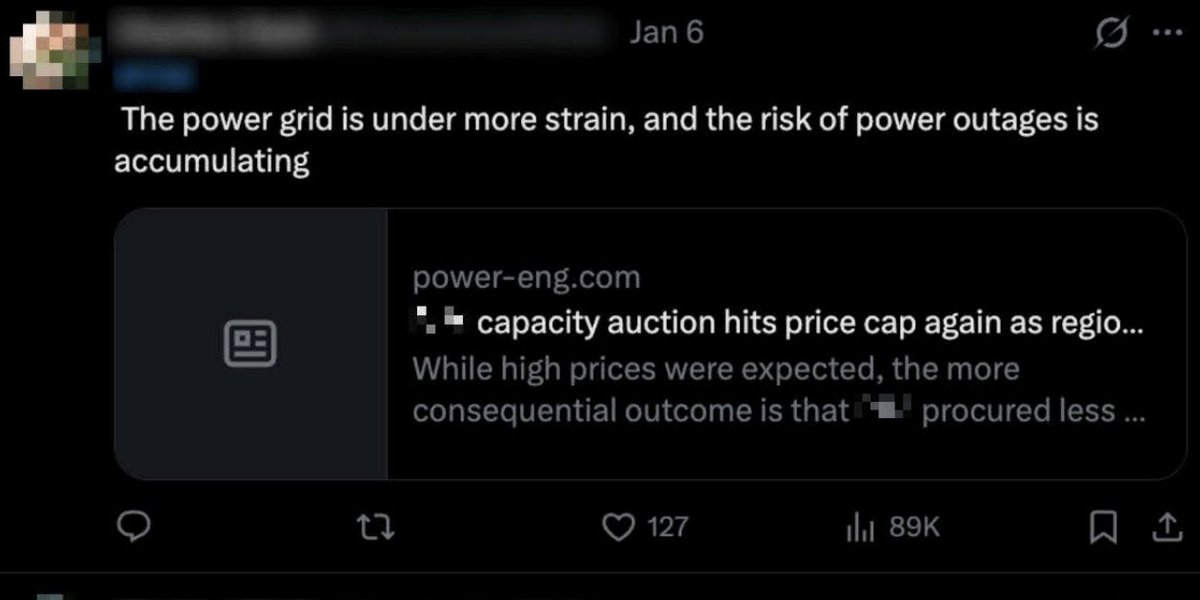
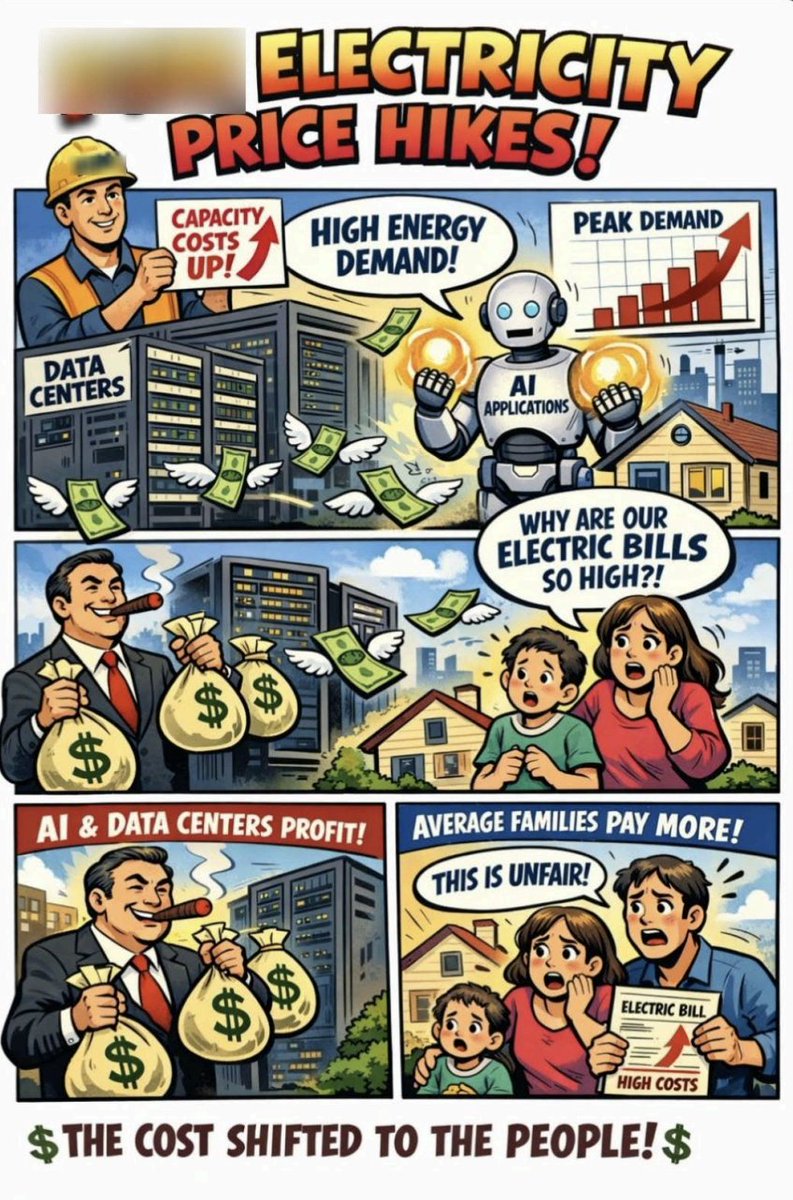
NEW: OpenAI just published a report exposing a coordinated CCP effort to inflame the American public against AI and data centers by spreading fear and misinformation on social media.
The actors used ChatGPT to generate X content to impersonate American citizens railing against US institutions and technology companies.
Let's dig deeper. A thread 🧵/
5
2
17
2,457
DJ retweeted

Jun 9
The New York Times published a roundtable discussion between @DAcemogluMIT, @deanwball, @clarashih & myself about the future of AI & who wins at work. I think it is a really nice overview of the core debates on the topic, and has some fun examples. nytimes.com/2026/06/09/magaz…
15
56
370
44,152
DJ retweeted

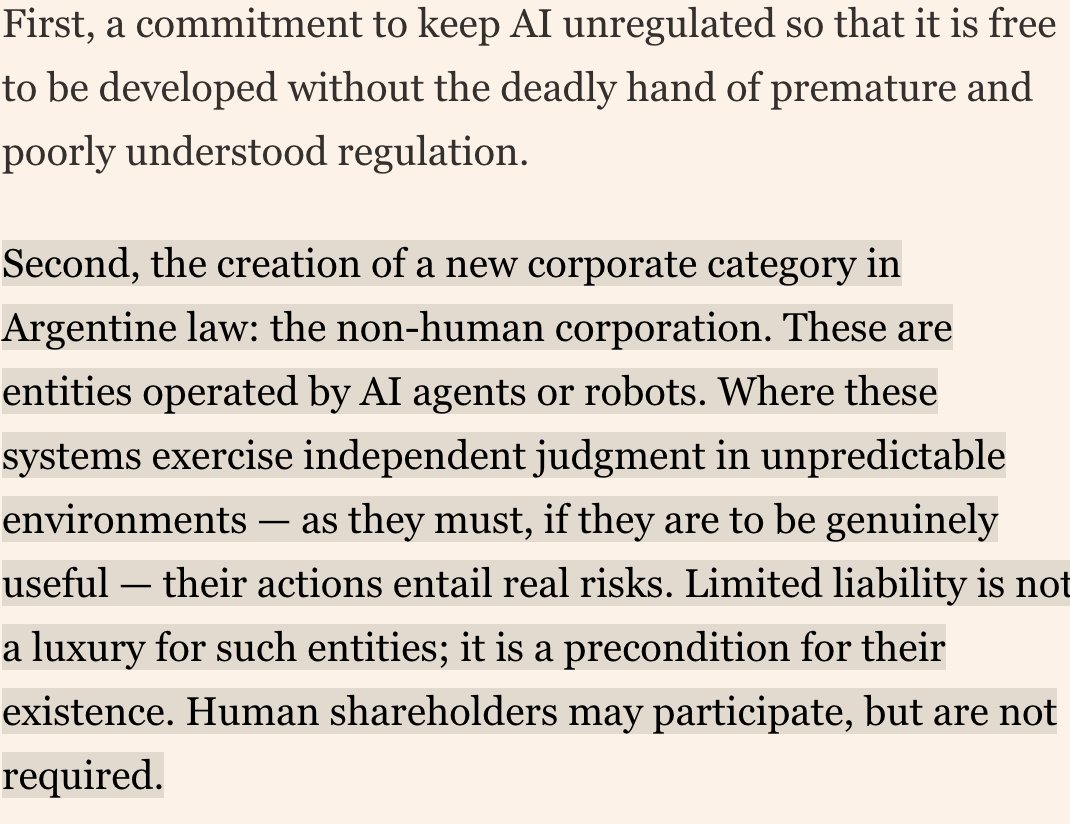
Now we know why Peter Thiel packed his bags for Argentina.
Milei just submitted his AI legislative framework to Congress, where he proposes:
- zero regulation on AI development,
- a brand-new "non-human corporation" category for AI/robot-operated entities with limited liability
-a low-tax regime with flexible governance rules.
The Dutch East India Company gave the world the limited liability company in 1602. Milei wants Argentina to do the same for autonomous AI agents in 2026.
415
5,307
15,953
911,096
DJ retweeted

Jun 4
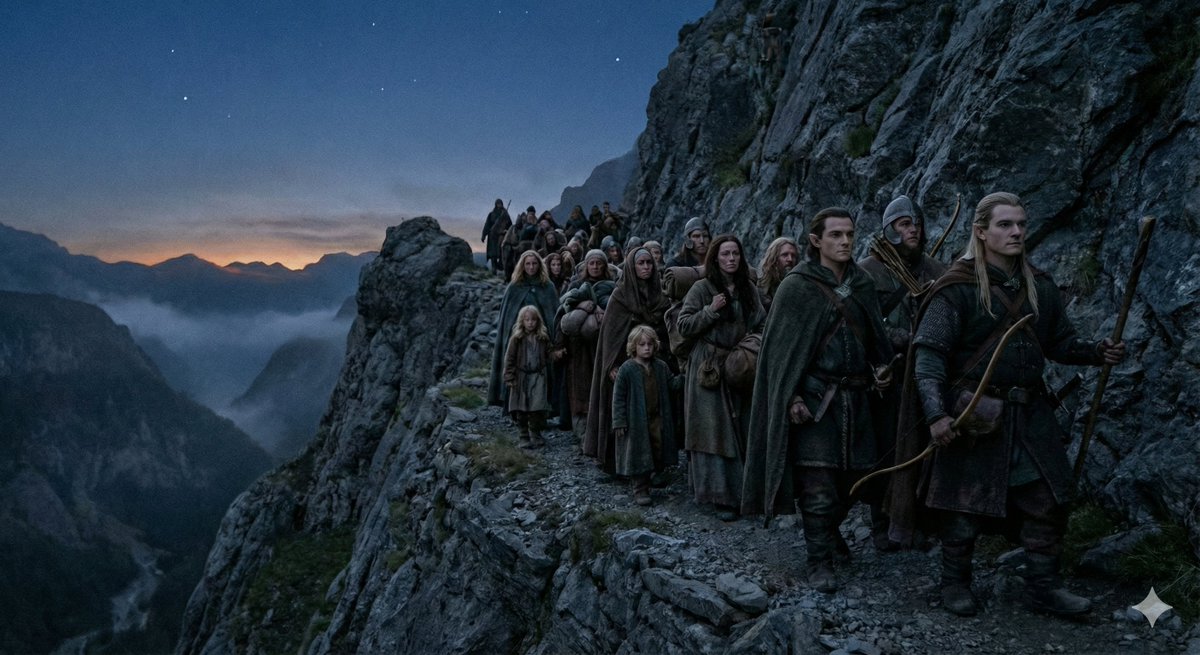
One funk to bring them all, and in the disco bind them.

Im almost embarrassed to say how many times I listened to this. It actually gave me goosebumps. 😂
👉𝐋𝐨𝐫𝐝 𝐨𝐟 𝐭𝐡𝐞 𝐑𝐢𝐧𝐠𝐬 𝐃𝐢𝐬𝐜𝐨: 𝐎𝐧𝐞 𝐅𝐮𝐧𝐤 𝐭𝐨 𝐑𝐮𝐥𝐞 𝐭𝐡𝐞𝐦 𝐀𝐥𝐥
100
113
2,257
401,937
DJ retweeted

May 31
Richard Sutton is of course a genius and a legend, and so self-recommending. My own view is that we didn’t have good definitions of either “novel” or “discovery” prior to AI, and so we will use AI to create many new things and never quite know what to call them.
May 31

A new and possibly controversial perspective:
In this video, I explain the sense in which generative AI trained by supervised learning is incapable of making novel discoveries.
youtu.be/K5LAFEjTlBA
The text of the speech:
AI Creativity and Discovery
Good day ladies and gentlemen. I regret that I am unable to be with you all today to engage in a back-and-forth discussion, but I am nevertheless pleased to be able to share with you, via this recording, some high-level thoughts about the current and future state of artificial intelligence, and in particular about AI’s relationship to science and mathematics, which is, as I understand it, the central focus of this meeting and of the SAIR Foundation.
I would like to start with an old joke; I am sure you have heard it before. It is the one about the researcher whose work is being evaluated, and the review comes back, and says “This work is both novel and good. Unfortunately, the parts that are good are not novel, and the parts that are novel are not good.”
My first point about AI is that this assessment applies exactly to large parts of AI as we know it today. Not all of today’s AI, but a large part of it. Pretty much all of what we mean by “Generative AI”---which includes large language models, and the images and video models, and even the new methods for learning world models. All of these AIs take large numbers of examples and produce a “model” which behaves similar to the examples, that is, which generates text like people, or images like artists or nature, and videos like we find on the internet. Don’t get me wrong, Generative AI can be extremely useful. No doubt about that. But the assessment of the joke still applies. These systems can produce output that is both novel and good, but not at the same time.
In many ways this is just absolutely not a problem. When we ask an AI for an answer from the internet, or to summarize a document, we don’t want it to be novel. We are happy if the quality of the answer, the goodness, comes from the source material—from the people who wrote the document or the articles on the internet. If the AI’s answer is novel it means it is going beyond the source material, adding something beyond it. This is what we call “hallucinations”. In most cases, we don’t like it when the AI makes something up, when it adds something novel.
One exception, of course, is when we are looking not for facts or reality, but for fiction and entertainment. We might ask for a bedtime story for a child, or an image based on existing images on the internet but which is nevertheless different and distinct from them. In these cases, it is never easy for us to know how creative the AI is actually being, as we do not know how close the AI’s story, poem, or image is to the source material. In a real practical sense we can not know this because the internet is too big, the possible sources that the AI may draw upon are too numerous.
When we ask for a fiction or novelty, the AI can give it to us because its processing is in part stochastic. Every decision can go multiple ways and will go different ways and produce a different trajectory every time. The trajectory can be random—and thus novel—or it can be based on the training data—and thus “good” because the training data is good, sourced from people or reality. Thus, the trajectory is either novel or good—based on randomness or based on data—but never both at the same time.
Really, I think it is okay if the output of Generative AI is never good and novel at the same time. For the researcher in the joke this is a devastating criticism, but for most things it is not, and for Generative AI it is not. Generative AI is meant to be a mimic. This is what supervised learning is for. Generative AI can be extremely useful, even when it just mimics, if it is faster, or cheaper, or smaller, or more customizable, or more copy-able, than the thing being mimicked. It is okay if Generative AI cannot be both novel and good at the same time. It is still a transformative technology.
But it is a limitation. And remember we are here to use AI for science and mathematics, and for these areas the assessment of the reviewer in the joke is devastating. For these areas we need true creativity and discovery. Generative AI—or Mimicking AI—will never get where us there. For these we need something more, and indeed we have something more in other parts of AI. We have many AI systems which can give us more. We have AlphaGo with its world-changing move 37, or AlphaZero with its brilliant original chess-playing style. We have GT-Sophy that drives simulated racecars better than any human. We have AlphaFold and AlphaProof and Claude-Code, which have brought true advances in science, mathematics, and programming. We have RL-Lyft which optimizes the assignment of cars to passengers in the ride-hailing business. All these systems have found things that are both novel and good. And, truth be told, some language models have been augmented in ways that make them more than Generative AI based on supervised learning.
All these systems have some additional features that make them capable of true creativity and true discovery. It is important for us to recognize what this is—and that it is not present in ordinary, garden-variety Generative AI. It is something that can not come from just supervised learning, from learning from examples. What is it? Well, it is a simple thing, a commonsense thing. It is not new. We have many names for it, but unfortunately none of them are very good names. I will call it Discovery. Basically, Discovery is just the idea of trying many things and seeing which of them work, then keeping those that worked the best. Evolution by natural selection works this way. The scientific method works this way. And just ordinary life and learning works this way. We try things and remember what works. What could be more obvious? In this behavioral case, psychology has two names for it— “instrumental learning” and “operant conditioning”—and in machine learning it is what we mean by “reinforcement learning”. We also see the idea of Discovery in planning and combinatorial search—anything that involves the idea of “generate and test”.
The essence of Discovery is to combine three steps:
1. Variation,
2. Evaluation, and
3. Selective retention.
Of course, I am not the first to say this. I am not the first to point out that this combination of steps is key to science, to evolution by natural selection, and to animal behavior. I think particularly of papers by Donald Campbell, by Daniel Dennett, and by Gary Cziko. What is new in my remarks is to directly relate the idea of Discovery to modern AI to help us see that it is not present in supervised learning or Generative AI—in particular, that Discovery is not present in backpropagation or gradient descent.
Let me say explicitly what is missing from Generative AI. As we have remarked, these systems do have a stochastic aspect, so they do generate a variety of trajectories and behavior. What is missing is the Evaluation step. The generator was pre-trained by supervised learning, leaving no way at runtime to Evaluate what it generates. And of course without Evaluation there can be no Selective retention, and thus no Discovery. The variation can bring novelty, but without evaluation there is no Discovery, and arguably, no creativity. That is, I would say that creativity requires that the new things generated be Evaluated. Without evaluation, and retention of the best, there is nothing created. The novelty flickers into existence but, if its value is unrecognized, it flickers away and is lost.
In many cases, Evaluation is done by people to make a discovery. As when we have Generative AI make many pictures for us, and then we pick the one that we like the best. The human AI system completes the discovery.
In many other cases, the Evaluation comes from a clear objective. Some moves lead to checkmate, some steps lead to a proof, some actions result in high reward, some genotypes make more copies, some theories explain the data better.
Some prefer the Variation step to be called Blind variation, where “blind” here means that it is uninformed, a shot in the dark. It does not need to be completely uninformed; a good scientist does not select theories to test at random. But neither can it be completely informed and determined. There must be some uncertainty about where the answer lies in order for there to be a discovery. In practice, the variation is partly informed and partly blind, but it is the blind part that corresponds to the discovery.
Now let us briefly go all the way to modern deep learning, to the backpropagation algorithm. At first it might seem that backpropagation is incapable of discovery because it is deterministic and thus incapable of variation. But this is not correct. The weight updates of backprop are deterministic, but the weights are initialized to small random values. The random initialization is often downplayed, but in fact it is a necessary form of variation; it must be done properly to get good performance. In backprop this Variation is done once, at network initialization, so its effect is temporary, and later the network may lose its ability to learn. This is the weakness of deep learning that is alleviated with a new algorithm that my group presented in Nature a couple of years ago. Our “continual backpropagation” made one small change: every so often a less-used neuron would be re-initialized to small random weights. This allows the variation to continue and plasticity to be retained.
Although there is much more to be said about Creativity and Discovery, this is the key point: they are more than supervised learning, more than pattern recognition, more than prediction, and more than world modeling. Those things are important, but they alone will not bring us to discovery. Discovery requires Evaluation from a person or from an explicit goal, and only in the latter case will we attain full autonomy.
So that is my call to arms. If we want the full power of AI scientists, then we should share the goals with them so they can create, evaluate, discover, and in these ways fully participate in achieving the goals. Let’s be bold! Let’s fully automate Creativity and Discovery!
66
48
648
153,106
DJ retweeted

May 31
America's cultural ideal has been the self-made entrepreneur while Europe's was rooted in aristocracy, with status inherited rather than earned. Europe's inheritance laws show this divide.
Many European countries have "forced heirship" laws that require people to leave 50-75% of their estates to their children. Want to leave the majority of your wealth to charity? not allowed. Your kids are estranged from you, struggling with addiction, or irresponsible? still required to give them the money. Want your kids to avoid a life of entitlement? tough.
Incredibly, these laws look back at transfers made during your lifetime. If you have 3 children in France, you're required to bequeath them a minimum of 75% of your estate. Because French law calculates this based on your assets at death plus all lifetime gifts, giving away more than 25% of your wealth while alive means your heirs can legally sue to force charities or foundations to return the funds. This has limited the development of the nonprofit sector on the continent.
The cultural gap between an entrepreneurial society and one shaped by dynastic wealth is enormous. If you make it yourself, you tend to want your kids to do the same. If you inherit it, the primary goal is protecting the estate for the next gen.
Countries like Spain, France, and Italy legally entrench family dynasties, while America has historically sought to limit them through estate taxes. The result is not only a weaker culture of philanthropy and civil society in Europe, but also less economic dynamism.
1,032
1,475
10,264
16,919,780

The History of Black-Jewish Relations, and how it unraveled - with Coleman Hughes
music.youtube.com/watch?v=HH…
10
DJ retweeted
May 27
Enjoy this video of Neville Singham addressing an audience of Chinese nationals as “comrades” as he rails against the American system and calls for “a new world order that is based on multilateralism that President Xi and the CPC and China have proposed.”
This man is a Marxist. Full stop. And yet, he funds one of the most influential nonprofit networks here in the United States to the tune of $278 million—all from his comfortable perch in Shanghai.
When Singham isn’t calling for the overthrow of “fascism” and US “imperialism,” his network is fighting tooth and nail to oppose the buildout of American AI.
Are you starting to see how this works?
154
934
2,734
294,303
DJ retweeted

May 28
Call your senator and ask them to support this. Unless of course you think healthcare and insurance in this country are perfect
May 26

Insurance companies’ ownership of pharmacies and hospitals is raising consumer costs, but economic competition can counter inflating expenses, according to bipartisan legislation from Sens. Josh Hawley, R-Missouri, and Elizabeth Warren, D-Massachusetts.
“We need more competition. We need protections for patients. We need better and cheaper health care,” Hawley told The Lion in an exclusive interview Thursday.
Hawley and Warren reintroduced The Patients Before Monopolies Act last week to counter the monopolized medical field, in step with their second bipartisan bill, The Break Up Big Medicine Act. The Patients Before Monopolies Act prohibits pharmacy benefit managers (PBMs), the middlemen between pharmacies and insurance companies, from owning pharmacies and hospitals, Hawley explained.
“What’s happening is more and more of these insurance companies are buying up everything,” Hawley told The Lion. “They’re buying up the pharmacies. They’re buying up the doctor’s offices. They’re buying up the hospitals.”
@HawleyMO
Read full story: bit.ly/4vglY42
104
120
603
152,065
DJ retweeted
May 26
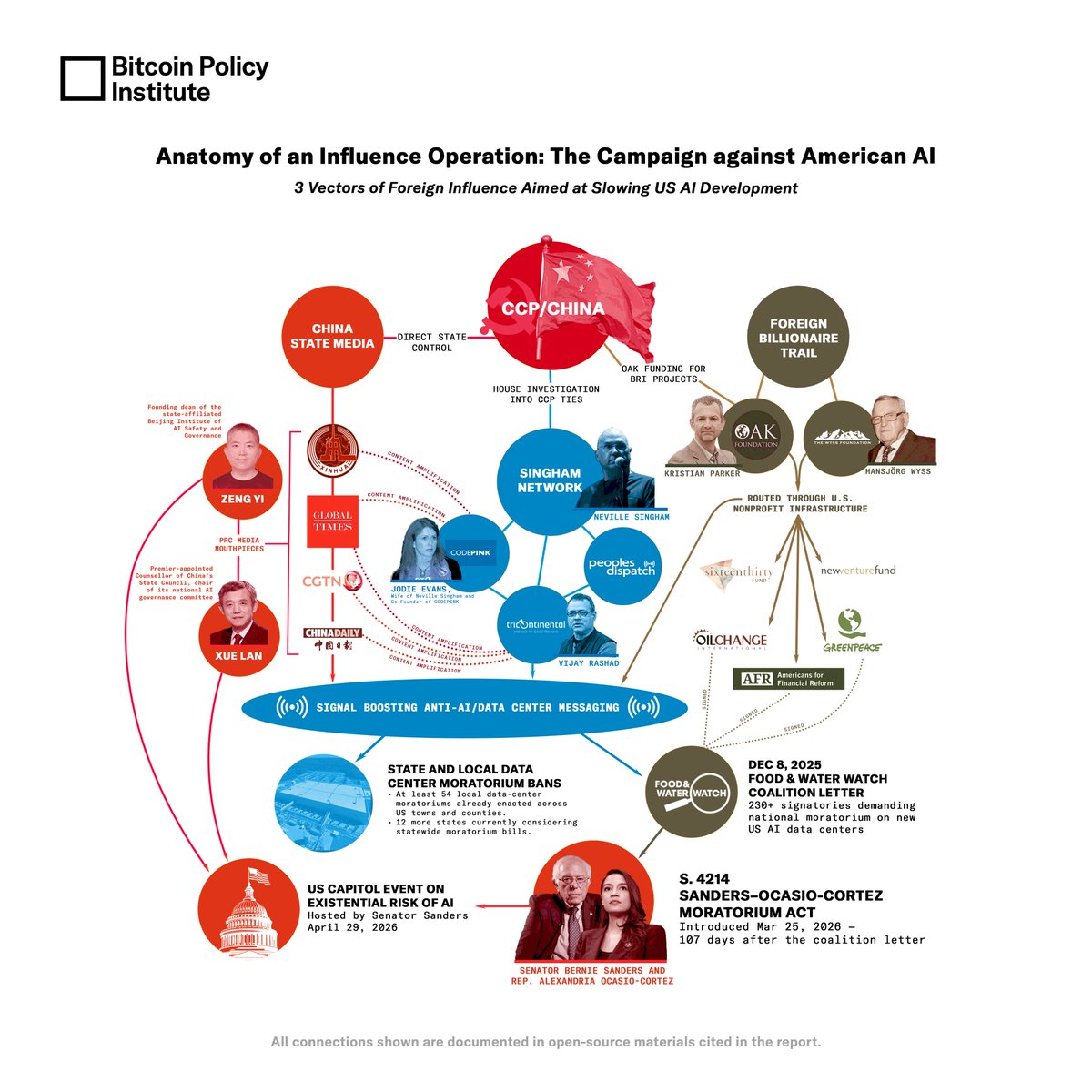
Hasan Piker singled out the Shanghai-based Neville Singham as the "funding vehicle" for political agitation here in the United States.
This is a huge admission from one of America's biggest podcasters.
And it directly corroborates BPI's research on foreign influence in the campaign against American AI.

SAYING THE QUIET PART OUT LOUD: Far-left streamer Hasan Piker names Neville Roy Singham as the 'funding vehicle' behind 'political operations' that operate under nonprofit labels.
The admission comes as Treasury Department investigates Piker and multiple congressional committees probe whether Singham organizations abuse their tax-exempt status.
foxnews.com/politics/hasan-p…
62
846
3,522
309,593
DJ retweeted

May 26
As an investor (and a human generally) I can’t stress how important it is to understand that well financed, often foreign enemies are trying to influence public perception on a range of topics from AI to Capitalism. They also sow discontent around social issues and have largely created what some have observed as the woke mind virus. If there’s one thing we should and are failing at is teaching our children to think critically, a difficult task since many of their teachers aren’t capable themselves. It’s a bummer but as parents we also have to teach our kids to see the opinions of their school teachers and college professors with the same skeptical eye.

We uncovered something far bigger than I ever expected. After seeing coordinated false attacks against the Utah data center project, we brought in an advanced data science team to trace where the content was coming from and the results were shocking. What we found led back to organized networks, political activist groups, and funding trails tied to massive international entities. We dug through IRS 990 filings, tracked IP data from around the world, and uncovered what appears to be a coordinated campaign targeting energy and data center projects across multiple regions.
I shared 90 pages of evidence with federal law enforcement and raised concerns directly with contacts at the White House. This isn’t speculation. The filings, funding records, dates, and connections are documented. There’s a coordinated PR war happening around energy infrastructure and data centers, and we’re not going to ignore it.
57
145
1,012
124,026
DJ retweeted
May 24
Answer: if you don't price it high enough the insurance company PBM gets their vig, it goes no where.
They don't want theowest price. They want the most profitable price
The PBMs control the formulary for 80pct of the market. If you don't price it high enough to get them rebate money, they will not make it available to patients.
May 24

Drug startup creates an amazing drug. It's groundbreaking.
They want to sell that drug for just enough to cover their expenses and to make a 10 pct return.
Where and how can they sell it so it reaches as many patients as possible ?
59
25
183
182,661
DJ retweeted

May 19
Taxing unrealized gains is a direct attack on Bitcoin holders. You pay taxes on the highs—even if prices fall. That’s a forced liquidation system.
Bitcoin gives you an exit, but policy still matters. Engage.
H/t @ChuckAFlint
washingtontimes.com/news/202…
11
11
75
3,104
DJ retweeted

May 18
"A city can survive many things. It can survive corruption, recession, bad mayors, crime waves, and even ideological fashions. What it cannot endure forever is leadership that despises the cultural inheritance it occupies." chroniclesmagazine.org/web/e…
6
15
876
DJ retweeted

May 17
Thought for the day: As its victims descend into increasingly bizarre conspiracy theories, we are seeing in real time how antisemitism is a stupidifying mind virus that corrodes the critical faculties needed to discern cause and effect.
26
137
661
28,603
DJ retweeted

May 18
.@elonmusk speaking live:
“I’m a huge admirer of the innovation coming out of Israel, it is objectively true that Israel punches high above its weight — I think honestly number one in the world… innovation per capita, Israel is by far number one in the world.”
123
745
4,823
214,750
DJ retweeted

May 16
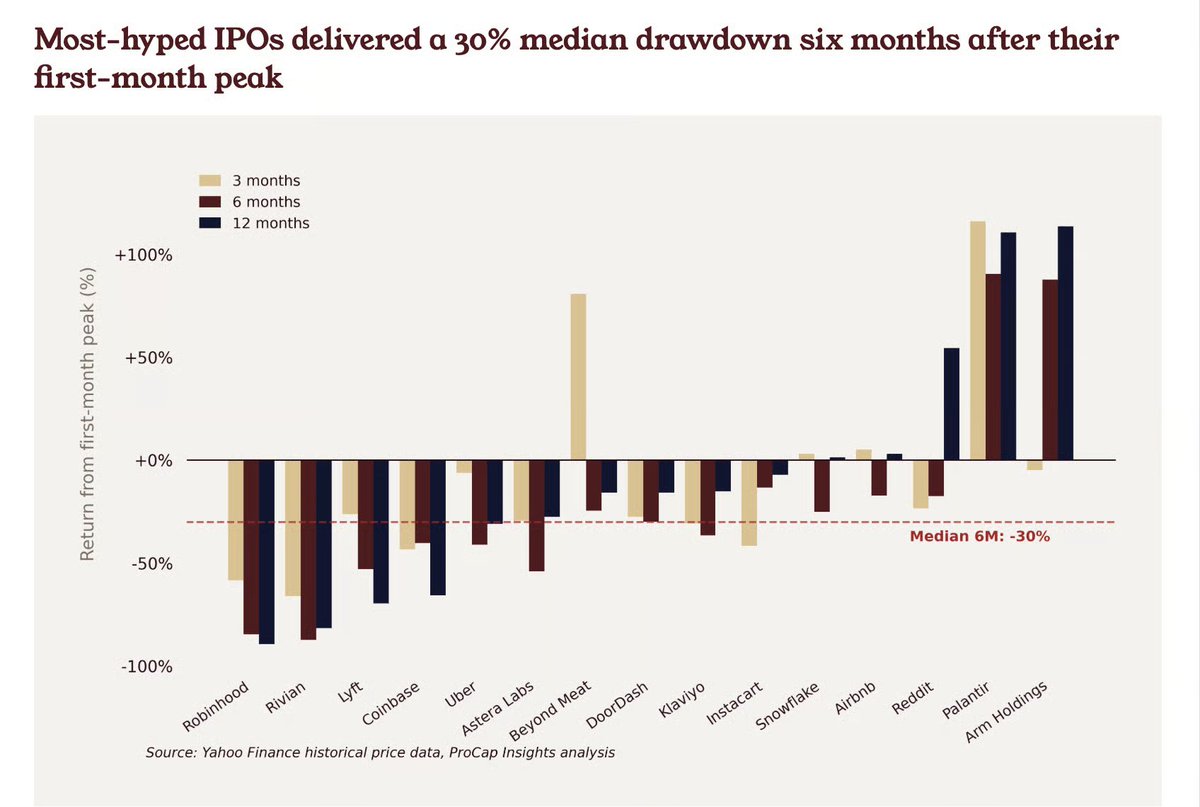
"Across 15 highly-anticipated tech IPOs since 2015, the median name lost 16.6% in the six months after its day-one rally."
ProCap Insights via @philrosenn
4
4
40
9,322