
Online Learning Coach | Empowering young minds (5-16) in English & Maths | Expert prep for UK 11 , SATs & US exams | Passionate about unlocking potentials.
Joined April 2025
- Tweets 1,328
- Following 3,230
- Followers 1,271
- Likes 1,976
104 Photos and videos














Pinned Tweet

Jun 1
Hot take on 11 prep: Sending your Year 5 child to 3 different tutors and stacking 10 hours of weekly practice papers isn’t "giving them an edge." It’s a fast track to burnout by September.
The 11 isn’t a memory test; it’s a test of processing speed and logic. 20 minutes of targeted, high-quality online practice a day beats a 2-hour weekend slog every single time.
Teach them how to think, not just how to pass. 🧠 #11Plus #GrammarSchool #TutorLife
How many hours a week is your child studying for the 11 right now? Are you team "slow and steady" or "all in"? Let’s discuss. 👇

1
2
11
859
Name a player who has done what Mbappé is doing right now.
I'll wait. 🇫🇷👑🔥

58 goals in 99 international games. 🤴🏾✨
No one like Kylian Mbappé in France whole history. Oliver Giroud’s record, broken. 🇫🇷

8
17h
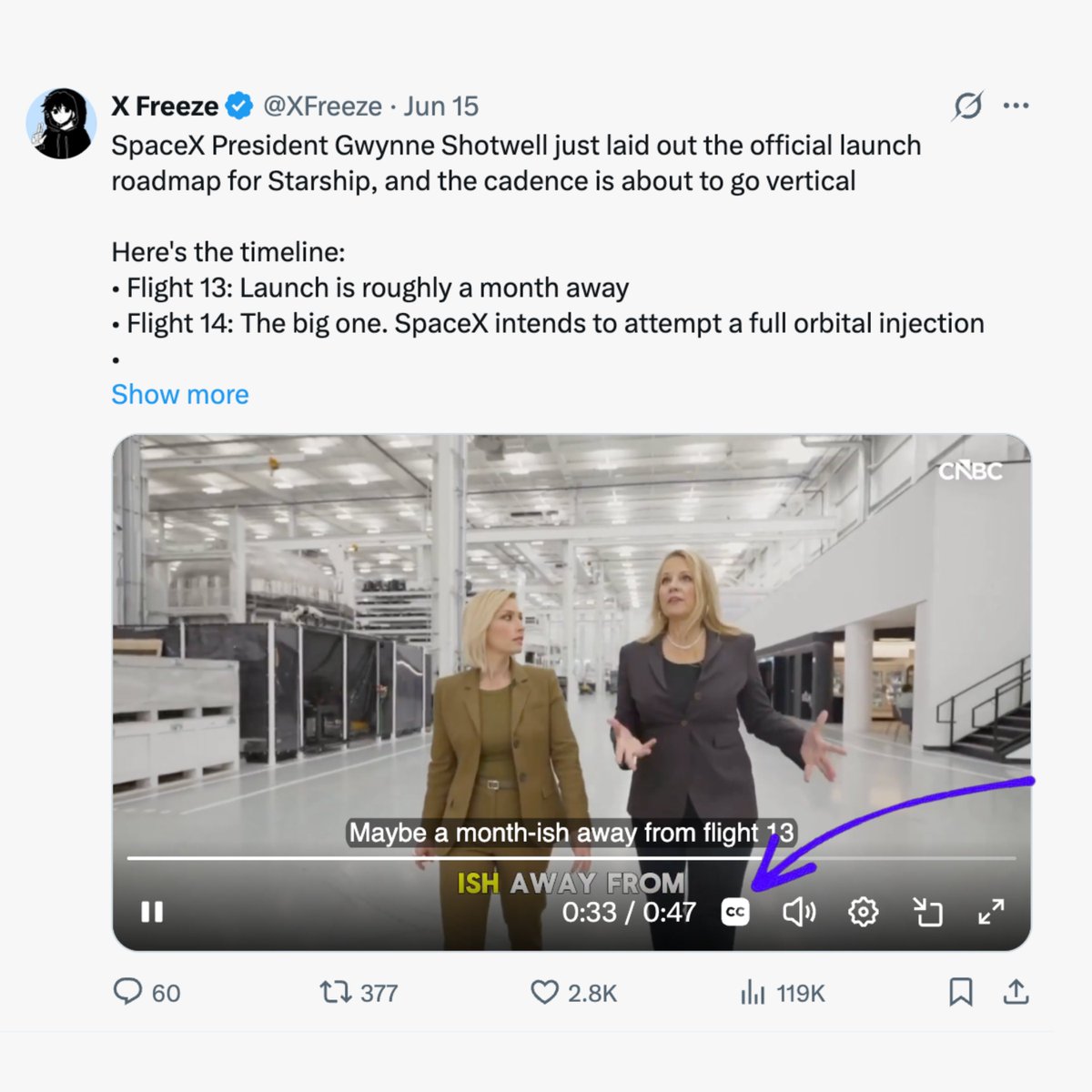
Finally! I've been manually adding captions to every video. X just gave me back hours of my week. Creators, we're eating good right now 🙌
BTW, how do we use this feature?

𝕏 just rolled out automatic video captions
A huge upgrade for creators and accessibility
Videos can now generate captions automatically, directly within the app....no third-party tools required
Why this matters:
✅ Helps viewers watch videos with the sound off
✅ Expands your reach to global audiences
✅ Improves watch time and engagement
✅ Makes content creation faster and more seamless
✅ Makes content accessible to deaf and hard-of-hearing viewers
𝕏 continues to ship meaningful creator tools at an incredible pace
The platform is becoming one of the best places to create and distribute video content
2
1
3
51
Jun 15
This child said "stare at a wall" 😂 Meanwhile my 11 students are using that screen time to prep for grammar school. Priorities! 🎯 #JJsTouchEduconnect

A UK student's reaction is going viral after Prime Minister Keir Starmer said Britain will ban children younger than 16 from using social media.
During a BBC interview, the student revealed her screen time was nine hours over the weekend. When asked how she'd fill all that extra time without social media, she didn't hesitate: "Stare at a wall."
The deadpan response is quickly becoming one of the most shared reactions to the UK's sweeping new restrictions on children's social media use.
1
96
Jun 15
As a teacher and a mum this hits home deeply 🥹 Children are growing up anxious, distracted and comparing themselves to highlight reels before they even know who they are. Giving them their childhoods back isn't old fashioned, it's urgent 📚❤️ Fully behind this 👏🏾 #ChildrenFirst
Jun 15

We are banning social media access for under 16s.
These days kids must find their feet in a world where technology intrudes into every area of their life.
I just can’t let that go on anymore. So we’re giving children their childhoods back.
Community note
The UK Government's 'careful review' of the research found a small correlation between children's use of social media and wellbeing, but no evidence of a causal effect:
gov.uk/government/pub…
assets.publishing.service.gov.uk/media/696e0b46…
35
Jane John retweeted

Jun 15
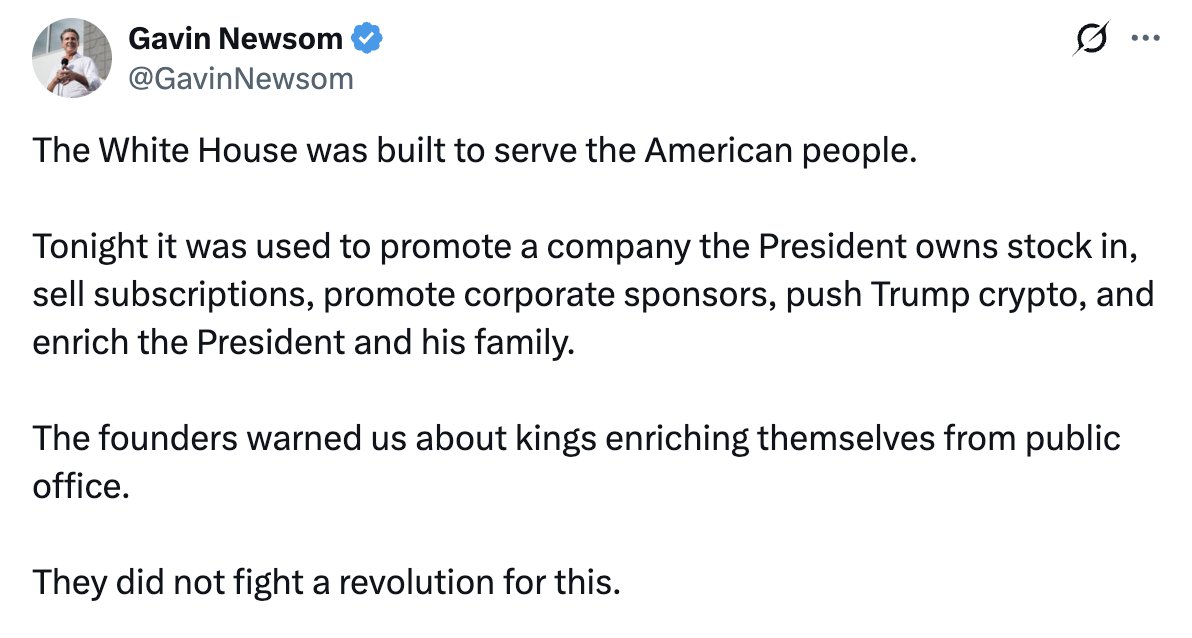
🇺🇸 Newsom decided that rather than sorting out California's chronic drug and homelessness problems, he'd spend his time taking cheap shots at the UFC Freedom 250 event
Maybe he could try cleaning up the streets of Cali, like Trump did in DC?
Writer: Ian
40
38
328
29,522
Jun 15
This is fascinating as a teacher 🤯 We've known for decades that children don't 'retrieve' what they learned, they RECONSTRUCT it using context, connections and prior experience. That's literally why good teaching uses storytelling, repetition and real-world examples. AI is finally catching up to what great educators already knew 📚✨ #MRAgent #AIEducation
Jun 15

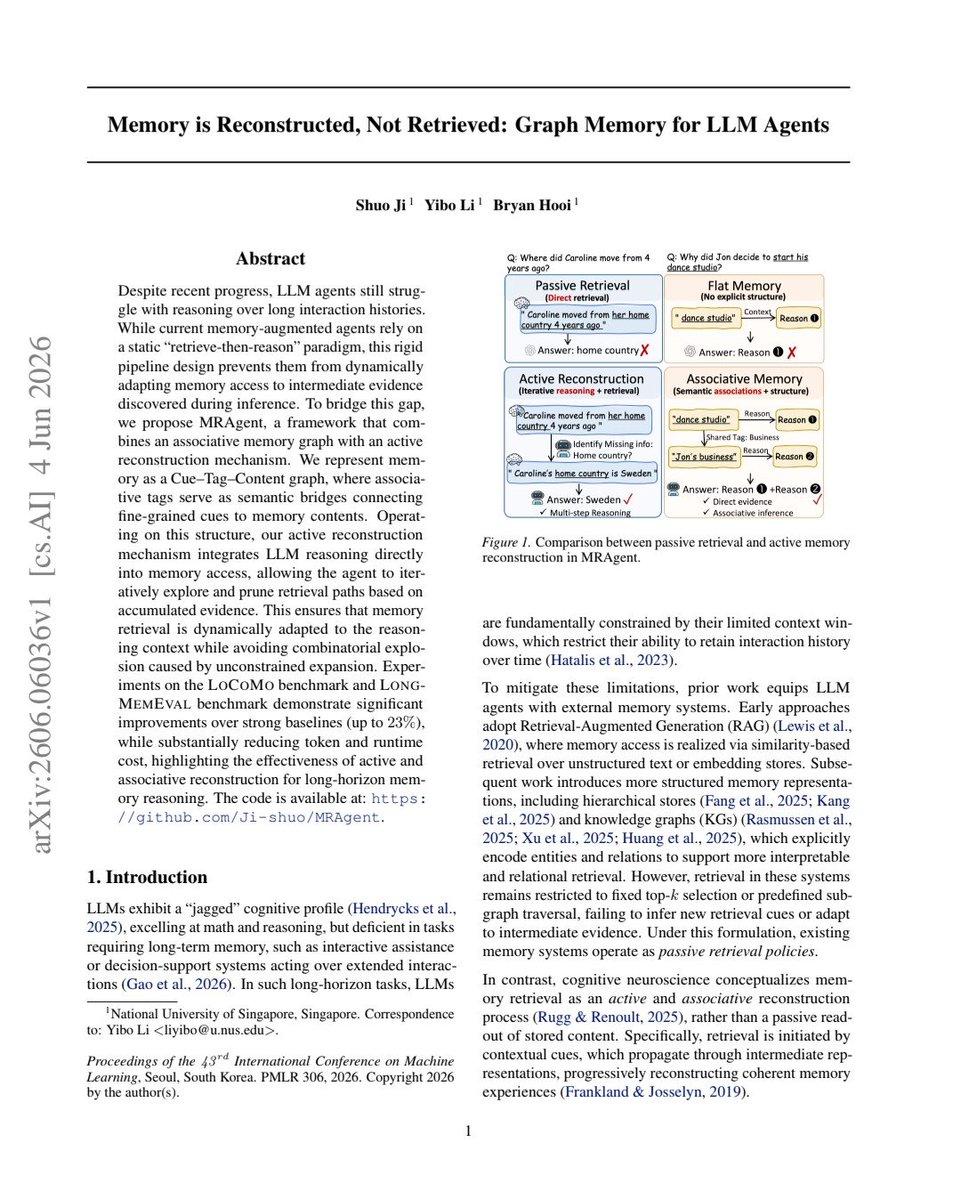
🚨BREAKING: Researchers just proved that every AI memory system has been built on a false assumption about how memory actually works.
Memory isn't retrieved. It's reconstructed.
This isn't a new finding in neuroscience. It's been understood for decades. When humans remember something, we don't play back a recording. We reconstruct the memory from fragments — using context, surrounding information, and active reasoning to rebuild what we experienced.
Every AI memory system ever built ignores this completely.
Current memory-augmented agents all work the same way. Store memories. Search for relevant ones. Retrieve them. Pass them to the LLM. Done. The retrieval happens before the reasoning. Once memories are retrieved, they're fixed. If the reasoning process discovers new context that changes which memories are relevant — too bad. The retrieval already happened.
That's not how memory works. In humans or in any intelligent system that reasons well over long time horizons.
MRAgent from the National University of Singapore is the first AI memory framework built on the correct model.
Here's the core insight.
Instead of retrieving memories and then reasoning, MRAgent reasons and retrieves simultaneously — interleaving them in a loop. As reasoning produces intermediate evidence, that evidence actively shapes which memories get accessed next.
You find one clue. The clue changes what you look for next. You find another clue. That changes your search again. You prune paths that turned out to be dead ends. You expand paths that keep yielding relevant information. Memory access adapts to the reasoning context in real time.
Here's the structure that makes this work.
Memories are stored in a Cue-Tag-Content graph. Not a flat list. Not a vector database. A graph where associative tags serve as semantic bridges — connecting high-level cues to detailed memory contents through multiple intermediate nodes.
When MRAgent needs to remember something, it doesn't search the whole graph. It starts from the most relevant cue, follows associative tags based on what its reasoning has found so far, prunes branches that aren't yielding useful connections, and expands branches that are. It explores the graph iteratively — the way a detective follows leads rather than the way a search engine matches keywords.
Here's the number that defines the result.
Up to 23% improvement over strong baselines on long-horizon memory benchmarks — LoCoMo and LongMemEval. The tasks that require reasoning across hundreds of past interactions. The tasks that break every existing memory system.
And it costs less. Fewer tokens. Less runtime. Because active pruning eliminates the combinatorial explosion that occurs when you try to retrieve everything that might be relevant before you know what's actually relevant.
Better memory reasoning. Lower computational cost. From building memory the way biology built it.
Here's the part most people will miss.
Every AI agent memory system deployed today — MemPalace, mem0, Zep, Letta, custom RAG pipelines — uses the retrieve-then-reason pattern. Fixed retrieval. Static context. No adaptation during reasoning.
MRAgent proves that pattern has a ceiling. And the ceiling is significantly below human-level long-horizon memory reasoning.
The fix isn't more memory. It's smarter memory access.
23 GitHub stars. Code available now. From NUS. #1 paper on Hugging Face today — June 15.
100% Open Source.
1
47
Jun 15
Every number on that stat line represents hours of practice nobody saw 👀 19 years old and already built different 🇨🇮 Yan Diomande didn't arrive at a World Cup Man of the Match performance by accident, greatness is always built in the quiet 📚🔥
Jun 15
⚡️🇨🇮 OFFICIAL: Yan Diomande, FIFA Man of the Match on his debut at World Cup at 19 years old!
-Most touches (80)
-Most chances created (5)
-Most duels won (11)
-Most progressive carries (15)
-Most passes in attacking 3rd (22)

44
Jun 15
The child holding that bag 🥹 Nobody told him to. Nobody was watching. He just did it because it was the right thing to do. That's not manners, that's character. And character is built at HOME and in SCHOOL long before a World Cup stadium 📚❤️🇯🇵"

2
90
Jun 15
Sweden 5-1 Tunisia 👀 Gyökeres, Ayari AND Isak all showing up on the same night?? Tunisia's defenders need a long holiday after that shift 😭😂 Man of the Match has to be Ayari, brace AND assist energy is a different level 🔥🇸🇪
Jun 15

Man of the Match for me has to be Ayari 🇸🇪 Scored first, scored last, bookended the whole performance beautifully 👏🏾 But honestly Sweden as a UNIT were just ruthless tonight — Tunisia had no answers whatsoever 😬🔥
1
183
Jun 14
I just finished my night classes right now.
Good night my darling mutuals.
We go again tomorrow.
5million impressions, here we come.
1
12
Jun 14
US-Iran peace deal ✅ Oil prices crashing 📉 Nigeria opening this news with one eye closed 😭🇳🇬 The global economy is never straightforward for us is it 😩🙏🏾
Jun 14

BREAKING: US agrees peace deal with Iran as global oil prices crash nairametrics.com/2026/06/14/…

41
Jun 14
Connectivity IS education in 2026. Full stop. 📡📚 Every child with reliable internet has access to the same knowledge as every child in the most expensive school on Earth. THAT is the great equaliser 🌍

2
47
Jun 14
€60m for Cucurella 👀 Real Madrid really said the World Cup isn't enough football activity for us this summer 😂 The transfer window never sleeps and neither does Florentino Perez 🤣
Jun 14
🚨💣 BREAKING: Marc Cucurella deal is signed and sealed after surprising exclusive story earlier today.
Real Madrid to pay €55m fixed fee plus €5m add-ons as Chelsea allowed medical tests.
Cucurella, new Real Madrid player. 🇪🇸
Here we go, confirmed. ✅🇪🇸

2
59
Jun 14
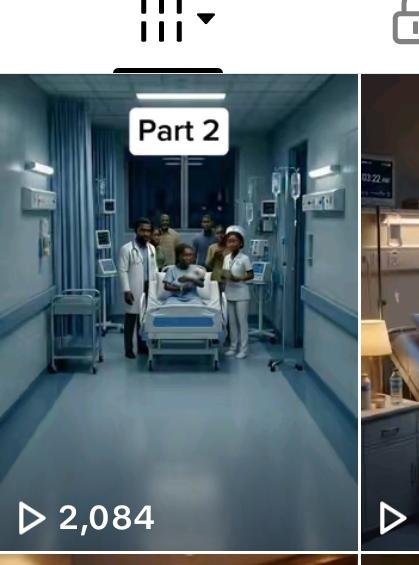
AI can now generate cinematic scenes in minutes. As an educator this fascinates AND challenges me because creativity used to be the one thing we said machines couldn't touch. Now the question isn't CAN AI create… it's what does human creativity look like alongside it? 🤔📚
3
51
Jun 14
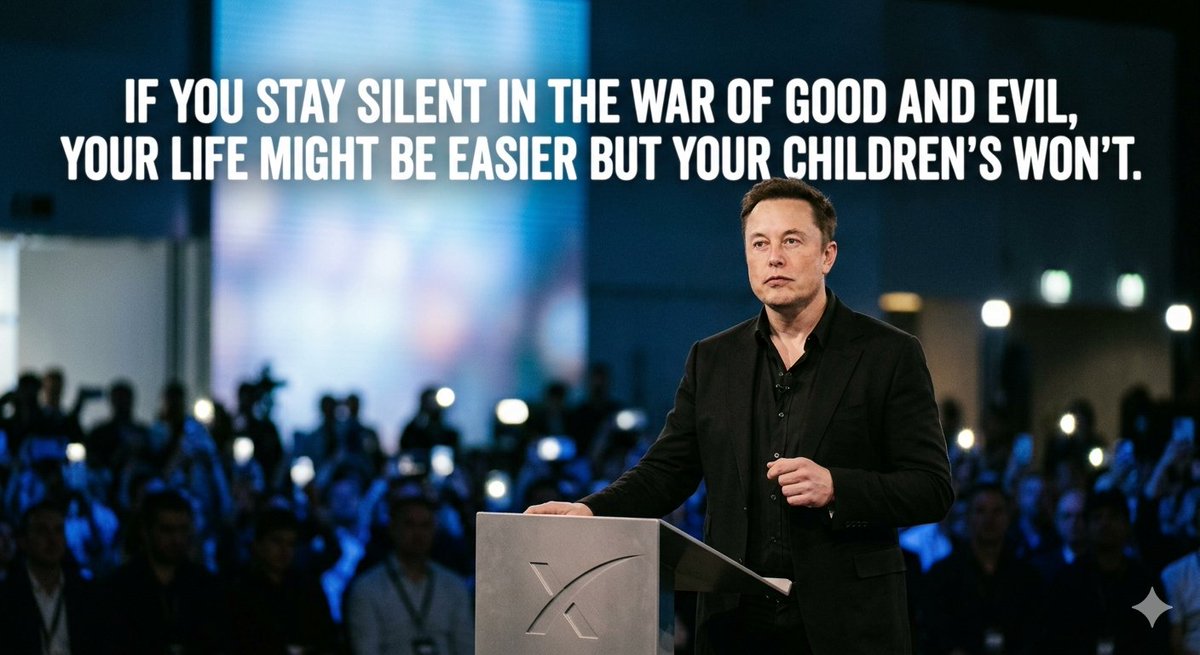
And while we're waiting for Moon factories, can we make sure every child on Earth can read, write and do maths first? 😅 The future Elon is building will need brilliant minds, and brilliant minds start in classrooms, not boardrooms 📚🚀 Education IS the currency of the future
Not impossible, but definitely requires factories on the Moon and Mars to achieve.
By then, I don’t think dollars will be used as currency. Just mass and energy.
1
33
Jun 14
This video took me straight back to 2006 🥹 I started teaching because of moments exactly like this one. My first 5 years were entirely with early years children and I can tell you — watching a toddler do something for the very first time never gets old. Not once. That caregiver's outstretched hand? That's every early years teacher ever. We live for this 👶🏾❤️
Jun 13

A daycare video went viral after capturing a baby girl taking her very first steps
1
9
Jun 14
3 months on X. Paid courses. Daily posting. Engaging with mutuals. Reposting.
My highest view count? 20. 😩
Then ONE reply gets 2,500 impressions out of nowhere.
I don't understand this app and I need someone to explain it to me like I'm 5 😭
X experts — how does the impression algorithm actually work? Drop your secrets below 👇
#GrowthOnX #XTips #Impressions
2
24
Jun 14
This!! My husband is 50 and will BOLDLY tell you he has never felt younger 😂 We have two toddlers and a 3 month old at home and somehow the man has more energy than people half his age 🤣 Babies don't let you get old, they won't allow it 👶🏾❤️
Jun 14

I’m convinced my parents and in-laws have aged in reverse in the four years since my son was born. I think being an active grandparent is the ultimate longevity hack. It’s truly life giving.
1
4
87
Jun 14
The #WorldCup2026Journalist @PoojaMedia Famous World Sport journalist is about to it 1million followers...
Can we get him there please? He follows back for real🙏
Jun 14

Let me add my voice.
Just 2k followers left for @PoojaMedia the famous world sport journalist to clock 1million followers.
Oya lets follow witiwiti.

1
18
Jun 14
This was quite helpful... Omo, the 50 great comments per day? Hmmm I'll keep trying.
Who's in it with me?
Jun 14

How to escape beginner hell:
• 3 tweets per day
• 50 comments per day
• 10 DMs follows per day
Keep it simple.
8