
CEO of L Street Corp, a growing Chicago based evergreen and diversified holding company. Buy-Build-Invest. 25 yrs of entrepreneurial finance & SMB strategy.
Joined December 2011
- Tweets 5,039
- Following 1,010
- Followers 843
- Likes 6,781
32 Photos and videos














Pinned Tweet

18 Apr 2024
"Entrepreneurship is the pursuit of opportunity beyond resources controlled."
~ Prof. Howard Stevenson, HBS entrepreneurial studies godfather
This is by far and away my favorite definition of entrepreneurship. Why?
Out of the gate it implies motion. The verb "pursuit" is deliberate and is the opposite of sitting and waiting for just the right moment.
But by far the most important piece of that short phrase is "beyond resources controlled."
This is pure gold. You won't see this as deliberately and succinctly applied in any other definition.
What he is basically saying is - you need to go and do things without knowing how you are going to get there or where you are going to get the money/resources/talent/knowledge.
Too many people wait for the perfect moment. Or complain they don't have the capital.
That is not entrepreneurship. That's just day dreaming.
4
1
32
2,247
Jun 15
Not extrapolate that to social media and everything that comes with it.
Jun 15

Fred Rogers met with a child psychologist every week for 22 years to build his show. She shaped everything: every script, prop, and song. The whole point was to give a child's nervous system time to slow down. In 1984, a single regulatory decision ended all of it.
The psychologist was Dr. Margaret McFarland, who co-founded the Arsenal Family and Children's Center alongside Benjamin Spock and Erik Erikson. She and Rogers understood that the prefrontal cortex in children, the part of the brain that controls impulse, emotion, and attention, takes decades to fully develop. At the start of every episode, Rogers tied his sneakers and changed his sweater while children settled in. Those pauses were intentional, designed to help a child's nervous system shift into a calmer, more focused state.
What ended it had nothing to do with child development science. In 1984, Reagan's FCC chairman Mark Fowler abolished the advertising limits that had protected children's programming from commercial pressure. Toy companies moved within months. Between 1984 and 1985, cartoons tied to toy lines increased by 300%, from a handful of shows to more than 40 animated series. In almost every case, the toy was designed first. The cartoon was built to sell it.
Researchers later put numbers to what parents were already noticing. A 2011 study in Pediatrics from the University of Virginia tested 60 four-year-olds across three groups: one watching SpongeBob, which cuts scene every 11 seconds; one watching a slow PBS show, which cuts scene every 34 seconds; and one drawing. Nine minutes later, all three took tests on attention, impulse control, short-term memory, and problem-solving. The SpongeBob group scored significantly worse across every measure.
In the 1970s, children began watching television around age 4. Research from pediatrician Dimitri Christakis found that by 2009, the average age of first screen exposure had dropped to 4 months, as the content got faster and the audience got younger. Researchers separately found that each additional hour of daily screen time at ages 1 or 3 raised the risk of attention problems at age 7 by 9%.
1
23
Jay Sebben retweeted

Under capitalism, socialists are free to build socialism.
Under socialism, capitalists aren’t free to build anything.
Nothing stops a group of socialists pooling their money, forming a company, and splitting every wage and every pound of profit perfectly equally.... Or to donate all profit to the government.
It’s legal. It’s easy. Owning the means of production is as simple as setting up a company.
Marx wrote his manifesto before the invention of limited liability companies. Back then “seize the factory” meant seizing it from the handful of families who could afford one.
That argument expired the day anyone could start a company with limited liability, raise investment and hire who they want.
Socialists are free to lead by example and demonstrate their system works. They can out-recruit, out-motivate, out-build and out innovate based on their ideas if they like. It would prove the philosophy works. Capitalism will happily host their experiment.
The fact that nobody does this tells you a lot.
Jun 2

I will soon be introducing a bill to give the public a 50% ownership stake in the largest AI companies in America.
This would guarantee that the trillions created by AI are used to improve the lives of all of us — and block oligarch decisions that harm the American people.
530
2,085
9,384
349,209

Biggest hoax in history.

398
2,759
9,532
299,661

The best job cut post I’ve ever read.
This should be required reading.
May 21

Today we reduced headcount by 22%. The business is the strongest it's ever been. So I think it's important to be direct about what I'm seeing and why.
First, I made this decision and I own it. I did it because the way to operate at the highest level of productivity is changing, and to win the future, ClickUp needs to change with it.
Second, this wasn't about cutting costs. Most savings from this change will flow directly back into the people who stay. We'll be introducing million-dollar salary bands. If you create outsized impact using AI, you'll be paid outside of traditional bands.
Most importantly, I have the deepest gratitude for those affected. We're doing this from a position of strength specifically so we can take care of people properly. Everyone affected receives a package aimed at honoring their contributions and easing the transition.
I only see two options: wait for this to play out gradually in the market or be honest about what I'm seeing and act proactively.
THE 100X ORGANIZATION
The primary change is that we're restructuring around what I call 100x org. The goal is 100x output. The roles required to build at the highest level are fundamentally different than they were a year ago.
Incremental improvements to existing systems won't get us there. We need new ones. That means creating enough disruption to rebuild rather than iterate on what's already broken.
The common narrative is that AI makes everyone more productive. It doesn't. Many of the workflows of today, if left unchanged, create bottlenecks in AI systems.
These roles will evolve. But waiting for that to happen naturally means falling behind now.
The 100x org is actually heavily dependent on people - infinitely more than today. This is only possible with 10x people that have embraced and adopted new ways of working.
THE BUILDERS, AGENT MANAGERS, AND FRONT-LINERS
— THE BUILDERS: 10X ENGINEERS
I don't think most companies have internalized what's actually happening with AI in engineering. The common narrative is that AI makes all engineers more productive. That may be true in isolation, but at an organization level - that is the farthest thing from reality.
Here's what we've validated recently at ClickUp: the great engineers, the ones who can orchestrate, architect, and review, are becoming 100x engineers. They're not writing code. They're directing agents that write code. The skill is judgment.
AI makes the best engineers wildly more productive, and everyone else using AI slows these engineers down.
Think about it - the bottlenecks are (1) orchestration - telling AI what to do, and (2) reviewing - what AI did. Everything is leapfrogged and no longer needed.
So who do you want orchestrating and reviewing code?
And how do you want your best engineers to spend their time?
If your best engineers are spending time reviewing other people's code, then this is inherently an inefficient bottleneck. These engineers can review their agent's code much faster than reviewing human code.
The new world is about enabling your 10x engineers to become 100x.
The wrong strategy is to push every engineer to use infinite tokens. Companies doing this are celebrating 500% more pull requests. But customer outcomes don't match the volume of code being generated.
I call this the great reckoning of AI coding, and every company will face this soon if not already.
More code is just another bottleneck to the best engineers, and ultimately to your company's impact as well.
— THE BUILDERS: 10X PRODUCT MANAGERS
Product management and design roles are merging.
Designers that have customer focus, become more like product managers.
And product managers that have intuition for UX become more like designers.
The bottleneck of user research is gone. It takes us just one mention of an agent to kickoff research and analyze results.
The bottleneck of product <> design iteration is also gone. The product builder iterates on their own, along with agents and skills that ensure alignment with quality and strategy.
Also controversial today - I believe that the wrong strategy is to have your PMs shipping code - that just introduces another bottleneck that the best engineers will waste their time on.
To be clear, PMs should be coding but they should do this in a playground to iterate, validate, and scope. That code should not go to production.
Everything outside of managing systems, orchestrating AI, and reviewing output becomes a bottleneck.
That's why the other roles that are critical along with these are the systems managers (to reduce bottlenecks) along with a bottleneck you can't replace - customer meeting time.
— THE SYSTEM MANAGERS
Ironically, the people that automate their jobs with AI will always have a job. They become owners of the AI systems - agent managers. We have many examples of these people at ClickUp.
The underlying systems in which we operate are absolutely critical to get right. I think most companies are delusional to think they can iterate on existing systems and compete in this new world.
You must create enough disruption so that old systems are deprecated entirely. If there's any definition for 'AI native' that's what it is.
— THE FRONT-LINERS
In a world that will become saturated with AI communication, the human touch will matter more than anything to customers.
This is a bottleneck that you shouldn't replace - even when agents are high enough quality to do video meetings.
One-on-one meeting time with customers is something that shouldn't be automated. The systems around the meetings should be - so that front-liners spend nearly 100% of their time with customers.
REWARDING 100X IMPACT
In a world where companies are able to do so much more with less, where does that excess money go?
In our case, much of the savings in this new operating model will flow directly back to those that enabled it.
We must reward people that create productivity accordingly. This aligns incentives on both sides. Plus, in a world where your best people create 100x impact, you can't afford to lose them.
You should aim to retain these employees for decades. The context they have and their ability to efficiently orchestrate and review will be nearly impossible to replace.
Compensation bands of today should be thrown out the door. We're introducing $1 million cash/year salary bands with a path available to nearly everyone in the company if they produce 100x impact by creating or managing AI systems.
THE FUTURE
Nearly every company will make changes like these. The ones that do it proactively will define what comes next.
The future is not fewer people. It's different work, new roles, and better rewards for those who embrace it. We're already seeing entirely new roles emerge, like Agent Managers, that didn't exist a year ago.
ClickUp is positioning to lead this shift, not just internally, but for our customers too. I've never been more certain about where we're headed.
40
27
647
810,333
Jay Sebben retweeted

May 21
Today we reduced headcount by 22%. The business is the strongest it's ever been. So I think it's important to be direct about what I'm seeing and why.
First, I made this decision and I own it. I did it because the way to operate at the highest level of productivity is changing, and to win the future, ClickUp needs to change with it.
Second, this wasn't about cutting costs. Most savings from this change will flow directly back into the people who stay. We'll be introducing million-dollar salary bands. If you create outsized impact using AI, you'll be paid outside of traditional bands.
Most importantly, I have the deepest gratitude for those affected. We're doing this from a position of strength specifically so we can take care of people properly. Everyone affected receives a package aimed at honoring their contributions and easing the transition.
I only see two options: wait for this to play out gradually in the market or be honest about what I'm seeing and act proactively.
THE 100X ORGANIZATION
The primary change is that we're restructuring around what I call 100x org. The goal is 100x output. The roles required to build at the highest level are fundamentally different than they were a year ago.
Incremental improvements to existing systems won't get us there. We need new ones. That means creating enough disruption to rebuild rather than iterate on what's already broken.
The common narrative is that AI makes everyone more productive. It doesn't. Many of the workflows of today, if left unchanged, create bottlenecks in AI systems.
These roles will evolve. But waiting for that to happen naturally means falling behind now.
The 100x org is actually heavily dependent on people - infinitely more than today. This is only possible with 10x people that have embraced and adopted new ways of working.
THE BUILDERS, AGENT MANAGERS, AND FRONT-LINERS
— THE BUILDERS: 10X ENGINEERS
I don't think most companies have internalized what's actually happening with AI in engineering. The common narrative is that AI makes all engineers more productive. That may be true in isolation, but at an organization level - that is the farthest thing from reality.
Here's what we've validated recently at ClickUp: the great engineers, the ones who can orchestrate, architect, and review, are becoming 100x engineers. They're not writing code. They're directing agents that write code. The skill is judgment.
AI makes the best engineers wildly more productive, and everyone else using AI slows these engineers down.
Think about it - the bottlenecks are (1) orchestration - telling AI what to do, and (2) reviewing - what AI did. Everything is leapfrogged and no longer needed.
So who do you want orchestrating and reviewing code?
And how do you want your best engineers to spend their time?
If your best engineers are spending time reviewing other people's code, then this is inherently an inefficient bottleneck. These engineers can review their agent's code much faster than reviewing human code.
The new world is about enabling your 10x engineers to become 100x.
The wrong strategy is to push every engineer to use infinite tokens. Companies doing this are celebrating 500% more pull requests. But customer outcomes don't match the volume of code being generated.
I call this the great reckoning of AI coding, and every company will face this soon if not already.
More code is just another bottleneck to the best engineers, and ultimately to your company's impact as well.
— THE BUILDERS: 10X PRODUCT MANAGERS
Product management and design roles are merging.
Designers that have customer focus, become more like product managers.
And product managers that have intuition for UX become more like designers.
The bottleneck of user research is gone. It takes us just one mention of an agent to kickoff research and analyze results.
The bottleneck of product <> design iteration is also gone. The product builder iterates on their own, along with agents and skills that ensure alignment with quality and strategy.
Also controversial today - I believe that the wrong strategy is to have your PMs shipping code - that just introduces another bottleneck that the best engineers will waste their time on.
To be clear, PMs should be coding but they should do this in a playground to iterate, validate, and scope. That code should not go to production.
Everything outside of managing systems, orchestrating AI, and reviewing output becomes a bottleneck.
That's why the other roles that are critical along with these are the systems managers (to reduce bottlenecks) along with a bottleneck you can't replace - customer meeting time.
— THE SYSTEM MANAGERS
Ironically, the people that automate their jobs with AI will always have a job. They become owners of the AI systems - agent managers. We have many examples of these people at ClickUp.
The underlying systems in which we operate are absolutely critical to get right. I think most companies are delusional to think they can iterate on existing systems and compete in this new world.
You must create enough disruption so that old systems are deprecated entirely. If there's any definition for 'AI native' that's what it is.
— THE FRONT-LINERS
In a world that will become saturated with AI communication, the human touch will matter more than anything to customers.
This is a bottleneck that you shouldn't replace - even when agents are high enough quality to do video meetings.
One-on-one meeting time with customers is something that shouldn't be automated. The systems around the meetings should be - so that front-liners spend nearly 100% of their time with customers.
REWARDING 100X IMPACT
In a world where companies are able to do so much more with less, where does that excess money go?
In our case, much of the savings in this new operating model will flow directly back to those that enabled it.
We must reward people that create productivity accordingly. This aligns incentives on both sides. Plus, in a world where your best people create 100x impact, you can't afford to lose them.
You should aim to retain these employees for decades. The context they have and their ability to efficiently orchestrate and review will be nearly impossible to replace.
Compensation bands of today should be thrown out the door. We're introducing $1 million cash/year salary bands with a path available to nearly everyone in the company if they produce 100x impact by creating or managing AI systems.
THE FUTURE
Nearly every company will make changes like these. The ones that do it proactively will define what comes next.
The future is not fewer people. It's different work, new roles, and better rewards for those who embrace it. We're already seeing entirely new roles emerge, like Agent Managers, that didn't exist a year ago.
ClickUp is positioning to lead this shift, not just internally, but for our customers too. I've never been more certain about where we're headed.
1,651
1,136
7,664
9,129,786
Apr 29
Great series of posts below. I know this sounds nuts to trained deal people, but I can’t tell you how many brokers (and even lawyers)… then by default of learned behavior, sellers… at the lower end… have tried to tell me “you’re buying assets” (as in the legal structure in an asset sale),
and then expect to hoodwink you out of appropriate inventory or AR levels or cram AP on you, or whatever, without any adjustment to value expectations.
Sometimes it’s out of ignorance. Sometimes it’s deception. Usually it’s because an advisor did a poor job of coaching the seller.
The full value of a business is as a going concern. A moving train. Not a startup where you buy equipment and inventory and then… ready-set-go!
Apr 28

It was the worst business buying story I’ve ever heard.
A buyer moved his family from Georgia to Utah mid-deal.
The negotiation was messy, but he was excited to close.
Working capital started at $800k.
Then dropped to $500k.
Then got negotiated down to $300k at the last minute.
He thought he was getting $300k to run the business.
Within 30 days, he realized he had a problem.
Most of that “working capital” was stale accounts receivable.
Money that was never going to be collected.
The purchase agreement didn’t protect him.
Nothing carved out AR over 90 days.
Within three months, he was running out of cash.
He drained his $200k 401(k) to keep the business alive.
Told his wife it would be a quick blip.
He’d pay it back soon.
Then sales stalled.
He needed more cash just to operate.
Banks said no.
He couldn’t bring himself to ask friends or family.
So he started using cash that was supposed to go back to the seller.
The seller sued him.
Everything unraveled fast.
By month nine, he was in default.
By month twelve, he was in bankruptcy and receivership.
Employees walked off the job.
The business collapsed.
He came to me among others around month eight searching for a solution.
At that point, it was already over.
A post-closing analysis showed the truth.
The business actually needed about $1.5M in working capital to run properly.
He got a fraction of that.
That’s the game.
If you don’t understand working capital, you’re not buying a business.
You’re buying a problem.
In today’s episode of Main Street Deals, Kevin and Sam unpack the most important lesson in business buying.
What working capital actually is.
How to negotiate for it.
And how to manage it post-closing.
Enjoy.
2
63
Jay Sebben retweeted

Apr 24
“If AI can make employees more productive, which is widely accepted as fact, then companies are going to want as many productive units of labor as possible. This is a key reason why I am changing my mind.”
This is why jevons paradox is really important to understand with AI right now.
And counterintuitively, this trend is going to increase as AI gets better. The better AI gets at performing tasks, the more companies can take on those tasks, which leads to hiring more people to do the surrounding work of those tasks.
Think about the small business that can’t afford to build complex software. When AI is only a little good nothing changes for them. When it’s really good they can finally hire engineers that have the impact of 5-10X, so they can finally invest in engineering.
The sales team that can automate customer intelligence and outbound demand gen will hire more sales people because they have more leads to go after. The marketing team that can now do higher-end video production than before will hire a video editor. And so on.
This is going to happen in more and more surprisingly ways.
Apr 24

I have changed my mind on how AI will impact jobs in America.
Previously, I believed AI would replace many entry level roles typically filled by young employees. The technology would then work its way up the organization and eventually reduce the total number of jobs in a company.
The data is saying something different, so when I get new information I am willing to change my mind.
The number of software engineers being hired has been increasing. The number of open software engineer roles is growing.
The number of new college grads who get hired has increased 5.6% over the last 12 months. The unemployment level for people aged 20-24 years old who have a college degree has fallen from nearly 9% to almost 5% as well.
The Wall Street Journal recently wrote “AI created 640,000 jobs between 2023 and 2025 in the U.S., according to an analysis by LinkedIn of job posting data, including new white-collar positions such as Head of AI and AI engineer.”
And I am starting to see companies throughout our portfolio aggressively hiring to keep up with the demand for their products and services.
If AI can make employees more productive, which is widely accepted as fact, then companies are going to want as many productive units of labor as possible. This is a key reason why I am changing my mind.
AI appears to be a magical technology that will make companies more productive and more profitable. The net result will be more corporations, more startups, and more jobs.
All three are big, positive wins for the American economy.
84
74
669
129,561
Apr 23
💯- moat worries are for people scared of winning in the marketplace. Nice to have, not need to have.

I meet new small business owners making a million a year or more take-home with "no moat", weekly.
Just because other people theoretically could do the same thing doesn't mean it's a bad business.
1
22
Jay Sebben retweeted

Apr 17
This is literally mind blowing
Spencer Pratt exposes Los Angeles Department of Water and Power salaries
- Over 100 LADWP employees earn an annual compensation of over $500,000 per year each
- 26 LADWP employees earn more than $600,000 thousand dollars per year
- 4 top level LADWP employees earn more than $700,000 dollars a year
- The LADWP has a combined water and power budget of 11 billion dollars
I looked into it further, and get this
100% of leadership and oversight of the Los Angeles Department of Water and Power are aligned with Democrats
Mayor of Los Angeles Karen Bass appointed the 5 member Board of Water and Power Commissioners, which sets policy and approves major decisions like executive hires and salaries
California is essentially run by the mafia
They are literally giving themselves $500,000 -$800,000 EACH and this is just one department
1,963
22,571
64,005
1,147,118

Mar 30
Most people don’t realize that by making a tax a percentage, it is already naturally progressive.
Mar 29

She’s doing three things at once and hoping no one notices.
First, she blurs rate and amount. A billionaire can show a lower effective rate in a given year because of how capital gains are realized, while still paying vastly more in absolute dollars than thousands of teachers combined. The burden isn’t remotely comparable.
Second, she strips out timing. Most billionaire wealth isn’t taxed yearly because it isn’t realized yearly. Tax systems don’t treat unrealized gains as income. So she compares a steady W2 salary to fluctuating, often deferred gains and calls it unfair.
Third, she redirects attention. Instead of asking where trillions in already collected tax revenue go, she frames the problem as “not enough taken.” That conveniently shields spending, waste, and incentives from scrutiny.
So the real question isn’t “why aren’t we taxing more?”
It’s “why does more revenue keep producing worse outcomes?”
That’s the part this rhetoric is designed to avoid.
1
1
25
Mar 24
Moda

We raised $7.5M to kill AI slop.
Introducing Moda: the world's first design agent with taste.
RT comment “Moda” and we’ll design your brand for FREE.
26
Mar 24
Tell me you’ve never run a business and can’t get out of the way of your political ideals without telling be you’ve never…
Or just tell me you’re bankrupt.
Mar 24

Hang on… Chicago wants to attract more tourists. It has created a marketing campaign to do that; and, in order to fund it, the city is… making it more expensive to stay in Chicago by raising taxes on hotel rooms? Do I have that right?
1
37
Jay Sebben retweeted

Congresswoman,
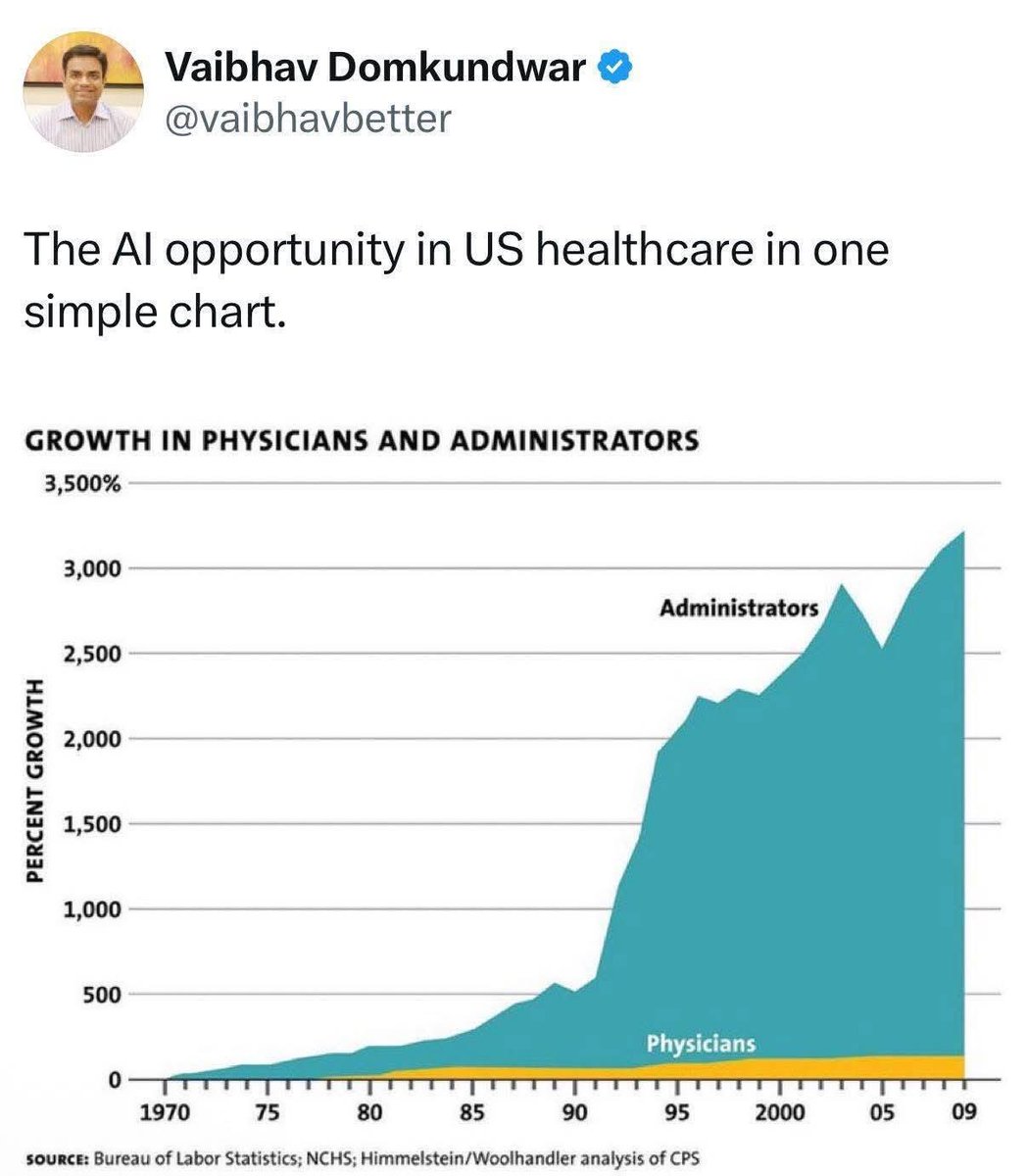
We spend 20% of our GDP on healthcare.
Nobody is saying we don’t have enough money for healthcare. We already spend too much on healthcare.
The problem is that the money goes to administrators, third parties, fraudsters, and monopoly corporations acting as “non profits.”
More money isn’t the answer. That will just continue putting us into debt so favored interest groups and scammers can keep extracting wealth from hard working americans.
If you truly cared about healthcare, you’d be working to reverse the policies got us here in the first place.
Mar 12

$11.3 billion on war for Iran, but tell me again how we don’t have enough money for health care.
40
237
1,539
31,071
Jay Sebben retweeted

Bankruptcy is the only path forward for Chicago. There is no credible way to "outgrow" the city's present situation. Step 1: Springfield pass law to allow city to file Ch. 9 bankruptcy. Step 2: City engages with unions and pension funds in good faith renegotiation of benefits and terms w/ bankruptcy now a real threat. Step 3: If negotiations fail, proceed with bankruptcy and let federal court resolve what creditors owed.
Mar 8

100 years of Democratic governance leads Crains to seriously propose the City of Chicago consider going into bankruptcy. This would mean pension cuts, labor cuts, and millions in private contracts torn up. It would be another low point for a great City.

56
127
823
86,543
Jay Sebben retweeted

Mar 4
You pay for healthcare seven times.
Once through your premium. Once through your deductible.
Once through Medicare payroll taxes.
Once through Medicaid via state income taxes. Once through local hospital district levies.
Once through charity care baked into every negotiated rate.
And once through your employer’s “contribution,” which is your compensation, redirected before you see it.
After all seven payments,
30 cents of every dollar still goes to administration.
Other developed nations average 12%.
The money isn’t missing.
It’s just going somewhere else.
30
244
714
10,820
Jay Sebben retweeted

Mar 4
The majority of kids in college right now will end up underemployed, taking jobs that do not require a college degree - unable to service student loans.
Even the winners face massive headwinds in terms of long term job security.
Now imagine 3 years from now.
What do you tell kids in high school today?
- AI is doing school work.
- AI is doing college applications.
- Colleges are using AI to assess applications.
- College kids are using AI to do school work, resumes, and job search.
- Employers are using AI to assess applications.
- Employers are using AI to reduce entry level positions.
And how do you educate younger kids?
It seems like the only viable path forward is teaching kids to become AI wizards and maestros, with an entrepreneurial mindset, whereby they can be a one-person company, or sell their skillset to the millions of boomer/gen x small businesses that don't have these skills.
105
57
575
43,485
Jay Sebben retweeted
Repeal the ban on physician owned hospitals.
@councilsns
Mar 4

Section 6001 of the Affordable Care Act banned the construction and expansion of physician-owned hospitals.
The American Hospital Association lobbied for it.
Physician-owned hospitals consistently rank among the highest quality facilities in the country.
They have lower prices.
They have better outcomes.
Patient satisfaction scores are higher.
Medicare and Medicaid (CMS) data confirms this every year.
The ban has nothing to do with quality.
It has everything to do with competition.
Large hospital systems couldn’t outperform physician-owned hospitals, so they made them illegal.
There is no polite way to say this:
Congress banned the best option to protect the worst operators in the market.
5
28
152
4,656
Jay Sebben retweeted

Mar 4
WOW... JB Pritzker's blind trust bought Centene stock. Then Centene got $20 BILLION in Illinois Medicaid contracts. Then Pritzker met personally with Centene executives. Then he claimed he knew nothing.
The most expensive coincidence in Illinois history.
865
12,765
36,505
604,716
Feb 16
Exactly. This is the case in everything that lacks transparency and adds complexity. The same in the IRS tax code, costs of education, government licensing, etc. This is why market simplicity is a better outcome than central planning.
It’s the natural undesired outcomes of bureaucracy human fallibility.

This is a great summary of the "sucker's paradox." Honesty is not a winning strategy.
We see this in healthcare, where dense rulemaking combines with means-tested exceptions, discretionary enforcement, and leniency for hardship. Each of those elements is defensible on its own. We want standardized payments so hospitals cannot charge wildly different amounts for similar care. We want adjustments for sicker patients so institutions are not penalized for taking on complex cases. We want compassion in enforcement because real lives are affected. Yet when these components are layered together, they create a predictable outcome: the honest actor is penalized relative to the strategic actor.
Just look at the massive amount of Medicaid fraud being uncovered. These programs are meant to help those who have hardship. Yet, we are seeing that any system that relies on intricate rules, targeted benefits, and discretionary enforcement will tend to reward those who master classification. We did not set out to build dishonest institutions. The intent was to design systems that were fair, standardized, and resistant to abuse. Yet when payment depends on ever more granular distinctions, and when enforcement can never be perfect, behavior adapts.
See more in my latest below:
1
28