
Creator, writer, producer, XRP•XLM•XDC
Joined May 2022
- Tweets 2,992
- Following 243
- Followers 646
- Likes 197,898
79 Photos and videos















Jetpac.io retweeted

This tweet aged very well, but I really like this one.
“Flare is the blockchain for data” is not just about putting data onchain. but more about what you can do with verified data once it is native to the chain.
well, program from the origin chain, execute cross-chain actions from Flare, verify states and make assets programmable and very important for institutions : compute privately, but keep it auditable.
That is basically a full stack for institutional cross-chain data usage.
Verified data becomes logic.
Logic becomes execution.
Execution becomes auditable markets.
Plus stablecoins, RWA and payment rails accelerating, this positioning makes more sense every day.
#Flare #XRP #RWA #DeFi #ConnectEverything
2 Feb 2024

Almost all future usecases of the blockchain (AI, Gaming, Identity, Real World Assets etc) will require some amount of external data attested onto chain. Decentralisation (without it there is no safety), scalability and low latency are key. Flare is the blockchain for data. #connecteverything
10
39
1,084
Jetpac.io retweeted

Jun 4
Ideas in Crypto that are dead:
- Store of value against inflation/debasement
- Get rich quick on vapourware
Very much alive:
- Utility charging fees or harvesting MEV that accrues to token economics
Flare’s myriad utilities:
- DeFi ecosystem for tokens that don’t have it
- Data & decentralised interoperability
- Compliant privacy
- Verifiable compute for on & offchain AI and financial uses
All can contribute through fees and MEV capture to Flare’s token economy.
32
100
480
17,765
Jetpac.io retweeted

Jun 3
Trillions will flow to Stellar.
$XLM still under $0.30
So what’s the real target when the money starts moving?

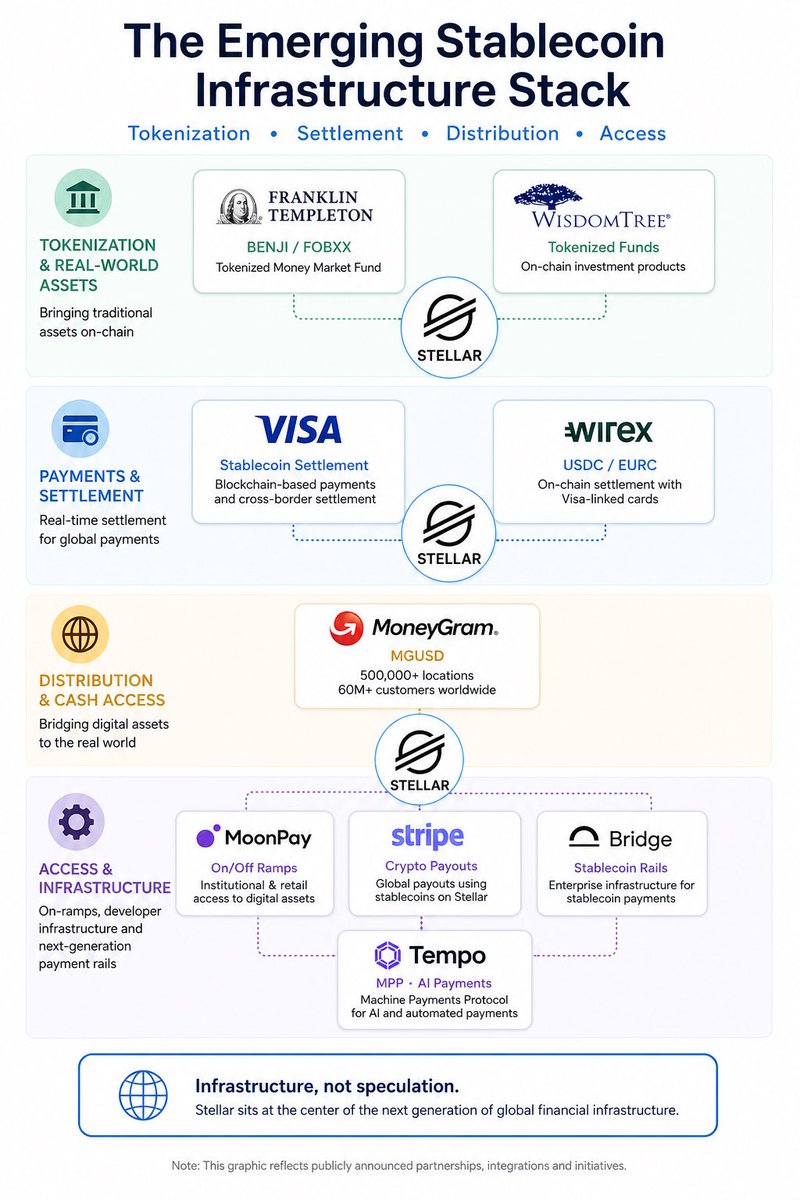
🧵 Stripe, Visa and Mastercard are reportedly close to launching a joint stablecoin platform.
Most investors will focus on the announcement itself.
The more interesting question may be:
Which networks are already connected to this emerging stablecoin infrastructure?
That question leads to @StellarOrg
Stablecoins are no longer a crypto side story.
They are increasingly becoming financial infrastructure.
The world’s largest payment companies are not chasing speculation.
They are building new settlement rails for moving money globally.
Stripe’s connection to Stellar runs deeper than many realize.
@stripe was an early investor in Stellar, and its relationship with the network dates back more than a decade.
Today, Stripe’s crypto strategy increasingly overlaps with areas where Stellar has long been active: payments, stablecoins and global settlement.
Stripe also integrated Stellar for crypto payouts.
The goal was not trading.
The goal was moving value efficiently across borders.
Fast settlement, low fees and global accessibility remain central to that vision.
Then came Bridge.
@stripe acquired the stablecoin infrastructure company for $1.1 billion.
Bridge has leveraged Stellar infrastructure for enterprise payouts and global money movement, connecting businesses with stablecoin-based payment rails.
@Visa has been moving steadily toward stablecoin settlement for years.
What began with early $USDC settlement initiatives has evolved into a broader strategy focused on blockchain-based payments, cross-border transfers and programmable money.
The direction of travel has become increasingly clear.
The Wirex partnership pushed that vision further.
Visa-linked settlement in USDC and EURC went live on Stellar, enabling settlement without relying on traditional correspondent banking infrastructure.
This was not a pilot.
It was production infrastructure.
@Mastercard has also established ties with @StellarOrg
The network joined the Mastercard Crypto Credential ecosystem, an initiative focused on identity, compliance and trusted blockchain-based transactions.
An important step toward regulated digital asset adoption.
Meanwhile, Stripe and Paradigm launched Tempo, a blockchain focused on next-generation payment infrastructure.
Many immediately assumed this meant competition with Stellar.
The reality may be more nuanced.
Stellar’s own developer docs now include Agentic Payments, with dedicated sections for x402 and MPP on Stellar.
That matters because the stablecoin story is no longer just about human payments.
It is also about programmable, machine-driven payment infrastructure.
Tempo brings modern payment architecture and AI-native applications.
Stellar brings more than a decade of experience in stablecoins, settlement, tokenized assets, compliance frameworks and global on/off-ramp infrastructure.
Those capabilities are complementary.
The takeaway is not that Stripe, Visa and Mastercard will build everything on Stellar.
The takeaway is that as stablecoins move deeper into mainstream finance, Stellar keeps appearing in the infrastructure stack.
Stripe.
Visa.
Mastercard.
MoneyGram.
Franklin Templeton.
At some point, that stops looking like coincidence and starts looking like infrastructure.
stellar.org/press/stellar-jo…
👉🏻 stellar.org/press/wirex-and-…
👉🏻 developers.stellar.org/
20
55
282
13,923
Jetpac.io retweeted

Jun 3
I bet you’d like to see something like this.
Me too, and I think there’s a path to get there with agentic payments and stablecoins.
Right now, there’s a gap in the market for machine-driven commerce: stable settlement, programmable access, and verifiable payment records need to exist in the same stack.
This is why I want to boost USDT0 adoption with agents. Flare can be uniquely well positioned to unlock value once agents can pay for APIs, data, and services in a reliable way.
There is a real business unlock in turning those payments into accountable economic activity that another system, company, or institution can trust and reuse later.

10
31
170
4,697
Jetpac.io retweeted

Jun 3
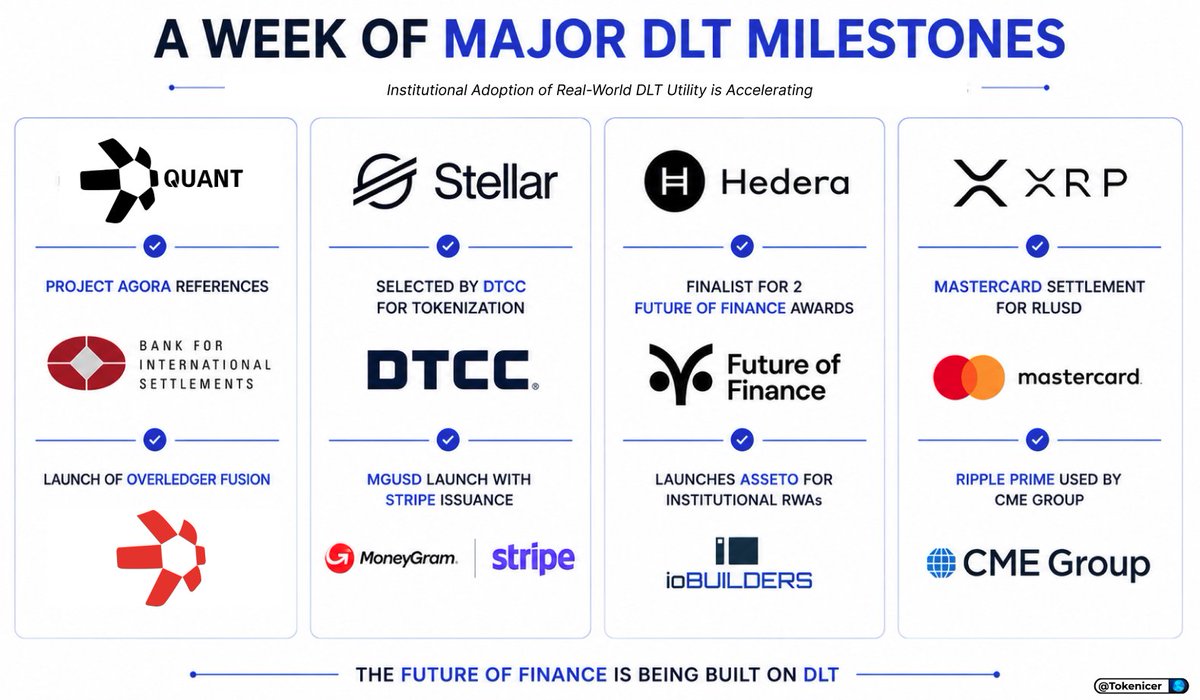
🗓️Been an incredible past week
$QNT
• Project Agora references
• Launch of Overledger Fusion
$XLM
• Selected by DTCC for tokenization
• MGUSD launch with Stripe issuance
$HBAR
• Finalist for 2 Future of Finance awards
• Launches Asseto for institutional RWAs
$XRP
• Mastercard settlement for RLUSD
• Ripple Prime used by CME Group
16
186
720
27,414
Jetpac.io retweeted

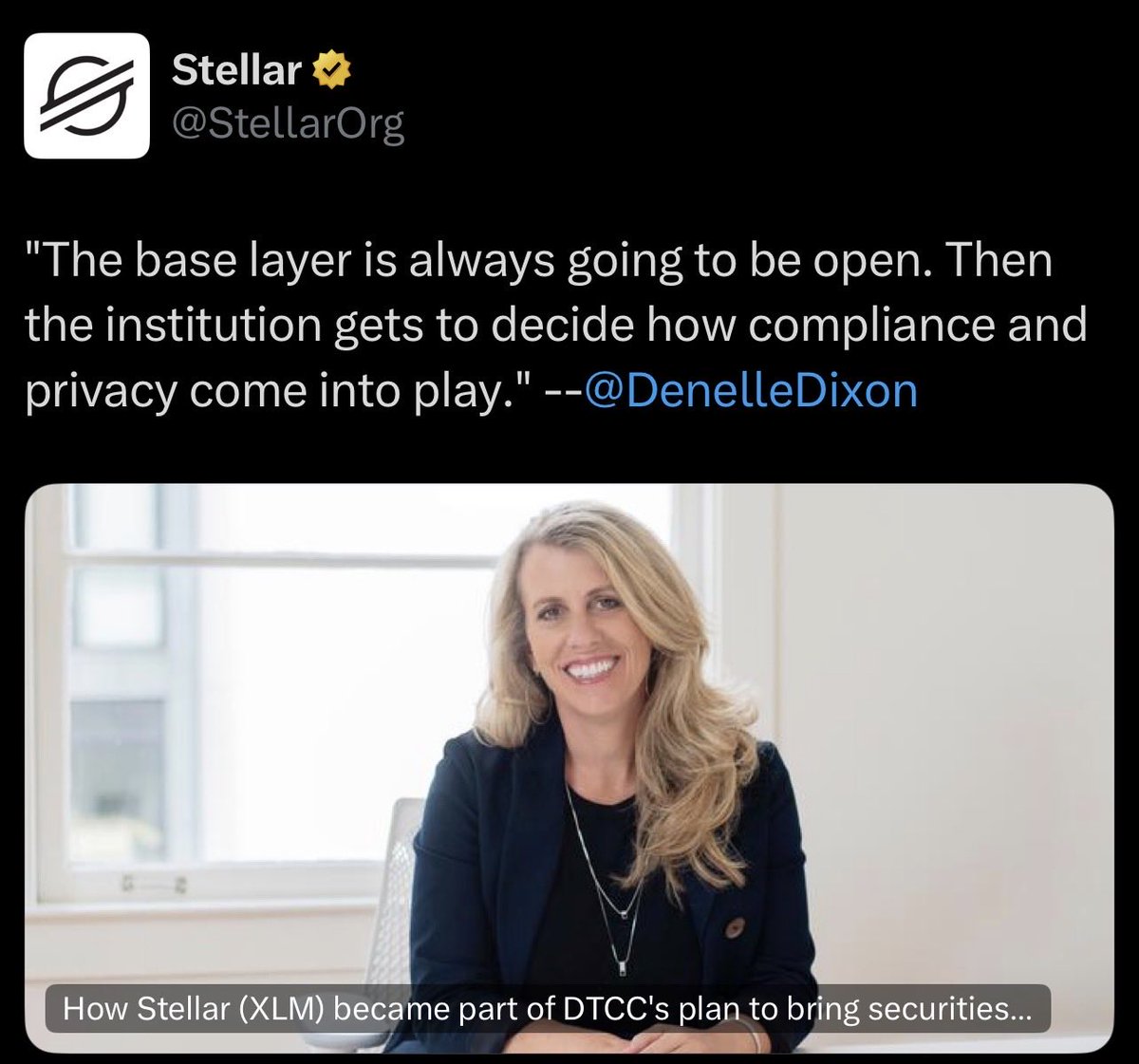
‼️👀 Stellar CEO Denelle Dixon Just Publicly Said: DTCC Has Been Secretly Working With Stellar Since 2018!
EIGHT FULL YEARS of hidden power moves… and now they drop the bomb!
They had been quietly working ever since! 💥
Everyone called Ripple’s pilots and partnerships with global banks, institutions and countries… total delusion and fake for years…
Stellar just showed EIGHT YEARS of secret DTCC work was 100% REAL.
Now picture what Ripple’s massive bank deals and long war have been building in the dark.
When it all explodes… $XRP is going to destroy everything.
It’s all been 100% real.
Those announcements are soon coming…

🚨 STELLAR CEO DROPS BOMBSHELL: Compliance and Privacy was the #1 reason DTCC chose Stellar!
Institutions are demanding real privacy on public ledgers 🔥
Now XRPL is about to flip the game.
Confidential MPTs ZK proofs dropping soon = hidden balances & transfers with full compliance.
Add @DNAOnChain’s privacy layer on XRPL where the data is secured through their portable token XDNA, using zero-knowledge proofs.
JP Morgan (the same bank that connected XRP Ledger with Interbank Settlement) dropped a massive Web3 digital identity page: Private, Self-sovereign identity ownership that lets people truly own and control their data.
Yes, the exact protocol being built on XRPL.
Stellar and XRPL are about to OWN tokenized RWAs, DeFi & global payments.
$XRP, $XLM and $XDNA will be the biggest assets in the utility season…
Buckle TF up🔥🌊
44
352
1,554
165,911
Jetpac.io retweeted

CRAZY: 🇺🇸IBM selected Stellar for its $150,000,000,000,000 global cross-border payments network.

46
285
1,418
59,173
Jetpac.io retweeted
May 31
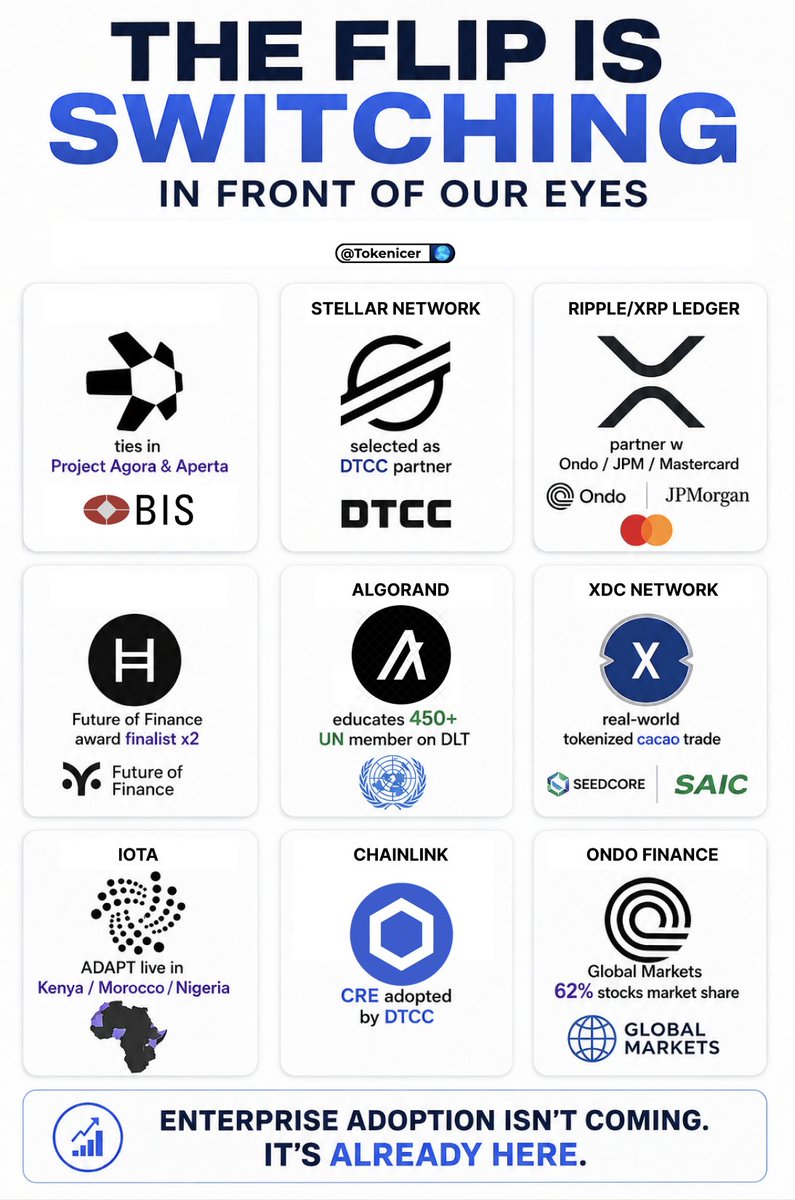
🚨The Flip is Switching in front of our eyes
And the progress in May's been EXPONENTIAL
$QNT ties in Project Agora & Aperta
$XLM selected as DTCC partner
$XRP partner w Ondo/JPM/Mastercard
$HBAR Future of Finance award finalist x2
$ALGO educates 450 UN member on DLT
$XDC real-world tokenized cacao trade
$IOTA ADAPT live in Kenya/Morocco/Nigeria
$LINK CRE adopted by DTCC for collateral
$ONDO Global Markets 62% stocks market share
40
403
1,497
63,416
Jetpac.io retweeted

May 29
Stellar 🤝🏻 DTCC ✅️
Stellar 🤝🏻 MoneyGram ✅️
Stellar 🤝🏻 Franklin Templeton ✅️
Stellar 🤝🏻 VISA ✅️
$XLM
Apr 28

🔥 BIG! In yesterdays session on Global Money Movement with @StellarOrg, The CEO of @MoneyGram confirmed the push to serve SME's atop of its retail clients; highlighting the firm is "bullish on having a digitized unified platform powered by a digital payments network." $XLM 🔥
24
206
1,091
58,590
Jetpac.io retweeted
May 30
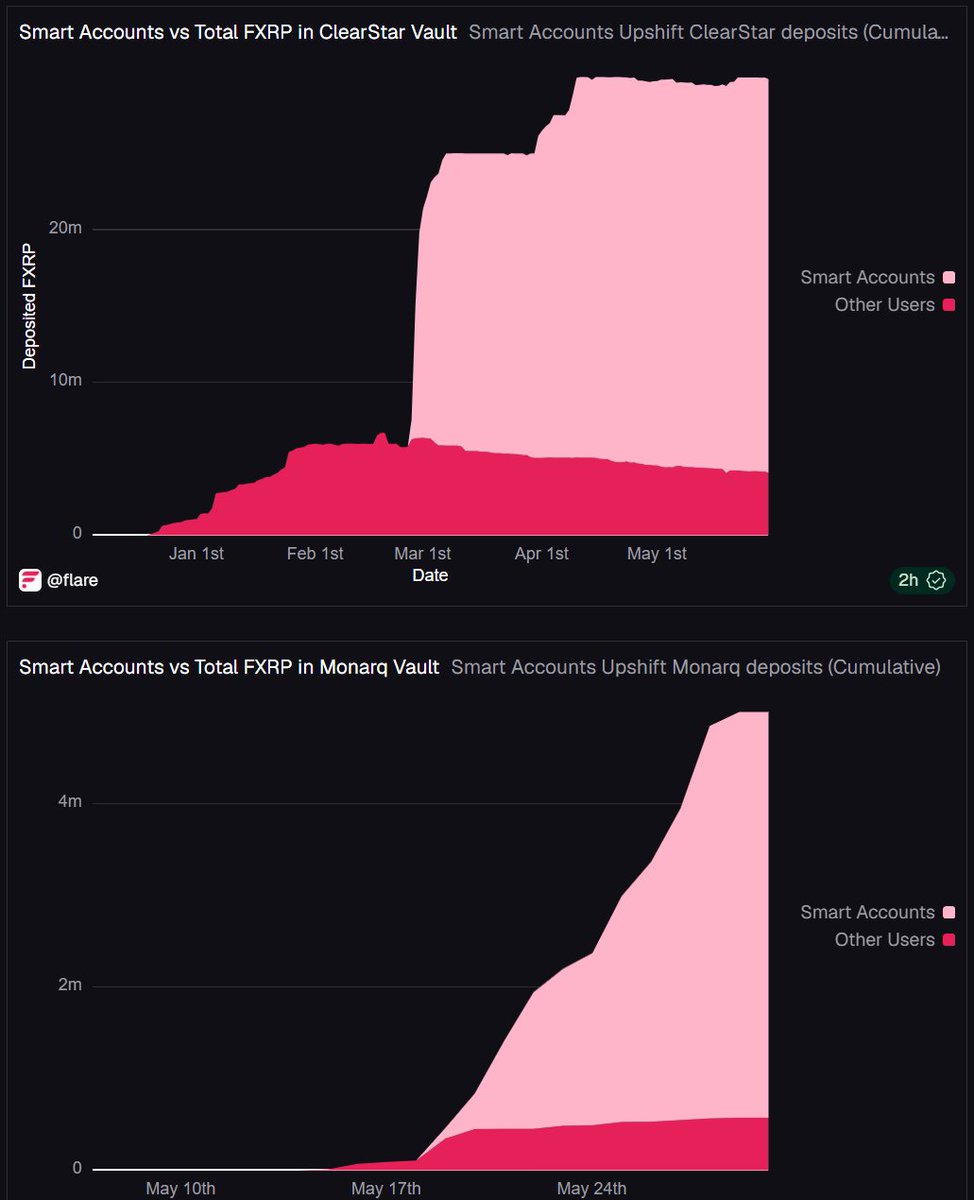
Flare Smart Accounts have already been amazing for adoption of both Flare and XRPFi.
As they exist today they only just scratch the surface of what smart accounts will be able to do long term. More functions, more networks and more assets will be added.
They provide a great user experience and are really hard for others to replicate. This gives Flare a huge advantage.
Smart accounts only exist because of the FDC. Building with data at the core of the network was painful but ultimately the right decision.
May 30

Smart Accounts give XRP holders a cleaner path into FXRP-based DeFi while keeping the experience anchored to XRPL wallets.
Track FXRP activity here:
dune.com/flare/fasset-overvi…
26
118
443
28,658
Jetpac.io retweeted

May 29
Interesting fact! 🚀
At launch, Stellar created 100 billion XLM. Over the next 5 years, inflation added ~5 billion more.
On November 5, 2019, SDF (Stellar Development Foundation) burned 55 billion XLM in a single day!
Now:
✅ Max supply — 50 billion XLM (inflation permanently disabled)
✅ Circulating supply — ~33.6 billion XLM
✅ ~16.4 billion — held by SDF (in escrow). These tokens are used for network development, developer grants, and ecosystem support
One of the largest token burns in crypto history 🤯
#Stellar #XLM #Cryp

8
79
602
85,568
Jetpac.io retweeted

May 29
The full XRPFi stack is hard to fit in one minute.
See @HugoPhilion on XRP yield in @RippleXDev's latest XRP in One Minute👇
May 29

Can XRP be used in strategies involving lending and vaults? Absolutely.
@HugoPhilion breaks down how XRP can be used as collateral to access yield strategies.
That includes wrapping XRP as FXRP on @FlareNetworks, borrowing stablecoins against it, and deploying those assets into other protocols, alongside vault-based strategies on XRPL and Flare.
XRP in a Minute 👇 on.ripple.com/4vm2fjm
52
70
341
21,016
Jetpac.io retweeted

May 29
May 29
Can XRP be used in strategies involving lending and vaults? Absolutely.
@HugoPhilion breaks down how XRP can be used as collateral to access yield strategies.
That includes wrapping XRP as FXRP on @FlareNetworks, borrowing stablecoins against it, and deploying those assets into other protocols, alongside vault-based strategies on XRPL and Flare.
XRP in a Minute 👇 on.ripple.com/4vm2fjm
7
75
421
16,370
Jetpac.io retweeted

May 27
Let's talk about what the DTCC/Stellar announcement actually means.
XLM pumped 8-10% today.
XRP community is nervous.
They shouldn't be. Here's why.
DTCC announced a multi-chain strategy.
That word matters.
Multi. Chain.
Not Stellar instead of Ripple.
Not XLM instead of XRP.
Both.
Here's the timeline:
Ripple Prime — DTCC tokenization working group — July 2026 limited production. October 2026 full launch. Already inside the room. ✅
Stellar — DTCC tokenized assets on Stellar network — H1 2027. ✅
Different chains.
Different timelines.
Same institution building on both.
The honest read:
XRP and XLM were built by the same person — Jed McCaleb. They share DNA. They serve different corridors.
XRP — institutional settlement. Cross-border. ODL corridors. Bridge asset between stablecoins.
XLM — retail remittances. Financial inclusion. Emerging markets. Individual access.
DTCC choosing both isn't a competition.
It's a confirmation that the multi-chain world the thesis was built on is exactly what's being built.
More chains tokenizing real assets means more bridges needed between them.
That's not bad for XRP.
That's the whole XRP thesis.
Sorry I couldn't write this sooner, was at work all day. Woosah XRP family.
We audit the plumbing 🛡
70
203
1,194
65,112
Jetpac.io retweeted

May 28
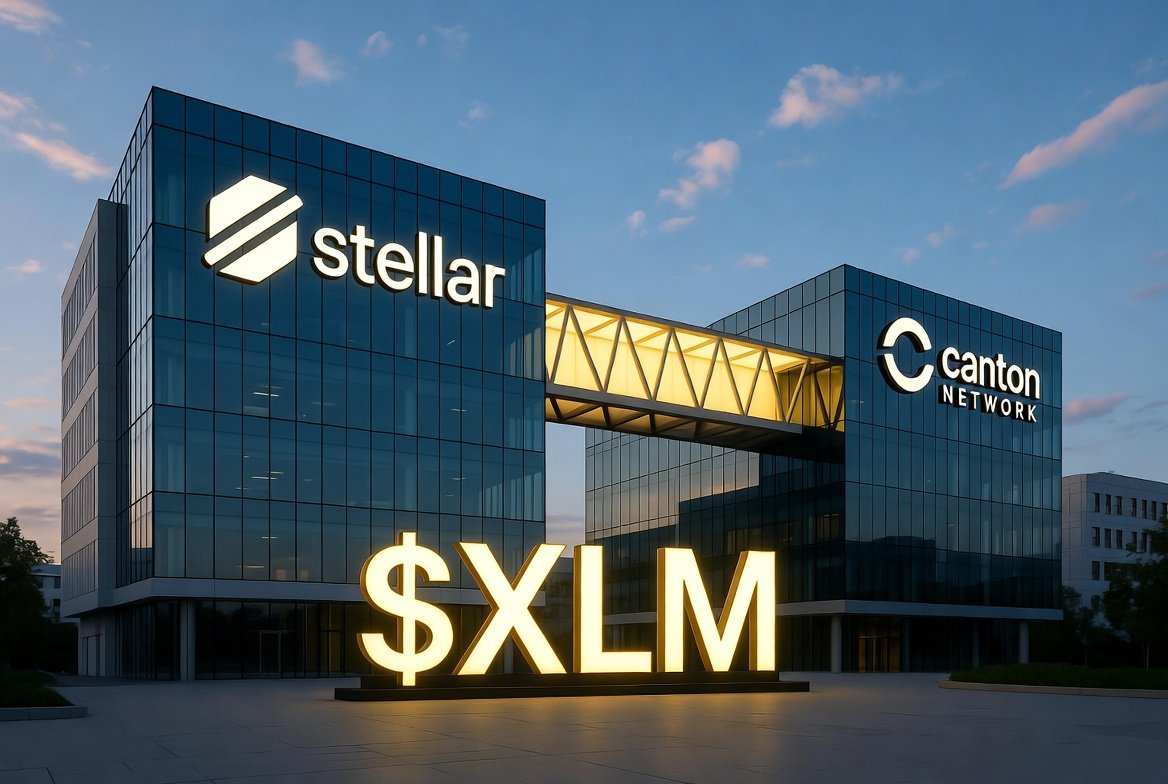
🚀 Stellar just leveled up with Canton Network!
$XLM is powering the public rail while Canton delivers permissioned privacy — creating DTCC’s true hybrid multichain ledger for tokenized assets at massive scale.
This public-private synergy with $CC is exactly what institutions need for real adoption.
How big will this hybrid model push Stellar and Canton? Drop your take below! 🌉
$XLM $XDC $HBAR $ONDO $ZBCN $SOL $BTC
#XLM #Stellar #CantonNetwork #RWA
6
38
283
6,211
Jetpac.io retweeted

May 27
Stellar is specifically designed with regulatory compliance in mind, more so than many other blockchains.
It has always been that way.
Four key features prove it:
• Clawback: recover assets for sanctions/fraud
• AUTH_REQUIRED: KYC gating on trustlines
• AUTH_REVOCABLE: instant freezes
• Public immutable ledger: full auditability
That’s why institutions prefer it 🔥🔥🔥

May 27

Why nowadays major financial infrastructure keeps ending up in the Stellar conversation
2
21
111
4,876

Jetpac.io retweeted

May 27
Today, @The_DTCC's tokenization service announced plans to connect with @StellarOrg starting H1 2027.
This integration will allow market participants to leverage traditional assets in a digital ecosystem for faster settlement, greater asset mobility, extended trading hours, cost efficiency, and lowered risk.
The network was built for this moment.
Watch ↓
176
808
3,601
644,363
Jetpac.io retweeted

May 27
Today, @The_DTCC and SDF are announcing plans to enable the tokenization of DTC-custodied assets on Stellar.
The connection supports the rapid conversion of traditional assets into tokenized form, and the full asset lifecycle, including corporate actions and reporting.
238
1,131
4,499
464,962

May 27
RT @The_DTCC: DTCC and the Stellar Development Foundation announced today plans to enable the tokenization of DTC‑custodied assets on the @…
1,659