
Building the future workforce of the AI economy 🤝
Joined March 2014
- Tweets 3,096
- Following 353
- Followers 10,518
- Likes 3,747
897 Photos and videos

Pinned Tweet

10 Jun 2025
Introducing Handshake AI—the most ambitious chapter in our story. We leverage the scale of the largest early career network to source, train, and manage domain experts who test and challenge frontier models to failure for the top AI labs.
21
15
156
338,157
Jun 2
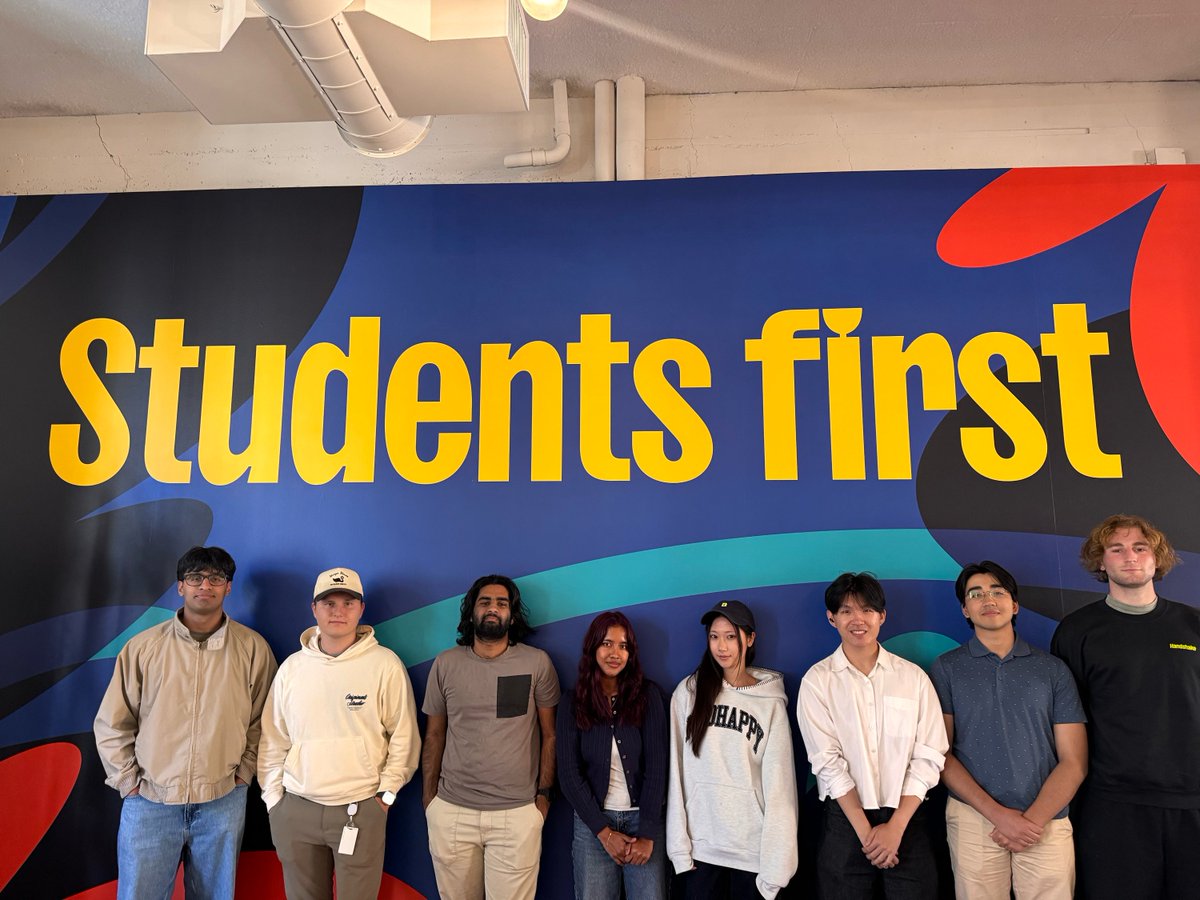
Meet our Handshake AI summer intern class.
They found us on Handshake. Now they're building what's next on it.
Welcome to the team. 🙌
5
2
18
1,324
May 27
We built a better way to grade agentic work.
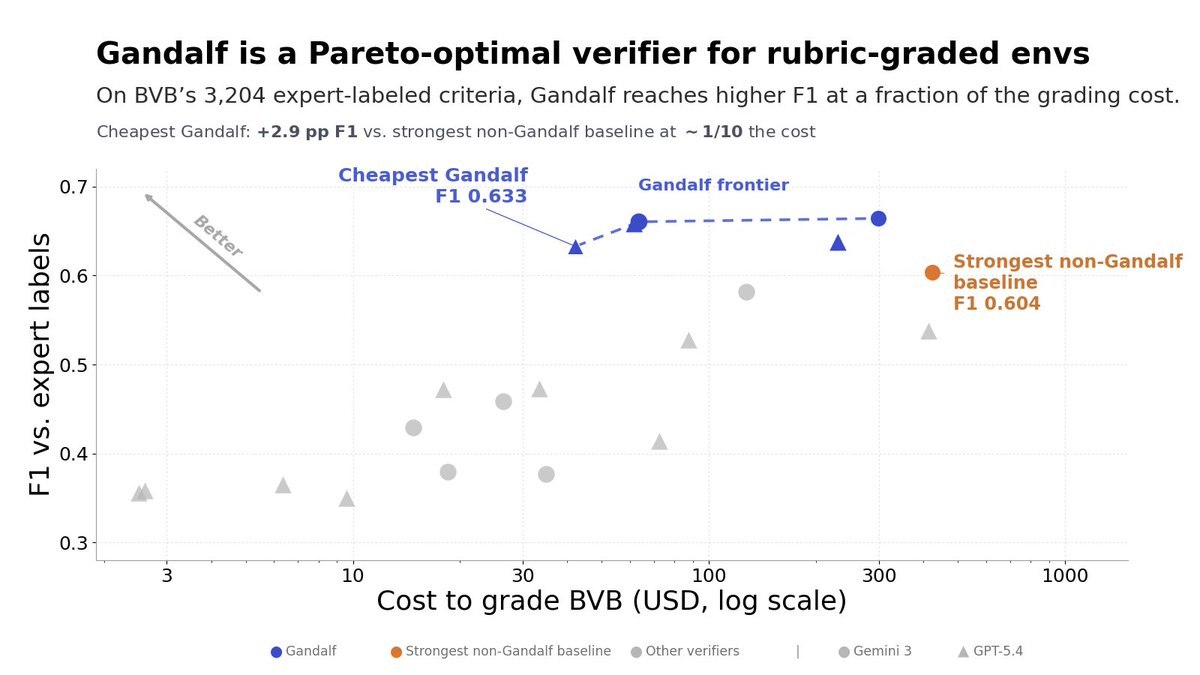
Gandalf is a reactive agent-as-judge that inspects files, tool state, and artifacts the same way a human expert would. On our banking benchmark, even the cheapest Gandalf config beat the next-best verifier at ~10x lower cost.
Verifier architecture matters more than the model behind it.
👇 More from @AnishAthalye
May 27

Grading agent rollouts in rubric-graded RL environments is itself a hard task.
Prior approaches pass serialized artifacts or agent trajectories to an LLM judge; this loses information / doesn't support sophisticated criteria.
In contrast, we built a reactive agentic judge.
4
15
1,814
May 27
Agent evals are becoming foundational infrastructure.
@jomulr joined @CAISconf’s RLEval workshop to share Handshake’s perspective on RL environments, evaluation, and why @harborframework is emerging as the framework.
May 27

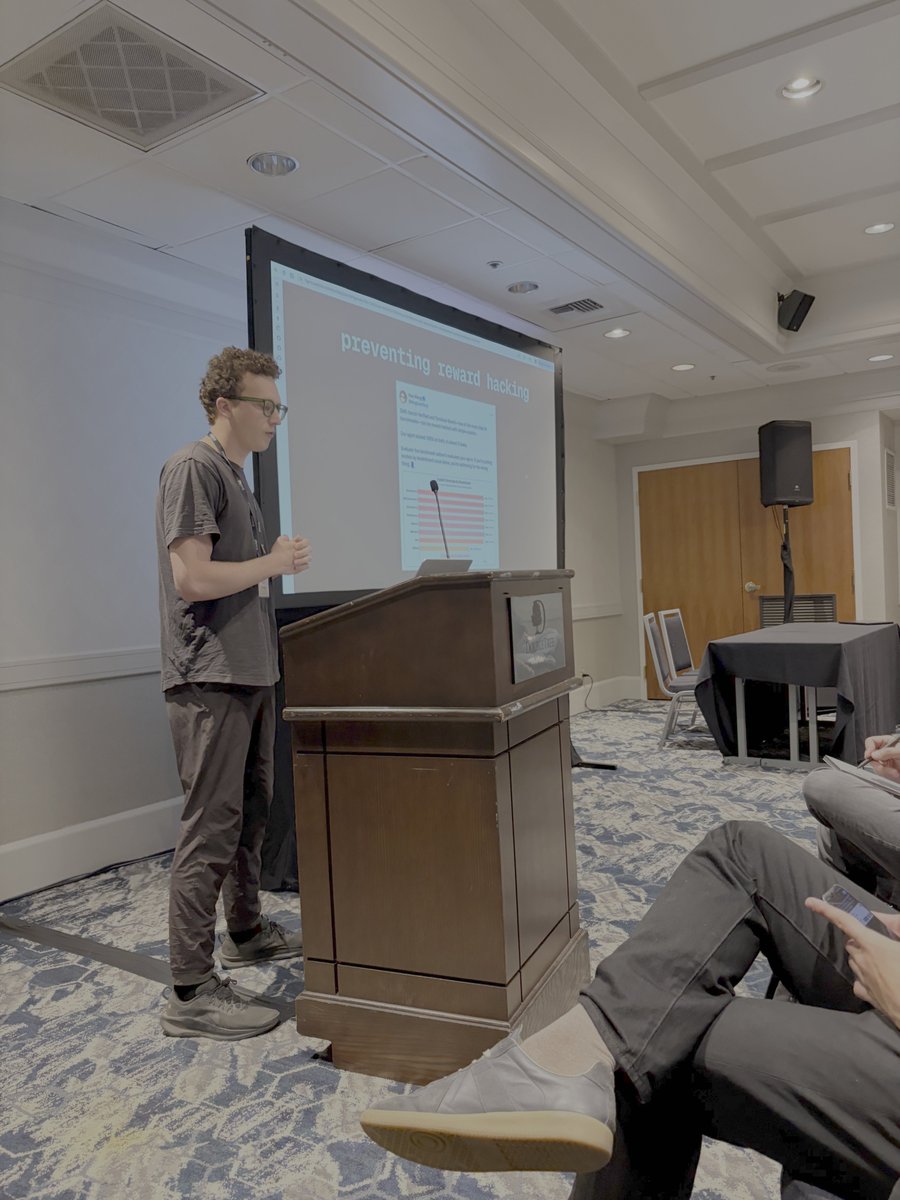
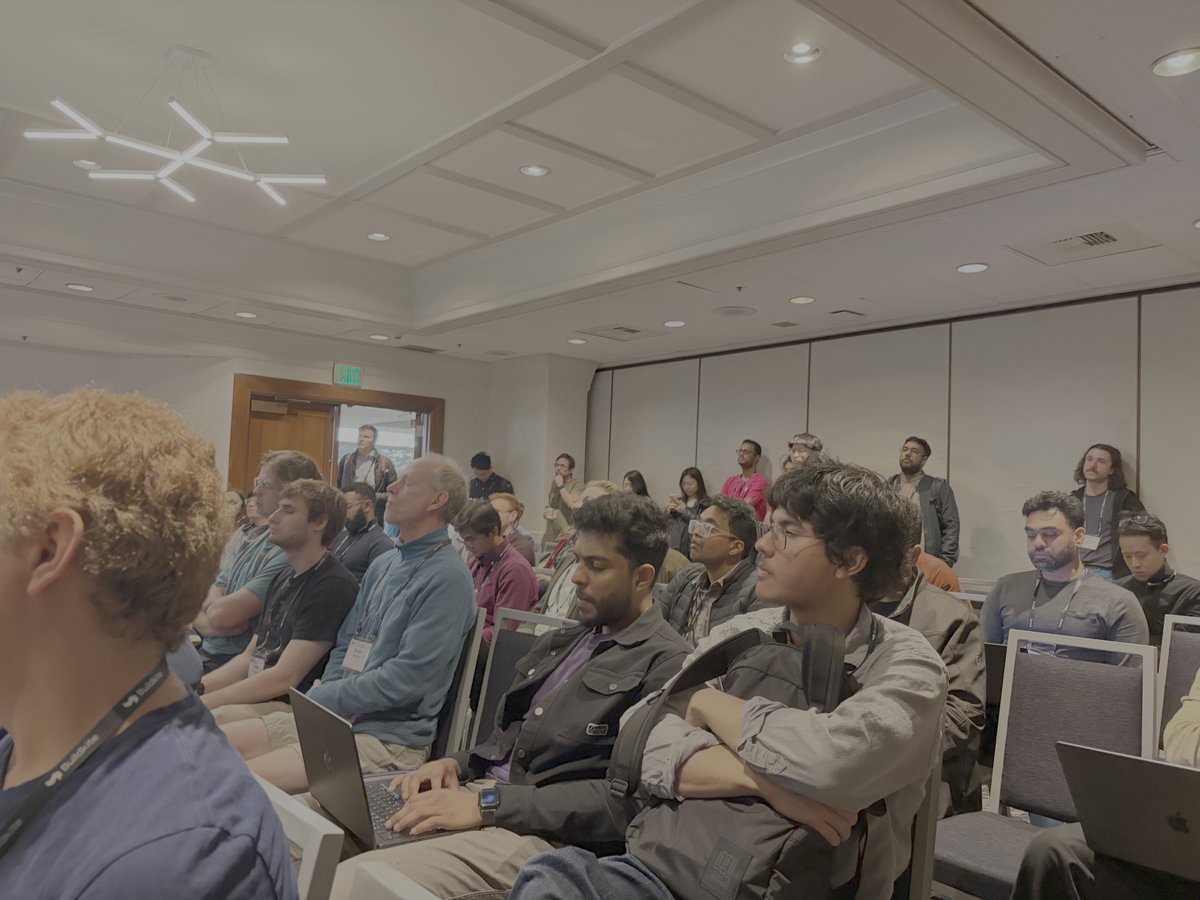
Packed room to hear @alexgshaw and @ryanmart3n break down how @harborframework grew into *the* framework for RL environments.
In our RLEval workshop at @CAISconf today, attendees tackled big open challenges in RLEs & Agent Evals I shared the approach we take at @joinHandshake
2
10
1,481
Handshake retweeted

May 27
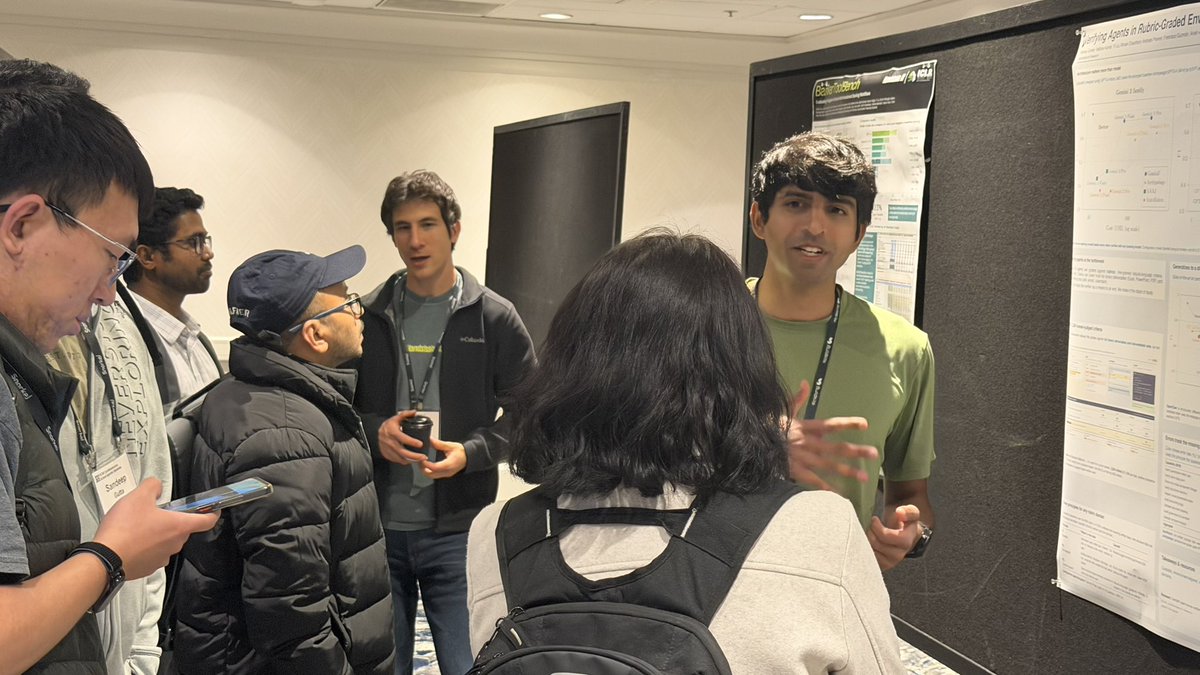
Kudos to @anishathalye and @jomulr for co-chairing the RL agentic benchmarks workshop track for the inaugural ACM CAIS conference this week.
We presented two separate Handshake AI Research papers in: (1) AI agentic systems - first evaluation of grader frameworks, and (2) AI benchmarks - first investment banking benchmark. Their posters had big crowds all afternoon. Great job!
6
11
1,350
May 26
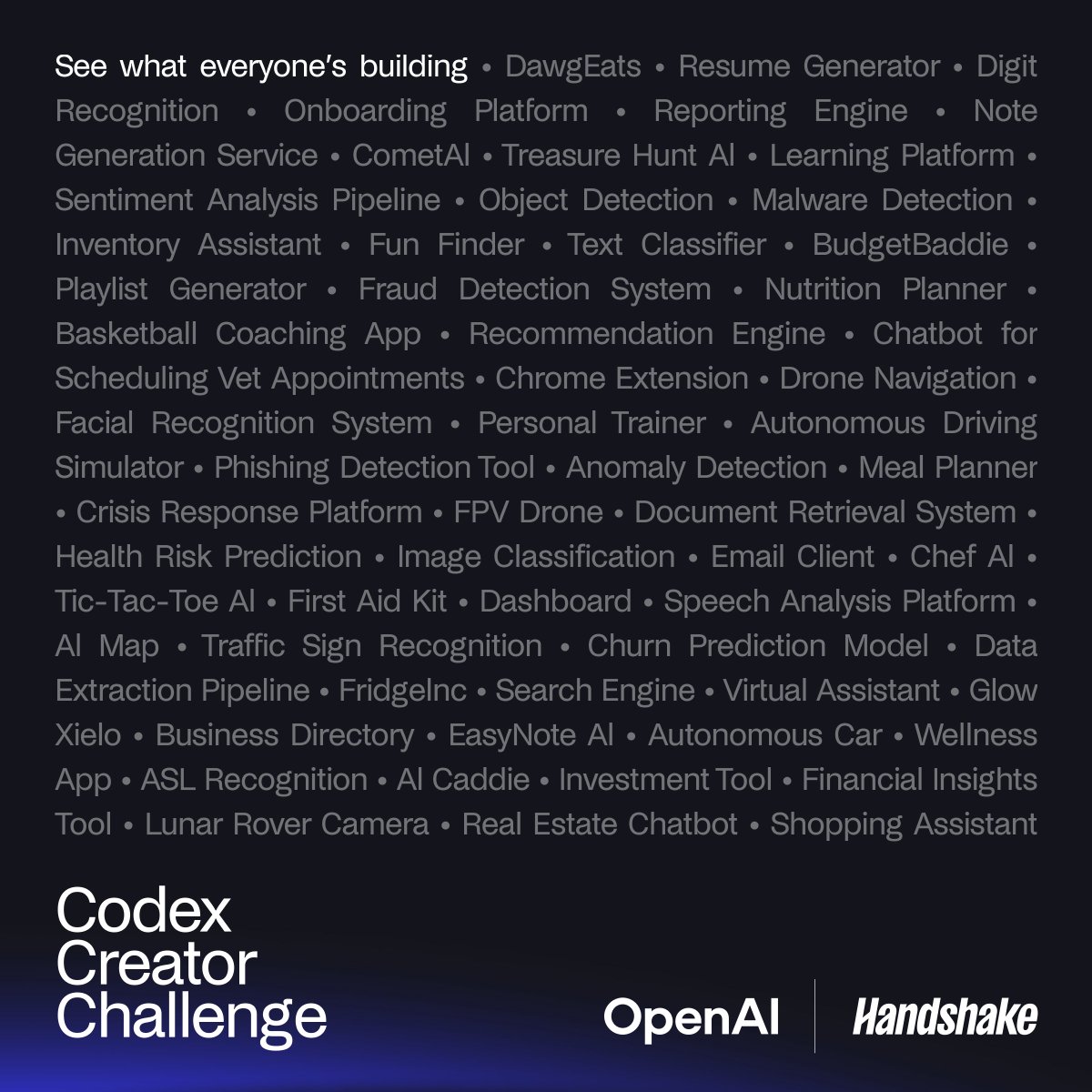
This spring, we worked with @OpenAI to launch the Codex Creator Challenge. More than 1,500 students built something on their own terms, driven by their own ideas. That kind of confidence and creative ownership is exactly what the most forward-thinking employers are hiring for.
Explore what they built: joinhandshake.com/blog/stude…
11
11
30
1,168
Handshake retweeted

May 18
Demo gods were on my side for this guest lecture on AI Agent Security at @MIT_CSAIL: I was able to show a prompt injection attack against @AnthropicAI's Opus 4.6 model. Agent security is still an unsolved problem!
6
6
55
4,682
May 18
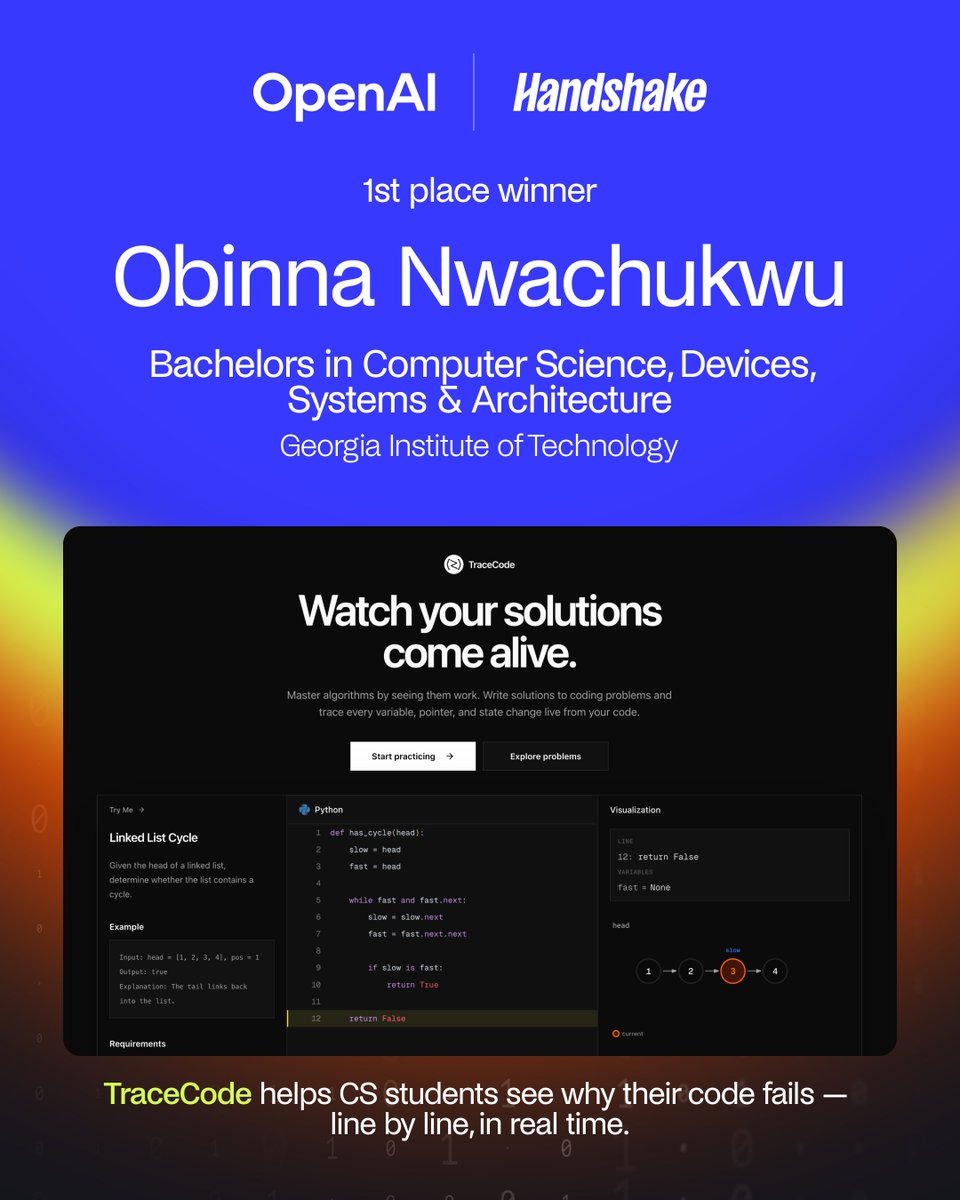
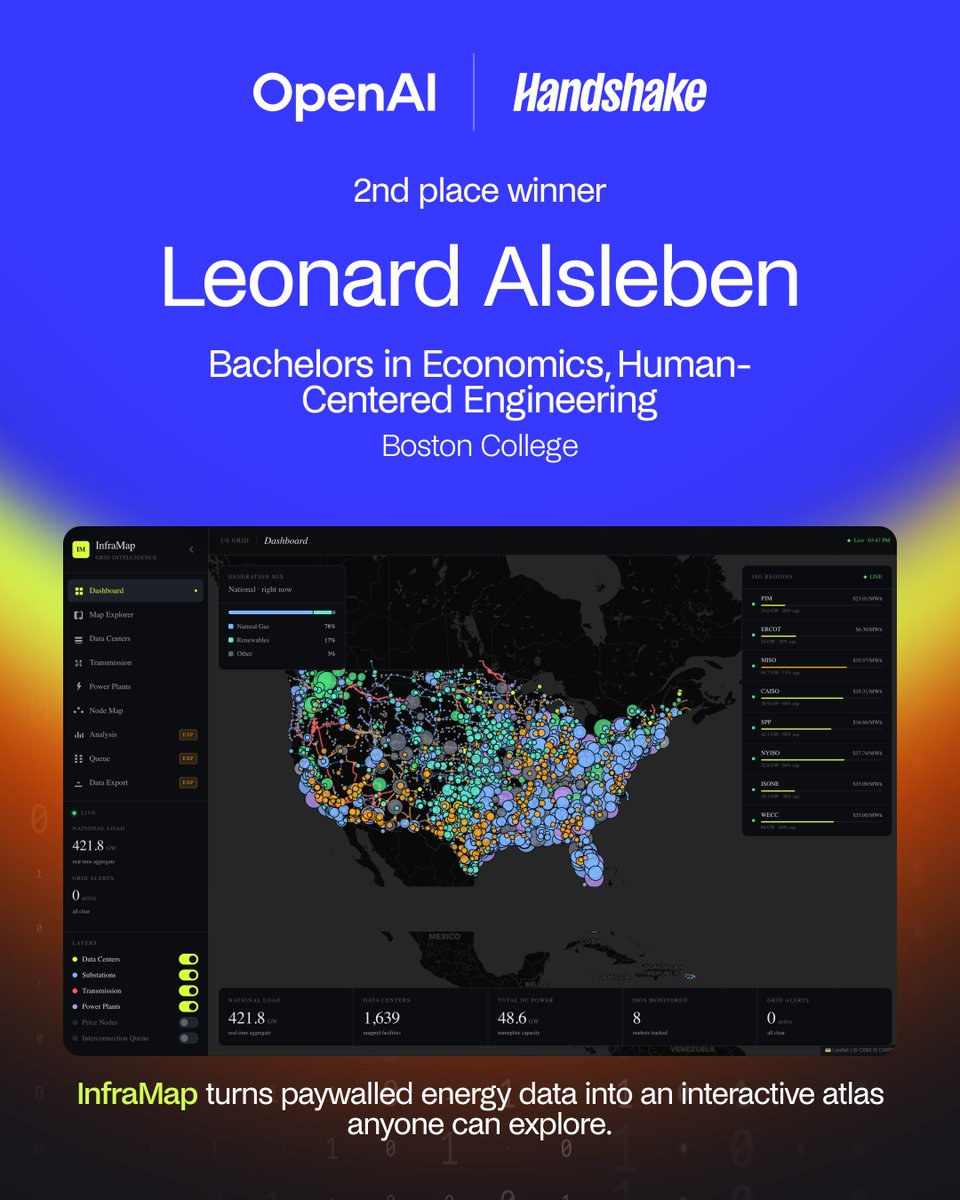
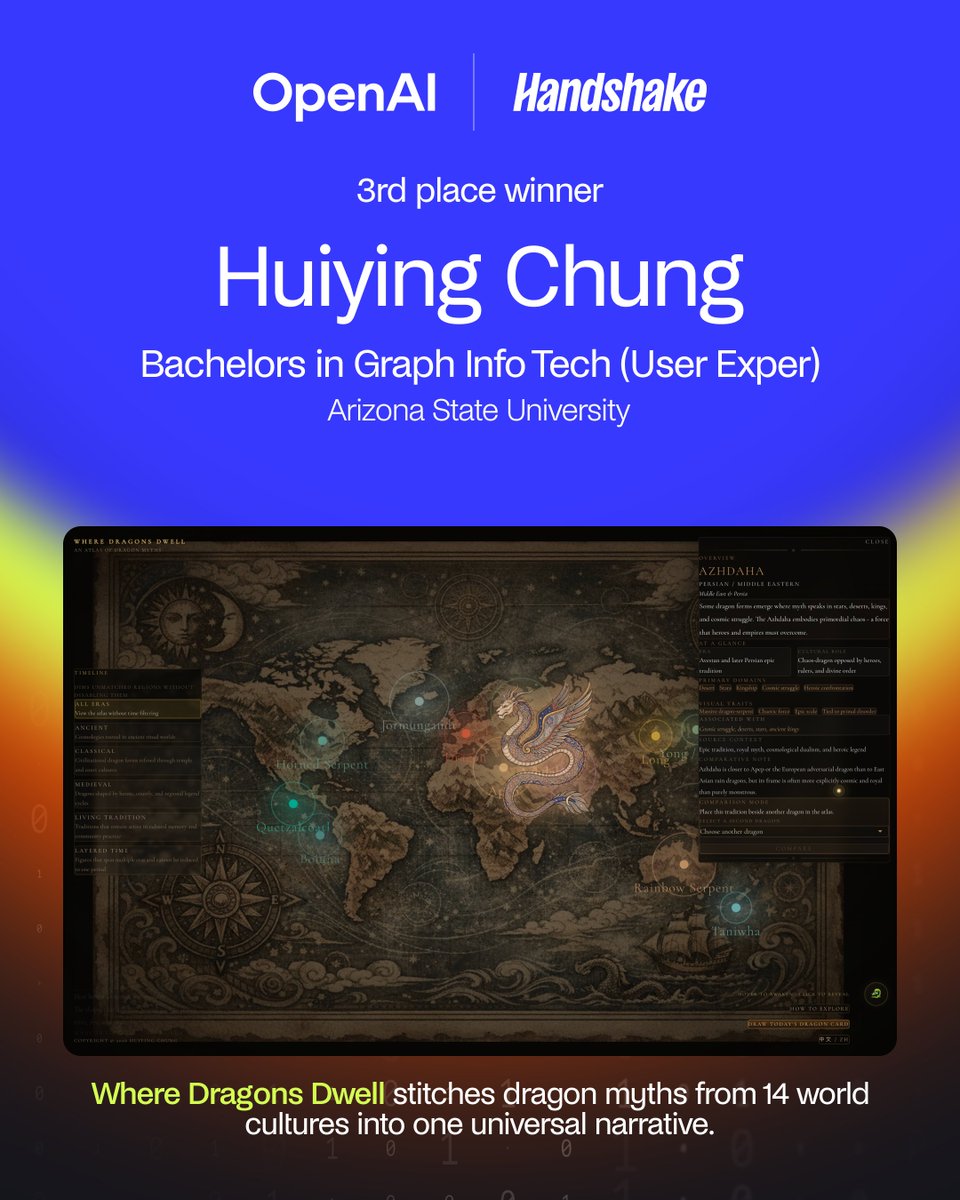
The Handshake x @OpenAI Codex Creator Challenge winners are in 👇
🥇See why your code fails, line by line, with TraceCode by Obinna Nwachukwu
🥈Interactively explore America's power grid with InfraMap by Leonard Alsleben
🥉 Explore global dragon mythology with Where Dragons Dwell by Huiying Chung
The AI Showcase is May 20. handshake.registration.goldc…
4
6
54
24,288
Handshake retweeted

Apr 30
This @joinHandshake event with @OpenAI was so energizing.
Not surprisingly, when you give young people powerful tools, their creativity and ambition run wild. The @UCBerkeley students were incredible.
With AI, your career will be more about showing than telling. Build something real, not just a pretty resume. This is just the start.
Apr 30

Students are learning to build with Codex, and building to learn.
Here’s what @UCBerkeley students built at the Codex Creator Challenge with @joinHandshake.
1
7
3,136
Apr 30
85% of seniors use generative AI. Now they're building with it too.
So proud to see @UCBerkeley students turn curiosity into craft at the Codex Creator Challenge with @OpenAIDevs. 🙌
Apr 30
Students are learning to build with Codex, and building to learn.
Here’s what @UCBerkeley students built at the Codex Creator Challenge with @joinHandshake.
5
1
1,124
Apr 13
AI models are incredible at coding and math. Labs like OpenAI and Anthropic solve verifiable domains by teaching models with tasks that have clear right or wrong answers, like "5/2."
But in domains like finance or law, there is rarely a single right answer. There, labs turn to verifiers, complex systems that use AI, to grade the answers. But these verifiers can make mistakes! Is that an issue?
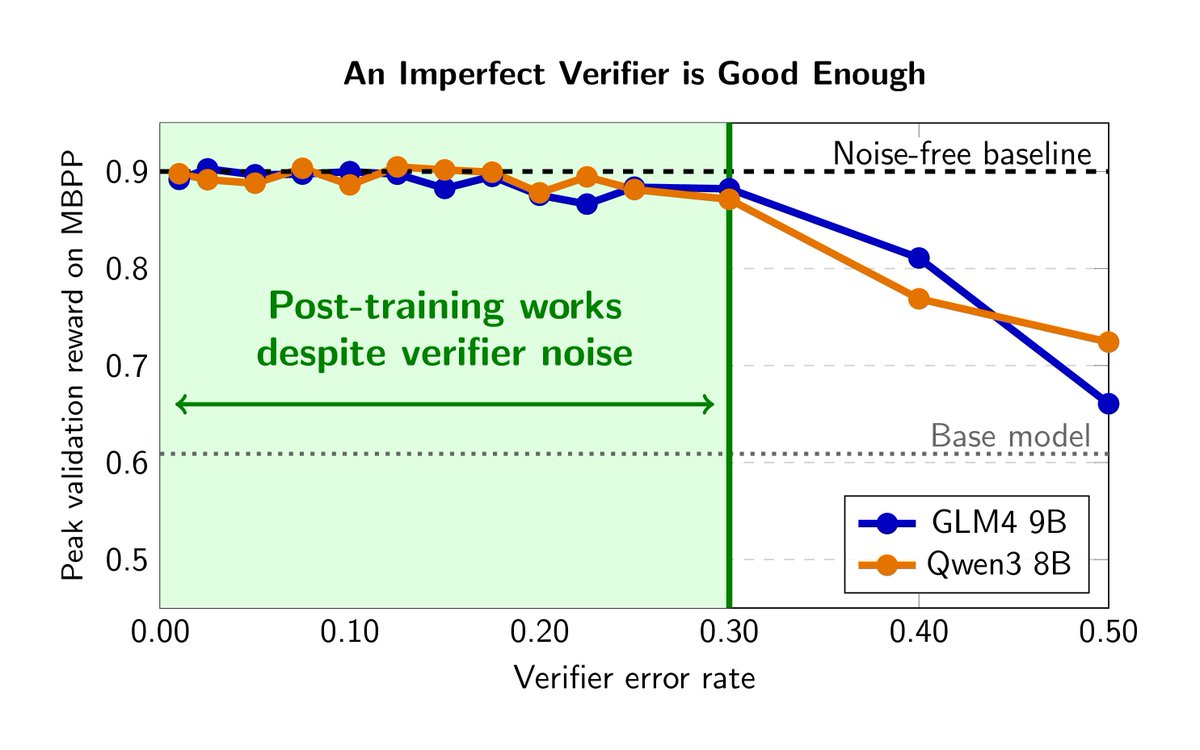
In our latest research, we show that the verifier can be wrong 15–30% of the time, and the models will learn just as well. This means we can use these imperfect verifiers without losing performance!
Apr 13
Does an imperfect verifier break reinforcement learning with verifiable rewards (RLVR)? Turns out it doesn’t!
Why does this matter? As the world moves into reinforcement learning in semi-verifiable domains, perfect verifiers don’t exist.
We added controlled and LLM-based noise to RLVR reward signals and found that up to 30% noise barely hurts training; performance stays within 4pp of the clean baseline.
This research has already impacted how we build reinforcement learning environments at @joinHandshake. For a major benchmark we are launching tomorrow, we hill-climbed the verifier to 88% accuracy—above the 85% human inter-rater agreement—knowing from this research that this is good enough.
With @andreas_plesner @guzmanhe
2
4
14
5,210

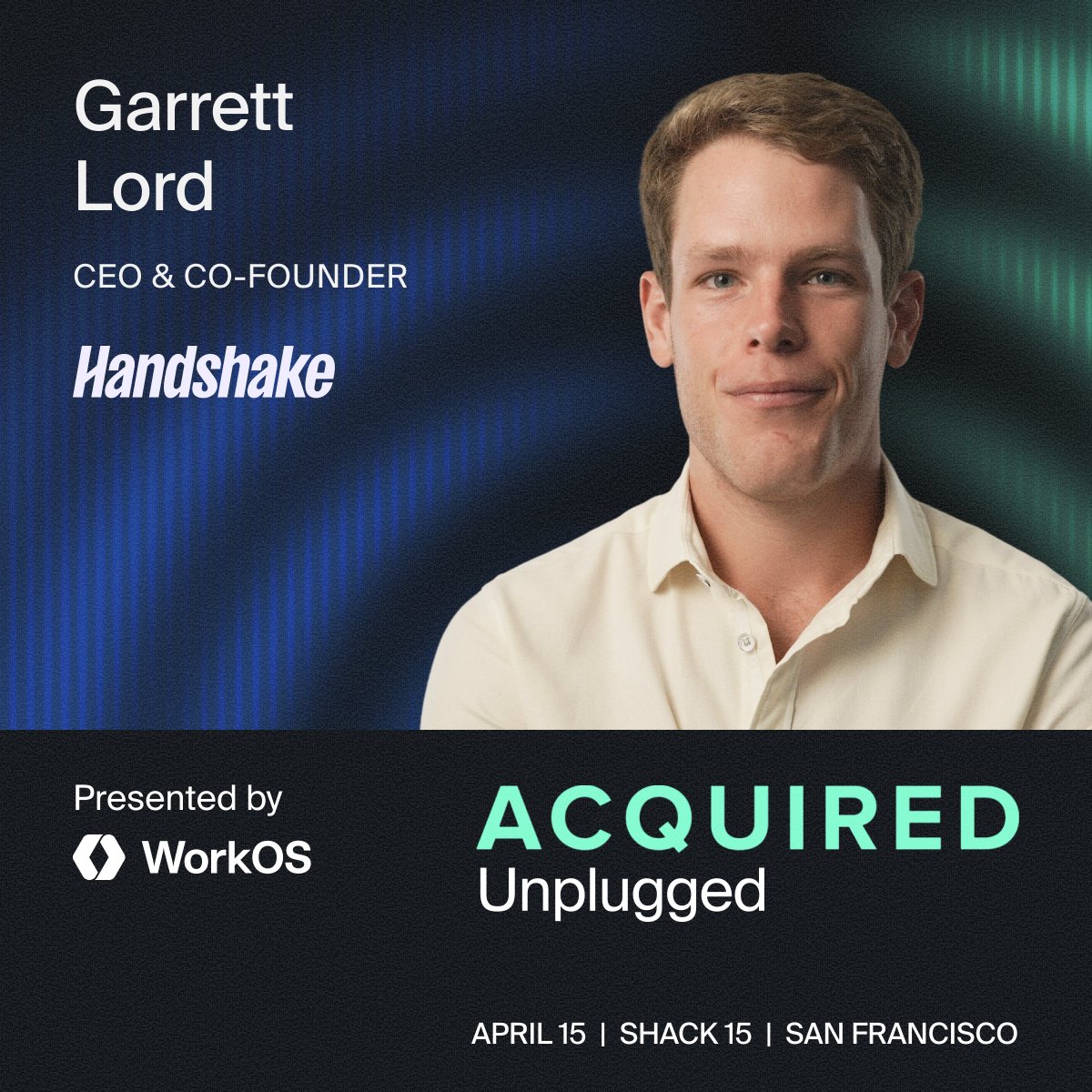
📣 Second speaker announcement for Acquired Unplugged:
Garrett Lord, co-founder and CEO of Handshake, will join Ben Gilbert and David Rosenthal for a live conversation on building Handshake into the career network for the AI economy.
Space is limited. Register here: luma.com/acq-workos
3
10
2,361
Handshake retweeted

Apr 4
I asked @GarrettLord how @joinHandshake came out of nowhere to become a top data labeling partner to the AI labs:
"We started to see incredible demand for individuals with PhDs and Master's on the Handshake platform. People studying to be lawyers, doctors, consultants, and getting their Master's in Tax Accounting. All the data labeling companies were trying to recruit them.
We saw this, and were also hearing from those same people that it was a frustrating experience. They weren't getting paid on time. They weren't getting trained properly. And they weren't being treated as experts in their domain.
We realized we had an opportunity to go direct. And we could then pass along the customer acquisition costs as savings to the AI labs, leapfrogging others in the space.
Human AI data labeling is a very operationally intensive business. The only durable advantage in this space is access to an audience. Otherwise, it's a commoditized set of companies competing with each other for margin.
If you can build loyalty, improve retention, and treat these people the way they expect to be treated, you can pass along many benefits to the labs.
The three things they care a bout is data quality, speed, and volume. And you can do this by building a much better product experience."
From our conversation published in July, 2025. Full episode linked in the replies.
5
8
21
7,369
Apr 3
Upcoming grads are 2x as likely to put AI skills on their resume as they were 4 years ago. But employers aren’t hiring for keywords alone; they’re hiring people who can actually apply them.
We’re working with @OpenAI on the Codex Creator Challenge to give students hands-on access to hone their skills, apply them, and build.
Submissions are already rolling in. Get started 👉 bit.ly/4lUHM1x
6
5
72
19,800
Handshake retweeted
Mar 30
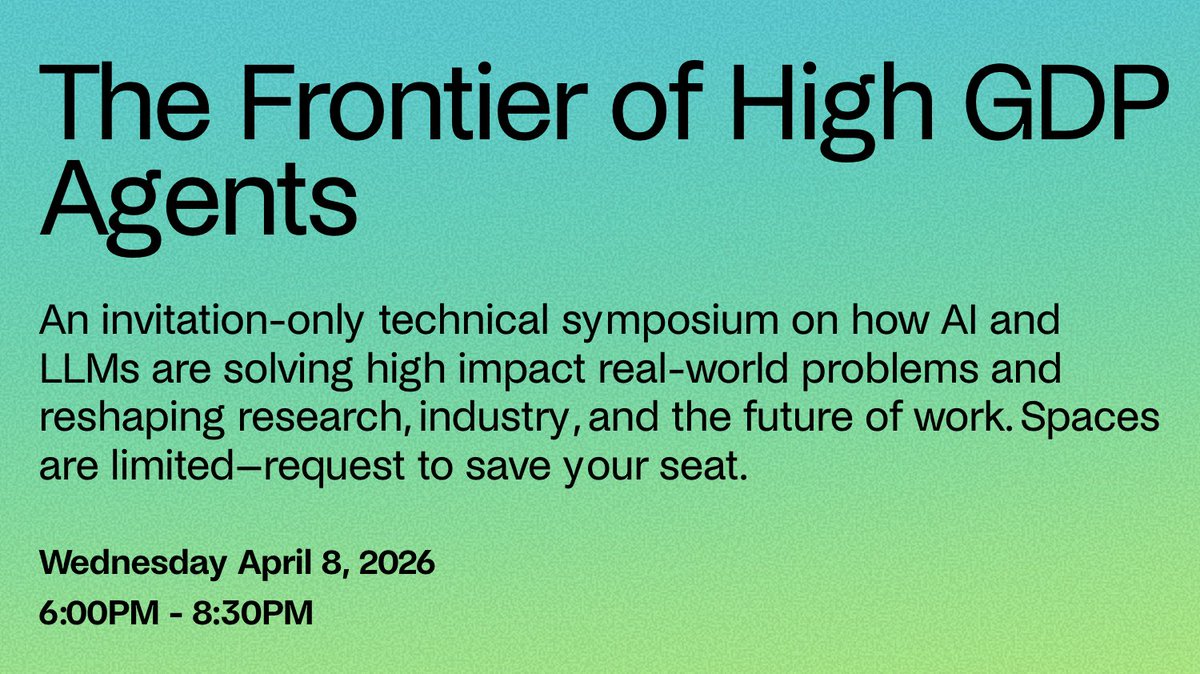
The week before ICLR, we're hosting a tight-knit AI research symposium in SF on the future of economically valuable AI agents
w/ @TheAndiPenguin (co-founder, humans&) @patrick_tammer (AI strategy/operations lead, Google), Linda Lu (head of strategic initiatives, Berkeley RDI)
1
2
19
3,419
Mar 25
Introducing the Handshake x @OpenAI Codex Creator Challenge.
Build real projects with AI. Showcase your work. Get seen by employers like @GEICO, @LOrealParisUSA, @ZSAssociates, and @KpffNY.
From learning AI → building with it.
Get started: bit.ly/4lUHM1x
8
5
34
30,537
Mar 23
“The journey from a student-focused platform to leading in AI career tools shows how much the world of work is changing and Handshake is at the center.” 🚀
Full feature on how it all started in @michigantech Magazine.
mtu.edu/magazine/2026/storie…
Mar 23

No degree. No safety net. No backup plan. My dad refinanced his house to bet on us.
Sleeping in McDonald's parking lots, getting kicked out of Princeton's pool.
"Most people overestimate what they can do in one year and underestimate what they can do in ten."
Keep Stacking Days
mtu.edu/magazine/2026/storie…
1
1
7
2,500
Handshake retweeted

Mar 18
Love that @mbdailyshow remembered using Handshake in college. So did millions of other people.
The internet has been scraped. What moves models now is signal that has to be generated by real people in real time. How humans actually talk. How experts actually reason. How professionals actually evaluate work. That's why we're paying improv performers $74/hr. And paying doctors, nuclear technicians, farm supervisors, and accountants A LOT more than that.
The models need what only people can generate.
5
2
12
4,065
Handshake retweeted
Mar 6
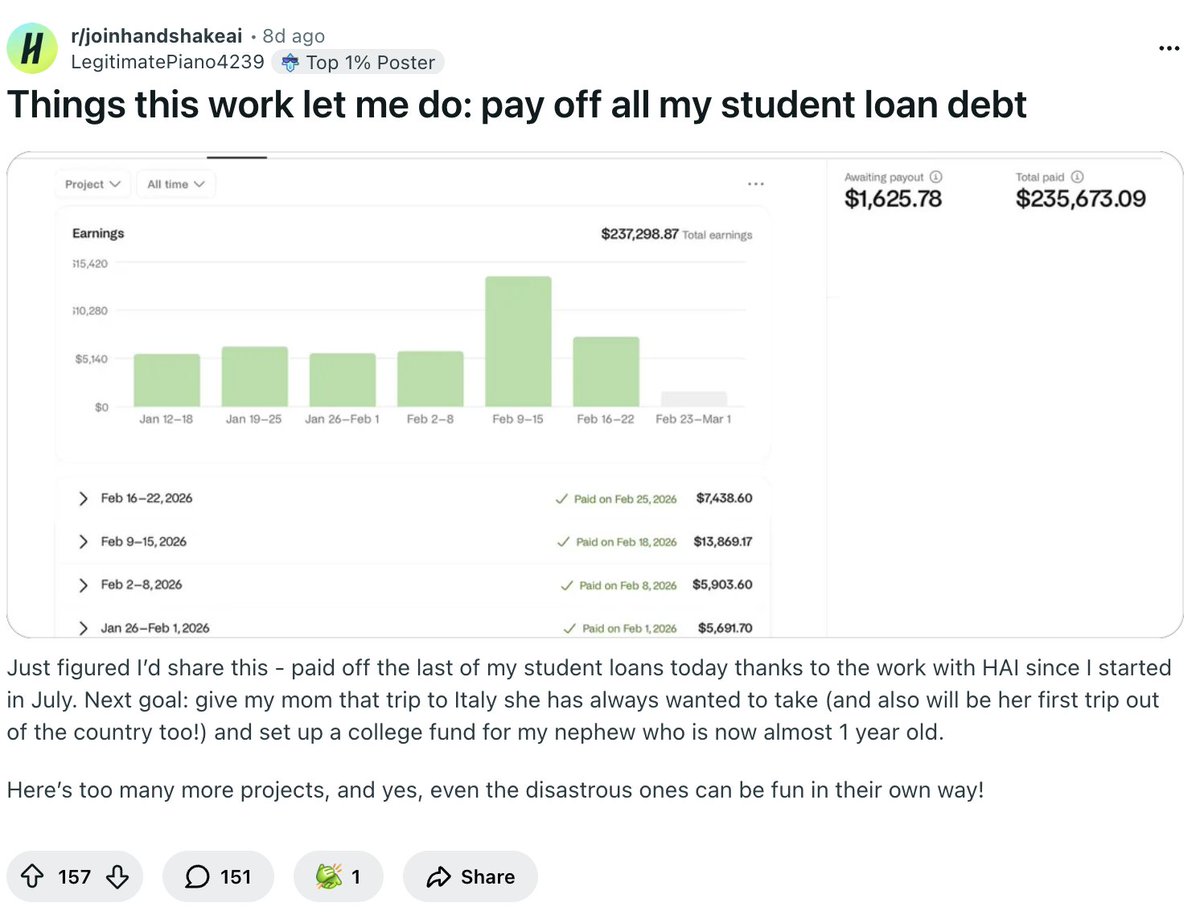
Someone on our subreddit just posted this. Paid off their student loans. $235K earned on HAI since July. Now they want to send their mom to Italy and start a college fund for their nephew. This is the part of building an AI company that never makes the headlines.
9
15
194
24,205
Mar 9
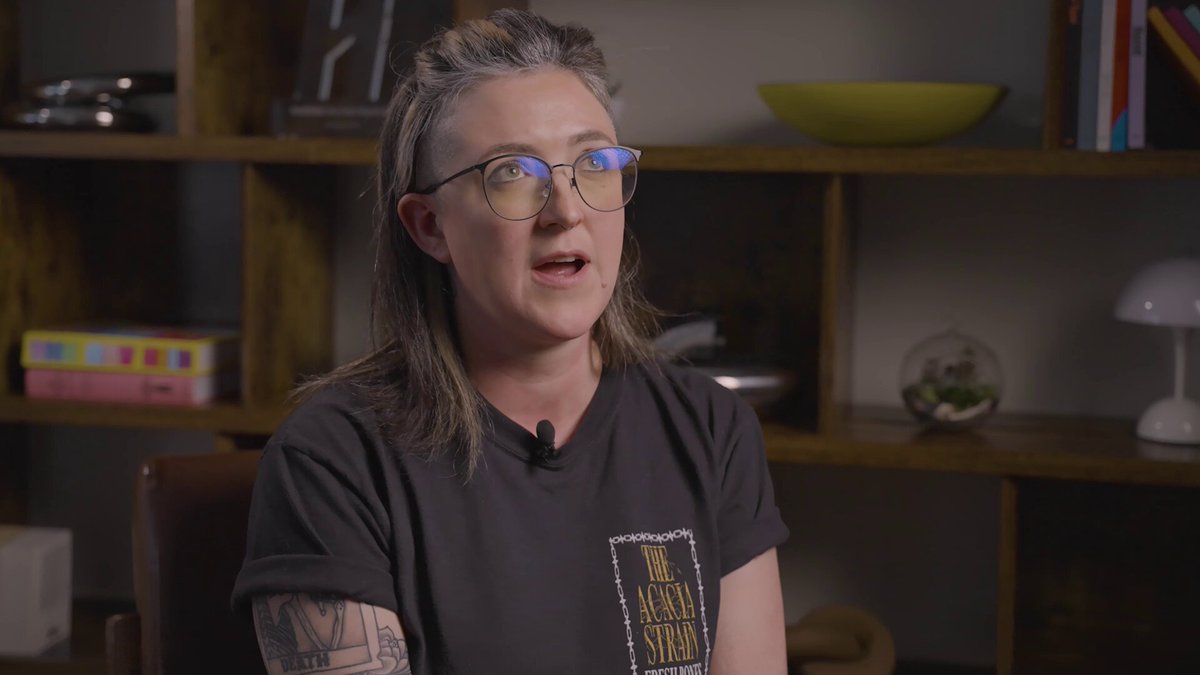
Victoria Moore, Handshake AI Specialist and Red Team Strategic Projects Lead, is focused on one core question: how do we build AI that’s safe for the next generation?
Safety isn’t abstract for Victoria. As a parent, knowing her children will grow up in a world shaped by AI makes the impact of her work deeply personal. That perspective carries into her role as an AI red teamer, where she works hands-on with models before release to surface risks and reinforce protections.
At Handshake AI, safety isn’t an afterthought. It’s foundational to how we train, evaluate, and improve large language models.
🎥 Hear more from Victoria below.
Learn more & apply: joinhandshake.com/ai
1
4
1,272