
@UNICEF Chief Statistician and Deputy-Director heading its Data & Analytics Section. Committed to giving voice to #everychild. Former @worldbank #SefazRJ #IPEA
Joined February 2013
- Tweets 7,432
- Following 1,089
- Followers 5,223
- Likes 12,185
2,546 Photos and videos

Pinned Tweet

28 Jan 2023
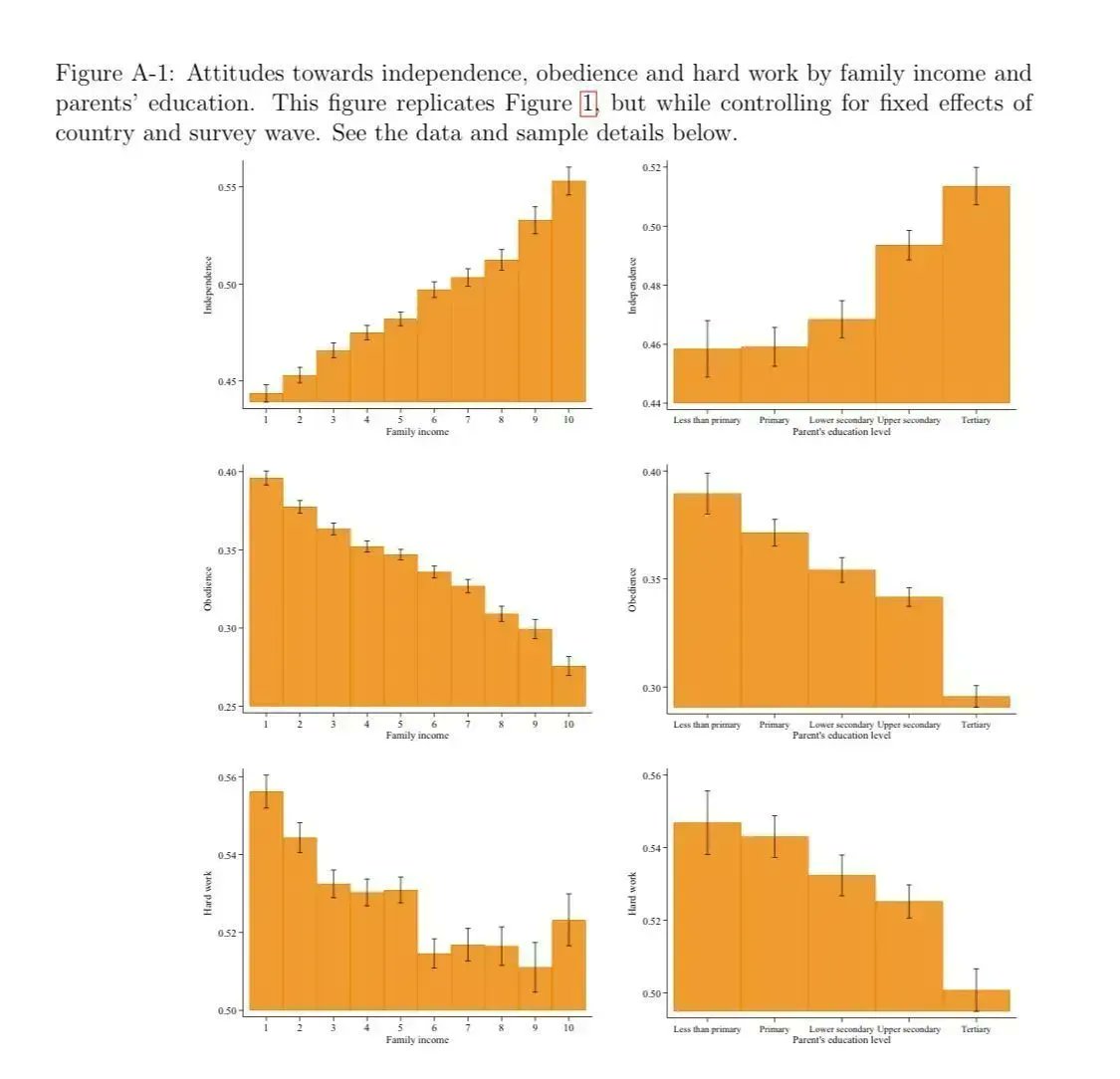
High-income parents teach their children independence, low-income parents teach obedience. The evidence in the graphs below is striking.
An interesting theoretical model on how family values interact with social mobility.
buff.ly/3j4DGrx
102
2,511
8,767
1,341,698
Jun 13
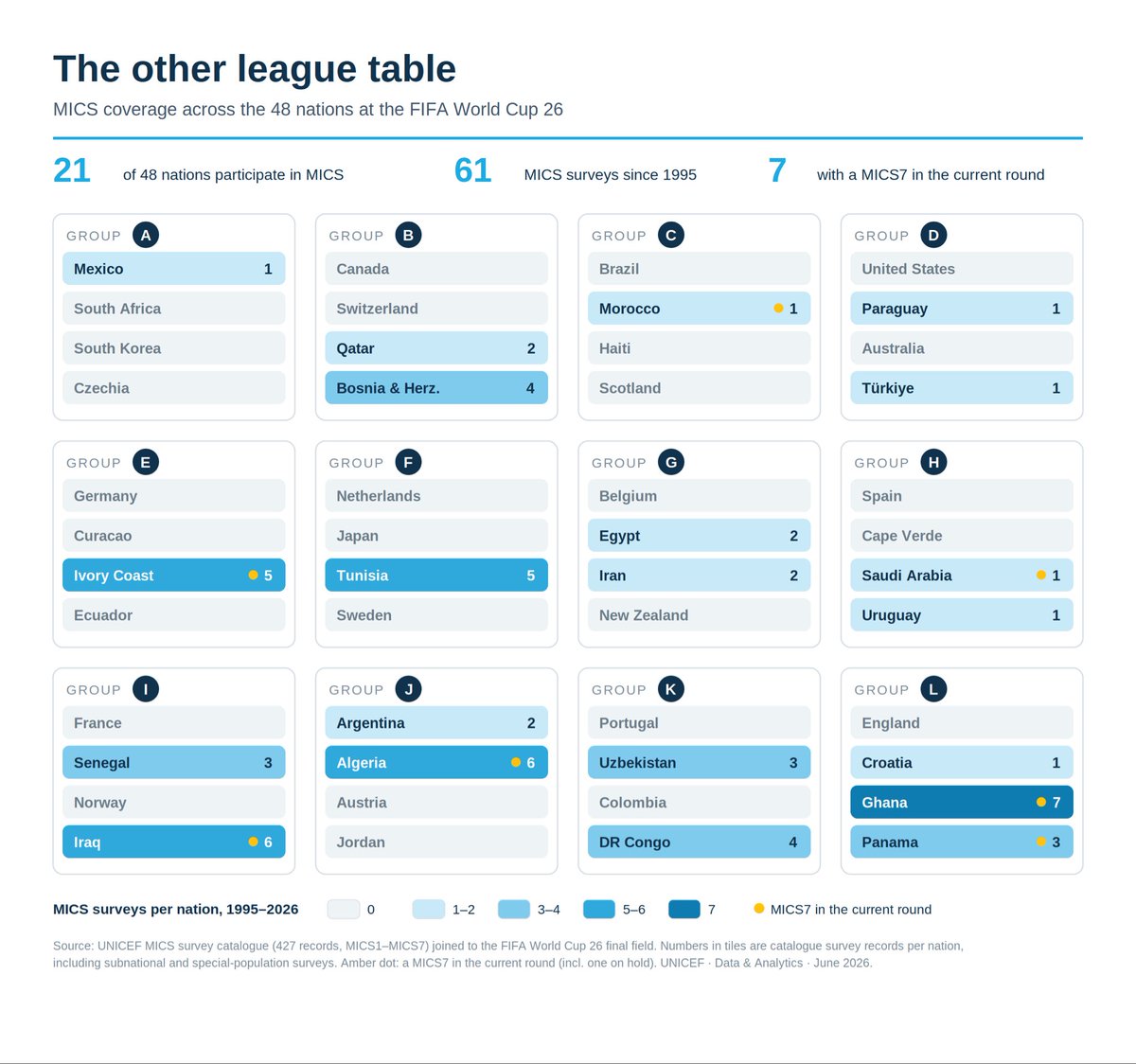
The World Cup has 48 teams. Our scoreboard reads differently: 21 of those nations run MICS surveys — 61 since 1995 — producing the data that tells us how their children are really doing. Ghana leads with 7. Iraq, back at the World Cup after 40 years, has its sixth in processing now.
Goals get counted in 90 minutes. Children deserve to be counted too.
#WorldCup2026 #MICS #DataForChildren
1
143
Jun 12
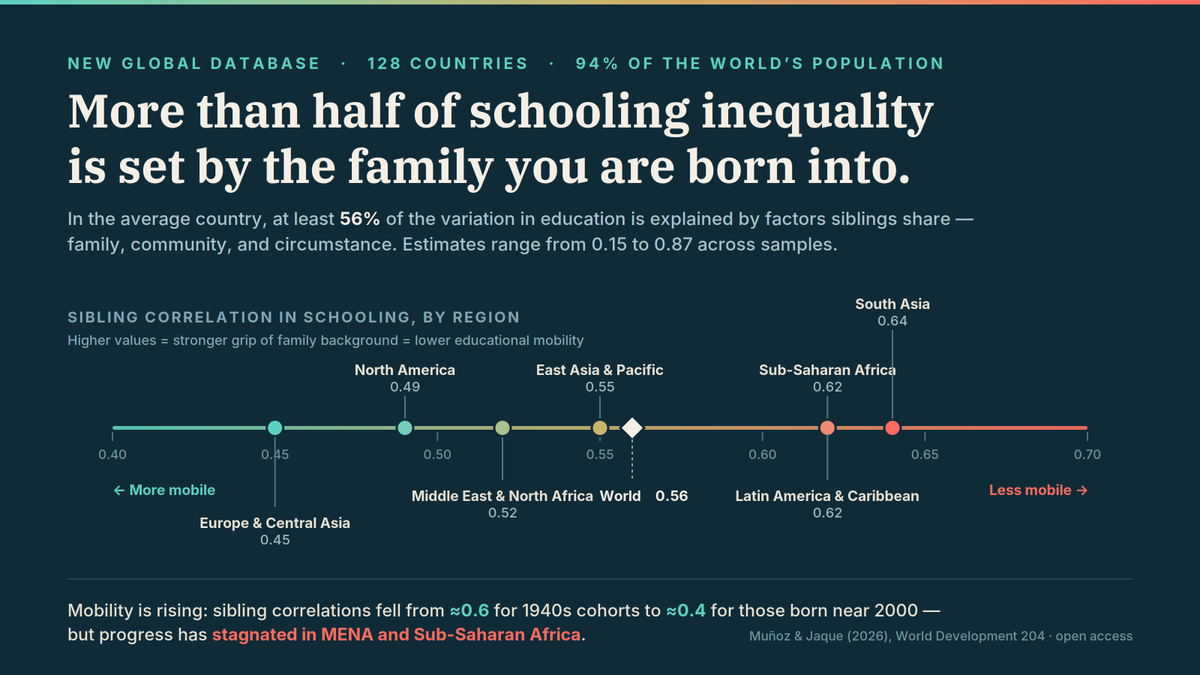
New in World Development: sibling correlations in schooling for 128 countries (94% of world pop). In the average country, ≥56% of education inequality reflects shared family background. Mobility is rising globally — but stalled in MENA & SSA. Open access: doi.org/10.1016/j.worlddev.2…
119
Jun 12
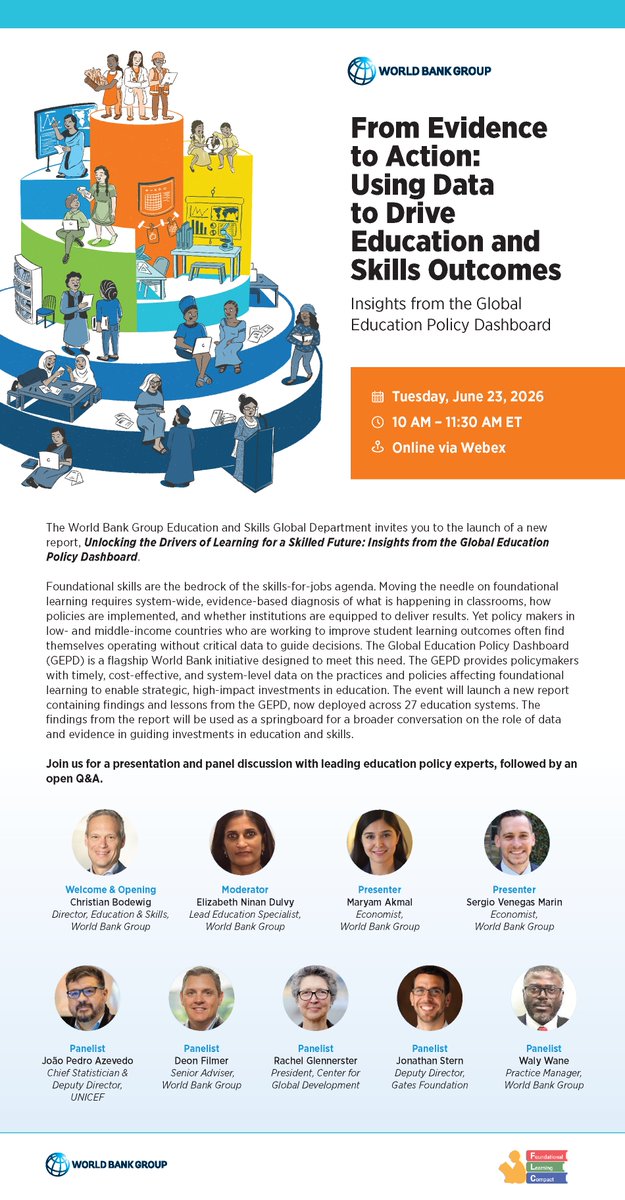
📊 From Evidence to Action: Using Data to Drive Education and Skills Outcomes
I'm honored to join the panel alongside Deon Filmer, Rachel Glennerster, Jonathan Stern, and waly wane, with a presentation by Maryam Akmal and Sergio Venegas Marin, moderated by Elizabeth Ninan, and opening remarks from Christian Bodewig.
🗓️ Tuesday, June 23, 2026 🕙 10:00–11:30 AM ET 💻 Online via Webex — registration link in comments
#FoundationalLearning #EducationData #LearningPoverty #SDG4 #DataForChildren
1
1
5
453
Jun 11
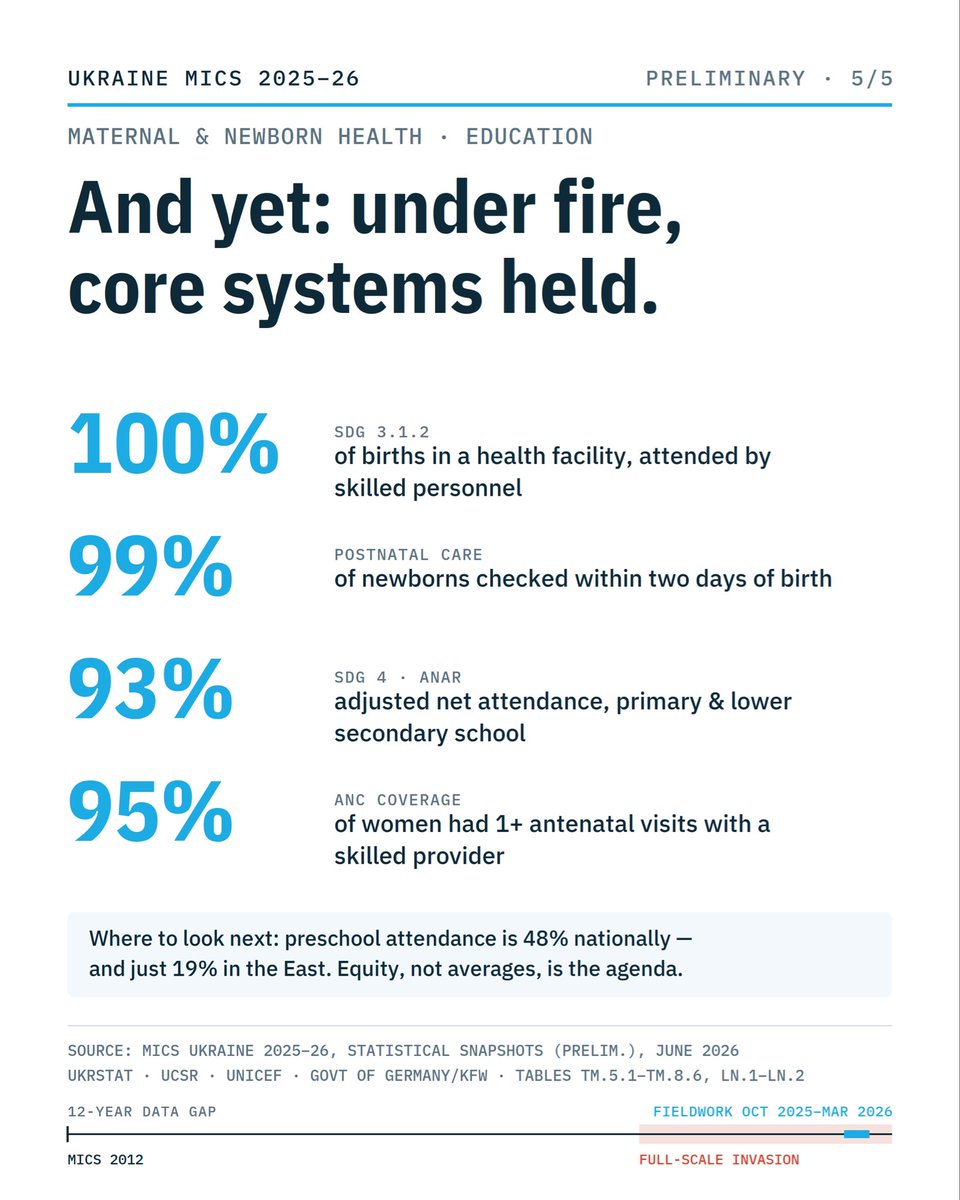
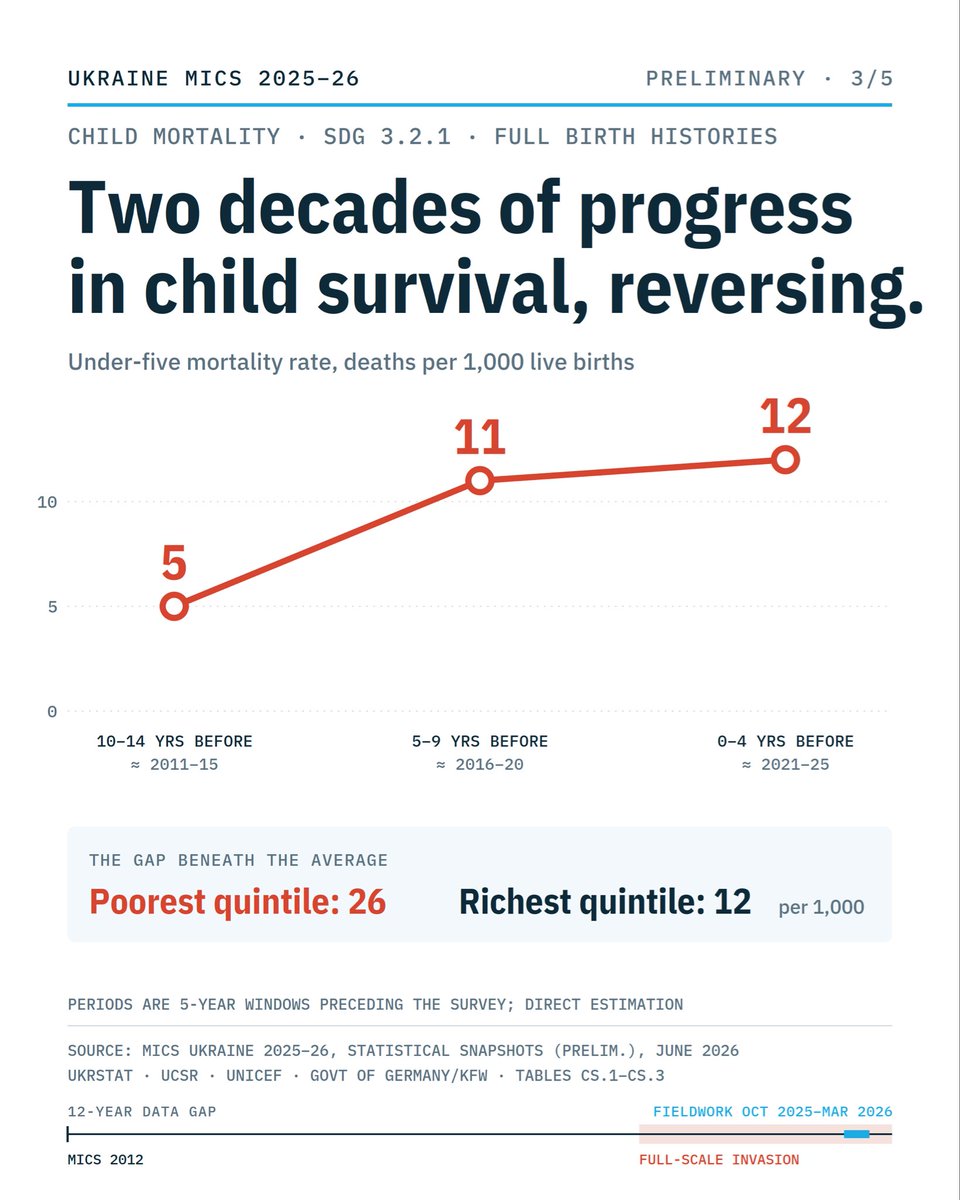
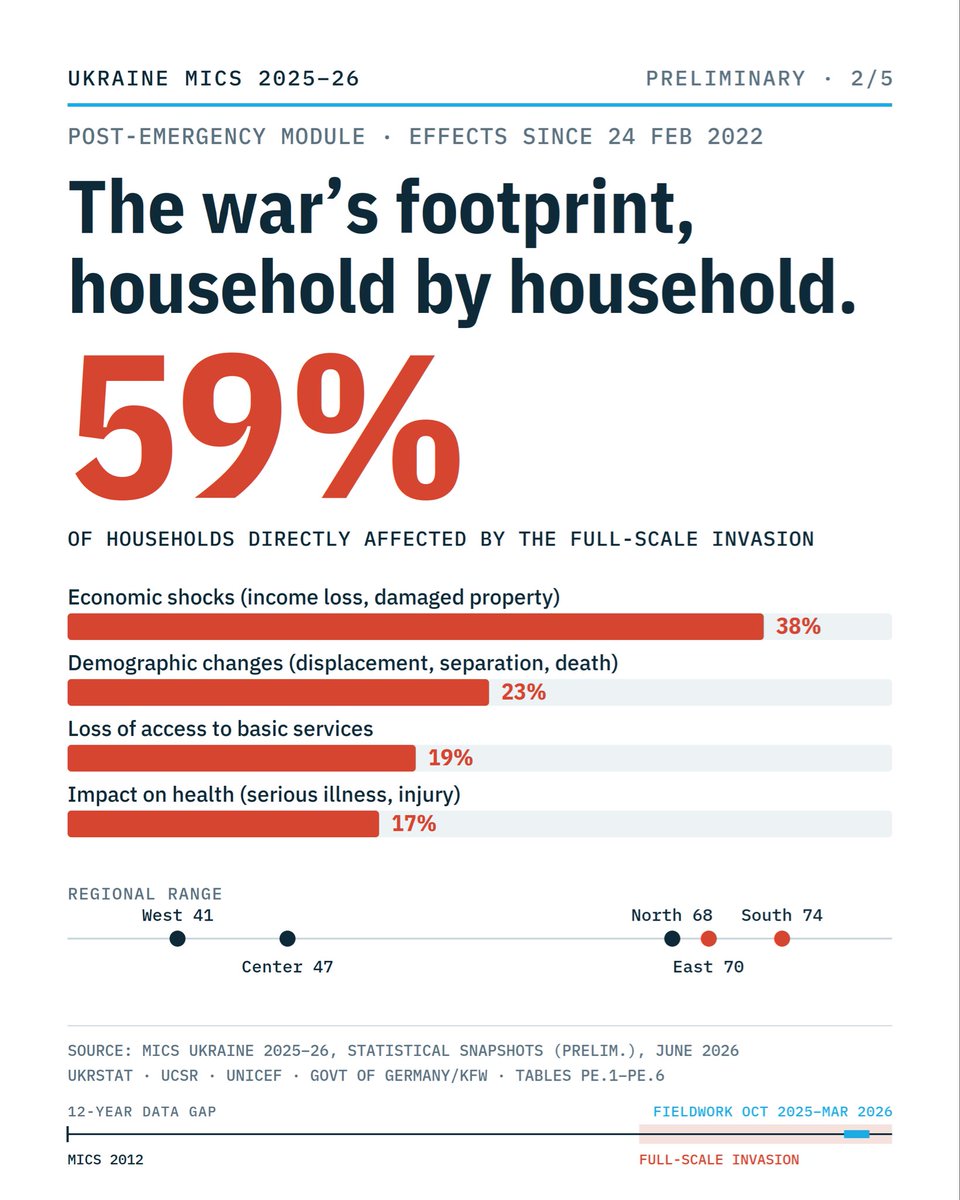
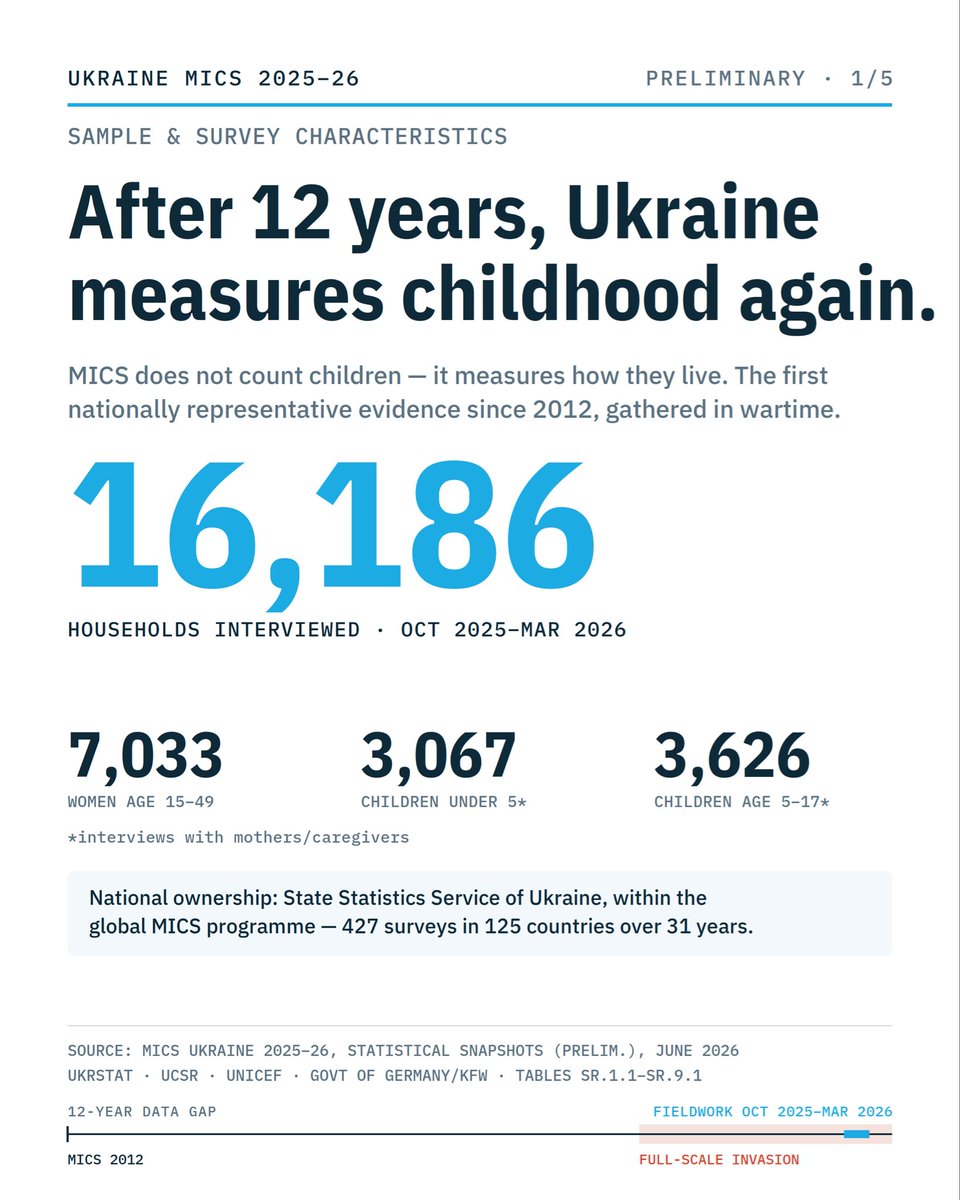
Twelve years without nationally representative evidence on how Ukraine’s children live. This week, that changes.
The Ukraine MICS 2025–26 preliminary snapshots are out: 16,186 households interviewed Oct 2025–Mar 2026 — under air alerts, in a country at war. 🧵
1
1
4
383
Jun 11
What held:
• ~100% of births in health facilities, with skilled attendance
• 93% school attendance, primary & lower secondary
Systems under fire, still delivering — and an equity agenda in plain sight: preschool attendance is 19% in the East vs 48% nationally.
1
44
Jun 11
With no census frame, the sample was built on a multi-source population model — demographic, administrative, geospatial data. Measurement innovation born of necessity.
Led by Ukrstat with UCSR; UNICEF support; financed by UNICEF & Germany via KfW.
35
Jun 11
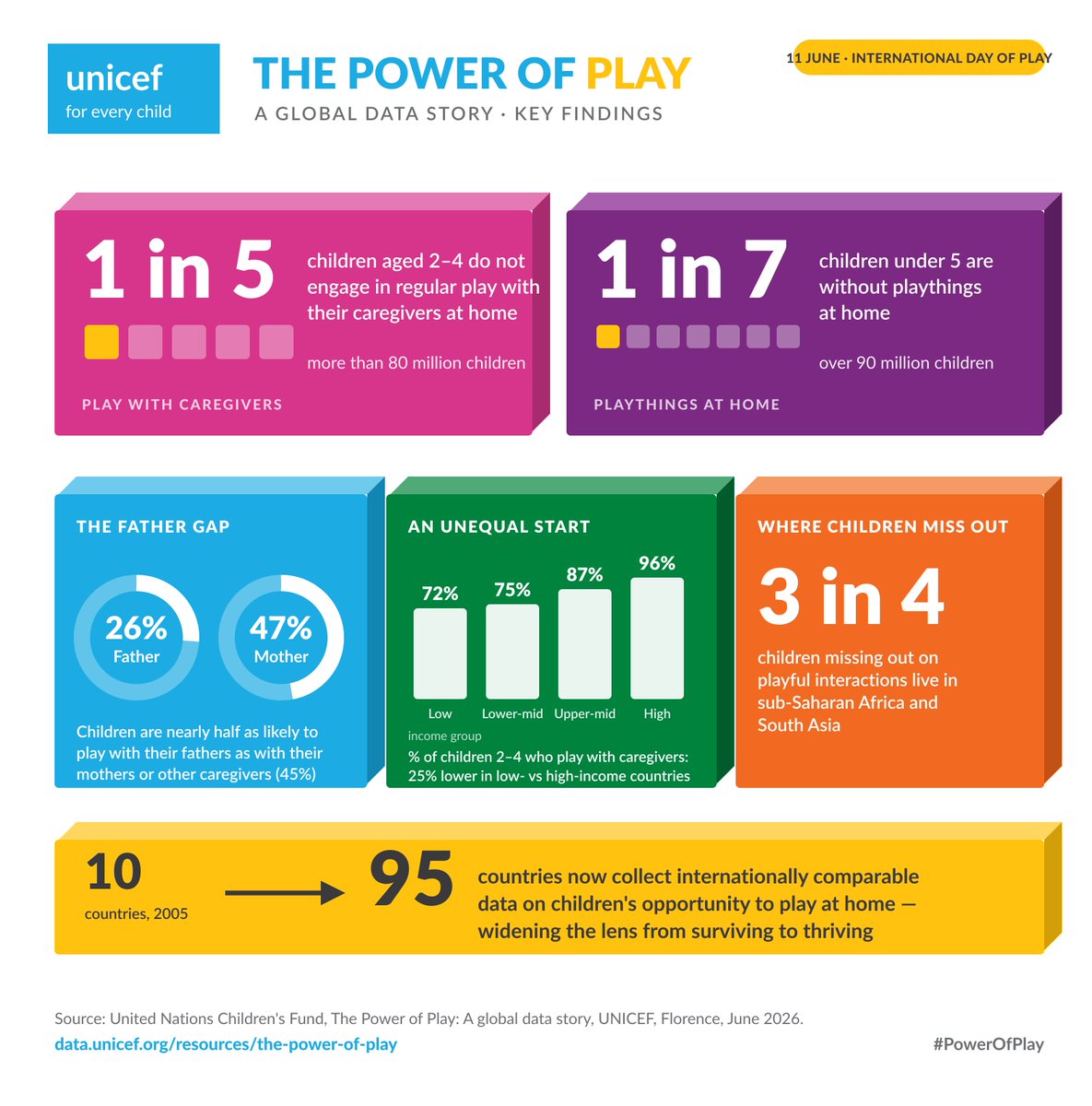
🎈 New @UNICEFData report, out today for #InternationalDayOfPlay:
▪️ 80M children aged 2–4 (1 in 5) don't play with caregivers at home
▪️ 90M under-5s (1 in 7) have no playthings at home
▪️ Kids are half as likely to play with fathers as with mothers
Play is not a luxury.
📖 data.unicef.org/resources/th…
1
3
112
Jun 10
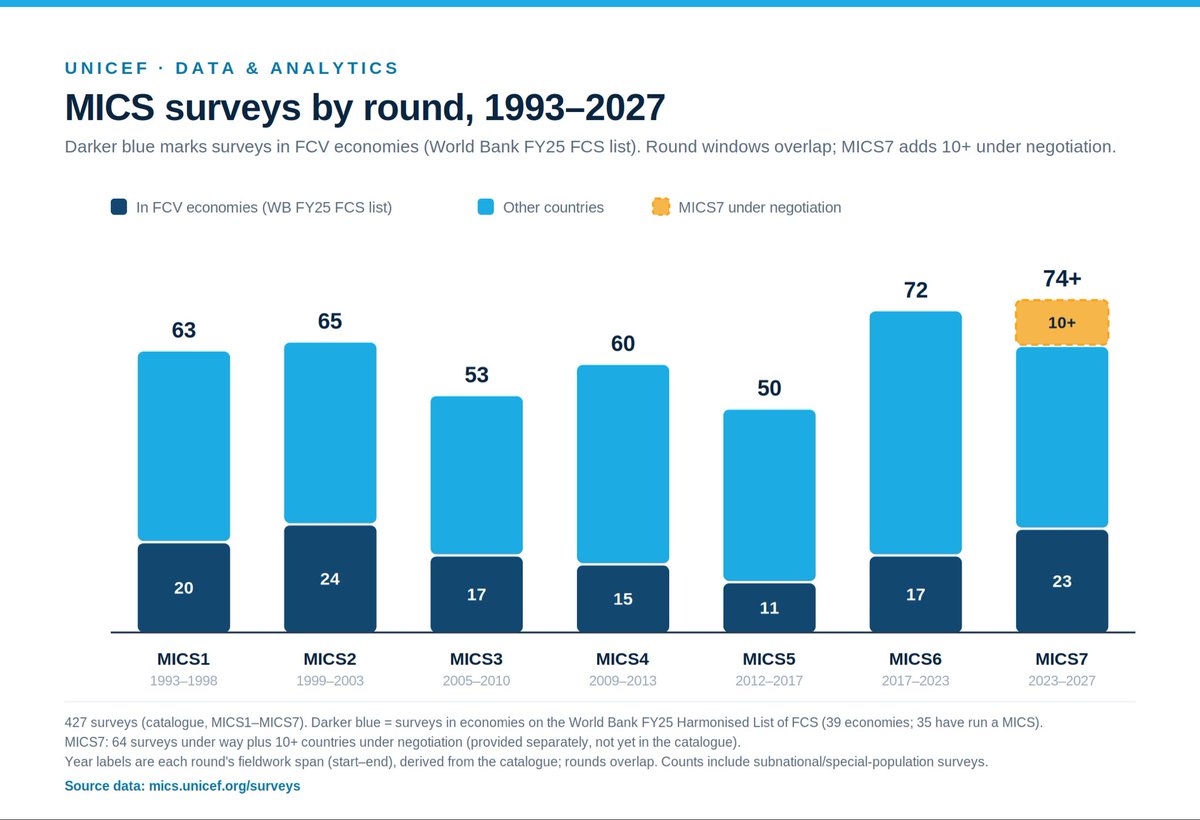
For three decades, UNICEF's Multiple Indicator Cluster Surveys (MICS) have produced nationally owned, internationally comparable data on children in the hardest places — from Afghanistan to Yemen, Iraq to Somalia, the State of Palestine to Ukraine. Today 35 of the 39 economies on the World Bank's fragility list take part, and 23 are fielding a survey in the current round.
What makes that possible is a model, not a one-off effort. MICS are designed and run by national statistical offices, with UNICEF technical assistance, to a common global standard — measuring the health, nutrition, learning and protection of children, women and families in a way that is comparable across countries and over time. The data belongs to the country; the standard is shared by the world.
The chart below shows the reach: 427 surveys across seven rounds since the 1990s, with the darker blue marking fragile and conflict-affected economies in every round. "Fragile" is not a synonym for "unsurveyable."
I see MICS as a foundational, nationally-owned layer of the FCV data architecture — the comparable base that faster, lighter instruments build on, not a substitute for them. Good data is a foundational infrastructure to prevention, planning and response; without it, the most vulnerable children, women and families go uncounted exactly where and when needs are greatest.
I'm at the World Bank's Fragility Forum in Washington, D.C. this week, where the data behind children in fragile settings is squarely on the table.
#FF2026 #FragilityForum #DataForChildren #MICS
2
93
Jun 6
The case for investing in children is settled. The unfinished work is measuring them — early, accurately, and to the same standard we hold GDP. That is where the next decade of human-capital progress will be won or lost.
Check out some reflections from a UNICEF–World Bank session at the World Bank Group's New York Office Economic Series, built around World Bank's new report Building Human Capital Where It Matters: Homes, Neighborhoods, and Workplaces.
linkedin.com/pulse/building-…
1
136
Jun 6
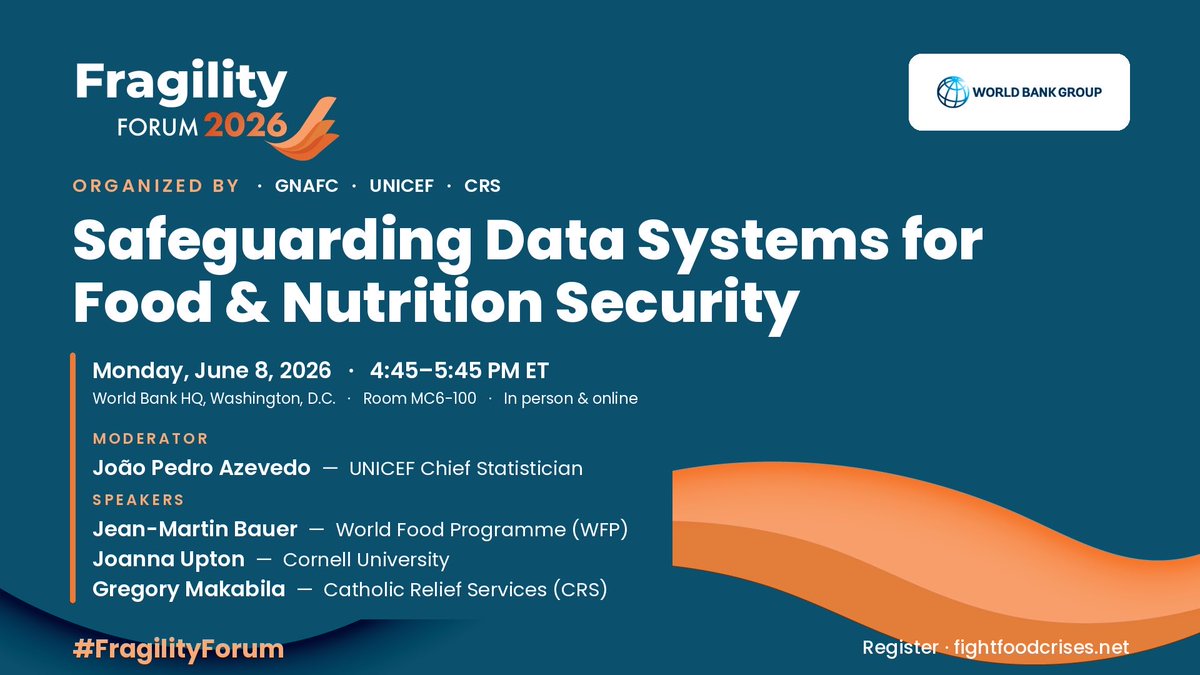
This Monday I’ll be moderating a session at the World Bank Group Fragility Forum — and I’d be glad to have you join, in person or online.
“Safeguarding Data Systems for Food and Nutrition Security” — organized by the Global Network Against Food Crises, UNICEF, and Catholic Relief Services — tackles a problem we don’t name often enough: in fragile settings, one of the first things to break is our ability to see the crisis. When funding for data collection stops, the numbers fall silent — and silence is too easily mistaken for good news.
Building on the 2026 Global Report on Food Crises, we’ll explore how to keep food and nutrition data reliable, protected, and actionable where systems are most likely to fail — and why these systems deserve to be treated as core infrastructure, not optional overhead. This is the third and final policy dialogue following the report’s launch, after London and Rome.
When: Monday, June 8, 2026 · 4:45–5:45 PM ET
Where: World Bank HQ, 1818 H Street NW, Washington, D.C. · Room MC6-100
Format: In person and online
Speakers:
– Gregory Makabila, MEAL Manager, Sudan Country Program, Catholic Relief Services (CRS)
– Jean-Martin Bauer, Director of Food Security and Nutrition Analysis, World Food Programme (WFP)
– Joanna Upton, Senior Research Associate, Charles H. Dyson School of Applied Economics and Management, Cornell University
Registration is free — sign up and get the join link here: lnkd.in/ecYMhkQB
The room seats about 50, so please arrive early if you’re joining in person.
#FragilityForum2026
1
4
211
Apr 28
Two countries showed what comes next at this week's launch.
🇿🇼 Zimbabwe's M-Water platform now collects water quality data daily from 22,000 water points — every district, integrating survey admin data into the national WASH strategy.
1
60
Apr 28
🇩🇿 Algeria is using MICS data to design national strategies on WASH in schools and menstrual hygiene management.
Survey indicators → interventions for adolescent girls.
This is statistical infrastructure doing policy work.
1
1
53
Apr 28
Half of African countries still have no published estimate. The 2026–27 surveys will narrow that gap.
Credit to NSOs across the continent, the MICS team, DHS Program, JMP, STATAFRIC, UNECA.
🔗 data.unicef.org/resources/af…
#AfCSC2026 #WASH #SDG6
1
53
Apr 28
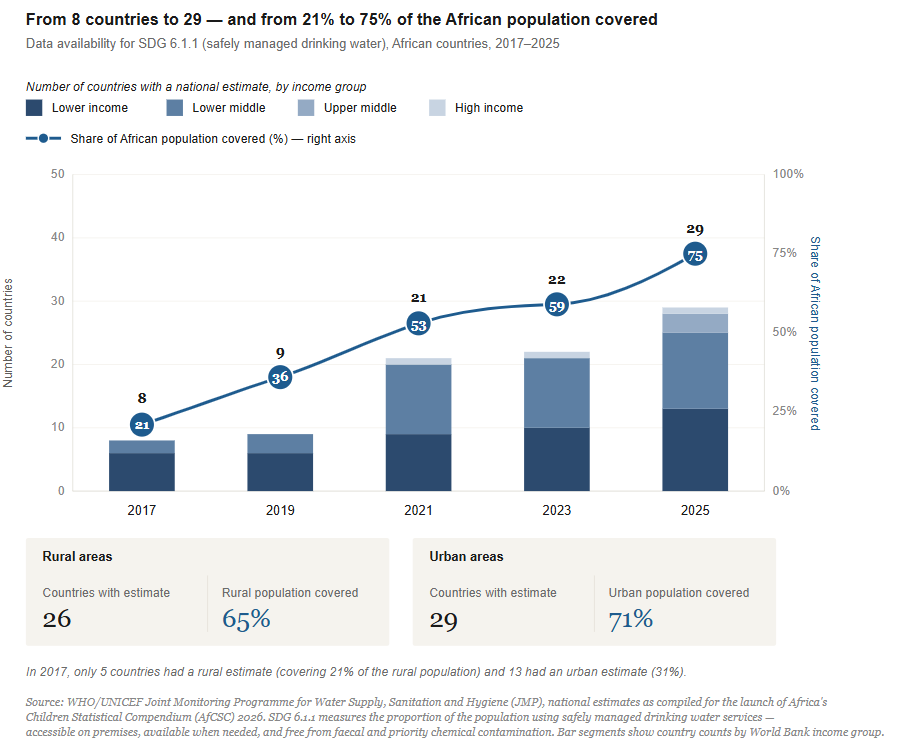
The disaggregation matters.
In 2025:
• 26 countries had a rural estimate (65% of rural pop)
• 29 had an urban one (71% of urban pop)
In 2017 those numbers were 5 (21%) and 13 (31%).
Rural is catching up.
1
65
Apr 28
In 2017, 8 African countries could measure how clean their drinking water actually was.
In 2025, 29 can. That covers 75% of the continent's population.
Here's how it happened — and what it took. 🧵
1
1
8
568
Apr 28
Behind the numbers is a single repeated act.
Country by country, survey by survey, water quality testing was built into the questionnaires that produce official statistics.
A kit. A sample. An E. coli result. That's what unlocks SDG 6.1.1.
1
1
1
116