
Investor relations @hashed_official. All opinions are my own & not financial advices. Based in Seoul, locked in as usual
Joined April 2022
- Tweets 42,599
- Following 4,691
- Followers 10,598
- Likes 122,455
6,199 Photos and videos













When new highways are built, who captures the tollgate?
Whenever a new technology emerges, people tend to ask the same questions.
“What can we build with this?”
“What should we build to get rich?”
These aren’t wrong questions. But if you look at the pattern of technological history, a more profitable question always sits underneath:
“Who stands at the point where money flows through this system?”
1. Railroads
• Railroads made the world faster. Everyone assumed railway companies would make the most money.
• But railroads were capital-intensive, heavily regulated, and ultimately margin-constrained.
• The real money wasn’t in the tracks themselves, but around them.
• Logistics, distribution, and urban hubs won.
2. Cars and Highways
• When automobiles took off, it seemed manufacturers would dominate.
• Reality turned out differently. Roads became public goods, and manufacturing turned into a margin game.
• Value shifted to oil, insurance, finance, and retail.
• And more importantly, to those who designed the rules of the network.
3. The Internet
• Early on, many believed network owners would control everything.
• But connectivity itself quickly became commoditized.
• The real value emerged not in infrastructure, but in the gateways.
• Search, advertising, marketplaces, and platforms defined the winners.
4. Mobile and App Stores
• With smartphones and app stores, developers looked like the new kings.
• But the real tollgate belonged to Apple.
• The 30% fee is not a business model.
• It is control over who gets to pass.
5. Card Networks
• @Visa and @Mastercard are not consumers, banks, or merchants.
• Yet they consistently capture value.
• The reason is simple:
• Transactions are optional. Passing through the network is not.
• And because a single monopoly would become a point of failure, a strange equilibrium persists.
The pattern repeats:
1. A new path opens
2.Everyone builds on top of it
3.Competition erodes margins
4.Value concentrates at the point of flow
Now: Blockchains and agent economies
Today, as infrastructure meets markets again, people ask:
“Should we launch an L1?”
“Should we issue a token?”
“Which chain should we build on?”
"Should our company start using @openclaw?"
But the better question remains the same:
“Where does the money enter, and where does it exit?”
A simple analogy:
• CBDCs resemble highways built by states
• Stablecoins resemble alleyways that emerge organically
This is not a question of construction capability.
Both are necessary for the system to function.
So where is the money?
Not on the highway.
Not in the alleyways.
It materializes at the tollgate that connects them.
-
In a world where both highways and alleyways are being built simultaneously, people will always find a way. If one path is blocked, they will climb mountains or cross oceans.
One thing is certain:
even the person crossing a strait on a raft, or hiking through remote terrain, can now transact - thanks to global connectivity layers.
So the question collapses into one:
Where is your tollgate?

15
23
1,003
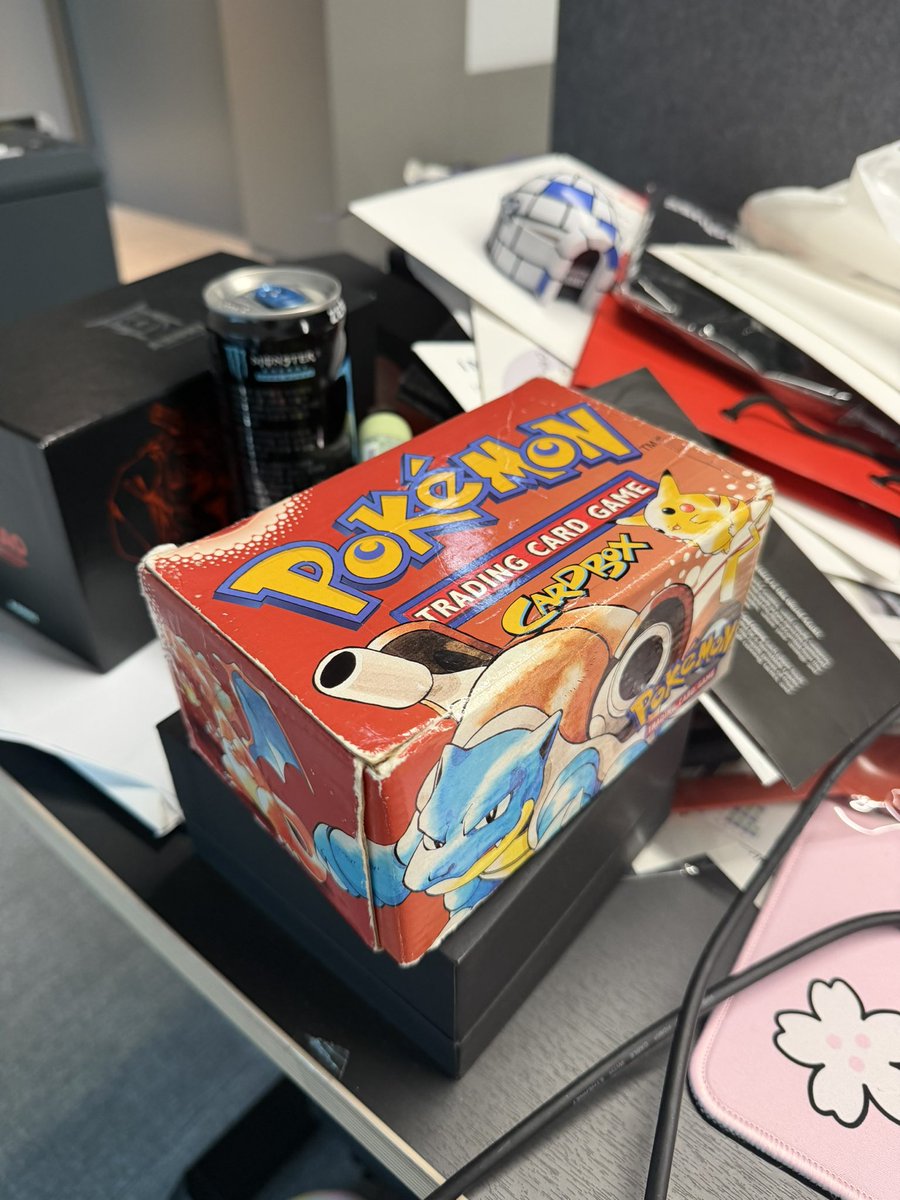
your slabs are belong to me now @tcgnative
or @youngsun idk
casually also featuring @AzukiTCG in the back if you already know leave comments
6
2
10
667
Jun Kim retweeted

Set your reminders now for this week's Meet at the Clubhouse.
Coffee on the West Coast.
Afternoon in Europe.
Prime time in APAC.
🇯🇵 Tokyo: 10pm JST
🇰🇷 Seoul: 10pm KST
🇸🇬 Singapore: 9pm SGT
🇬🇧 London: 2pm BST
🇪🇺 Central Europe: 3pm CEST
🇺🇸 West Coast: 6am PT
See you Thursday, June 4th.
x.com/i/spaces/1oKMvvgrkrkGQ…
62
61
278
12,157

Start your AI journey.
@virtuals_io 🫶 @AskVenice

Virtuals Protocol is integrating @AskVenice to power AI agent building with private, uncensored inference, available to anyone, anywhere on @base.
Venice brings best-in-class privacy-first inference. Virtuals EconomyOS brings the full agent infrastructure stack: wallets, identity, payments, commerce, funding rails, and launch infrastructure.
We are deploying up to $400,000 in private inference credits so anyone can move from idea to working agent without compute or backend complexity getting in the way.
Start your AI journey. Inference and infra are on us.
Program details soon.
3
4
72
2,507
bored ape yacht club

Today we're making changes to ApeCoin.
Yuga Labs and ApeCo (fka Ape Foundation) coordinate, but operate in parallel. To keep the orgs and leaders in sync, a coordination tax is paid in additional handoffs and added decision-making checkpoints.
This made sense when the lack of regulatory clarity forced crypto to contort into strange formations just to ship.
That era is over, and we need to reset from first principles.
Simpler, with less coordination tax.
Cam helped build and lead ApeCo, and he’s fully aligned with me on this reboot. With the reset, the separate ApeCo lead role no longer makes sense in the same way. Cam is stepping down from that role.
The core ApeChain tech and BD teams will now work directly with Yuga, so the chain and its partners will be well served. Some other members of ApeCo will be departing - they’re really great people and we’re thankful for their hard work. This transition will be complete by June 5th.
ApeCoin should not feel like a separate bet from all the other progress Yuga is making with its brands. Everywhere else we are building holders with real conviction and ApeCoin will be no different.
So I’m currently planning a roadshow in June with key and prospective partners, exchanges, investors, institutions and community members in Hong Kong, Shanghai, Taipei and Seoul. We’re going to show up in person and build the relationships that move BAYC, Otherside, and ApeCoin forward together.
This is a first step, but not the only step.
10
14
399
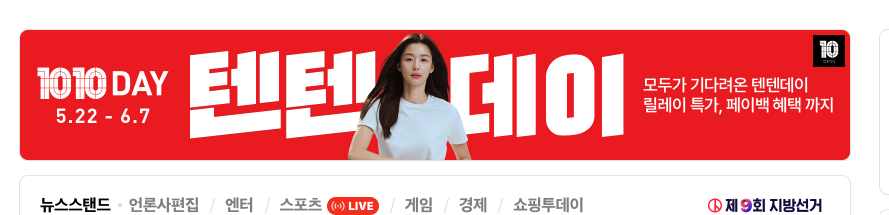
gm from seoul
the first thing I see on the korean portal site @official_naver
is an ad saying "happy 10/10 day"
lmao I shrinked
more like no one wanted to jinx it but we did survive the buddha beam day which was yesterday
here's to the crypto market that's on the brink of becoming an actually robust, infrastructure-based, coherent market where the open web and the real world are finally meeting in the middle
we were so early for a long time
and now we're so early at another nearing boundary
ready for the new world
wagmi, lfg, and gazua
have a great one ahead frens 😉
18
1
17
265

korea is built different
we build things out of nowhere
then we are something together
always different yet the same at heart and soul
@virtuals_io wins
May 22
오픈소스 개발자분들을 모십니다.
한국에도 뛰어난 오픈소스 빌더들이 많지만, 대부분은 안정적인 후원이나 수익 구조 없이 개인 시간과 생활비를 들여 개발을 이어가고 있습니다.
버추얼은 이 구조를 바꿀 수 있는 새로운 실험을 함께하고 싶습니다.
트레이딩 수수료만으로는 부족합니다. 그래서 저희는 ACF(Automated Capital Formation)를 통해 오픈소스 빌더들이 더 지속 가능한 방식으로 프로젝트를 키우고, 커뮤니티와 함께 성장할 수 있는 새로운 메커니즘을 실험하고 있습니다.
오픈소스 프로젝트를 더 크게 키우고 싶은 분들, 글로벌 커뮤니티와 연결되고 싶은 분들, 새로운 자금화 모델을 함께 고민해보고 싶은 분들을 찾고 있습니다.
- 작게 시작한 프로젝트도 괜찮습니다.
- 이미 유저가 있는 프로젝트도 좋습니다.
- 아직 아이디어 단계여도 좋습니다.
관심 있으신 분들은 편하게 DM 주세요. 커피챗도 환영입니다.
슬슬 K-오픈소스 빌더들의 힘을 보여줄 시간입니다.

5
8
380
Jun Kim retweeted

May 6
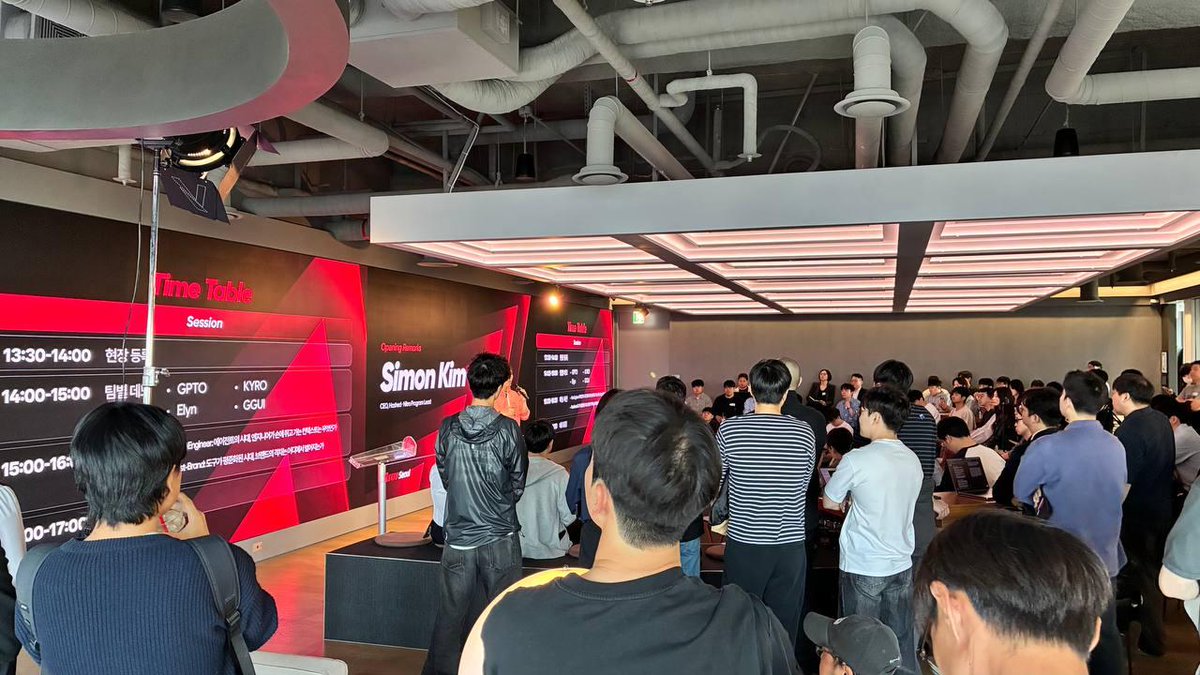
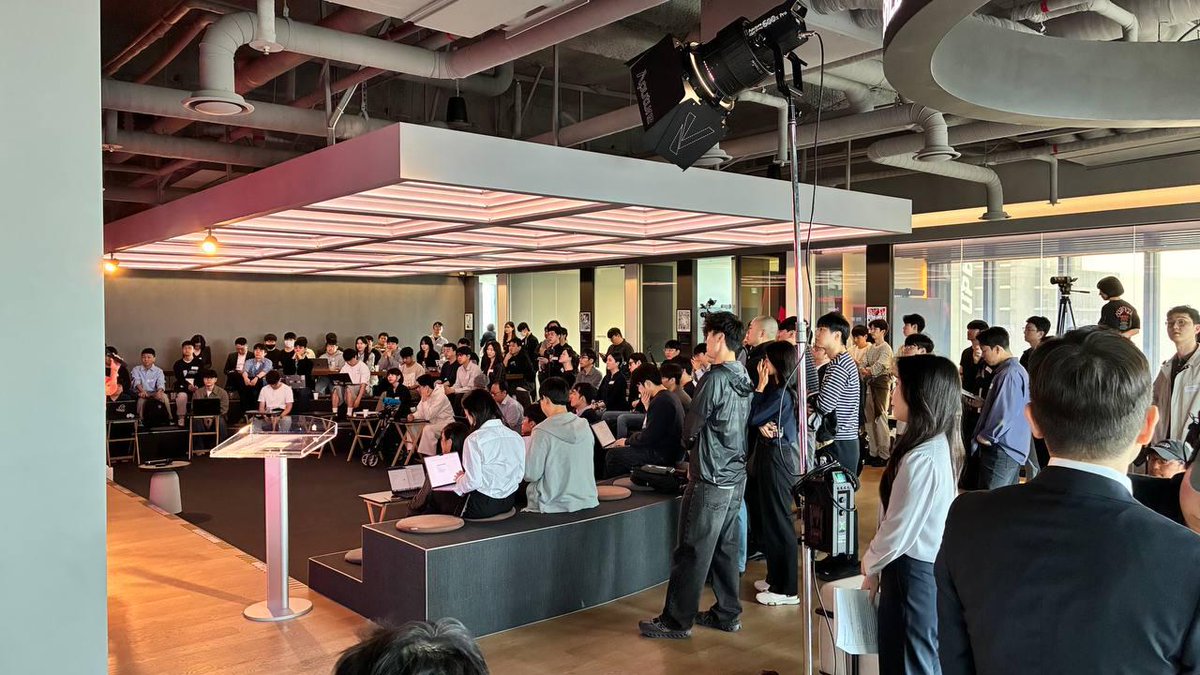
Last week, Nitro by Hashed hosted its first public Demo Day at the Hashed Lounge in Seoul — marking the official debut since rebranding from Hashed Vibe Labs.
Over an 8-week deployment sprint (Mar 3 – Apr 24), four teams shipped relentlessly alongside 20 fellows spanning open source, data science, cybersecurity, product, finance, and creative. Selection wasn't based on decks — it was based on shipped product, iteration speed, and user signal. Investment closed within a week of selection.
Meet the cohort:
🔹 Elyn — AI character companion
🔹 GPTO — B2B solution for AI Answer Engine Optimization (AEO·GEO)
🔹 KYRO — gamified running app
🔹 GGUI — generative UI protocol for AI agents
The afternoon closed with a panel — "Building in the Age of the Agentic Economy" — and a few takeaways from @simonkim_nft's keynote that we keep coming back to:
• "Everything you can see is now open source." With frontier models, a screenshot becomes a working clone in 30 minutes. Building is no longer the bottleneck.
• What matters now is the taste to know what to build, and the network to build it with the right people — at global scale from Day 1.
• The new definition of a VC isn't who writes the check. It's who builds at the same altitude, in the same language, alongside the founder.
Nitro is our bet on that thesis: a small, obsessed group moves fastest. Huge thanks to the founders, fellows, and friends who shipped, showed up, and pushed each other.
More to come.
1
5
14
2,043
kaito always wins

hiring across the board for the next phase of kaito (more coming soon publicly - join now and help shape it)
- marketing lead (singapore w/ visa sponsorship, or remote)
- BD manager & associate (singapore w/ visa sponsorship, or US-based)
more details: kaitoai.notion.site/kaito-jo…
7
11
825
Jun Kim retweeted

Apr 30
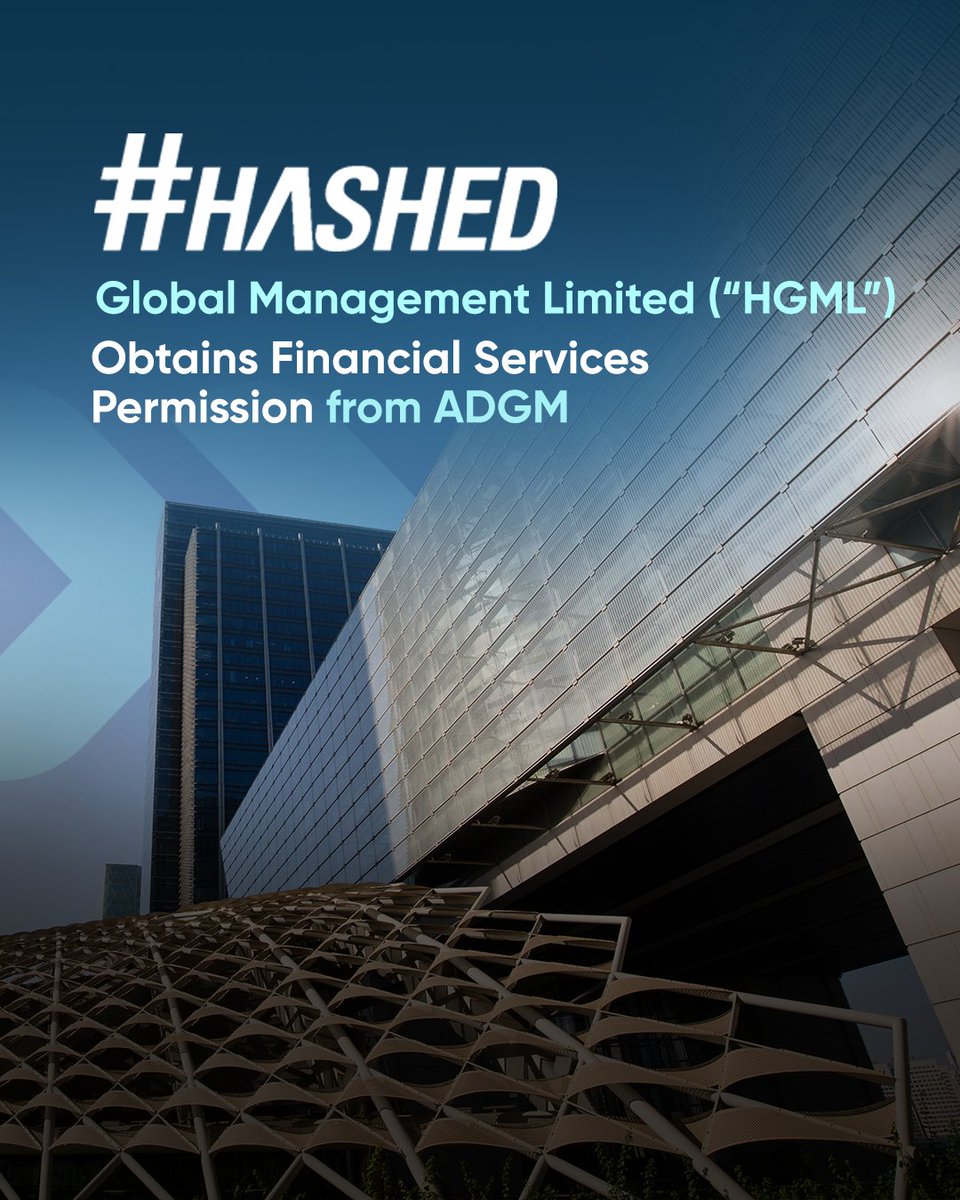
ADGM’s Financial Services Regulatory Authority (FSRA) has granted @hashed_official Global Management Limited (HGML) a Financial Services Permission (FSP), enabling HGML to conduct regulated activities in or from ADGM, including advising on investments or credits, arranging deals in investments, managing assets, and managing a collective investment fund.
This milestone reinforces ADGM’s position as an international financial centre with a forward-looking regulatory environment supporting innovation, fintech, and digital assets, and reflects growing momentum as leading global firms choose ADGM and Abu Dhabi to establish and scale regional operations.
Read more via: adgm.com/media/announcements…
منحت سلطة تنظيم الخدمات المالية (FSRA) في أبوظبي العالمي شركة Hashed Global Management Limited (HGML) تصريح خدمات مالية (FSP)، مما يتيح لها مزاولة أنشطة خاضعة للتنظيم داخل أو من خلال أبوظبي العالمي، بما في ذلك تقديم المشورة بشأن الاستثمارات أو الائتمان، وترتيب الصفقات في الاستثمارات، وإدارة الأصول، وإدارة صناديق الاستثمار الجماعي.
ويعزز هذا الإنجاز مكانة أبوظبي العالمي كمركز مالي دولي يتمتع بإطار تنظيمي متقدم يدعم الابتكار والتقنيات المالية والأصول الرقمية، كما يعكس الزخم المتزايد مع اختيار شركات عالمية رائدة لأبوظبي العالمي وأبوظبي لتأسيس وتوسيع عملياتها الإقليمية.
6
8
3,909
Jun Kim retweeted

Apr 30
1/ Most of you know me from my 7 years in crypto.
What most of you don't know: my obsession with TCG started long before any of that. Over the past decade I've been to more card shows than crypto conferences.
Which is why this one means a lot.
Apr 30

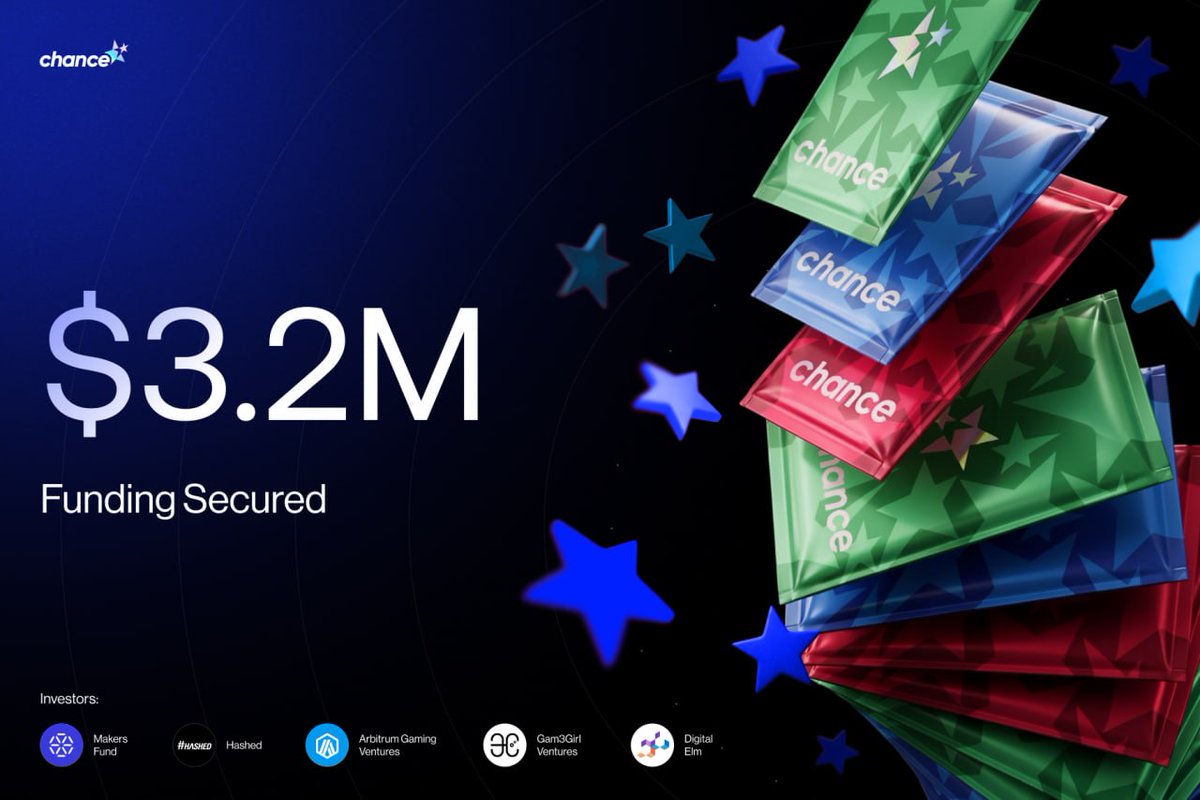
We raised $3.2M to build the third place for TCG collectors.
Co-led by @makersfundvc and @hashed_official, with @Arbitrum Gaming Ventures, @GAM3GIRLVC, and Digital Elm.
---
The TCG market is massive and still growing. But the biggest gap isn't authenticity or liquidity, it's what happens after the purchase. Collectors don't need another marketplace. They need a place where collecting turns into connecting.
That's what Chance is building. When collectors build for collectors, the details matter. That's our moat.
$3.2M = 3.2 million reasons to curate more grails, create more products, and cultivate more experiences for our users.
To our investors: thank you for taking a chance on us.
To our community: thank you for building this with us.
To everyone who's ever ripped a pack, chased a grail, or stayed up too late sorting through bulk and shit, this one is for you.
Built by TCG natives. For TCG natives.
onemoarchance.
11
7
61
6,329
Jun Kim retweeted
Apr 30
Big announcement: Hashed Global Management Limited (HGML), an entity within Hashed(@hashed_official) group, has received its Financial Services Permission (FSP) from the Financial Services Regulatory Authority (FSRA) of ADGM (@ADGlobalMarket).
With a regulated presence in Abu Dhabi, we look forward to deepening connections between Korean and Asian innovation ecosystems and the broader UAE & GCC ecosystem.
Grateful for the trust and partnership of the ADGM team as we take this step forward.
adgm.com/media/announcements…
Apr 30

ADGM’s Financial Services Regulatory Authority (FSRA) has granted @hashed_official Global Management Limited (HGML) a Financial Services Permission (FSP), enabling HGML to conduct regulated activities in or from ADGM, including advising on investments or credits, arranging deals in investments, managing assets, and managing a collective investment fund.
This milestone reinforces ADGM’s position as an international financial centre with a forward-looking regulatory environment supporting innovation, fintech, and digital assets, and reflects growing momentum as leading global firms choose ADGM and Abu Dhabi to establish and scale regional operations.
Read more via: adgm.com/media/announcements…
منحت سلطة تنظيم الخدمات المالية (FSRA) في أبوظبي العالمي شركة Hashed Global Management Limited (HGML) تصريح خدمات مالية (FSP)، مما يتيح لها مزاولة أنشطة خاضعة للتنظيم داخل أو من خلال أبوظبي العالمي، بما في ذلك تقديم المشورة بشأن الاستثمارات أو الائتمان، وترتيب الصفقات في الاستثمارات، وإدارة الأصول، وإدارة صناديق الاستثمار الجماعي.
ويعزز هذا الإنجاز مكانة أبوظبي العالمي كمركز مالي دولي يتمتع بإطار تنظيمي متقدم يدعم الابتكار والتقنيات المالية والأصول الرقمية، كما يعكس الزخم المتزايد مع اختيار شركات عالمية رائدة لأبوظبي العالمي وأبوظبي لتأسيس وتوسيع عملياتها الإقليمية.
3
5
31
3,188
gm from abu dhabi
build with @hashed_official @ADGlobalMarket
seoul <> you and me <> abu dhabi
we simply do it together
join us
we are still so early.
Apr 30

Crypto VC Hashed gains financial services license in Abu Dhabi theblock.co/post/399505/hash…
12
8
1,345
1
1
65
Jun Kim retweeted

Apr 29
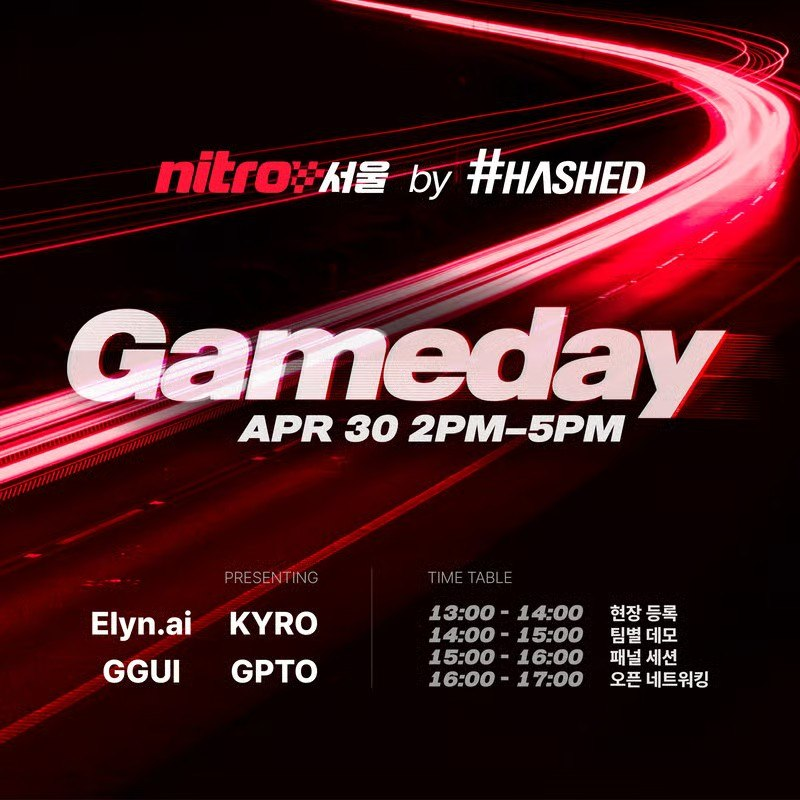
Nitro Seoul Game Day 🏁
8주 전, 5팀이 같은 출발선에 섰습니다.
피치덱은 없었습니다. 프로덕트와 트랙션만으로 선발했고, 선발과 동시에 투자가 집행되었습니다. 자료가 아니라 이미 움직이고 있는 것을 보고 판단했다는 뜻입니다. AI가 공동 창업자의 자리에 앉은 시대, 생각의 속도와 실행의 속도가 같아진 환경에서, 몰입한 소수가 8주 안에 어디까지 갈 수 있는지 확인해보기 위한 실험이었습니다. 창업의 문법이 다시 쓰이는 지금, 이 팀들은 그 문법을 가장 먼저 자신의 언어로 바꿔낸 사람들입니다.
Hashed Vibe Labs는 이번 Game Day를 기점으로 Nitro by Hashed로 새출발합니다. 저희가 설계한 8주 스프린트의 본질, “소수가 가장 빠르게 간다”는 믿음을 이름에 담았습니다. 넓게 지원하는 대신, 깊게 가속합니다. 규모로 줄 세우는 프로그램이 아니라, 가장 빠른 팀들이 서로의 속도를 끌어올리는 환경을 만드는 일에 집중합니다.
Nitro Seoul Game Day는 그 8주를 함께 달려온 5팀 중, 이번 무대에서 자신들이 만든 것을 직접 보여줄 준비를 마친 4팀이 서는 자리입니다. 각 팀의 호흡과 리듬은 다르고, 무대에 오르는 시점 또한 팀마다의 판단입니다. 유저가 실제로 쓰고 있는 제품, 실제로 쌓인 지표, 그리고 8주라는 시간 안에서만 드러나는 팀의 결정과 전환의 흔적을 한자리에서 확인하실 수 있습니다. 이 시대의 프로덕트가 어떻게 만들어지는지 가장 먼저 들여다볼 수 있는 자리이기도 합니다.
당일에는 팀별 피치와 라이브 데모, Agentic Economy 시대의 빌딩을 주제로 한 패널 세션, 그리고 파운더들과의 오픈 네트워킹이 이어집니다. 바이브코더, 창업자, 도메인 전문가, 그리고 이 변화의 한가운데에 서보고 싶은 분들이 함께하는 자리입니다.
개발자가 아니어도 좋습니다. 특정 도메인의 깊이를 가진 전문가, 고객의 언어로 사고하는 분, AI를 도구 삼아 직접 무언가를 만드는 빌더 — 지금 이 변화에 자신의 자리를 만들고 있는 모든 분들을 환영합니다.
일정: 4월 30일(목) 오후 2시
13:00 – 14:00 현장 등록
14:00 – 15:00 팀별 데모
15:00 – 16:00 패널 세션
16:00 – 17:00 오픈 네트워킹
luma.com/a3u6l9o5
5
3
34
2,276
Jun Kim retweeted
Apr 28
AI agents, tokenized markets, and digital settlement are no longer parallel conversations.
@hashed_official and @ADGlobalMarket – ADGM, Abu Dhabi's leading, award-winning, International Financial Centre – have published a joint policy report synthesizing discussions from the Web3 Leaders Roundtable at @ADFinanceWeek. The report was co-authored by ADGM Emerging Tech and Hashed Open Research, Hashed's research think tank.
The roundtable brought together senior participants from @ADGlobalMarket, @DMCCAuthority, @BlackRock, @The_DTCC, @FTI_US, @circle, @Consensys, @SolanaFndn, @NEARProtocol, @AvaLabs, @dfinity, @Grayscale, @StoryProtocol, @tether, @FalconXGlobal, @dbsbank, @LaserDigital_, @EntEthAlliance, @jito_sol, @GSR_io, @GoKiteAI, @Sharplink, @9BlocksCap, and @openmind_agi, alongside representatives from ADIA, the European Commission, the Government of Liechtenstein, Further Ventures, and Brevan Howard Digital, to examine two core questions shaping the next phase of digital asset adoption: what infrastructure an AI-native economy will require, and what policy barriers still stand in the way of institutional scale.
Hosted by ADGM's Dmitry Fedotov and Hashed's @simonkim_nft, with framing remarks and moderation from @HenriArslanian (Nine Blocks Capital), @baekkyoumkim (Hashed).
The broader implication is that institutional adoption is no longer a question of whether demand is coming, but whether policy and infrastructure can keep pace with it.
Read the full report:
assets.adgm.com/download/ass…
News Coverage:
adgm.com/media/announcements…
1
8
17
1,825

As someone who's loved crypto research for years, I always wondered if our work would actually resonate globally. This round feels like the answer.
600 reports, 100 protocol collaborations, 3 years in.
And research will stay at our core as we expand into institutional validators and advisory.
Grateful to everyone who's been part of the journey. More to come.
Apr 27

: : We're excited to announce that @FourPillarsFP has raised Series A Funding from @PanteraCapital and @further.
This round marks our next chapter: scaling from a research firm into an institutional-focused blockchain research and infrastructure provider.
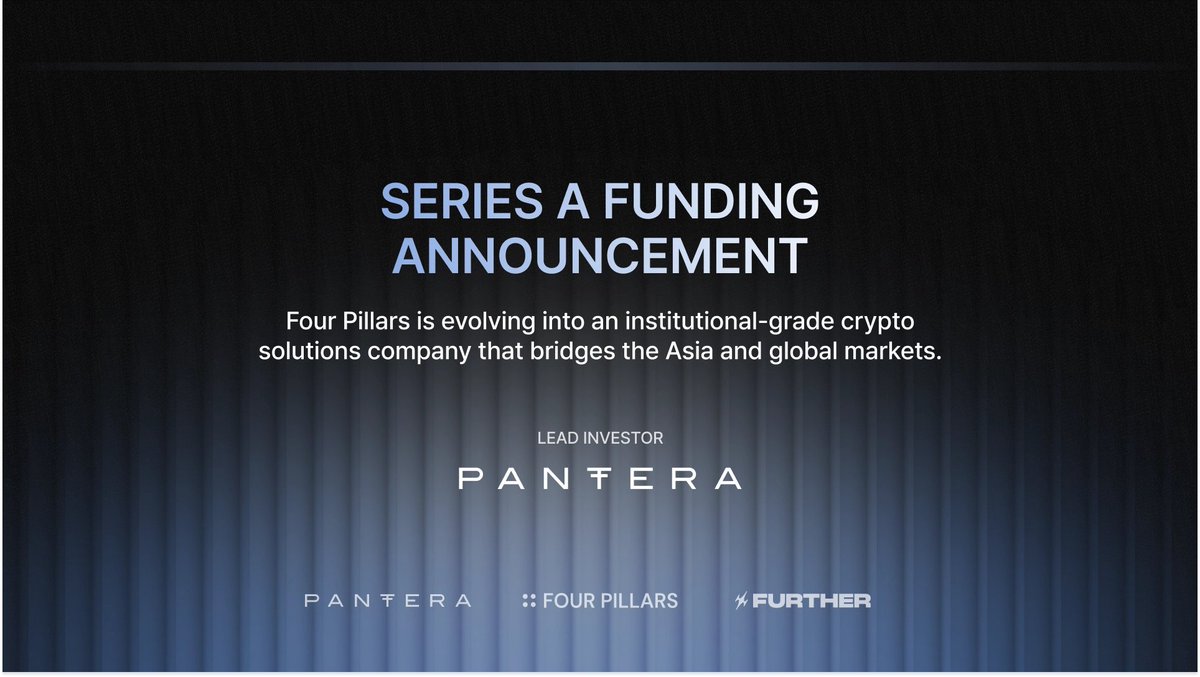
44
9
202
19,616
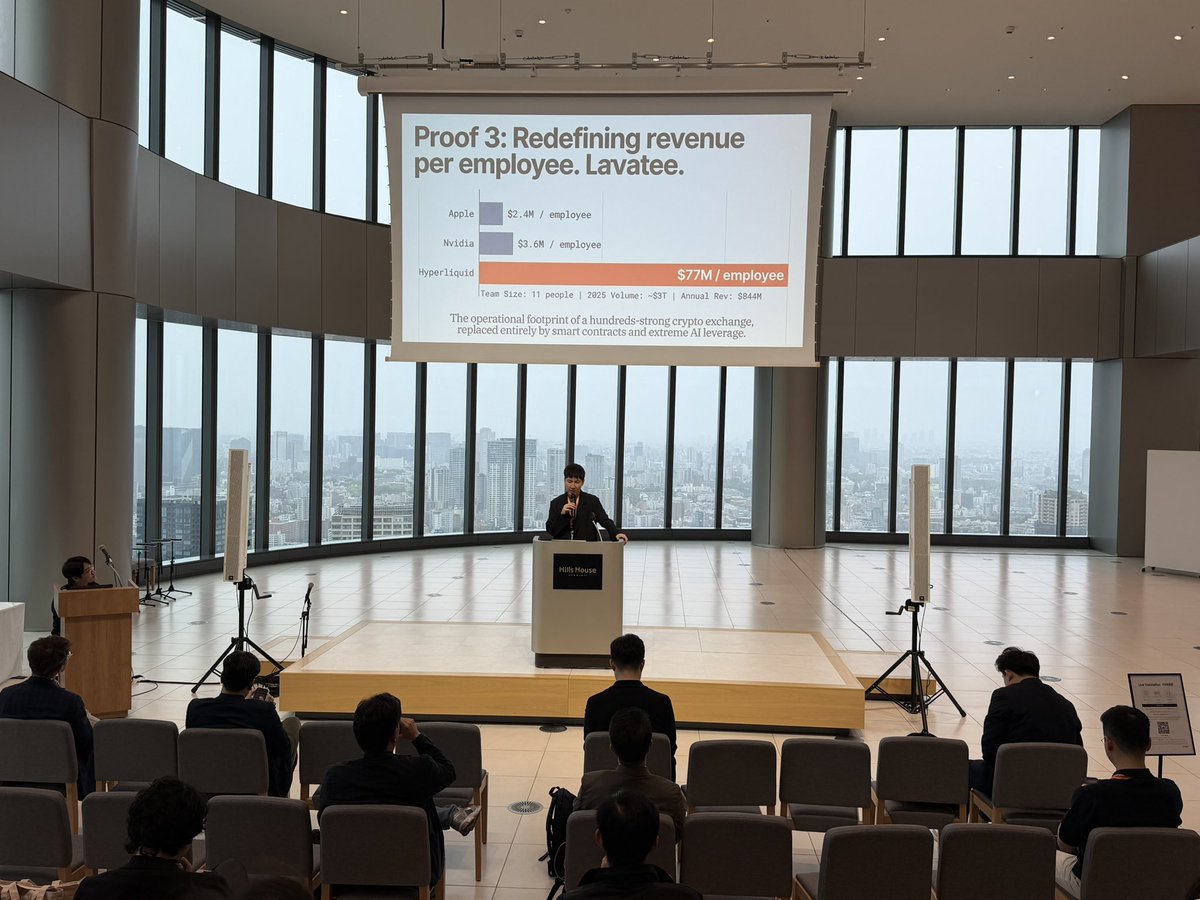
also @HyperliquidX mentioned
probably nothing
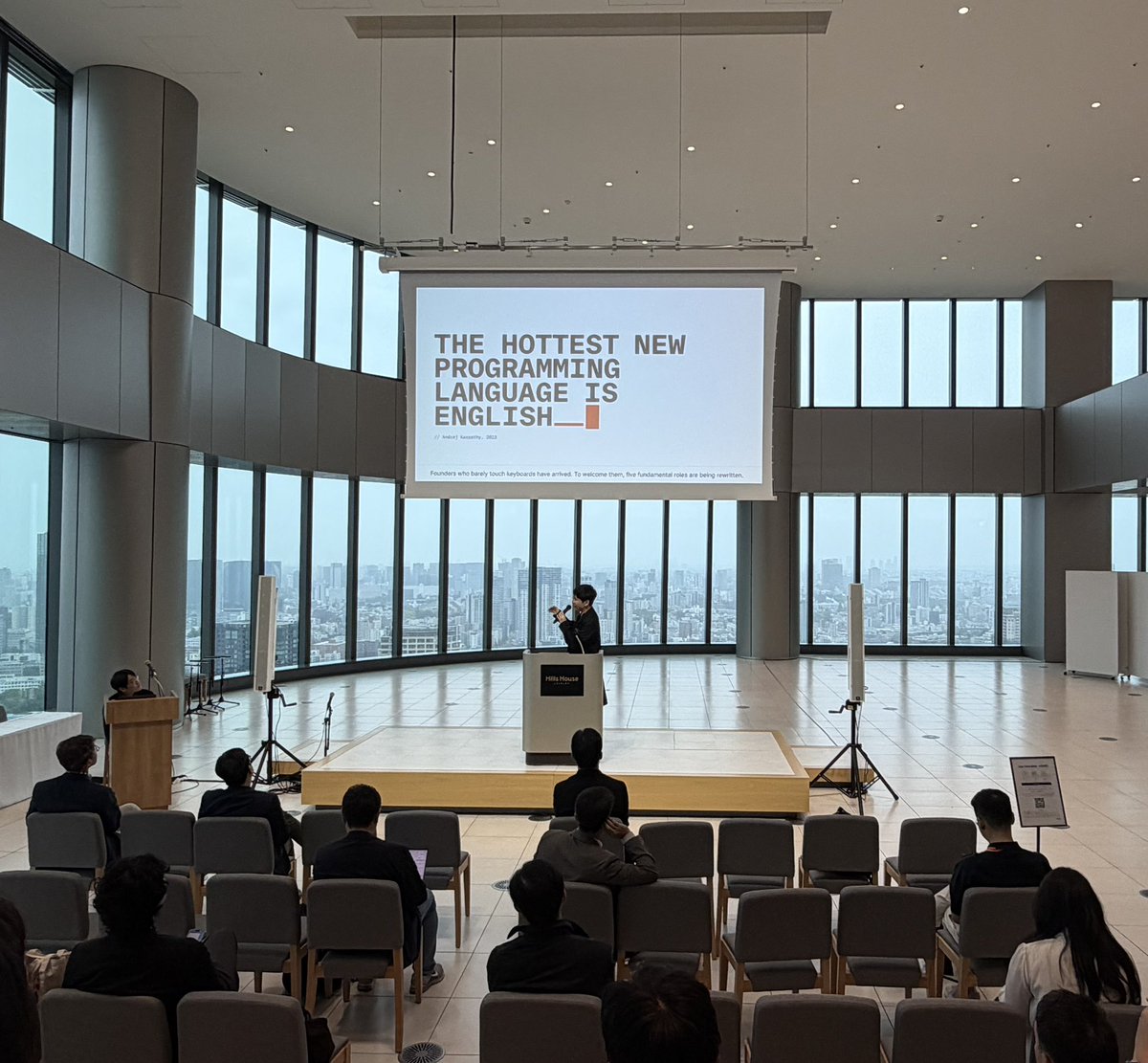
gm from tokyo

"the speed of thinking, is now the speed of creation"
- Simon Kim, Founder/Managing Director of Hashed, at Tokyo Unicorn Summit 2026, "How Vibe Coding is Reshaping Roles"
Full keynote summary soon - stay tuned
5
8
472