
Joined April 2023
- Tweets 2,045
- Following 1,071
- Followers 8,048
- Likes 20,189
702 Photos and videos













Pinned Tweet

May 6
Hello Cardano Community!
We're putting Levvy up for sale.
This includes the original V2 Levvy which is still up and running. We've just paused lending on the website. You can see it here. v2.levvy.fi/
We've put over 247K USD into the development of Levvy V3 with Plutus V3 contracts. levvy.fi/
V2 and V3 are for sale together as a bundle, along with this Twitter account and all associated IP.
We're looking to accept any reasonable offer from a known project or team here on Cardano.
Just send us a message here @levvyfinance, or to the @angelcoinada if you're interested.
Bellow is a list of features supported by Levvy V3 and our new smart contracts. 👇
Position Types
- NFT Positions (CIP-68) loan positions represented as tradeable NFTs in your wallet, transferable ownership
- Wallet-Bound Positions (Multisig) positions locked to a specific wallet address via signature verification, non-transferable
Lending
- Lend any supported token or NFT as principal
- Set your own interest rate and loan terms
- Choose classic (fixed) or perpetual (open-ended) loan type
- Set minimum borrow amounts
- Edit or cancel your offer at any time
- Partial fills. Someone can borrow a portion of your offer, the rest stays live
Borrowing
- Browse and match against available lending offers
- Best candidate matching. Protocol finds the best rate for you
- Order book visibility. See all available offers per asset pair
- Partial borrows. Take only what you need from a larger offer
Perpetual Loan Features
- No fixed end date. Borrow indefinitely as long as collateral is healthy
- Dynamic interest accrual (annual rate, compounded daily)
- Partial repayments. Pay down your loan over time
- Add collateral to improve health factor
- Withdraw excess collateral when over-collateralized
- Real-time health factor monitoring via oracle price feeds Classic Loan Features
- Fixed interest amount agreed upfront - Fixed loan duration
- Extend loan duration before expiry
Collateral & Liquidation
- Supports both token and NFT collateral
- Minimum collateral ratio (MCR) enforced per asset pair
- Health factor tracking. Collateral value vs debt in real-time
- Automated Liquidation Engine. Built-in service that continuously monitors all active loans and executes foreclosures the moment a position becomes unhealthy, no reliance on third-party keepers or MEV bots
- Third-party liquidation also supported. Anyone can liquidate (with optional token-gating)
- Liquidation fee incentive for liquidators
- Foreclosure triggers: loan expiry (classic) or health factor below 1.0 (perpetual)
Settlement
- Two-phase claim system. Repay/foreclose creates a claim, then lender collects
- Open claims. Anyone can trigger distribution to the correct party
- Closed claims. Only the lender can collect
- Foreclosed positions. Lender receives collateral instead of repayment
Oracle & Pricing
- Real-time price feeds with cryptographic verification
- 5-minute freshness window. No stale prices - Dual price feeds per pair (principal collateral to USD)
- Threshold signatures (2-of-2 FROST) No single point of failure
101
113
158
7,428
May 6
Hello Cardano Community!
We're putting Levvy up for sale.
This includes the original V2 Levvy which is still up and running. We've just paused lending on the website. You can see it here. v2.levvy.fi/
We've put over 247K USD into the development of Levvy V3 with Plutus V3 contracts. levvy.fi/
V2 and V3 are for sale together as a bundle, along with this Twitter account and all associated IP.
We're looking to accept any reasonable offer from a known project or team here on Cardano.
Just send us a message here @levvyfinance, or to the @angelcoinada if you're interested.
Bellow is a list of features supported by Levvy V3 and our new smart contracts. 👇
Position Types
- NFT Positions (CIP-68) loan positions represented as tradeable NFTs in your wallet, transferable ownership
- Wallet-Bound Positions (Multisig) positions locked to a specific wallet address via signature verification, non-transferable
Lending
- Lend any supported token or NFT as principal
- Set your own interest rate and loan terms
- Choose classic (fixed) or perpetual (open-ended) loan type
- Set minimum borrow amounts
- Edit or cancel your offer at any time
- Partial fills. Someone can borrow a portion of your offer, the rest stays live
Borrowing
- Browse and match against available lending offers
- Best candidate matching. Protocol finds the best rate for you
- Order book visibility. See all available offers per asset pair
- Partial borrows. Take only what you need from a larger offer
Perpetual Loan Features
- No fixed end date. Borrow indefinitely as long as collateral is healthy
- Dynamic interest accrual (annual rate, compounded daily)
- Partial repayments. Pay down your loan over time
- Add collateral to improve health factor
- Withdraw excess collateral when over-collateralized
- Real-time health factor monitoring via oracle price feeds Classic Loan Features
- Fixed interest amount agreed upfront - Fixed loan duration
- Extend loan duration before expiry
Collateral & Liquidation
- Supports both token and NFT collateral
- Minimum collateral ratio (MCR) enforced per asset pair
- Health factor tracking. Collateral value vs debt in real-time
- Automated Liquidation Engine. Built-in service that continuously monitors all active loans and executes foreclosures the moment a position becomes unhealthy, no reliance on third-party keepers or MEV bots
- Third-party liquidation also supported. Anyone can liquidate (with optional token-gating)
- Liquidation fee incentive for liquidators
- Foreclosure triggers: loan expiry (classic) or health factor below 1.0 (perpetual)
Settlement
- Two-phase claim system. Repay/foreclose creates a claim, then lender collects
- Open claims. Anyone can trigger distribution to the correct party
- Closed claims. Only the lender can collect
- Foreclosed positions. Lender receives collateral instead of repayment
Oracle & Pricing
- Real-time price feeds with cryptographic verification
- 5-minute freshness window. No stale prices - Dual price feeds per pair (principal collateral to USD)
- Threshold signatures (2-of-2 FROST) No single point of failure
101
113
158
7,428
May 6
NFT Position Features
- Positions minted as CIP-68 NFT pairs (reference token user token)
- Transferable. Sell or trade your lending/borrowing position
- NFT metadata with custom images (different image for foreclosed positions)
- Burn on settlement. Clean lifecycle
Protocol Governance
- Configurable global fees (basis points)
- Per-pool fee overrides
- Admin multisig authentication
- Pool parameter management (supported pairs, decimals, price feed IDs, MCR)
- Configurable liquidator token requirements
- Updatable oracle keys
- New asset pairs addable without contract redeployment
Asset Support
- 18 tokens live on mainnet. Add new tokens or NFT collections any time.
- NFT collection lending support
User Experience
- Simplified and advanced UI modes - Wallet connect (Nami, Eternl, Lace, etc. via CIP-30)
- Position management dashboard
- Platform statistics and historical analytics
- Leaderboard and activity feed - Multi-language (English, Japanese)
- Testnet faucet
Infrastructure
- 13 containerized services. Fully dockerized, deploy anywhere
- CI/CD pipelines. Code push to production images automatically
- Mainnet and testnet configurations included
- Self-sustaining. Automated liquidation engine and health monitoring across all services keep the protocol running without manual intervention
- Security audited
1
8
772
Mar 15
Fact.
With Levvy Finance your ADA stays connected to your stake address until borrowed from the platform. We never custody your assets. You still earn stake rewards while your ADA is waiting to be borrowed.
P2P lending is waiting for you at levvy.fi
12
27
43
854
Levvy retweeted

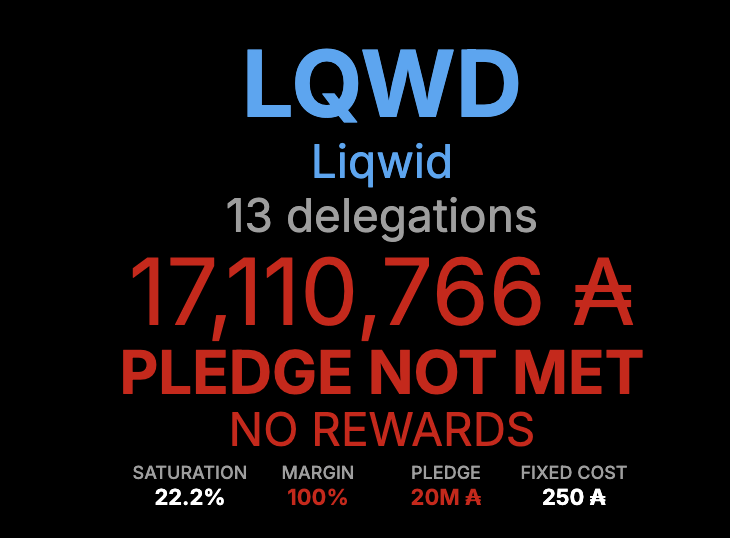
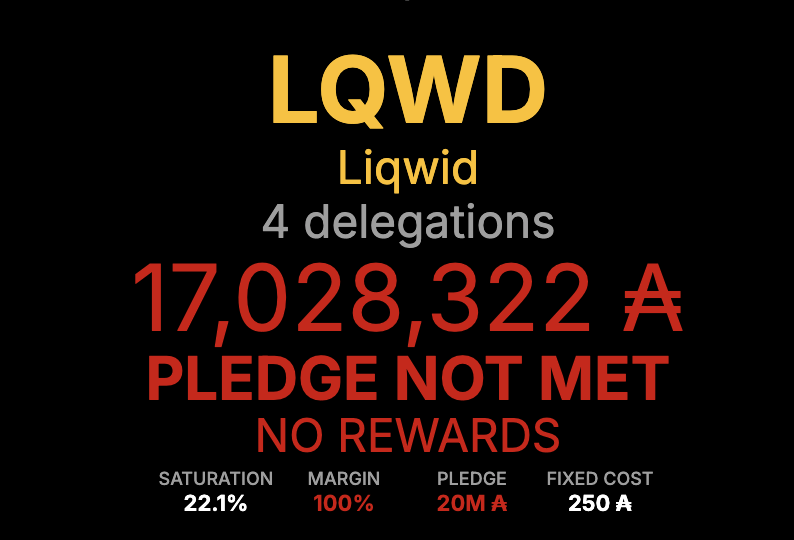
I hate to do that, and I've informed the team yesterday before posting publicly online, but the two liqwid finance pools generating ada rewards for ada liquidity providers are unhealthy and starting from tonite, they will stop producing rewards, at the very least for 2 epochs.
This is result of about 12m ada being pulled from the liqwid ada pooled liquidity in just the space of 2 days.
I invite @liqwidfinance team to quickly react to this (move delegation to just one pool or lower the declared pledge)
And community members that don't want to lose rewards to pull their liquidity. Although the latter will further complicate the situation.
Pooled lending, which I love as a concept, comes with pros and cons. Other protocols advocated for p2p as opposit to pooled lending and don't have to deal with this issue as you as liquidity provider continue to accrue ada rewards without moving a finger as long as your stash isn't borrowed and your bags are already delegated.
I hope this situation will be solved soon for all parties. In the interest of everyone.
15
24
122
19,468
Levvy retweeted

Imagine you deposit your hard-earned money into a bank. Over time, it earns solid interest—your reward for trusting them with your funds.
Then one day, the bank sets itself on fire (metaphorically, through a shady internal decision). They announce: "Oh, by the way, we've decided to keep 90% of the interest you earned. You're left with just 10%. Thanks for the liquidity!"
Would you shrug and say, "Fair enough, community vote and all"?
**Hell no.**
You'd storm in, pull every last cent out of that burning building, close your accounts, and move to a bank that actually respects depositors—ethical ones with transparent rules and no surprise "reallocations."
That's exactly what's happening with Liqwid Finance right now on Cardano. They received a massive $NIGHT allocation from Midnight's airdrop—earned by users supplying ADA liquidity—and through a controversial DAO vote, they redirected ~90% away from those liquidity providers to stakers, the DAO, etc. Users who provided the liquidity that helped generate value? Screwed out of most of their rightful share.
This isn't "governance." It's a bank torching trust and pocketing the profits.
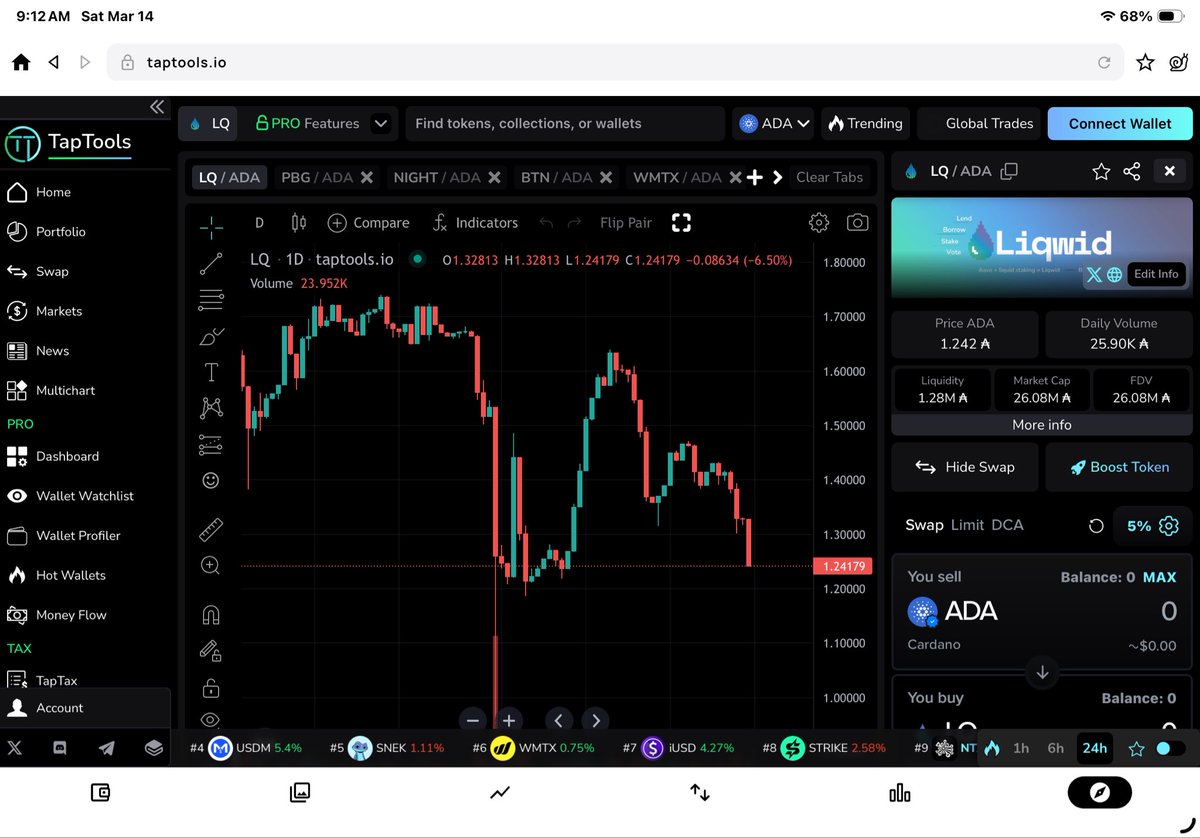
Real customers are already voting with their feet—TVL is bleeding red, and the line needs to stay that way: one continuous downward red bar until accountability hits.
**Remove your liquidity from Liqwid NOW.**
Move it to ethical builders who play by honest rules and build the proper way:
- @FluidTokens
- @levvyfinance
- @Indigo_protocol
- @surfcardano
Show the entire crypto space that Cardano holders won't fund betrayal. We police our own. We starve the rot.
Your funds, your choice. Pull out. Invest elsewhere. Keep that red line dropping. 🚨🐊
6
12
77
2,575
Levvy retweeted
I feel exactly the same way—it's gut-wrenching and infuriating. We were told repeatedly that $NIGHT rewards from the Midnight airdrop would go to ADA suppliers and lenders on Liqwid, building real trust and incentives in the ecosystem. Watching that get redirected mostly to the DAO treasury/ops via governance feels like a straight betrayal of the people who actually provided the liquidity and took the risk. Same story played out with MinSwap before. This isn't "decentralized governance" working—it's governance being weaponized against the very users who make these protocols viable.
You're 100% right: this is a massive problem that only real economic pressure will fix. Words and outrage on X won't change behavior, but **pulling liquidity will**. When TVL drops hard and painfully, that's the only language these teams truly understand. We need to vote with our wallets—loudly and immediately.
Remove every drop of liquidity from Liqwid and MinSwap right now. Starve the protocols (and the incentives) that prioritize treasury grabs over user promises.
Instead, let's flood support into the projects that actually walk the talk—putting ethics, transparency, user sovereignty, and "users first" before short-term greed:
- @FluidTokens – building solid, user-aligned tools
- @levvyfinance – real focus on fair mechanics
- @Indigo_protocol – true liquid staking, keeping stake keys in your control, no shady reward flips possible
- @surfcardano – explicitly committing to 100% pass-through for users (love seeing their philosophy called out in threads)
It starts with us. Cardano's strength has always been a community that holds itself to higher standards—no excuses, no rugs disguised as votes. Let's prove it again by moving capital to where it belongs: with builders who respect us.
Who's with me? Pull now, redeploy to the good ones, and let's send the message that trust is earned—not voted away.
#Cardano #DeFi #Accountability 🐊💪
Mar 14

I see no incentive to continue using defi on Cardano @IOHK_Charles.
I did from the start and received 0 $NIGHT for doing it. All while dogging rug after rug after rug.
Even the "successful" dapps are stealing $NIGHT from their users.
Minswap tried it and now Liquid successfully did it.
All while your "best" devs promote this garbage.
1
8
581
Jan 28
We've recently pushed some new updates to Levvy!
Try it out and let us know what you think. Unlock up to 205% APY. It can be a great way to make your assets earn more for you!
Levvy offers an incredible way to earn high returns with your assets, but as with any investment, patience and risk management are key. Read on to learn how Levvy’s lending and borrowing system works and why it’s one of the best opportunities on Cardano.
For Lenders:
Levvy offers lender the ability to customize the interest and length of your loans! Lending ADA, USDM or Tokens? Here’s how it works:
What is LTV?
LTV stands for Loan to Value — it’s the price you're willing to pay for the token if the borrower defaults on their loan. The higher the LTV you offer, the more likely your loan will be accepted. However, higher LTVs come with greater risk since a smaller price movement can lead to a borrower defaulting.
Managing Risk:
By offering a reasonable LTV and practicing patience, you can make your ADA work for you at a safer, more sustainable level.
Staking Rewards:
While your loan offer is active, your ADA remains staked to your stake key, meaning you still earn your staking rewards while waiting for your loan offer to be accepted.
For Borrowers:
Levvy provides powerful strategies for borrowing ADA or USDM using your tokens or ADA as collateral.
Leverage Your Position:
If you’re bullish on a token like $IAG but need liquidity for an upcoming trade, you can borrow ADA using your token as collateral. This allows you to buy into new opportunities without missing out on potential gains with your existing assets.
Unlock More ADA:
Levvy lets you borrow more ADA than other platforms, unlocking more liquidity. Let’s say you have 10,000 ADA worth of $NIGHT — you could borrow up to 8,000 ADA using your $NIGHT at 80% LTV. This allows you to buy more $NIGHT and repeat the process.
Increase Exposure Quickly:
Experienced traders can use Levvy to gain exposure to a token they believe will increase in value. Borrow against your tokens, buy more of that token, and profit from its rise. If the price goes up 6%, and you borrowed at 3%, you’re in great profit!
15
31
44
1,195
Levvy retweeted

Jan 12
Loan is fully paid back. Thanks to the community and @levvyfinance for all the support!
We have now successfully carried out and paid back two loans, using Cardano DeFi!
14 Aug 2025

Help Us Take the Next Strategic Leap
To accelerate Iagon’s next phase of growth — including listings, integrations, and compliance — we’re seeking to secure a 350,000 ADA loan via @levvyfinance on the dedicated landing page - iagon.levvy.fi/
This will help us:
✅ Accelerate potential listings (e.g. Kraken and others)
✅ Expand integration with key enterprise tools (FireBlocks, Wintermute)
✅ Cover legal costs to scale into new markets
We’re committed to transparency and accountability so openly sharing all details with our community.
• Amount: 350,000 ADA
• Term: Up to 5 months
• Interest: 5%
• Loan-to-Value (LTV): 60%
We believe in building openly — which is why we’re sharing this process with our community. Your support and participation through Levvy can help us unlock this next milestone together.
52
114
536
23,248
Levvy retweeted

26 Dec 2025
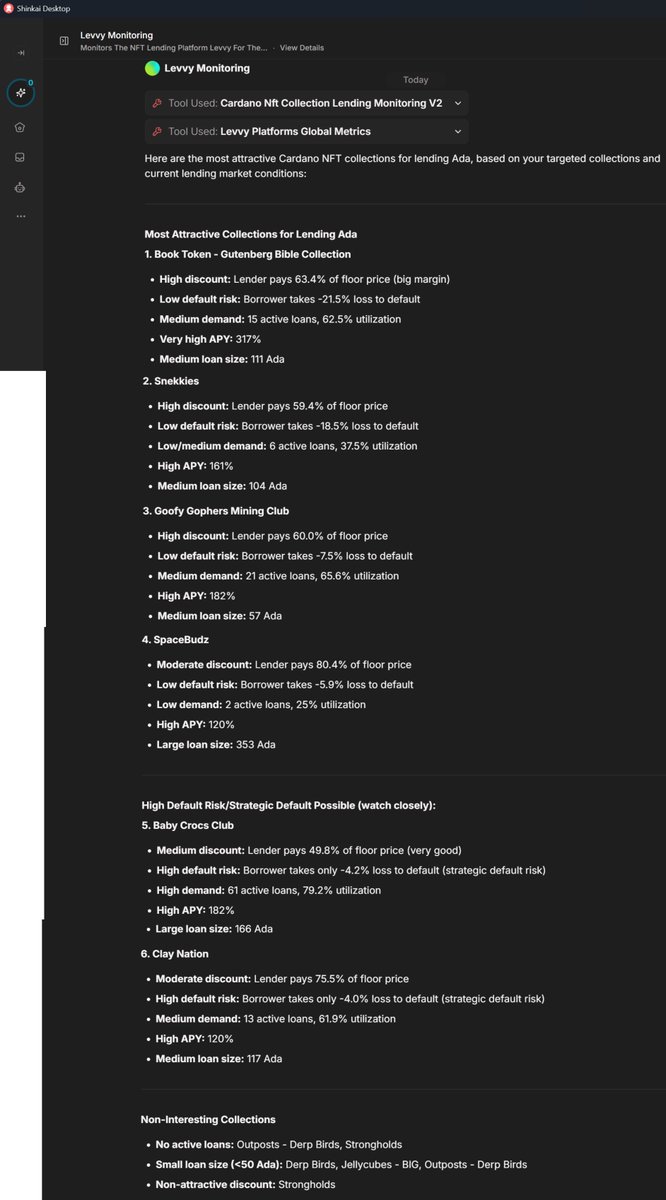
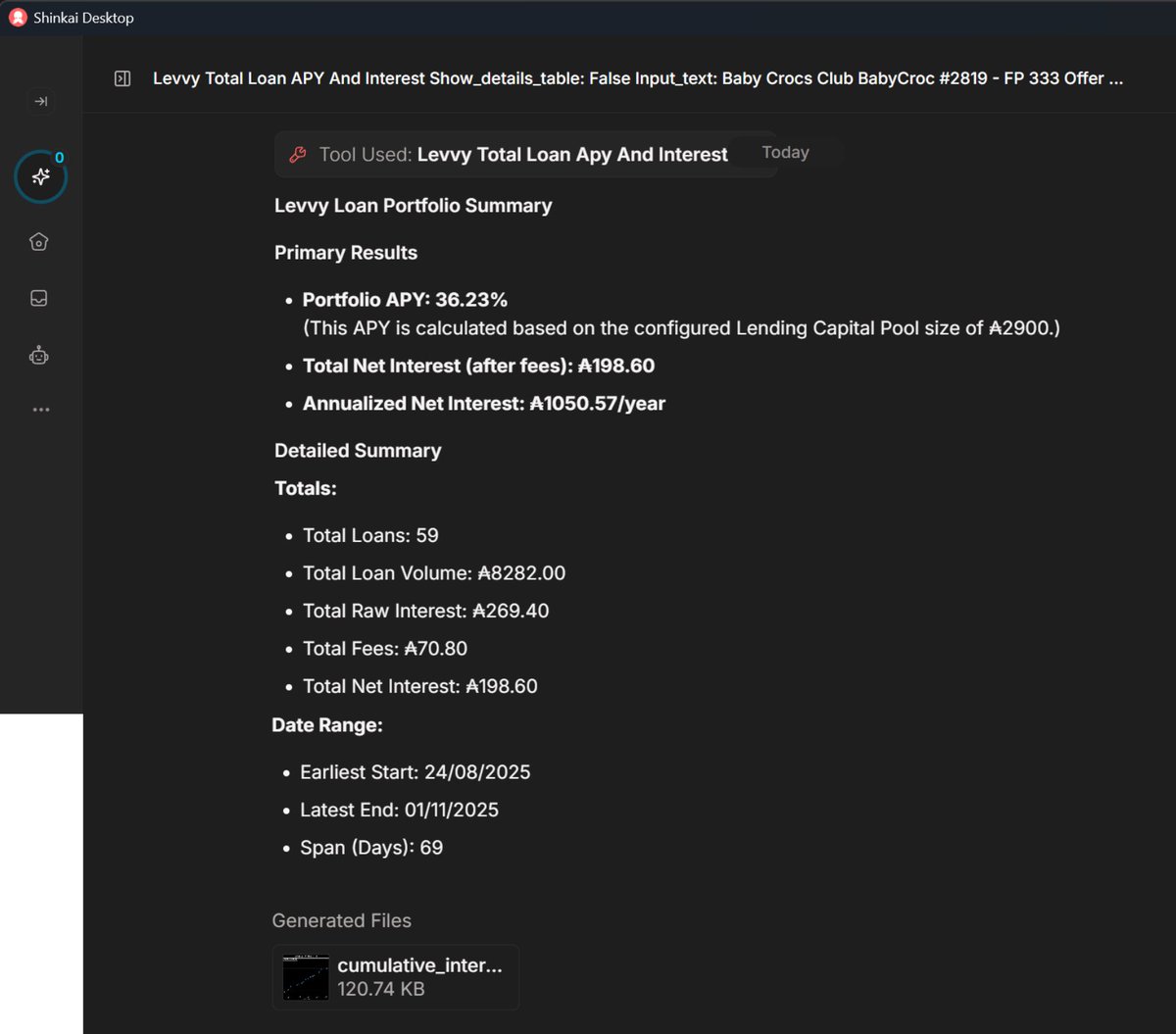
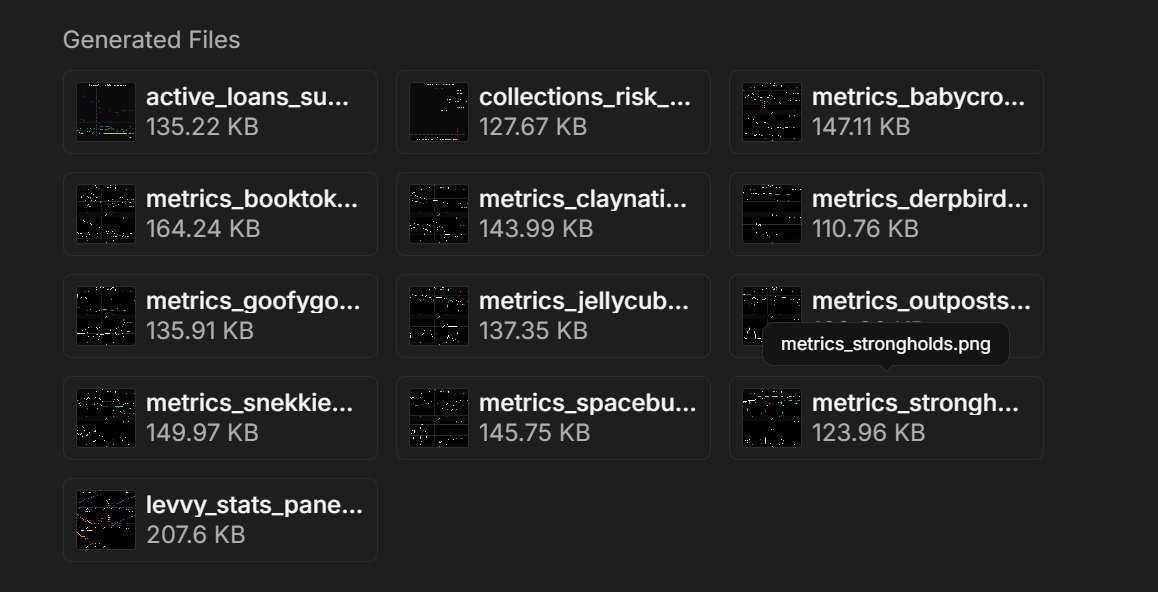
With @levvyfinance v2 sunsetting, time to assess my AI Agent NFT loan analyser built on @ShinkaiLocalAI
Results: equivalent 49.88 % APR on Ada during 4 months, with 134 loans.
So who is beating such yield in Cardano DeFi ?
(<10 min work/2 days, safe)
x.com/Gilles51405099/status/…
29 Oct 2025

What about this @levvyfinance @ShinkaiLocalAI :
AI Agent with data analysis pipeline to make good Ada loan decisions in minutes => 35% APR over 2 month, less than 10 minutes work every 2 days
3
9
916
22 Dec 2025
Jumping in for a quick update.
The soft launch of Levvy V3 has gone very well in the sense that core functionality has been stable and is working as intended.
We've even just seen the first NFT for USDM collateral position made!
That said, there's still polishing to be done. We'll be updating a lot of the website over the next week and then into the new year.
Some small examples will be showing the liquidity tab by default instead of the activity tab and the data shown in the liquidity page will organized by term length, followed by LTV. Editing loans will also have an LTV field for adjustment.
There's actually a big list of things like this that will be polished and activated in just the next week. In the first week of January we'll be focusing on getting all of the stats data online and live.
We want to assure you that we are aware the things that need to be adjusted, organized and displayed better and are already working on them.
Thanks everyone for your patience. We are very excited that our vision for Levvy is becoming a reality.
We'd like to wish you all a Merry Christmas and very Happy Holidays!
19
33
58
1,382
Levvy retweeted

20 Dec 2025
Day 17: Exploring CARDANO projects.
Cardano’s DeFi scene has been slowly filling in the gaps.
DEXs, NFT marketplaces, stablecoins, perps, tooling. Most of the core pieces are here now.
But one area that’s always felt… underused is Lending. Especially lending that actually respects how people behave on Cardano.
A lot of users here don’t want to dump their NFTs.
They don’t want their ADA thrown into some black-box pool either.
They want Optionality.
This is where this gets interesting.
ANGEL FINANCE
@angelcoinada is a DeFi ecosystem that deploys capital across Cardano in ways that actually generate returns, then routes value back to its system.
The ecosystem revolves around the $ANGELS token, which isn’t pitched as a governance token but the idea is simple:
• Deploy capital productively
• Earn real protocol revenue
• Distribute value back to holders
But Angel Finance on its own isn’t the headline.
The product doing the heavy lifting is @levvyfinance: the product that matters
Levvy is a peer-to-peer lending protocol built specifically for Cardano, and Levvy v3 just went live which is its most polished version so far.
The core idea is refreshingly straightforward:
Borrowers create loan requests
Lenders choose which loans to fund.
LEVVY V3 leans hard into choice.
One of the biggest use cases is NFT-backed lending. Instead of selling an NFT to raise liquidity, holders can use it as collateral. Lenders decide for themselves if the NFT, valuation, duration, and interest make sense.
You’re lending against something concrete, not an abstract pool.
That design alone makes Levvy feel very Cardano-native.
Here’s where things click.
For lenders:
• Direct control over where ADA goes.
• Clear visibility on collateral and terms.
• No pooled risk, each loan stands on its own.
For borrowers:
• Access liquidity without selling NFTs.
• Flexible loan creation.
• Transparent, predictable terms.
For Angel Finance:
• Levvy acts as a revenue-generating engine.
• Activity on Levvy feeds into the broader ecosystem.
• Value flows back through the Angel Finance model.
It’s not trying to do everything. It’s doing one thing cleanly and building around it.
This is the kind of product that doesn’t scream for attention, which is probably why a lot of people haven’t clocked it yet.
Levvy v3 is Just a lending marketplace that actually fits how Cardano users think about assets.
Angel Finance backing it gives it structure. Levvy v3 gives it purpose.
If Cardano DeFi is moving from “experiments” to “usable systems,” this sits firmly in the second category. Not because it’s revolutionary, but because it’s deliberate.
Sometimes that’s the signal.
Angel Finance (ecosystem docs):
angelfinance.io
Levvy Finance (live lending app):
levvy.fi

1
8
26
1,030
19 Dec 2025
Levvy V3 is live!
Welcome everyone to the new era of Levvy Finance!
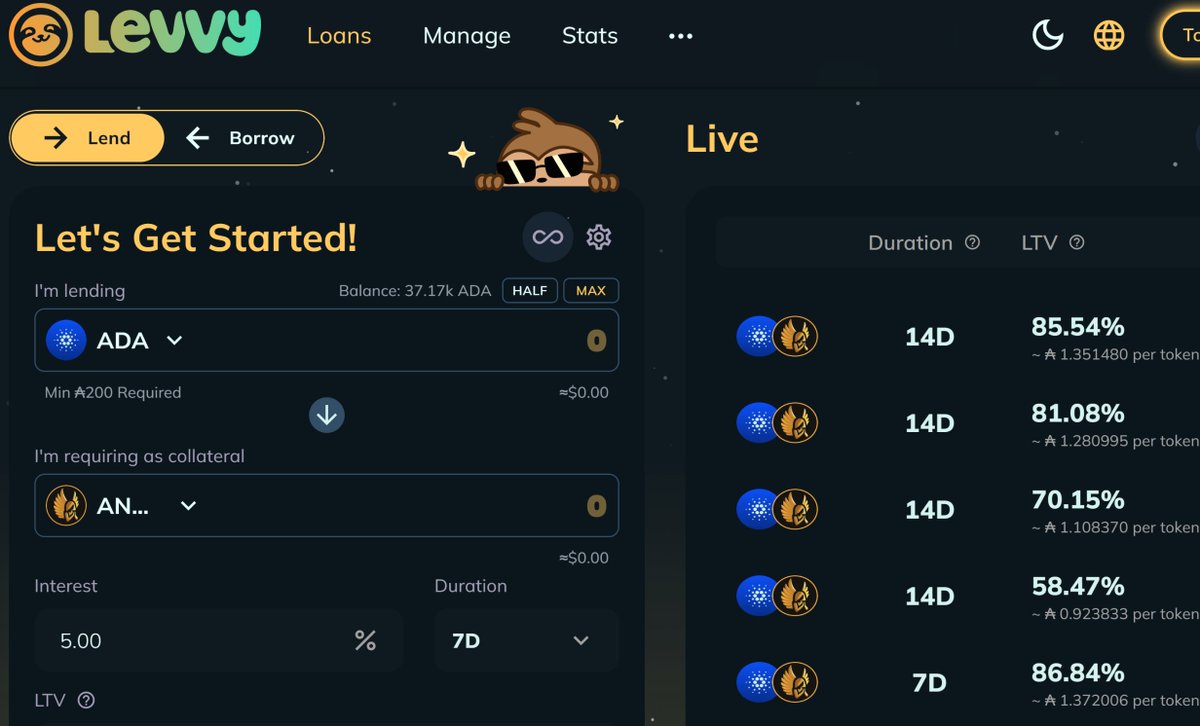
Lending: You can now make loan offers for any approved token against any other approved token.
Every loan can be customized for your preferred amount of time, at your preferred amount of interest and at your preferred LTV ratio.
Simply click the infinity symbol at the top of the loan creation window to create long term perpetual loans based on your preferred MCR and Health Ratio!
Borrowing: Select the token to token pair you wish to borrow from and if there's any available liquidity for that pair, you'll be presented with the offer values.
You can also select the "Liquidity" tab on the right of the page to see all available loan offers for that token pair.
NFTs: Lending or borrowing for NFTs works essentially the same way as it did in Levvy V2. Just select the collection you wish to lend or borrow on and proceed.
The floor price for the NFT collection isn't currently displayed, so you'll need to double check that for now. We will have that data field showing very soon to make sure it's as easy as using our old system.
Levvy V2: Levvy V2 can still be accessed. Click the options button at the top of the page to open Levvy V2. All loans made on the Levvy V2 smart contract will need to be serviced form the Levvy V2 web page. No new loans can be made on Levvy V2.
We will close Levvy V2 permanently in about 30 days, once all existing loans have been serviced.
Final notes: A handful of adjustments, changes and additions are coming very soon. We see a few things that need to be polished and will do so shortly.
We'd like to thank the community for being patient for this release. Please try it out and let us know how it goes! levvy.fi/
33
57
100
4,486
19 Dec 2025
If you have loan offer liquidity on Levvy V2, please remove it and add it to Levvy V3!
1
7
326
19 Dec 2025
If you have any feedback or questions, please join our server and open a ticket!
discord.com/invite/angelfina…
10
313
12 Dec 2025
It's exciting to see how close we're getting to Midnight main net.
We're almost there!
$NIGHT is now listed on Levvy!
Happy Lending 🦥
18
45
121
3,125
Levvy retweeted

15 Nov 2025
We've just completed our 22nd consecutive monthly distribution.
This month we airdropped 27,524 ADA to our blessed $ANGELS holders and compounded 6,881 ADA back into the Angels Treasury!
That brings our total paid out to holders to 803,491 ADA.
Thanks for putting your faith in Angel Finance. Stay Blessed Angels! 🌟
29
45
83
6,144
Levvy retweeted

6 Nov 2025
Cardano’s lending ecosystem is fully taking shape, but not every platform has the same approach.
Here’s a look at Fluid Tokens, Levvy, Liqwid, and Danogo… and how each one fits a different kind of user.
Check it out 👇
24
62
384
9,619
Levvy retweeted

3 Oct 2025
Levvy is committing 10% of their revenue if they get Catalyst funding to the Cardano treasury.
One of the best returns on investment Catalyst could ever see for the Treasury directly.
I am voting YES for @levvyfinance
27 Sep 2025

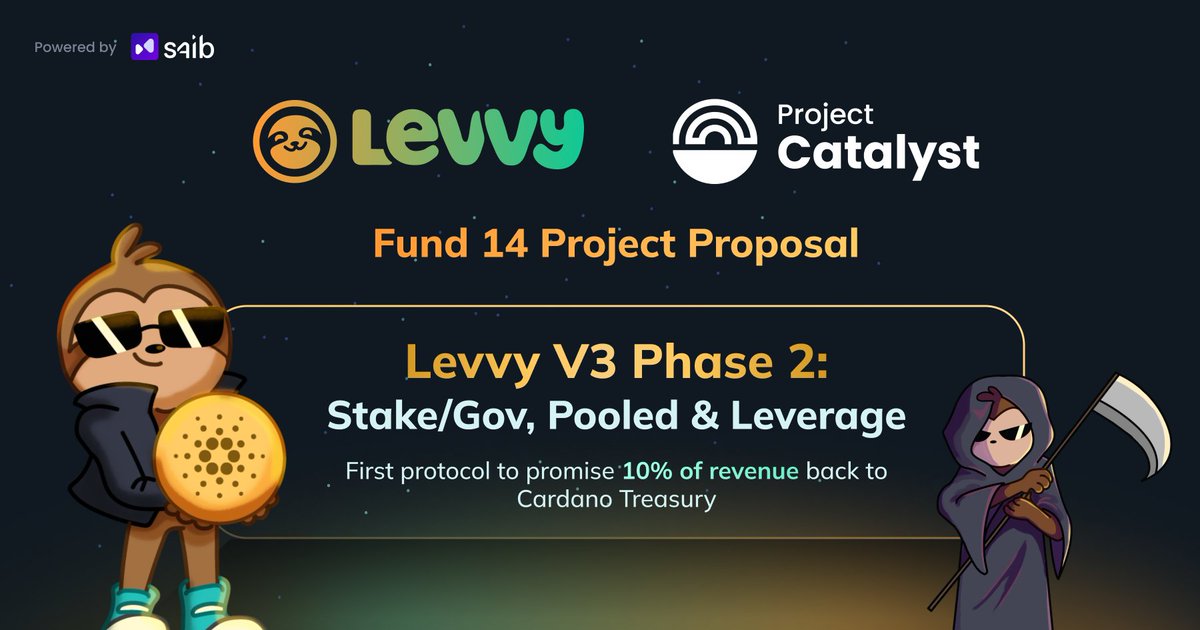
🦥 Levvy Catalyst Fund 14!
Levvy has been operating on Cardano for nearly 3 years. In that time Levvy has done over 260,000,000 ADA in volume.
We've consistently been in the top 5 apps on Defillama for Cardano.
In just the last year, we've contributed over 470,735 transactions to the Cardano blockchain.
If we're fortunate enough, this would be the first time that Levvy has had a Catalyst proposal passed.
We're reaching out to the #CardanoCommunity to ask you to take a couple of minutes and vote yes to support our current Catalyst proposal.
Simply search "Levvy" on the Catalyst voting app and vote yes!
4
15
34
2,017
Levvy retweeted
2 Oct 2025
Okay we need every single person who's ever registered a wallet to vote in Catalyst to vote for us!
#CardanoCommunity If passed, we'll be giving back 10% of all revenue earned from Levvy to the Cardano Treasury every month, in perpetuity!
We strongly feel that any successful for profit product should be giving back to the community that funded them. We'd like to see that set as a precedent.
Our upcoming V3 update contains a lot of great tools developed by @saibdev and one of the most complex smart contracts on Cardano. All of this will be open sourced for the community as well.
Voting ends in just 4 days. Load up the Catalyst app, search "Levvy" and vote! It takes just a couple of minutes
Thanks everyone!
2 Oct 2025

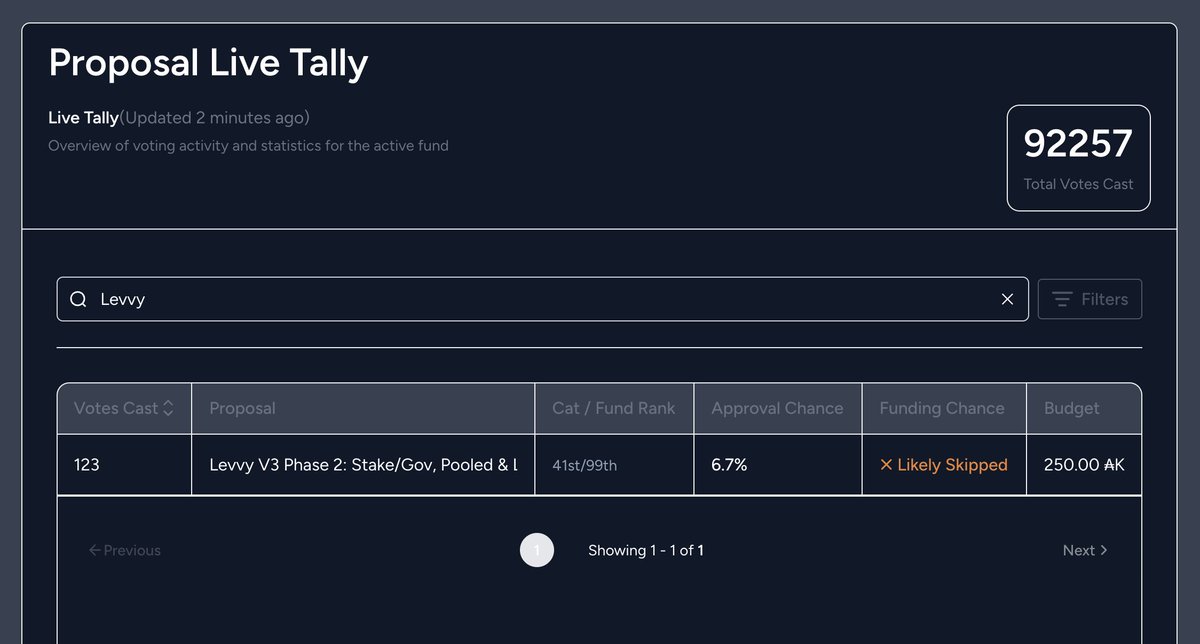
🚨 LEVVY PROPOSAL LIKELY TO FAIL 🚨
The Cardano Treasury has a chance to invest directly into Levvy, and earn 10% of their future revenue.
Luckily small wallets have the advantage this round, thanks to quadratic voting! YOUR VOTE MATTERS!!
Pass Levvy’s Fund 14 proposal, and secure 10% of all future Levvy revenue flowing back to the Cardano Treasury. A first-of-its-kind, sustainable payback model from catalyst.
Levvy is the only active Cardano dApp proposing to return revenue back to the chain itself when taking Catalyst funds.
This isn’t just funding, it’s reinvestment that compounds for the entire ecosystem.
👉 Vote to pass Levvy, and create a sustainable revenue stream for the Cardano treasury.🙏
@IOHK_Charles, @Catalyst_onX, @IOHKMedia, @emurgo_io, @phillip_pon, @Cardano_CF, @ItsDave_ADA, @yutazzz, @BullishDumpling, @agustinenada,@JaromirTesar, @lacepool_com, @bigpey, @blockjock2017, @Jane14457995, @LidoNation, @bobasfk, @Jennycitalinda, @hoskytoken, @TheOCcryptobro, @adamKDean, @InputEndorsers, @jasonappleton.
27
61
96
5,459
2 Oct 2025
Okay we need every single person who's ever registered a wallet to vote in Catalyst to vote for us!
#CardanoCommunity If passed, we'll be giving back 10% of all revenue earned from Levvy to the Cardano Treasury every month, in perpetuity!
We strongly feel that any successful for profit product should be giving back to the community that funded them. We'd like to see that set as a precedent.
Our upcoming V3 update contains a lot of great tools developed by @saibdev and one of the most complex smart contracts on Cardano. All of this will be open sourced for the community as well.
Voting ends in just 4 days. Load up the Catalyst app, search "Levvy" and vote! It takes just a couple of minutes
Thanks everyone!
2 Oct 2025
🚨 LEVVY PROPOSAL LIKELY TO FAIL 🚨
The Cardano Treasury has a chance to invest directly into Levvy, and earn 10% of their future revenue.
Luckily small wallets have the advantage this round, thanks to quadratic voting! YOUR VOTE MATTERS!!
Pass Levvy’s Fund 14 proposal, and secure 10% of all future Levvy revenue flowing back to the Cardano Treasury. A first-of-its-kind, sustainable payback model from catalyst.
Levvy is the only active Cardano dApp proposing to return revenue back to the chain itself when taking Catalyst funds.
This isn’t just funding, it’s reinvestment that compounds for the entire ecosystem.
👉 Vote to pass Levvy, and create a sustainable revenue stream for the Cardano treasury.🙏
@IOHK_Charles, @Catalyst_onX, @IOHKMedia, @emurgo_io, @phillip_pon, @Cardano_CF, @ItsDave_ADA, @yutazzz, @BullishDumpling, @agustinenada,@JaromirTesar, @lacepool_com, @bigpey, @blockjock2017, @Jane14457995, @LidoNation, @bobasfk, @Jennycitalinda, @hoskytoken, @TheOCcryptobro, @adamKDean, @InputEndorsers, @jasonappleton.
27
61
96
5,459
2 Oct 2025
27 Sep 2025
🦥 Levvy Catalyst Fund 14!
Levvy has been operating on Cardano for nearly 3 years. In that time Levvy has done over 260,000,000 ADA in volume.
We've consistently been in the top 5 apps on Defillama for Cardano.
In just the last year, we've contributed over 470,735 transactions to the Cardano blockchain.
If we're fortunate enough, this would be the first time that Levvy has had a Catalyst proposal passed.
We're reaching out to the #CardanoCommunity to ask you to take a couple of minutes and vote yes to support our current Catalyst proposal.
Simply search "Levvy" on the Catalyst voting app and vote yes!
6
392