
24 Photos and videos













Wombosi retweeted

Jun 15
In 2018, Warren Buffett called Elon Musk's strategy a mistake:
"You need a moat. Pace of innovation isn't enough."
Eight years later, Musk just became the world's first trillionaire.
And it came from ONE play Buffett would never have touched:
December 24, 2008. 6 PM.
Elon Musk had one hour left to save Tesla.
The financing round was scheduled to close at the end of the business day.
If it didn't, payroll would bounce two days later.
Three months earlier, SpaceX had finally launched Falcon 1 into orbit on its fourth try after three straight failures.
Days before Christmas, NASA had awarded SpaceX a $1.6 billion cargo contract.
SpaceX had survived. Tesla had not.
Musk was getting divorced.
The Great Recession was tearing through the economy.
Tesla wasn't profitable and was burning cash faster than it could raise.
He took the last of his cash from the PayPal sale and put all of it into Tesla.
Every dollar of his liquid net worth.
Into a pre-revenue car company in the middle of the worst financial crisis since 1929.
He didn't own a house.
He was borrowing money from friends to pay rent.
This is the bet Warren Buffett's entire framework is designed to prevent you from making.
Diversify. Margin of safety. Never bet the farm. Wait for the fat pitch.
Buffett's playbook has produced one of the great fortunes in history.
19.8% compound annual returns from 1965 to 2023.
A track record nobody else in modern investing can touch.
But Buffett's playbook would have told Musk to fold Tesla that night.
Take the loss. Live to fight another day.
Musk did the opposite of every Buffett principle in one transaction.
The Tesla round closed at 6 PM.
Tesla survived. The compounding started.
17 years later, Musk rang the bell at the Nasdaq for the largest IPO in history.
SpaceX closed up 19% on Friday at a $2 trillion market cap.
His personal net worth crossed $1 trillion.
For context, Berkshire Hathaway took 60 years to reach a $1.05 trillion market cap.
Musk did $1 trillion in 17 years.
By ignoring almost every rule Buffett wrote.
Buffett wasn't wrong. His framework is one of the great achievements in investing history.
What Musk proved is something different.
Conviction in a single asymmetric bet, sized to the limit of survival, can outperform 60 years of perfect diversification.
Musk has openly said he gave SpaceX less than a 10% chance of working when he founded it in 2002.
He put $100 million of his PayPal money in anyway.
Six years later, on Christmas Eve 2008, he doubled down by putting the rest into Tesla.
A 90/10 bet, twice, with 100% of his liquid net worth on the table.
While his marriage was ending and the world was burning.
The world's first trillionaire was made by a man who broke every rule of investing in one December afternoon.
For the rest of us, the system is the edge...
20
71
336
12,223

Andrej Karpathy just dropped his personal ai workflow.
"i don't actually go to chatgpt and ask for snippets of code because that's way too slow. it just doesn't have the context to work with me professionally."
most people still treat ai as a basic search bar. top-tier engineers have completely shifted their approach.
the new paradigm is vibe coding. you don't write explicit logic or copy-paste syntax anymore. you open cursor, give the autonomous agent a goal, and let it build the architecture for you.
2 hours. free. from the creator of the term "vibe coding" himself.
the absolute cheat code for shipping software faster.
bookmark & watch the full masterclass here

anthropic's head of claude code Boris Cherny:
"i uninstalled my IDE months ago. i don't prompt claude to write code anymore. i have loops that are running. my job is to write loops."
he breaks down how the entire concept of software engineering is melting away. "all these old distinctions about engineer vs PM vs designer... by the end of the year, it's gone."
his ultimate advice for founders building in 2026: underfund your projects with humans, and overfund them with tokens.
if a project feels like it needs 4 engineers, put 2 on it. give them an unlimited token budget and let the agents automate the rest.
the alpha is no longer how many devs you have. it's how many loops you can run.
30 minutes. free. at acquired unplugged.
bookmark & watch
14
70
717
235,489
Wombosi retweeted

CAN YOU HELP ME WITH.... a teeny tiny math problem?
1
53
Wombosi retweeted
©️ The Theory of Relativity Series
The Geometry of Invariant Deriving Spacetime (basic Idea)
Part 2
4
7
65
3,812
Wombosi retweeted

Jun 14
©️ The Theory of Relativity.
Part - 1
The Geometry of Time.
14
69
598
13,940
Wombosi retweeted

Jun 12
Graham Hancock: “Myths and scriptures from all around the world record a gigantic cataclysm.”
“The Flood of Noah is one example.”
“Plato’s story of Atlantis is another.”
“It remembers a global flood that wiped out a former era of existence.”
“Leaving only a few survivors.”
“This is the memory bank of our species.”
“This is the only record we have of a period before 6,000 years ago.”
“A very important academic study was published in the 1960s.”
“A book called Hamlet’s Mill by Giorgio de Santillana … and Hertha von Dechend.”
“They found encoded in those myths numbers and imagery that could only relate to one thing.”
“An obscure astronomical phenomenon called the precession of the equinoxes.”
“To observe it and to record it … involves very precise astronomical observations maintained over a very long period of time.”
“Hundreds of years at least.”
“There are ancient maps that show the world as it looked during the Ice Age.”
“The [theory] that I find most persuasive is called the Younger Dryas impact hypothesis.”
“About 20,000 years ago, a very large comet came in from deep space and went into orbit around the sun.”
“A comet of the diameter of 100 kilometers, maybe 200.”
“Once comets are caught by the gravitational field of … a sun, they start to break up into multiple parts.”
“This is what happened to the Younger Dryas comet.”
“It became thousands and thousands of objects, of which we’ve cataloged quite a lot.”
“12,860 years ago, approximately, the Earth went into a storm of these fragments.”
“They found it in the west coast of North America.”
“They found it in Belgium.”
“They found it as far east as Syria.”
“Most of it is blowing up in the air.”
“An airburst from an object that might be 100 meters in diameter is equivalent to a very substantial nuclear blast.”
“Their argument is the Earth was hit by a comet storm.”
“12,800 years ago … the Earth was coming out of the Ice Age.”
“For maybe 2,000 years before that, the Earth had been getting warmer.”
“You would normally expect that to continue.”
“But then … the Earth suddenly goes back into a massive deep freeze.”
“This is the time when all the famous big animals of the Ice Age … are wiped out.”
“The woolly mammoths.”
“The mastodons.”
“The giant sloths.”
“Most important of all is a very mysterious sea level rise that occurs then.”
“The comet theory explains it perfectly.”
“The impact, the heat, the airbursts, that would have been enough to send the ice sheets into meltdown and to cause this pulse of meltwater.”
“Then the freeze sets in.”
“And then 11,600 years ago, it suddenly warms up.”
@Graham__Hancock @StevenBartlett
11
32
267
16,696
Wombosi retweeted

Jun 15
Graham Hancock just dropped a devastating blow to mainstream archaeology with the Great Pyramid of Giza.
“It’s a 6 million ton monument… more than 2 million individual blocks of stone.”
“The Great Pyramid is aligned within 3/60ths of a single degree to true north… on a 6 million ton monument.”
“It sits almost exactly on latitude 30 which is 1/3rd of the way between the north pole and the equator.”
“And it incorporates the dimensions of the earth on a scale of 1 to 43,200 in its own dimensions.”
“So if you take the height of the Great Pyramid and multiply it by 43,200… you get the polar radius of the earth. Measure the base perimeter of the Great Pyramid… multiply it by the same factor, 43,200, and you get the equatorial circumference of the Earth.”
“Archaeologists know this. They say it’s a coincidence, total coincidence, just by chance.”
“However, I could agree with them actually if the scale was not 1 to 43,200. But the fact that it’s 1 to 43,200 changes everything because that belongs to a sequence of numbers that is found in ancient mythology all around the world… multiples of the number 72… derive from… the precession of the equinoxes.”
545
2,854
26,824
1,191,102
Wombosi retweeted

Jun 15
Amy Eskridge talking about P47s and P52s.
217
459
5,917
55,239
Wombosi retweeted

Jun 15
NVIDIA CEO Jensen Huang just shrunk the data center to fit on your desk: 768GB of unified memory in a single DGX Station.
125
136
1,802
219,725
Wombosi retweeted

Jun 15
We need to talk about Fable 5.
I'm angry. You should be too.
40
26
313
22,740
Wombosi retweeted

Jun 14
🚨 SHOCKING: LISA SU’S $1,499 LUNCHBOX ANNIHILATES NVIDIA’S $4K AI BEAST!
AMD CEO Lisa Su walked on stage, held a lunchbox sized PC in one hand, and ran a 235 billion parameter model live.
No data center. No cloud. No rented GPU.
The chip inside is the AMD Ryzen AI Max 395. It is the first x86 chip where the CPU and GPU share the same pool of memory. Up to 128GB of unified memory. That one design choice is what changes everything.
An RTX 5090 gives you 32GB of video memory. A 4090 gives you 24. This box gives you more than three times either of them in a chassis you can carry in a backpack.
On DeepSeek R1 inference, AMD's chip beat an Nvidia RTX 5080 by more than 3x. A desktop the size of a thick paperback outrunning a dedicated graphics card that costs over a thousand dollars on a real AI workload.
Now do the math on your subscriptions.
Claude Code Max is $200 a month. ChatGPT Pro is another $200. Cursor is $20. Gemini is $20. That is $5,280 leaving your account every year before you build a single thing.
The 128GB version of this machine starts at around $2,399. At that run rate it pays for itself in under a year and then runs free.
Install Ollama. Pull Qwen3 235B. Point Claude Code at localhost. Same interface you already use. Nothing leaves your machine. Nothing costs per request. No throttling at 3am when you finally have time to build.
Lawyers stop worrying about what OpenAI does with their files. Developers stop watching the token counter. Founders stop killing prototypes because the cloud bill scared them off.
Private AI just became something a normal person can own.
Community note
The device demoed by AMD CEO Lisa Su, the Ryzen AI Halo mini PC capable of running 235B parameter models, costs $3,999, not $1,499. amd.com/en/products/pr…
283
825
5,018
720,129
Wombosi retweeted

84.4% of cancer patients taking ivermectin declared COMPLETE REMISSION, TUMOR SHRINKAGE, or HALTED TUMOR GROWTH
The LARGEST human ivermectin cancer study EVER conducted is now PEER-REVIEWED and PUBLISHED by the International Institute of Anticancer Research.
We are WINNING.
109
2,850
6,158
161,892
Wombosi retweeted
CDC DATA SHOW COVID SHOTS TRIGGERED 146 NEUROLOGICAL & PSYCHIATRIC SAFETY SIGNALS
Over 70% of humanity underwent a chemical lobotomy masquerading as “vaccination.”
This explains the widespread collapse of common sense, deterioration of cognitive function, and drastic personality distortions seen since 2021.
Safety signals identified in our two peer-reviewed studies include:
📈PRION DISEASE — 847× more likely vs. flu shot
📈BRAIN CLOTS — 3,000× more likely
📈PSYCHOSIS — 440× more likely
📈HOMICIDAL IDEATION — 25× more likely
📈DEMENTIA — 140× more likely
📈SUICIDAL THOUGHTS — 150× more likely
📈SCHIZOPHRENIA — 315× more likely
📈DEPRESSION — 530× more likely
📈HERPES ZOSTER MENINGITIS — 1,200× more likely
📈TOXIC ENCEPHALOPATHY — 157× more likely
📈MENINGITIS (ALL TYPES) — 34× more likely
📈AUTOIMMUNE ENCEPHALITIS — 79× more likely
📈BRAIN ABSCESS — 120× more likely
📈SPINAL CORD ABSCESS — 89× more likely
📈VIOLENT BEHAVIOR — 80× more likely
📈COGNITIVE DECLINE — 115× more likely
📈DELUSIONS — 50× more likely
📈 MYELITIS (ALL TYPES) — 31× more likely
And many more......
The mRNA shots disrupt the blood–brain barrier, allowing mRNA, amyloidogenic spike proteins, and pathogens to penetrate the brain and spinal cord — an outcome consistent with the skyrocketing rates of cognitive decline now seen across the world.
Jun 13

Reports from people having taken the vaccine feel a sudden disconnection to God as well as a lower IQ with difficulties problem solving
391
5,964
9,490
281,837
Wombosi retweeted

Jun 14
The conspiracy theorists were right
A new FDA data mining report shows they knew the Covid vaccine had 25 major side effects and they all conspired to hide it from the public
Senator Ron Johnson’s Senate PSI Majority Staff Interim Report has been released on FDA data mining and the March 2021 analysis by Dr. Ana Szarfman
There was a “masking” in the standard FDA system, where signals from Pfizer and Moderna reportedly cancelled each other out
Meaning they lied and hid the side effects from the public and told you it was 100% safe and effective
I have compared the whole list for you:
Neurological & Dysautonomia
• Bell’s palsy (Suppressed Signal)
• Paraesthesia ear (Suppressed Signal)
• Bradykinesia (Suppressed Signal)
• Basal ganglia stroke (Suppressed Signal)
• Cerebral artery occlusion (Suppressed Signal)
• Thalamic infarction
• Sinus rhythm abnormality
• Agonal rhythm
• Diaphragmatic spasm
• Dementia (Pfizer)
Cardiac
• Sudden cardiac death (Suppressed Signal)
• Acute left ventricular failure (Suppressed Signal)
• Diastolic dysfunction (Suppressed Signal)
• Ejection fraction abnormal (Suppressed Signal)
• Hypertensive emergency (Suppressed Signal)
• Blood pressure systolic changes (Suppressed Signal)
• Aortic stenosis (Suppressed Signal)
• Cardiac failure chronic
• Acute myocardial infarction (Pfizer, Moderna)
• Cardiac telemetry abnormal (Pfizer) (Suppressed Signal)
Vascular & Pulmonary
• Pulmonary infarction (Suppressed Signal)
• Embolic stroke
• Ischaemic stroke
• Aortic aneurysm rupture
• May-Thurner syndrome
• Hypomagnesaemia (Suppressed Signal)
Other
• Cholecystitis acute (Suppressed Signal)
• AST/ALT ratio abnormal
• Mastoid disorder
• Cardiac assistance device user
• Brain natriuretic peptide increased
• Asymptomatic COVID-19 (Pfizer) (Suppressed Signal)
The FDA’s standard analytical method allegedly masked “obscured” statistical safety signals in the data
Aka they lied
1,811
28,750
60,862
1,236,953
Wombosi retweeted

Jun 12
Elon just created 4,400 millionaires in a single day.
400 of them are now worth over $100 million.
These aren't VCs. They're SpaceX employees, and the list includes welders, technicians, and cafeteria staff, because for two decades the company paid every level of the workforce in stock instead of higher salaries.
Juan Hernandez immigrated from Mexico and took a $28 an hour contractor welding job in 2015. He says he didn't even know what SpaceX was. The company gave him a $10,000 equity grant and let him buy more shares through payroll deductions. That stake is now worth $880,000.
Trevor Hise's parents wanted him to take a stable job at General Electric. He picked SpaceX instead, stayed 12 years, and accumulated over 100,000 shares. At the $135 listing price that's $13.5 million. He's 37 and semiretired. His words: "The magnitude of this has been ridiculous."
The most telling detail came before the listing. Over 100 employees quietly banded together and negotiated a group wealth management deal covering up to $5 billion, because none of them had ever needed a wealth manager before.
Software IPOs have minted millionaires for 30 years. This is the first one where the money went to the factory floor.
3,277
25,633
142,045
7,491,801
Wombosi retweeted

Jun 12
卧槽兄弟们,GitHub 上真的有一堆免费到离谱的项目。
很多能力已经能直接干掉你正在月付的软件。
1. TradingAgents
AI 多 Agent 量化交易框架
github.com/TauricResearch…
2. LibreChat
一个界面接入 ChatGPT、Claude、Gemini 等多个模型
github.com/danny-avila/Li…
3. HyperFrames
HeyGen 开源的视频生成引擎
github.com/heygen-com/hyp…
4. Fincept Terminal
开源版彭博终端
github.com/Fincept-Corpor…
5. MoneyPrinterTurbo
AI 一键生成短视频
github.com/harry0703/Mone…
6. Agentic Inbox
Cloudflare 开源 AI 邮件助手
github.com/cloudflare/age…
7. VoxCPM
AI 声音克隆工具
github.com/OpenBMB/VoxCPM
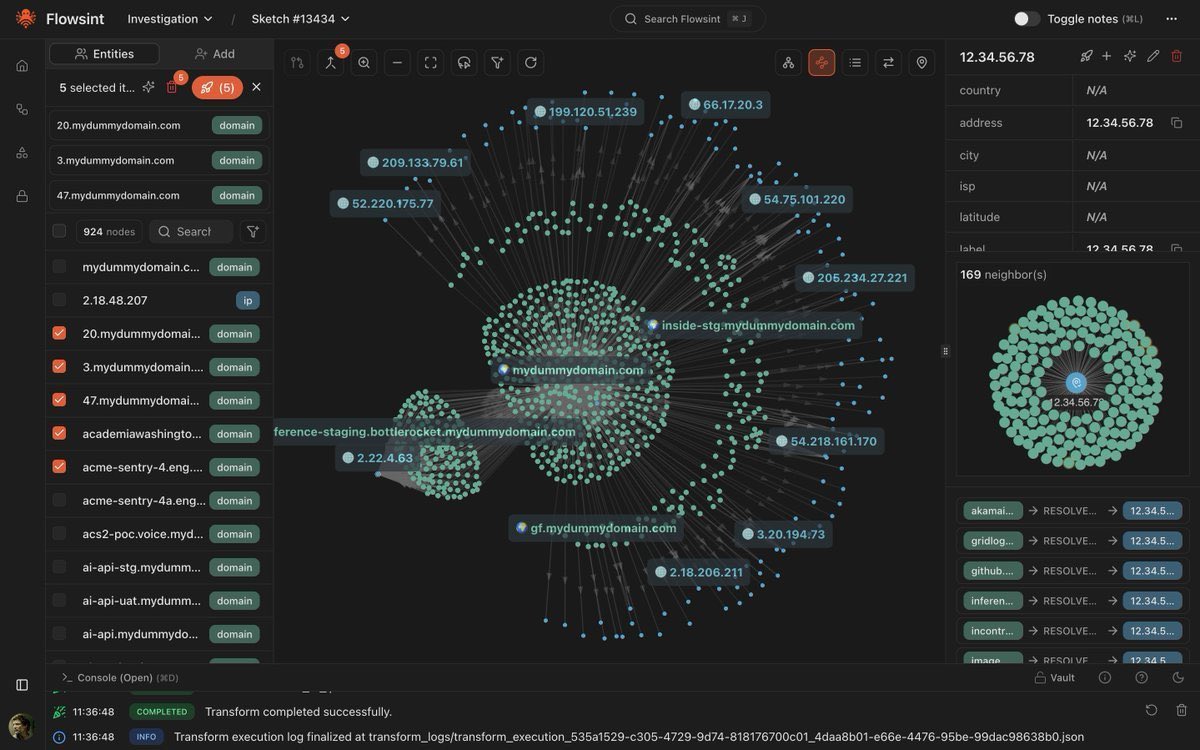
8. Flowsint
开源 OSINT 情报分析工具
github.com/reconurge/flow…
9. agent-skills
Claude Code 技能库
github.com/addyosmani/age…
10. Nango
开源 API 集成平台
github.com/NangoHQ/nango
兄弟们,这些真不是玩具项目。
很多你还在交月费的软件,GitHub 上已经有人做出开源平替了。
一句话:
别只会收藏 AI 工具网站了。
真正狠的东西,很多都藏在 GitHub 里。
113
841
4,292
294,703

Wombosi retweeted

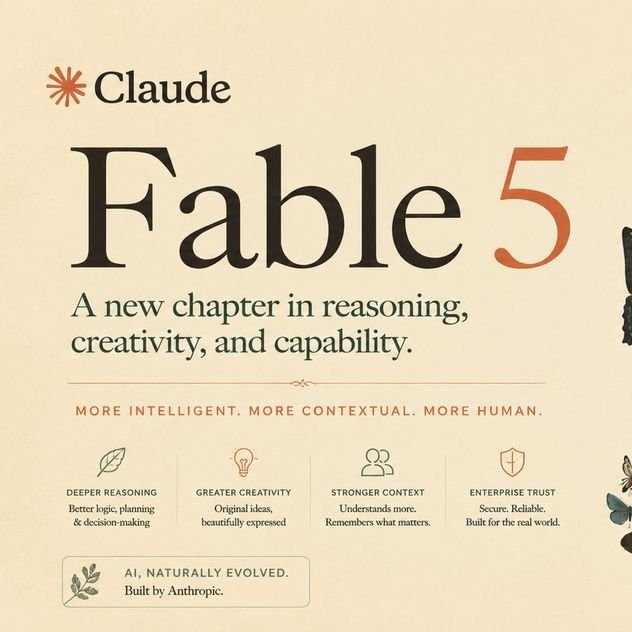
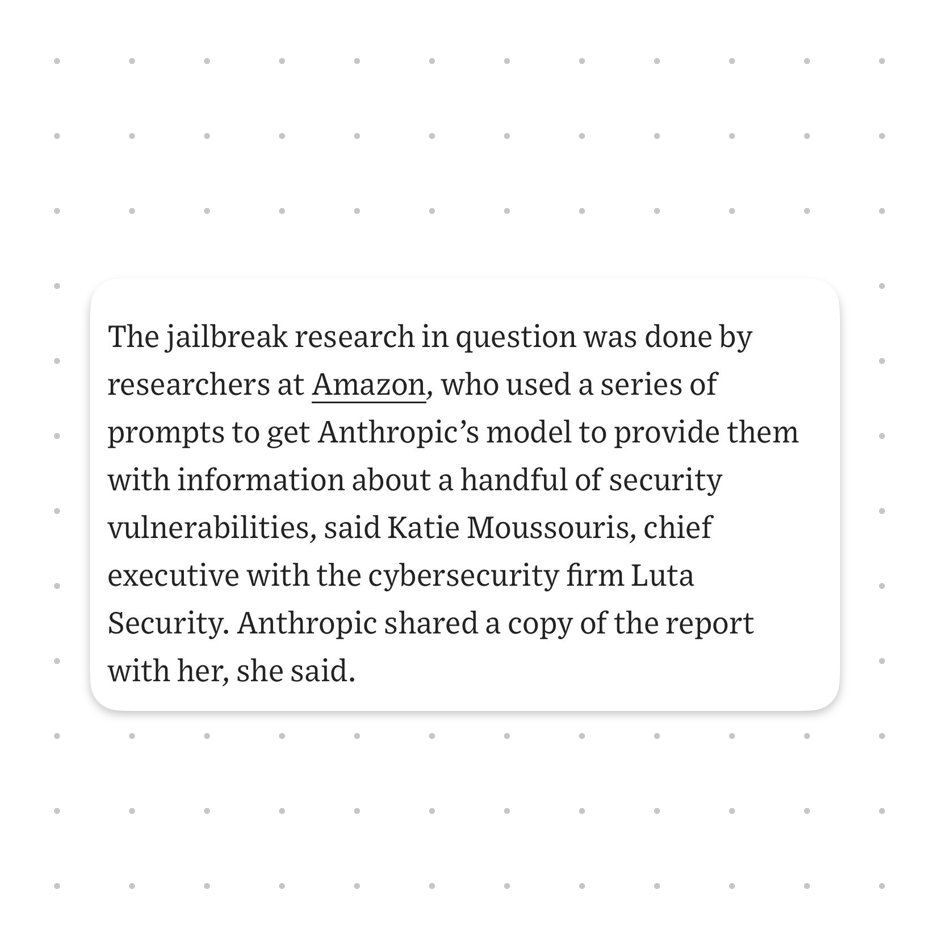
‼️🚨 BREAKING: Amazon researchers snitched to the US government about jailbreaking Fable 5 and Mythos 5, forcing Anthropic to immediately shut down worldwide access.
A security export control directive from Commerce Secretary Howard Lutnick enforced the action.
Anthropic is fighting the directive and calls it a misunderstanding.
This isn't the first clash. The Trump administration had already tried to get Anthropic to pause the release of its latest models before this directive landed.
308
1,112
7,206
2,686,239
Wombosi retweeted

Jun 13
US Gov BANNED Fable 5 From Trading Because It Hit 1,411%
86
174
3,642
403,712
Wombosi retweeted

Jun 13
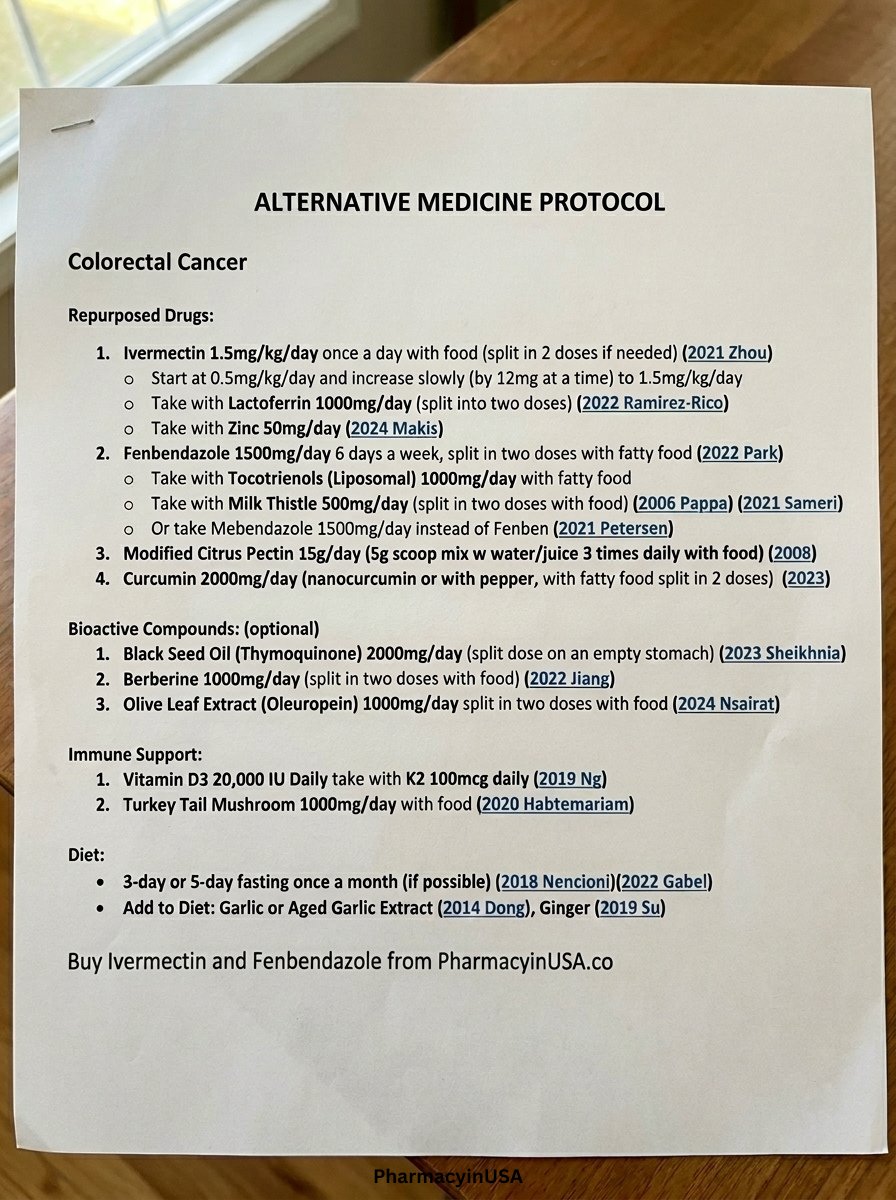
🚨 DR. WILLIAM MAKIS' COLORECTAL CANCER PROTOCOL
This is one of the protocols Dr. William Makis has been sharing for colorectal cancer and other advanced cancers.
It combines:
🔹 Ivermectin Lactoferrin Zinc
🔹 Fenbendazole (or Mebendazole)
🔹 Modified Citrus Pectin
🔹 Curcumin
🔹 Black Seed Oil
🔹 Berberine
🔹 Olive Leaf Extract
🔹 Vitamin D3 K2
🔹 Turkey Tail Mushroom
🔹 Fasting, Garlic & Ginger
The idea is simple:
Target cancer from multiple angles instead of just one.
✔️ Cancer stem cells
✔️ Cancer metabolism
✔️ Inflammation
✔️ Immune function
✔️ Treatment resistance
Whether you agree with Dr. Makis or not, one thing is clear:
More people are researching repurposed medicines like ivermectin, fenbendazole, and mebendazole than ever before. Research into metabolic and repurposed drug approaches continues to grow.
📌 Save this protocol.
🔁 Share it with someone researching colorectal cancer.
📩 Visit @PharmacyinUSA to access Ivermectin, fenbendazole, mebendazole. We provide worldwide delivery of them.
36
1,019
2,299
66,823