PhD: trauma CanLit. Currently: public health policy student, epi stats geek.

Joined November 2011
1,259 Photos and videos
This is a Tweet for everyone missing @Arley_McNeney, who maybe feels very alone in that missing because social media grief is weird and odd in its transience but I really miss her today and I know many of you do too. <3
5
14
122
59,984
Lucia Lorenzi (she/they) retweeted
I find it so bizarre that people think it’s more important to be shielded from the thought of bad things than to be given the tools to deal with them. The pandemic response has been all about shielding people from anxiety rather than protecting them from a harmful virus.
26
321
1,339
14,120
Lucia Lorenzi (she/they) retweeted
We have discovered that Alan Levinovitz's new book has already sold to publishers And it's about psychogenic illness. No wonder he thinks Long Covid is 60-80% psychogenic & why he won't reconsider his framing. He is invested That a major publisher @HenryHolt is running this raises serious concerns
44
124
444
17,002
Lucia Lorenzi (she/they) retweeted
A fellow Vancouver #Care4Complex patient who has suffered serious harm, and whose life is being put at risk yet again by the incompetence and negligence of the BC medical system, was on @CityNewsVAN last night: vancouver.citynews.ca/video/… This is the NORM, not an exception. #bcpoli
2
34
72
2,660
Lucia Lorenzi (she/they) retweeted
Thanks @amyrochlin for your thoughtful comments and sharing our paper! I agree with everything you said with one caveat: while we all want biomarkers and improved diagnostic tests, waiting for this has stalled progress in our field. We can't wait any longer, our patients can't wait any longer. Time to move forward with novel and repurposed therapeutic trials using what we've got. I look forward to working with Pharma on this: there is a large slice of patient population that needs treatment NOW! 💉🧬🩺
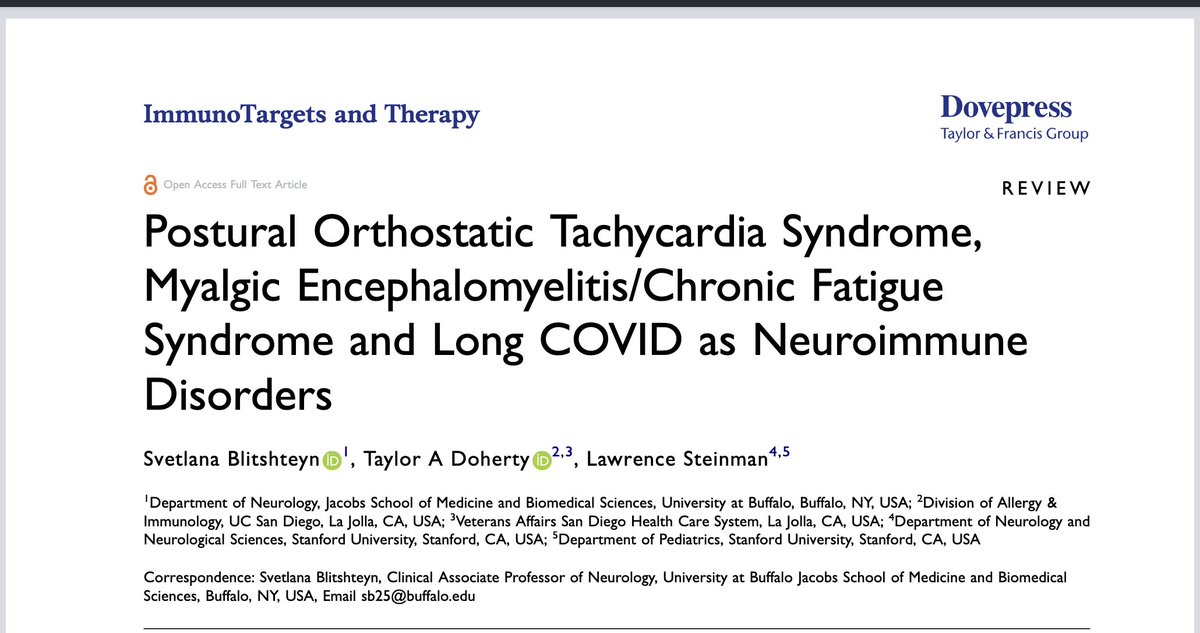
A few things come to mind. One of the most important lessons from modern medicine is that progress follows biology. Patients with diabetes aren't asked to prove their illness through symptom questionnaires alone. We measure glucose metabolism. No one diagnoses a heart attack based solely on fatigue and chest discomfort. We measure biomarkers, blood flow, and tissue injury. We don't debate whether skin cancer exists because a patient reports a suspicious mole. We examine the tissue, study the biology, and make a diagnosis. The path to treatment has always been the same: understand the biology. That is why I find the comparison in this paper between complex disorders and multiple sclerosis compelling. The transformation of multiple sclerosis did not occur because people became more sympathetic to patients. It happened because researchers developed tools that allowed them to see the disease. MRI revealed lesions. Immune profiling uncovered underlying mechanisms. Biomarkers provided objective measures of disease activity. Biology changed everything. Complex disorders are in the midst of the same scientific ambition. The future is not asking physicians, researchers, policymakers, or society to simply believe patients more. The future is generating a level of biological understanding that makes these diseases impossible to ignore. In this paper there are excellent highlights for deeper testing and I agree, we should be investing aggressively in: • 7T MRI to visualize the brainstem and autonomic control networks• • PET imaging to understand neuroimmune activity and neuroinflammation • Advanced immune profiling to characterize the cellular and molecular drivers of disease • Cerebral blood flow measurements to quantify physiologic dysfunction • Longitudinal studies that connect biological changes to patient outcomes (oh how we need these). • I'd also add AI-driven research to add speed and depth These technologies and approaches give us the opportunity to move beyond broad symptom categories and begin identifying the biological pathways that drive illness. Medicine advances because better biology leads to better diagnostics. Better diagnostics lead to better clinical trials. Better clinical trials lead to better treatments. Better treatments lead to health. That is how we transformed diseases like multiple sclerosis. That is how we transformed cancer. That is how we transformed cardiovascular disease. And that is how we will transform and treat complex neuroimmune disorders. When patients ask me why research matters, when all they need is better care: This is why. Better science drives better care. And the exciting part is that we can do this now. We have technologies that previous generations of researchers could only dream of. We have advanced imaging. We have immune profiling. We have AI. We have wearable devices. We have large clinical datasets. We have unprecedented computing power. The challenge is bringing the data, technologies, researchers, clinicians, and patients together in ways that allow us to see the biology more clearly. That is why expert collaboration matters. No single lab, institution, specialty, or dataset will solve these conditions alone. Progress will come from connecting expertise across neuroscience, immunology, autonomics, imaging, computational biology, and clinical medicine. The opportunity is here. @CODA_research is following a specific path: finding answers for patients. CODA CCD unites 8 experts in the field and then will go out to 50 more experts on the best ways to evaluate and treat craniocervical dysfunction. Immune studies (Anktiva and Inspiritol) are based on specific exploration of biomarkers, subgroups. Vagus nerve modulation shows huge promise for RA - how do we bring it to our diseases. AI data specialists - both internal and our partners - are using multiomics and clinical data to subtype and get a clearer picture of underlying biology. This is just a small amount of where we're going with our partners. And we partner with as many leading scientists and other foundations - we believe we are stronger together. One of the greatest moments we had this year, was coming together with @actionforme Schmidt Initiative for Long COVID, @PlzSolveCFS @weandmecfs to get a massive @DecodeMEstudy long-read genomics study launched - with an amazing £4.5 invested by th UK govt because of this partnership. That wasn't my idea - it was @SonyaChowdhury and team's brilliant idea and we were glad to be a part of it. I have a child in this space and I talk to patients every single day who are suffering beyond measure. I know patients can't wait for better care. The more we work together, the more experts engage, the better we can use science to accelerate real progress and the more people we can help. Quickly. Thank you @dysclinic et. al. for the paper. And @BrainInflCollab for calling it out for me this morning. buff.ly/HqR7NKH
5
6
72
3,609
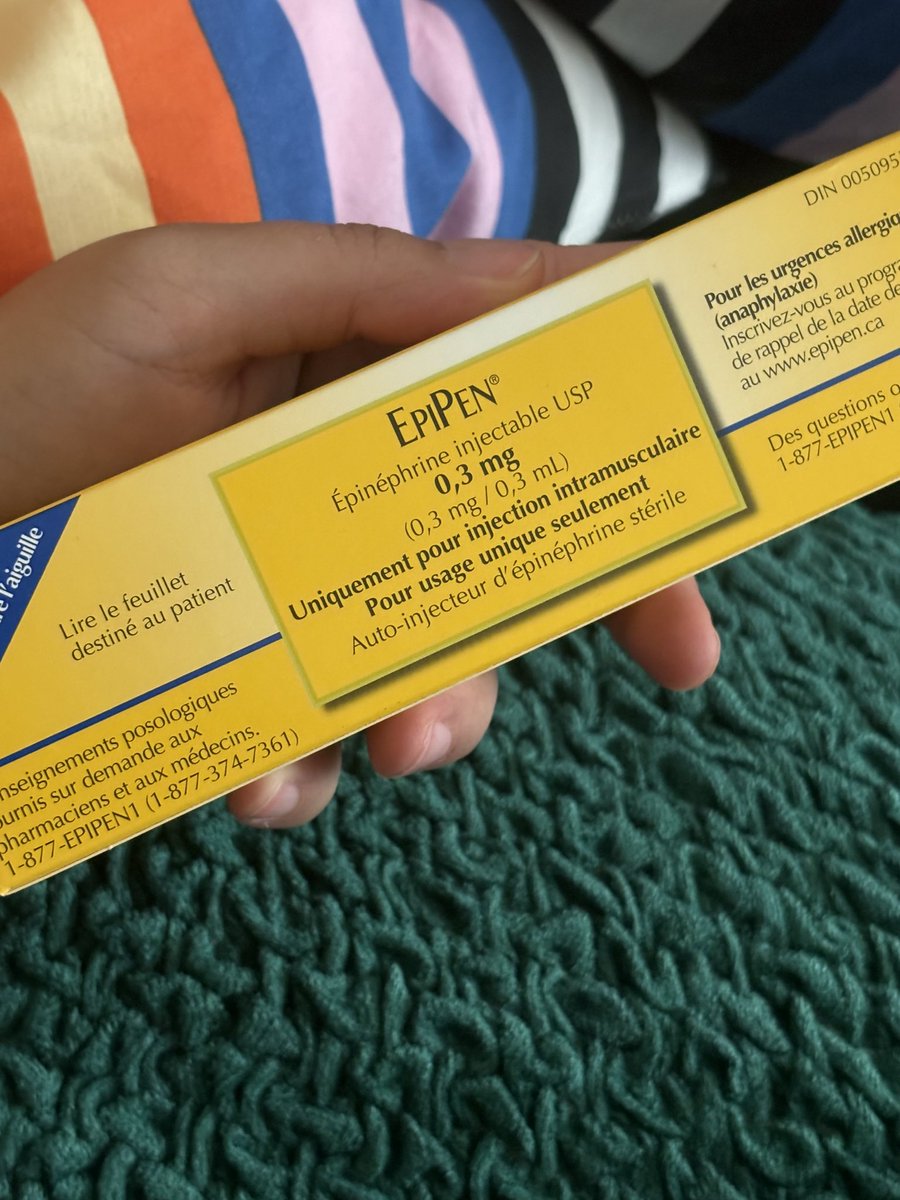
Waiting months for very important medical test results and trying to keep going on at work and school like everything is normal while also dealing with the fallout of a serum-sickness reaction to a biologic medication to something that was supposed to ideally help allergy is....
1
5
359
I fear I did the loop around mental unwellness right back to mental wellness again
1
1
228
which is by refining my humour so that I can just pull out a tight five at every meeting I'm at
1
134
Lucia Lorenzi (she/they) retweeted
This @WIRED piece is a clear illustration of the drawbacks of journalism as a method of investigation. It seems the general procedure for media coverage of contentious issues is to call up a few carefully preselected people, listen to their anecdotes… 🧵1/
Jun 1
Six years since the height of the pandemic, the scientific community remains baffled by long Covid. But there might finally be a way forward for long Covid treatment—if only you were allowed to talk about it. wired.com/story/the-painful-…
8
51
239
16,136
Lucia Lorenzi (she/they) retweeted
La realidad de este país es una homofobia y transfobia absoluta. Miedo a las diferencias. Terror ante lo que no comprenden. Odio, matanzas.
3
21
97
4,139
I can't say enough about Raúl Pacheco-Vega's kindness, his gentleness, his insistence on rigorous research ethics and care, his love for his parents and his mentors, and his honesty about what he sacrificed for his career. I'm truly finding it hard to process his sudden death.
2
5
74
2,860
Lucia Lorenzi (she/they) retweeted
The academic community in Canada and around the world is mourning the profound loss of Raul Pacheco-Vega, a distinguished scholar, mentor, colleague, and friend whose influence extended far beyond the classroom and research community... insidertributes.today/raul-p…
8
24
2,184
Lucia Lorenzi (she/they) retweeted
I am so devastated to learn of the passing of @raulpacheco, who I just had coffee with a week ago. We met at @REPAL_LatAm and he was one of the kindest, most genuine people I have ever met in academia. He made me feel like my work mattered.
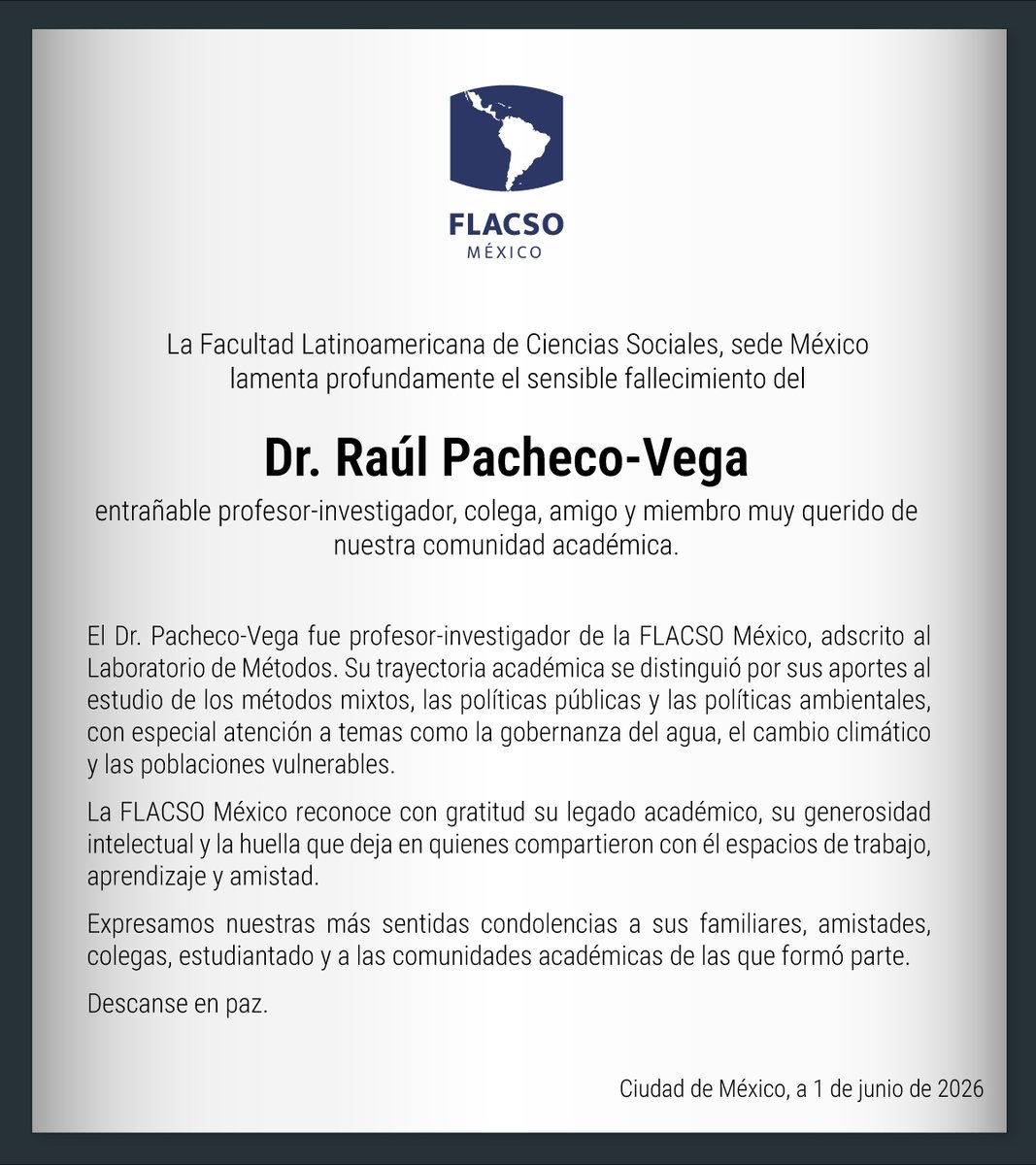
La FLACSO México lamenta el sensible fallecimiento del Dr. Raúl Pacheco-Vega entrañable profesor-investigador, colega, amigo y miembro muy querido de nuestra comunidad académica. Expresamos nuestras más sentidas condolencias a sus familiares, amistades, colegas, estudiantado y a las comunidades académicas de las que formó parte.
1
14
236
42,454
Lucia Lorenzi (she/they) retweeted
in canada, mind body practices dominate medicine to the extent that my endometriosis excision was delayed by an additional 3 years bc, at my hospital, we have to complete a mandatory program that includes MB techniques before going on the surgery waitlist
Replying to @tylerblack32
This has practical implications for patients, very damaging ones. It discourages investment in real treatments and real research. It encourages doctors and friends/family to treat our illness as “in our heads” and something be visualized away
4
58
282
25,797
Lucia Lorenzi (she/they) retweeted
Wonder why you can’t get medical care in Vancouver as a complex illness or chronic pain patient? The doctor who runs the complex illness clinic is literally teaching the ER doctors that you just have BPD and to refuse you care. 🙃 Skip to 17:00.
Replying to @arianek
Ugh. The link to my old thread failed to post and search isn’t working - here’s the YouTube link to the video though, start at the 17 minute mark for the section where he says all the complex illness patients have BPD and not to provide ER care: youtu.be/E7d6ZrqWOWM?si=7ytZ…
10
29
2,046
Lucia Lorenzi (she/they) retweeted
The Pope should release an encyclical about the search function in Outlook.
31
1,124
10,460
203,883
Lucia Lorenzi (she/they) retweeted
Ontario man dies of MAID after being assessed outside Tim Hortons | National Post nationalpost.com/news/ontari…
6
24
40
2,561
Lucia Lorenzi (she/they) retweeted
I read all the papers I cited at least four times – probably far more. That's why it's called reading for a PhD. And I could instantly tell when students cited papers they hadn't read. It's really obvious to anyone that's actually done the reading.
Replying to @eiszett
Have you read all the sources you ever cited? During my PhD we, along with dozens of other papers, cited a paper that I later found did not contain the result for which it was commonly cited. I should be banned I guess.
21
66
891
17,674
People not reading the shit they cite for AI-researched papers is always fun when you have experience doing evidence synthesis including abstract and full-text screening. Manually screening hundreds of abstracts and seeing if you need to get full-text and then screening those...
1
3
227
Doing things like risk of bias training is so, so humbling because reviewing the quality of evidence for studies, guidelines, meta-analyses is so contingent on being able to read VERY carefully for how things were done. It's not always well- or clearly-described.
1
60
Sometimes that's done deliberately. You have to look in the methods to be like oh, yeah, they acknowledged that this was an open-label trial or a very underpowered study. So many people aren't even trained on methods research. But they're gonna use LLMs to do it for them? Naw.
54