
Joined March 2020
- Tweets 869
- Following 513
- Followers 503
- Likes 3,325
89 Photos and videos








Pinned Tweet

13 Nov 2024
Some exciting news: I'll be starting a position as Faculty Fellow here in Newcastle in January 2025! The lab will be studying #transcription and #RNA processing in #cardiooncology. More updates to come in the next few months so stay tuned🤓
15
1
66
5,936
Sara Luzzi retweeted

20 Aug 2025
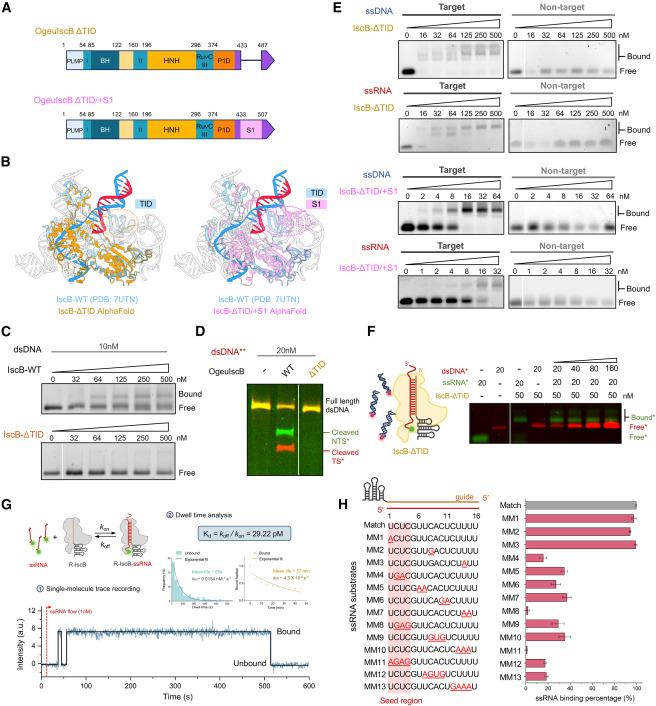
A new paper in Cell shows that it is possible (simple, really) to convert DNA-editing CRISPR proteins, such as Cas9, into RNA editors.
All you have to do is delete a chunk of them.
Deleting 55 amino acids from a DNA editor called IscB (the ancestor of Cas9) turned it into a “robust and versatile” RNA-guided RNA editor in human cells. This modified protein was used to cut mRNAs, knockdown gene expression levels, and even make an A-to-I base editor for RNA.
There are existing RNA-editing proteins, of course, with Cas13 being the most commonly used. Cas13 uses a short snippet of RNA to seek out, and then cut, target RNA molecules. But it also has a major problem: After it cuts its target RNA, Cas13 causes “collateral damage” by also randomly chopping up nearby, bystander mRNAs. This is toxic to bacterial and mammalian cells.
So in this paper, the authors deleted a part of the IscB protein (called the target-adjacent motif interaction domain, stretching from amino acids 433-487), which is normally responsible for its grabbing tightly onto DNA. And that deletion alone converted this protein into an RNA editor. The reason this works is because IscB naturally grabs onto both DNA and RNA, but is heavily biased toward DNA. So this deletion just removes its ability to grab onto DNA, thus biasing it to RNA.
The resulting RNA editor is not only “more active than Cas13,” according to the paper, but it also “has no discernible cytotoxicity in human cells.” The author also show that the same exact approach works for other Cas proteins, including Cas9. Lots of gene editors can be converted into RNA editors, in other words.
Good paper. Gene editors are even more versatile than we appreciated.

5
140
721
43,186
16 Jul 2025
Don't miss your chance to register and send your abstract!
15 Jul 2025

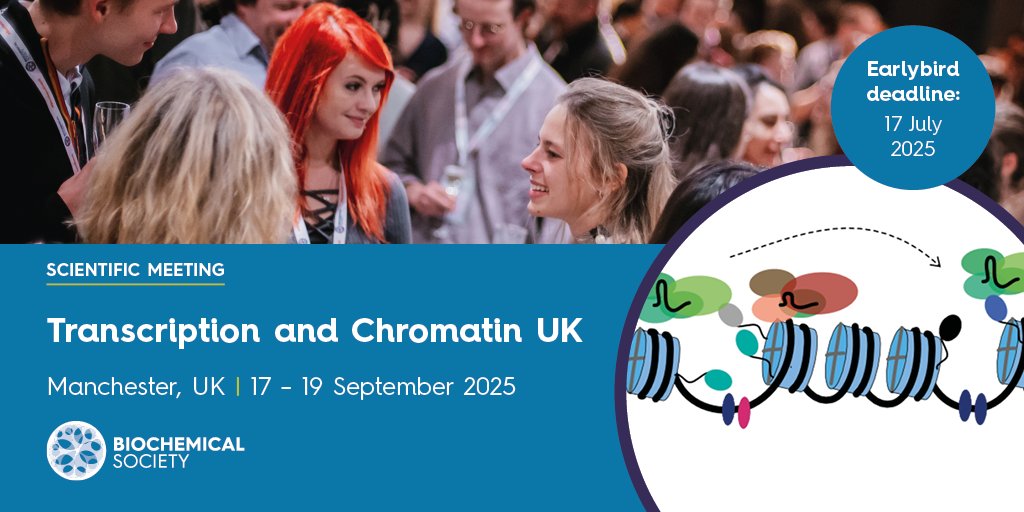
Final call! The abstract submission and earlybird discount deadline for Transcription and Chromatin UK is this Thursday 17 July! Register now to save £50 and submit your work for consideration as a poster or oral communication: ow.ly/Rkjg50WoUfo
ALT Scientific Meeting Transcription and Chromatin UK Manchester, UK 17-19 September 2025 Earlybird deadline 17 July 2025
1
1
152
28 Jun 2025
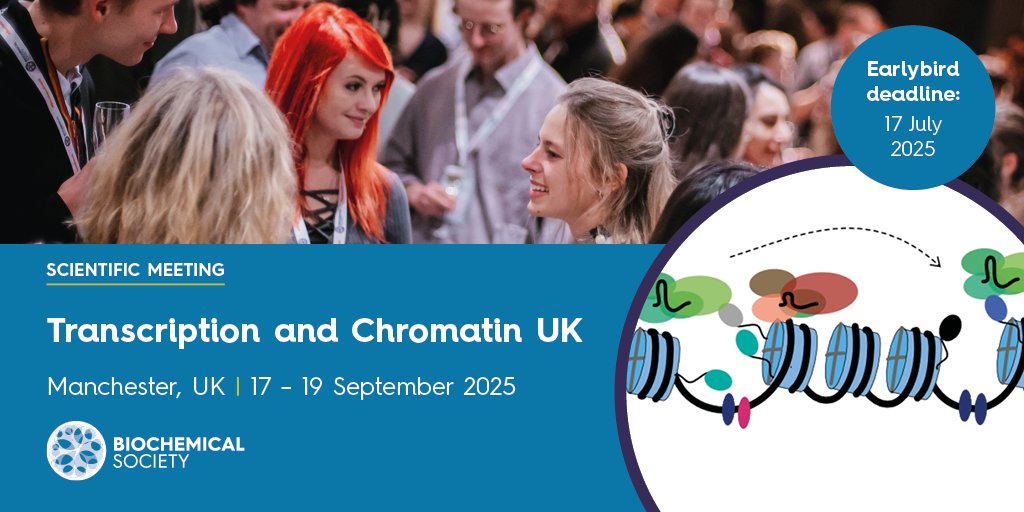
Transcription and Chromatin UK is back! This time in Manchester, 17-19 September. Send your abstract by 17th July for the opportunity to discuss your work with the UK RNA and epigenetics community, and with leading experts from abroad. Click the link below and spread the word!
20 Jun 2025
Registration for Transcription and Chromatin UK is OPEN! Taking place 17-19 September 2025, this conference will showcase cutting-edge research and is a ‘mustattend’ for anyone within the transcription and epigenetics community. Register now: ow.ly/7QQb50W9Alo
ALT Scientific Meeting Transcription and Chromatin UK Manchester, UK 17-19 September 2025 Earlybird deadline 17 July 2025
5
180
Sara Luzzi retweeted

20 Mar 2025
Happy to share our new work with @haognguyen on targeting mRNA translation of oncogenes by RNA structure remodeling with a small molecule zotatifin. Congrats to @DuyguKuzuoglu an amazing postdoc and all the authors and collaborators!
cell.com/cancer-cell/fulltex…
10
30
117
8,709
Sara Luzzi retweeted

3 Mar 2025
PhD studentship available with me @UniofNewcastle Biosciences and Dr David Doupe @DurBiol fully funded by @BBSRC North East Doctoral Landscape PhD DTP
Investigating glycans to discover new mechanisms regulating stem cell development #glycotime
findaphd.com/phds/project/un…
12
14
1,711
Sara Luzzi retweeted

4 Mar 2025
We have a 4 year PhD position available to study the impact of the RNA exosome on ribosome specialisation! Get in touch if you are interested or just apply. March 31st deadline.
findaphd.com/phds/project/th…
7
4
450
Sara Luzzi retweeted

11 Feb 2025
💡 Oggi è la Giornata Internazionale delle Donne e delle Ragazze nella Scienza
👩🔬Solo il 33% dei laureati STEM è donna e il divario cresce lungo la carriera
🌏Il 72% delle partecipanti al nostro progetto sono donne e mostrano alle classi che le scienziate sono protagoniste
1
4
7
665
Sara Luzzi retweeted

5 Feb 2025
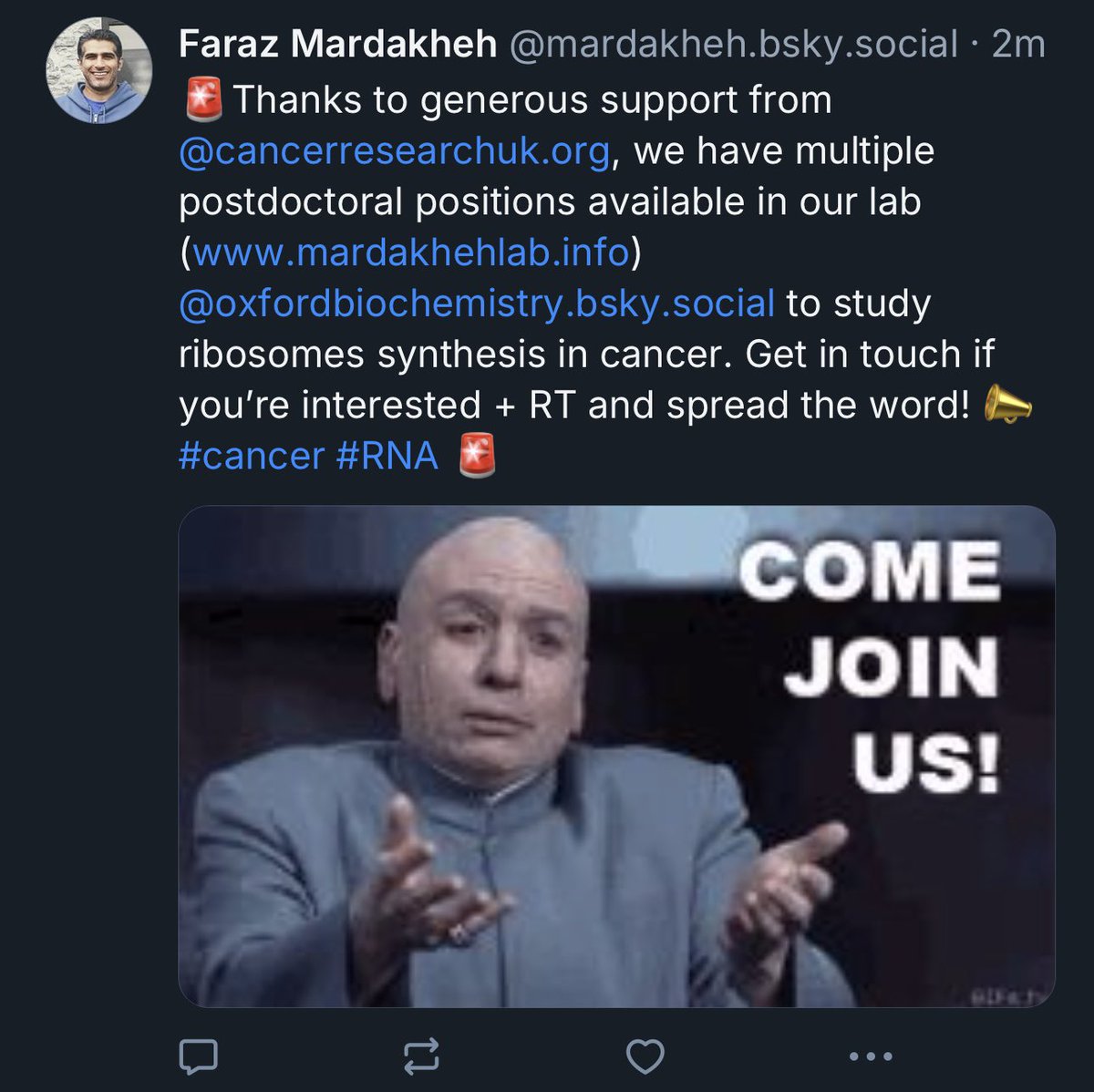
I don’t post here much anymore, but this one is an important announcement for us: 🚨We are Recruiting! So come join us! 🚨#RNA #CancerResearch
1
21
30
6,743
Sara Luzzi retweeted

21 Jan 2025
@UniofNewcastle Researchers running the @Great_Run to beat Heart Disease🫀🏃♀️Check out our @TheBHF story here!
chroniclelive.co.uk/news/nor…
2
6
304
Sara Luzzi retweeted

9 Jan 2025
Delighted to finally share our latest preprint on the role of NF-kappaB in hypoxia. Quite a few surprises!! biorxiv.org/content/10.1101/…
Have a look!
14
28
2,816
Sara Luzzi retweeted

8 Jan 2025
We are still taking applications for this exciting @TheBHF funded #PhDStudentship investigating the #genetics of #cardiovasculardevelopment at @UniofNewcastle. Please spread the word and share to your networks! Apply here: tinyurl.com/yc6paa5w.
6
6
468
Sara Luzzi retweeted

19 Dec 2024
I have a Research Technician post open for a short project funded by @TUF_tweets #UTI #epigenetics jobs.ncl.ac.uk/job/Newcastle…
13
15
2,549
3 Dec 2024
Interested in RNA biology, cancer or vascular research? I have a position open for either a research assistant or a new postdoc to start expanding the fast-growing research area of cardio-oncology! Apply here: jobs.ncl.ac.uk/job/Newcastle…
Happy to have informal chats! Please share 🧬.
2
33
60
7,025
Sara Luzzi retweeted
22 Nov 2024
I have been awarded a @TheBHF 3 year #PhDStudentship so looking for enthusiastic people to apply who are interested in researching the #genetics of #cardiovascular development @UniofNewcastle with @LabPhillips and #RachelQueen. Apply here: tinyurl.com/yc6paa5w.
14
25
1,563
Sara Luzzi retweeted

21 Nov 2024
What happens when you overexpress one subunit of the RNA Pol II? Well, it depends on the subunit, but all deregulate transcription and induce genome instability @AgaGambus @GregersenLab biorxiv.org/content/10.1101/…
1
9
33
1,423
Sara Luzzi retweeted

14 Nov 2024
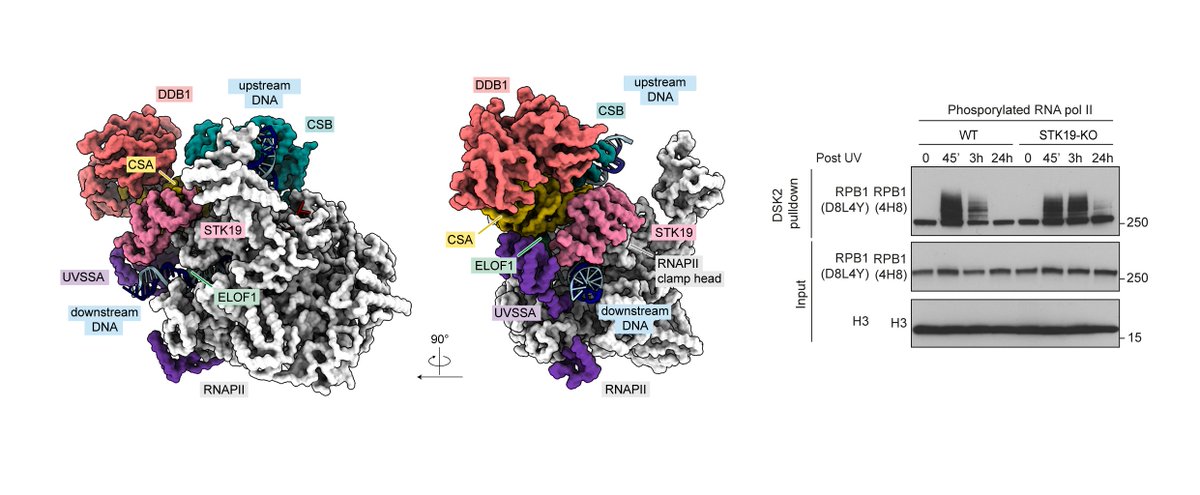
New paper with @KokicGoran and @SvejstrupLab in Cell Press! We show that STK19 facilitates the clearance of lesion-stalled RNAPII during transcription-coupled DNA repair.
Great teamwork by @dianavandenheu2 , @MartaRodrgzMart, Paula van der Meer!
cell.com/cell/fulltext/S0092…
1/6
4
23
81
11,162
Sara Luzzi retweeted

14 Nov 2024
It is finally out! My first @ScienceMagazine paper is online and it does not seem real😃. I am Incredibly happy! Really thanks to all my coauthors and special mention to my incredible supervisor @iDikic2 for all the support and trust ! 🫶. Science science.org/doi/10.1126/scie…
7
28
171
22,744
Sara Luzzi retweeted

11 Nov 2024
. Here: Everything you always wanted to know about Sen1 (but were afraid to dig through papers for...)
Here: doi.org/10.1016/j.jmb.2024.1…
8
9
991
10 Nov 2024
Went with the flow, and opened a @bluesky account. You can find me under saraluzzi.bsky.social 🦋
115