
Joined June 2009
- Tweets 4,033
- Following 610
- Followers 370
- Likes 2,925
Photos and videos

Jun 14
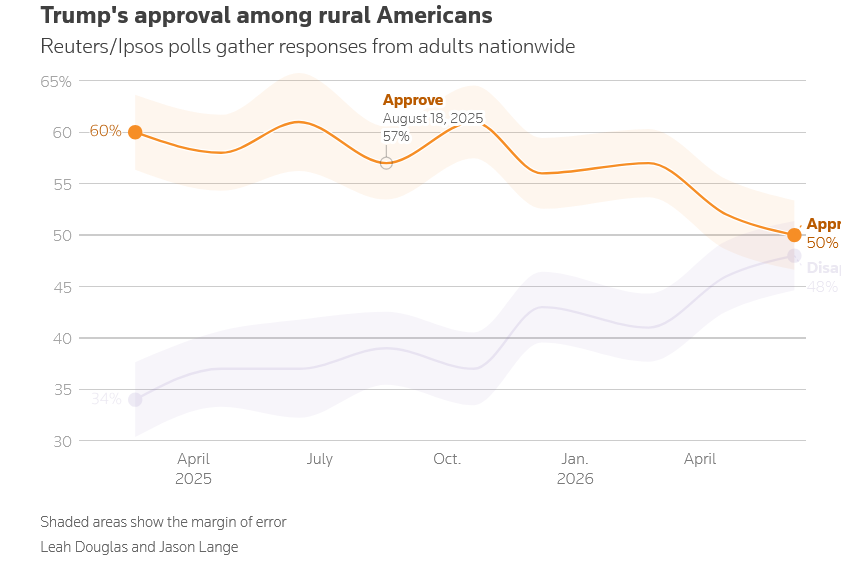
Trump's support in rural America slips as fuel and food prices climb, Reuters/Ipsos poll shows reuters.com/world/us/trumps-…
1
109
Jun 12
‘Toxic’ social media overwhelms police response to Belfast violence ft.com/content/845a6ced-1b82… via @ft
56
Marco Maraffi retweeted

Jun 10
On 30 April 2026, 4.37 million non-EU citizens who fled 🇺🇦Ukraine had temporary protection status in the EU.🛂
Highest number of temporary protection beneficiaries in:
🇩🇪Germany (1 279 660 people; 29.3% of EU total)
🇵🇱Poland (971 255; 22.2%)
👉link.europa.eu/byMtfj
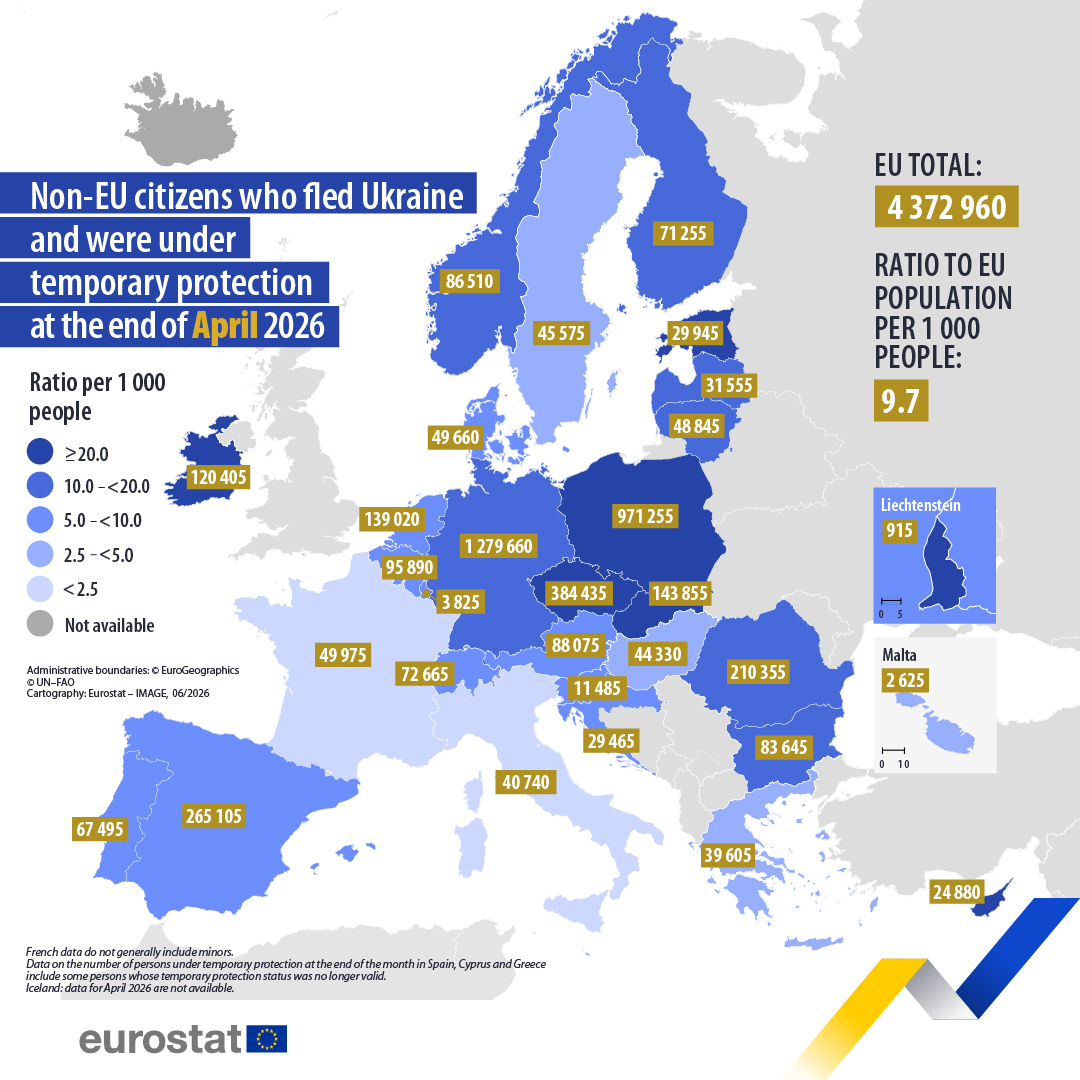
ALT Map showing Non-EU citizens who fled Ukraine and were under temporary protection at the end of April 2026, among EU and EFTA countries with available data
3
23
99
10,713
Jun 10
Meloni: «Vogliamo ridurre ancora il carico fiscale sul ceto medio. No alla patrimoniale» @sole24ore ilsole24ore.com/art/meloni-v…
1
1
23
Jun 10
La prima cosa da fare è rimodulare le fasce di reddito teendo conto dell'inflazione. Da fare ogni anno
14
Marco Maraffi retweeted

Jun 10
How much do countries spend on their militaries?
How has this changed over time, and how do different countries compare?
The Stockholm International Peace Research Institute (@SIPRIorg) provides a key resource for answering these questions and more.
SIPRI compiles the most consistent long-run data available on military spending: in absolute terms (as shown in the chart here) and as a share of both GDP and overall government spending.
SIPRI builds the database from open sources — defense budgets, audit reports, and IMF and World Bank figures — and adjusts for differences in how countries report their fiscal years, so the numbers are comparable across borders.
The latest release covers around 150 countries from 1949 to 2025, though not all countries and regions have data for the full period.
Our colleague @parriagadap recently updated our charts with the latest release. SIPRI updates this data annually, with the next release expected around April 2027.
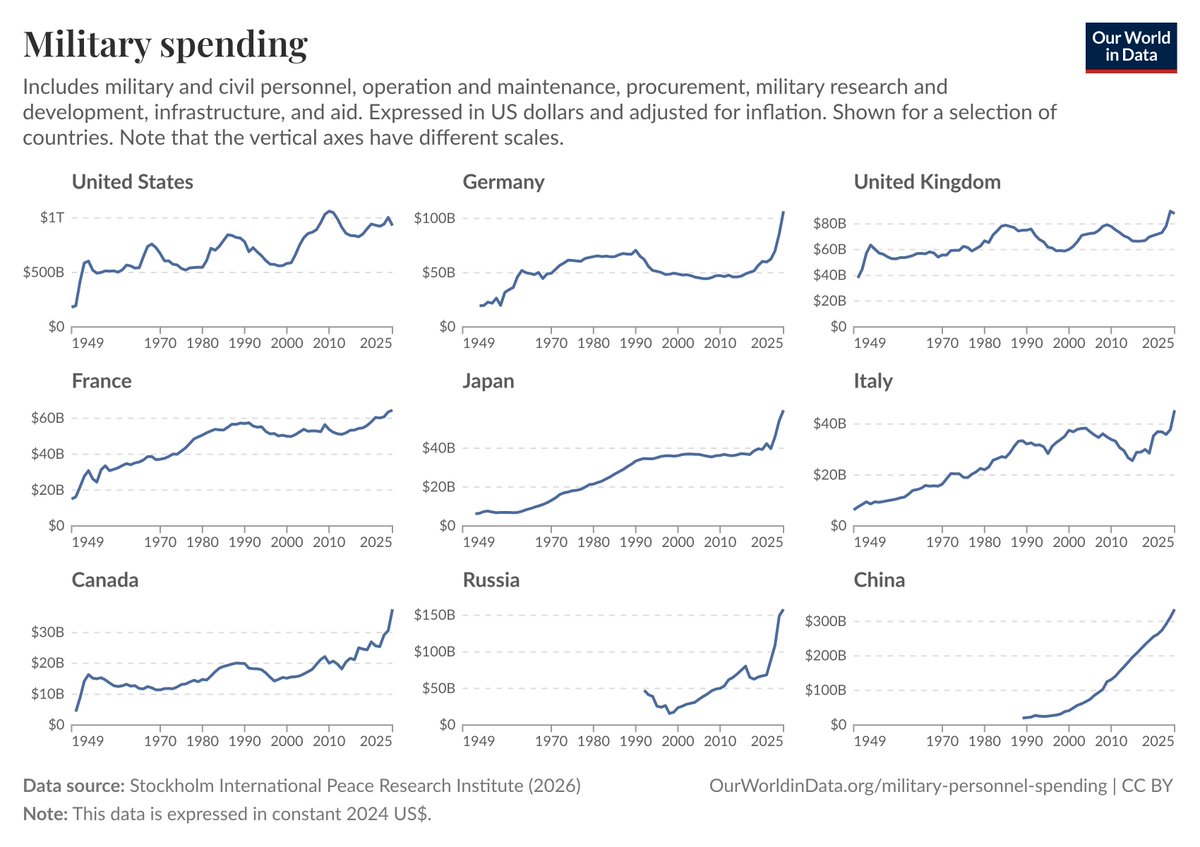
ALT Small multiples line charts of military spending by country where they compare annual spending from 1949 to about 2026 in constant 2024 US dollars to show long-term trends. Source: Stockholm International Peace Research Institute (2026). License: CC BY to Our World in Data.
3
28
75
8,177
Jun 10
#Amministrative 2026: i #ballottaggi confermano l’equilibrio e la competitività tra i poli, ma molte città cambiano colore cise.luiss.it/2026/06/10/amm…
4
Jun 8
Negative views of Israel have become more common in some countries since 2025 pewresearch.org/chart/negati…
1
192
Jun 8
Negative views of Israel, low confidence in Netanyahu across 36 countries | Pew Research Center pewresearch.org/short-reads/…
10
Jun 7
What is the largest source of electricity in each country? - Our World in Data ourworldindata.org/data-insi…
1
24
Jun 7
27
Marco Maraffi retweeted

May 27
How will your country's demographics change this century?
At Our World in Data we built a tool to let you see for yourself.
The UN's assumptions are the starting point.
But then you can adjust the three drivers of change — births, deaths, and migration — to what you expect.
12
75
296
57,218
May 27
#Italia terz'ultima
May 27

In 2025, 10.45 million people were employed as information and communication technology specialists across the EU (5.0% of all employed people).💻
Highest shares in:
🇸🇪Sweden (8.9%)
🇱🇺Luxembourg (8.7%)
Lowest in:
🇬🇷Greece (2.5%)
🇷🇴Romania (2.7%)
👉link.europa.eu/MXmfnb
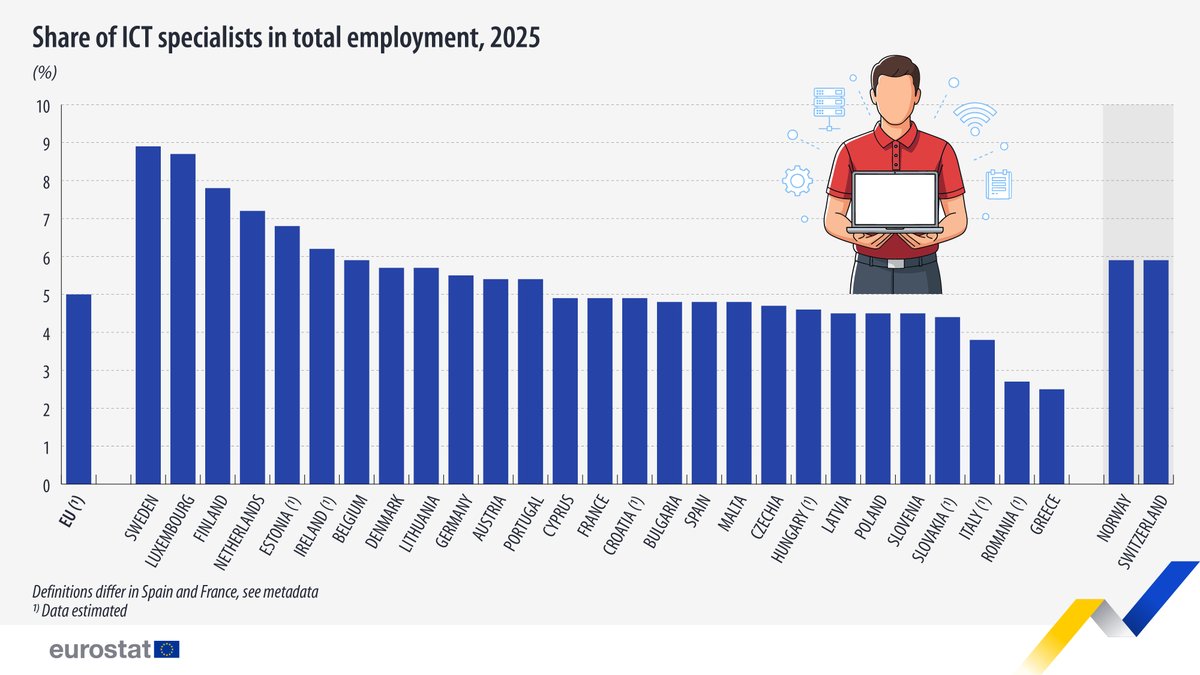
ALT Share of IT specialists in total employment, 2025 (%), among EU and EFTA countries
8
May 26
How the EU’s plan to turbocharge Italy’s economy fell flat ft.com/content/152088a1-9615… via @ft
4
May 18
May 18
In 2025, 76.1% of the EU’s 20 to 64-year-olds were employed. 💼🏢
More data 👉 link.europa.eu/8tj34M
12
Marco Maraffi retweeted
May 18
In 2025, 76.1% of the EU’s 20 to 64-year-olds were employed. 💼🏢
More data 👉 link.europa.eu/8tj34M
1
23
52
10,955
Marco Maraffi retweeted
May 13
Why do we need to know about progress if we are concerned about the world's largest problems?
Let’s look at one of the very worst global problems of all — the death of children. One of the leading causes of death for children is malaria, which kills more than 300,000 children each year.
The death rate from malaria has decreased significantly in the past 20 years, as you can see in the chart.
People who study malaria see several reasons that make it very likely that continued progress against this disease is possible.
The factors that are holding us back in the fight against malaria are the three factors that often limit our progress:
1) More money would make more progress possible — e.g., buying more insecticide-treated bed nets, which are a very effective way to reduce malaria’s death toll.
2) More people who set themselves the goal to work towards progress can make a difference — e.g., researchers and others who developed not one but two vaccines against malaria and are now rolling them out to those most in need.
3) More attention and the understanding that it is a solvable problem would make more progress possible — it’s likely we would not see a lack of funding and talented people working on malaria if malaria were to get the *attention* it deserves.
300,000 child deaths per year means 820 dead children on any average day.
What is true about malaria is true about many of the problems the world faces. Making progress is hard, but it is possible.
The progress made over the last two centuries has not ended in our lifetimes. There are possibilities to make the world a better place. It is on us to realize this.
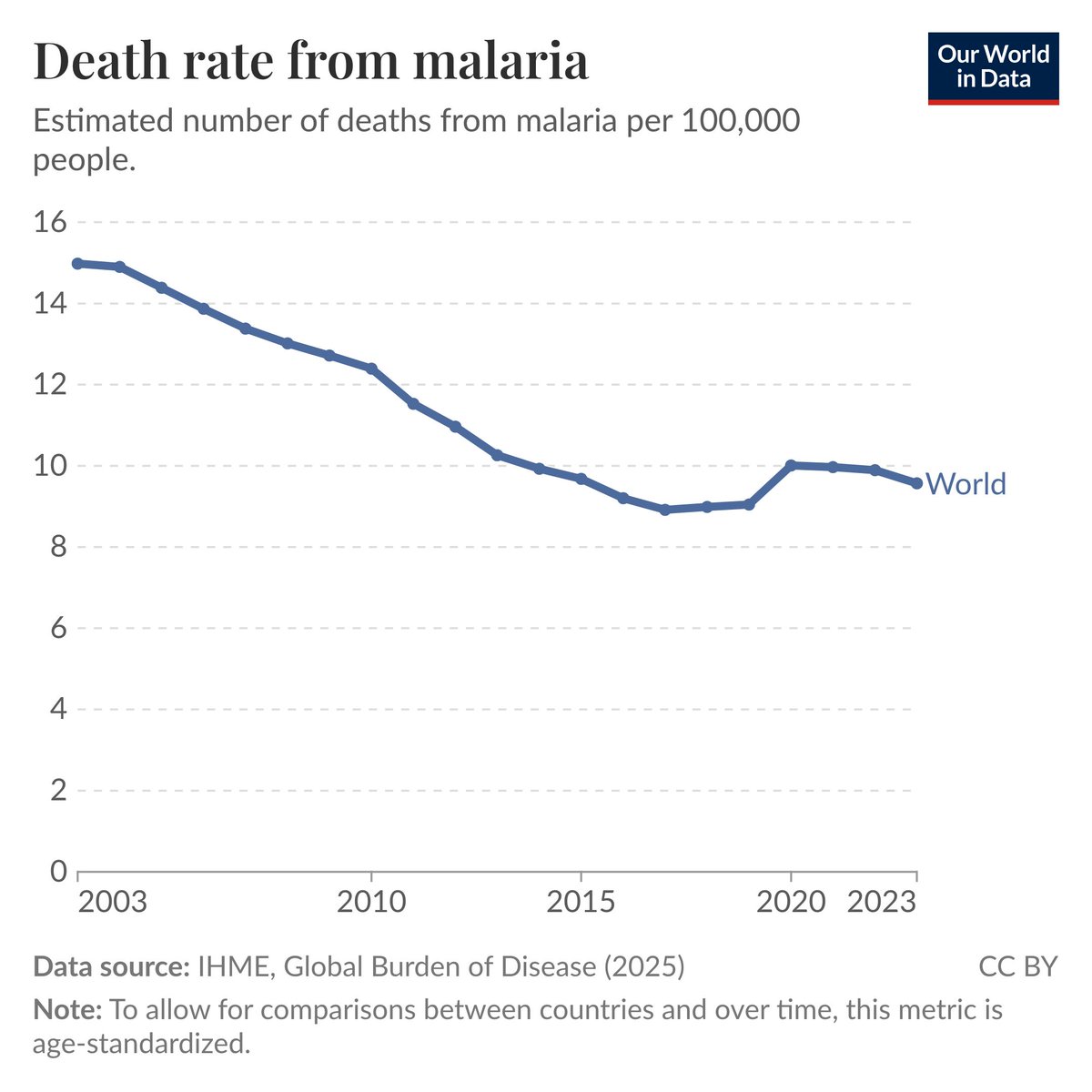
ALT Line chart showing the global death rate from malaria falling from about 15 per 100,000 people in 2003 to under 10 in 2023. The data source is IHME, Global Burden of Disease (2025). CC BY.
1
19
46
6,613
Marco Maraffi retweeted

May 11
Kasparov: Trump always plays for Trump: his money, his glory, his family. But in the Ukraine war, he is playing on Putin’s side.
He never says a bad word about Putin, always explains Putin’s actions, and every concrete step helps Putin’s war effort. 1/
34
647
2,800
68,661