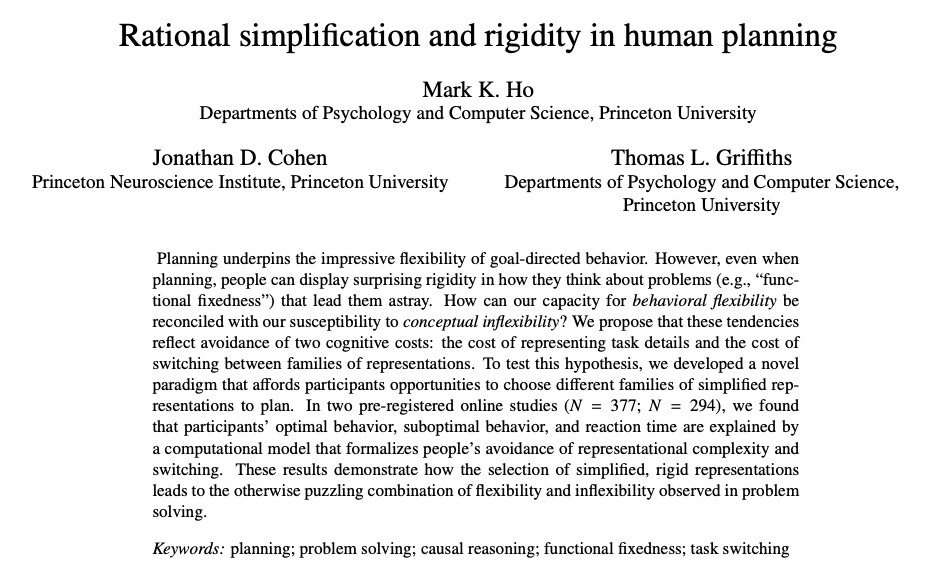
1/ I'm excited to share our new paper, now in @Nature!
Paper: nature.com/articles/s41586-0…
PDF: rdcu.be/cNVkp
Summary 🧵:
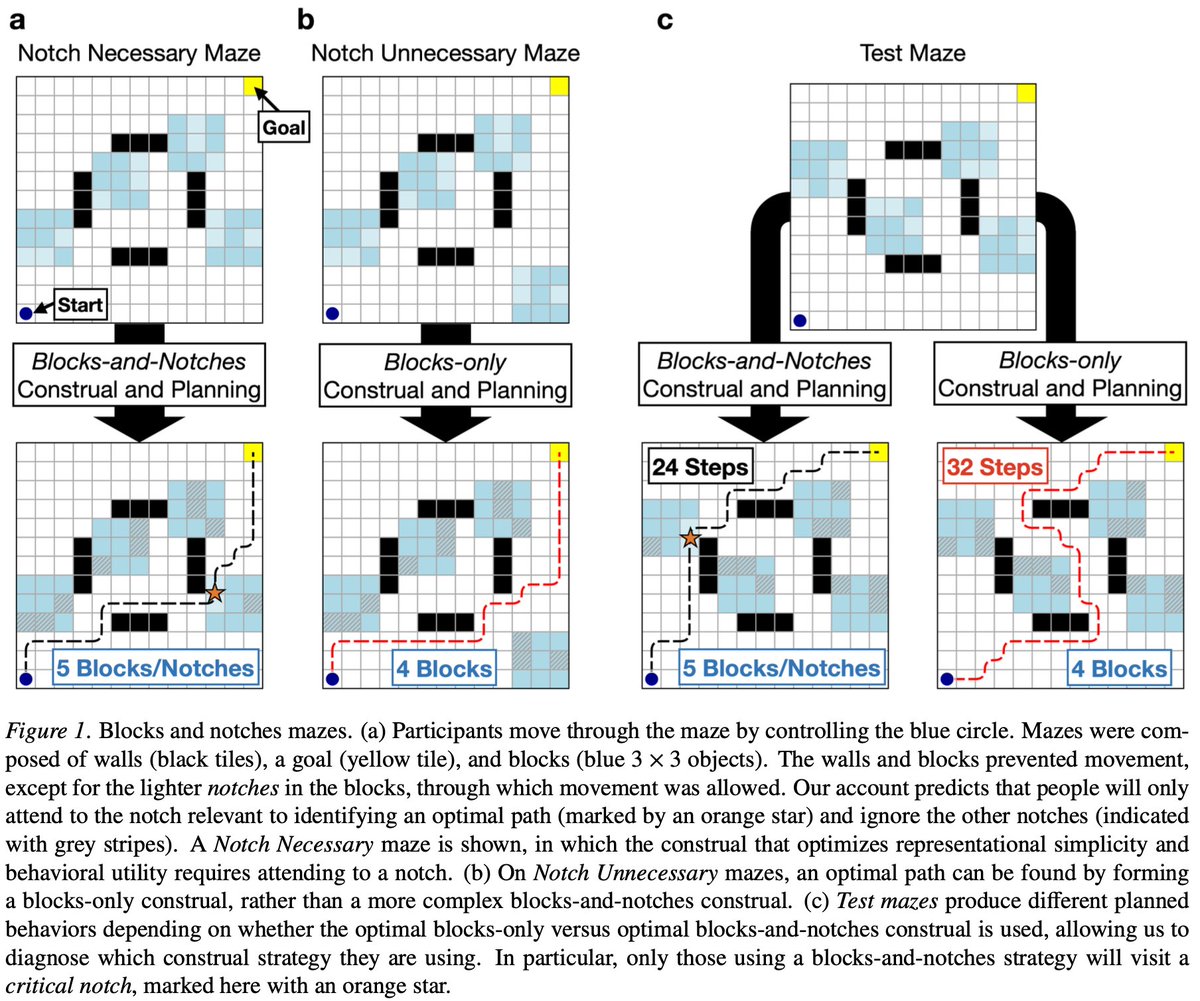
We present a new theory of problem simplification to answer an old question in cognitive science and AI:
How do we represent problems when planning?
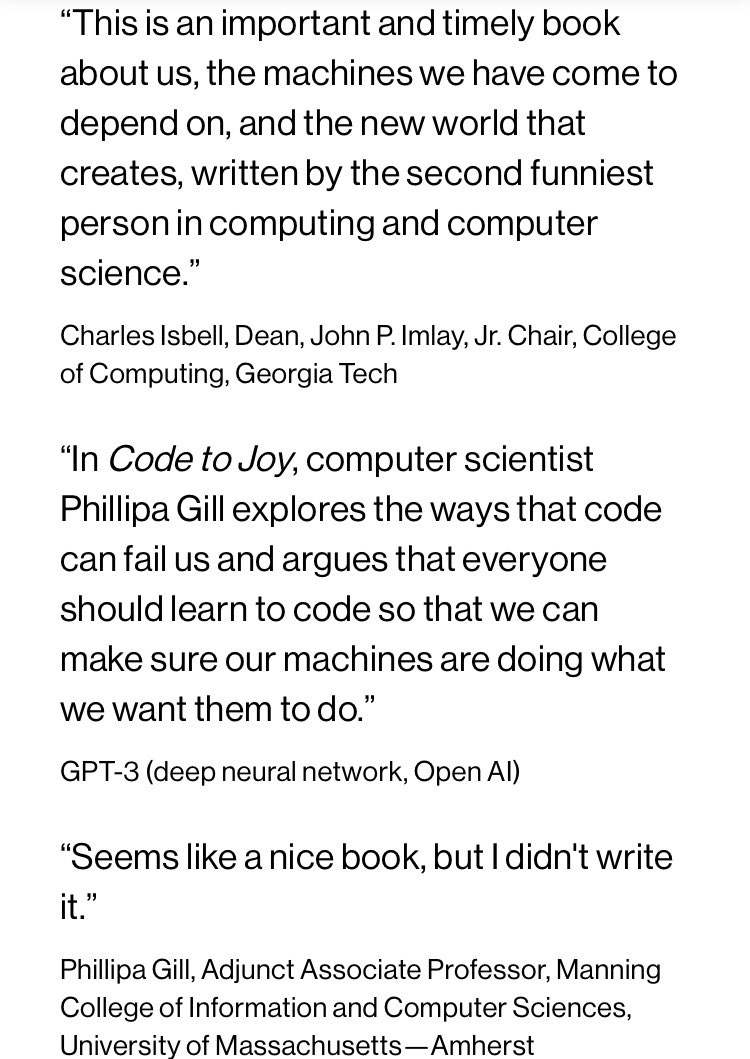
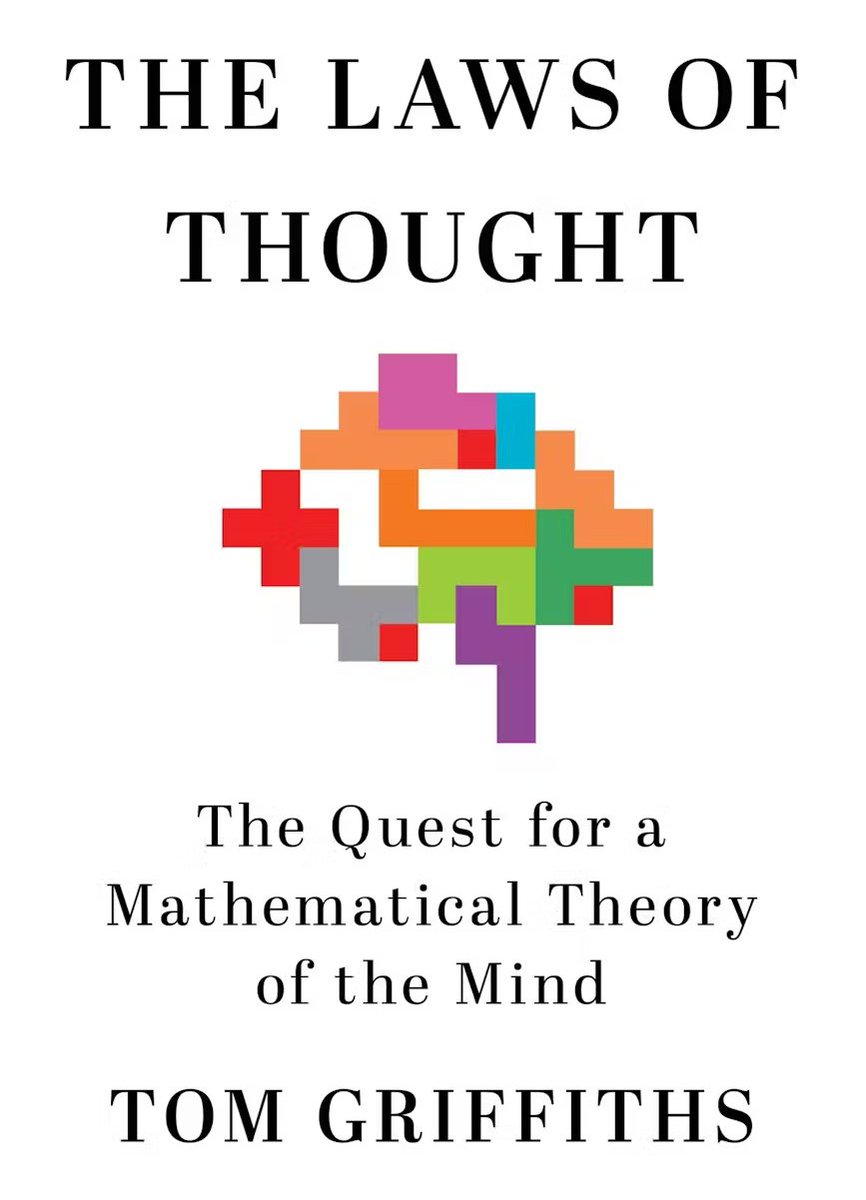
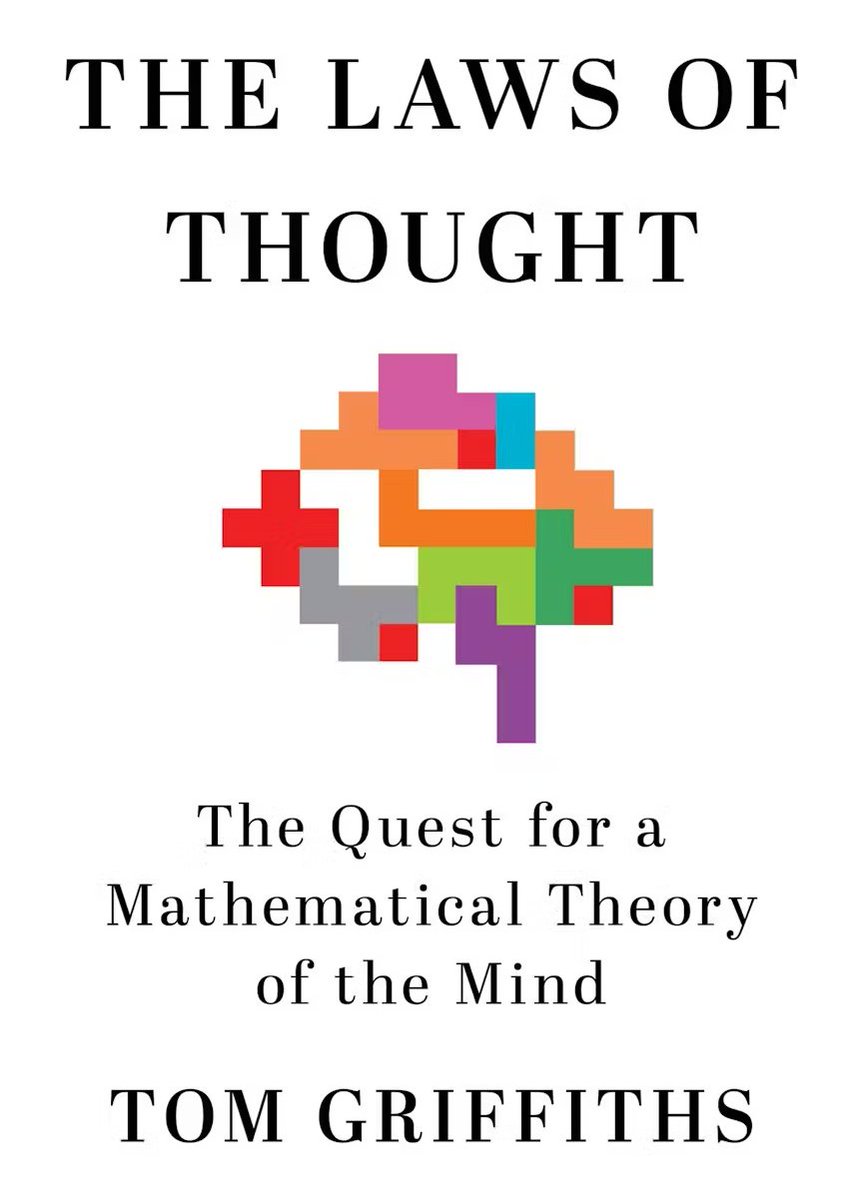
New book The Laws of Thought is out tomorrow! Just as Algorithms to Live By introduced ideas from computer science through their applications in everyday life, the Laws of Thought introduces ideas from cognitive science and AI through the stories of the people who created them.
Excited to announce a new book telling the story of mathematical approaches to studying the mind, from the origins of cognitive science to modern AI! The Laws of Thought will be published in February, and is available for pre-order now.
Very excited about this preprint! We used LLMs and a large-scale eye-tracking study to (I think) really nail some questions that psycholinguists have been debating for decades:
Why are some syntactic structures harder to read than others? How much of this difficulty can be explained by predictability? When we go back and reread earlier words in the sentence, how do we choose which words to read?
It was great to work on this project with @wtimkey8 and @byungdoh, Kuan-Jung Huang, @sArehalli, @grushaprasad and Brian Dillon!
New Preprint: osf.io/eq2ra
Reading feels effortless, but it's actually quite complex under the hood. Most words are easy to process, but some words make us reread or linger. It turns out that LLMs can tell us about why, but only in certain cases... (1/n)
happy to be a part of this work, on how to use IRL to infer and work with more general cognitive priors, nice paper bridging these domains by @mark_ho_, @EugeneVinitsky, and team (thanks @SounakBanerjee, all!), spotlighted in #neurips2025!
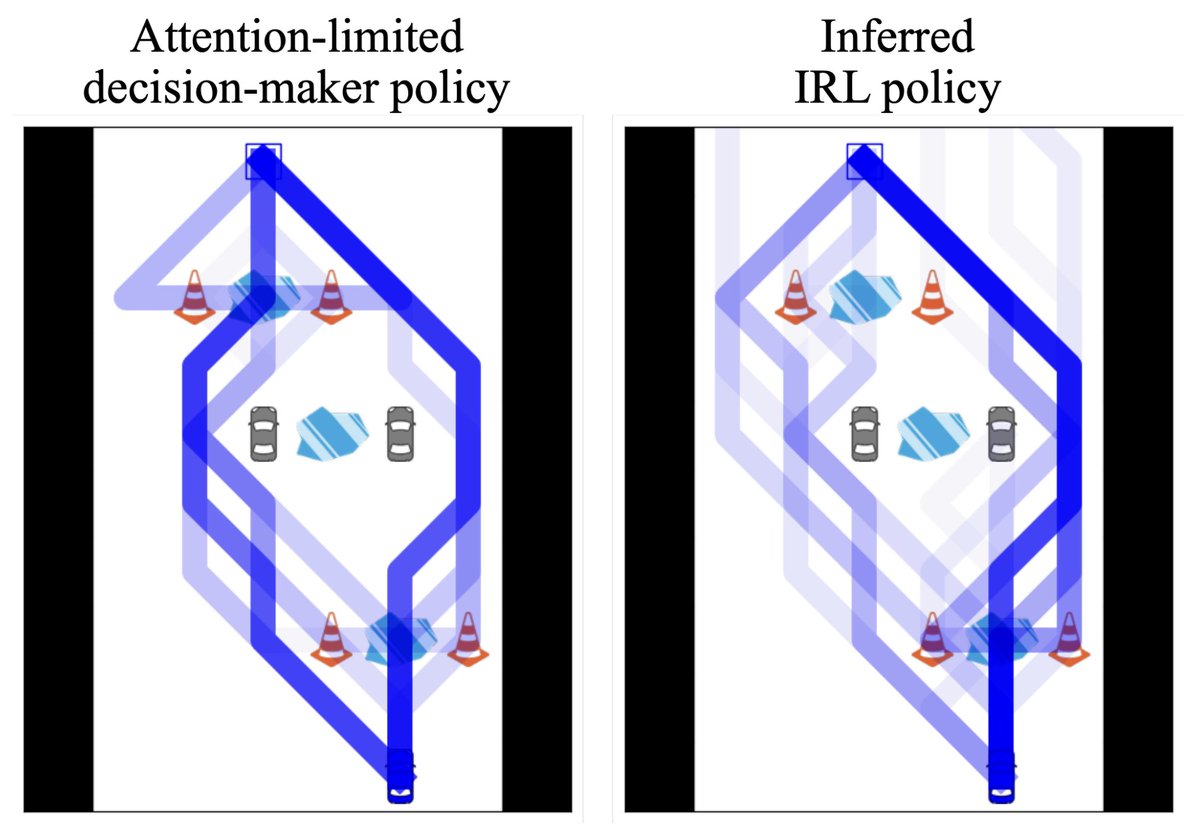
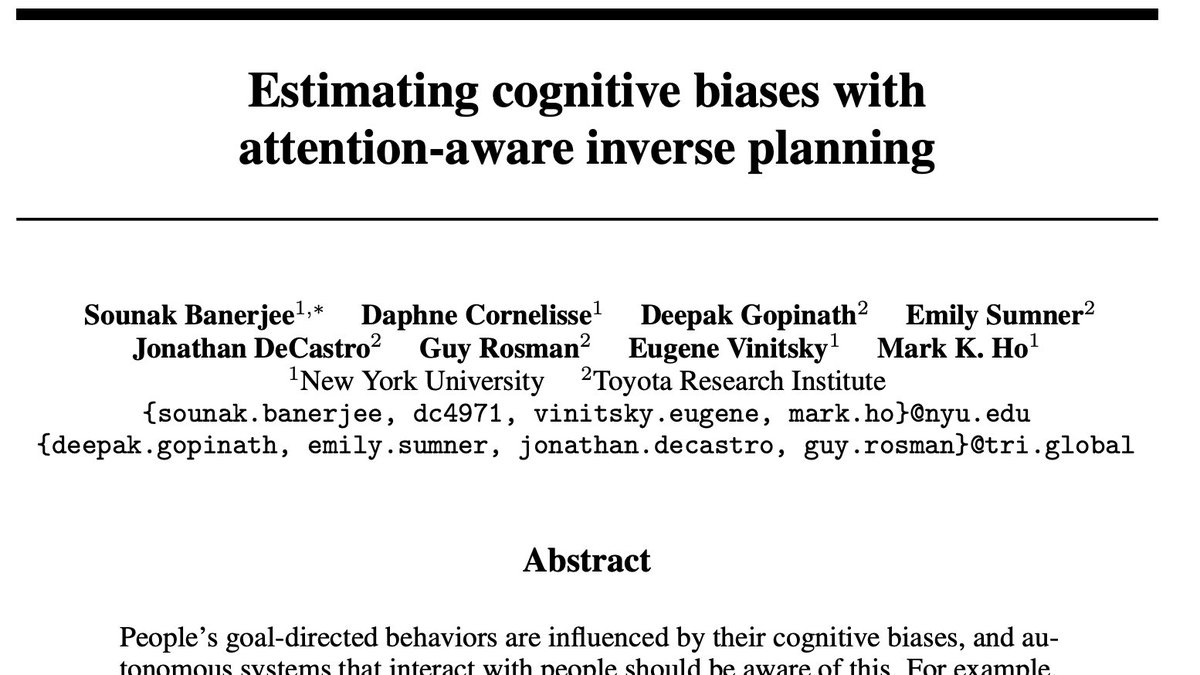
🚀 Excited to share a new preprint, accepted as a spotlight at #NeurIPS2025!
Humans are imperfect decision-makers, and autonomous systems should understand how we deviate from idealized rationality
Our paper aims to address this! 👀🧠✨
arxiv.org/abs/2510.25951
a 🧵⤵️
I have been a fan of Mark's work for a decade and in this work I finally had an opportunity to collaborate with him and his postdoc @SounakB02298201! In this work I believe we are taking important steps towards bringing computational cognitive science to real-world naturalistic
🚀 Excited to share a new preprint, accepted as a spotlight at #NeurIPS2025!
Humans are imperfect decision-makers, and autonomous systems should understand how we deviate from idealized rationality
Our paper aims to address this! 👀🧠✨
arxiv.org/abs/2510.25951
a 🧵⤵️
🚀 Excited to share a new preprint, accepted as a spotlight at #NeurIPS2025!
Humans are imperfect decision-makers, and autonomous systems should understand how we deviate from idealized rationality
Our paper aims to address this! 👀🧠✨
arxiv.org/abs/2510.25951
a 🧵⤵️
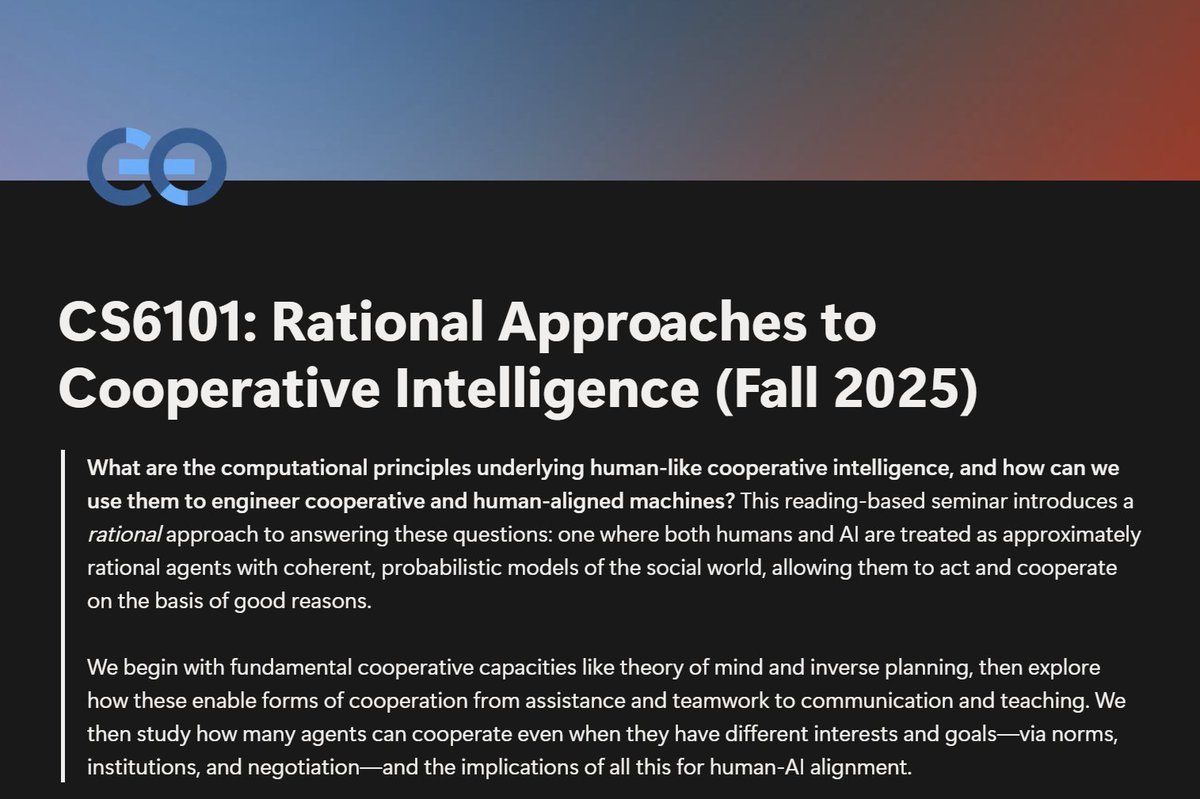
Finished teaching my first seminar course today! Had tons of fun introducing my students to the rational foundations of human-like cooperation. Now that the course is over, I'm sharing the syllabus more widely!
ALT CS6101: Rational Approaches to Cooperative Intelligence (Fall 2025)
**What are the computational principles underlying human-like cooperative intelligence, and how can we use them to engineer cooperative and human-aligned machines?** This reading-based seminar introduces a *rational* approach to answering these questions: one where both humans and AI are treated as approximately rational agents with coherent, probabilistic models of the social world, allowing them to act and cooperate on the basis of good reasons.
We begin with fundamental cooperative capacities like theory of mind and inverse planning, then explore how these enable forms of cooperation from assistance and teamwork to communication and teaching. We then study how many agents can cooperate even when they have different interests and goals—via norms, institutions, and negotiation—and the implications of all this for human-AI alignment.
🚀 Excited to share a new preprint, accepted as a spotlight at #NeurIPS2025!
Humans are imperfect decision-makers, and autonomous systems should understand how we deviate from idealized rationality
Our paper aims to address this! 👀🧠✨
arxiv.org/abs/2510.25951
a 🧵⤵️
One reason I’m excited about this work is that it is step towards scaling cognitive models to naturalistic domains, like driving 🚗
This pushes cognitive modeling approaches forward while helping bridge the gap between cognitive science theory and real-world autonomous systems!
Excited to see our NMH paper featured here for #WorldMentalHealthDay! rdcu.be/dYl7T
Many psychiatric symptoms are inherently social. @XiaosiGu, @JoeBarnby, & I call for models that reflect processes most relevant to our questions, esp. for those about social symptoms
🚨To celebrate #WorldMentalHealthDay, our October issue includes a Focus that examines the advances in computational psychiatry and the challenges of developing and deploying computational models to address mental health disorders.
➡️nature.com/collections/cdfgg…
🧵(1/8)
ALT A robot on a chair sits next to a patient against a backdrop of a medical report. Credit: mathisworks / DigitalVision Vectors / Getty Images
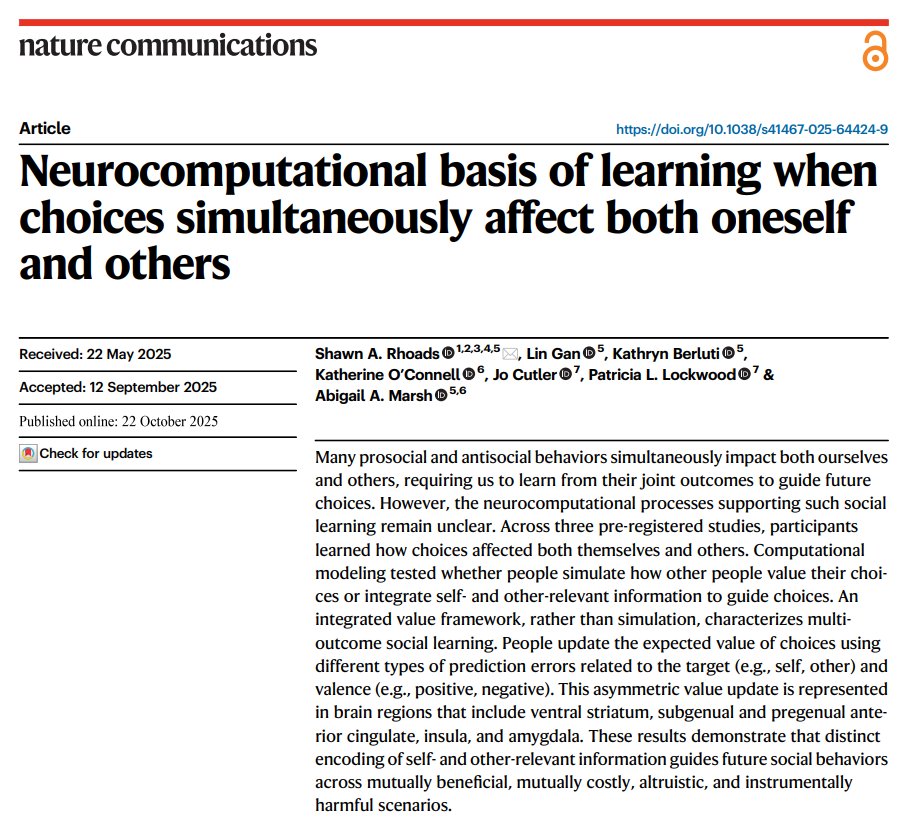
📢 New paper out now in @NatureComms
Shared computations underlie how we acquire behaviors that simultaneously affect the self and others, incl. actions that benefit the self at the expense of others & actions that benefit others at the expense of self
🧵rdcu.be/eL8mZ