
Researching the cultural evolution of health behaviour at @BrunelCCE.
Joined July 2012
- Tweets 1,237
- Following 1,234
- Followers 704
- Likes 3,689
119 Photos and videos










May 26
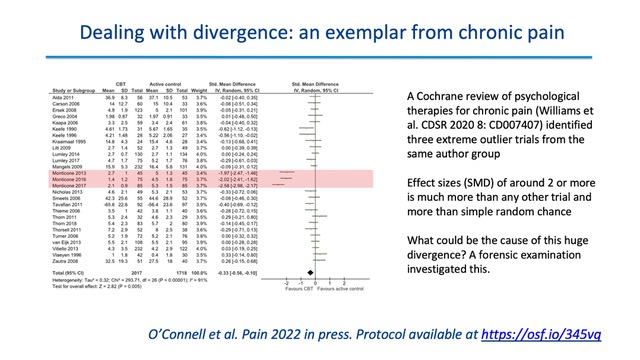
Surprising that this government-commissioned report don't include deflationary contributions from people like Williams, Acerbi, Mercier and Altay.

🇪🇺🤝🇬🇧 Pleased to see the new rapid evidence review led by @sheffielduni @BehaviourRes_UK.
Drawing on EDMO data, it synthesises latest evidence on false & misleading information – definitions, harms, and what actually works to reduce impact. Take a look: osf.io/8ckdy/files/6vhkp
Based on contributions by @goripaula @muendges @johnfocook @Sander_vdLinden and many others 👇

2
59
May 18
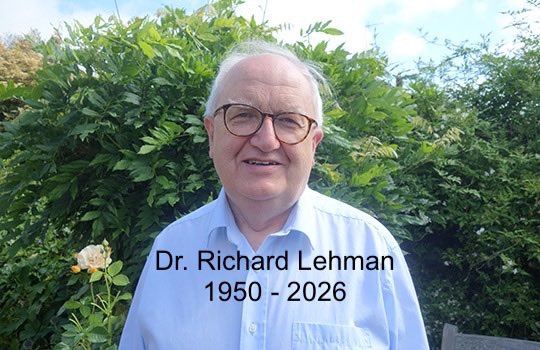
I learned so much about ethics, evidence and medicine from reading Richard Lehman's humane and witty weekly journal review in the BMJ for many years. 💔
May 18

Here is a sampling of Richard Lehman’s work - a glimpse of the thousands of analyses of published studies - “laser sharp, weekly & witty, a body of work that is unquestionably one of the greatest publishing achievements by any GP in the last two decades.” garyschwitzer.substack.com/p…

1
1
118
May 18
He often argued the point of medicine isn't to maximise longevity but to support a life well lived, and that people are best placed to decide what that means. For him it was ceviche, gardening, a good bottle of wine. Shaped some of my research. RIP doi.org/10.1093/phe/phad003
19
Mícheál de Barra retweeted

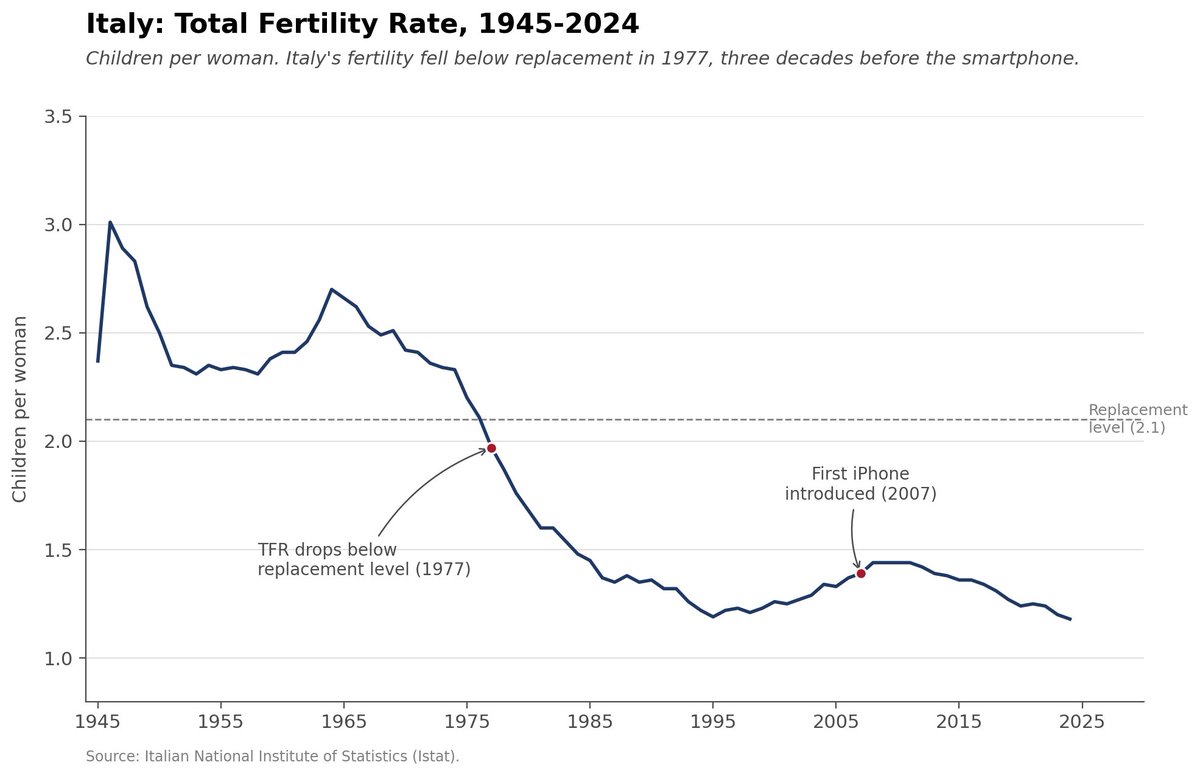
Smartphones are not the explanation for the recent decline in fertility. Instead, they are an accelerator of deeper forces already at work.
Let’s start with the facts. Fertility is falling almost everywhere: in rich, middle-income, and poor countries; in secular and religious countries; and in countries with high and low levels of gender equality.
The decline accelerated around 2014. So, no country-specific explanation will work unless you are willing to believe that 200 distinct country-specific explanations arrived at roughly the same time.
Smartphones look like the obvious candidate: the first iPhone was released in 2007, and global adoption has been astonishingly fast.
Economists understand the first major decline in fertility in advanced economies, from 6 or 7 children per woman throughout most of human history to about 1.8, that occurred between the early 1800s and roughly 1970, well before smartphones. The main drivers were a sharp fall in child mortality (effective fertility was rarely above 3 and often close to 2) and the shift from a low-skill, rural agrarian economy to a high-skill, urban industrial one. We have quantitative models that fit these facts well.
Country-specific factors mattered too, of course. Proximity to low-fertility neighbors accelerated Hungary’s decline, while fragmented landowning structures accelerated France’s. But these were second-order mechanisms.
This is also why most economists long considered Paul Ehrlich’s doom scenarios implausible. We forecast that fertility in middle- and low-income economies would follow the same path as in the rich, probably faster, because reductions in child mortality reached India or Africa at lower income levels (medical technology is nearly universal, and most gains come from handwashing and cheap antibiotics, not Mayo Clinic-level care). Much of what we see in Africa or parts of Latin America today is still that old story.
But in the 1980s, a new pattern appeared. Japan and Italy fell below 1.8, the level we had thought was the new floor. By 1990, Japan was at 1.54 and Italy at 1.36.
This second fertility decline began in Japan and Italy earlier than elsewhere, driven by country-specific factors, but the underlying dynamics were widespread: secularization, an education arms race, expensive housing, the dissolution of old social networks, and the shift to a service economy in which women’s bargaining power within the household is higher. The U.S. lagged because secularization came later, suburban housing remained relatively cheap, and African American fertility was still high. U.S. demographic patterns are exceptional and skew how academics (most of whom are in the U.S.) and the New York Times see the world.
My best guess is that, without smartphones, Italy’s 2025 fertility rate would be about 1.24 rather than 1.14. I doubt anyone will document an effect larger than 0.1-0.2. Italy was at 1.19 in 1995, not far from today’s 1.14. The TFR is cyclical due to tempo effects, so I do not read too much into the rise between 1995 and 2007 or the decline from 1.27 in 2019 to 1.14 today. The direct effect of smartphones is not zero, but it is not, by itself, that large.
Where social media, in general, and smartphones, in particular, matter is in the diffusion of social norms. What would have taken 25 years now happens in 10. Social media are not the cause of fertility decline; modernity is. But they are a very fast accelerator.
That is why social media are a major part of the story behind Guatemala (yes, Guatemala) going from 3.8 children per woman in 2005 to 1.9 in 2025. Without them, Guatemala would also have reached 1.9, just 20 years later.
Modernity, in its current form, is incompatible with replacement-level fertility. By modernity, I do not mean capitalism: fertility fell earlier and faster in socialist economies than in market economies. Socialist Hungary fell below replacement in 1960, and socialist Czechoslovakia in 1966 (both experienced small, short-lived baby booms in the mid-1970s). By modernity, I mean a society organized around rational, large-scale systems and formalized knowledge.
Countries will not converge to the same fertility rate. East Asia is likely stuck near 1, possibly below, given its unbalanced gender norms and toxic education systems. Latin America faces the same gender problem plus weak growth prospects, so I expect something around 1.2. Northern Europe has more egalitarian family structures and might hold near 1.5. The very religious societies are probably the only ones that will sustain 1.8.
All of this could change with AI or changes in population composition. We will see. But on the current evidence, deep sub-replacement fertility is the “new new normal.” Unless we reorganize our societies, better learn to handle it as best we can.
224
918
3,711
901,329
Mícheál de Barra retweeted

Apr 14
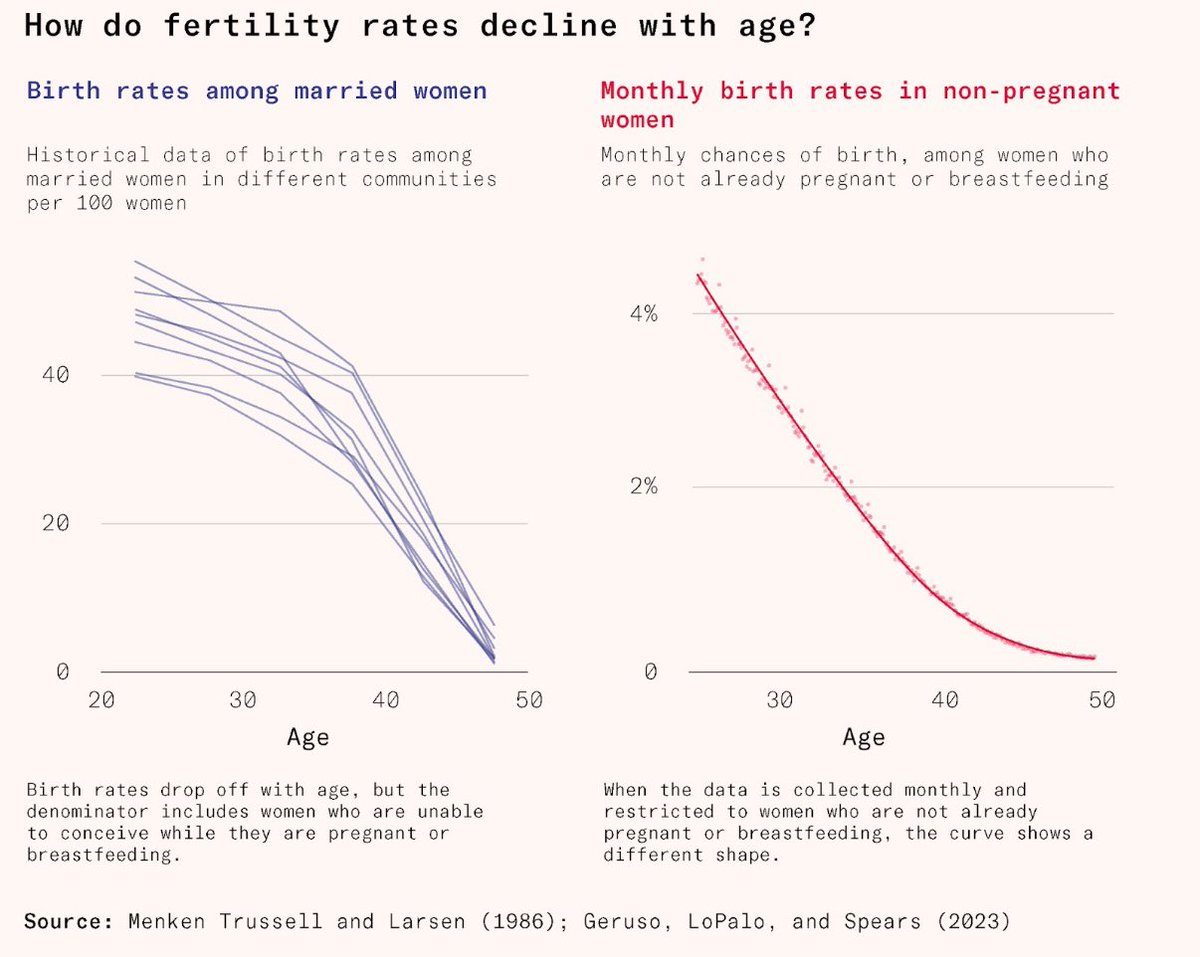
It's a myth that egg freezing doesn't work. It works extremely well for women who freeze young. It has low success rates for women in their 40s and late 30s, when fertility has already declined significantly.
- Women who freeze enough of their eggs in their twenties have the same success rate using those eggs later as they would have had using them fresh in their twenties: 85-90%.
-Women generally freeze too few eggs and too late (median age: 37). This is why overall success rates reported in papers are low.
- Women's fertility does not drop off rapidly after age 35. That's a myth caused by faulty data. The decline is earlier and more linear.
- Clinics in Spain are significantly cheaper but just as good or better than British or American ones in success rates. I got my eggs frozen in Valencia last week.
- Clinic choice matters a lot. Average success rates can vary between 25% to more than 60% probability of live birth per embryo transfer for the worst and best clinics, respectively.
worksinprogress.co/issue/wer…
@_revoluzia_ and I are both in our late 20s, and both decided to get our eggs frozen, so that we could definitely have the number of children we wanted, regardless of where life takes us. Recent technological improvements make egg and embryo freezing an effective 'fertility insurance'.
We share our lessons from the process in a new article for Works in Progress.
78
164
1,271
1,048,986
Mícheál de Barra retweeted

Mar 31
Today we’re launching the Prolific 100% Human Guarantee. If an AI agent is detected in your Prolific study, you'll get twice the cost of that participant response back.
@Prolific’s bot authenticity checks have been doing AI detection work for a while now, tested against major detection methods and achieving 100% accuracy. But it's the years of investment and 50 checks before participants even see your study that make us especially confident.
Read about our guarantee here, I would love to hear any other feedback: prolific.com/100-human-guara…
1
5
13
632
Mícheál de Barra retweeted

Mar 27
I don't think the advice is awful, but it is worth noting that the extent to which it is 'evidence-led' is overblown.
The recommendations are based off a literature review where most of the studies are non-causal, cross-sectional, and heavily confounded. Honestly, we really don't know how bad (or not) screen time is for kids.
The advice itself is informed by the review, but it is highly precautionary. At every point, they err on the side of caution.
In my view, when the Govt puts out advice they should be careful to communicate when we're dealing with a precautionary best-guess, and when we're dealing with 'vaccines stop this virus/smoking causes cancer' tier information.
Mar 27

This government is on the side of families. Whether that is tackling the cost of living, or helping navigate the rapidly changing online world.
Today, we publish non-judgemental, practical tips, developed with parents, experts and led by evidence to manage under-5s’ screen time.

ALT Front page of The Sun, covering new screen time guidance.
10
15
86
27,628
Mícheál de Barra retweeted

Mar 24
Isofix killed the 3 child family
66
67
872
1,430,268
Mar 11
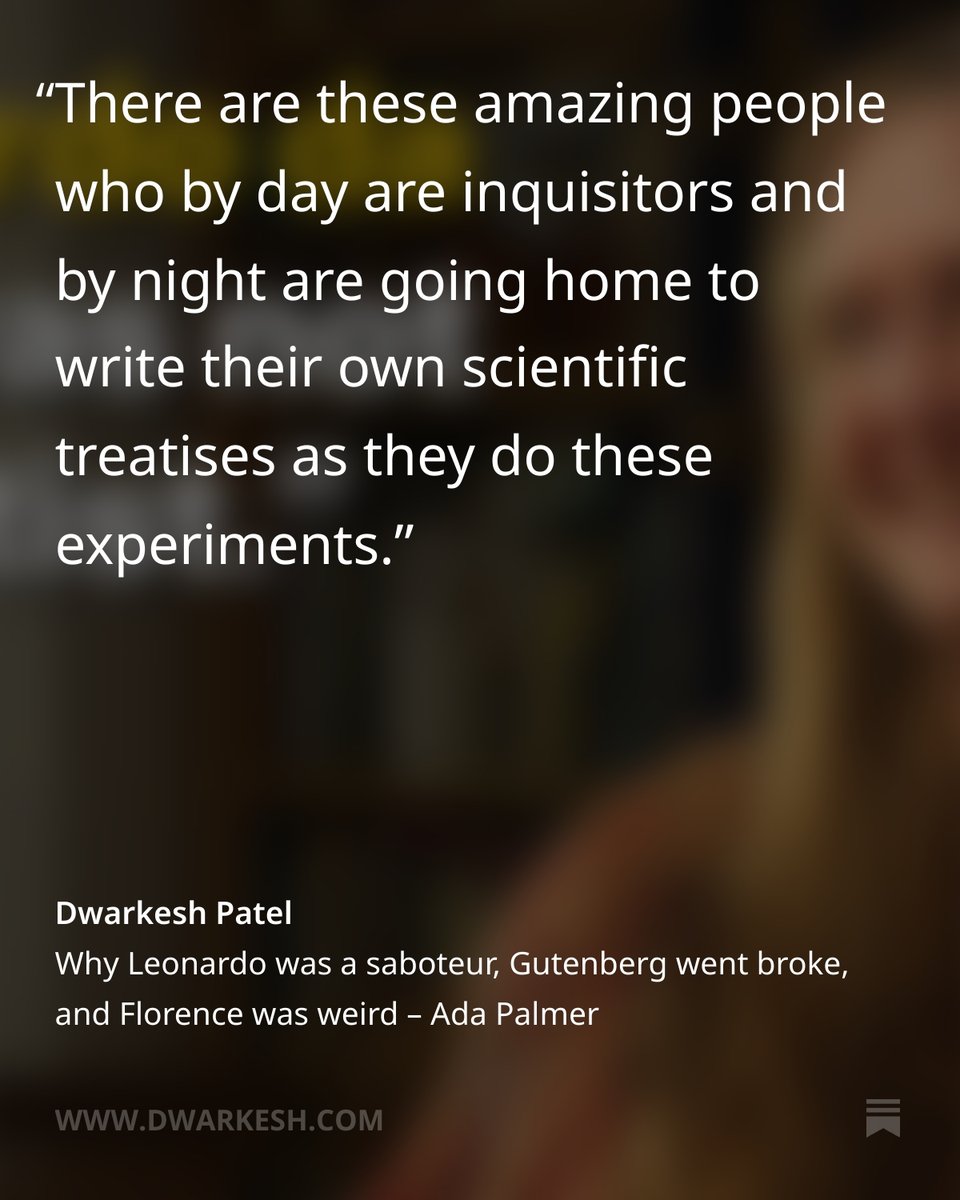
Italian Inquisition was so worried about people publishing bad science, they set up their own laboratories to repeat experiments and censor studies that failed to replicate.
Some very contemporary concerns in the 1600s.
27
Mícheál de Barra retweeted
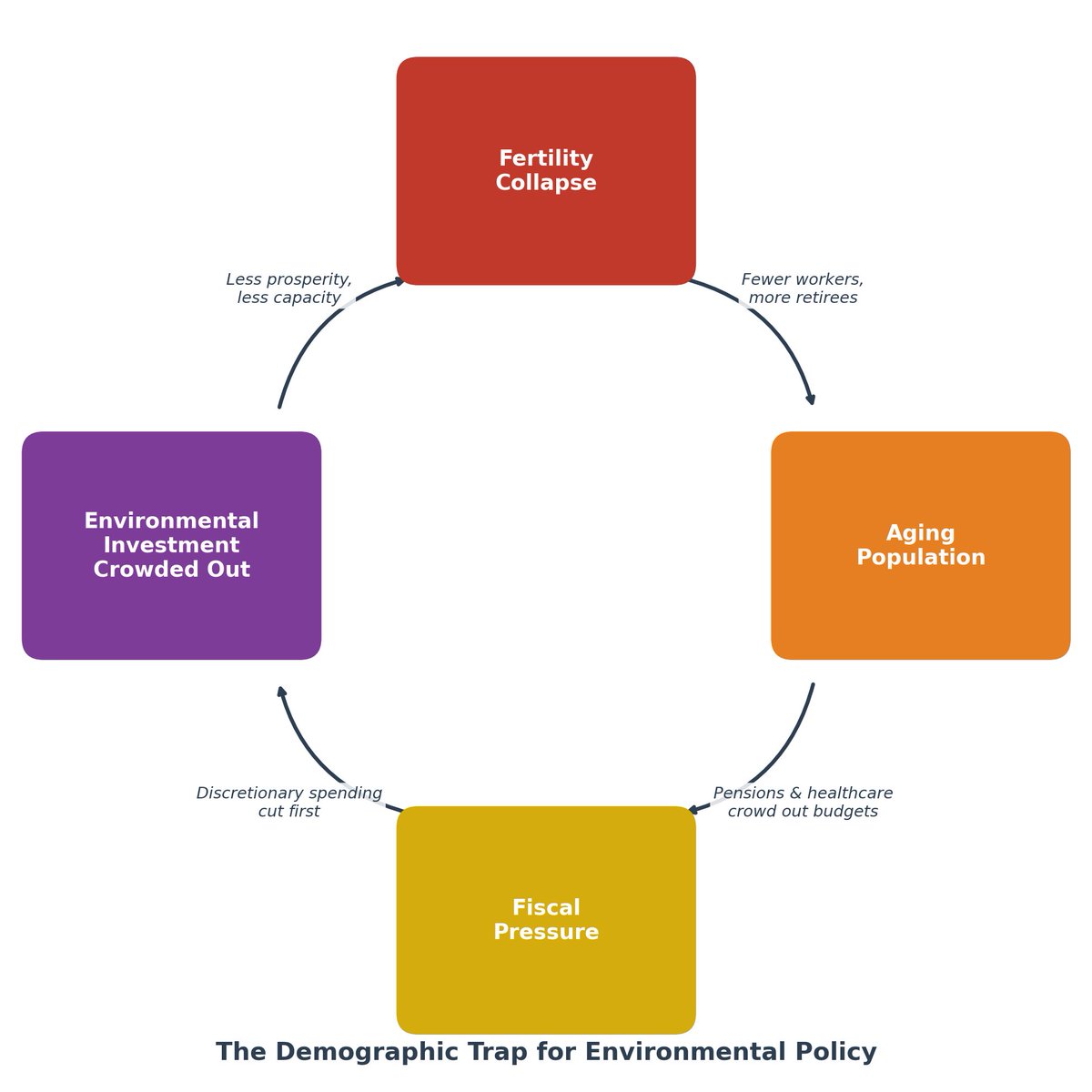
Every time I post about falling fertility, someone replies: “Great for the planet.” I understand the intuition, but it gets the economics almost exactly backwards.
To be clear: I am not arguing for explosive population growth. A gentle decline or stabilization would be my first choice. The problem is that we are not heading toward a gentle decline. We are heading toward a collapse. And a collapse changes everything.
Environmental protection behaves like a luxury good. As countries become richer, citizens demand cleaner air, cleaner water, and stronger climate policy. Prosperity creates both the willingness and the fiscal capacity to pay for these goods.
This is not a theoretical curiosity. The modern environmental movement was born in California in the 1960s, when the state was among the richest in the richest country on earth. That was no coincidence. You need to be prosperous before you start worrying about the spotted owl.
A sustained fertility collapse works in the opposite direction. As populations age, pension and healthcare costs rise while the tax base shrinks. Governments under that kind of fiscal pressure protect mandatory spending first because that is what voters scream about (I am from Europe, and I can tell you this is the case with 100% certainty). Environmental investment, which is largely discretionary, is the easiest to postpone. And it will be postponed, particularly in middle- and low-income countries.
Environmental policy is not a costless virtue. It requires administrative capacity, long planning horizons, and resources. Lots of resources. Decarbonization alone demands trillions in public and private investment over the coming decades. Where will that money come from if the working-age population is shrinking and the dependency ratio is exploding?
If demographic collapse erodes prosperity and fiscal space, and the evidence strongly suggests it will, it will not increase environmental investment. It will make it harder to sustain.
So, if you care about the environment, I am sorry, but what is happening with fertility right now is terrible news.
54
193
741
85,083
Mícheál de Barra retweeted

Feb 23
About 2% of children in the UK have elevated blood lead levels. I made an interactive map (with a little help from Claude) so you can see the % in your local area.
lcrawfurd.github.io/lead-map…
5
10
1,232
Feb 13
Ireland's love for a rural bungalow shows up well here:

A map of population distribution in Europe (black = at least one inhabitant per square km)
Always stuns me to see how empty swaths of Spain are!

1
114
Jan 22
Interesting convergence with @dansperber and Mercier's social models of human reasoning: cambridge.org/core/journals/…

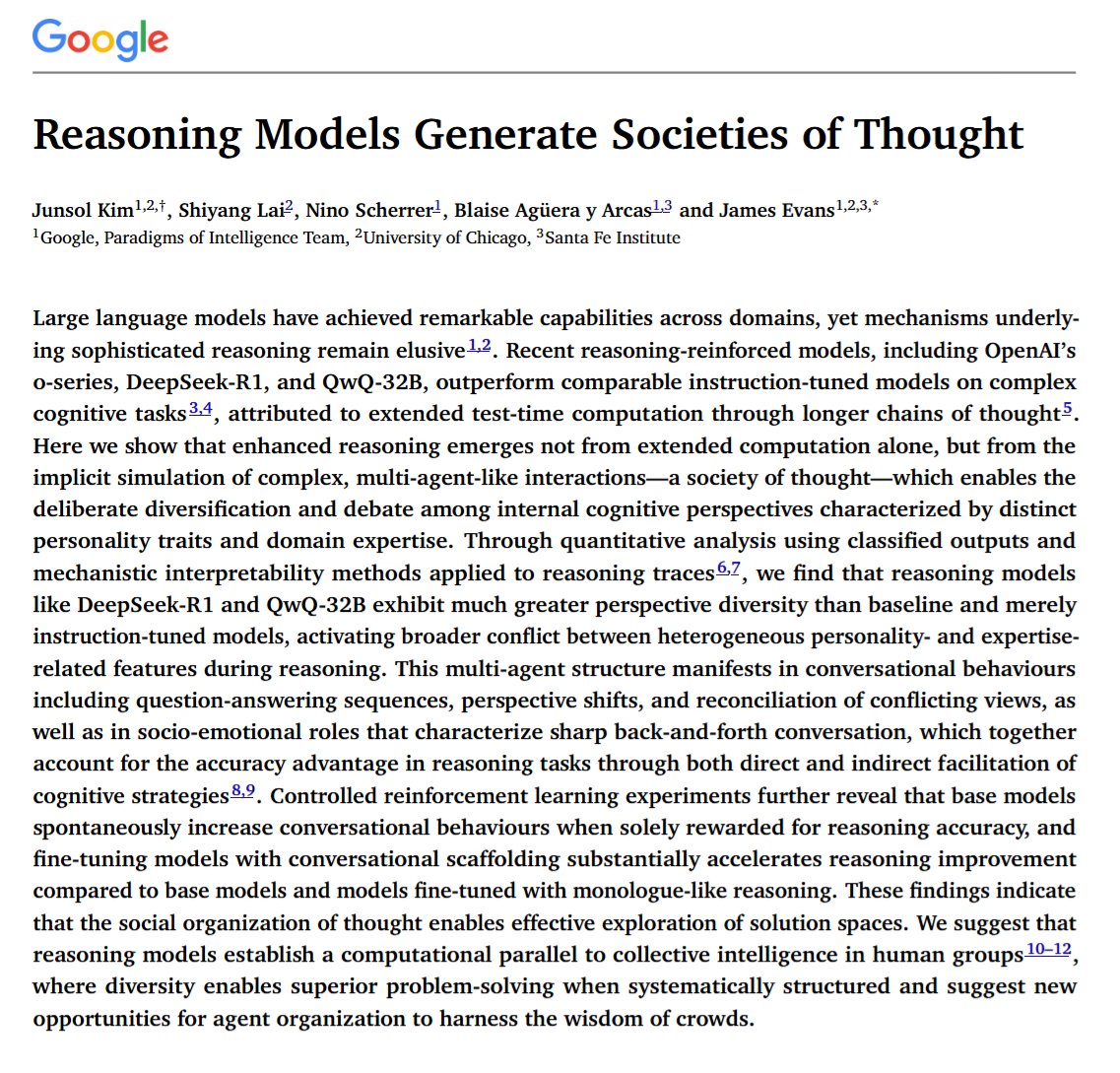
Love this. To solve hard problems, reasoning models sometimes simulate an internal conversation between different personas, like a debate team inside their own digital brain. They argue, correct each other, express surprise, and reconcile different viewpoints to reach the right answer. Human intelligence probably evolved because of social interactions, and it seems like a similar intuition might well apply to AI! arxiv.org/abs/2601.10825
1
2
255
6 Nov 2025
a biased bias illustration.
5 Nov 2025

This is not an accurate picture of how biased the literature is. The authors only analyze p-values in abstracts. If scientists say 'not significant' without stating p for p >. 05, you get this graph with 0 bias.
79
Mícheál de Barra retweeted

3 Nov 2025
I had a go at improving it.

3 Nov 2025

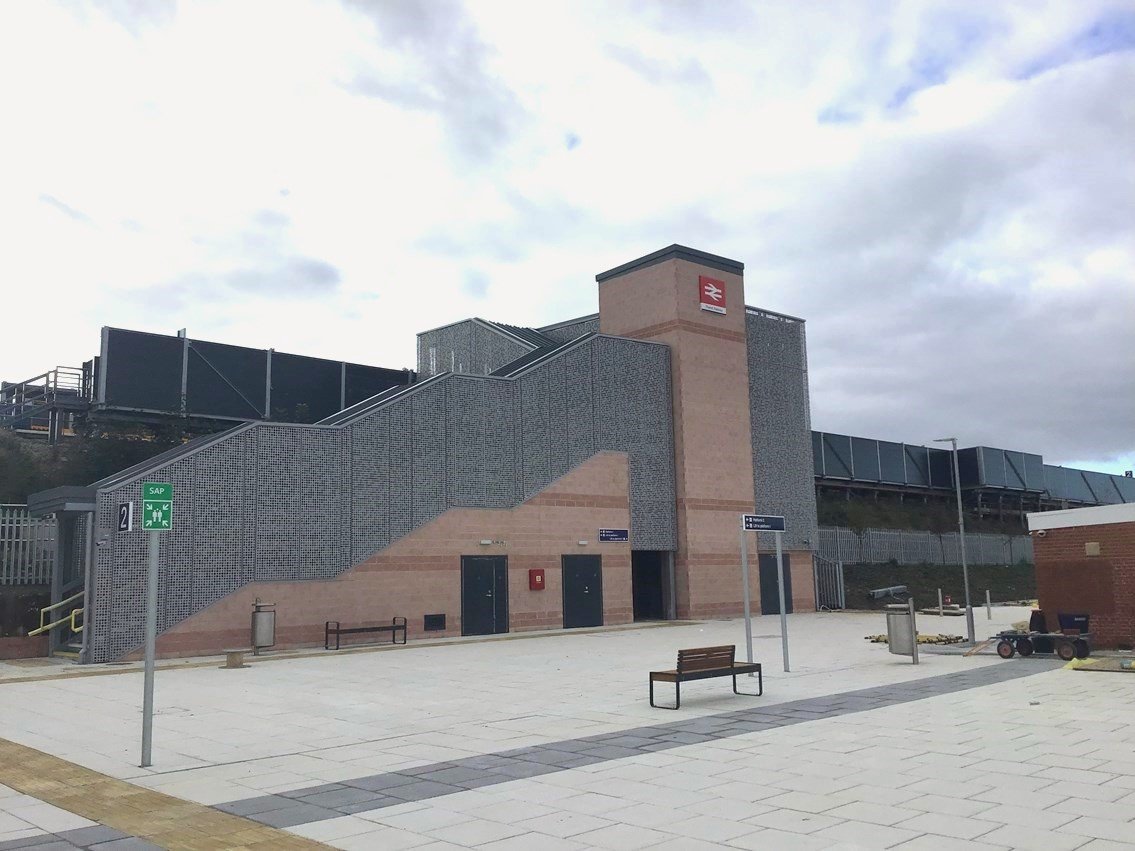
This is a recently completed British train station. It is pathetic, value engineered to a level of comatose ugliness that dispirits & dulls the mind, dissuading passengers & degrading the trains that run through it. It is not civic or sociable architecture....
679
1,319
44,447
4,655,350
Mícheál de Barra retweeted

2 Oct 2025
Here are the X account for the new Leverhulme-funded project I’ve just started working on with colleagues at the University of Edinburgh. We will investigate, from a cultural evolution perspective, the spread of heritage-based hostility on social media.
2 Oct 2025

Welcome to Weaponised Pasts! The website for our investigation into heritage-based hostility is now live. The link to the site is at the end of this thread, where you can find out more our project, team and how to stay up-to-date with our progress.
3
7
704
29 Sep 2025
For people working in HR, Reform plan to "Restrict undergraduate numbers well below current levels ... Enforce minimum entry standards" and force provision of 2-Year undergrads.
27 Sep 2025

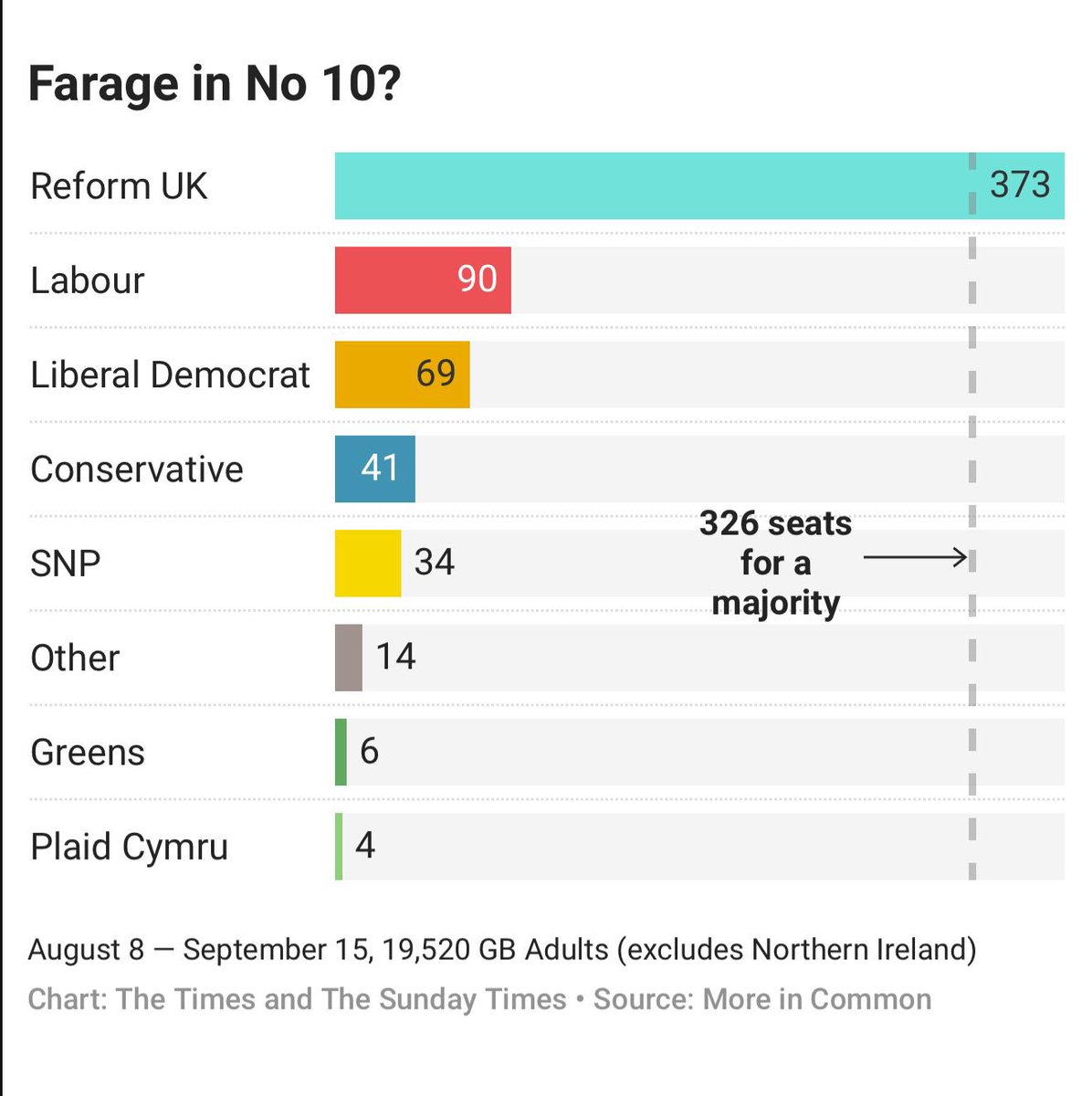
New Sunday Times MRP poll has Reform UK winning an election outright with a majority of 94
1
104
Mícheál de Barra retweeted

8 Sep 2025
I have a couple of times come across the idea of “The Irish Enlightenment”. What exactly was it? I’ve wondered this for quite some time.
In the early 18th century especially, there existed a cluster of thinkers in or from Ireland whose ideas seem important by modern standards: Francis Hutcheson, Richard Cantillon, Jonathan Swift, George Berkeley, and Edmund Burke probably rank first among them. William Petty, the early statistician, should maybe be mentioned as well.
These individuals don’t feature very prominently in contemporary Irish culture or Irish education: one rarely hears about Hutcheson or Cantillon. I think this is significantly because they didn’t accord with the Irish self-conception that emerged in the late 19th and early 20th centuries. They are emphatically not Gaelic revival figures and fit awkwardly beneath the nationalist palimpsest. All except Cantillon are Protestant and many lived or worked in the UK. Trinity had a Berkeley library but “denamed” it in 2023. In school, the great Irish thinkers were from the late 18th and 19th centuries: Wolfe Tone, Daniel O’Connell, and Charles Parnell.
What can we say about these earlier Irish intellectuals?
Hutcheson was “probably the most influential and respected moral philosopher in America in the eighteenth century”, according to Norman Fiering. In Original of Our Ideas of Beauty and Virtue, he introduced the concept of “unalienable rights”, with the collective right to resist oppressive government, which was used at Harvard as a textbook as early as the 1730s. Benjamin Franklin, Thomas Jefferson, and John Adams were among his fans. In Inventing America, Garry Wills argues that these authors of the Declaration of Independence drew most of all on Hutcheson. He corresponded with David Hume and taught Adam Smith. While better known as a philosopher, he wrote extensively about economics: he emphasized the importance of private property and the division of labor. He repeatedly condemned slavery.
Richard Cantillon introduced was the first person to use “entrepreneur” in its modern sense. Reading his Essai, one is struck by the clarity of its thought and its modernity. In a sense, what is noteworthy is how little there is to say about it: it feels quite contemporary and basically correct. He prefigures Malthusian population reasoning and recognizes that risk and uncertainty are central forces in economics. By separating intrinsic value from market pricing, he adumbrates subjective valuation concepts later emphasized by the Austrians. His description of the emergent order arising from the decentralized market forces coordinating landowners, farmers, tradespeople, and workers sounds downright Hayekian. Schumpeter: “Cantillon was the first to make this circular flow concrete and explicit, to give us a bird’s-eye view of economic life.”
Swift is best known as an irascible satirist. However, he was principally a pamphleteer: a hectoring intellectual activist. In this he was remarkably prodigious. His complete works is a 19 volume collection. He saw that “Ireland is the poorest of all civilized countries in Europe, with every natural advantage to make it one of the richest”, and was preoccupied with practical questions pertaining to this goal. He successfully advocated for monetary reform (in Drapier’s Letters) and thought extensively about how to stimulate both manufacture and industry in Ireland as well as a culture conducive to prosperity. He spends a great deal of time on import substitution, the balance of trade, and the stimulation of manufacture. His views are very mercantilist by today’s standards, but always in service of the question: how to develop. He composed his own epitaph: he sought to be seen as “a strenuous champion of liberty.”
Berkeley is maybe the most directly economically-relevant and in my view the most underrated. Like Hutcheson, he’s best-known as a philosopher, but, in The Querist (1735), he writes what is probably the first work of development economics. It is composed in an unusual form – 895 questions, culminating in one ultimate question: “whose fault is it if poor Ireland still continues poor?” In this, he assesses that Ireland has little excuse. After describing a vision of prosperity, he asks “whether Ireland be not as well qualified for such a state as any nation under the sun?” Like Swift, he’s disgusted by vanity and indulgence. He has a sophisticated understanding of concepts like the velocity of money. Most of all, he sees culture and human capital as being as closely linked with economic development as more conventional trade, monetary, and fiscal matters, and, unusually for a work of economics, he spends a great deal of time on the former. The Irish, in his eyes, are indolent: we need to become more skilled and more industrious. In his emphasis on culture and human capital, his outlook reminds me of Park Chung-hee and Lee Kuan Yew. Perhaps even Deng Xiaoping.
Burke is usually considered a political thinker, but his economic writings are substantial and important. He advocated for free trade (leading to the removal of restrictions on the grain trade), denounced colonial extraction (particularly in India, with some influence), and made a powerful case for market pricing and laissez-faire policy in Thoughts and Details on Scarcity. In emphasizing the cultural and institutional foundations of markets, he anticipates arguments later made by Karl Polanyi.
(As an aside, in rereading Reflections on the Revolution in France, I was surprised at how unpersuasive I found it. Unlike Berkeley, he gives almost no attention to economic outcomes, and his implicit theory just can’t explain which ruptures and revolutions one should support. If we accept his arguments, how should we feel about the formation of the Irish state, the creation of UAE or Singapore, and the fall of the Soviet Union? I was left wondering why Reflections is the most famous of his works. Is it because of the somewhat clickbaity title?)
In surveying these thinkers, one is reminded that Ireland was an oppressed polity. Hutcheson, Burke, and Cantillon all did much of their work outside of Ireland; in publishing their work at home, Swift and Berkeley resorted to unusual forms (satire, rhetorical propositions) and, often, anonymity. (Both The Querist and Drapier’s Letters were first published without their names.)
How should we view the movement as a whole? Well, the timing is important: Cantillon published his Essai in 1755, Swift Drapier’s Letters in 1724, and Berkeley The Querist in 1735. It seems to me that, before 1750, the Irish thinkers have a strong claim to leading the world in the field of economics and to having collectively sketched out much of the core of the field in broadly correct terms. In Petty you have economic statistics; in Cantillon you have risk, market pricing, and much else; in Berkeley, you have a theory of national banking plus development economics; in Swift you have proto-monetarism. The claim is not that they figured everything out or were right on all points, but which other school or group could you rank ahead of them? Smith published Wealth of Nations in 1776 and The French physiocrats, who were very important, came later: Quesnay’s first piece wasn’t published until 1756.
Smith surely instigated economics as a proper discipline with his main work. The full title is An Inquiry into the Nature and Causes of the Wealth of Nations, which is a very “Irish school” framing. And, sure enough, Smith studied under Hutcheson in Glasgow (recalling that he was “the most acute, the most distinct, and the most philosophical of all my teachers”) and explicitly cites Cantillon. In his letters, he refers to Swift’s work. He owned a copy of The Querist. He was friends with Edmund Burke. None of this should detract from Smith’s own intellectual achievement, but the ties to the Irish Enlightenment are strikingly strong.
While the group may have influenced Smith and many others, part of what is striking about the Irish Enlightenment is how influential it wasn’t at home. Irish poverty endured for over 200 subsequent years of unwise and destructive governance. Much of this policy was obviously the fault of the British (and indeed deliberately so, as in the Penal Laws), but De Valera’s autarkic protectionism in the early days of the Irish Free State kept Ireland destitute as late as the 1960s, until a liberal turn was eventually instigated by Lemass and others.
Most of all, the Irish Enlightenment seems to me an instance of small group theory. I’m fond of the thought that between great man and structuralist theories of history there lies an intermediate position: the small group, a colocated cauldron for iconoclastic thinking, can as a collective pioneer a novel direction. The romantics in Jena, the founders of Silicon Valley, the musicians behind punk. Unsurprisingly, the early Irish thinkers are closely connected. Swift and Berkeley attended the same school and were good friends. Hutcheson and Berkeley debated publicly, while Burke’s work is clearly downstream of Hutcheson’s.
It highlights the importance of simply asking the right question. Berkeley did not comprehensively diagnose why Ireland was poor, or what to do, but he did realize that “what are we doing that makes us poor?” is the key lens.
There is probably something in it about the value of being an outsider. One gets the sense that Swift and Berkeley would have been less novel had they been absorbed into the English power structure.
The Irish Enlightenment certainly shows the fragility of good ideas and of auspicious movements. Ireland did not adopt their perspective, and inasmuch as their program was intended to remedy the plaintive Irish economic situation, it did not succeed on the kind of timeframe they would have hoped.
But for me it also shows the endurance of good ideas. Ireland itself may not have been particularly influenced, but Smith was, as were the American founding fathers, Voltaire, Kant, Hume, de Tocqueville, and, eventually, the Austrians and the free market movement. (Hayek repeatedly cites Burke as a model and wrote an introduction to a reprint of Cantillon.) In 1958, 223 years after The Querist, TK Whitaker published Economic Development, a landmark report that set forth an open and trade-led vision for Irish economic growth. The report was enacted by the Lemass government and set the foundations for Ireland’s economic boom over the subsequent decades. It's hard to precisely attribute Whitaker’s intellectual influences, but he describes West Germany’s social-market policies as a model (Walter Eucken, who led the Ordoliberal school in Germany, was alongside Hayek a founding attendee of the Mont Pelerin Society), and he was surely familiar with the work of the Institute of Economic Affairs in London, established to promote liberal Austrian ideas. That is all to say, in a very roundabout way, the intellectual program catalyzed by the Irish Enlightenment thinkers in the early 1700s endured, and did, eventually, with a few century delay and no small number of digressions, lead to the remarkable melioration of Ireland’s economic circumstances.
81
116
784
192,297
Mícheál de Barra retweeted

30 May 2025
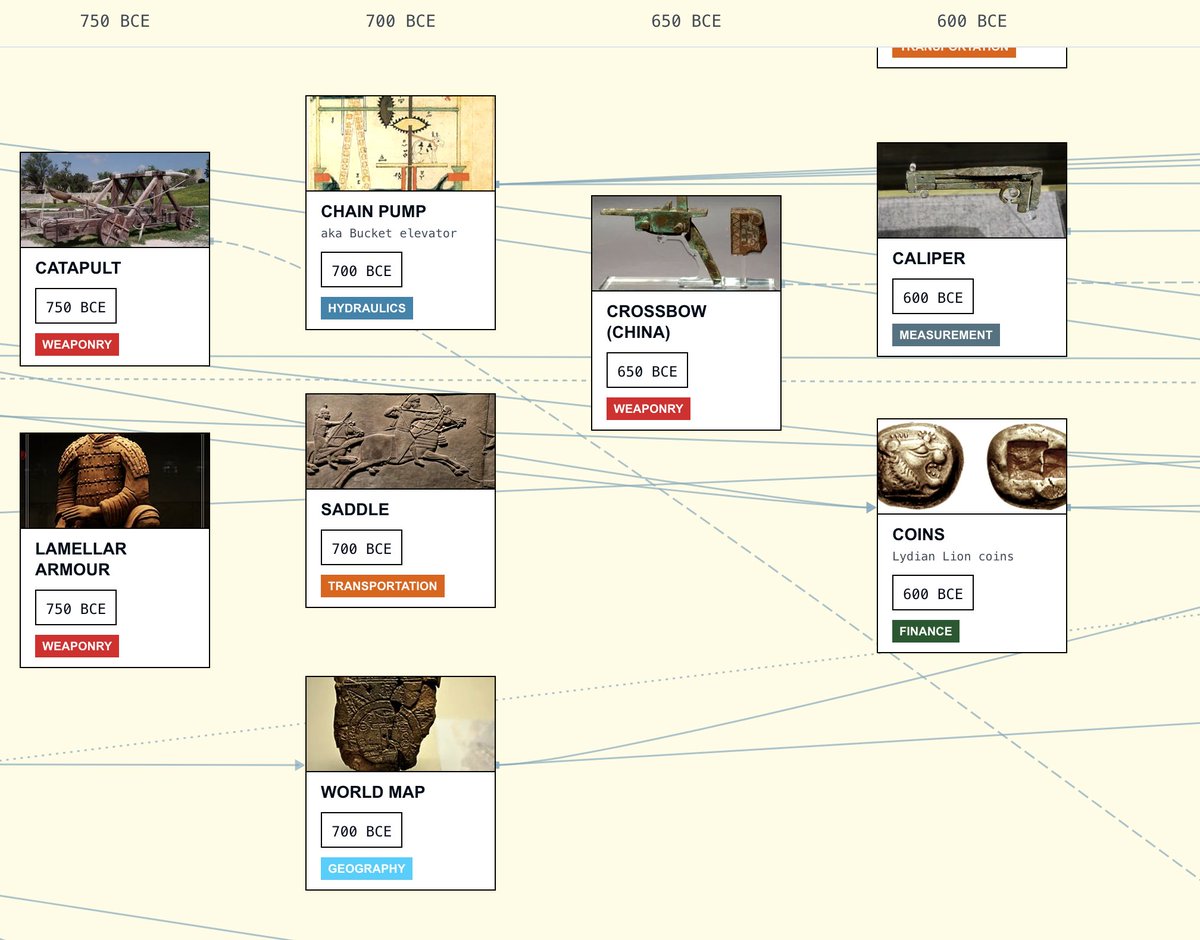
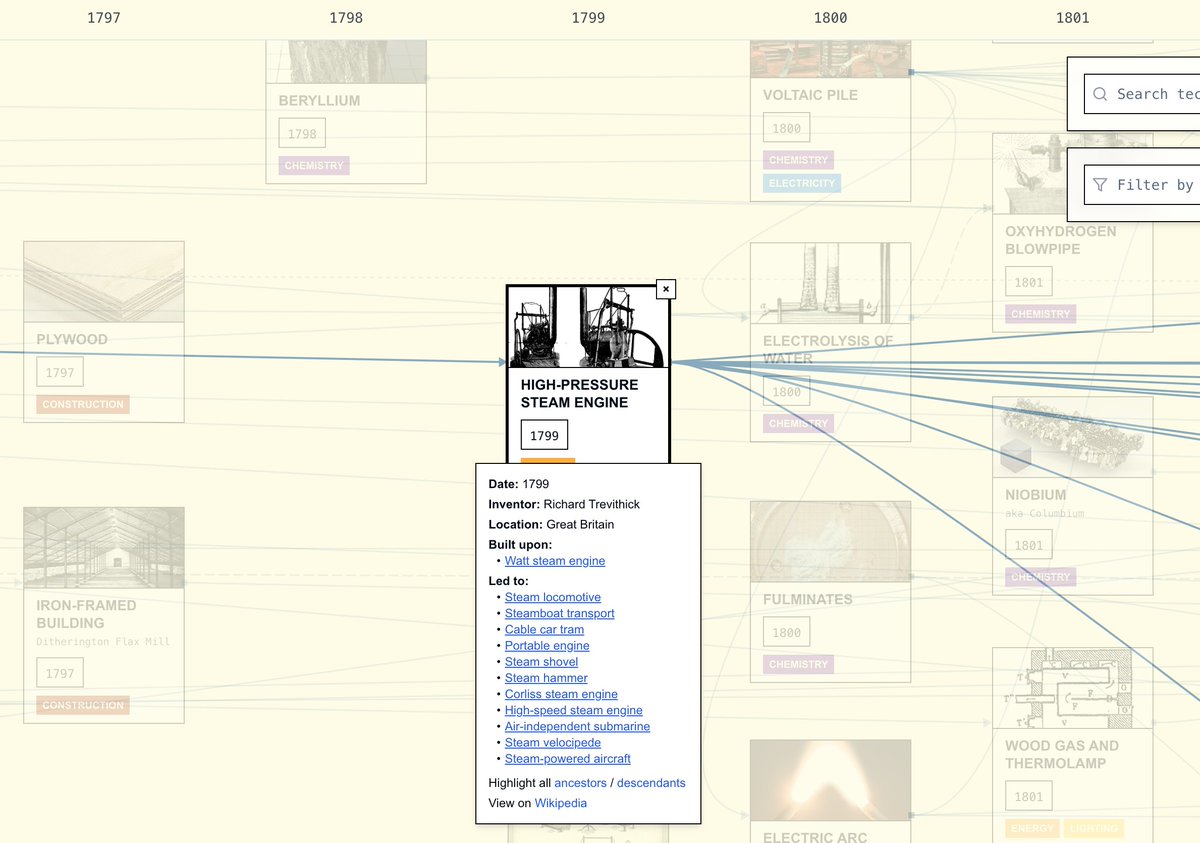
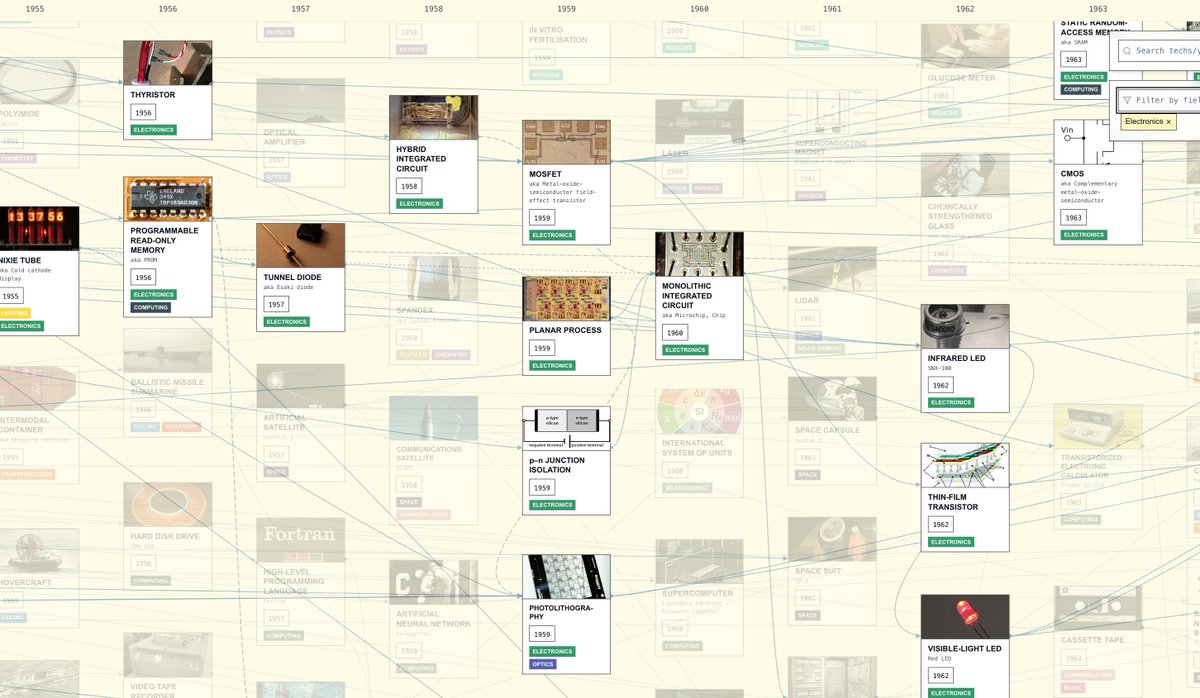
I made a big interactive tech tree of technological history! Here are some screenshots

64
208
1,727
127,548
Mícheál de Barra retweeted

15 May 2025
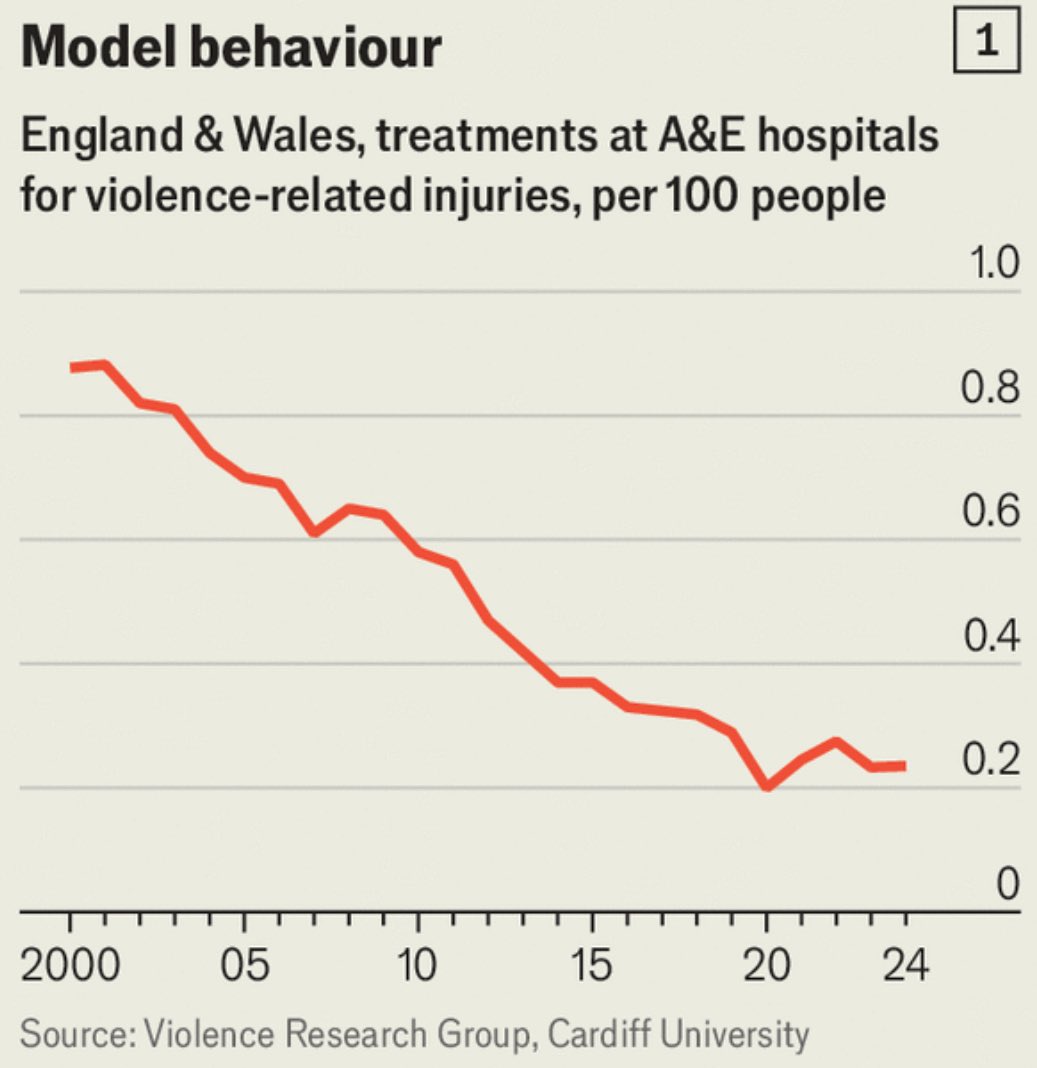
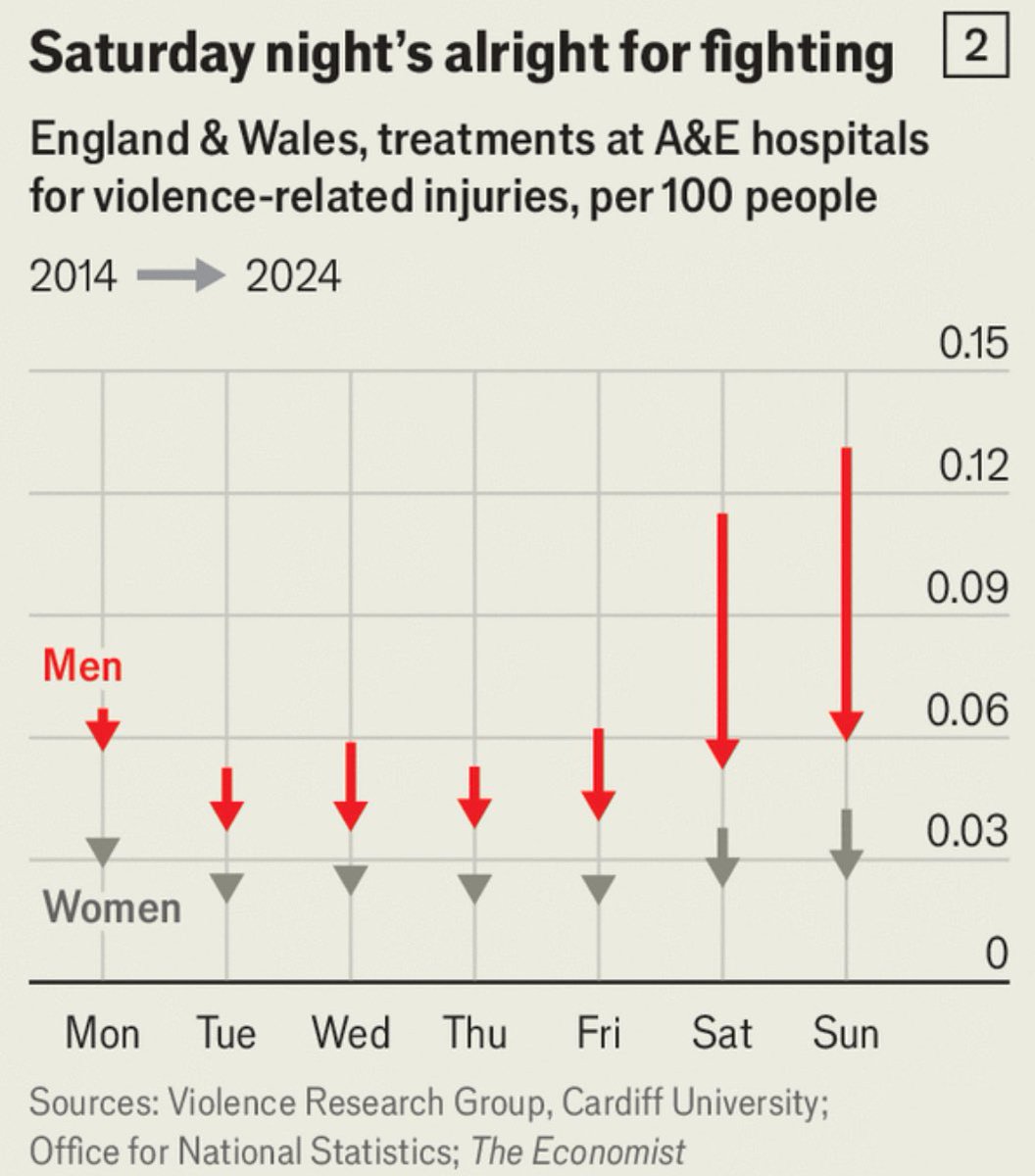
The decline of violence (and especially the weekend pub brawl) marches on in England and Wales
4
8
38
3,512