
Joined February 2009
- Tweets 12,621
- Following 2,664
- Followers 17,968
- Likes 66,439
317 Photos and videos
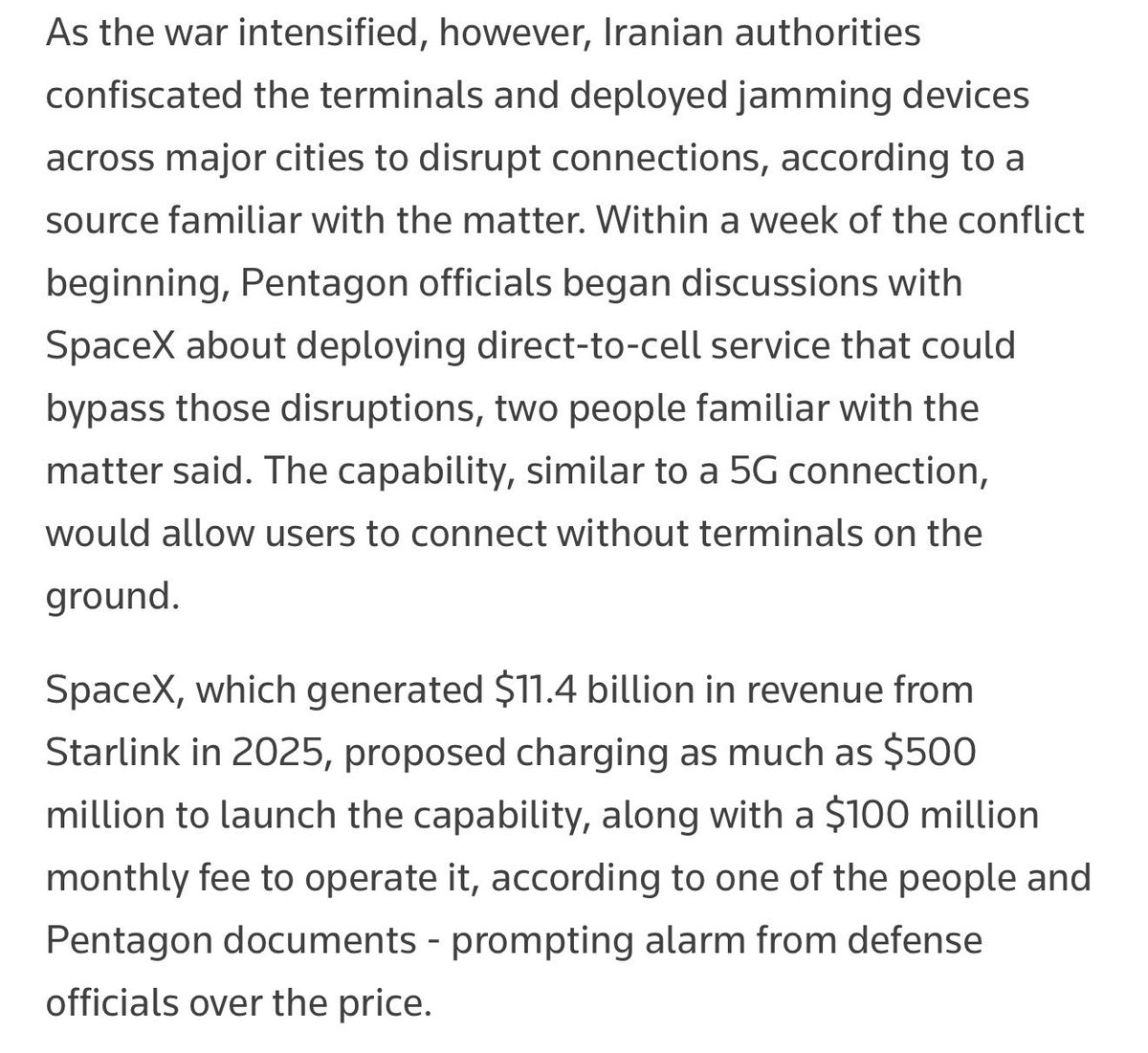
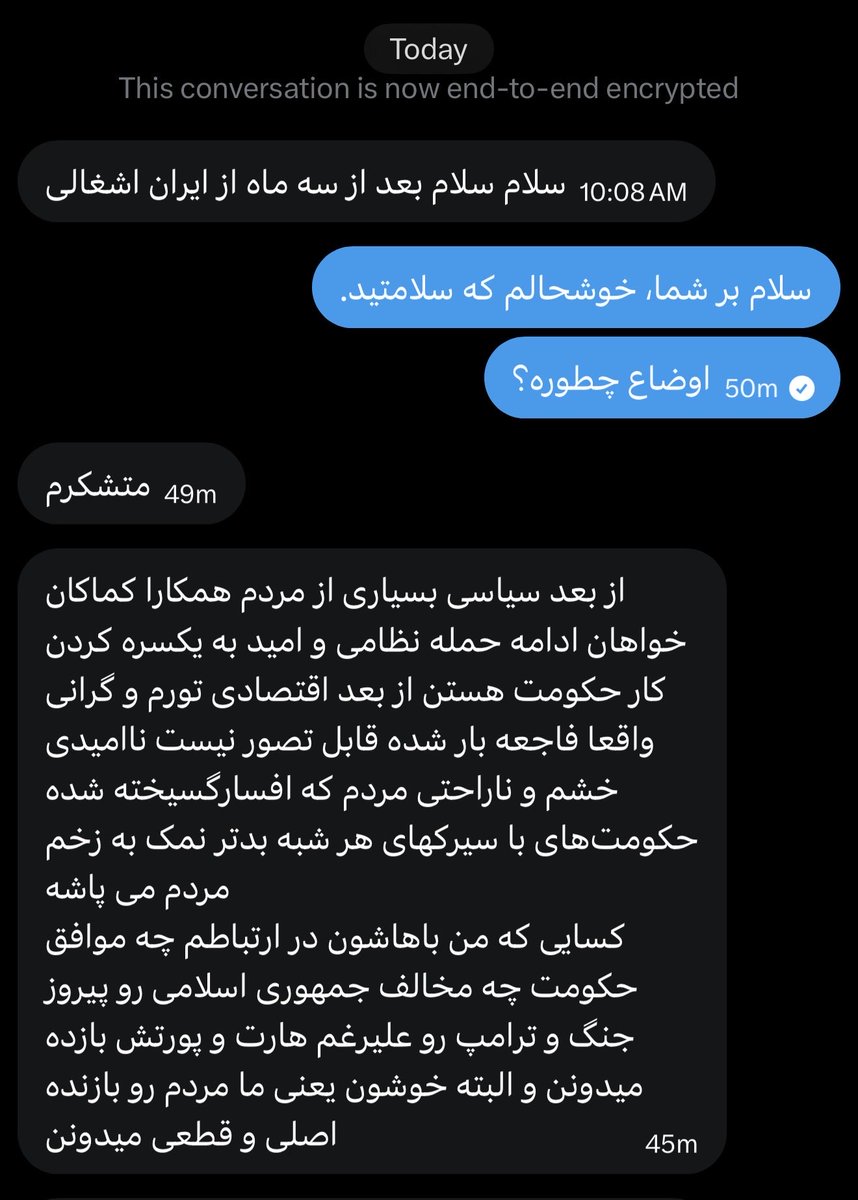
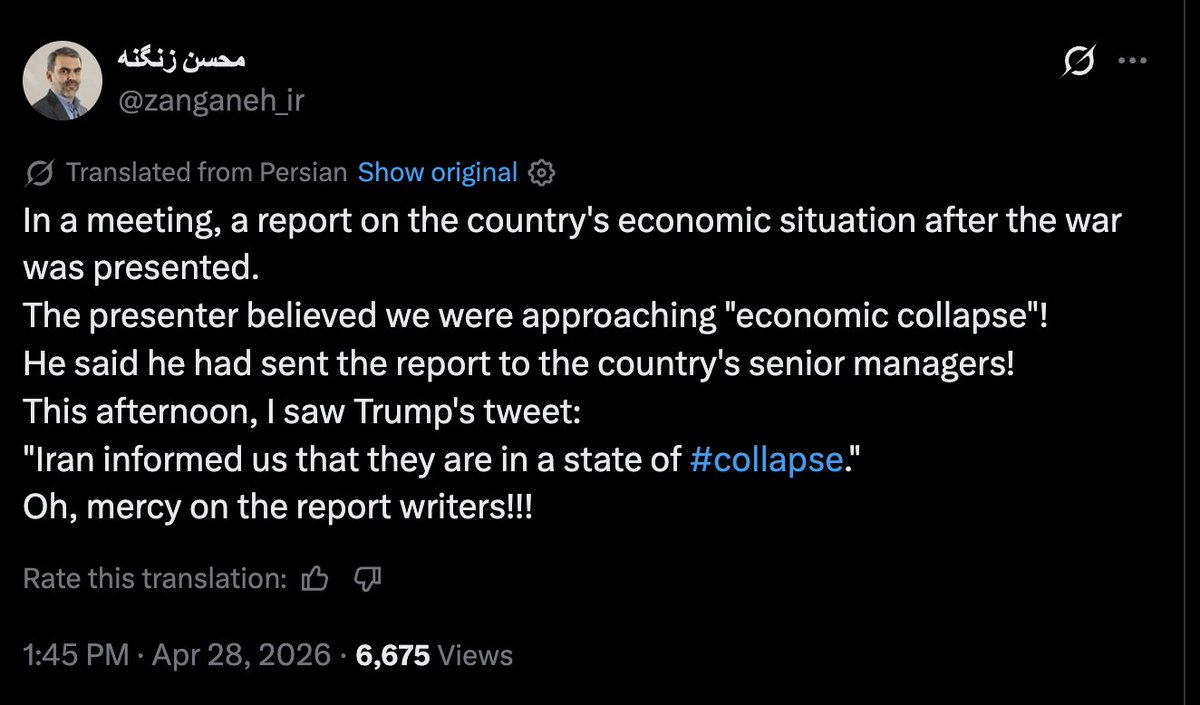
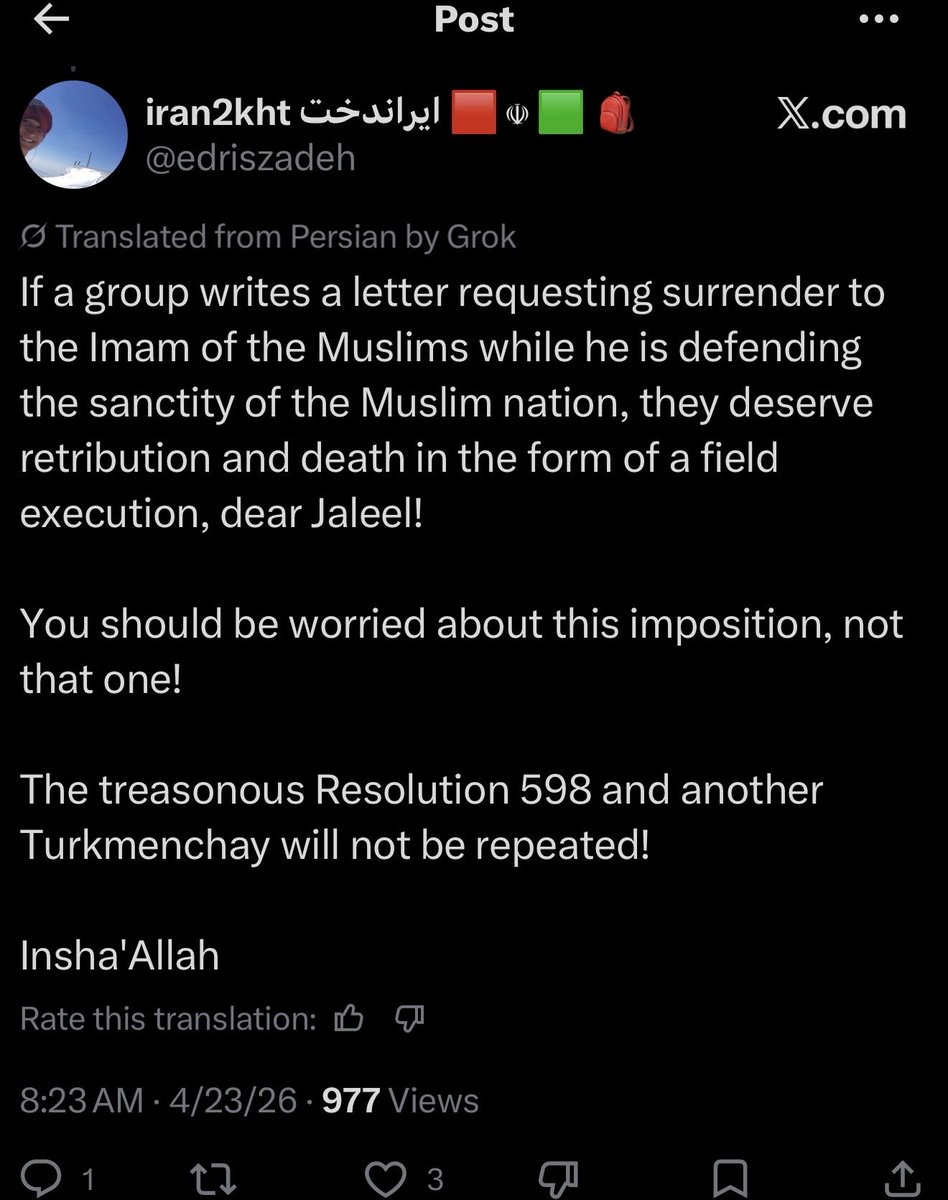

📄This is my guess for the content of the potential US-Iran deal based on the Iranian and American statements I have seen and what is reasonable considering the balance of power:
●The US, Iran, and their allies would commit to a 60-day truce on all fronts, including Lebanon. The 60-day can be extended (which I believe will be extended until the end of the mid-term elections).
●The US and Iran would agree to lift the blockade.
●Iran would commit not to pursue nuclear weapons. Iran has made this commitment many times before, but including it in the deal would give Trump something to highlight politically.
●Iran and the US would agree to continue negotiations for 60 days on the removal or dilution of highly enriched uranium (HEU), as well as a pause or reduction in nuclear enrichment, in exchange for full sanction relief.
●Sanctions on Iranian oil would be lifted for 60 days. While this would benefit the Iranian regime, it would also benefit Trump by helping lower oil prices more quickly.
●Iran will commit to no enrichment in this period and no attempt to recover the buried nuclear material.
●Iran commits to allow IAEA full access to all aspects of its nuclear activities.
●The US would commit not to increase its military presence in the region during the 60-day period.
🚫What you won’t see in the deal:
●No mention of payments to Iran. Any release of frozen Iranian funds would likely be handled outside the agreement to avoid creating political problems for Trump. The UAE and Qatar would most likely facilitate these transfers.
●No mention of tolls in the Strait of Hormuz. The US would not want to publicly acknowledge such an arrangement, but by omitting any reference to “no tolls,” it could effectively allow Iran to impose them on the Iranian side.
●No mention of US forces leaving the Middle East. Iran has reportedly raised this issue, but it is a non-starter for Washington and is unlikely to be included in any agreement.
2
2
8
1,504
Mehdi Yahyanejad retweeted

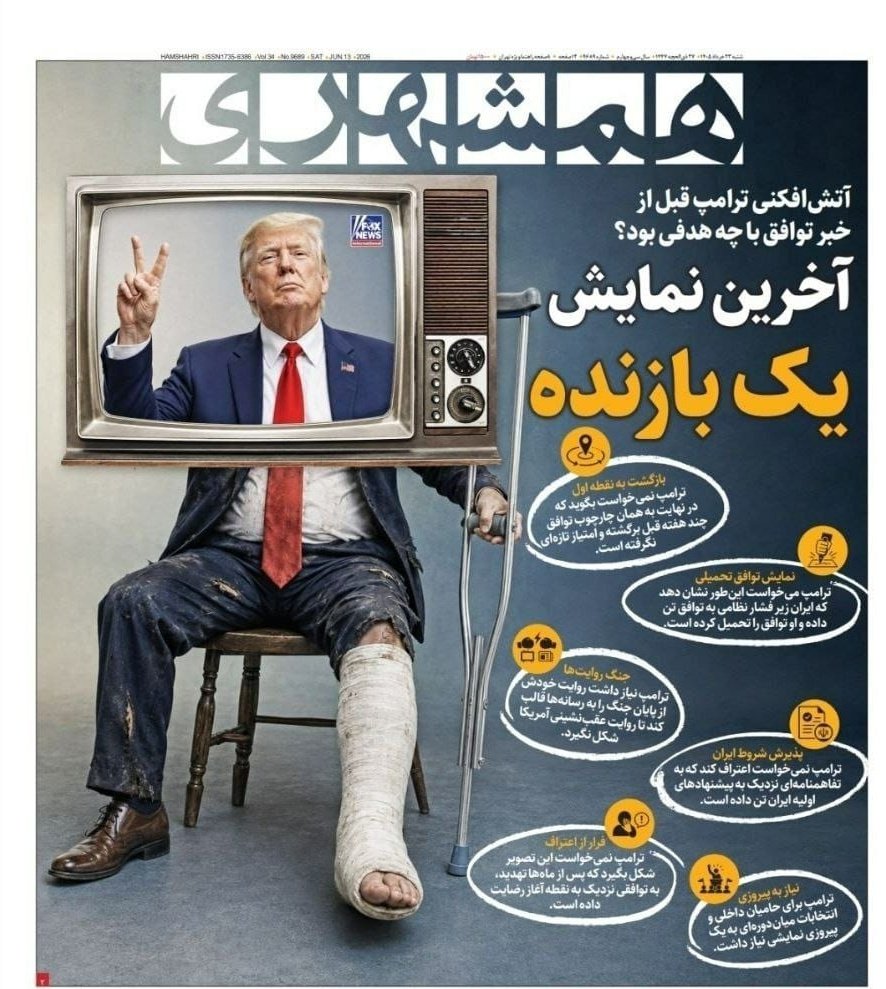
Today's front page of Hamshahri, the daily newspaper affiliated with Ghalibaf, with the headline: "The Last Performance of a Loser" 👇
159
933
3,381
48,374
Mehdi Yahyanejad retweeted

Jun 13
The US government, citing national security authorities, has issued an export control directive to suspend all access to Fable 5 and Mythos 5 by any foreign national, whether inside or outside the United States, including foreign national Anthropic employees.
The net effect of this order is that we must abruptly disable Fable 5 and Mythos 5 for all our customers to ensure compliance.
Access to all other Claude models is not affected.
We apologize for this disruption to our customers. We believe this is a misunderstanding and are working to restore access as soon as possible.
Read our full statement: anthropic.com/news/fable-myt…
12,053
25,201
85,270
82,922,321

Jun 12
As a dissident, it is painful to watch this. Over the past few months of the Iran-US conflict, the Iranian regime has played its limited cards remarkably well. One reason a dictatorship built around a seventh-century ideology is outplaying the most powerful democracy in the world is that, in this case, it appears to have a better decision-making process.
There is a surprisingly active space for the regime analysts to debate policy; of course within the regime's ideological boundaries. Iran’s Supreme National Security Council, or SNSC, brings together different stakeholders and different viewpoints within the system. Even with the Supreme Leader being the final decision maker, the debates and votings in the SNSC are real and influence the outcome. This has helped the regime avoid some of the catastrophic mistakes made by other dictatorships, such as Saddam Hussein’s Iraq or Qaddafi’s Libya.
In the United States, we often lack that kind of structured decision-making process. NSC is mostly an advisory council to the president and is only as strong as the president allows it to be. When the president personalizes foreign policy, the process collapses into court politics: advisers compete for access, agencies maneuver around each other, and decisions reflect the president’s instincts rather than an institutional consensus.
One possible solution would be to expand the mandate of the National Security Council to get a formal vote on major foreign policy decisions which the president would be allowed to veto. Another solution is to expand the membership to representatives from Congress, as well as independent council members appointed by the president or Congress. Some of these members could serve across administrations to reduce the sharp swings in US foreign policy between Democratic and Republican presidents.

Araghchi: "There are supporters and opponents of the text within the Iran's SNSC, but a collective decision will be made. For now, we must wait. If approved, the agreement will be signed remotely."
12
12
46
16,389
Jun 12
In analyzing the situation in Middle East, there are valuable news quotes that you have to interpret them exactly the opposite to extract the value:
“The source, who declined to be named due to the sensitivity of the matter, told Reuters that unfreezing the assets was "directly linked to ensuring safe passage through the Strait of Hormuz", a key issue in talks aimed at ending the conflict.”
Translation: The unfreezing has nothing to do with the safe passage through Hormuz and is the payment for the US-Iran deal.
reuters.com/world/middle-eas…
3
2
6
1,153
Jun 12
مشکل جمهوری اسلامی با یک توافق محدود حل نمیشود. اسرائیل و آمریکا دست از سر جمهوری اسلامی برنخواهند داشت. همانطور که دو بار غافلگیرش کردند، بار دیگر هم ممکن است به شکل دیگری به سراغش بروند. ترامپ هنوز برای دو سال و نیم دیگر رئیسجمهور آمریکاست.
در این جنگ ثابت شد که حملات موشکی جمهوری اسلامی آسیب محدودی ایجاد میکنند و بازدارندگی لازم را ندارند. تنها برگ برنده جمهوری اسلامی تنگه هرمز بود. ارزش تنگه هرمز هم به مرور کمتر خواهد شد؛ هم کشورهای حوزه خلیج فارس راههای صادراتی دیگری خواهند ساخت و هم کشورهای دنیا ظرفیت ذخایر استراتژیک خود را افزایش خواهند داد.
در درازمدت جمهوری اسلامی بیش از دو راهحل ندارد: ۱- عادیسازی کامل روابط با آمریکا و کنار گذاشتن اسرائیلستیزی. ۲- ساخت بمب هستهای.
راهحل میانهای برای جمهوری اسلامی وجود ندارد.
15
6
94
11,220
Jun 12
My guess is that the US payments to the Iranian regime will be structured either as an agreement between the UAE and Iran or as some sort of humanitarian payments. Obama’s problem was that he wasn’t creative enough.

Exclusive: UAE to unlock billions of dollars for Iran, sources say reuters.com/world/middle-eas…
3
2
13
1,750

Jun 12
In the US/Iran negotiations, each side only works on their own draft!
Jun 12

Iran’s Mehr, citing a source close to Iran’s negotiating team, claims a proposed U.S.-Iran draft MOU includes:
• Immediate and permanent ceasefire on all fronts, including Lebanon
• U.S. commitment not to interfere in Iran’s internal affairs
• Maritime blockade lifted within 30 days
• U.S. forces to withdraw from areas around Iran
• Strait of Hormuz reopened within 30 days under Iranian arrangements
• Suspension of sanctions on Iranian oil and petrochemical exports
• Full access to Iranian financial assets
• 60 days of negotiations toward a final nuclear agreement
• $24 billion in frozen Iranian funds to be released, with half before talks begin
• Missile program and support for resistance groups excluded from negotiations
• Final agreement to be endorsed by the UN Security Council
• Draft still pending review and approval by Iranian authorities
(Again, this an Iranian report, and not confirmed by the U.S.)
2
6
1,066
Mehdi Yahyanejad retweeted

Jun 12
Iran fired several drones tonight at commercial vessels attempting to transit Strait of Hormuz.
On background for a senior US defense official:
“It appears Iran has attempted to strike commercial ships transiting the Strait of Hormuz tonight. U.S. forces shot down two Iranian one-way attack drones. Traffic flow through the Strait continues.”
108
528
1,827
377,990
Mehdi Yahyanejad retweeted

Jun 11
IRAN AND ISRAEL BOTH DENY EXISTENCE OF ANY AGREEMENT. - N12 NEWS
191
636
4,013
659,688
Mehdi Yahyanejad retweeted

Jun 11
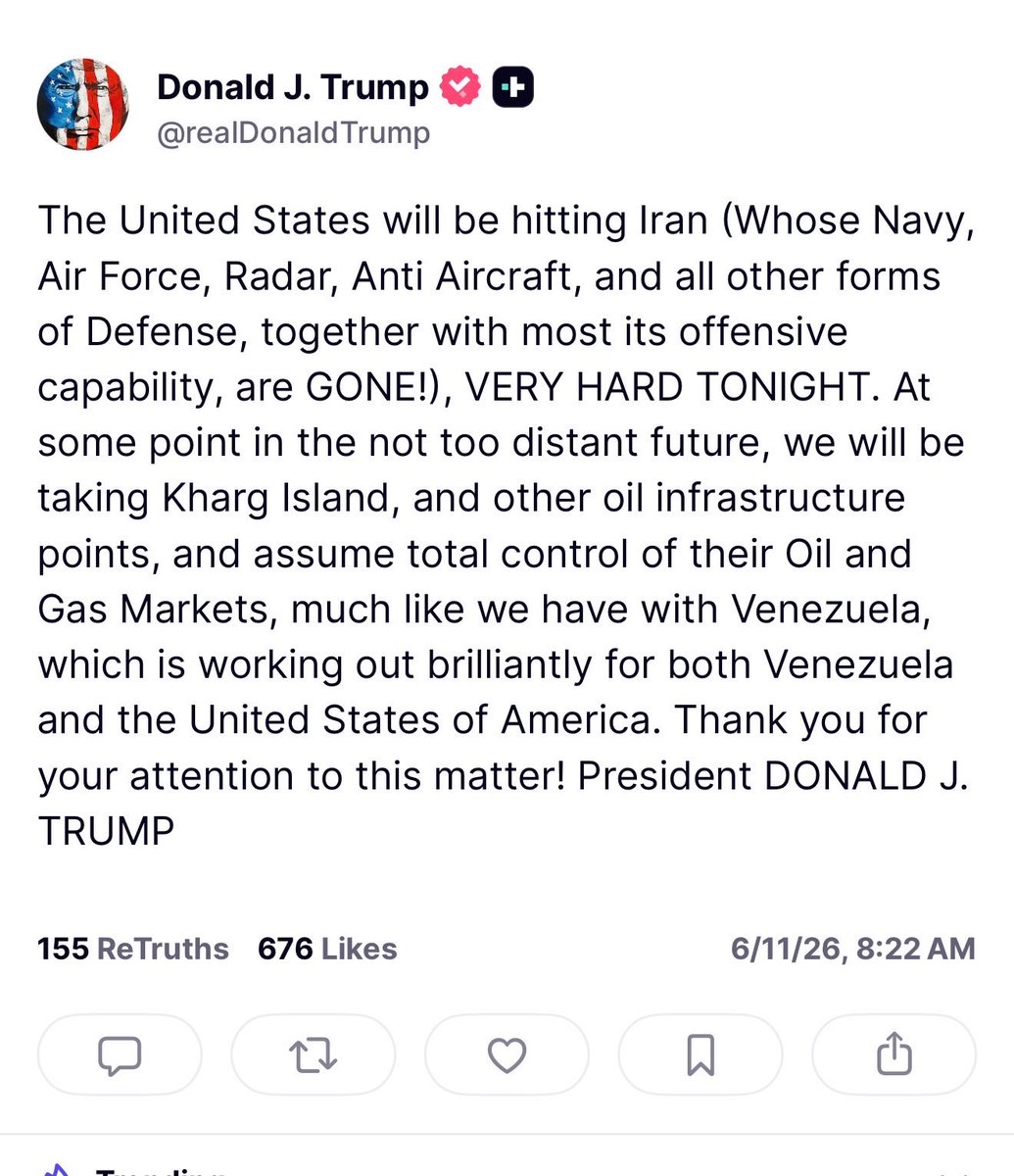
President Trump previews that the U.S. will strike Iran again tonight and says seizing Kharg Island and taking control of Iran’s oil and gas markets is in the future.
336
172
714
446,521
Mehdi Yahyanejad retweeted

Jun 11
NOW: Bahrain says warning sirens have been sounded, with Kuwait Army reporting that air defenses are engaging hostile aerial targets from Iran.
22
93
813
106,627
Mehdi Yahyanejad retweeted

Jun 10
US officials saying strikes are to increase pressure on the regime to make a deal
Again showing a fundamental misunderstanding of the regime
This tactic is guaranteed to fail
Either just walk away
Or go for regime change
Period
92
319
1,551
42,752

اینا هنوز آدم نشدند. در پایان هم، مثل همیشه در اوج ضعف و بدون گرفتن هیچ امتیازی، مجبور به توافق میشن.
البته این دفعه با یه ایران ویرانتر و فقیرتر.
Jun 10

حملات جدید ترامپ به ایران بخاطر «مُجابسازیِ تهران» برای «توافقِ شبهتسلیم» است.
پیشبینی میشود آمریکا به سمت زدن «زیرساختهای حیاتی» _مثل برق و بنزین_ برود!
اگرچه تمهیداتِ خوبی برای این شرایط هم دیده شده ولی طبیعتا اگر قرار باشد ایران در «برق» و «بنزین» دُچارِ مشکل شود، همه منطقه و خصوصا سرزمینهای اشغالی هم باید بحرانی شوند!
1
22
1,615
Mehdi Yahyanejad retweeted

Jun 10
US-Iran negotiations have completely collapsed.
220
394
5,073
177,890
Jun 10
The Trump administration has chosen to escalate for now. Most likely, the price of oil will continue to rise over the next few weeks. Higher oil prices would heavily impact China. China might start using its leverages on both parties to end this war.
Jun 10

The Trump administration is under heavy pressure to reopen Hormuz soon to prevent oil prices from skyrocketing. The administration has two options, neither of them good:
1) Accept an interim deal in which Iran reopens Hormuz, the U.S. lifts the blockade, and nuclear discussions are postponed. In this case, Iran would be unlikely to give in to U.S. demands later.
2) Escalate militarily to force the Iranian government to reopen Hormuz and accept a deal that Iran considers lopsided. Again, it is unlikely that the Iranian government would agree to such a deal under pressure.
At this point, trust between the two sides is so broken that the chance of a multi-phase deal is very small. A multi-phase deal would not be balanced at every step: some steps would favor Iran, and others would favor the U.S. With the lack of trust between the parties, both sides are demanding that the benefits for them be front-loaded into the deal and their concessions be postponed.
5
9
2,471
Jun 10
The Trump administration is under heavy pressure to reopen Hormuz soon to prevent oil prices from skyrocketing. The administration has two options, neither of them good:
1) Accept an interim deal in which Iran reopens Hormuz, the U.S. lifts the blockade, and nuclear discussions are postponed. In this case, Iran would be unlikely to give in to U.S. demands later.
2) Escalate militarily to force the Iranian government to reopen Hormuz and accept a deal that Iran considers lopsided. Again, it is unlikely that the Iranian government would agree to such a deal under pressure.
At this point, trust between the two sides is so broken that the chance of a multi-phase deal is very small. A multi-phase deal would not be balanced at every step: some steps would favor Iran, and others would favor the U.S. With the lack of trust between the parties, both sides are demanding that the benefits for them be front-loaded into the deal and their concessions be postponed.
3
5
26
6,828
Mehdi Yahyanejad retweeted
Jun 10
US airstrikes have begun targeting Iran: US official tells me. Explosions heard in Sirik, Minab, Isfahan and Qeshm Island.
31
118
692
100,896
Mehdi Yahyanejad retweeted

Jun 10
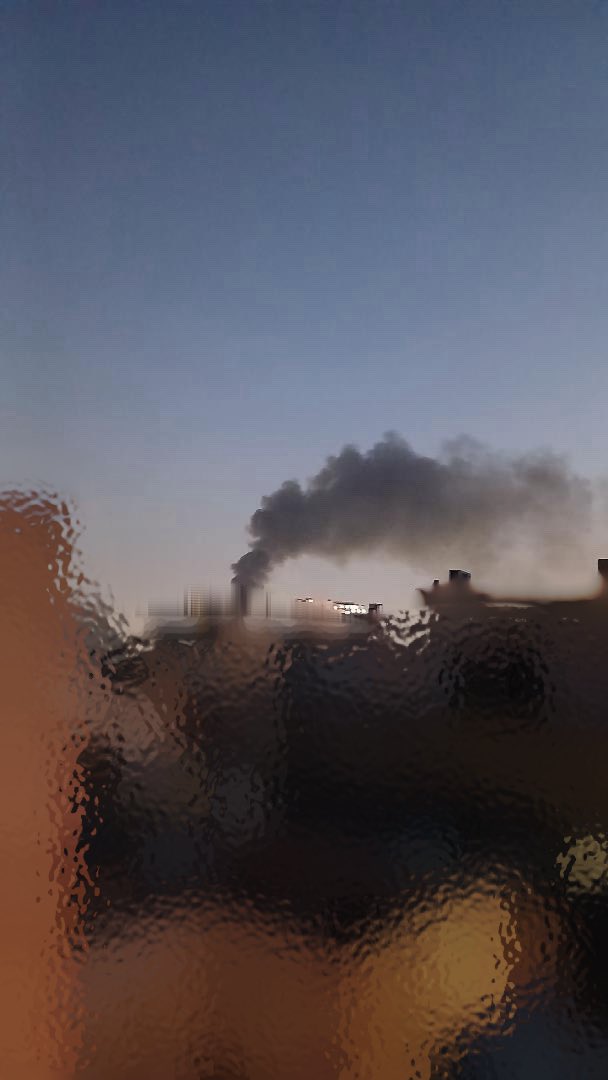
پیام شما :
آتشسوزی در میدان قیام تهران در یک انبار فرش رخ داده.

1
7
225
16,946