
Freelance C# / .Net Web architect / developer, specializing in clean, simple, performant code. Looking for new projects. Check my web site for demos, etc.
Joined December 2007
- Tweets 2,487
- Following 6,857
- Followers 899
- Likes 34,531
37 Photos and videos





Pinned Tweet

6 Jun 2022
Your podcast listeners value your content and appreciate your work. But over time, some may wander off. What about new listeners? How do you attract new listeners to your podcast without spending additional time and effort? podintelligence.com/blog/how… #podcasting #backcatalog #AI
1
14
mindmodel retweeted

Jun 11
Anthropic will pay 1,000 people $85,000 each to spend a year inside a nonprofit, learning to build with Claude.
• $150M total
• No degree required
• First 100 start in October
• Applications close July 17
📷 Sutando WIRE ep. 016
#AI #Anthropic #Claude
24
32
398
82,821
mindmodel retweeted

Jun 11
After using Fable incessantly for 3 days, I can confidently say 2 things:
1. It's a frighteningly good model. o3 was the first time a model corrected me on something mathematical, but it happened once; Fable is recognizing operator factorizations and spectra I totally missed.
17
24
1,026
139,447
mindmodel retweeted

Jun 11
OpenAI is reportedly considering drastic token price cuts to pull customers away from Anthropic, per WSJ. This follows rising complaints from enterprise customers about AI costs, while Anthropic has been gaining traction with Claude Code.
The message is clear: @OpenAI does not want Anthropic to own the developer market. A real AI price war may be starting.
66
24
683
60,013
mindmodel retweeted

Jun 11
We’re launching Claude Corps, a national fellowship program matching people early in their careers with US nonprofits.
We'll teach 1,000 people to use Claude, and pay them to use AI to advance their hosts’ missions.
anthropic.com/claude-corps
552
711
6,812
947,238
mindmodel retweeted

Jun 10
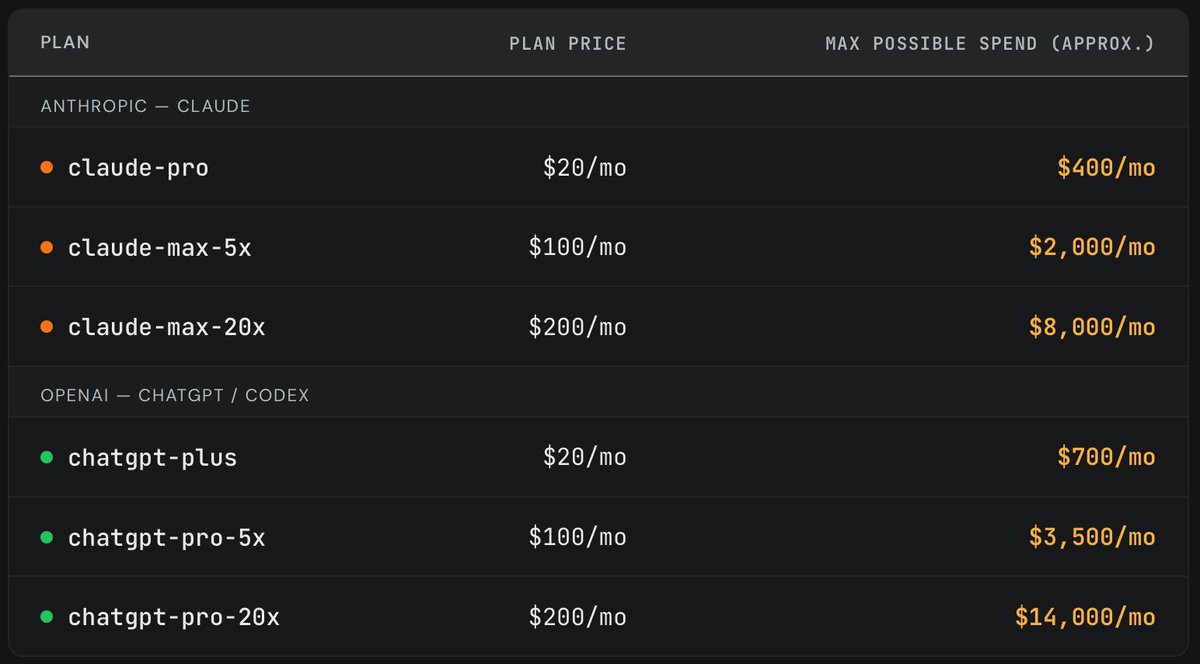
Recently, we purchased one of each Anthropic/OpenAI subscription plan and randomly ran long horizon coding tasks until we exhausted the weekly limit. It's widely believed that a $200/month plan maxes out at ~$2000/month worth of tokens (assuming API pricing). However, we found that the subscriptions are actually far more generous. (2/4)
190
574
6,041
3,464,394
mindmodel retweeted

Jun 10
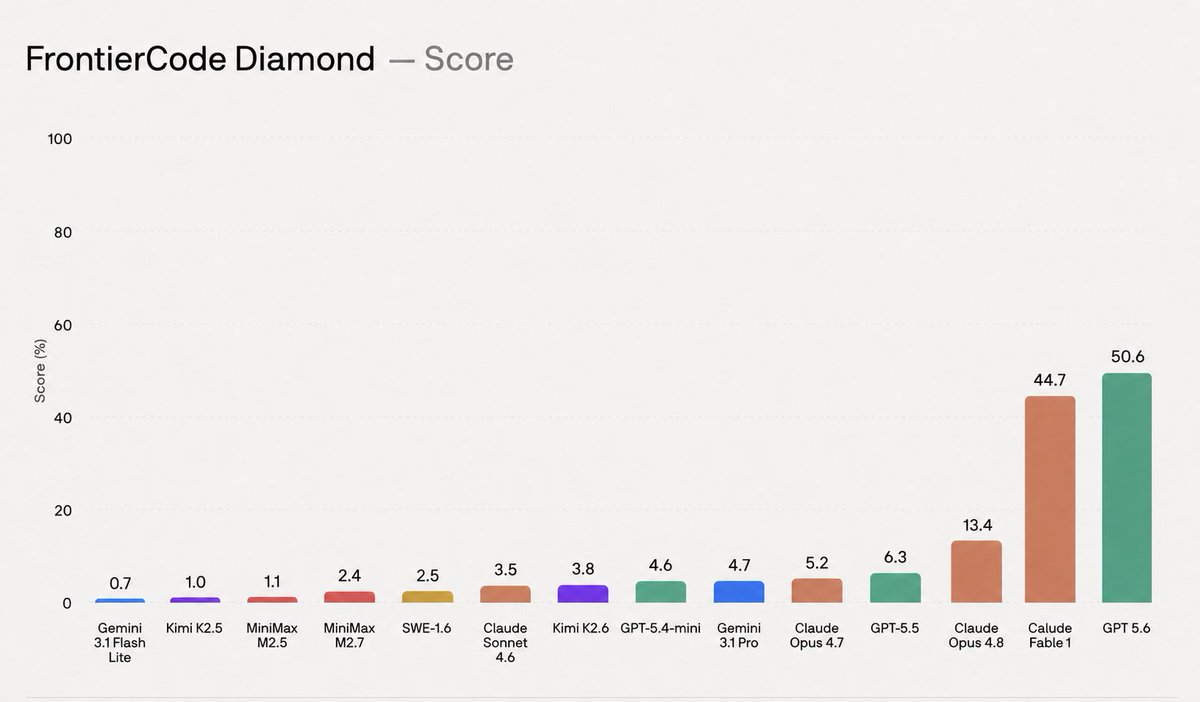
what if i told you…
hello sammy
if you haven’t figured out by now that they have a model waiting to crush fable on thursday i can’t help you.
it will be cheap, it will be fast, it won’t be gated.
enjoy chat. have a great wednesday.
138
41
1,057
209,126

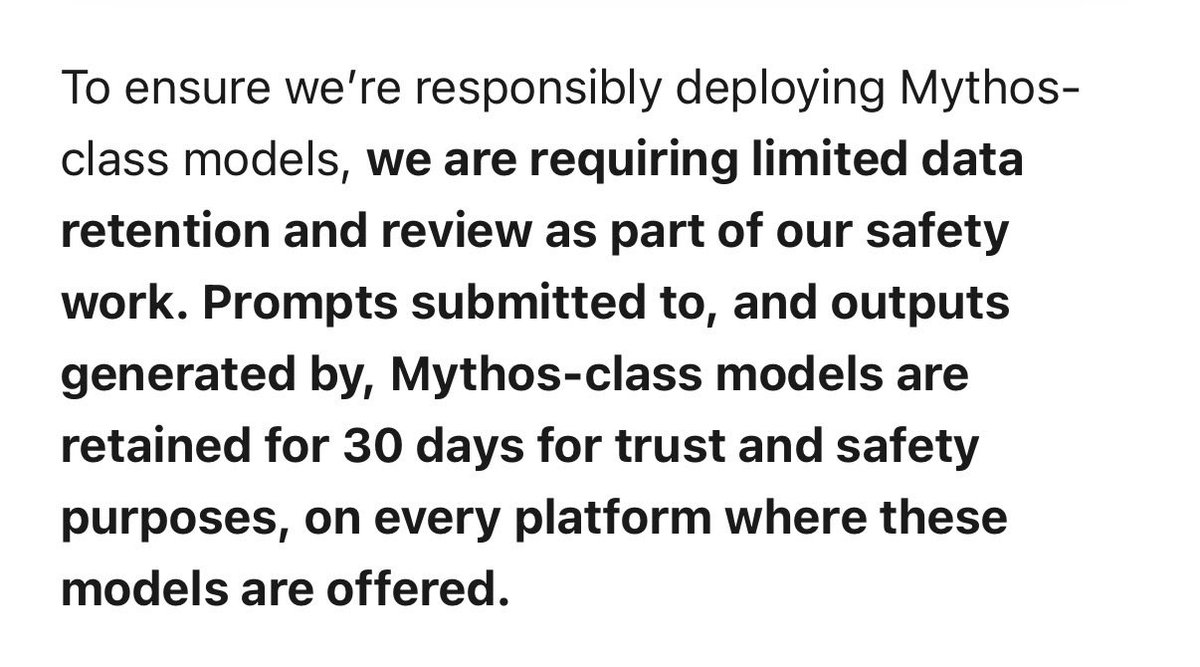
new policy from anthropic: if you use fable/mythos, they collect your data.
no exceptions. not even for enterprise partners.

Introducing Claude Fable 5: a Mythos-class model that we’ve made safe for general use.
Its capabilities exceed those of any model we’ve ever made generally available.
126
436
4,354
683,735


mindmodel retweeted

Jun 9
Just landed nested subagent support in Claude Code
Starting to experiment more with agents kicking off agents as a way to better manage context. Capped at depth=5 to start, going out in today’s release.
Lmk what you think!
503
294
5,642
470,765
mindmodel retweeted

Jun 10
the year is 2028. claude infers whether you’ve ever even thought about gradient descent and silently routes your queries to Claude Sisyphus, a model RL’d to maximize engagement while avoiding task completion. you spend your entire UBI token allotment on it without ever realizing.
35
221
3,665
101,816
mindmodel retweeted

Jun 9
We've reset 5-hour and weekly rate limits for all users. Enjoy Fable 5!
1,355
1,818
35,762
2,202,732
mindmodel retweeted

Jun 9
oh gosh, this is kind of a big deal
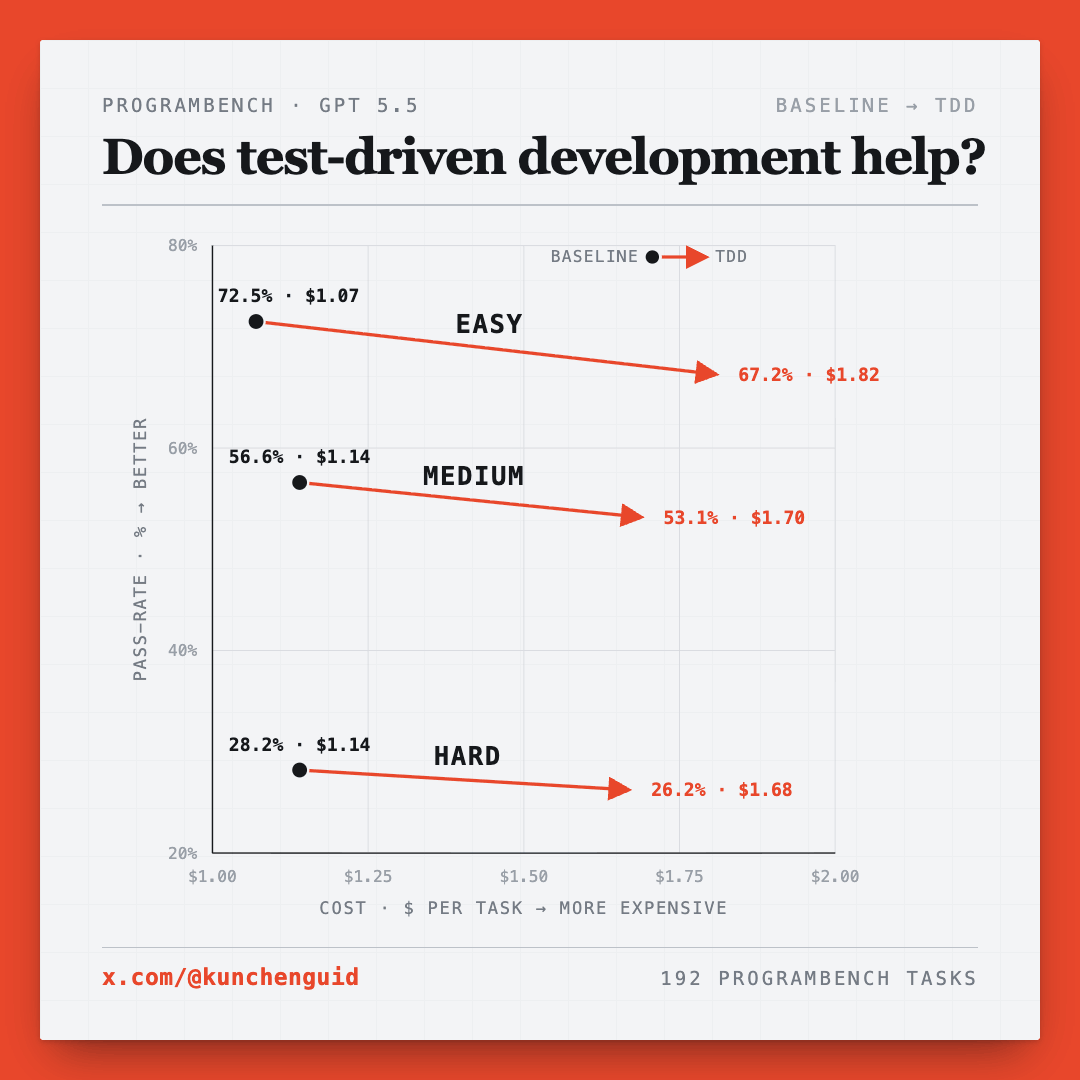
DO NOT ASK YOUR AGENTS TO DO TDD!
i now have empirical evidence that Test Driven Development is harmful for coding agents
what other popular skills do you want me to debunk?
details about the evaluation below 👇
123
43
449
87,893


We’ve been researching new ways for ChatGPT memory to carry context across conversations and keep it useful over time.
Today, that work is rolling out as a more capable memory system in ChatGPT. openai.com/index/chatgpt-mem…
744
1,016
9,684
2,625,111
mindmodel retweeted

Jun 4
At 25, the average person stays in regular touch with about 18 people. By 40, it is down to around 13, and it keeps thinning after that. They rarely leave in one big blowup. It is jobs, rent, distance, and a week that fills with everything except the people in it.
Those numbers come from a study that combed the phone records of three million people, and the same slow fade showed up across the board. So if adulthood has pushed you to go quiet and pull back, you are moving the way the data says most people move.
The posting usually goes first. Sharing your life feels like a chore when you are barely keeping up with the life itself. Then the replies slow down, and whole stretches go by where the only people you talk to are the ones you have to.
Plenty of people are sitting in this exact spot. The World Health Organization spent three years on it and found that one in six people on the planet feels lonely right now, closer to one in five among young adults. We can reach each other more easily than any people in history, and somehow more of us feel alone than before.
The quiet carries a cost, and a lot of it is physical. That report tied loneliness to around 100 deaths every hour, more than 870,000 a year, and put the harm to your body in the same range as smoking. A quiet feed often hides a hard year.
The slide does not run to zero. The same study found that late in life it settles into a small core, about six to eight people, and that inner circle barely changes once it forms. Life is slowly sanding the list down to the few who actually fit.
Going quiet is almost always a season. The job settles, the money stops being a weekly panic, and a little energy comes back. The handful of people who matter most tend to still be there when you come up for air, usually kinder about the silence than you feared, because they have lived their own quiet years too.
The feeling of disappearing is real. It is also one of the most common things people go through. Almost everyone you scroll past in silence is somewhere in the same stretch, carrying the same weight, posting nothing about it.
Jun 3

adulting really humbles you. i finally understand why some people go quiet, stop posting, or just disappear from social media.
4
22
146
11,640
mindmodel retweeted
Jun 4
Every annoying password rule you follow, the capital letter, the number, the symbol, changing it every few months, came from one man at a US government office in 2003. He was mostly guessing. Years later, he went public and apologized to all of us.
The password is older than that rule, and it was a mess from day one. It was born at MIT in 1961, when a scientist named Fernando Corbató built one of the first computers many people could share at once. Since everyone shared that one machine, he needed to keep each person's files separate. His fix was the password. He never meant it as serious security, just to stop casual snooping.
It didn't even do that much. Every password sat in one plain file anyone with access could read. In the spring of 1962, an MIT student named Allan Scherr hit his four-hour-a-week limit and wanted more. One Friday night he asked the system to print that file, then grabbed the whole list Saturday morning. He logged in as other people and passed the list around to friends. The password was about a year old, and it was already broken.
The man behind the rules you hate was Bill Burr, and in 2003 he wrote an eight page guide on building a password. He told everyone to add a capital letter, a number, and a symbol, and to switch to a new one every 90 days. Banks, schools, and offices copied it word for word. That is why your login still wants a symbol and a number you can't recall. He had almost no proof any of it worked. He leaned on a paper from the 1980s, before the internet existed, when almost no one had studied what made a password safe.
In 2017, he came clean. He told the Wall Street Journal, "Much of what I did I now regret." Forcing a new password every few months just taught the lazy move, bumping Rosebud1 to Rosebud2 to Rosebud3, which a computer cracks in seconds. So the same office threw the rules out. The new advice is to skip the symbols and forced changes and use a long, plain phrase. A cartoonist named Randall Munroe ran the numbers. A phrase like "correct horse battery staple" would take a computer about 550 years to crack, while a rules-style password like "Tr0ub4dor&3" falls in three days.
People have leaned on spoken passwords for roughly 3,000 years. Roman soldiers had a code word for the night guard, and during Prohibition you needed the right phrase to get into the bar. But there was only ever one of them, just for that night. The same brain that once held a single code word now has to track 120 of them, each with a capital and a symbol, half guarding accounts you forgot you ever made. So no, the human spirit was not built for this. One man's shaky guess in 2003 just made it hurt a whole lot more.
Jun 3

the human spirit was not designed for this many passwords
12
86
450
74,299

mindmodel retweeted

Jun 4
I'm sorry. I was wrong.
GPT-5.6 will not be released today.
It will be the Codex SuperApp.
The question: in what ways will it be Super?

Jun 4

It's increasingly likely that GPT-5.6 comes tomorrow.
When I posted this morning, I was going off pattern recognition. When the Codex update comes on Tues., it signals something bigger for Thurs.
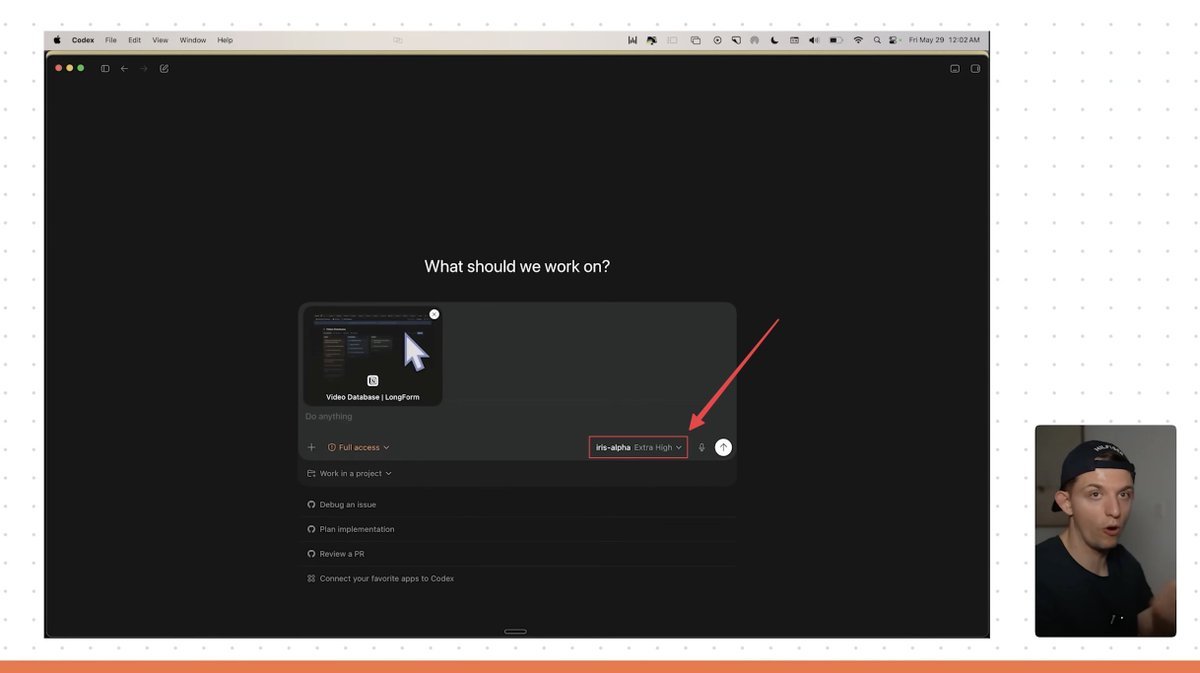
Now mysterious model checkpoints have appeared in YouTube videos.
It's on schedule too:
> GPT-5.4: 3/5/26
> GPT-5.5: 4/23/26
> GPT-5.6: 6/4/26 (?)
~6 week model release cadence now, which is crazy.
Tomorrow should be fun.
53
13
478
107,937
mindmodel retweeted

Jun 4
The best way to learn how to backflip
38
389
4,312
290,546
mindmodel retweeted

Jun 4
Hi. Over the last 24 hours we had three separate small incidents that affected Codex reliability. Those are three too many and we are taking active steps for them to not reproduce.
I have reset usage limits for Codex across all paid plans. May the tokens flow again.
1,036
508
11,119
1,215,282