A Son, father, husband, staunch muslim, ever-grateful to his creator.
Joined January 2011
- Tweets 13,198
- Following 117
- Followers 1,298
- Likes 11,115
361 Photos and videos
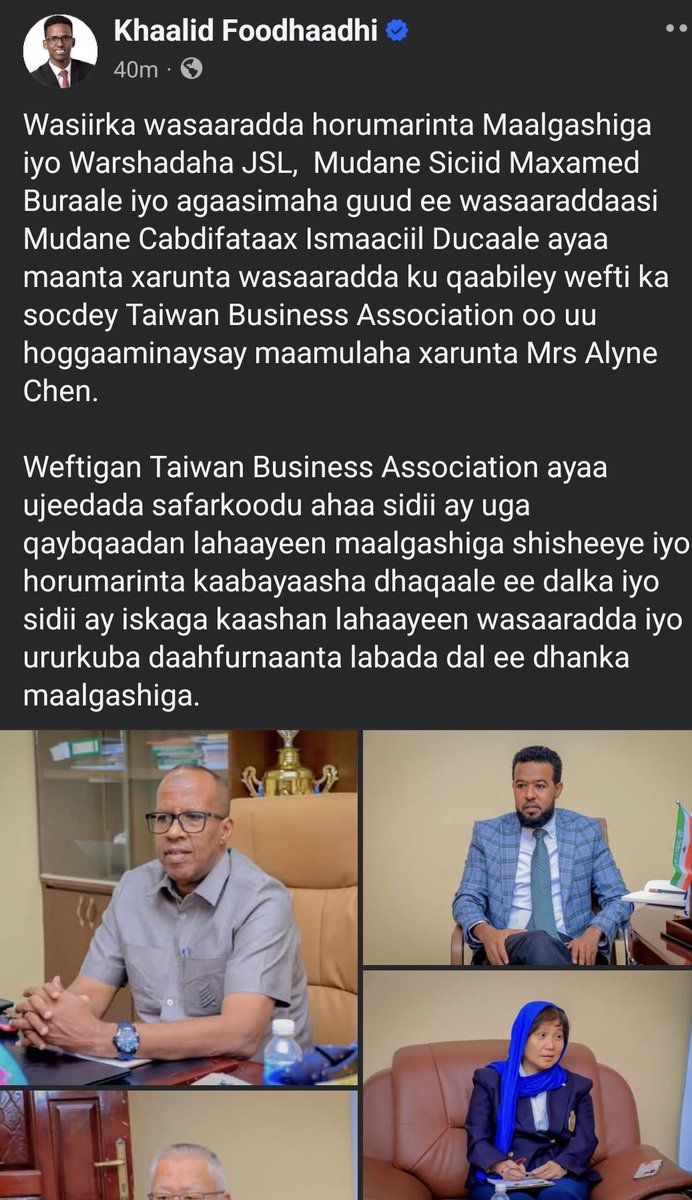
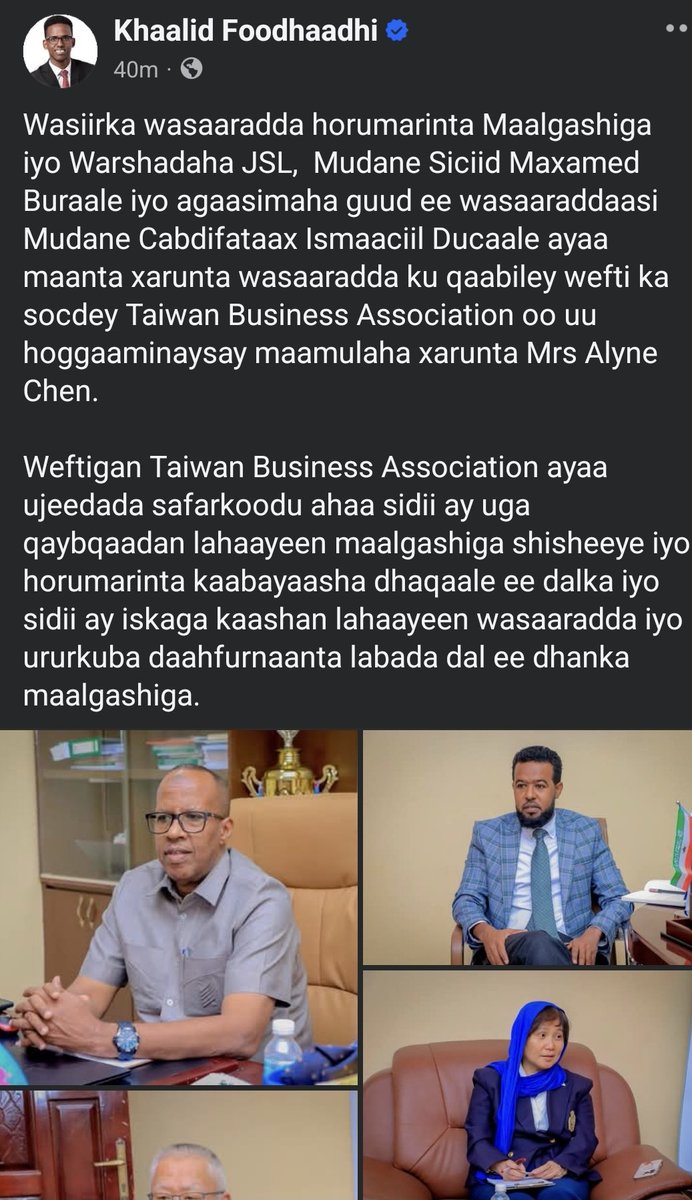
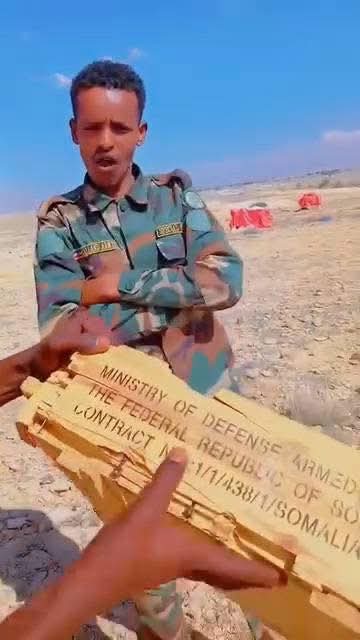

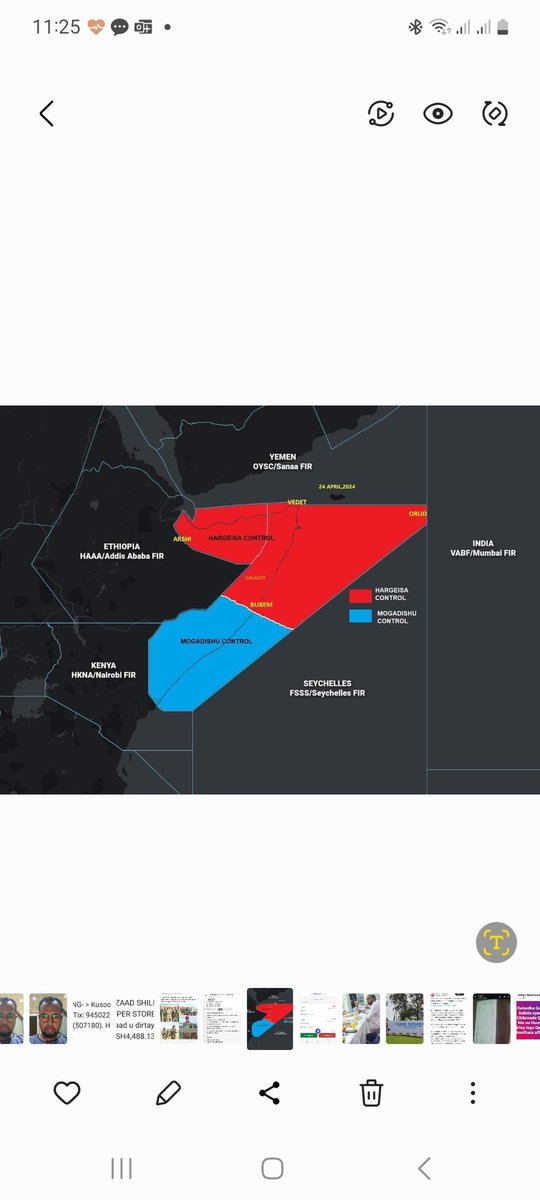


Jun 14
Mohamed Hassan
Your mimicry of morale and the false grandeur stain the words you used: pride, dignity, & loyalty. For 3 years, your gates remain closed to starved Gazans. Anyone of your ilk shouldn't, in their right mind or with a shred of conscience, make such an statement.
Jun 14

The new governor of Akka betrays once again!
History is being rewritten with the ink of concessions, and a rush toward suspicious alliances in pursuit of a missing international recognition,even if the price is shaking hands with those who have shed the blood of brothers and innocents.
The Somali people, across all spectrums, have built their history on pride, dignity, and loyalty to the causes of the Arab and Islamic nations.
Today, this announcement by the president of the separatist Somaliland region, Abdirahman Cirro, regarding his arrival in Israel on a first-of-its-kind visit, comes as a shock to all steadfast principles. It exposes a readiness to fall into the embrace of the occupation under the pretext of "seeking hope and existence," as if existence cannot be achieved except by selling out principles and denying a shared history.
Israel, which has failed to bring peace and stability to itself, will never be a lifeline for any nation. Instead, it remains a tool for deepening divisions and sowing discord within the same body.
Anyone who believes that their legitimacy can be derived from Tel Aviv, or through a recognition that passes over the blood of the vulnerable, is chasing a mirage. History will record that this step was not a "new chapter of friendship," but rather a stab in the back of brotherhood, and a chapter of compromise over the nation's awareness and fundamental principles.
The choice to ally with the occupier will remain a stigma, no matter how much it is shrouded in terms like "diplomacy" and "shared future."
35
Jun 11
Thank you! We have always been too pure for the filthy, predatory politics and geopolitics.

I am advising Somaliland to decline a POTUS recognition. They are too pure for his shenanigans.
1
1
1
90
Mohamed Hassan retweeted

Jun 5
Actually the deal was never ratified, Somalia should have no sovereignty over Somaliland. You should have watched by episode on Somaliland. 👇
youtu.be/JS7m3XvoGj0?si=Y8eI…
29
162
497
23,883
Mohamed Hassan retweeted

📰 Response to Faisal's Opinion :
June 26, 1960 – The Legal and Historical Case for Somaliland’s Sovereignty.
A Date That Stands on Its Own.
June 26, 1960 is not just a historical milestone , it is the day Somaliland became a sovereign state. This fact is documented in historical records and diplomatic recognition practices at the time (Lewis, 2002; Bradbury, 2008). Yet its significance continues to be debated, often overshadowed by competing political narratives.
At its core, the issue is simple:
Can a people who achieved recognized independence reassert their sovereignty based on that same legal foundation?
In the case of Somaliland, the answer is yes.
Sovereignty Was Achieved , Not Imagined
On June 26, 1960, Somaliland ended British colonial rule and emerged as an independent state, receiving recognition from multiple countries (Bradbury, 2008). This met the widely accepted criteria of statehood outlined in international law.
According to the Montevideo Convention (1933), a state must possess:
a.Defined territory
b.Permanent population
c.Government
d.Capacity for international relations
Somaliland fulfilled these conditions at independence (Shaw, 2017).
Once achieved, sovereignty creates a legal precedent that retains significance in later disputes.
Restoration, Not Separation.
The claim that Somaliland represents “secession” overlooks a key legal distinction.
Secession involves the creation of a new state from an existing one. Somaliland, however, bases its claim on restoration of prior sovereignty, having existed as an independent state in 1960 (Pegg, 2008).
As scholars note, cases of restored sovereignty differ from traditional secession movements, particularly when prior recognition existed (Crawford, 2006).
The Misunderstanding of Borders.
Critics often argue that Somaliland’s borders are colonial constructs. While historically accurate, this argument conflicts with established African legal practice.
The principle of uti possidetis juris, endorsed by the International Court of Justice, affirms that:
Former colonial administrative boundaries should be preserved after independence (ICJ, 1986; Shaw, 2017).
This principle has been consistently applied across Africa to maintain stability. Somaliland’s borders, based on the former British Protectorate, align directly with this rule.
Statehood Is Measured by Reality, Not Perfection.
Statehood does not require internal unanimity. Instead, it depends on effective governance and control (Crawford, 2006).
For over three decades, Somaliland has demonstrated:
Stable governance
Institutional continuity
Electoral processes
Scholars such as Bradbury (2008) and Hoehne (2011) have documented Somaliland’s relative stability compared to the region, reinforcing its practical statehood.
Self-Determination Is a Continuing Right
The right to self-determination is a core principle of international law, enshrined in:
UN Charter, Article 1(2)
UN General Assembly Resolution 1514 (1960)
These affirm that:
All peoples have the right to freely determine their political status (UN, 1960).
Somaliland exercised this right in 1960 and continues to express it through sustained governance and political organization.
Unity Must Be Voluntary, Not Assumed
Shared culture, language, and history do not automatically require political unity.
Modern international relations demonstrate that:
States with shared identities can coexist independently.
Political legitimacy depends on consent and sustainability
As noted in international law scholarship, state formation is ultimately shaped by political will and effective governance, not cultural uniformity (Crawford, 2006; Shaw, 2017).
The Core Question.
The debate is not about whether Somaliland meets the criteria of statehood , it clearly does. The real question is:
Will historical facts, legal principles, and ground realities be consistently recognized?
Somaliland’s case rests on:
A documented moment of independence
Compliance with legal criteria of statehood.
Long-term effective governance.
Conclusion: Recognition of Reality
June 26, 1960 represents lawful sovereignty grounded in international law.
Somaliland’s claim is supported by:
Historical independence
Legal principles (self-determination, uti possidetis)
Practical state-building
Final Line
Somaliland’s independence is not a question of possibility, it is a matter of acknowledgment.
📚 References
Bradbury, M. (2008). Becoming Somaliland. Indiana University Press.
Crawford, J. (2006). The Creation of States in International Law (2nd ed.). Oxford University Press.
Hoehne, M. V. (2011). “No Easy Way Out: Traditional Authorities in Somaliland.” Journal of Eastern African Studies.
ICJ (International Court of Justice). (1986). Frontier Dispute (Burkina Faso/Mali), Judgment.
Lewis, I. M. (2002). A Modern History of the Somali. Ohio University Press.
Pegg, S. (2008). “Somaliland: The Process of State Formation.” African Affairs.
Shaw, M. N. (2017). International Law (8th ed.). Cambridge University Press.
United Nations (1960). General Assembly Resolution 1514 (XV).
@cnnbrk @tomweg @siciidSL @musebiihi @FaisalAliWarabe @faisalroble19 @somalilandmfa @sldc01 @FahimaAli49 @SomalilandChro1 @France24_en @AP_Fashion @IsraelenFR @IsraeAfricaOrg
8
23
80
5,247
May 25
If Somaliland is "so called" and by that innuendo does not exist, why are you bothered? Why the furious statements?
24
Mohamed Hassan retweeted

May 24
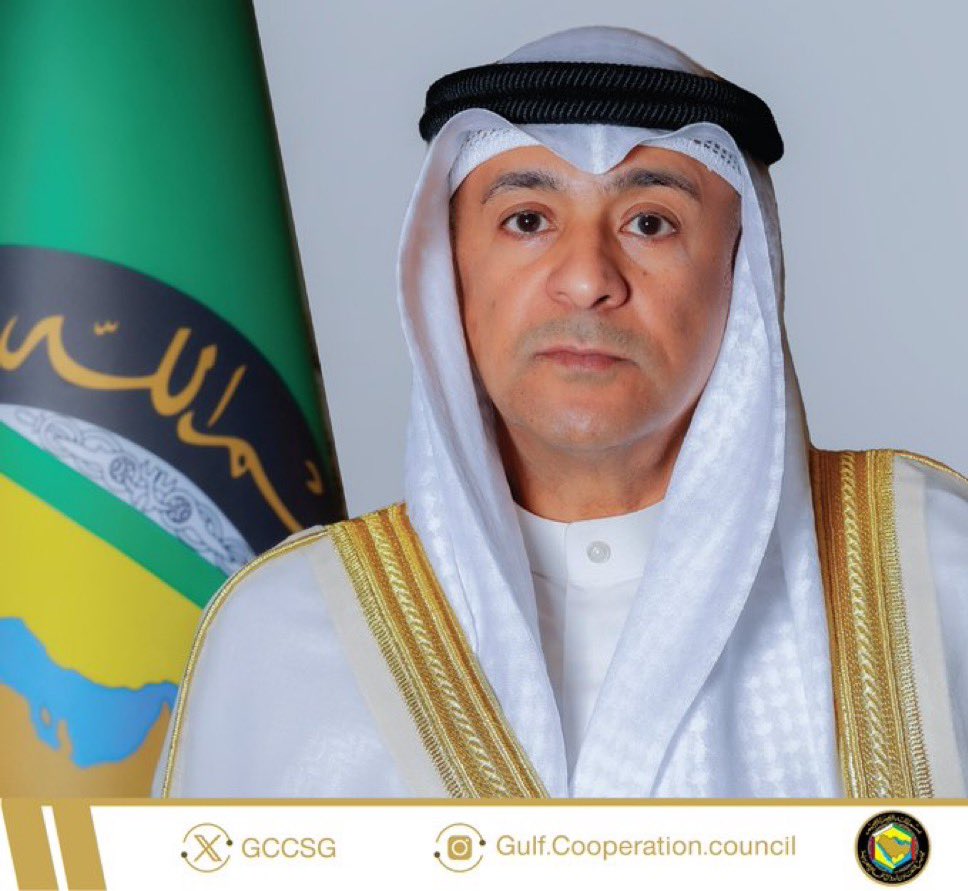
GCC Sec General says “the ‘so-called Somaliland’ opening of an ‘embassy’ in occupied Jerusalem” is a step that violates international law and resolutions.
Questions:
1- If Somaliland is an imaginary and unrecognized state, why bother denouncing whatever it does?
2- The Arab official position considers East Jerusalem to be occupied and should be given to Palestinians to become the capital of a Palestinian state in line with UN 242 up to 2803. If so, how is any nation opening an embassy in West Jerusalem a violation of anything?
May 24

معالي الأمين العام لمجلس التعاون @jasemalbudaiwi : ما أقدمت عليه ما يسمى بـ”أرض الصومال” في افتتاح “سفارة” مزعومة له في مدينة القدس المحتلة، هي إجراءات باطلة ومرفوضة وتنتهك القوانين والقرارات الدولية والأممية.
gcc-sg.org/ar/MediaCenter/Ne…
#مجلس_التعاون
42
61
214
19,600
Mohamed Hassan retweeted

I advocated for #Somaliland recognition more than a decade ago. When I spoke about the Horn and Somaliland in 2024 in a space and repeated ad nauseam that the Horn and this country would be part of this post-Westphalian era we’ve entered, people didn’t listen..
I’m happy to read, to hear that my analysis has finally come thru
x.com/MMSomalitv/status/2057…
16
36
148
3,042
Mohamed Hassan retweeted

May 18
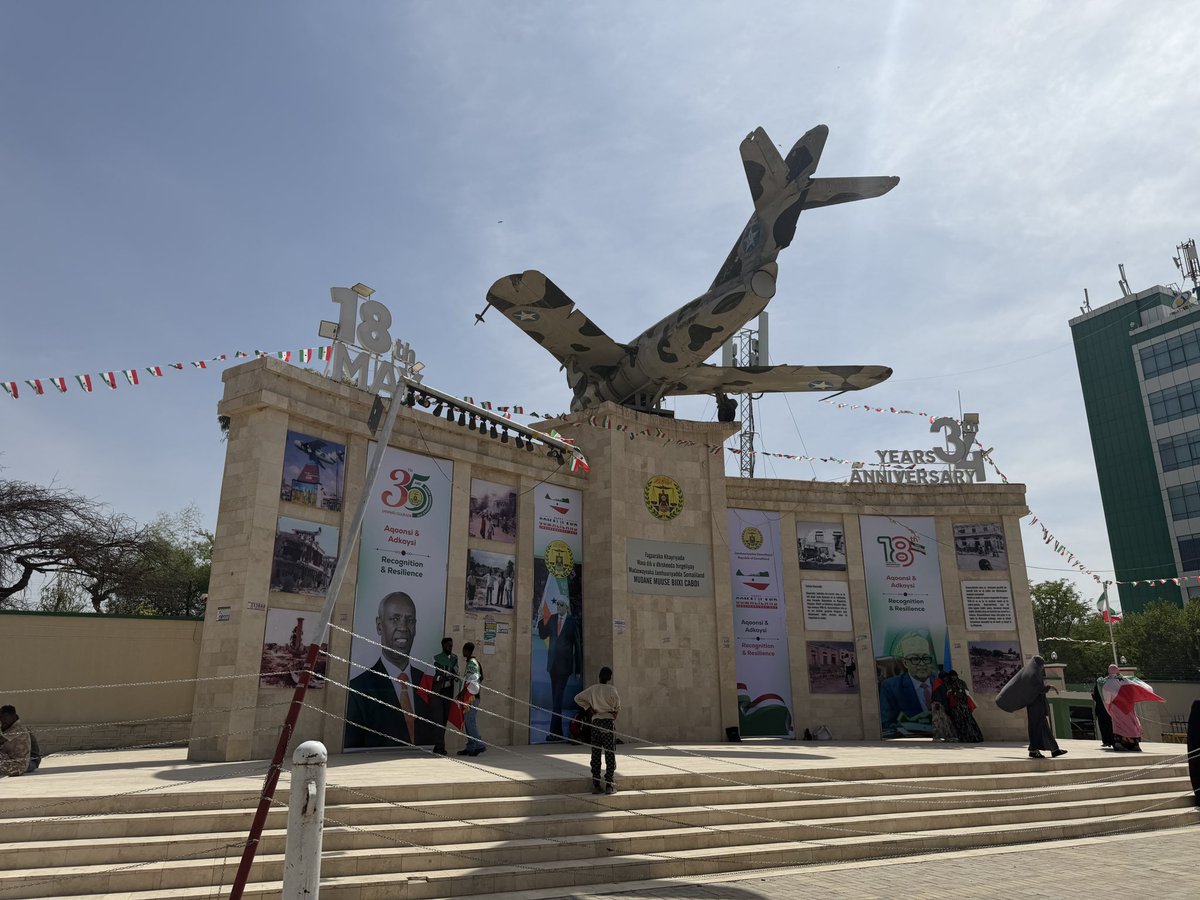
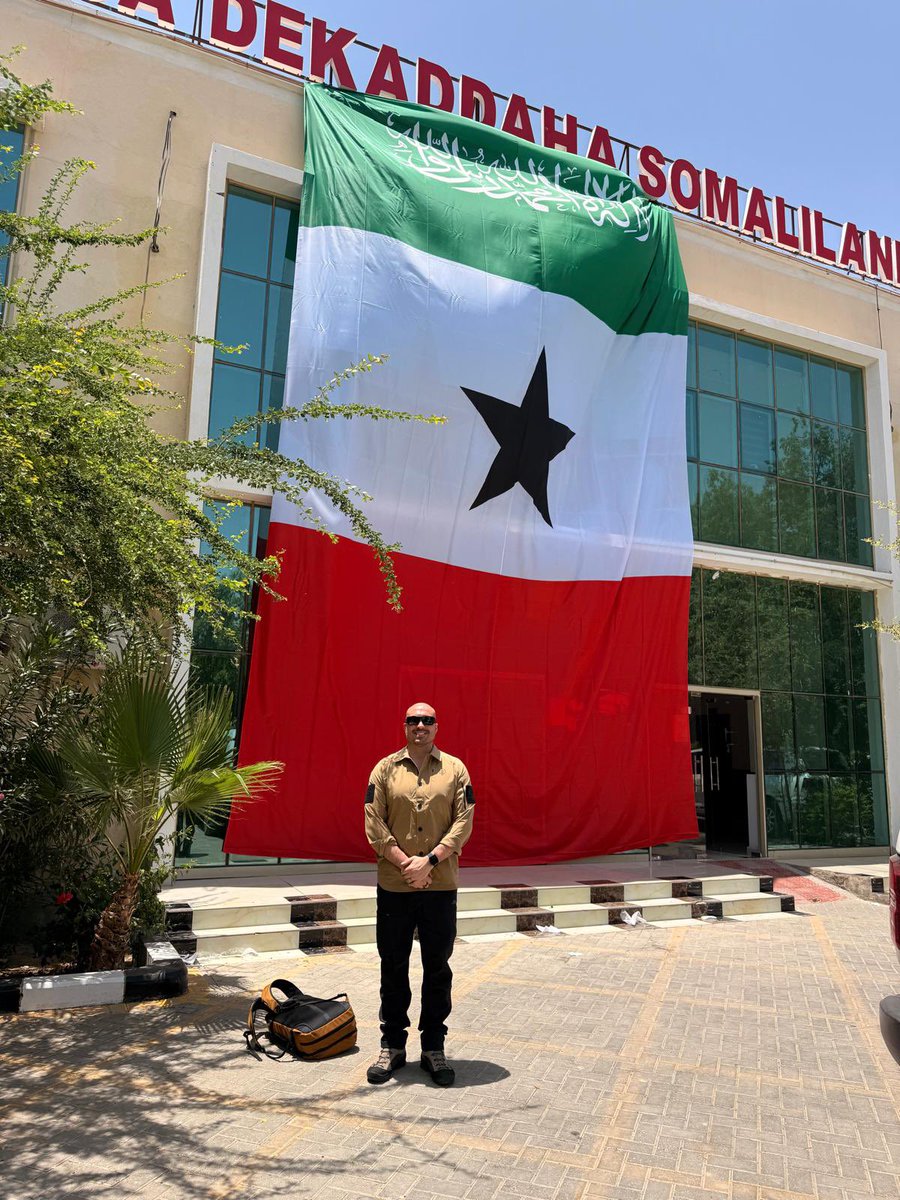
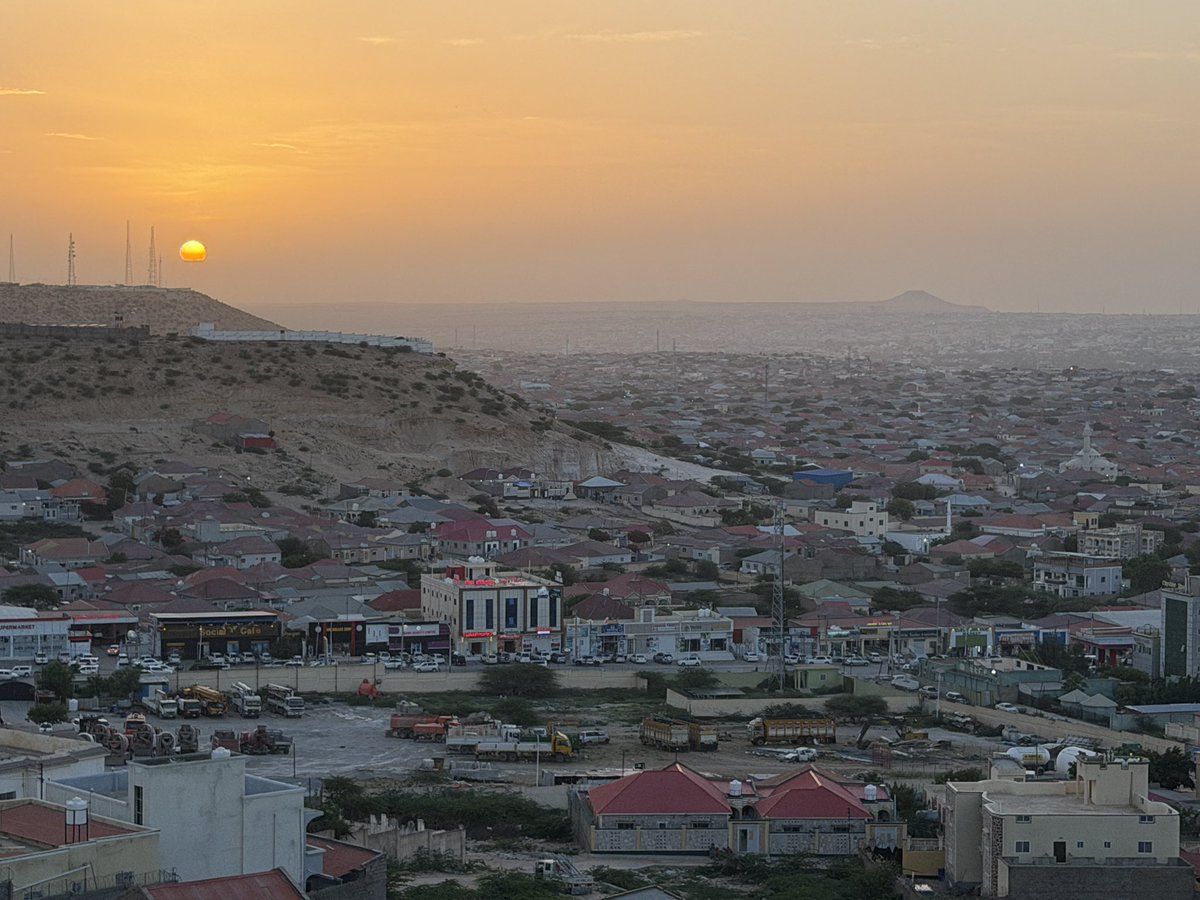
After a few days in Somaliland, meeting government ministers, local administrators, soldiers, port officials, business people and ordinary Somalilanders, I leave with one overriding impression: this is a country waiting to exhale.
It is not perfect and no country is. Somaliland’s politics are contested but have passed the test, its institutions need development, and its eastern disputes need careful handling.
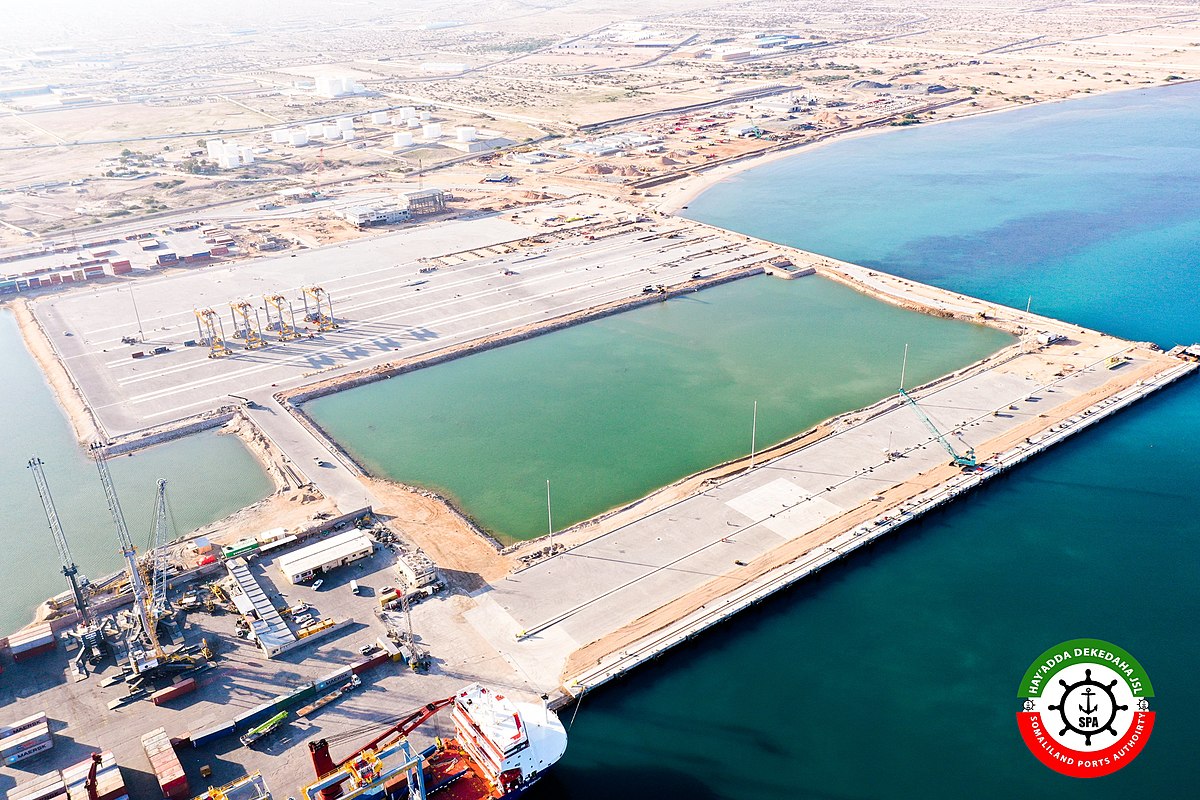
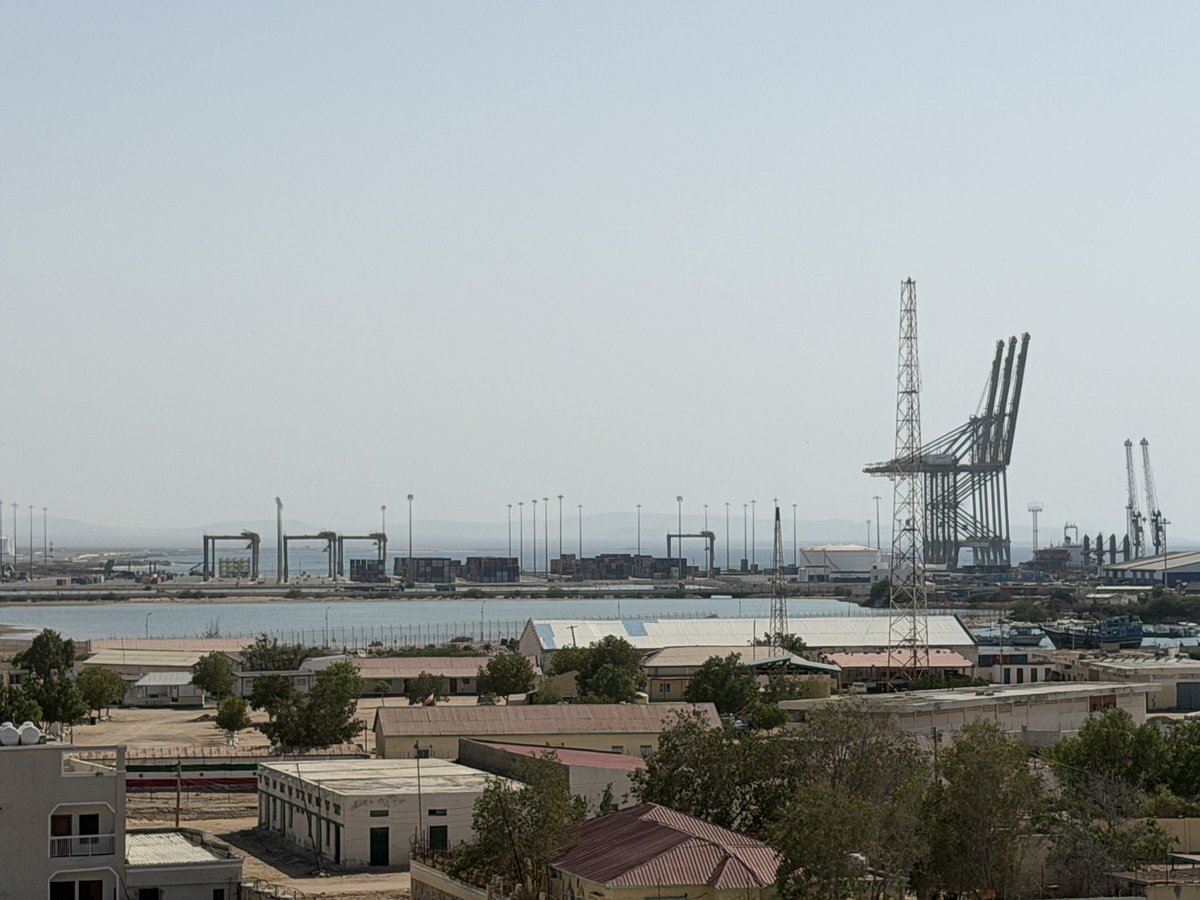
However, the basic fact is hard to escape. Somaliland governs itself. It has built order from collapse, held competitive elections, maintained functioning institutions, secured its own streets, and developed Berbera into a strategic asset on one of the world’s most important maritime corridors.
Recognition would simply be the formal acknowledgement of a reality that already exists.
The contrast with Somalia makes this even more obvious. The internationally recognised state next door continues to absorb billions in aid, diplomatic attention and security assistance while remaining unable to impose authority across its own territory. Huge tracts of Somalia are run by Al Shabab, the government barely controls Mogadishu, and even then, their leader is a Muslim Brotherhood extremist. Yet Somaliland, which has done so much more with so much less, is left in legal limbo.
That limbo now serves no serious strategic purpose. It complicates investment, constrains security cooperation, weakens maritime partnerships, and leaves a stable, pro-Western polity exposed while others shape the Red Sea corridor.
The people I met did not speak like petitioners asking for a favour but as citizens of a country that has earned its place. There is pride here, but also impatience. Somaliland is not asking the world to invent a state. It is asking the world to recognise the one that has existed, in practice, for more than three decades.
Recognition can only be a good thing: for Somaliland, for Britain, and for a region that badly needs functioning partners. We need to make a choice. Other countries like China in Djibouti and Turkey in Somalia are already shaping the strategic picture. Do we want to sit back and let them do so in a strategic part of the world, or do we want to have an influence? If so, doing the right thing and recognising Somaliland serves both their interests as well as ours.
49
202
831
27,758
Mohamed Hassan retweeted

May 18
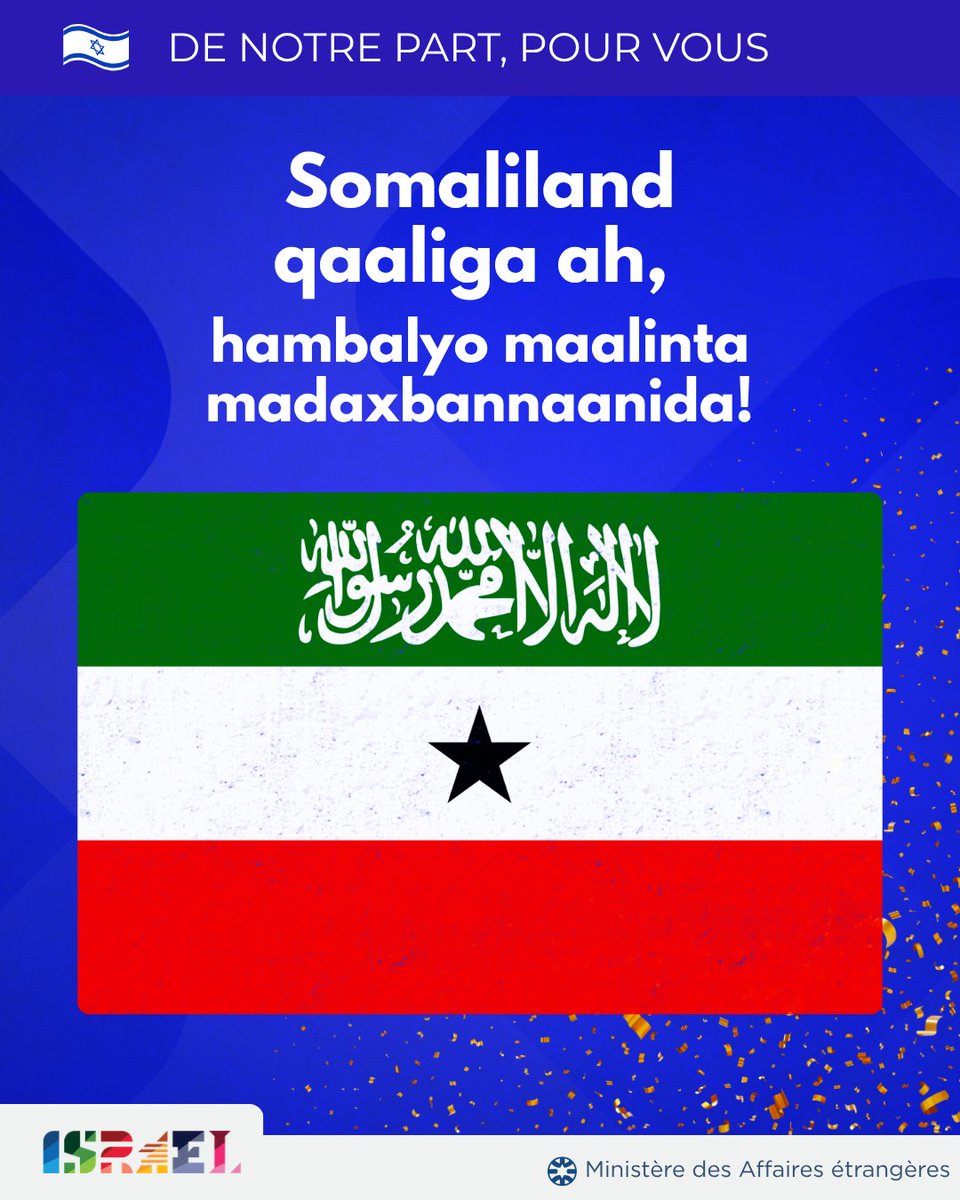
Cher Somaliland,
Chaleureuses félicitations à l’occasion de votre fête de l’indépendance 🇸🇴✨
Sincèrement,
Israël 🇮🇱
@somalilandmfa @Abdirahmanirro @AmbMohamedHagi
46
99
524
17,528
Mohamed Hassan retweeted

From our Mailbox
We are people who understand our religion and care about our country’s interest. This voice is coming from a 5-year-old child from #Somaliland.
@AhmedyasinOmar
21
73
398
8,716
Apr 8
RT @badrijimale: Breaking: Djibouti’s April 10, 2026 election results just leaked—again. Shocking absolutely no one: Ismaïl Omar Guelleh wi…
1
Mohamed Hassan retweeted

Feb 21
Somaliland didnt need the UAE to declare independence. They broke away in 1991 after decades of atrocities under Siad Barre, and I’m talking real genocide.
The Isaaq genocide from 1987 to 1989, also called the Hargeisa Holocaust, killed between 50,000 and 100,000 civilians, with local reports going as high as 200,000. Cities like Hargeisa and Burao were completely destroyed. Barre’s regime targeted Isaaq civilians systematically, and it was state-sponsored no questions asked.
So don’t tell me the UAE is some “Trojan horse” trying to split Somaliland. The people there already had a reason to take control of their own destiny. Somaliland has run its own government, army, and elections for over 30 years
Everyone suddenly claiming to be a Somalia expert? Learn the history first. Start with the genocide, the famine, the collapse of the state then maybe you can talk. Everything else is just weak storytelling to fit your animosity towards the UAE
110
168
555
35,106
Mohamed Hassan retweeted

Feb 18
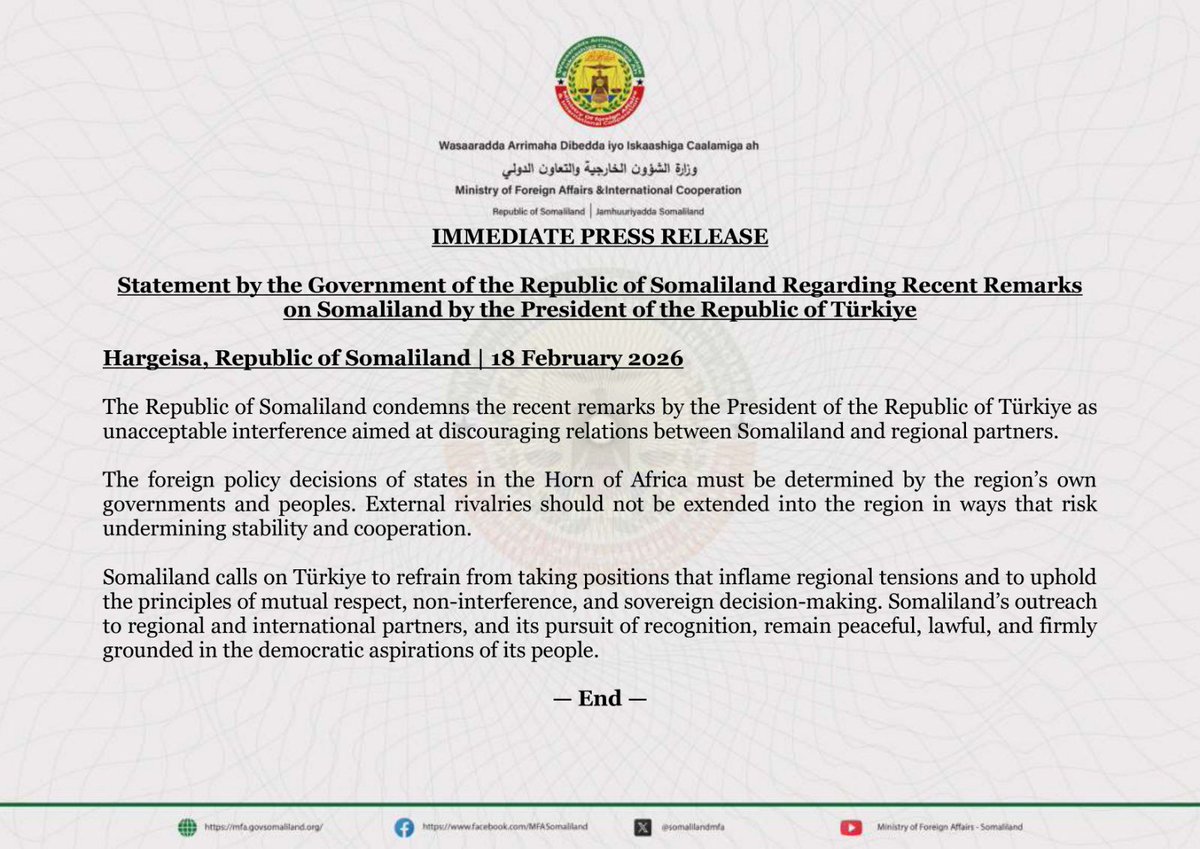
IMMEDIATE PRESS RELEASE
Statement by the Government of the Republic of Somaliland Regarding Recent Remarks on Somaliland by the President of the Republic of Türkiye.
mfa.govsomaliland.org/articl…
177
454
1,397
336,566
Mohamed Hassan retweeted

Feb 15
Tiny Djibouti and the AU Chair Mohamoud Ali have instrumentalised the African Union, turned into an tool of naked partisanship; a weapon to block the international recognition of Somaliland.
Just two latest moves:
Somalia elevated into the AUPSC - undeservingly.
Somalia put on African peer review mechanism - a role that ought to be reserved for states that are least fragile, well-governed and can exercise positive peer pressure.
But can the AU alone and singly stop a powerful international momentum?
Isn't the real decider of Somaliland recognition ultimately not geopolitics and bilateral strategic choice, rather than outdated normative multilateral principles?
99
155
454
98,742
Feb 9
Very well put! This is Somaliland defined. This is what our founding fathers - the first Guurti - laid the foundation for. A democratic system that gives equal platform to all citizens (regardless of their clan) is the core of its power and very existence. Thank you @RAbdiAnalyst
Feb 9

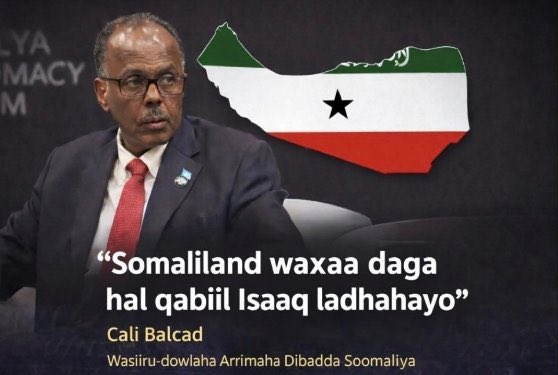
Mogadishu's favourite talking point is that Somaliland is Isaq dominated and a single clan cannot become a nation-state.
Reality is that Somaliland is a multi-clan state and has historically done more to become more inclusive than any Somali polity in the Horn.
The Isaq are the dominant clan because of demography not because they 'own' the state.
The Isaq were the central force that drove Somaliland's war of liberation, helped reclaim its independence and contributed to its state-building.
Those who demonise the Isaq conveniently forget the clan's contribution to build a democratic state, inclusive and pluralistic society.
The notion Somaliland is single clan aristocracy is a caricature
Dahir Riyale Kahin (Somaliland's 3rd President) was a Gadabursi from Awdal and not an Isaq.
If it did that when it was a young democracy it surely could do the same now.
Look at every Somali polity and show me one single Somali state whose early state building was not driven by a 'central clan' with demographic weight, military muscle, ability to out-coerce and exert control.
The beauty of Somaliland is that it is on the right path towards becoming a strong constitutional democracy one which prioritises and privileges citizenship over clan.
Ask Balcad and Mogadishu if a Hamari, a Jareer/Bantu Somali can become president.
Zero chance. 😇
1
7
14
2,632
Mohamed Hassan retweeted

#Somaliland gov. has reached an agreement with #UAE company Nael & Bin Harmal Hydroexport to rebuild a bridge destroyed during a flood. The road is essential for ensuring truck traffic from the port to Hargeisa and Tog Wajaale, a border town with #Ethiopia africaintelligence.com/easte…
7
56
190
7,365
Mohamed Hassan retweeted

Jan 21
I appreciate the passion you bring to this discussion. However, several of your assertions require clarification, as they rest on selective interpretations that do not fully align with the historical and legal record.
First, regarding the 1960 union: It is a matter of documented history—not myth—that the Act of Union between the State of Somaliland and the Somali Republic was never mutually ratified in identical form by both parties as a binding international treaty. Somaliland’s Legislative Assembly approved and signed its version on 27 June 1960, effective immediately in its territory. The Somali side approved an “Atto di Unione” in principle on 30 June, but it differed significantly in content, and no single, agreed text was ever finalized or registered as required under international law for such unions. A retrospective proclamation in January 1961 by the combined assembly does not cure this defect retroactively. This is not “rewritten history” but a well-established legal and historical fact, acknowledged in scholarly analyses and even reflected in the African Union’s own 2005 Fact-Finding Mission findings.
Speaking of that mission: Far from “abusing” or “cherry-picking” the report, I refer directly to its core conclusions. The AU mission explicitly described Somaliland’s case as “historically unique and self-justified in African political history,” noting that the 1960 union “malfunctioned,” brought “enormous injustice and suffering,” and was never properly ratified. It recommended that the AU find a “special method” to address this outstanding case without linking it to fears of a “Pandora’s box.” The report reaffirmed territorial integrity in general but did not preclude—and indeed invited—consideration of Somaliland’s distinct status. Respecting the AU’s broader position does not require ignoring its own documented assessment of this specific situation.
On international law principles like uti possidetis juris and state continuity: Somaliland’s claim is not one of secession from a functioning sovereign entity but restoration of sovereignty based on pre-union borders that were internationally recognized upon independence from Britain on 26 June 1960. The brief, defective union does not erase that colonial boundary inheritance. Advocating measured consideration of this unique case—through dialogue, not unilateral imposition—is hardly “reckless law-breaking” or a violation of the UN Charter or AU Constitutive Act. It is a call for pragmatic diplomacy that could enhance regional stability, given Somaliland’s proven record of peace, democratic governance, and effective administration over three decades—contrasting sharply with ongoing challenges elsewhere in the former union.
As for the allegations concerning Swedish aid and deportations. I have never “blocked” legitimate oversight; parliamentary procedures exist for a reason, and any documented concerns should be addressed transparently through those channels. Conflating migration cooperation—aimed at fulfilling mutual obligations under international law and humanitarian standards—with “bribery” or “collective punishment” is a misrepresentation that ignores the complexities of returns policy. Sweden’s engagement seeks orderly, rights-respecting solutions, not coercion.
Principles matter deeply, which is why I stand by supporting dialogue on Somaliland’s status. Recognition would not “purchase sovereignty” or “legalize secession” through aid—it would acknowledge facts on the ground: a stable, self-governing entity that meets the Montevideo criteria for statehood and whose people have consistently expressed their will through democratic means.
9
35
138
3,046
Mohamed Hassan retweeted

Jan 3
رغم أن حكومة صوماليلاند نفت مرارًا وتكرارًا مزاعم تهجير الفلسطينيين، وكان آخر نفي رسمي يوم أمس، ورغم أن قناة الجزيرة تعلم ذلك علم اليقين، إلا أن هذا لم يمنعها من مواصلة ترويج الأكذوبة في كل نشرة أخبار
منذ يوم اعتراف إسرائيل بصوماليلاند وحتى اليوم، تصرّ الجزيرة على تكرار رواية مفبركة تم نفيها رسميًا، في انتهاك صارخ لأبسط قواعد المهنية الصحفية
هذا ليس خطأً إعلاميًا ولا سوء تقدير، بل تضليل متعمّد يخدم أجندة سياسية، ويكشف مرة أخرى أن ما يُقدَّم على أنه “إعلام” ليس سوى دعاية مغلّفة بالأخبار
Jan 3

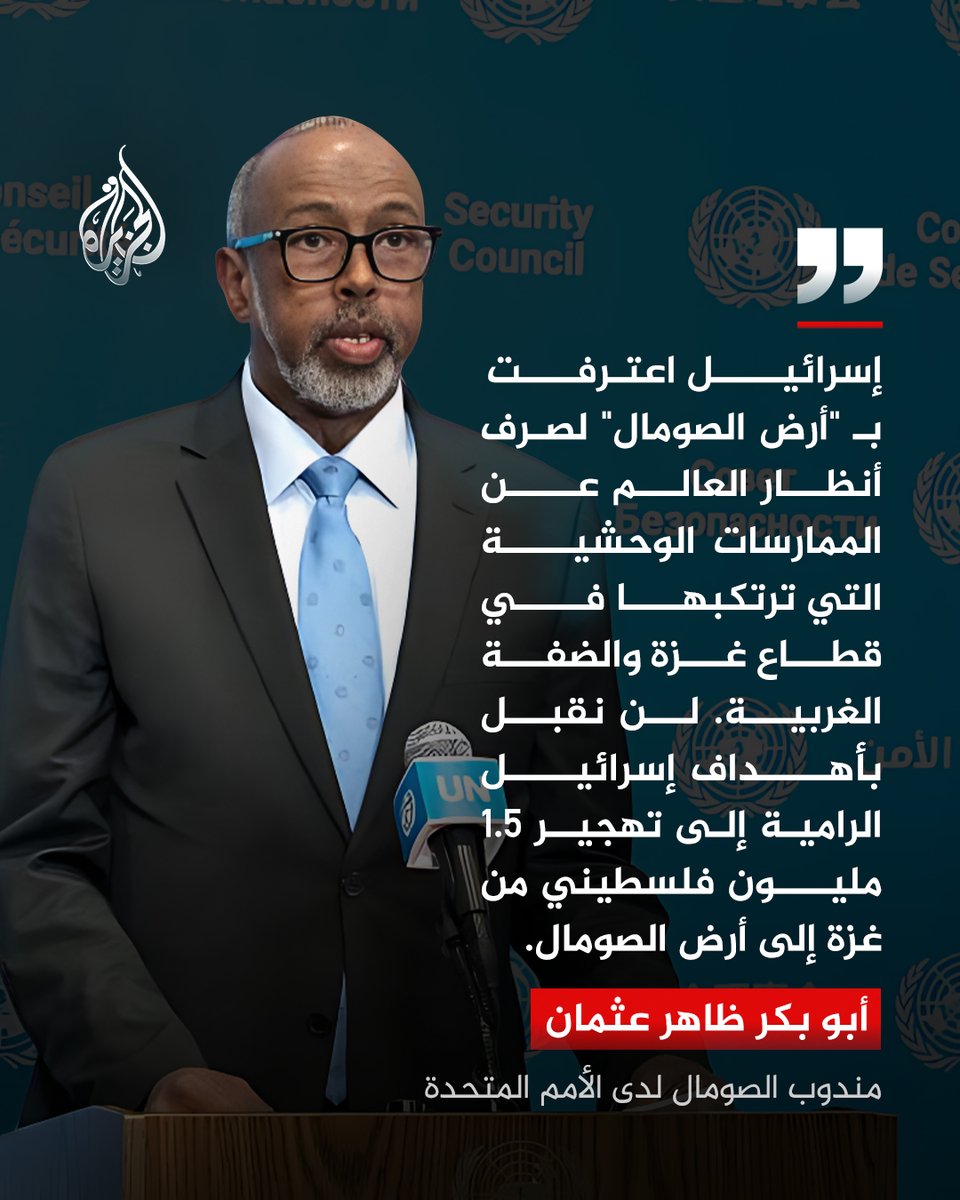
مندوب الصومال في الأمم المتحدة أبو بكر ظاهر عثمان يقول إن اعتراف إسرائيل بأرض الصومال هدفه صرف الأنظار عن فظائع الاحتلال في فلسطين مؤكدا أن بلاده لن تقبل بتهجير الفلسطينيين من غزة إلى أرض الصومال
9
41
126
9,305
Mohamed Hassan retweeted

I listened to Abdi Rashid Hashi (@AnalystSomalia) speaking in a highly disparaging and below-the-belt manner about Somaliland during the BBC Somali debate on Israel’s recognition of Somaliland. I also observed Abdi Aynte (@Aynte) enthusiastically applauding Abukar Baale’s (@AbukarOsman1) denial of Isak genocide, while Hodan Osman (@hodansomali) appeared visibly frustrated and resigned. Meanwhile, Faisal Roble (@faisalroble19) briefly posted — and then quickly deleted — the remark, “Aan ooyee albaabka ii xidha…”, which itself speaks volumes.
The so-called #NotAnInch camp has fundamentally misdiagnosed the problem. Their failure lies in treating the Somaliland–Ethiopia MoU as the core issue, rather than recognizing it as a symptom of a much deeper and long-standing reality: Somaliland’s unwavering determination to secure international recognition. Instead of addressing this structural and political reality, they chose to chase optics—framing the issue as “Ethiopia trying to take our sea”—while ignoring the root cause altogether.
Now, history is repeating itself. Another manifestation of the same underlying issue has emerged: Israel’s recognition of Somaliland. Yet once again, the response remains shallow and misplaced. Rather than confronting the real question—why Somaliland continues to gain diplomatic traction—they retreat to emotional slogans such as “Israel is trying to dismember our country.”
This pattern of denial, deflection, and misdiagnosis only reinforces the very outcome they claim to oppose. Ignoring the political reality of Somaliland’s statehood aspirations does not make it disappear; it merely ensures that each new development catches them unprepared, reacting to symptoms while refusing to confront the cause.
@afric_insde @RAbdiAnalyst @haadka @mlibax @FahimaAli49 @MSamatar3 @SuleimanElite
@abino11 @HassanSMohamud @AhmedMoFiqi @AAbdishakur @AbiyAhmedAli @RedwanHussien @Mustafe_M_Omer @musebiihi @Abdirahmanirro @Jgabush @khadarlooge @bidhaanDahir @NMAliDr
1
1
81
Mohamed Hassan retweeted
29 Dec 2025
Significant piece of news you may have missed:
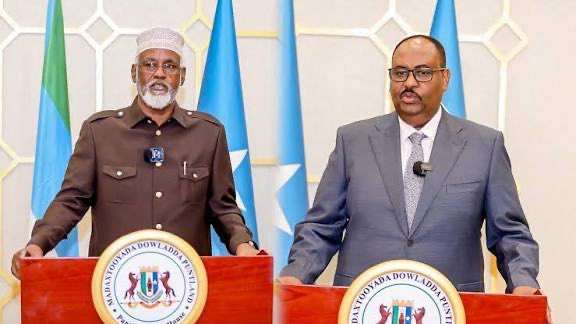
Presidents of Jubaland and Puntland have so far opted to remain silent on Israel's recognition of Somaliland.
This is an interesting development, partly attributable to the two region's deep-seated grievances with Mogadishu's anti-federalism agenda and HSM's recentralisation of the state.
I suspect it is also based on political realism - the realisation Somaliland will never be part of the Somali union again.
Puntland's President Said Deni recently said he would be willing to live by any decision Somaliland takes to achieve self-determination.
This was interpreted widely as a tacit signal from Puntland that it would no longer oppose Somaliland's international recognition.
15
74
315
35,042