
educator, writer, singer, songwriter, dancer, analyst, theorizer, pontificator, wonderer, wanderer
Joined March 2009
- Tweets 35,363
- Following 401
- Followers 825
- Likes 30,712
8,105 Photos and videos






Pinned Tweet

24 Jun 2021
I’m passing my phone to the mom from American Dad.

12
533
13,041
Jun 7
No one wants you there. You’re not a real fan. Your presence will take away a space where fans watch, as close to the game as possible without being inside MSG. You’ve spitefully scorned the city, held funding hostage, vilified/misrepresented the Mayor based on your bigotry…
25
May 28
Well parsed.
Except it isn’t just normal human behavior—that lets them off the hook—it’s deliberate deflection.
instagram.com/reel/DYuvV3spZ…
22
May 18
The Doctor is IN.
May 17

It is remarkable how many people have unfollowed me since I took the position that the MCAT is not, by itself, a particularly good metric for medical school admission, that Yale has produced generations of excellent physicians, and that having served on two different medical school admissions committees, I learned something many people outside medicine do not understand:
Test-taking ability is not the same thing as being a good clinician.
The MCAT has value. Of course it does. But medicine is filled with qualities that standardized exams measure poorly: judgment, empathy, communication, leadership, resilience, curiosity, humility, and the ability to care for human beings under stress and uncertainty.
What has also become clear in this debate is how inconsistently people apply the language of “discrimination.” When some groups are historically underrepresented, many simply assume that reflects lesser capability. But when institutions consciously try to broaden representation, suddenly every disparity becomes evidence of unfairness.
And yet in public health, the evidence repeatedly shows that greater physician diversity improves trust, preventive care uptake, underserved access, and health outcomes in many communities.
We see similar benefits in medical education itself. Diverse student bodies produce richer discussions, broader perspectives, and stronger learning environments. That was obvious to anyone who has actually spent time inside a medical school rather than arguing about one on social media.
What I do see in many of these replies is not principled concern about merit. I see a fair amount of racism dressed up as statistical objectivity.
50
May 16
Anytime I’ve ever asked this question…🦗🦗🦗🦗🦗
May 15

Tell me: on what planet would it be in the interest of medical schools to admit supposedly unqualified students and apparently—according to your stupid ass thinking—also keep them that way throughout their time there, so that they also graduate unqualified? What do they gain?
36
May 9
Watch this:
Who cares?
May 6

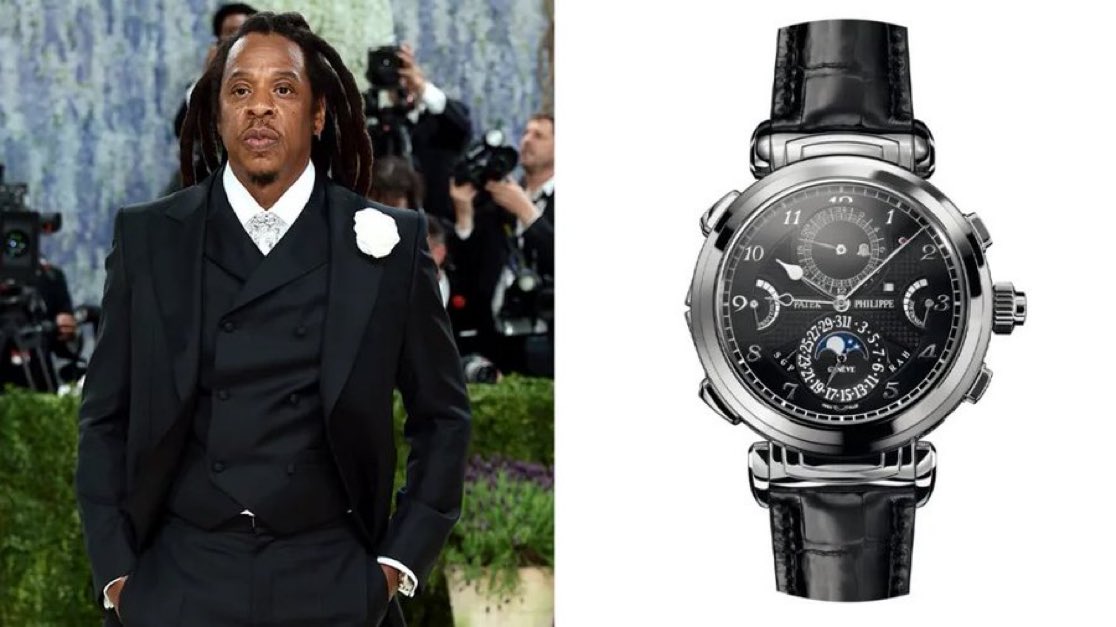
Jay-Z wore a Patek Philippe Grandmaster Chime at the Met Gala worth $6.5 million
25
May 9
Oh, it’s just YOUR MONEY, as if the majority of SNAP recipients don’t also pay taxes because they work but still don’t make enough to make ends meet?🙄
Any issue with YOUR money building that bigoted buffoon’s ballroom?
Gtfoh with this ignorant/arrogant BS.
May 8

It's not about making people healthier. It's about the fact that they are spending MY MONEY without my consent, on things that I CAN'T EVEN AFFORD
1
57
81 freckles retweeted

Apr 24
This should be on the front page of every newspaper in America.
A Syrian billionaire needed U.S. sanctions lifted so he could cash in on $12 billion in reconstruction contracts.
In an attempt to influence American foreign policy, he proposed a Trump-branded golf course, cut Jared Kushner & Ivanka Trump into a multibillion-dollar real estate deal for a resort in Albania, and had someone physically deliver a stone engraved with the Trump family crest to a Republican Member of Congress with instructions to take it to the White House to get the President's attention.
Trump threw his weight behind repealing the sanctions. They were lifted. The contracts are moving, the Trump family’s deals are expanding, and not a single Washington Republican is willing to say a word about any of it.
This is a corruption of everything the office of the presidency is supposed to stand for, and the American people deserve to know about it.
nytimes.com/2026/04/19/us/po…
874
19,297
41,548
1,833,414
81 freckles retweeted

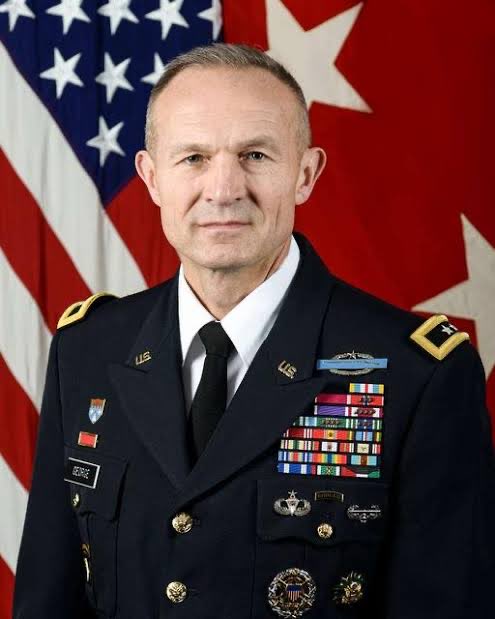
JUST IN: You do not fire your Army Chief of Staff in the middle of a war for no reason. You fire him because of what comes next.
Pete Hegseth called General Randy George on April 2 and told him to retire immediately. The Pentagon confirmed it within hours. No reason was given. Not publicly. Not privately. A senior Army official told Fox News that Hegseth offered George nothing: no misconduct, no operational failure, no policy disagreement on the record. Just a phone call and a career ending in the middle of the most significant American combat operation in two decades.
George is the 24th general or admiral Hegseth has removed. But he is not the 24th. He is the one that matters. The Army Chief of Staff. The man whose signature sits between a president’s intent and the order that sends soldiers across a beach or into a tunnel complex. The 82nd Airborne is deploying right now. Marines from the 31st MEU are staged on the USS Tripoli. JSOC operators are at forward bases in Israel, Jordan, Saudi Arabia, and the UAE. Kharg Island, 90 percent of Iranian oil exports, sits 16 kilometres off a coast that someone will have to decide whether to approach. And the four-star general whose job it was to advise whether that approach should happen was removed 48 hours after Trump told the nation the war would continue for two to three more weeks.
The replacement is Vice Chief General Christopher LaNeve. He was Hegseth’s senior military aide before this appointment. The man who carried the Secretary’s briefcase now commands the Army the Secretary is reshaping. The chain of command did not break. It shortened. The distance between a television studio and a combat order just collapsed to zero intermediaries who were not personally selected by the man giving the order.
No reason was given. That is the tell. When someone is removed without explanation during a crisis, the explanation is the crisis itself. George either objected to something or was about to. The ground option. The power plant strikes. The Kharg raid. The escalation that turned a highway bridge in Karaj into rubble on the same day he was told to leave. Something in the next two weeks requires a chief who will not push back, and the Pentagon solved that problem by installing one trained as Hegseth’s aide.
A former Fox News weekend host just fired a four-star general with combat tours in Iraq and Afghanistan, replaced him with his own former assistant, and did it during a live war in which the next decision could put American soldiers on Iranian soil for the first time in history. No hearing was held. No misconduct cited. The Army woke up on April 3 with a new chief it did not choose, in a war it did not start, preparing for a phase the previous chief apparently could not be trusted to execute.
The question is not why George was fired. Every general in the building knows why. The question is what order is coming in the next fourteen days that required removing the one man in the chain of command who might have said no.
The war has no perimeter. The chain of command has no objectors. And the next phase has no one left to stop it.
open.substack.com/pub/shanak…
2,774
16,214
38,210
5,539,759
81 freckles retweeted

Mar 29
The word "communist" has lost all meaning in MAGA world. Let's fix that.
What communism actually is:
• State ownership of ALL means of production
• Abolition of private property
• No free markets
• Single-party authoritarian rule
What US Democrats actually support:
• Capitalism with regulations
• Private property rights
• Free markets with safety nets
• Multiple parties, free elections
Communist parties in US Congress: 0
Socialist parties in US Congress: 0
Democratic Socialists (Bernie-style): ~5 out of 535
The Democratic Party would be center-right in most of Europe. Biden and Harris are capitalists. Always have been.
But you call everything you don't like "communism" because:
1. You can't define it
2. You never learned political science
3. Fox/OAN/Newsmax told you scary words = Democrats
4. You're in a cult that requires an enemy
"Do your own research" means YouTube videos.
"Communist" means "thing I don't like."
"Patriot" means "person in my cult."
The states with the worst education rankings vote the most Republican. That's not a coincidence.
945
1,975
6,193
155,400
Mar 15
Leave it to a writer to put it perfectly.

interesting that a regard for others, non-white, will arouse in racists this extreme reaction: as if, supporting equality for all, one is believed to "hate" one's own race.
not at all. look in the mirror. your skin hue is an accident of birth. you did not earn it, deserve it, merit it: it was chance. pride in being of the white majority in the US is absurd.
it will be a shock to you to know that only 15% of the world's population is described as "white." so God did not favor you quite as much as you'd been led to think by your elders.
64
Mar 8
Crystallized.

Let’s be honest Ari. Blaming Obama for Trump is like blaming the fire alarm for the fire.
Obama didn’t divide Americans; he revealed the divisions that were already there. He talked about unity, not resentment, and it’s telling that some people heard his calls for decency as personal attacks.
Trump didn’t “punch back.” He lowered the bar. He thrived on outrage, dishonesty, and grievance politics, and somehow convinced people that cruelty was strength. Obama didn’t create that impulse; he just made it harder for people who were used to being unchallenged.
If the only good thing Obama did was help elect Trump, then the real legacy of Trumpism isn’t strength or courage. It’s taking pride in grievance and calling it patriotism.
77
Mar 1
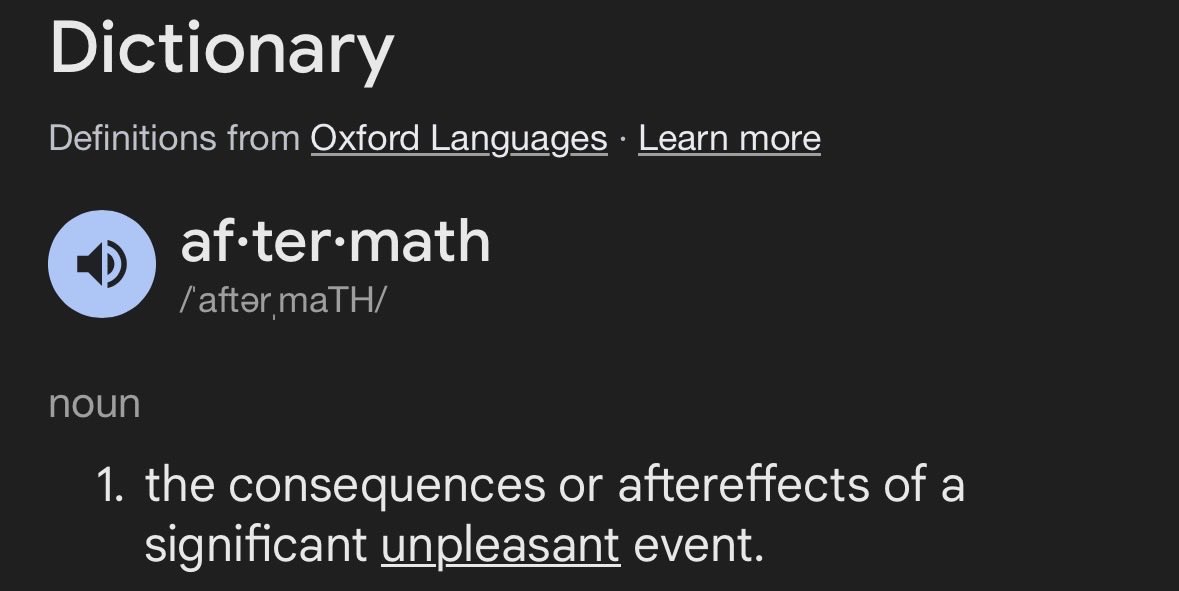
Ignorant-ass racists trying to push the idea that the word “aftermath” ONLY applies to events such as wars—just to support their racist criticism of two men reacting to an experience they will never know—is something.
It was significant and unpleasant to them and many.
Mar 1

“The aftermath of what happened”. It’s not the fucking attack on Pearl Harbour.
54
Mar 1
Aftermath literally means the consequences or aftereffects of an unpleasant situation.
So, no you wouldn’t think that.
Mar 1

That’s what I’ve just said.
“Aftermath” you’d think they’d escaped a warzone!
39
Mar 1
We have a winner.🏆
Feb 28

If Trump really wants to destroy Iran he should go be its president for a few months.
1
34
Feb 24
It’s a lead pipe cinch that those who’ve seen videos of cops abusing/brutalizing (especially certain) citizens and immediately asked what came BEFORE the video, assumed cops to be justified, or otherwise victim blamed have no similar interest in what happened before this one.
Feb 23

HAPPENING NOW🚨: Absolutely disgusting scene in Washington Square Park are out there this afternoon hurling snowballs at NYPD officers. Vile. No respect for Law Enforcement in New York.
🎥: @BGOnTheScene
77
Feb 23
A driver loses control due to something on the road, spins out, crashes into you: you wouldn’t expect an apology? Wasn’t intended, but they still damaged your car. Never been a social standard that lack of control/intent means no apology needed—wonder why it does in this case…
1
30
Feb 23
This. Neat, tidy and with a bow.
Feb 23

The Kanye West comparison remains the best description to show this imbalance.
He is a black man with a severe documented mental health condition and when he made antisemitic statements, the world collectively decided that his illness did not grant him a pass to spread hate. World leaders made statements, he was ostracised from a lot of his business deals, he lost millions of dollars.
The "nuance" of his severe bipolar disorder was set aside in favour of the outrage from the Jewish community. Yet, when the roles are shifted and the perpetrator is a white man with a neurological condition, the "nuance" suddenly becomes the entire story.
If an institution's first reflex is to explain away a slur rather than address the harm it caused, they aren't being inclusive, they are choosing to prioritize the social comfort of the person who spoke over the fundamental dignity of the people who were targeted.
Look at how quickly people(mostly white) online rushed in to explain that he has Tourette's. Before anyone had even finished processing what happened, the conversation had already shifted to defending the speaker. It’s not that the condition isn't real or relevant. It's that the instinct to protect the speaker seemed to arrive faster than the instinct to acknowledge the harm.
Once it comes to black people, the emotional burden is by default, expected to flip. So that the people who heard the slur are now expected to demonstrate empathy before their own reaction is even treated as legitimate.
None of this requires denying the reality of Tourette's or pretending the outburst was intentional. A neurological condition can explain why something happened without erasing what it felt like to hear it. Both truths can sit together. A fair response has to acknowledge that even with a lack of intent, the reality of the harm is still there. Aggressively writing a 10 page thesis on Tourette's to shut down conversations doesn't do anyone any favours.
55
Feb 23
This isn’t difficult: An apology doesn’t always mean there was control or intent; it’s meant to acknowledge problem caused or harm done.
(But I think we know why in this case you just can’t wrap your head around this simple concept.)
Feb 23

Apologize for what? Having a disease that makes him unable to control what he says?
Fuck that.
Why is an apology so important or necessary to you? Would it matter? Why can't you simply accept the fact he has a disease that causes him to have verbal tics and move on?
FFS.
1
2
61
Feb 1
🛎️ Ding-ding. Wheatstraw gets it.
Jan 31

That’s just it. They don’t think they will be fired because it’s wrong, but because the “woke mind virus”has taken over. They don’t think saying something racist is wrong or mean. What’s wrong and mean is calling them racist for saying something racist.
1
136
