Backcountry skier with a history problem, scholar of mountain warfare, author of Ski, Climb, Fight: The 10th Mountain Division and the Rise of Mountain Warfare.
Joined November 2023
- Tweets 480
- Following 298
- Followers 134
- Likes 1,798
201 Photos and videos








Pinned Tweet

4 Nov 2024
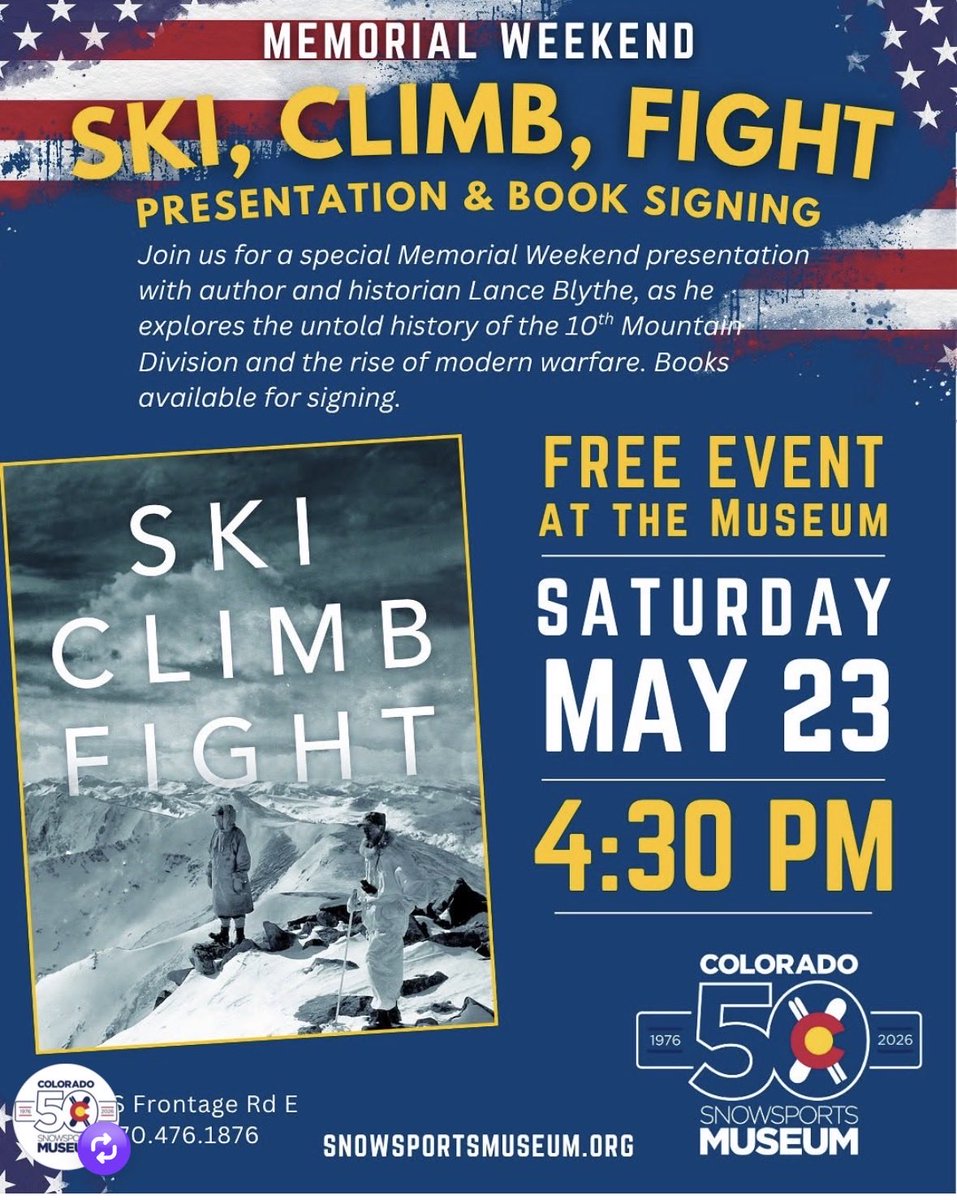
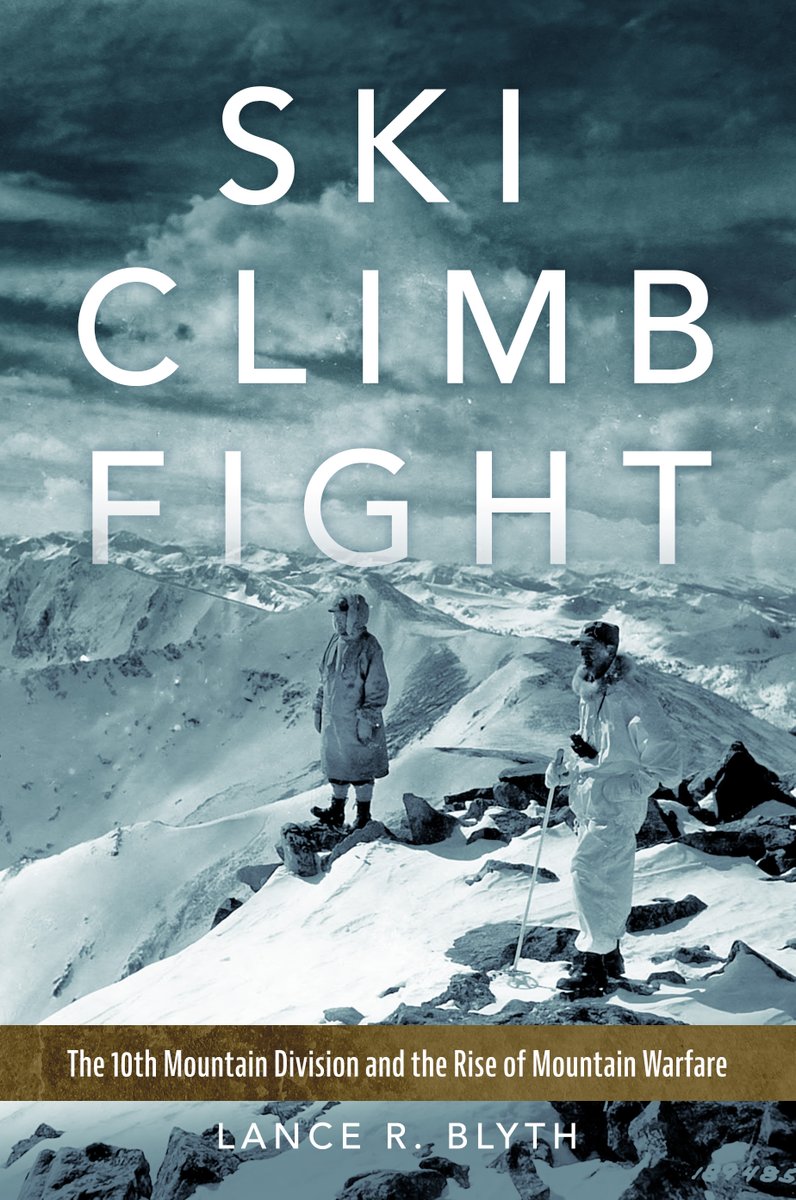
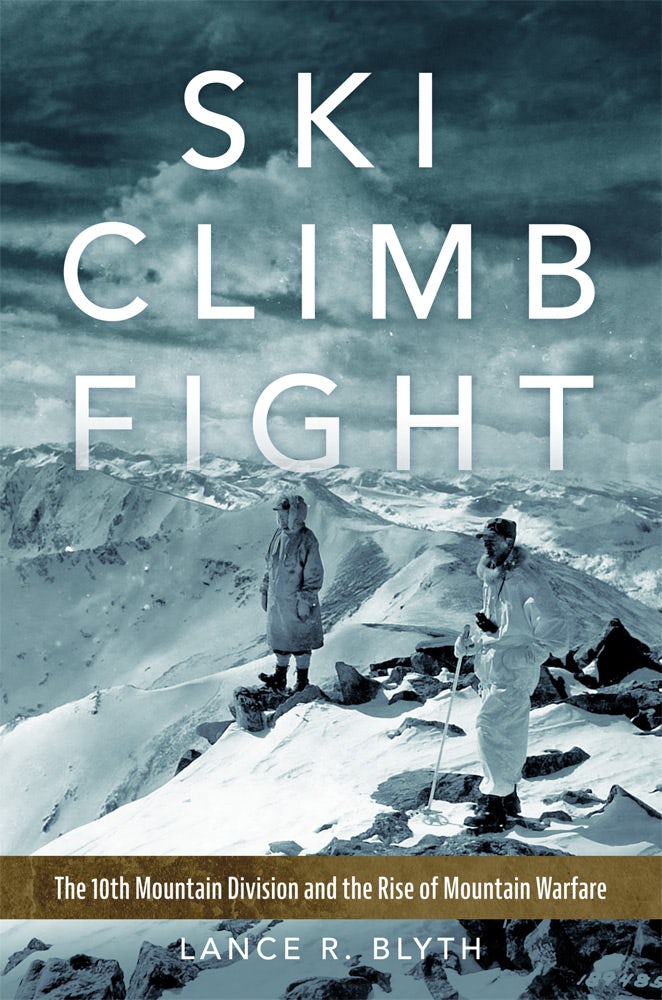
New books are here! Ski, Climb, Fight from @OUPress is now available at @Longleafserv or the bookseller of your choice. @SMH_Historians @SWWresearch @SWWResearchNA
1
7
16
830
Lance R Blyth retweeted

Jun 3
Food for thought on comparisons between the Spanish Civil War and Russia's war of aggression against Ukraine
warontherocks.com/the-rain-i…
1
1
15
2,129
Jun 2
The requirement for mountain warfare, the national direction to send the time, effort, and money to train and equip forces for mountain operations is something that has increasingly come to mind, in both the past and present.
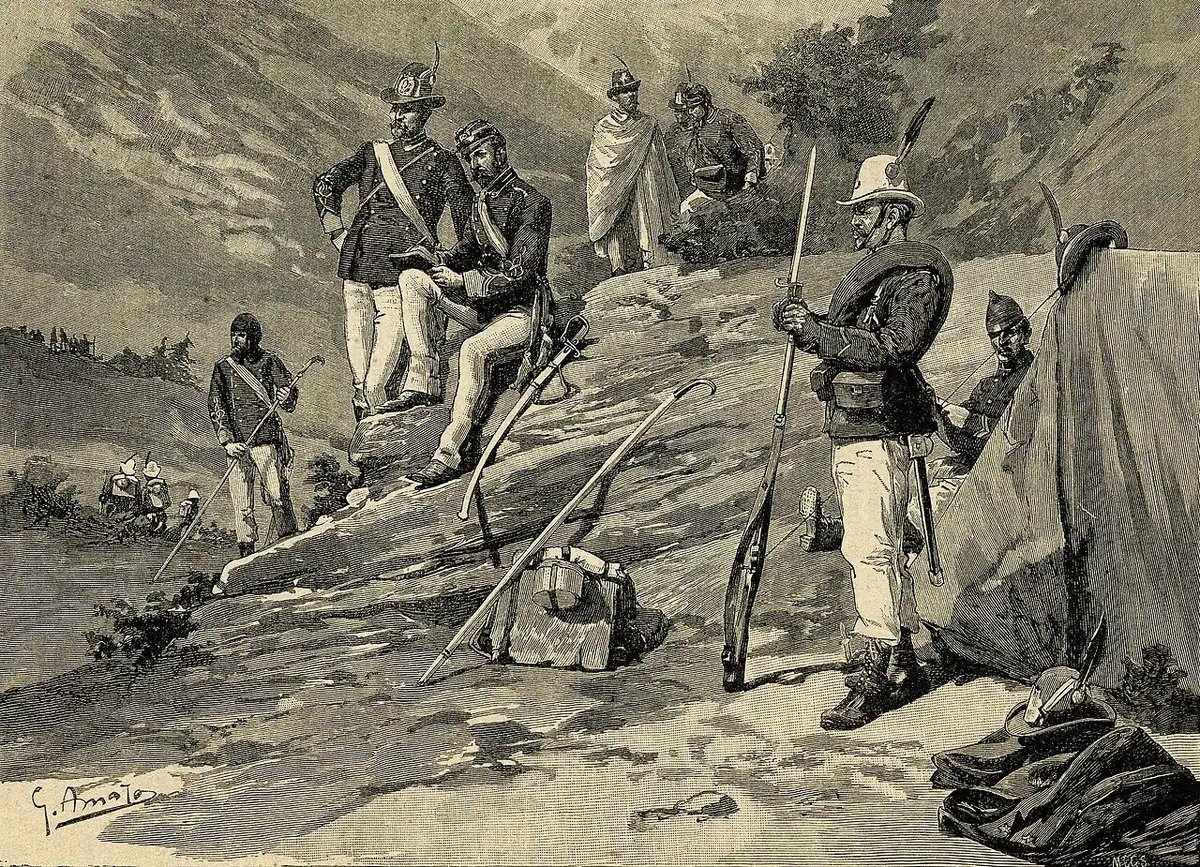
The original identification of the need for mountain warfare, to conduct mountain operations where the mountains are a means to maneuver, not an obstacle to maneuver, came amongst the alpine nations of mid-19th century Europe. Mountains, while at the physical edges of the nation, increasingly resided at the center of the mental concept of the nation, thus had to be defended.
In Italy, during the final national consolidation of the 1860s, it became clear that it would take longer to mobilize an army than it could take for any enemy to cross the Alps. The solution for this, beginning in 1872, was the raising of Alpini companies from the alpine villages in independent companies at first, to serve as a defense force to delay any enemy crossing. These companies would soon become battalions and regiments intending to hold the mountains, not just slow down any advance.
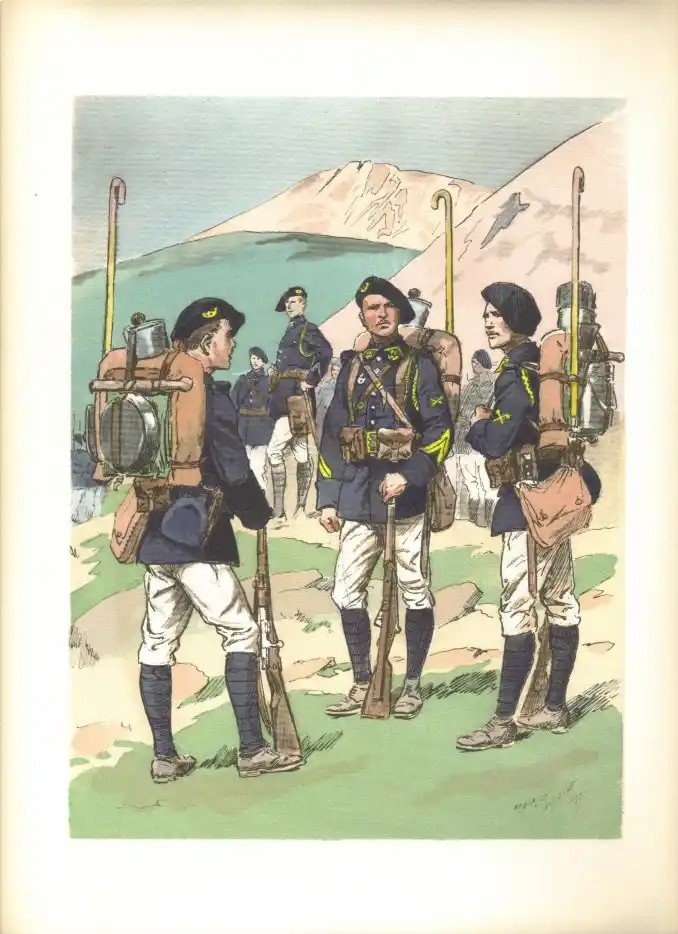
In response to the growing numbers and capability of the Alpini, the French converted 12 light infantry battalions into Chasseurs Alpins. Operating in battalion task forces with artillery, engineers, and signals, and soon backed by alpine infantry regiments, the alpins were intended to hold any advancing Italian force in the high mountain valleys to allow a reinforcing French army to climb the mountains and defeat the invaders.
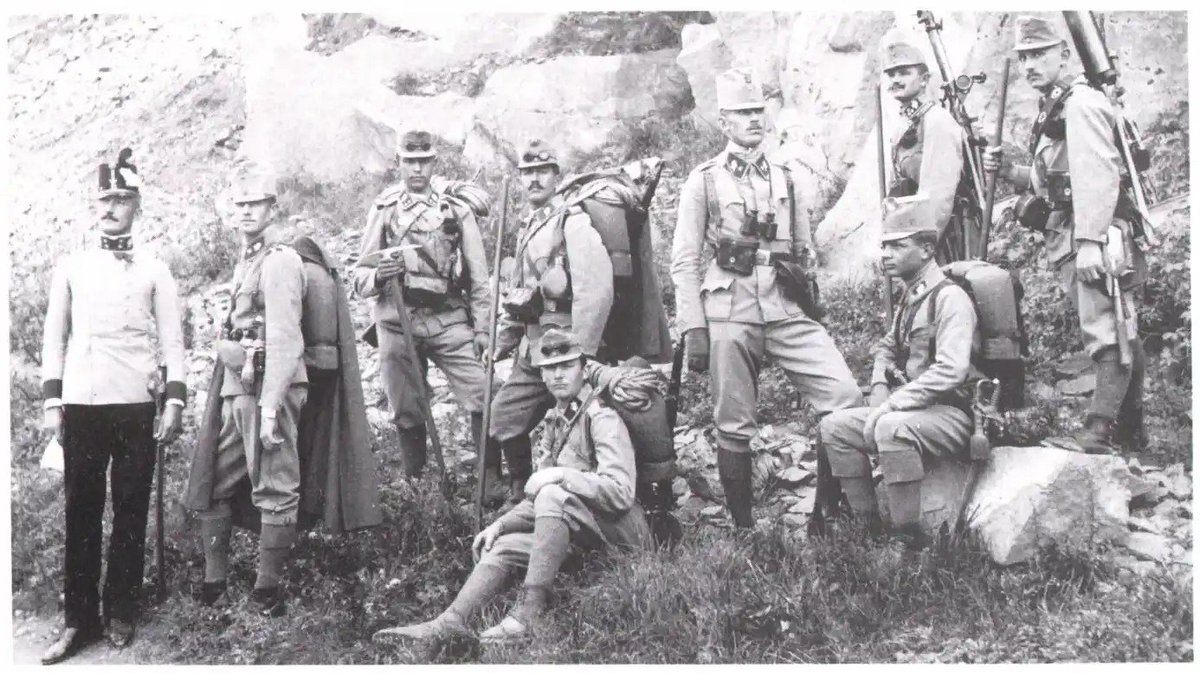
In 1906 the Austro-Hungarian Empire, considering an Italian attack on unredeemed Italian-speaking parts of the Tyrol, assigned two Landesschützen regiments of the Austrian Landwehr (State Army), along with a third infantry regiment, to the border protection mission. These were to operate in nearly independent companies, patrolling, conducting reconnaissance, and gathering intelligence along 152 identified mountain routes.
So, the original requirement for mountain warfare amongst alpine nations was the need to defend mountainous borders. This primary defensive focus has long obscured the requirement for mountain warfare for other nations.
#mountainwarfare
15
Lance R Blyth retweeted

May 31
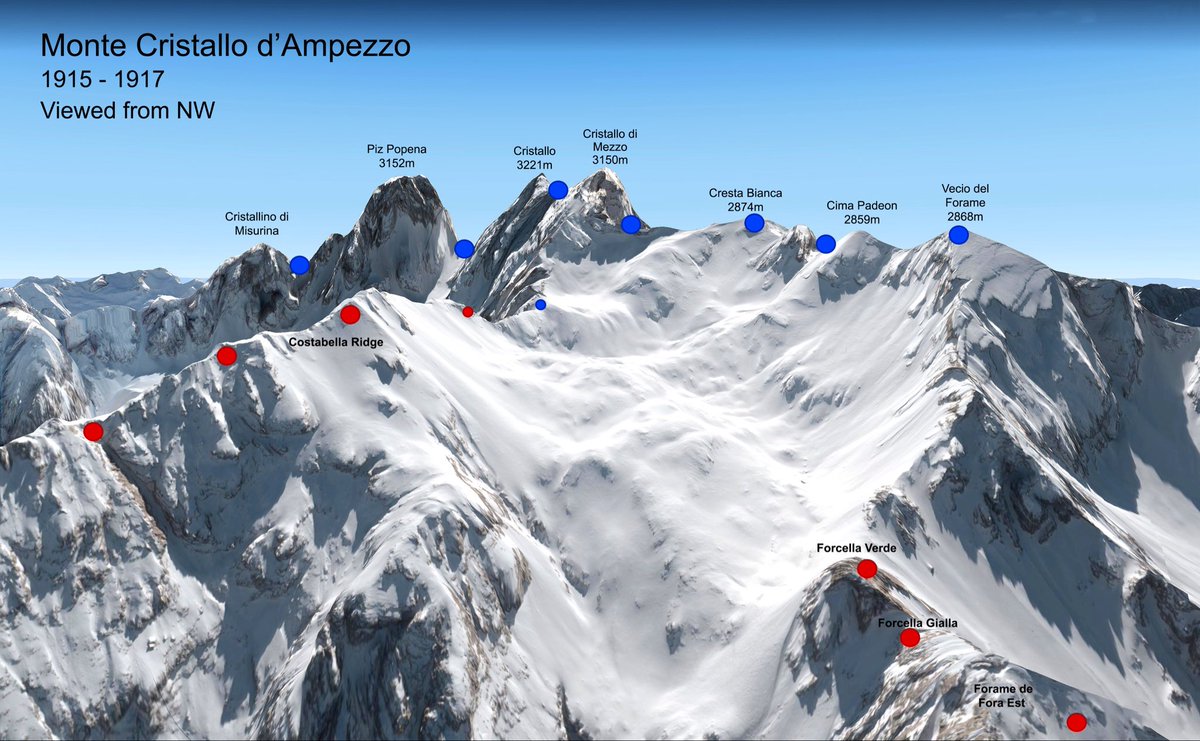
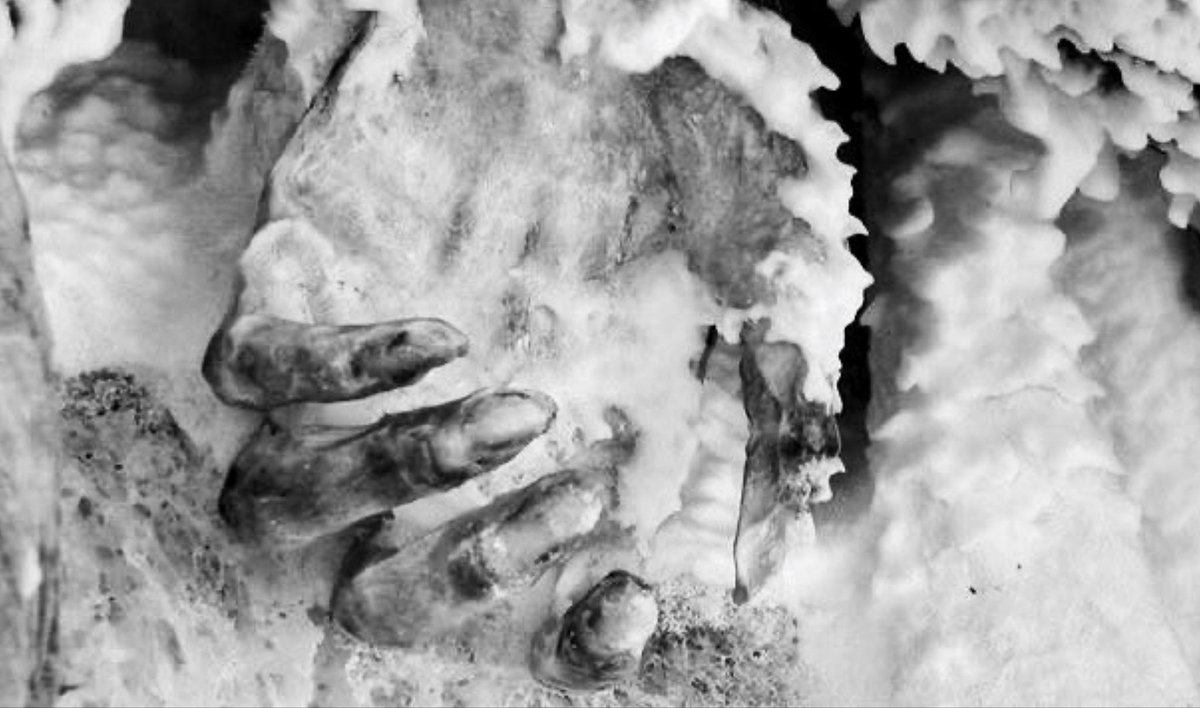
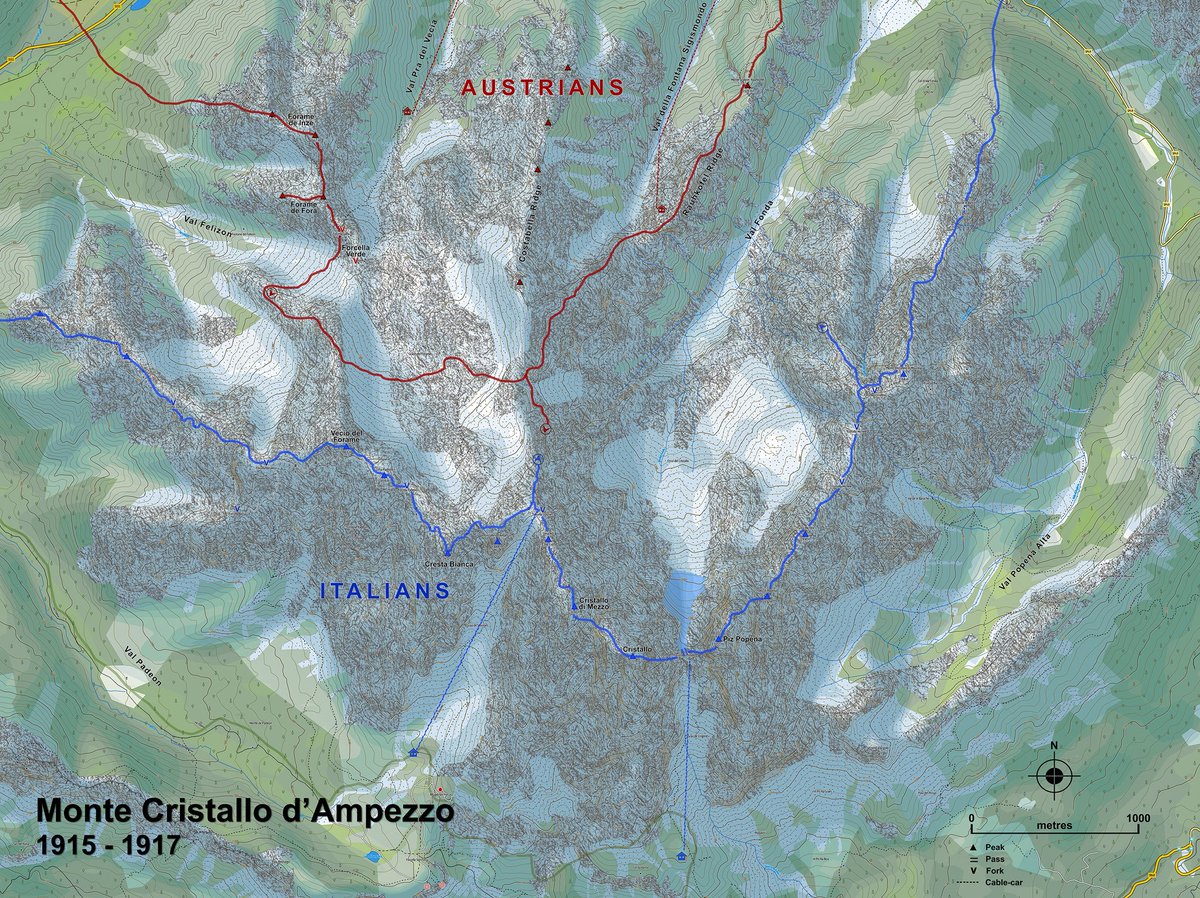
The battles for Monte Cristallo d’Ampezzo in the Dolomites are another chapter absent from most English language books about WW1 in Italy. In late October 1915, the Alpini belayed 120 wounded and frostbitten men down Costabella Ridge using a frozen corpse as an anchor. #TiTM
2
24
346
27,025
Lance R Blyth retweeted

Tune in to see multiple SWWRGNA historians--Rob Citino, Mike Neiberg, Jadwiga Biskupska, Cameron Zinsou--in #WorldWarIITomHanks premiering Memorial Day 2026 at 8/7c @HISTORY. Over 20 hours, the series captures the full arc of the war for a new generation @Nutopia_tv @HISTORYUK

2
7
654
May 19
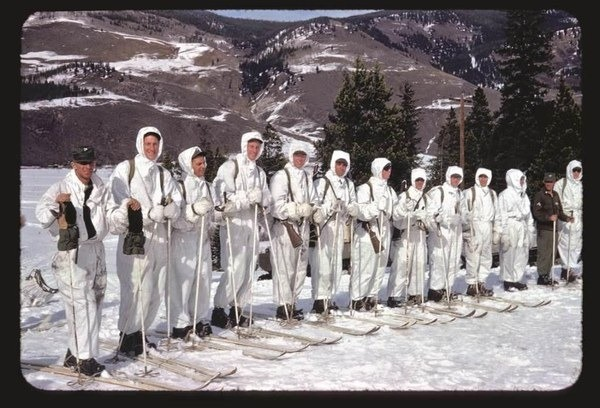
Anyone who’s followed along here knows I have a strong interest in military skiing.
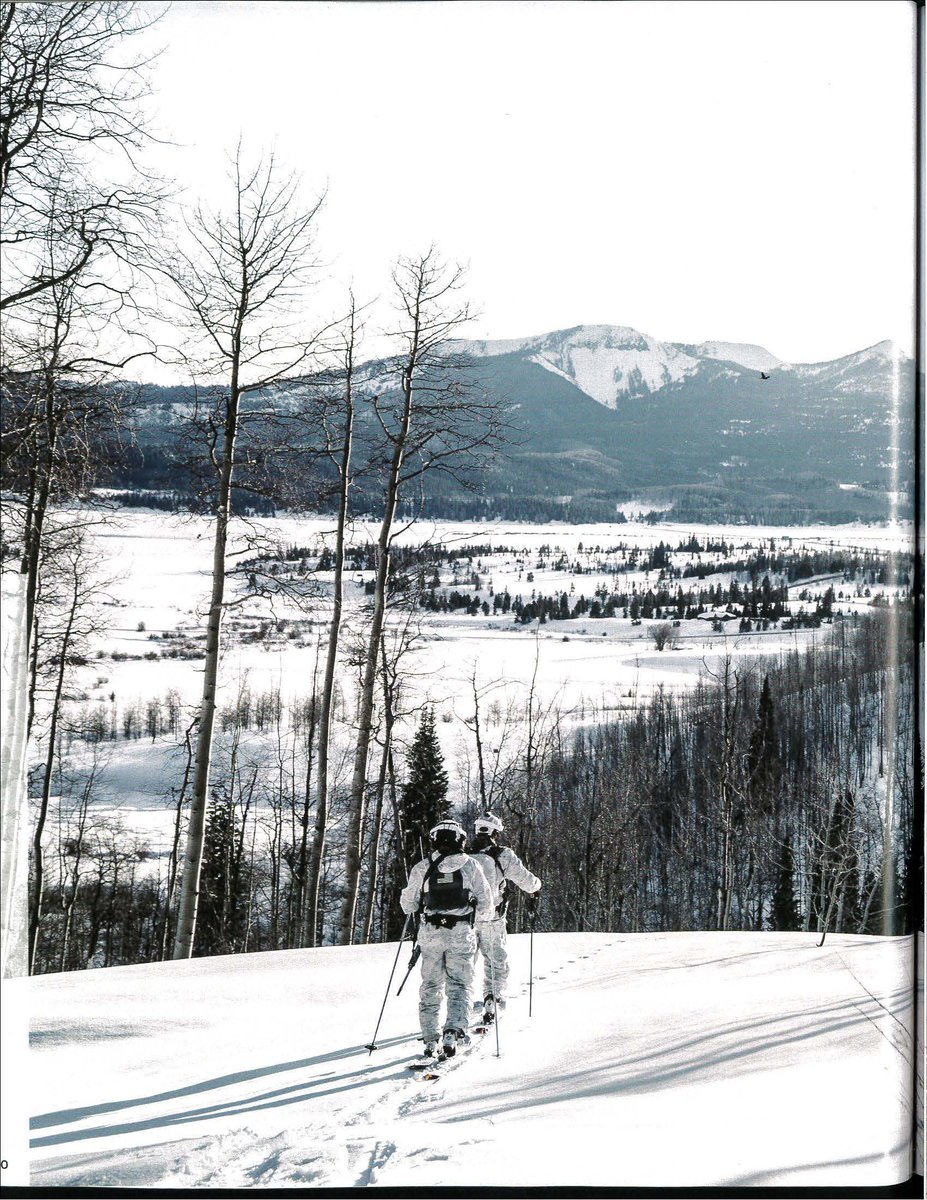
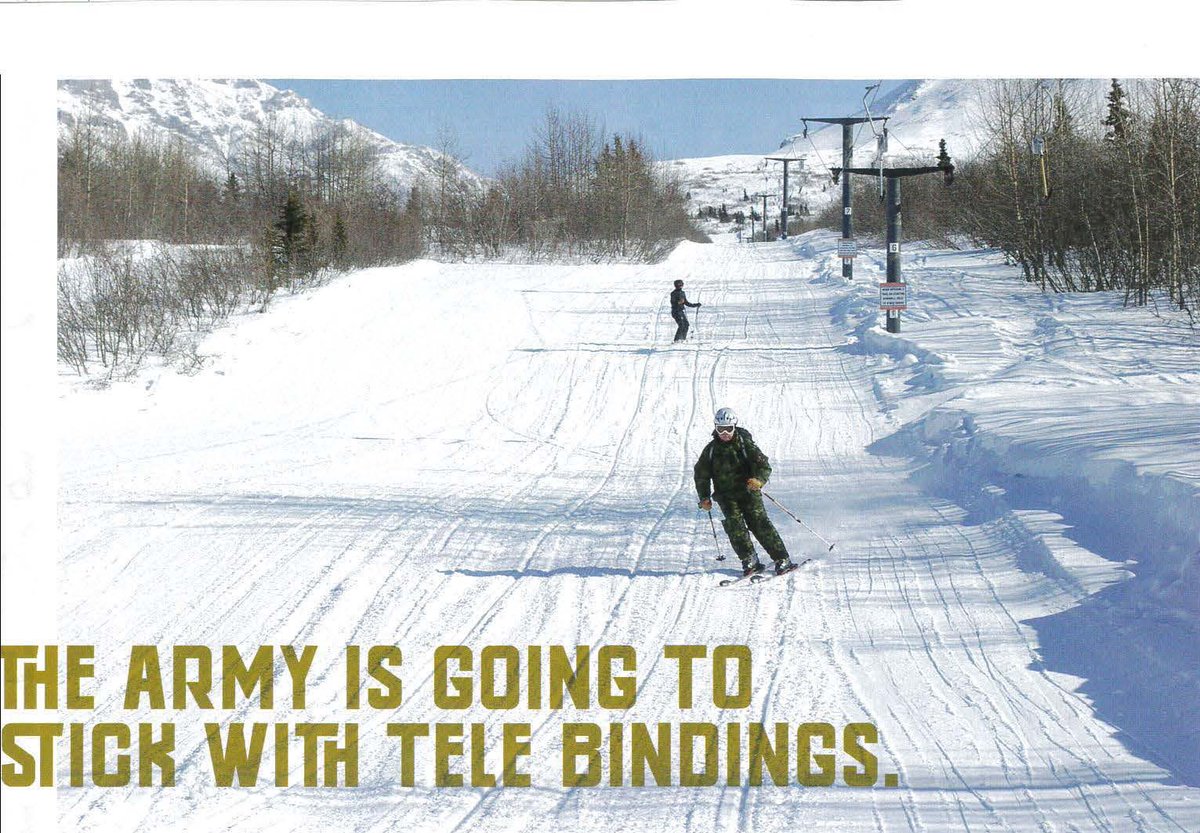
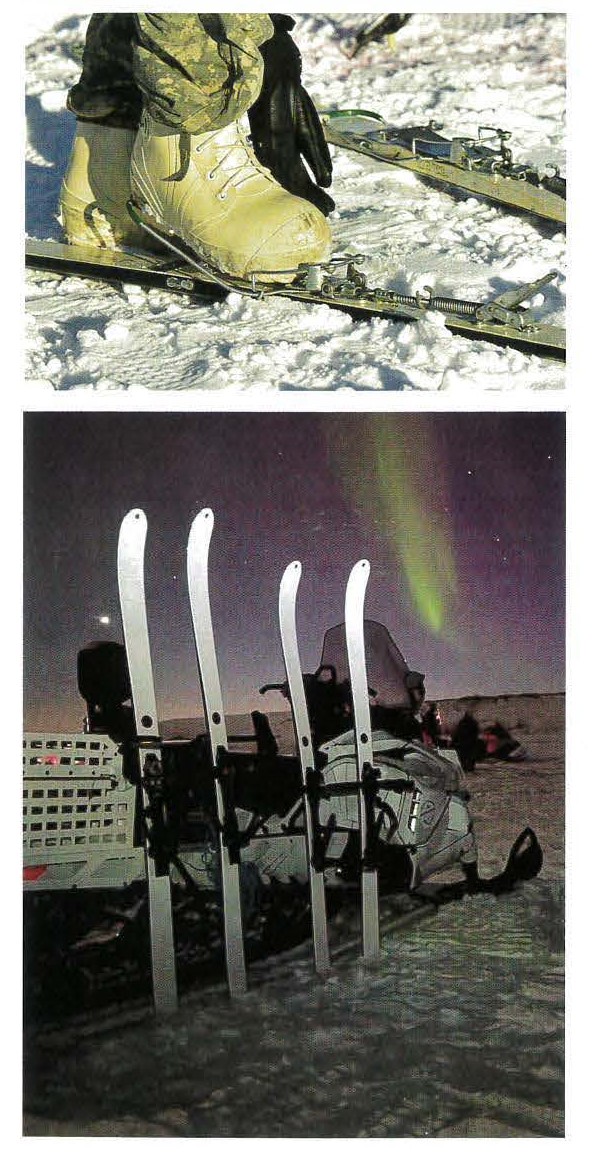
Backcountry Magazine 165 (2026) published short article, “Arctic Angels,” by Gregory Scruggs on that subject looking at skiing in the 11 ABN and NWTC in Alaska.
My response to a few key points is summarized here but encourage everyone to get a copy of the article.
#1 Military skiing is back and came from the bottom up.
A PL decided to train his platoon to ski w/assistance of the NWTC in 2022. This led to experimentation energized by the Army’s Arctic Strategy. Going and doing is the best way to move forward.
#2 11 ABN procured 2,200 pairs of skis in 2024 and they’re DPS!
DPS makes an Assault ski—153cm long, 100mm wide—snow-trekker but better than snow shoes, with fish-scales or fixed skins for low skill level, a Distance ski—87 or 82 underfoot—again with fish-scales or fixed skins for medium level skills, and a Military Alpine Tour ski—this is the Pagoda 100 Tour, my personal favorite—with the standard race base for experience skiers.
#3 For Arctic ops the Army determined that a cable binding, the old NATO 120, was the best.
AT bindings and hard boots were considered, but as the troops were not expecting to operate in steep mountains, the cable binding was preferred for the Assault and Distance skis as it can fit many different types of boots and is optimized for cross-country travel.
However, my historical evidence suggests that a battalion should mount at least one platoon of its best skiers on touring skis with AT bindings to serve as scouts or guides in steeper terrain.
#4 Ski training for the 11 ABN will focus on techniques for low-angle terrain below 25º.
Ski (and mountaineering) techniques have to be adapted to military usage and the terrain, so this strikes me as very sensible, but, as above, don’t make the steep terrain off-limits, train and equip some troops to operate there.
Tags: @dpsskis
Photos: US Army and DPS via Backcountry Magazine
1
54
May 13
10th Mountain Division Foundation Memorial Day Weekend 2026 linkedin.com/pulse/10th-moun…
1
2
39
Lance R Blyth retweeted

Today marks 68 years that #NORAD has conducted the distinct missions of aerospace warning and aerospace control, as well as maritime warning since 2006. The images below show some of the past and current homes of the 🇨🇦 & 🇺🇸 bi-national command, as well as the various NORAD missions conducted 24/7/365.
#WeHaveTheWatch #HappyBirthdayNORAD

ALT North American Aerospace Defense Command 68th Birthday graphic
2
21
57
6,708
May 5
Setting the objective in mountain warfare, continued . . .
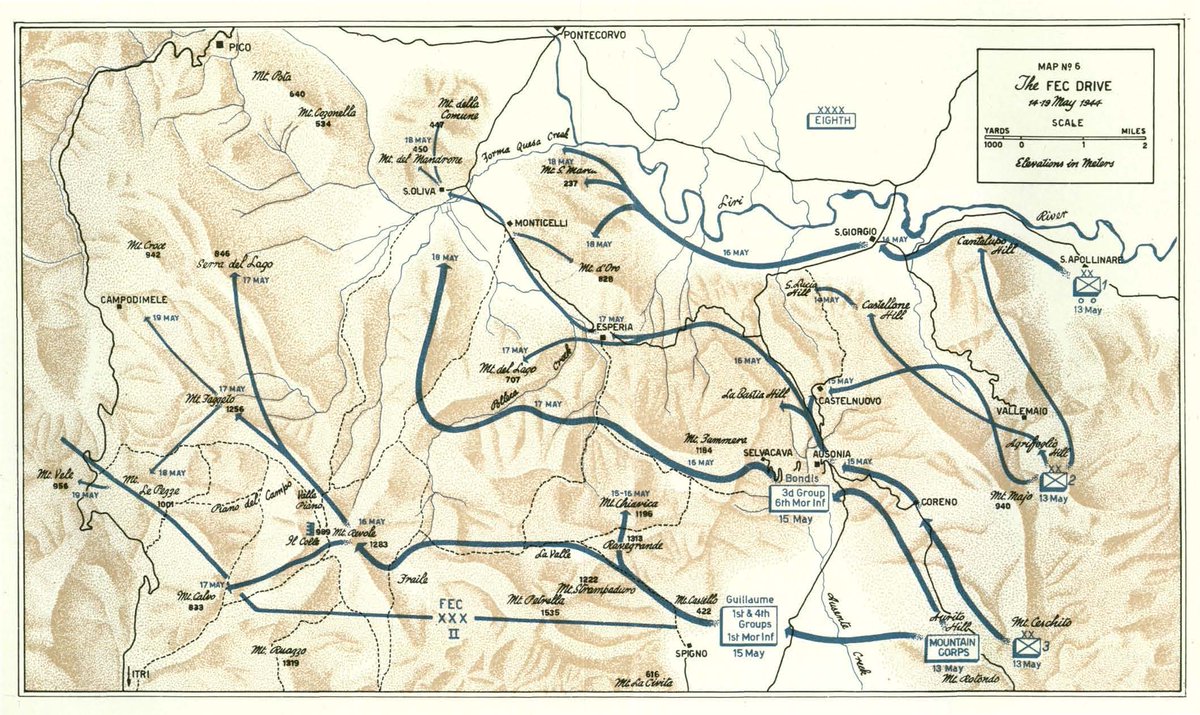
In March 1944 the French Expeditionary Corps (FEC) or Corps Expéditionnaire Français, (CEF), under the command of General Alphonse Juin, moved to a new section of the front line along the Garigliano River in Italy.
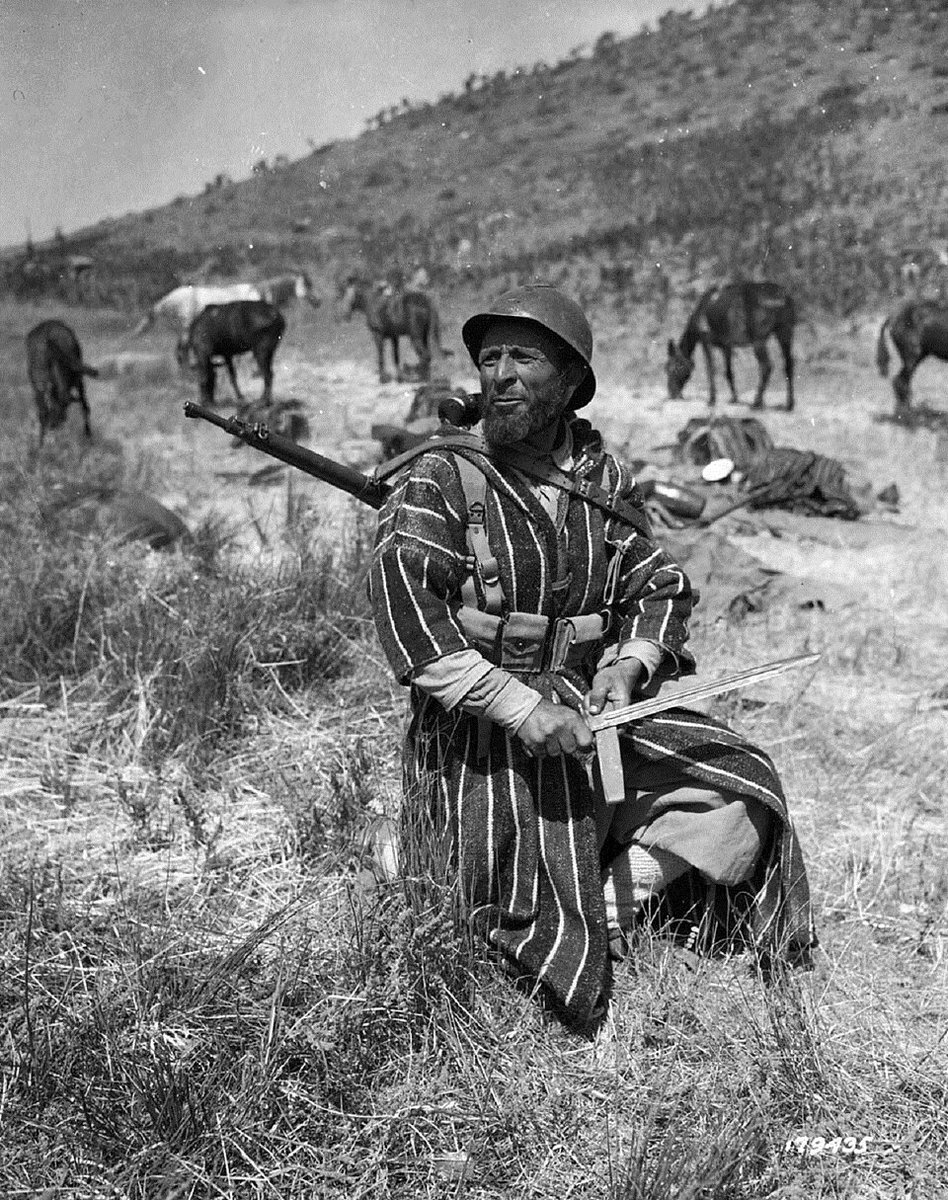
On 15 May, having ruptured the Gustav Line two days prior, General Juin deployed a ‘corps de montagne’ (mountain corps) comprised of the 4e division marocaine de montagne (4e DMM) and three regimental-sized Groupes de Tabors marocains (GTM), better known as goumiers, to advance through the roadless Aurunci Mountains. Juin’s objective was to cut the Itri-Pico Road which ran laterally behind the German fallback Hitler Line. Taking this objective would inhibit targeted the German capacity to supply their defenses and move their counterattack forces.
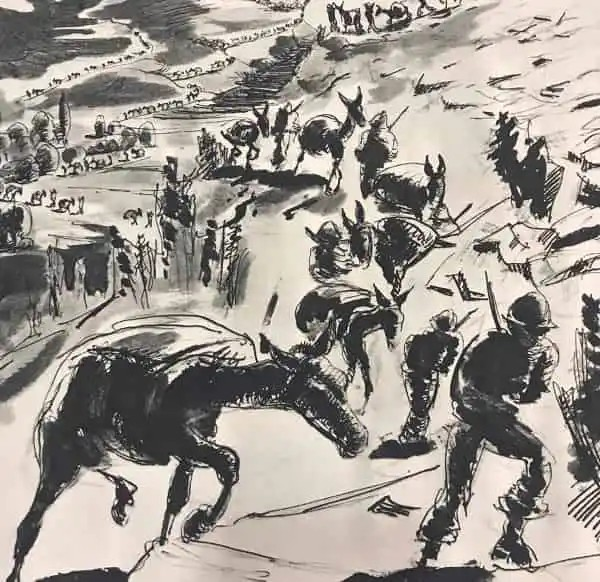
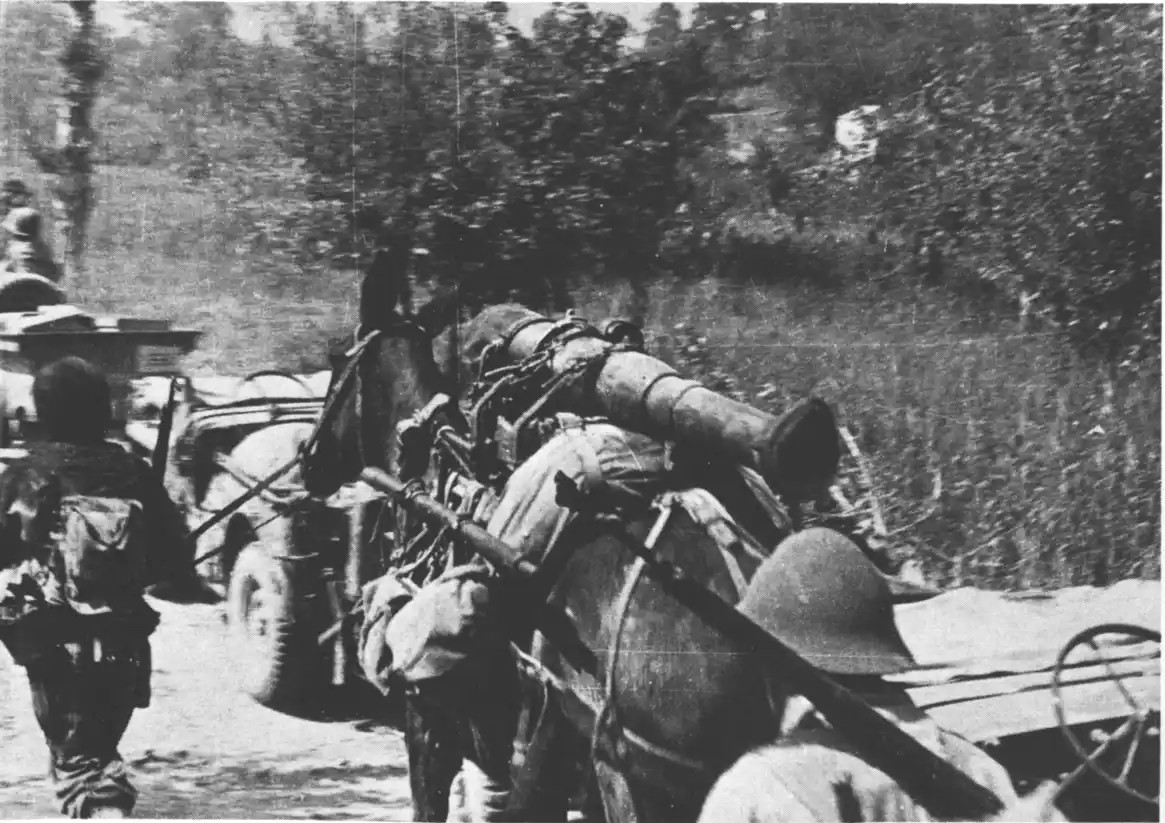
The CEF planned to supply the corps de montagne using over 4,000 mules and pre-planned airdrops for supplies. Water, for the mules, was a critical item. American staff officers in the Fifth Army HQ doubted that the maneuver could be done.
The mountain corps advanced up into the Auruncis in a southern group led by mounted goumiers and a northern group preceded by ‘rock scouts,’ trained at a mountain school in the Atlas Mountains of Morrocco, who seized Mount Fammera by climbing up narrow rock chimneys. So limited were the paths, the rear elements of the mountain corps did not begin their ascent up the massif until the next day.
For two days the Moroccan goumiers and tirailleurs walked, day and night, accompanied by mules. On 17 May the Germans, realizing their peril, dispatched two motorized battalions to intercept the southern group on the northeastern slope of Mount Revole. Mul-packed mountain artillery halted the German attack and the goumiers swarmed along the ridges above the Germans, cutting off and annihilating them.
Two days later the goumiers cut the Itri-Pico Road, rendering the Hitler Line useless, opening the way to Rome.
Juin realized that objectives in mountain warfare are best aimed at the enemy’s ability to survive and be mobile.
#mountainwarfare
46
May 1
Thanks to @AaronBMacLean and @schoolofwarpod for having back on, in my day-job capacity at @NORADCommand
May 1

Last time @mtn_war was on @schoolofwarpod we discussed his excellent history of the 10th Mountain Division. Today, we talk about the history NORAD (where he's the command historian) and of defending America from nuclear attack.
youtube.com/watch?v=y6H1JLAm…

3
5
895
Apr 21
Setting the objective in mountain warfare, a case.
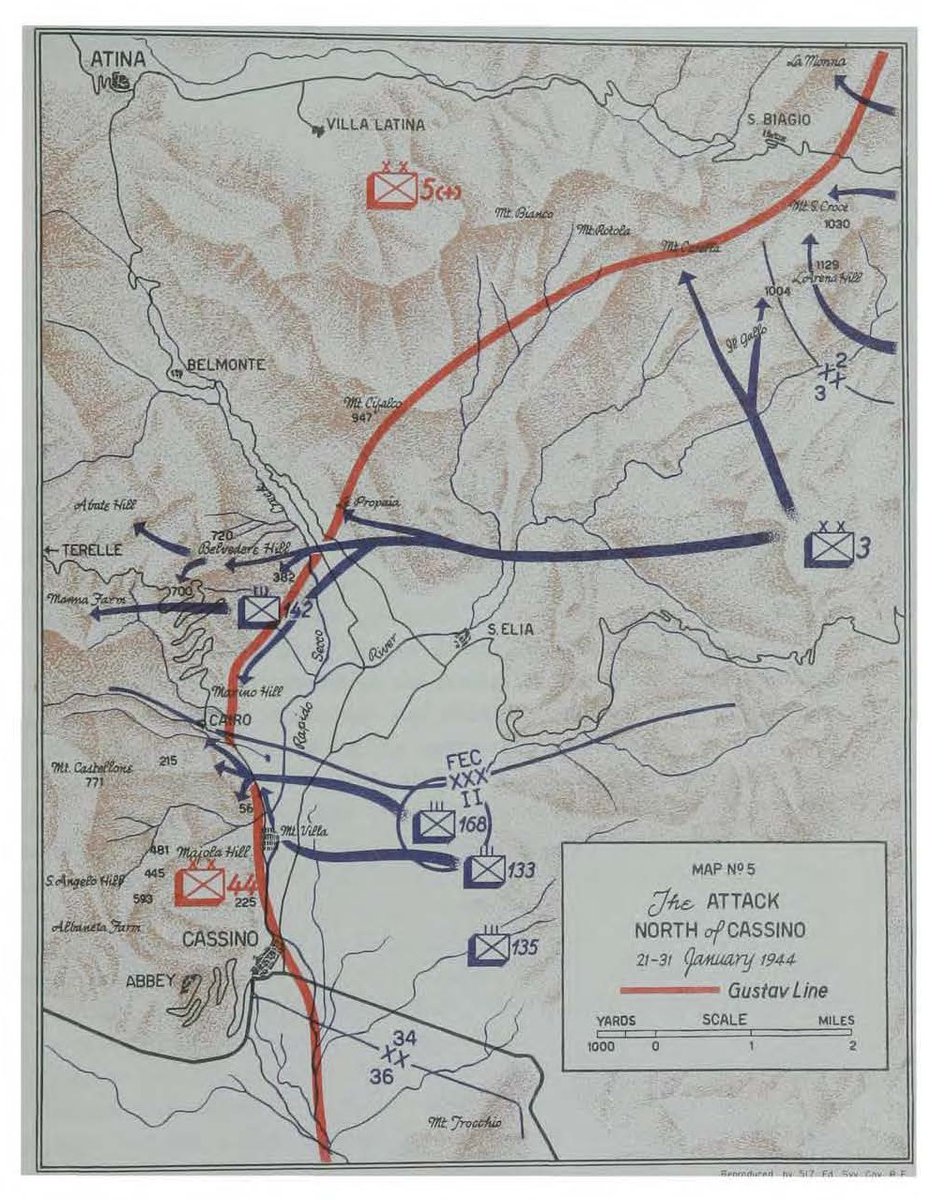
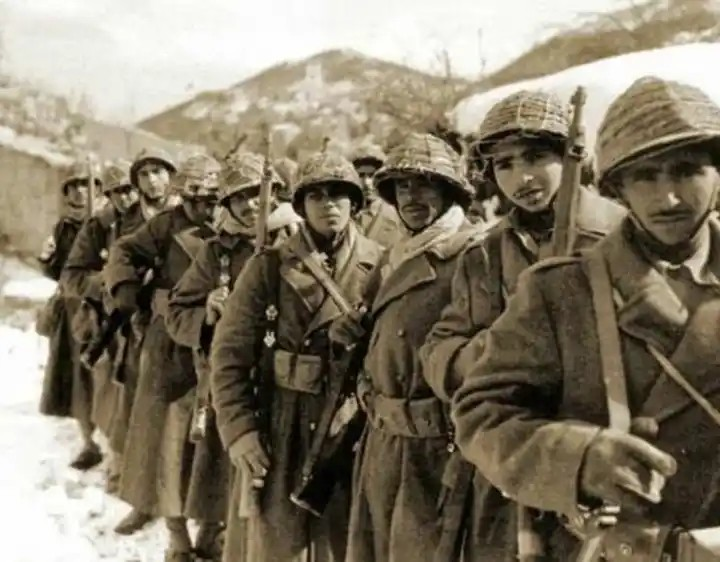
In January 1943 the French Expeditionary Corps (FEC) or Corps Expéditionnaire Français, (CEF), under the command of General Alphonse Juin, attacked the German Gustav Line north of Monte Cassino.
Juin wanted the objective of his corps to be the mountain town of Atina, to the north of Monte Cassino, from where the Germans were supplying their defenses. So critical were these supply lines that the Germans placed their only mountain division in Italy, the 5th Gebirgs, into the hills above Atina in defense.
General Harold Alexander disagreed, wanting Monte Cassino to be the main objective of the attack, with the French colonial divisions in support, to clear the main road to Rome.
Juin, however, even with only two divisions of Algerians, Tunisians, and Moroccans ill-prepared to fight in winter and no mule trains, managed to fight his way to the hills above Atina, chewing up the 5th Gebirgs Division along the way.
Alexander, however, with the attack on Cassion going poorly, ordered Juin to turn west in support, ultimately bringing the CEF’s advance to a grinding halt.
Juin, who understood his mountain warfare doctrine, wanted an objective focused on the ability of the enemy to operate in the mountains. Alexander, who had no mountain warfare doctrine, wanted objectives focused on his forces’ ability to operate in the valleys.
Juin would get his chance a few months later.
#mountainwarfare @SWWResearchNA @SMH_Historians
67
Apr 9
RIP Jim Whittaker, first American on Everest, first president of REI, and a mountain soldier.
Jim and his twin brother Lou were drafted into the US Army in 1952. They had heard of the Army’s Mountain and Cold Weather Training Command (MCWTC), the original Ram’s Head guys, in Colorado so utilized their 10th Mountain Division connections to get transferred.
Their boss at O&U, a sporting goods store in downtown Seattle, Scott Osborn, served with the 10th Mountain headquarters during the war, leaving as a sergeant. Osborn knew LTC Hazel ‘Ed’ Link at the MCWTC. Link had served with the 87th Mountain Infantry, then the 10th Recon Troop, as a training supervisor and in 1951 established the MCWTC.
Osborn wrote to Link laying out Jim and Lou’s qualifications: Rainer mountain guides, climbing instructors for the Seattle Mountaineers, National Ski Patrol members, mountain rescue members. They were promptly transferred, arriving at Hale in January 1953. Jim remembered “a world of brilliant sunshine and deep powder snow.” Jim and Lou taught skiing at Ski Cooper to, and served as aggressors for the tactical training of, Army units.
In the spring they moved down to Colorado Springs where, now corporals, they lived off-base, and taught climbing and mountaineering in North Cheyenne Canyon and the Garden of the Gods for the Army. Keith Wegeman, a member of the US Olympic Ski Team, was a fellow instructor and they all taught skiing at Arapahoe Basin on the weekends for Willy Schaeffler, a future Olympic ski coach.
In the spring of 1954 the superintendent of Rainier National Park, at Jim’s request, wrote to the commander of the MCWTC requesting Jim and Lou’s services in the park that summer, allowing for their early discharge and ending their military service.
Photo: A group shot of ski instructors on the B-Slope at the south end of Camp Hale. From the left Jim is 2nd, Lou 4th, Wegeman 5th. (Courtesy Whittaker family.)
4
14
833
Mar 31
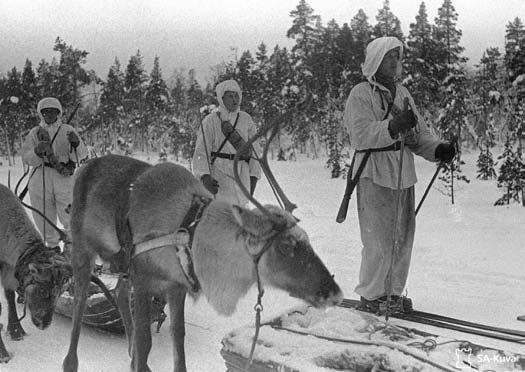
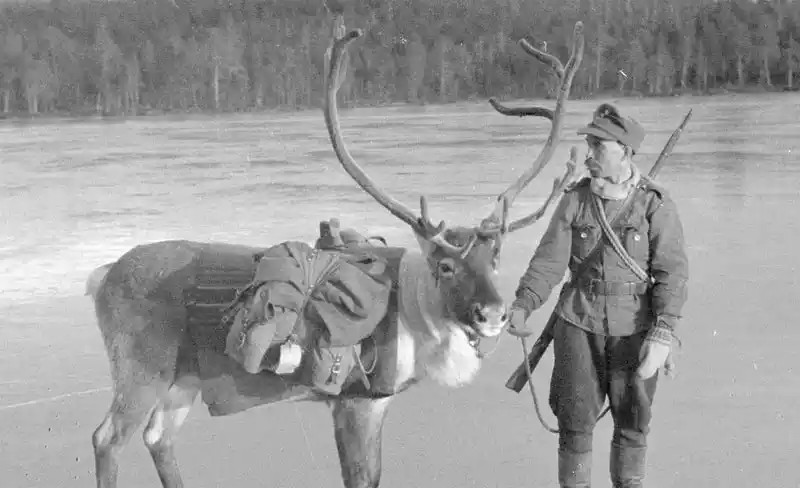
A passing question sent me down a rabbit hole of research into, . . . wait for it, . . . . reindeer! Specifically, reindeer use by Finland during WWII.
Reindeer herds and herders, Forest, Inari, and Skolt Sámi and Finns, it turns out proved valuable to Finland during the war. Herders formed the core of several battalions that operated in regions close to the eastern border, especially in Lapland. The herders’ physical conditioning and experience in moving in the wilderness—on waterlogged mires in summer and on snow in bitter cold in winter—were needed. Their ability to navigate proved important for patrolling.
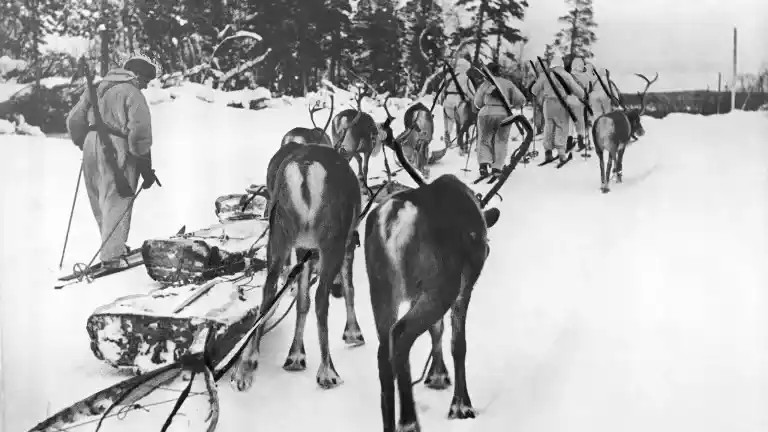
Reindeer further played an important role in logistical operations in northern Finland. The use of draught reindeer, those trained to haul sledges, was advantageous in the forests and on the Arctic steppe. There was no need to build roads through the forests or to bypass difficult terrain for reindeer convoys. Reindeer were used for communication, patrolling, and as a means of transport.
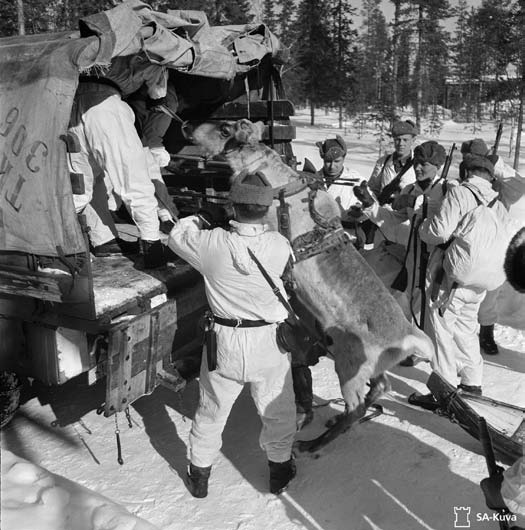
In widely dispersed units, reindeer replaced vehicles. Far-ranging reconnaissance and raiding patrols operating behind enemy lines used reindeer to carry equipment and food, moving them to the front by truck as one picture shows. Casualties could be carried on the sledge. When the snow melted, reindeer could also carry packs. Reindeer supply columns were hard to detect, even by air. Herders handled the reindeer and no special forage was needed. On one sector of the Lapland Front in Lutto there were between 500 and 750 reindeer pulling sledges or carrying supplies. “Even in deep snow one strong reindeer pulling a sledge can carry equipment and a week’s rations for at least four men at the speed of a skier.”
While motorized vehicles have taken over, it is worth remembering the advantages animal transport can provide in extreme environments.
Source: Minna T. Turunen, Sirpa Rasmus, and Asta Kietäväinen, “The Importance of Reindeer in Northern Finland during World War II (1939 – 45) and the Post-War Reconstruction,” Arctic (June 2018): 167-182
@SMH_Historians @SWWResearchNA @Mother_of_Tanks
1
1
2
212

Just in time for #SMH2026, a new review of SKI, CLIMB, FIGHT in On Point: The Journal of Army History! Read the review here ➡️ armyhistory.org/ski-climb-fi…
2
5
140
Lance R Blyth retweeted

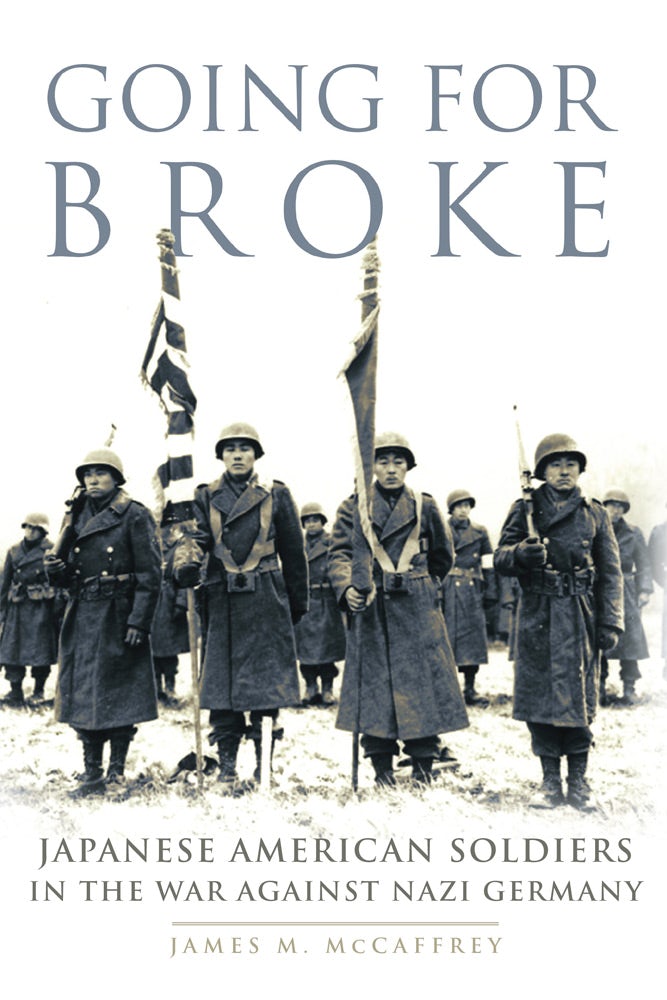
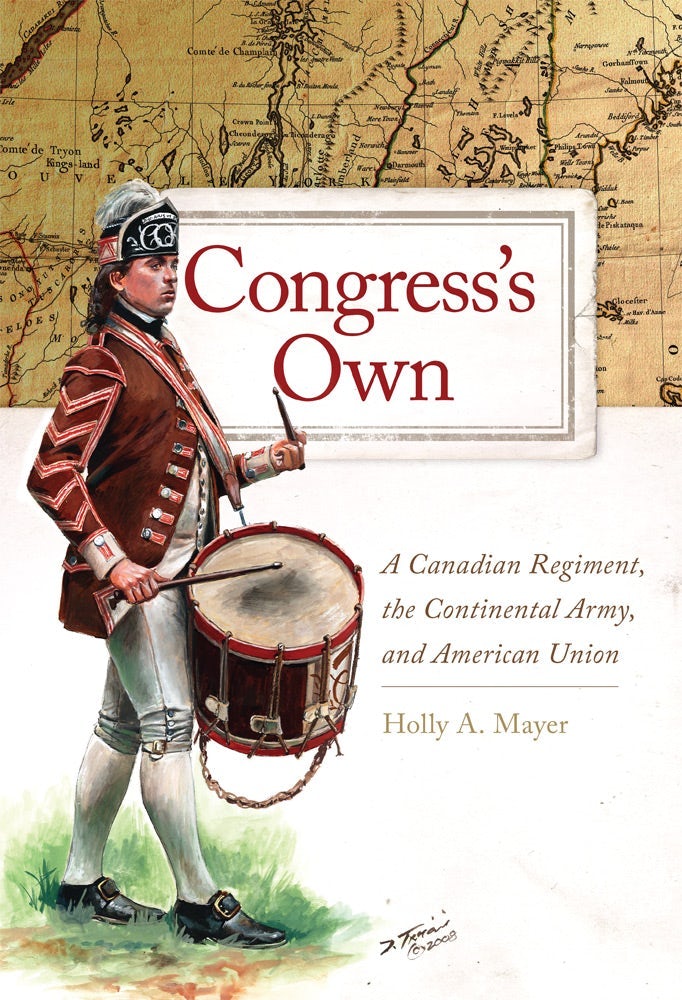
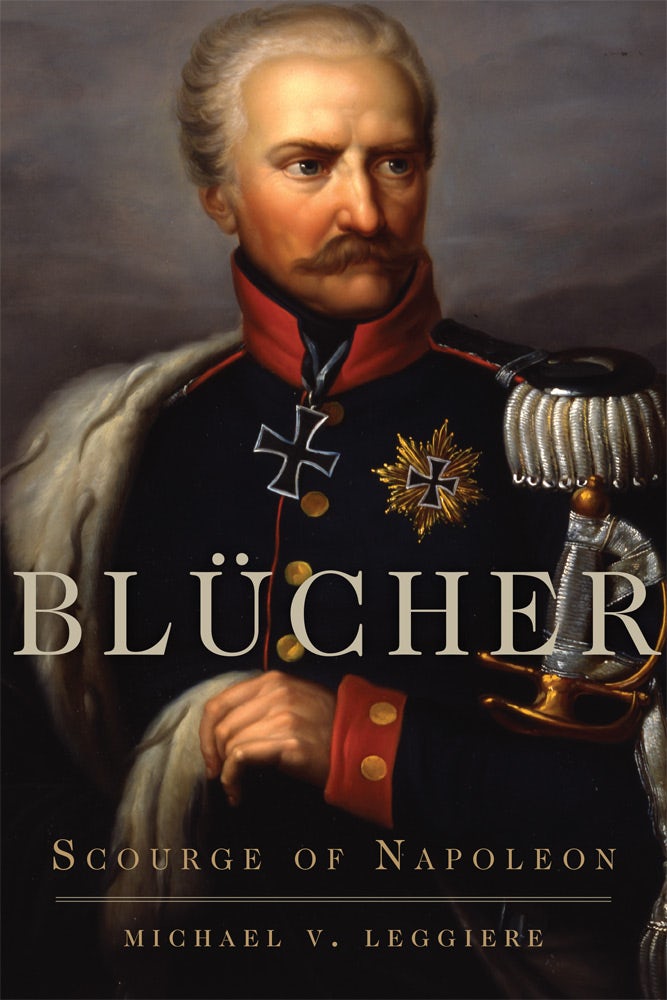
Wine! Beer! Books!
At @SMH_Historians next week, join @OUPress in honoring Dr. Greg Urwin on his retirement as editor of the legendary Campaigns & Commanders series and celebrating new editor Dr. Michael Leggiere.
Friday, March 27, 3-4PM. At the #SMH2026 book exhibits area!
1
4
8
570
Mar 17
Of all the Mountain Training Center/10th Recon Troop training detachments the oddest had to be the one that was sent to Italy from Camp Hale, Colorado in December 1943 to join the British mountain school as instructors. And the oddest job of that det ever did was with the British 1st Household Cavalry Regiment (1HCR).
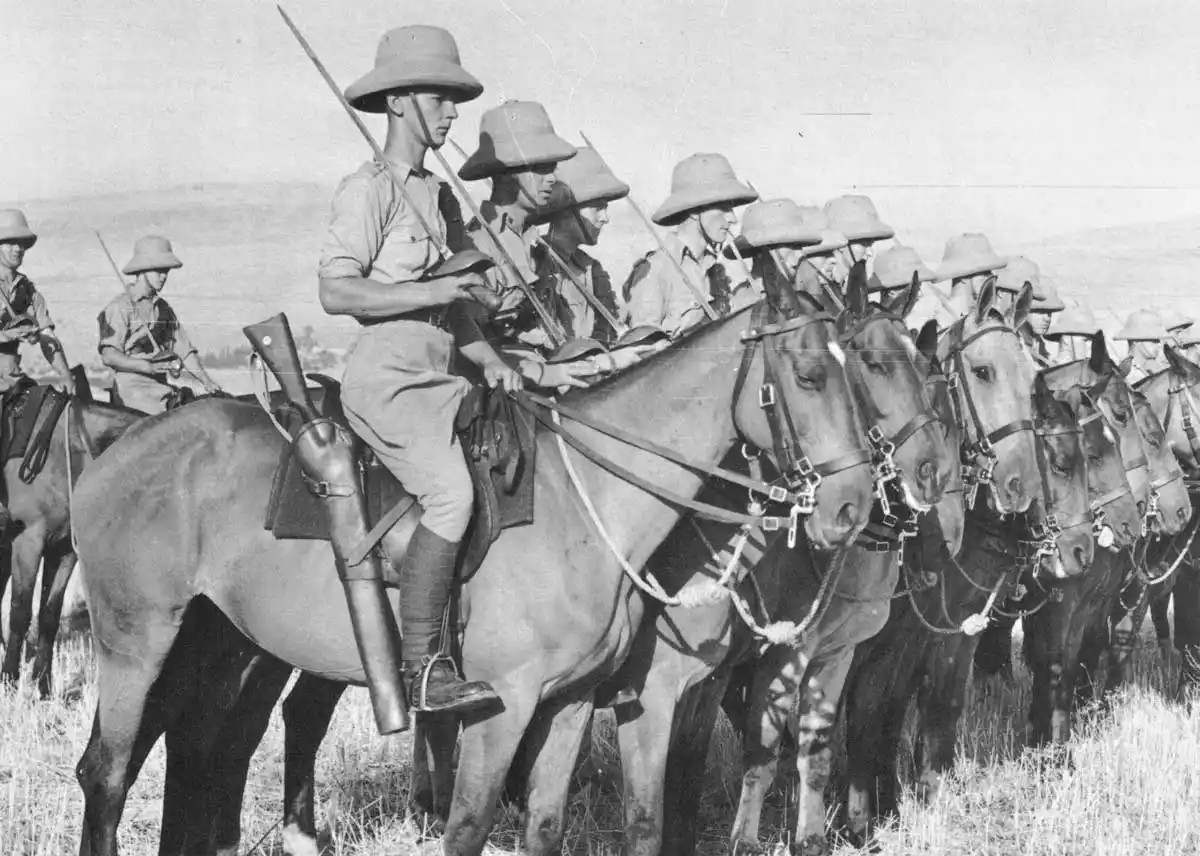
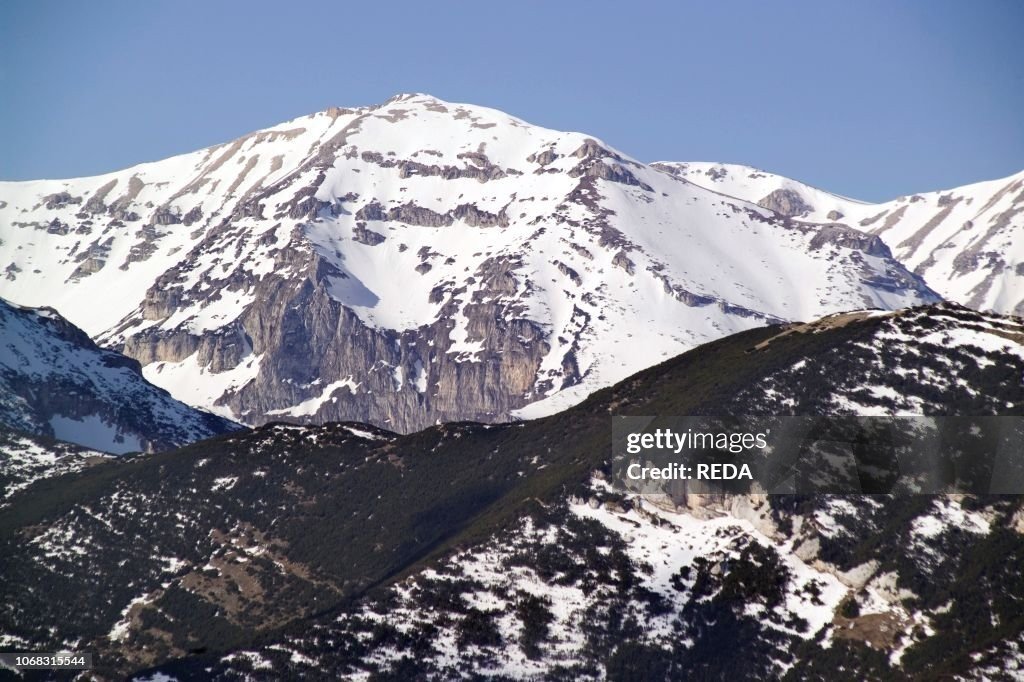
The 1HCR began the war as a mounted unit in Palestine (pic 1), but soon converted to trucks, before finally receiving armored cars. But, upon arrival in Italy in late 1943, the 1HCR was assigned as a corps recon regiment and dispatched into the Abruzzo Mountains below Monte Amaro, at 2,793m (9,163 ft) the second highest mountain in the Apennine Range (pic 2).
So, sometime in the spring of 1944, “rather late in the game” as a regimental history of the time notes, the 1HCR received “eight US officers and sergeants with Swiss or German names . . . to coach the Regiment in mountain warfare—one, a Swiss, had defected from a German mountain regiment.”
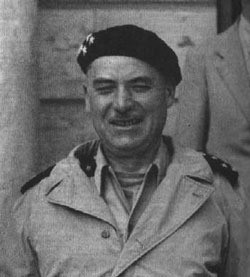
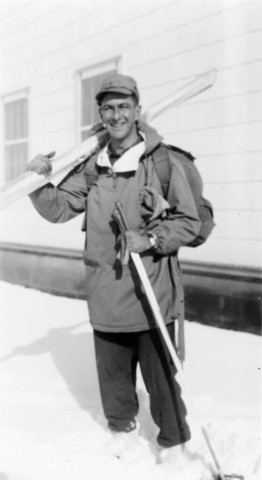
Lt Hal Burton (pic 3), author of one of the first reliable accounts of the 10th Mountain Division in WW 2, _The Ski Troops_ (1972), appears to have led the det to the Brits, and was commended for leading patrols, during one of which the Germans put out a dead body as bait, nearly surrounding Burton’s patrol before if fought itself free.
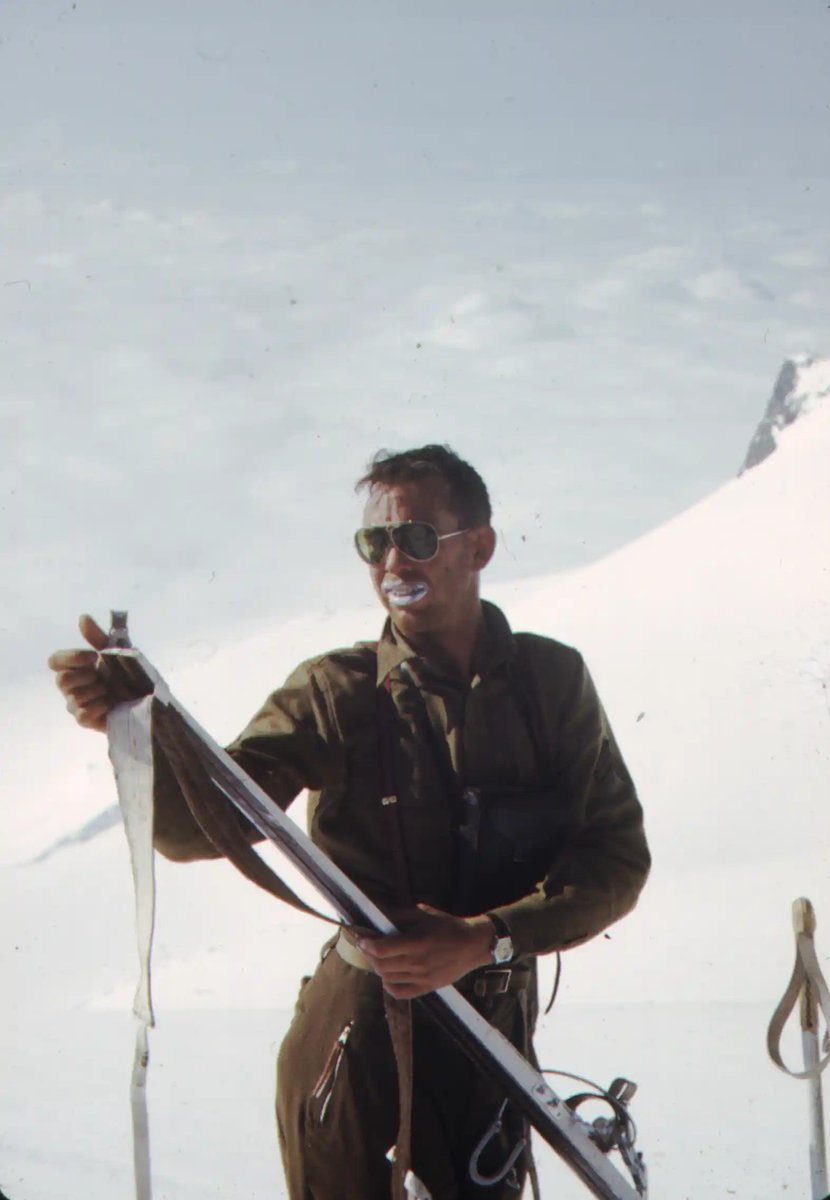
Also with the det was Sgt Eldon Metzger (pic 4) who, despite his name, was from Oregon, who was also commended for leading mountain patrols, and would go on to a long career as a civilian instructor and mountain expert for the Army, apparently designing the ALICE pack.
The 1HCR appears to have conflated the experiences of Sgt Peter Pringsheim, a German émigré who had served as an instructor for German mountain troops in the 1930s, and Sgt Alfred “Fredy” Pieren, a Swiss mountain guide and ski instructor who had instructed Swiss mountain troops, who also served with the detachment.
Definitely an odd ‘lash-up” with old school British aristocracy on one side and American dirt-baggers on the other!
@swwrgna @SMH_Historians
2
50
Mar 5
Roaring Fork Valley--you're next!
Unknown Tales of the 10th - Aspen Historical Society
When: March 19, 2026 from 6:30–8pm
Location: TACAW, 400 Robinson St. Basalt, CO
Cost: FREE (RSVP required via TACAW; Seats first come, first served)
aspenhistory.org/activity/un…
1
2
77
Mar 3
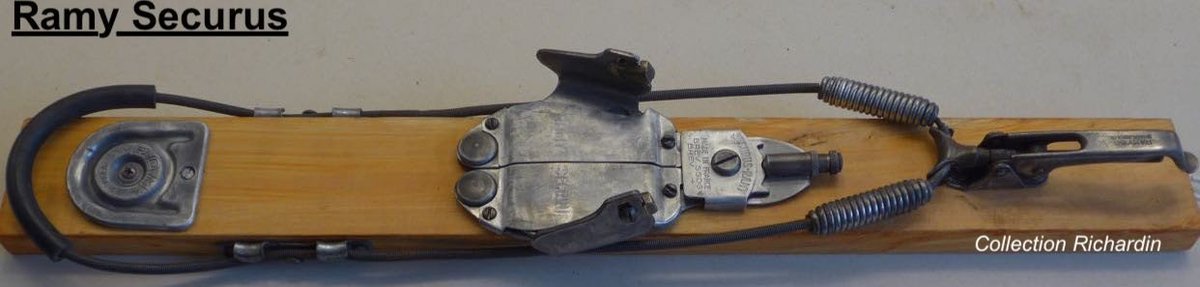
In 1972 the Arctic Institute of North American tested and evaluated off-the-shelf mountaineering equipment for the Army in the Saint Elias mountains. While the institute recommended many pieces with several suppliers, it only recommended one ski binding: the Ramy-Securus ski mountaineering binding, a derivation of the older Kandahar cable binding, but with a releasable toe piece.
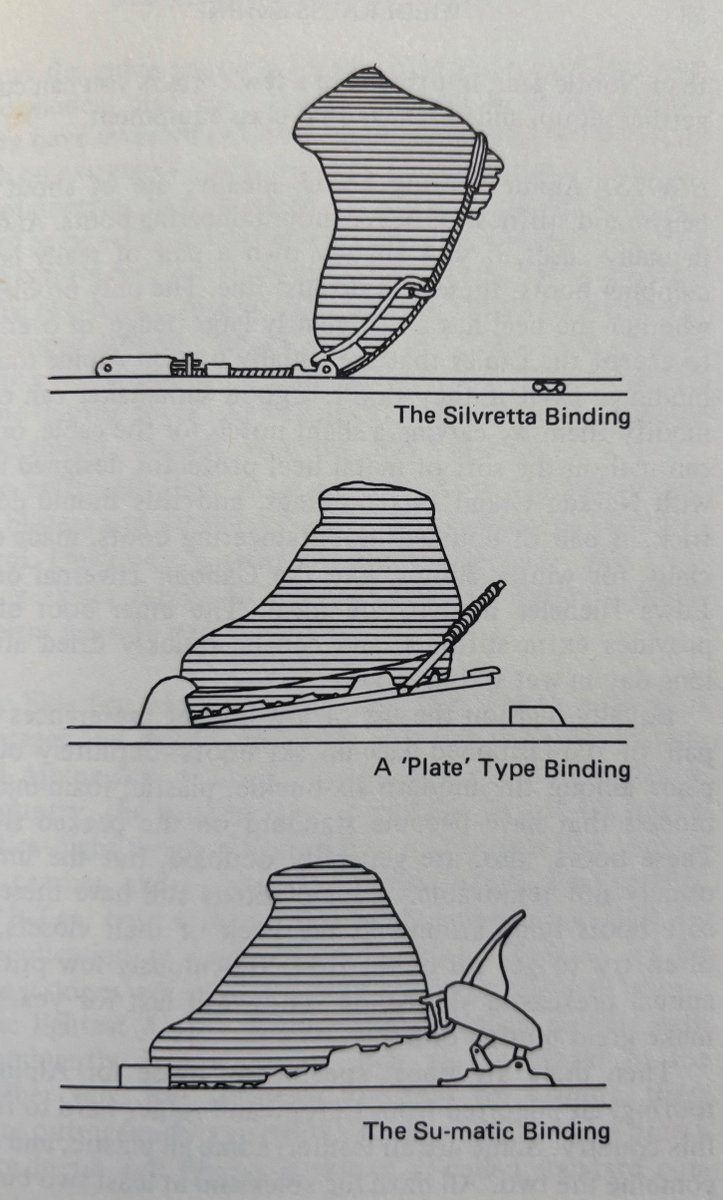
However, in that same year, mountain guides Lito Tejada-Flores and Allen Steck released their Wilderness Skiing ‘totebook.’ Tejada-Flores and Steck identified at least three bindings that would have met the Army’s requirements but recommended the Silvretta cable binding and the Ramer plate binding (which was the first to have heel-lifts for climbing). (They thought the Su-matic was a good side-country binding but too complex for backcountry use.)
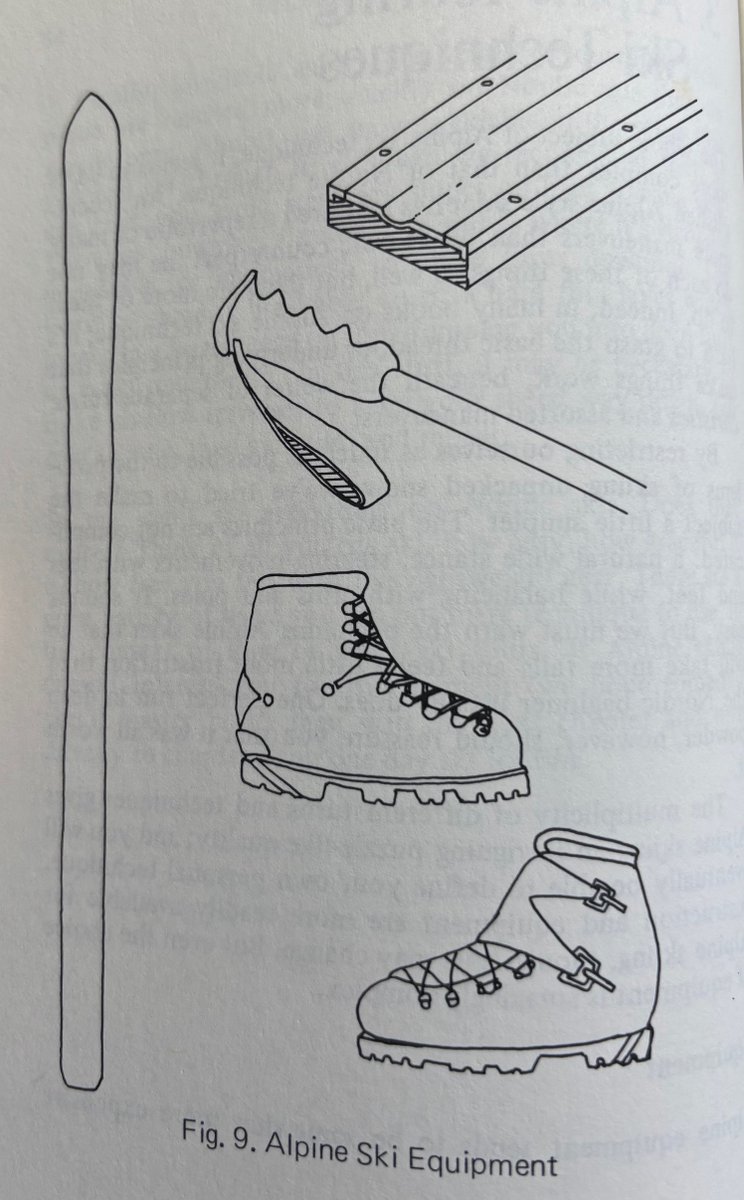
Both these, however, required a specialized alpine touring boot, at that time a beefed-up, leather and plastic, mountaineering boot. But, since the Army had exiled mountain training to Alaska in 1957, the preferred ski boot of the time was the white, cold weather, ‘Mickey Mouse’ boot, consigning the Army to missing the continuing revolution in backcountry ski bindings almost down to this day.
So, with companies like ATK producing all-metal, enclosed tech-toe bindings (eliminating many of the challenges of that type) is it time to revisit Army ski bindings? Even if that means buying hard, alpine touring boots (which are okay for booting uphill, but not for lengthy foot movements)? Would love to see another evaluation done today!
#mountainwarfare #backcountryskiing

92
Feb 25
Just got the best blurb for Ski, Climb, Fight from a US Army Special Forces mountain warfare instructor “Every O4 and above should have to read it”!
@ABerzanskis
#mountainwarfare
2
1
3
187