
Teacher, Banker, Trade Unionist, follow literature and politics closely.
Joined March 2013
- Tweets 26,818
- Following 1,033
- Followers 197
- Likes 57,110
94 Photos and videos





Pottal Muchanthi Chenthi retweeted

#WATCH | திமுக ஆட்சியில் 4 மாதங்களுக்கு முன்பே வழங்கப்பட்டு பயன்படுத்தி வரும் வாகனங்களுக்கு தவெக அரசின் ஸ்டிக்கர் ஒட்டி மீண்டும் வழங்கிய அமைச்சர் விஜய் பாலாஜி.. செய்தியாளர்கள் சுட்டிக்காட்டி கேட்டபோது அமைச்சர் அளித்த பதில்
#SunNews | #Vellore | #TVK | #VijayBalaji
30
907
1,581
38,381
Pottal Muchanthi Chenthi retweeted

To the so-called “rebels of TMC”: don’t ever forget the public is watching you .
666
335
2,105
65,033
Pottal Muchanthi Chenthi retweeted
Tamil Nadu has officially surpassed Gujarat and Maharashtra to become India’s top textile exporter. With exports worth $7.99 billion in FY 2024–25, the state commanded 21.84% of the nation’s total textile trade- a major win for Tamil Nadu’s manufacturing and business ecosystem.
Current status (FY 2025–26): Full year data is not yet available. As of April 2025- January 2026, Tamil Nadu’s textile and apparel exports grew by 3.3% year-on-year.
This reflects modest low single digit growth, but it should be seen in the context of US tariff issues and other global challenges.
8
17
171
8,468
Pottal Muchanthi Chenthi retweeted

🚨 NORTH KOREA GLIMPSE INDIAN PARLIAMENT!
The "Modi... Modi... Modi..." chants don't happen by Magic.
A CIRCULAR was issued:
"Wherever you are, Whatever you do — show up & chant Modi... Modi... Modi...!!!"
This is a Manufactured Personality Cult — Straight Out of North Korea's Playbook.
Parliament Reduced To A Supreme Leader Worship Session❓
#नेशनल_फ्रीडम_यूनियन #12YearsOfYuvaShakti
22
572
1,552
66,783
Pottal Muchanthi Chenthi retweeted

This is looking like some serious discussion
But if ANI unmute the video and post with audio, then you can make 100 memes out of it 🤧
72
288
1,870
41,318
Pottal Muchanthi Chenthi retweeted

🚨Parandur likely to be dropped while a Sipcot will come up there. A GO is expected shortly as per Hindu. Chennai will continue to suffer. Good luck finding a site which has no farms & water bodies. You have already pushed TN/Chennai back @CMOTamilnadu 👎
hindutamil.in/news/tamilnadu…
253
327
1,628
507,372
Pottal Muchanthi Chenthi retweeted

Jun 13
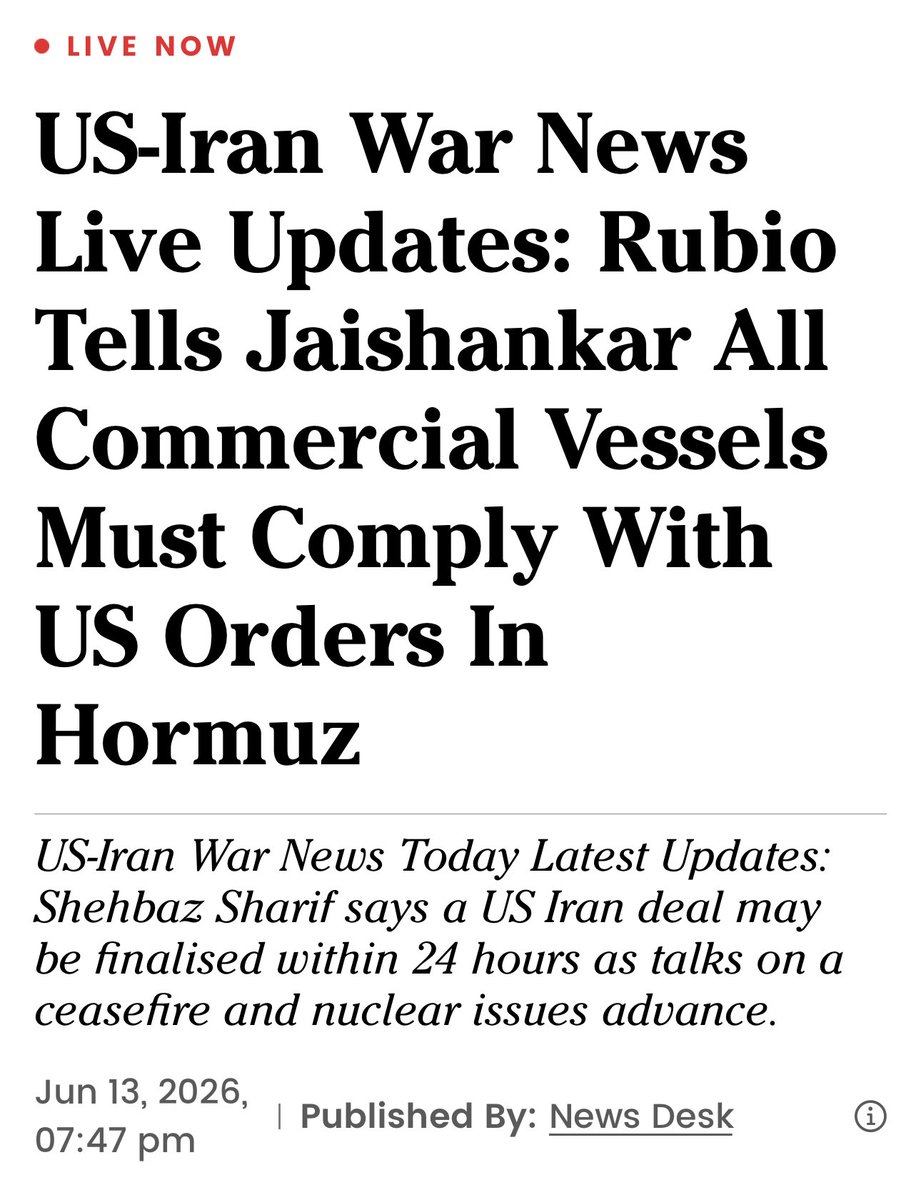
It's INSULTING!
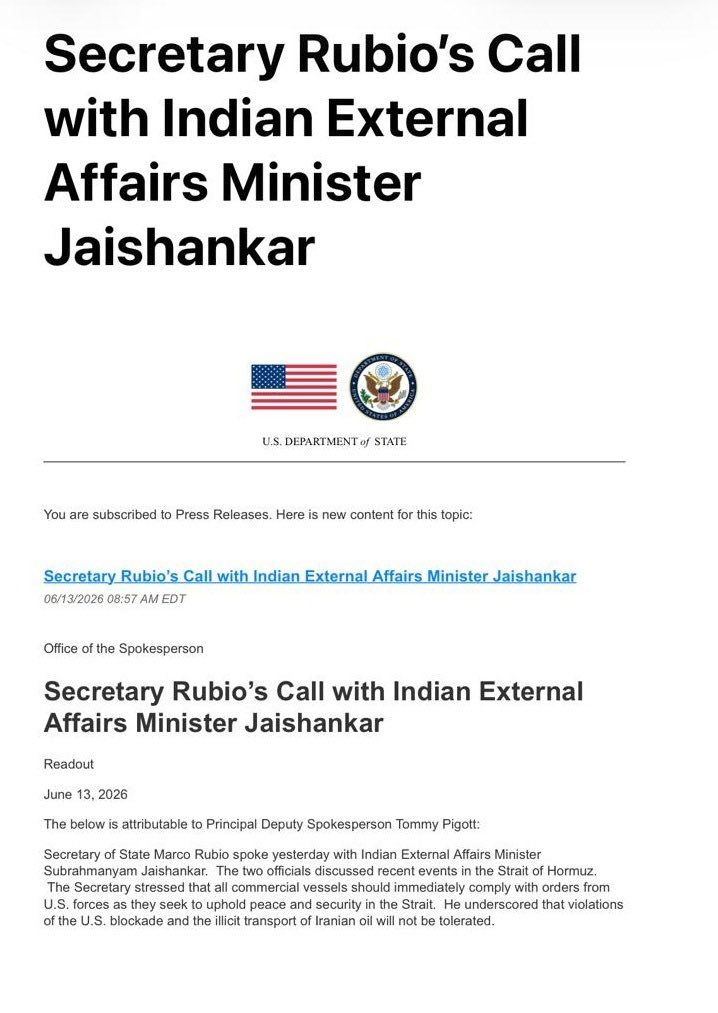
US says it'll will kill more Indian sailors unless we crawl to USA's orders!
If shot killed 3 US sailors. USA would send a fleet to teach India a lesson.
Yet Modi pines for Trump's affections and will surely hug him (yuck!) on the sidelines of G7 meet in Paris
40
300
581
6,772
Pottal Muchanthi Chenthi retweeted

Jun 13
US refuses to apologize for killing our citizens . Mr Laser eyes @DrSJaishankar issues a lame statement . Look at @marcorubio 's arrogance . And look at how this Govt wants us to believe that the world does not take a decision without consulting India . Before killing 3 Indians , the US fired a torpedo killing 100 Iranian sailors who were in the Indian Ocean returning from an event in India . Diplomacy has been so servile before .
112
758
1,944
105,214
Pottal Muchanthi Chenthi retweeted

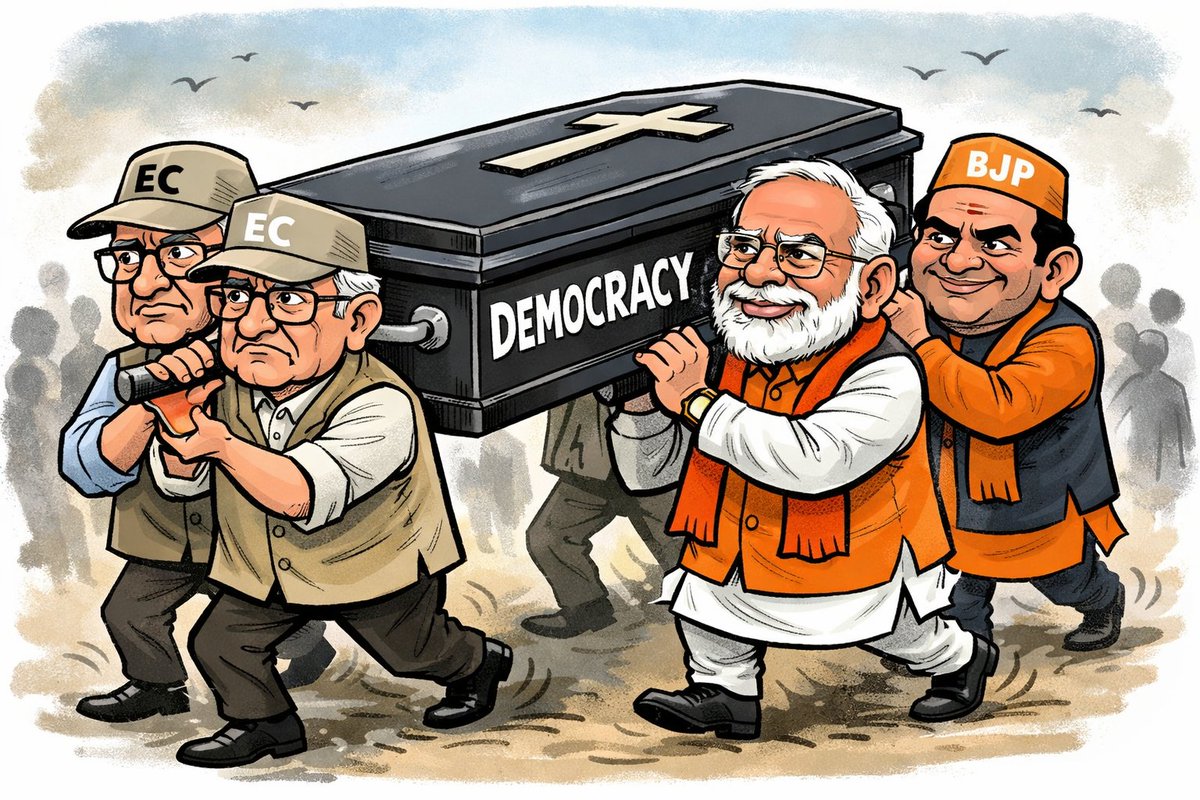
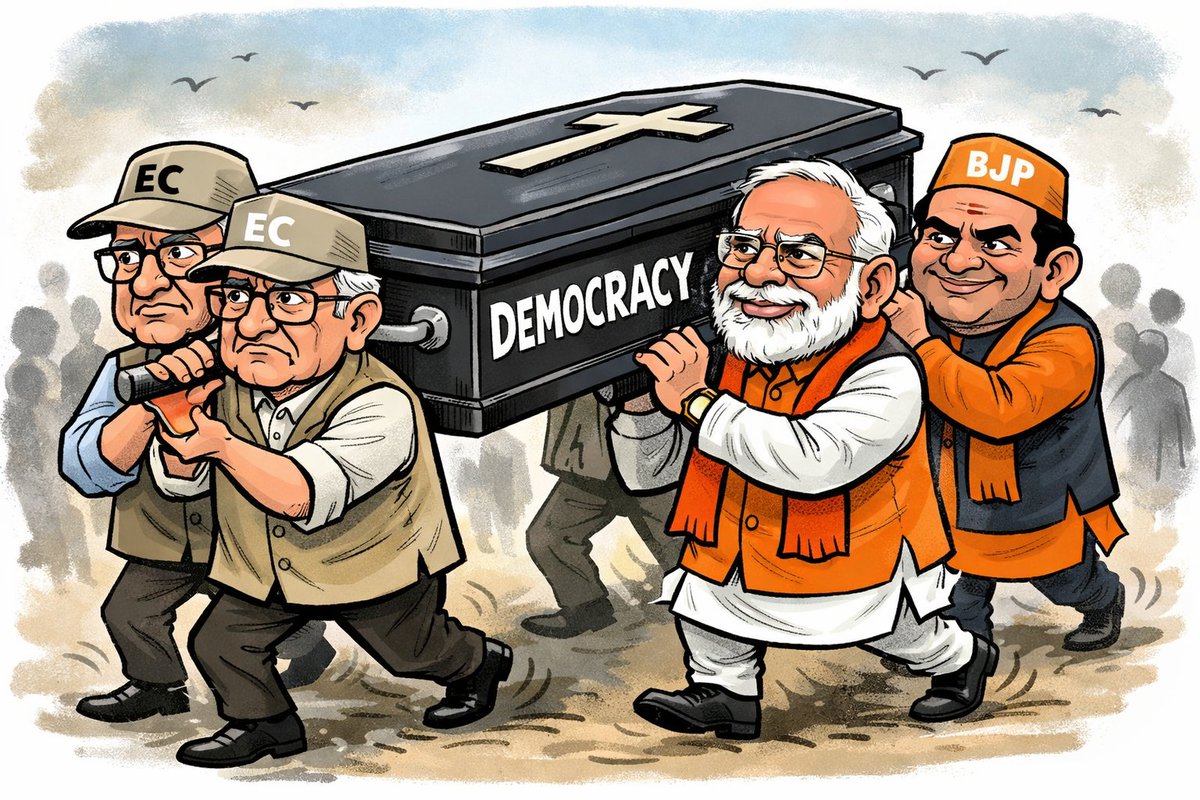
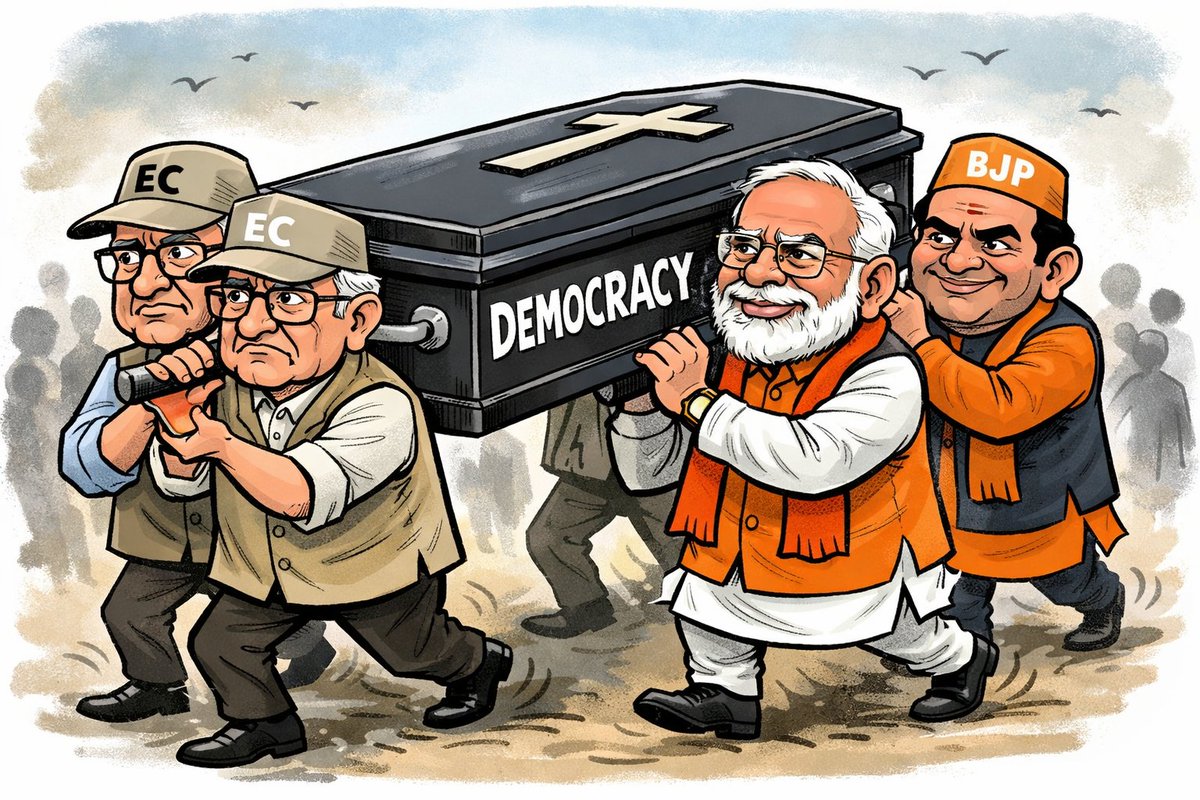
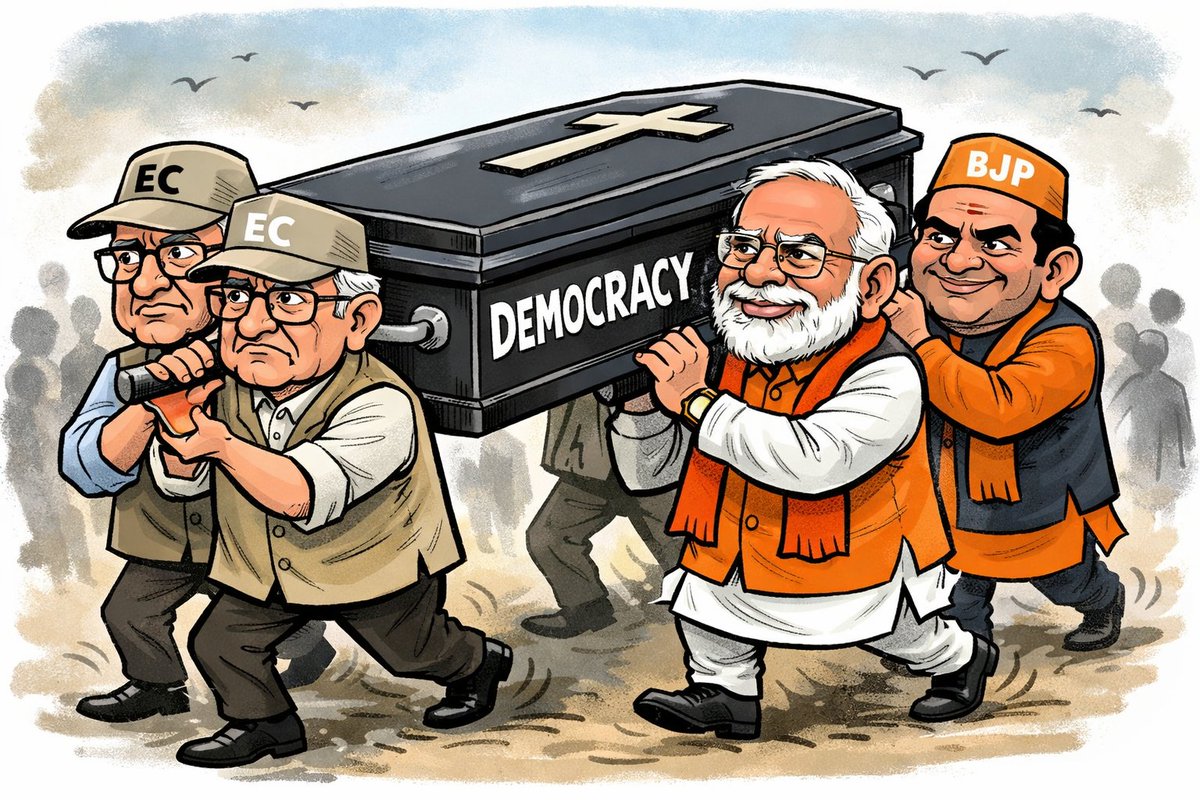
First ECI became ECBJP now Supreme Court of India is becoming Supreme Court of BJP.
Jun 13

IMPORTANT: NO criminal case pending against Meenakshi Natarajan in Telangana matter clarifies a Hyderabad court, returns the private petition citing lack of jurisdiction. This happens exactly in the week where her election nomination was rejected by a returning officer because of this very case and SC refused to intervene and asked her to file an election petition in HC instead. So who will now ensure justice is done to her and institutional integrity maintained? @ECISVEEP @indSupremeCourt . ANYONE?? newindianexpress.com/amp/sto…
30
202
612
7,899
Pottal Muchanthi Chenthi retweeted

Jun 13
Congress leader and Senior Supreme Court Advocate @DrAMSinghvi very strong words on TMC political turmoil
"I am not one of those who think that there is no dissatisfaction, anger in those who have left the TMC. I am also not one of those who think that the BJP alone is the reason for them to leave. But let me make a few points crystal clear...
▪️Never before in the 75-80 years of Indian history has any party misused agencies, that includes past BJP Govts and non-Congress Govts, to even 1/10th the extent which this Govt has done.
▪️Secondly, in the last 75-80 years of Indian political history, no party has aggregated and misused as many monetary resources as this ruling party.
▪️Third, there is no doubt in my mind that there are categories of people. You cannot equate a Suvendu Adhikari with the others who have left. Suvendu Adhikari may have had serious differences but he had the guts to leave the party years ago. He fought on the ground, he carried a campaign, he won the elections, he became the CM. That is the democractic way of doing. You may not agree with him but you cannot criticise him for this. There is a second category of a very small number where people have left after 5th May 2026. But they have at least had the moral courage to resign their seats. The third category is the largest, they are not prepared to leave the office, they are not prepared to leave their greediness, they are not prepared to leave anything of the TMC which got them where they are.
So, what kind of category is this?
This is nothing but immoral.
▪️Fourthly, there is a huge complete, ridiculous conceptual distortion that anywhere any legislature party - if so called 2/3rd walk out and form a group then the anti-defection law doesn't apply. This is the most ridiculously wrong interpretation and is based on complete ignorance or deliberate non-understanding of the existing law which has been decided by the Supreme Court.
▪️Fifthly, pick up and read the Shiv Sena judgment of 2022. There is no concept of a 2/3rds simplicitor in the legislator party which will prevent the application of the 'dal badal' anti-defection law. They will be subject to disqualification.
However, in this country, the process is the punishment.
Everybody knows the law but I, as an existing TMC and Mamata Banerjee, will file a complaint against you that you have left. That complaint will go to the Speakers of the Assembly and Lok Sabha. Is it possible to contemplate that those Speakers who belong to the ruling party will allow my complaint? They will reject and those people will be recognised. I will go to court and the court will take 3-4 years.
▪️Lastly, I have been advocating for many years that you must repeal all this farce of the 10th Schedule. You must have a 2-line 10th Schedule which says that anybody who is elected on symbol x and party y and who does directly or indirectly any other anti-party activity and joins/support any other party must resign the post he holds and refight the elections..."
47
328
932
41,455
Pottal Muchanthi Chenthi retweeted

Jun 13
IMPORTANT: NO criminal case pending against Meenakshi Natarajan in Telangana matter clarifies a Hyderabad court, returns the private petition citing lack of jurisdiction. This happens exactly in the week where her election nomination was rejected by a returning officer because of this very case and SC refused to intervene and asked her to file an election petition in HC instead. So who will now ensure justice is done to her and institutional integrity maintained? @ECISVEEP @indSupremeCourt . ANYONE?? newindianexpress.com/amp/sto…
509
2,420
7,564
290,845
Pottal Muchanthi Chenthi retweeted

Jun 11
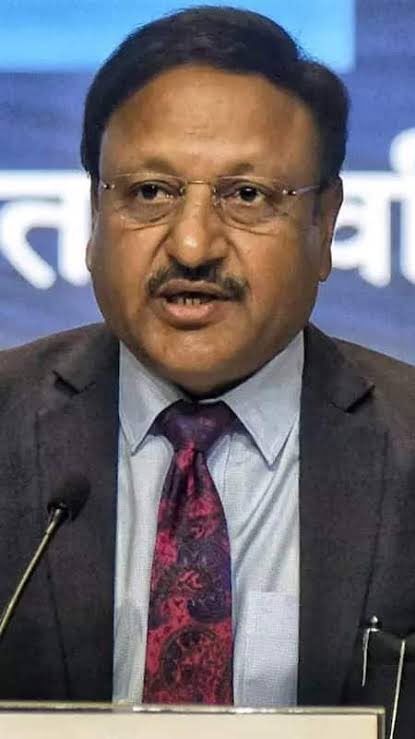
Where is this man⁉️
He once was the Election Commissioner of India, Rajeev Kumar.
Today he is in the hiding.
He can’t move about freely and openly in India.
Gyanesh Kumar will also need to find a place in some corner of the globe to hide and fade away eventually.
Such a shameful, disgraceful life where an entire nation is looking for them to pull them up for letting them down so horribly.
What they did amounts to Treason.
They are Anti Nationals.
155
764
1,719
28,996
Pottal Muchanthi Chenthi retweeted
Jun 12
Have some shame @nytimes . Your half baked report destroyed lives. People dependent on Newsclick for their bread and butter are still without jobs . Your frivolous report made "Newsclick" a stigma on their CVs and no one would hire them .

The @nytimes had published a poorly substantiated red-scare type report, with exaggerated allegations about @newsclickin. That report had been widely cited by the regime in India to demonise everyone who worked for NewsClick. Will NYT issue a correction and publish a new piece?
15
286
960
33,857
Pottal Muchanthi Chenthi retweeted

Jun 12
The Hon’ble Supreme Court’s argument is that we should first go to the Election Commission, then to the High Court, and only thereafter approach the Supreme Court.
However, this is a special case. The more time that is given, the longer this matter will be dragged out. That is why we wanted the Supreme Court to provide relief in the Meenakshi Natarajan case.
Nevertheless, since the Court has said so, we will approach the High Court accordingly. We believe that this rejection is illegal, immoral, and anti-democratic.
What the BJP Govt has done is wrong. Such major actions do not happen without the approval or direction of PM Modi.
We believe that these steps are being taken deliberately as part of a larger conspiracy to weaken the Congress Party and undermine Democracy. In our view, these actions are aimed at harassing and suppressing the Opposition.
216
1,755
5,479
114,715
Pottal Muchanthi Chenthi retweeted

The irony is that the U.S. and India are "Major Defense Partners," conduct joint military exercises and cooperate across the Indo-Pacific. Yet the U.S. Navy has launched missile strikes against commercial tankers in international waters and killed Indian merchant mariners.
The U.S. Navy had direct communications with the crews of the three foreign-flagged commercial tankers and was fully aware of their Indian nationality before launching the strikes that killed three crew members this week.
This echoes March, when the U.S. Navy torpedoed and sank, in India's backyard, an Iranian frigate returning in a non-combat configuration after largely expending its munitions during an India-hosted multilateral naval exercise in which the U.S. also participated.
And just as the U.S. Navy did not attempt to rescue the sailors from the sinking frigate, it likewise did not come to the aid of the surviving Indian crew members aboard the three tankers it struck. The rescue efforts were mounted instead by Omani authorities.
It is noteworthy that the vessels Washington labels part of a "shadow fleet" transporting crude oil are largely linked to China and Russia. Yet since the Trump-ordered naval blockade began on April 13 without any basis in international law, the U.S. military has not struck a single tanker actively bound for, or coming directly from, either China or Russia.
Striking such a vessel would transform a localized naval blockade into a direct geopolitical confrontation with Beijing or Moscow — a line the Trump administration has explicitly avoided crossing. Instead, it has employed kinetic force only against lower-profile vessels, including those carrying Indian crew members.
Taken together, these incidents are a sad commentary on the state of India's foreign policy under the present government.
191
924
2,434
81,420
Pottal Muchanthi Chenthi retweeted
Jun 12
Journalism isn't stand comedy @navikakumar ... I remember @HoeZaay brilliant act on this . You are comedy. Though not funny at all.
Jun 12

Journalism isn't stand-up comedy,
but you are a clown for sure. 🤡🤡
Reading fake whatsapp forwards on the national television is not journalism.
40
536
2,242
28,088
Pottal Muchanthi Chenthi retweeted

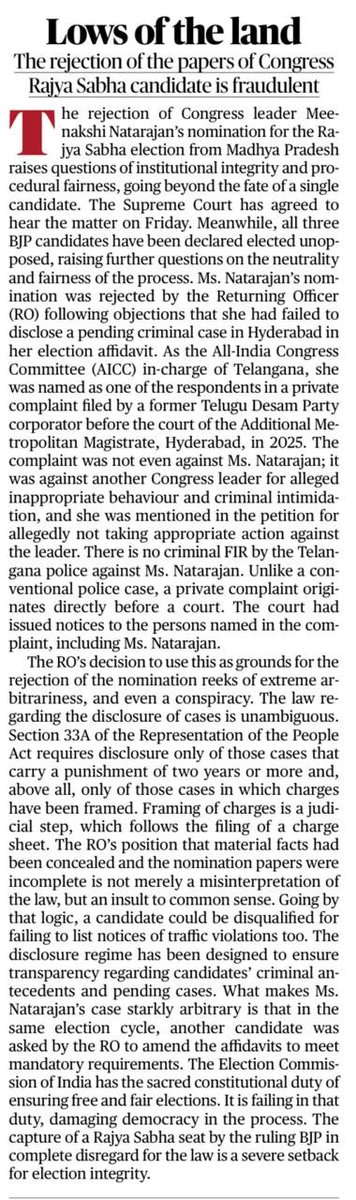
Anyone has any doubt that Gyanesh will support the BJP at any cost ? Read this.

5
12
54
6,205
Pottal Muchanthi Chenthi retweeted

Jun 12
Whether you like DMK or not, during its tenure, our state was leading the country in both GDP growth and industrialisation. Political preferences should not come in the way of facts.
Jun 12

Why you failed to point out to Stalin the failure of development of State subject projects enough in TN. On the contrary you were all praise for TN doing well than UP etc. Just recall how constantly I reminded of this failure of TN. Good you have turned wiser now.
6
15
111
9,423
Pottal Muchanthi Chenthi retweeted

Jun 12
It’s clear that @ECISVEEP needs to explain this bizarre inconsistency to the nation if the people are not to lose faith in our election process: altnews.in/where-did-our-vot…
@INCIndia
123
525
1,650
79,974
Pottal Muchanthi Chenthi retweeted

I am not asking RSS workers to get registered, I am simply asking RSS to get registered……. Every street vendor is registered….. why not RSS?
315
2,377
12,606
318,349