
experimental theologist @AmplifyPartners.
Joined May 2009
- Tweets 3,933
- Following 1,458
- Followers 4,561
- Likes 154,822
229 Photos and videos













Jun 12
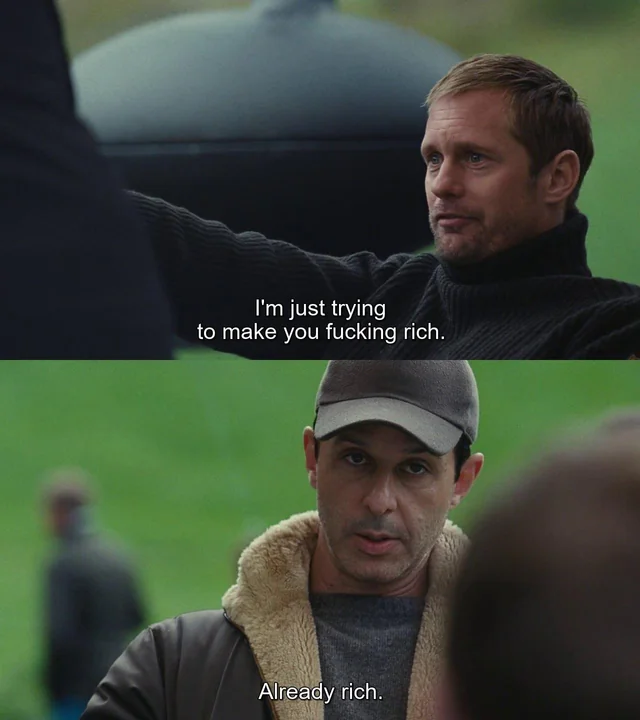
Promised my son a single SpaceX share like six months ago and he has gleefully come to collect today. I incorrectly assumed they'd split until it was like twenty bucks...
1
18
1,882
Arjun Narayan retweeted

Jun 11
Academic writing should be addressed neither to the public nor to other academics. It should be addressed to a single interlocutor with whom you have a petty rivalry and whose work you are trying to discredit
71
445
3,717
327,994
Jun 11
It's actually the Sveriges Rigsbank Prize in memory of the Economic Sciences
1
1
7
3,962

The only reason every crew member don't have back-end deals, is "Hollywood Accounting" is notorious for defrauding people out of backend deals by hiding profit. In Silicon Valley, every startup employee has backend deals, generally honored with high social consequences for not doing so. That greater alignment is part of why Silicon Valley is kicking Hollywood's ass
Jun 6

I don't get what it is she wants - for every crew member to have back end deals? It was a small budget movie that some company paid and poured $50 mil into to promote and distribute and it hit big. A better reaction would be to leverage working on that for bigger projects.
7
2
132
20,710
Jun 1

1
11
894
Arjun Narayan retweeted

May 26
I just checked and there are literally no historic examples of memory stocks crashing due to oversupply.
27
10
748
142,131
May 22
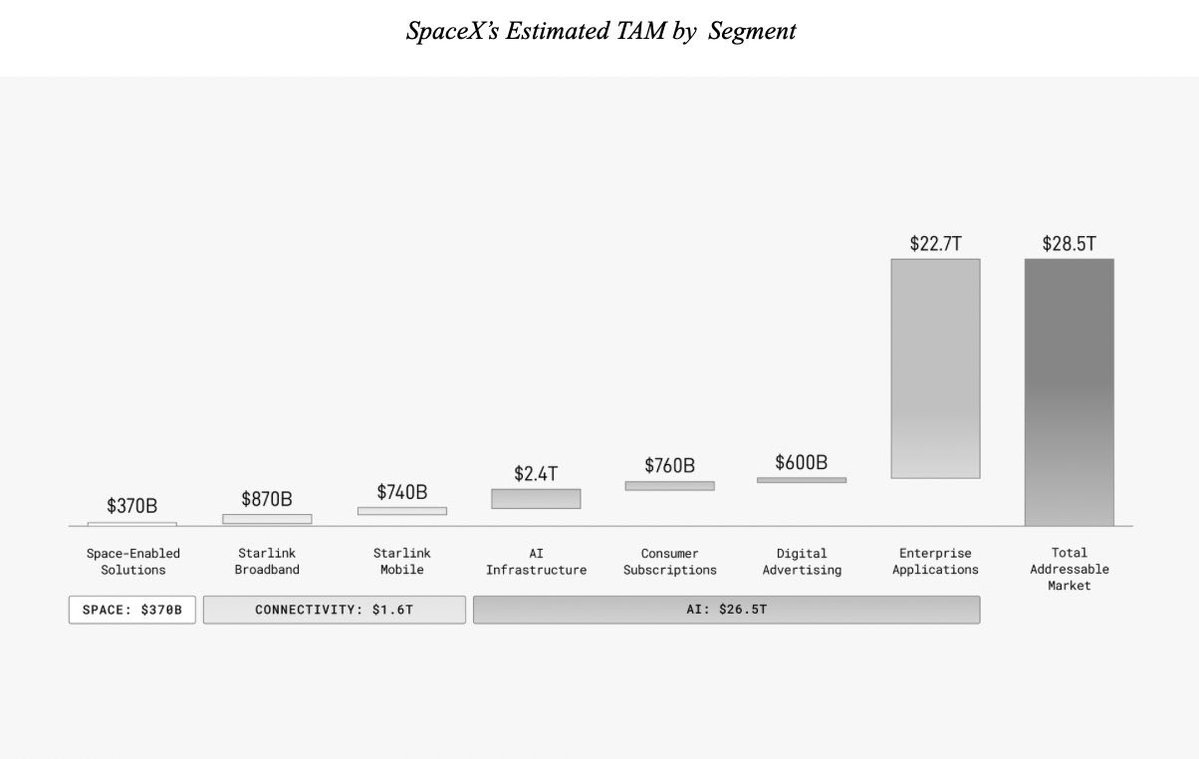
SpaceX drops the hypiest IPO filing and says "we believe we have identified the largest TAM in human history", and you're like, my interplanetary east India company, what delectable spice have you decided to ship across the stars, and it's like... 22 trillion dollars of b2b saas
44
124
1,578
472,252
Arjun Narayan retweeted

May 20
We’re watching Git melt down in front of our eyes as agents write most of our code.
This is why many people, present company especially, are excited about Jujutsu (jj).
Some observations on Git’s history, why it’s creating problems for an agent-first SDLC, and how jj may help:
A brief history of version control systems:
In the early days of computing, version control didn't exist because it didn't need to. Programs were small enough that a single developer could hold one in their head. As teams grew, early systems like RCS tried to solve coordination with file locks that serialized work one person at a time, but locks created as many problems as they solved.
Centralized systems like SVN and Perforce reframed the question entirely, reconciling simultaneous work through merging rather than preventing it. Then Git arrived in 2005, built by Linus Torvalds in a matter of days and described in its first commit as "the information manager from hell."
What it added was decentralization: every developer got a full local copy of the repo, which made branching trivial and gave the whole system a resilience no centralized tool could match. Even so, Git didn't win on technical merit alone; GitHub understood that version control systems are fundamentally collaboration platforms, and that insight, more than anything else, is what made Git the standard.
Why Git is suboptimal for an agent-first world
Git's well documented (and memed) problems fall into two categories: data structures and UX.
At scale, operations like finding merge bases require walking the entire commit history, and Git's reconciliation algorithms max out at roughly 2-3 merges to main per second. That’s fine for startups, but a hard ceiling for hyperscalers.
The UX problems are more universally felt. Git exposes its internal state model to the user, forcing developers to reason about whether a file is untracked, staged, committed, or stashed, when most people just want their work recorded. Merge conflicts are incredibly frustrating because Git treats them as invalid states that must be resolved before you can continue, with no way to set one aside and come back later.
The maintainers know all this, but Git is load-bearing infrastructure with 20 years of backwards-compatibility requirements, and the core team is severely constrained in what they can change.
Agents make all of it exponentially worse, amplifying Git's limitations by generating code at high velocity, turning hyperscaler edge cases into mid-sized-team problems, and the same state machine complexity that frustrates developers becomes reasoning overhead for agents.
Jujutsu (jj) and why people are excited about it
jj started in 2019 as an experiment towards a next-generation VCS by Martin von Zweigbergk at Google. The core difference is that jj eliminates the staging area entirely; every change is always committed, just like Dropbox, and all the little Git incantations are abstracted away.
Several design choices follow naturally. Undo is a primitive: jj maintains an operation log of every action you've taken, so undoing a rebase is one command, whereas Git users have all lost data hunting through the reflog. Conflicts are first-class, represented in the underlying data structures rather than treated as invalid states, which means you can have a conflicted commit, move it around, and come back later without interrupting your work.
And jj builds its own data structures on top of a storage backend, which today is Git, so you could start using it at work without anyone knowing.
For those nodding along, check out @erscio. ERSC was started by JJ’s core committers and they’re building the version control system and forge that will take software development into the next 20 years, for humans and agents.
5
11
79
17,918
May 18
What did you think "Amo Dei" meant? Vibes? Essays?
12
27
521
22,624
Arjun Narayan retweeted

May 16
The solution to all of this is to have kids.

The vibes in SF feel pretty frenetic right now. The divide in outcomes is the worst I've ever seen.
Over the last 5yrs, a group of ~10k people - employees at Anthropic, OpenAI, xAI, Nvidia, Meta TBD, founders - have hit retirement wealth of well above $20M (back of the envelope AI estimation).
Everyone outside that group feels like they can work their well-paying (but <$500k) job for their whole life and never get there.
Worse yet, layoffs are in full swing. Many software engineers feel like their life's skill is no longer useful. The day to day role of most jobs has changed overnight with AI.
As a result,
1. The corporate ladder looks like the wrong building to climb.
Everyone's trying to align with a new set of career "paths": should I be a founder? Is it too late to join Anthropic / OpenAI? should I get into AI? what company stock will 10x next? People are demanding higher salaries and switching jobs more and more.
2. There’s a deep malaise about work (and its future).
Why even work at all for “peanuts”? Will my job even exist in a few years? Many feel helpless. You hear the “permanent underclass” conversation a lot, esp from young people. It's hard to focus on doing good work when you think "man, if I joined Anthropic 2yrs ago, I could retire"
3. The mid to late middle managers feel paralyzed.
Many have families and don't feel like they have the energy or network to just "start a company". They don't particularly have any AI skills. They see the writing on the wall: middle management is being hollowed out in many companies.
4. The rich aren’t particularly happy either.
No one is shedding tears for them (and rightfully so). But those who have "made it" experience a profound lack of purpose too. Some have gone from <$150k to >$50M in a few years with no ramp. It flips your life plans upside down. For some, comparison is the thief of joy. For some, they escape to NYC to "live life". For others still, they start companies "just cuz", often to win status points. They never imagined that by age 30, they'd be set. I once asked a post-economic founder friend why they didn't just sell the co and they said "and do what? right now, everyone wants to talk to me. if i sell, I will only have money."
I understand that many reading this scoff at the champagne problems of the valley. Society is warped in this tech bubble. What is often well-off anywhere else in the world is bang average here.
Unlike many other places, tenure, intelligence and hard work can be loosely correlated with outcomes in the Bay. Living through a societally transformative gold rush in that environment can be paralyzing. "Am I in the right place? Should I move? Is there time still left? Am I gonna make it?" It psychologically torments many who have moved here in search of "success".
Ironically, a frequent side effect of this torment is to spin up the very products making everyone rich in hopes that you too can vibecode your path to economic enlightenment.
57
59
1,332
163,609
May 14
Cerebras popped 90% today. Is there anyone at Benchmark with opinions about IPO pricing? Curious to hear all perspectives!
3
65
14,892
May 12
Pray Mr. Suskever, if I ask the agent the wrong question, will it still give me the right answer?
2
639
May 1
Infuriating to see such resources wasted on a rocket to nowhere. Imagine for instance how many miles of high speed rail we could have built in California for this amount of money!

Exclusive: SpaceX spending on Starship tops $15 billion in rush for airline-like rocketry reut.rs/3OCPNMx reut.rs/3OCPNMx
4
15
4,751
Arjun Narayan retweeted

Getting paid to think is peak everything. If you’re getting paid well to think, don’t take it for granted. That’s 1% of civilization type stuff. Your ancestors are proud and jealous that you’ve gotten this far.
111
1,764
16,464
375,234
Arjun Narayan retweeted

Apr 25
Humble request to techies to stfu about AI mass unemployment and start to talk about using GPUs to cure cancer and find new materials and all the other amazing opportunities
Apr 23

JUST IN: An AI data center moratorium is now projected to pass this year as protests intensify nationwide.
85% chance.


Community note
While the phrasing of this post could be interpreted to apply to a nationwide ban, it in fact applies to *any* moratorium at local, state, or national level.
polymarket.com/event/ai-data-…
134
150
2,130
169,878
Arjun Narayan retweeted

Apr 22
We raised a Series A for exe.dev. We are going to build a new cloud. blog.exe.dev/series-a
88
51
906
107,725
Apr 9
tbh going viral for a frankly very midwit take while my actual bangers get 1-2 likes is very disillusioning for the platform and algorithm
6
43
2,053
Apr 8
It should be a top EA priority for Dario to get jacked. 2-3 hours gym a day, full Hollywood steroid course, etc. And be able to go on Rogan and yap for 3 hours about why he can be trusted. The alternative is nationalization, and he should be able to see that.
37
38
2,010
89,318
Apr 8
If your open position is a de facto regime change, you're going to need to look and talk like a credible regime. Democracy is an excellent system for facilitating bloodless regime change, but you can't skip looking competent.
1
78
5,319