
expect nothing and appreciate everything. opinions are solely my own and do not reflect the views or opinions of my employer. @neggl.es on bsky
Joined June 2007
- Tweets 56,708
- Following 1,045
- Followers 881
- Likes 3,338
1,739 Photos and videos



Pinned Tweet

May 1
"only a small number of users care about this" is a bad argument when those users are the people everyone else asks before spending money
1
5
480
neggles (Andi H) retweeted

Jun 4
Hi. Over the last 24 hours we had three separate small incidents that affected Codex reliability. Those are three too many and we are taking active steps for them to not reproduce.
I have reset usage limits for Codex across all paid plans. May the tokens flow again.
1,036
509
11,119
1,215,076
Jun 3
this is some good shit ngl
Jun 2

The next evolution of Hermes Agent is here!
Introducing Hermes Desktop: everything you love about Hermes, now native on your machine.
First demoed in Jensen's GTC keynote, it's now in public preview.
2
13
866
Jun 1
>working
wao... he said the quiet part out loud...
May 31

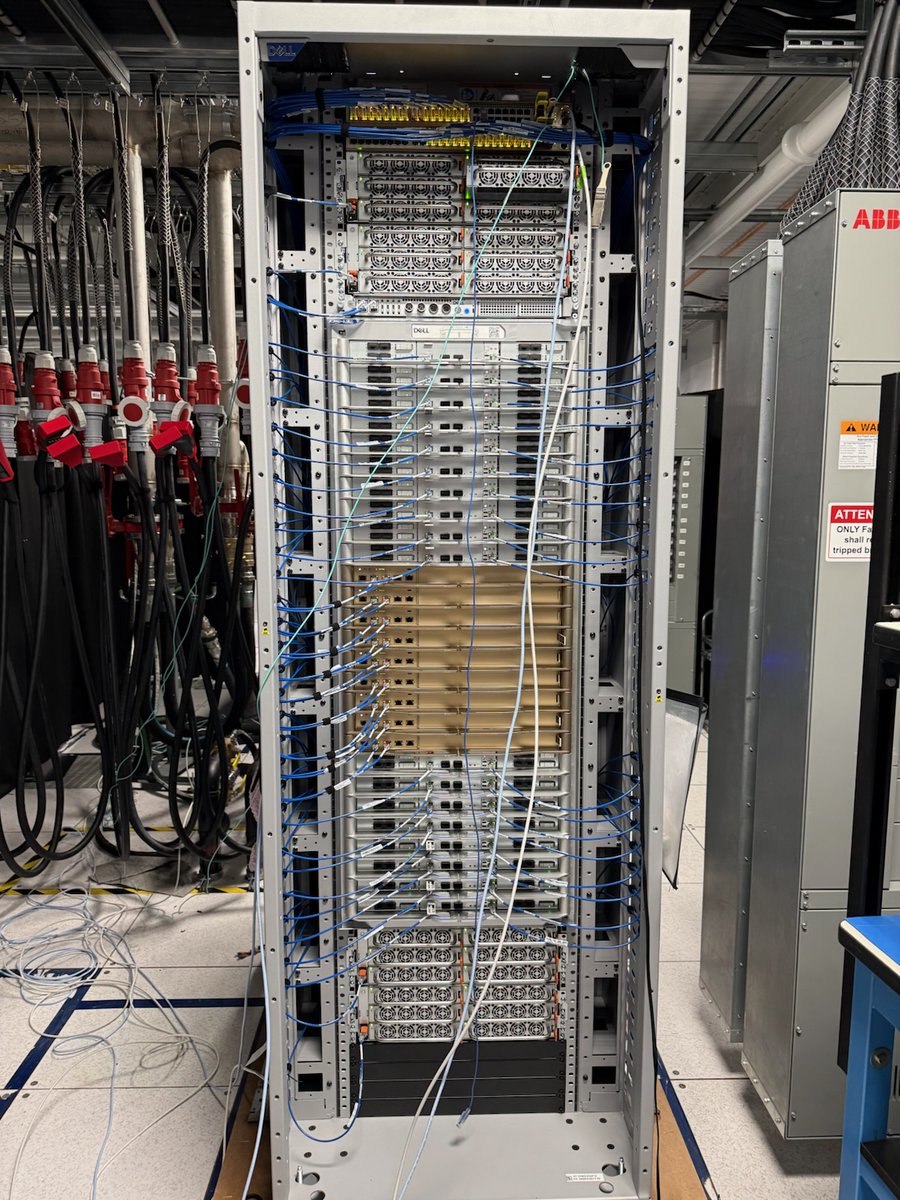
The world’s first @nvidia Vera Rubin NVL72 server rack is here.
We’re thrilled to deliver the first working, liquid-cooled @Dell PowerEdge XE9812 for @CoreWeave.
Built for the next era of AI infrastructure. 🚀🤝
1
1
250
May 24
<obligatory hermes-agent shillpost>
no but fr hermes is based and you can use your ChatGPT account with it too! (the nous tool gateway continues to be killer, though)
May 23

A little secret. About 5% of our production traffic is on the Pi harness, about another 5% is on OpenCode. Reminder you can use your ChatGPT account in a flourishing set of other tools.
We’ll continue to make Codex awesome, but you have options.
1
165
neggles (Andi H) retweeted

May 14
Deepseek V4 Flash is now free via Nous Portal for a limited time thanks to @novita_labs!
101
114
1,460
517,228
neggles (Andi H) retweeted

May 14
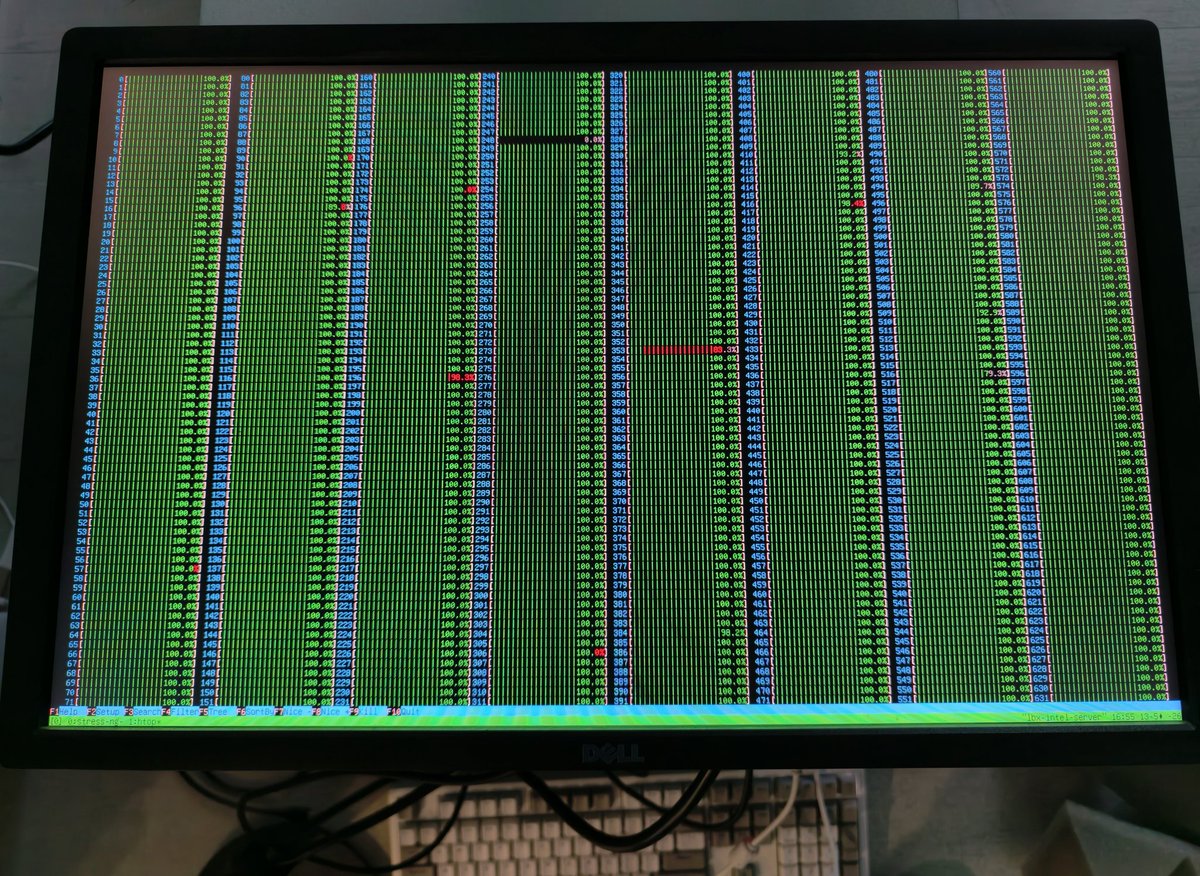
Hyperthread is the Intel branding from the Intel region of France.
Otherwise it's just sparking Simultanous Multi-Threading.

12
59
1,085
47,641
May 13
i miss when security breaches were caused by actually skilled threat actors rather than fuckwits with a copy of claude code
3
184
May 1
tl;dr: Qualcomm do not have an excuse here.
they have the resources, engineers, and upstream experience. other non-x86 vendors with far less leverage have already shown it can be done.
they could ship a sane client platform compatibility story.
they are choosing not to.
9
603
neggles (Andi H) retweeted
Apr 30
Hermes Agent v0.12.0 - “The Curator Release”
99
153
1,885
684,429
Apr 30
Intel review system: burn Ubuntu LTS ISO, boot installer, install, reboot, works.
Qualcomm review system: no boot menu, Fedora won’t boot, OEM says "QC say no Linux support" so they won't upstream a DT.
That is not a serious client platform.
1
2
23
1,316
Apr 30
I do not care about firmware abstraction theorycrafting.
I care about what works today.
6
184
Apr 30
hoisting this out of the thread:
I do not care about ACPI as a technology fandom object.
I care that new hardware should not require kernel changes just to boot.
UEFI ACPI has delivered that experience at scale. The alternatives have not.
That's all.
Apr 30

LoongArch uses ACPI.
Server ARM systems use ACPI via SBSA.
Phytium desktop ARM systems use ACPI. Huawei Kunpeng desktop ARM systems use ACPI.
Server RISC-V systems can use ACPI.
So if Loongson, Phytium, Huawei, etc can do this, why can’t Qualcomm, MediaTek, Samsung, and friends?
And to be clear: I don’t actually care whether the abstraction is ACPI, DT, or something else entirely.
I care about the end-user experience.
On x86, I can take a ten-year-old Windows or Linux installer and boot it on a system released yesterday. Some things might be flaky, especially DVFS/platform-specific power management, but the machine will generally boot and work.
On SDX2E, I can’t even boot a Linux distro from six months ago, let alone ten years ago. I’m not sure there’s a single normal distro installer ISO today, other than maybe Gentoo/Arch-adjacent stuff, that boots on it out of the box.
As an end user, that is not acceptable.
If non-x86 architectures want to be taken seriously as general-purpose client platforms, they need an end-user compatibility story at least as good as x86’s. Otherwise, why should anyone care?
The point of ACPI in this context is not “ACPI good because ACPI.” The point is that new hardware should not require kernel changes just to boot.
ACPI provides standard interfaces for common platform devices, and lets firmware provide the platform-specific glue needed to translate those standard interfaces into whatever weird little thing the SoC actually needs.
Can that be done with DT? In theory, yes. There are even generic DT class drivers for some common device types.
But in practice, it’s optional, still a moving target, and usually more effort than just adding another compatible string and another driver path. So people mostly don’t use it that way.
On ACPI systems, those abstractions are the default path for common platform functionality. A PCIe controller, for example, should not need a bespoke per-board DT binding and kernel-side special casing just to exist.
Maintaining upstream DTs for every device does not scale. It cannot scale.
We already have too many. The constant schema churn also makes firmware-supplied DTs basically non-viable: OEMs cannot reliably target a moving upstream interface forever. We’ve tried this. It does not work.
So again: I don’t care whether the answer is ACPI, better DT class abstractions, or something else.
But the requirement is simple: I should be able to boot a normal OS installer on new hardware without waiting for a bespoke kernel port.
x86 already delivers that. Non-x86 client platforms need to stop treating it as optional.
1
11
764
Apr 29
ASUS PR: "Upon confirmation with our chip supplier, @Qualcomm, there are currently no plans to support Linux systems on the Snapdragon X2 Elite platform."
QC assured us that SDX2E would have day-0 linux support, multiple times.
so that was a %#&$ing lie
3
8
32
5,364
Apr 26
they should not have given me the power to make shitpost websites in a matter of hours sol139.com
2
125
Apr 26
imagine waking up and thinking "you know what the world needs? another compiler"
Apr 25

Launching pyptx — a Python DSL for writing NVIDIA PTX kernels.
One PTX instruction = one Python call. Write pure PTX in Python.
Direct Hopper Blackwell support: wgmma, TMA, tcgen05, mbarriers. JAX PyTorch integration.
Includes GEMM, grouped GEMM, RMSNorm, SwiGLU, and a PTX→Python transpiler
pip install pyptx[torch]
pip install pyptx[jax]
github.com/patrick-toulme/py…
1
188
Apr 26
seems legit. will have to see how easily it breaks
Apr 25

Qwen-Image-2.0-Pro is now live 🚀🚀
We’ve pushed image quality, multilingual text rendering, and instruction following to a new level, while making performance much more consistent across styles.🌅🌃
Ranked #9 worldwide for Text-to-Image on @arena
🔗Try it now on
ModelScope:
modelscope.ai/studios/Qwen/Q…
modelscope.cn/studios/Qwen/Q…
API:modelstudio.console.alibabac…
1
176
Apr 25
lmao so "we tried to reduce inference compute load but people noticed oopsie"
Apr 23

Thanks to the entire Claude community for giving feedback and continuing to build with us.
Read the full post-mortem here: anthropic.com/engineering/ap…
1
4
249