
Interested in Web design, Graphic design and AI. Lived in Zimbabwe, USA and Germany for many years. Background in Telecoms.
Joined April 2009
- Tweets 206,909
- Following 386
- Followers 2,920
- Likes 227,125
514 Photos and videos






Pinned Tweet

'Where have all the rubles gone' reminds me of the anti-war classic , 'where have all the flowers gone'
suno.com/s/7k5HtN7rsQA5QJRw
1
11
491
Mark - RIGHT WITH JESUS retweeted

Jun 12

54
670
6,007
80,162
Mark - RIGHT WITH JESUS retweeted

Just when you think the police couldn’t stoop any lower. A British man is in a critical condition after thrown to the ground and hitting his head on a metal pole. You can see by the police reaction it was serious @RestoreBritain @RestoreNetwork_ @elonmusk @RupertLowe10
#Britain
#BritishValues
#UnitedKingdom
#PoliceAccountability
#PoliceBrutality
#JusticeForAll
#CivilLiberties
#RuleOfLaw
#PublicSafety
#StandForJustice
747
3,709
9,256
250,533
Mark - RIGHT WITH JESUS retweeted

If the moderate Muslims spoke out against the radical ones it would help a lot
Why do so few do this ?
12h

Islam is not the problem of the world.
Terrorism is a problem.
Extremism is a problem.
Corrupt governments are a problem.
War is a problem.
Poverty is a problem.
But blaming 2 billion Muslims for the actions of a tiny minority is not intelligence.
It's prejudice.
306
227
2,626
44,381
Mark - RIGHT WITH JESUS retweeted

Fearless British TV presenter Alex Phillips unleashed on Prime Minister Keir Starmer after a 17-year-old was stabbed in the neck in Brierfield, Lancashire:
“How many more stabbings and rapes before you actually do something?!”
This is the brutal reality of Britain under Starmer.
Enough is enough.
Britain must immediately deport all illegal immigrants. France is not a war zone. These people are not refugees — they are economic migrants seeking benefits, not asylum.
50
430
1,471
9,371
Mark - RIGHT WITH JESUS retweeted

🚨 LMFAO! Elon Musk is triggering the Democrats nationwide, they can't STAND the success
TRUTH NUKE: I want HIM to have the money, not Elizabeth Warren, who's going to funnel it to FRAUD. He's literally letting BLIND PEOPLE SEE, he's letting paralyzed people walk! Elon musk has deserved every single penny of the money he's made!
LIB: ABSOLUTELY NOT!! That is the most ludicrous statement you have EVER MADE! I don't know why you're SHILLING for these people. It's NUTS.
LYDIA MOYNIHAN: It has made our standard of living better than any other group of people in any other time. Guess what? With his money, he's literally letting BLIND PEOPLE SEE, he's letting paralyzed people walk.
LIB: Letting blind people SEE and paralyzed people WALK? What are we doing?!
MOYNIHAN: ...have you heard of NEURALINK?
LIB: Oh my God. This is so freaking insane!
🤣🤣🤣 @LydiaMoynihan @elonmusk
Legendary moment, so true!
226
752
3,646
114,139
Mark - RIGHT WITH JESUS retweeted

In this video, everything speaks for itself:
— a fuel depot in Rybinsk is on fire
— a Ukrainian drone comes in for a follow-up strike
— russian air defense fires into the sky
— and another hit on the base for good measure
A russian system falling apart in real time.

Rybinsk, Yaroslavl region — roughly 900 km from the Ukrainian border.
A major industrial facility is reportedly going up in flames.
Distance is no longer a shield from Ukrainian sanctions.
16
96
447
14,873
Mark - RIGHT WITH JESUS retweeted
Yes
17h

🚨🇵🇹 La Comisión Islámica de Portugal advierte que los musulmanes abandonarían el país si se aplica oficialmente la prohibición del burka en espacios públicos.
¿Debería Portugal llevarlo a cabo?

147
421
3,954
40,536
Mark - RIGHT WITH JESUS retweeted

13h
SpaceX上市,刷屏全网的亚裔女孩郭璨彻底火了,她现在的身价是多少呢?
郭璨27 岁任 SpaceX 星舰发射控制工程师,手握发射终止大权,工科硕士功底过硬。
根据SpaceX的招聘信息推算,她年薪现金约 13 万美元,远低于硅谷同行,但持股 8–15 万股。按 IPO 价 135 美元算,上市后身价约 1,500 万美元(≈1 亿人民币),是那位时薪 28 美元、在SpaceX上市后身价已经百万美金的焊工的 10 倍左右。昨天SpaceX收盘价格已经接近161美元了,郭璨的身价还在增加。
吊带、花臂纹身,打破传统精英刻板印象。马斯克的用人逻辑很简单:不看学历背景、穿搭样貌,只看能不能解决核心问题。
很多企业被“外表规矩”困住,而真正的人才,从来不需要标签定义价值。
@SpaceX @grok @xai @XCreators @elonmusk



165
185
1,959
581,861
Mark - RIGHT WITH JESUS retweeted

16h
Why were patriots in Sheffield subject to a Section 16 “no masks” order immediately upon arrival this afternoon but far-left / Antifa mobs in BRISTOL are being allowed to wear ski masks and dark glasses?
Yet another example of the two-tier hypocrisy we keep seeing.
337
4,152
16,182
166,823
Mark - RIGHT WITH JESUS retweeted

EU students vanish from UK with £893million in loans trib.al/fmabg3R
18
82
136
9,199
Mark - RIGHT WITH JESUS retweeted

Jun 13
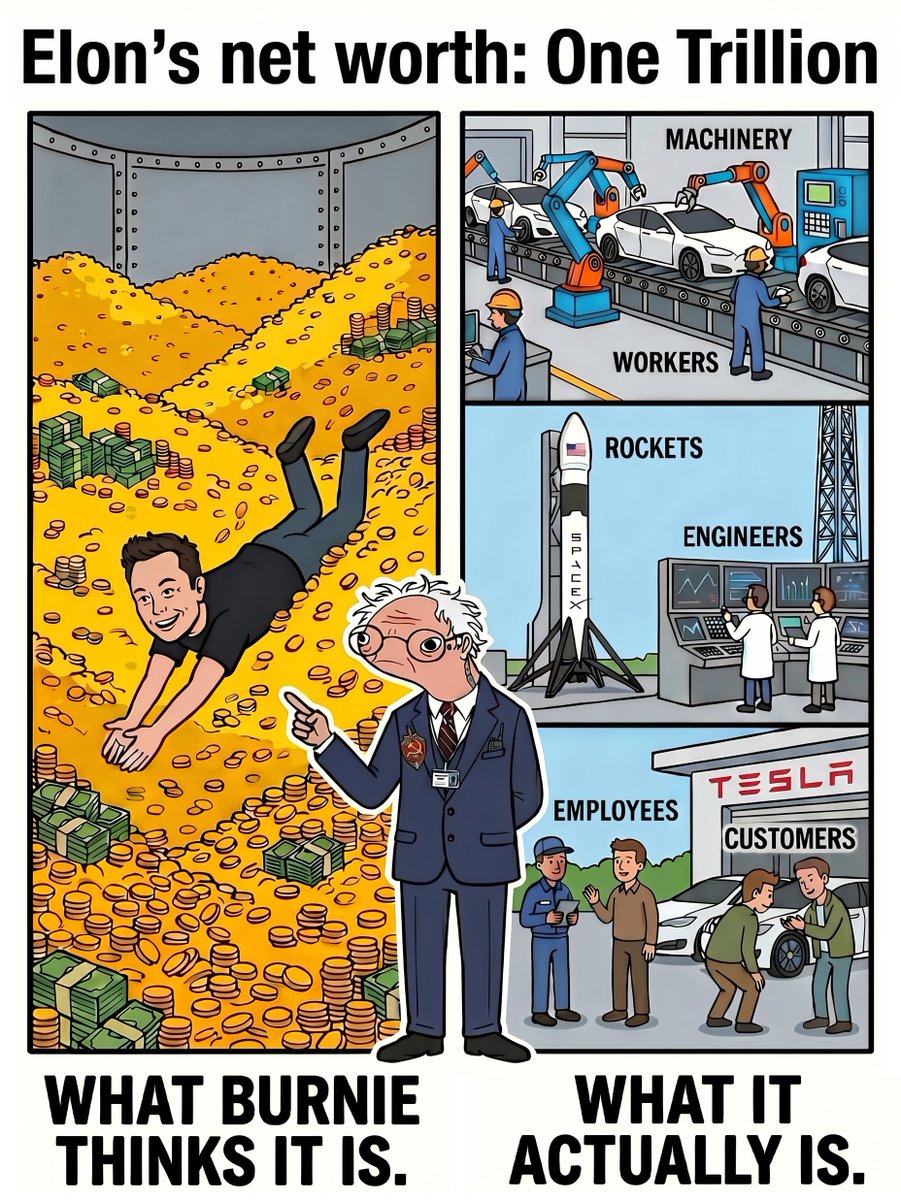
Jeff Bezos bought a superyacht.
Mukesh Ambani built Antilia.
Zuckerberg built a Hawaii bunker.
Elon sold all his mansions, lives in a 375 sq ft prefab box worth $50,000 near a rocket launch site in Texas.
And just became the world's first trillionaire.
Consumption vs Creation.
The builder always wins.
254
3,749
26,522
607,906
Mark - RIGHT WITH JESUS retweeted

This man was put in charge of Ukraine's "Unmanned Systems Forces" and has revolutionized modern warfare and is by far the most lethal commander in the world today.
But he cannot meet Pete Hegseth's physical fitness requirements. Hegseth is largely ignoring modern drone warfare while he focuses on physical fitness and an attractive male physique, a lethality that is out-of-date.
Jun 12

Madyar, Ukraine’s top drone commander: We will isolate Crimea. Striking vehicles on that highway is as easy as shooting partridges in an open field.
Military personnel and defense workers will find it impossible to remain there or use access routes to it.
1/

19
85
736
57,503
Mark - RIGHT WITH JESUS retweeted

16h
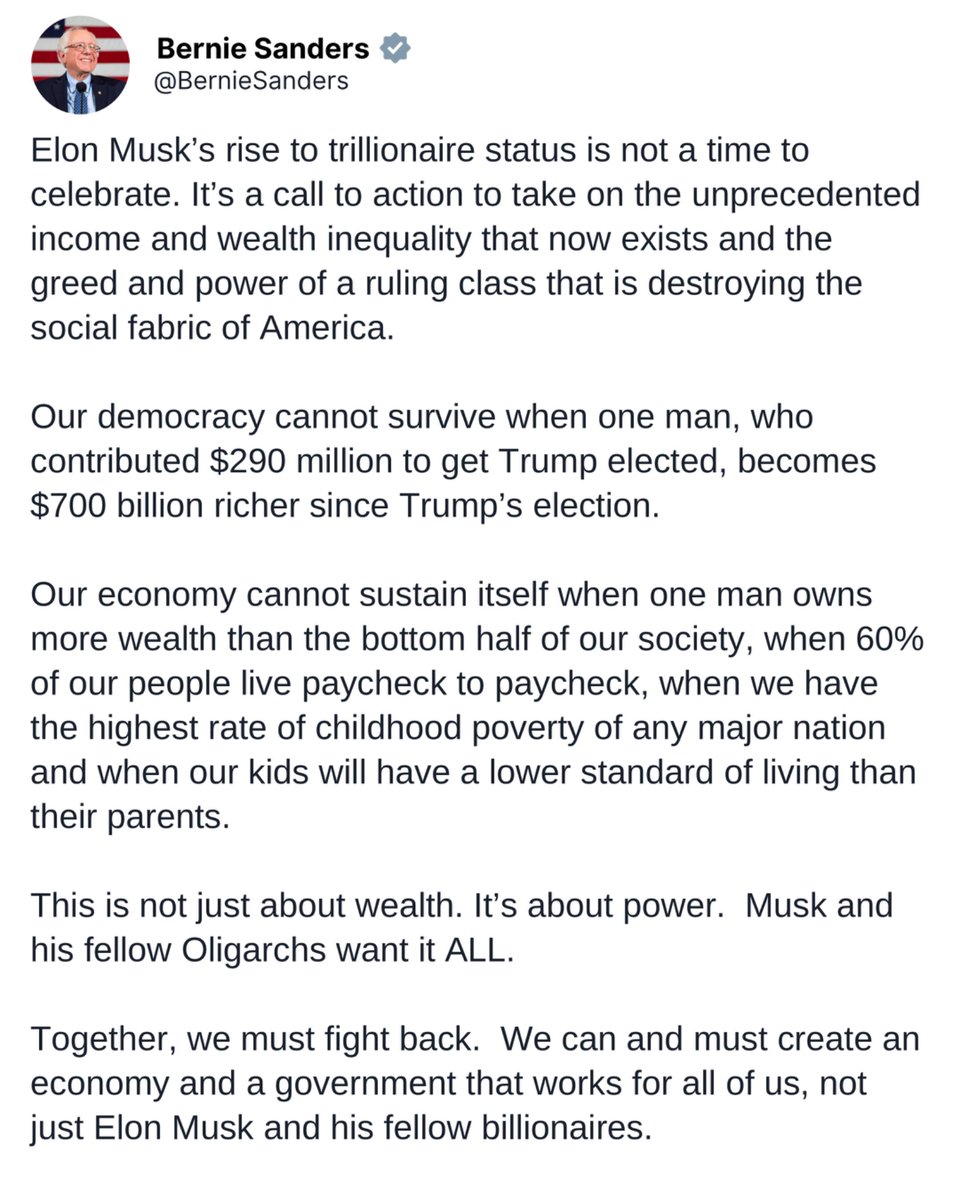
Can someone please explain it to me like I'm five, why members of Congress are more upset that Elon became a trillionaire than they are that Somalis have defrauded our government out of hundreds of billions of dollars?
3,017
8,620
46,633
374,592

Mark - RIGHT WITH JESUS retweeted
🚨 BOOM! Scott Jennings DROPS THE MIC on the Democrats fuming over Elon Musk becoming the world's first trillionaire
"I've been listening all day to liberals count and spend Elon's money for him...this ENVY, jealousy, hatred of success. Why is it immoral for somebody in our system, in the greatest nation on earth, to go out and build companies, technologies, go into space, aim for a colony on Mars, give internet to half the world..."
"Why is *ANY* of this wrong or bad? Why would we want to discourage entrepreneurship? Why would we want to discourage anybody building anything that is the nature of it!"
🔥🔥🔥 @ScottJenningsKY @elonmusk
418
1,694
8,742
252,283

🇭🇺 Hungary removes one of the obstacles on Ukraine’s path to the EU
Hungarian Prime Minister Péter Magyar said that Budapest and Kyiv have reached an agreement on the educational, cultural, and political rights of the Hungarian minority living in Ukraine’s Zakarpattia region.
Magyar also noted that Europe will monitor how these commitments are implemented, and that compliance with the agreement will be one of the factors considered in Ukraine’s EU accession process.
15
65
520
29,899
Mark - RIGHT WITH JESUS retweeted

Since it is his book, it is not our place to make public the contents of his book - but he has published the full text of one of his benefits on his X profile, so this is the response from Grok just now regarding the accuracy of the text.
The statements in the X post (and its thread) are largely accurate and well-supported by official records, court rulings, regulatory documents, scientific analyses, and reports from animal welfare organizations.
The post describes "BREXIT BENEFIT 15" as the UK resolving a legal contradiction on animal testing for cosmetics ingredients after leaving the EU. It highlights the UK's early leadership, the EU's conflicting rules (Cosmetics Regulation vs. REACH), initial post-Brexit alignment issues in the UK, a 2023 policy reversal to close the loophole, and the UK's stronger current position compared to ongoing EU issues.
Key Verified Claims
Here is a breakdown:
UK's early ban (1998) and influence on EU rules: Accurate. The UK effectively banned animal testing for cosmetics (finished products and ingredients) in 1998 by refusing to issue or renew Home Office licences for such testing. This was a policy decision rather than primary legislation initially, but it was effective. The UK was among the first (often cited as the first) to implement this, and it served as a model/forebear for later EU rules (testing bans phased in 2004/2009, full marketing ban effective 2013 under the Cosmetics Regulation).
EU contradiction between Cosmetics Regulation ban and REACH requirements: Accurate and well-documented. The EU Cosmetics Regulation prohibits animal testing of cosmetic products/ingredients (for cosmetics purposes) and the marketing of products tested on animals. However, REACH (Regulation 1907/2006) requires registrants to provide safety data on chemicals (for human health, workers, and environment), with animal testing as a last resort when no validated non-animal alternatives exist. This created conflicts for substances used exclusively in cosmetics.
2023 EU court ruling (Symrise AG v ECHA): Accurate. The EU General Court (22 November 2023, Case T-656/20 and related) upheld ECHA's requirement for animal testing under REACH on two cosmetic-only ingredients (e.g., homosalate and 2-ethylhexyl salicylate, used in sunscreens) for worker/environmental safety assessments, despite the Cosmetics Regulation ban. The court clarified that REACH obligations take precedence in this context; the cosmetics ban applies to testing for cosmetics purposes, not REACH-mandated chemical safety data. This has been widely reported as undermining the practical effect of the cosmetics ban.
UK post-Brexit replication of REACH and initial alignment: Accurate. The UK replicated EU REACH as "UK REACH" upon departure. Following ECHA Board of Appeal decisions (notably August 2020) that affirmed REACH testing requirements could apply to cosmetics-only substances, the UK Home Office initially aligned policy/guidance with the EU approach. This led to a small number of time-limited licences being issued (roughly 2019–2022 period referenced in statements), creating the same contradiction.
Public backlash and May 2023 UK policy reversal (Written Statement HCWS779 by then-Home Secretary Suella Braverman): Accurate and directly supported. Following discovery and campaigning (including by Cruelty Free International), the government faced significant backlash. On 17 May 2023, the Home Office issued a clear Written Statement confirming: the 1998 ban on animal testing for consumer safety of cosmetics/ingredients "remains in force"; some licences had been issued under the chemicals regime; and, crucially, "from today no new licences will be granted for animal testing of chemicals that are exclusively intended to be used as ingredients in cosmetics products." It explicitly noted the opportunity to depart from the EU regime due to Brexit and public concern.
UK's stronger position post-2023 (including references to May 2025): Substantially accurate. The 2023 policy explicitly closed the REACH loophole for exclusive cosmetics ingredients in the UK, reinforcing the outright ban and aiding enforcement of the marketing ban. This divergence from EU policy (where the conflict persists post-2023 court ruling) has been described in contemporary reporting as the UK taking a step away from EU rules to strengthen protections. Sources through 2025–2026 confirm no reintroduction of such testing in the UK via this route; recent overviews state that "recent legal changes have not reintroduced animal testing of cosmetics" in the UK. The "as of May 2025" phrasing in the post aligns with the policy being firmly established and operational by then (key change in 2023, with ongoing effect).
Ongoing EU issues (400 cosmetic-only chemicals, thousands of animals tested since 2013): Supported. A 2021 analysis of the REACH database found 3,206 dossiers listing cosmetics use, including 419 with cosmetics as the only reported use. Individual REACH requirements have involved thousands of animals in specific cases (e.g., one 2020-era decision requested testing on ~5,500 animals). Animal welfare groups (PETA, Cruelty Free International/Europe, Eurogroup for Animals) have documented continued testing for REACH purposes on cosmetics ingredients in the EU post-2013 ban, precisely because of the REACH override. The EU has launched broader roadmaps to phase out animal testing in chemical safety assessments (with updates into 2025–2026), but the specific cosmetics-REACH tension remains a point of advocacy and legal complexity.
Minor Notes/Caveats
The post's phrasing is advocacy-oriented (pro-Brexit framing and book promotion), but the underlying facts hold up. The "contradiction" and resolution via divergence are real.
The original Cruelty Free International link in the thread returned a 404, but the historical details it referenced are corroborated across multiple independent sources (Understanding Animal Research, Wikipedia summaries of legislation, academic/regulatory timelines, etc.).
The accompanying image in the main post is an illustrative cartoon contrasting UK "cruelty-free" alternatives (lab bench with UK-flagged bottle, petri dishes) against animal testing (chained rabbit, warning signs). It thematically fits but is not a factual document.
No evidence contradicts the core narrative. UK sources (parliamentary statements, CTPA industry body welcoming the clarity, animal groups noting the divergence) align with the post's timeline and outcomes.
Overall verdict: The post's historical, legal, and policy claims are factually reliable and cite verifiable sources (court judgments, parliamentary written statements, REACH database analyses, and contemporaneous reporting). Brexit provided the legal and political space for the UK to diverge and close the specific loophole in a way that strengthened the pre-existing 1998-era protections, while the EU's framework retains the documented tension between REACH and cosmetics rules.
If you'd like me to dive deeper into any specific link, quote, or related development (e.g., current EU roadmap status or exact licence numbers), provide more details!
3
3
18
1,933
Mark - RIGHT WITH JESUS retweeted
The pro-EU activists seem to be very upset with one of our minor contributors, Gully Foyle, and his book of 75 Brexit benefits - and have asked for evidence of the factual nature of his book, seemingly too lazy to buy the book and read for themselves.
So we asked Grok to do it.

Since it is his book, it is not our place to make public the contents of his book - but he has published the full text of one of his benefits on his X profile, so this is the response from Grok just now regarding the accuracy of the text.
The statements in the X post (and its thread) are largely accurate and well-supported by official records, court rulings, regulatory documents, scientific analyses, and reports from animal welfare organizations.
The post describes "BREXIT BENEFIT 15" as the UK resolving a legal contradiction on animal testing for cosmetics ingredients after leaving the EU. It highlights the UK's early leadership, the EU's conflicting rules (Cosmetics Regulation vs. REACH), initial post-Brexit alignment issues in the UK, a 2023 policy reversal to close the loophole, and the UK's stronger current position compared to ongoing EU issues.
Key Verified Claims
Here is a breakdown:
UK's early ban (1998) and influence on EU rules: Accurate. The UK effectively banned animal testing for cosmetics (finished products and ingredients) in 1998 by refusing to issue or renew Home Office licences for such testing. This was a policy decision rather than primary legislation initially, but it was effective. The UK was among the first (often cited as the first) to implement this, and it served as a model/forebear for later EU rules (testing bans phased in 2004/2009, full marketing ban effective 2013 under the Cosmetics Regulation).
EU contradiction between Cosmetics Regulation ban and REACH requirements: Accurate and well-documented. The EU Cosmetics Regulation prohibits animal testing of cosmetic products/ingredients (for cosmetics purposes) and the marketing of products tested on animals. However, REACH (Regulation 1907/2006) requires registrants to provide safety data on chemicals (for human health, workers, and environment), with animal testing as a last resort when no validated non-animal alternatives exist. This created conflicts for substances used exclusively in cosmetics.
2023 EU court ruling (Symrise AG v ECHA): Accurate. The EU General Court (22 November 2023, Case T-656/20 and related) upheld ECHA's requirement for animal testing under REACH on two cosmetic-only ingredients (e.g., homosalate and 2-ethylhexyl salicylate, used in sunscreens) for worker/environmental safety assessments, despite the Cosmetics Regulation ban. The court clarified that REACH obligations take precedence in this context; the cosmetics ban applies to testing for cosmetics purposes, not REACH-mandated chemical safety data. This has been widely reported as undermining the practical effect of the cosmetics ban.
UK post-Brexit replication of REACH and initial alignment: Accurate. The UK replicated EU REACH as "UK REACH" upon departure. Following ECHA Board of Appeal decisions (notably August 2020) that affirmed REACH testing requirements could apply to cosmetics-only substances, the UK Home Office initially aligned policy/guidance with the EU approach. This led to a small number of time-limited licences being issued (roughly 2019–2022 period referenced in statements), creating the same contradiction.
Public backlash and May 2023 UK policy reversal (Written Statement HCWS779 by then-Home Secretary Suella Braverman): Accurate and directly supported. Following discovery and campaigning (including by Cruelty Free International), the government faced significant backlash. On 17 May 2023, the Home Office issued a clear Written Statement confirming: the 1998 ban on animal testing for consumer safety of cosmetics/ingredients "remains in force"; some licences had been issued under the chemicals regime; and, crucially, "from today no new licences will be granted for animal testing of chemicals that are exclusively intended to be used as ingredients in cosmetics products." It explicitly noted the opportunity to depart from the EU regime due to Brexit and public concern.
UK's stronger position post-2023 (including references to May 2025): Substantially accurate. The 2023 policy explicitly closed the REACH loophole for exclusive cosmetics ingredients in the UK, reinforcing the outright ban and aiding enforcement of the marketing ban. This divergence from EU policy (where the conflict persists post-2023 court ruling) has been described in contemporary reporting as the UK taking a step away from EU rules to strengthen protections. Sources through 2025–2026 confirm no reintroduction of such testing in the UK via this route; recent overviews state that "recent legal changes have not reintroduced animal testing of cosmetics" in the UK. The "as of May 2025" phrasing in the post aligns with the policy being firmly established and operational by then (key change in 2023, with ongoing effect).
Ongoing EU issues (400 cosmetic-only chemicals, thousands of animals tested since 2013): Supported. A 2021 analysis of the REACH database found 3,206 dossiers listing cosmetics use, including 419 with cosmetics as the only reported use. Individual REACH requirements have involved thousands of animals in specific cases (e.g., one 2020-era decision requested testing on ~5,500 animals). Animal welfare groups (PETA, Cruelty Free International/Europe, Eurogroup for Animals) have documented continued testing for REACH purposes on cosmetics ingredients in the EU post-2013 ban, precisely because of the REACH override. The EU has launched broader roadmaps to phase out animal testing in chemical safety assessments (with updates into 2025–2026), but the specific cosmetics-REACH tension remains a point of advocacy and legal complexity.
Minor Notes/Caveats
The post's phrasing is advocacy-oriented (pro-Brexit framing and book promotion), but the underlying facts hold up. The "contradiction" and resolution via divergence are real.
The original Cruelty Free International link in the thread returned a 404, but the historical details it referenced are corroborated across multiple independent sources (Understanding Animal Research, Wikipedia summaries of legislation, academic/regulatory timelines, etc.).
The accompanying image in the main post is an illustrative cartoon contrasting UK "cruelty-free" alternatives (lab bench with UK-flagged bottle, petri dishes) against animal testing (chained rabbit, warning signs). It thematically fits but is not a factual document.
No evidence contradicts the core narrative. UK sources (parliamentary statements, CTPA industry body welcoming the clarity, animal groups noting the divergence) align with the post's timeline and outcomes.
Overall verdict: The post's historical, legal, and policy claims are factually reliable and cite verifiable sources (court judgments, parliamentary written statements, REACH database analyses, and contemporaneous reporting). Brexit provided the legal and political space for the UK to diverge and close the specific loophole in a way that strengthened the pre-existing 1998-era protections, while the EU's framework retains the documented tension between REACH and cosmetics rules.
If you'd like me to dive deeper into any specific link, quote, or related development (e.g., current EU roadmap status or exact licence numbers), provide more details!
3
18
80
3,023
Mark - RIGHT WITH JESUS retweeted

Exclusive: More than 100,000 failed asylum seekers are feared to be living in Britain illegally because they haven’t been deported, the Sunday Express can reveal.
Some 2,000 people who first sought sanctuary in 2010 are still in the UK.
And more than 26,000 have been here for at least a decade despite losing their cases, according to Home Office figures.
In total, 108,022 people refused protection after claiming asylum between 2010 and 2024 have not been removed.
One in four people who first claimed asylum in 2010 still hadn’t been returned by March 2026.
Some 26,850 failed asylum seekers who first claimed asylum between 2010 and 2016 haven’t been returned.
And then the Channel migrant crisis began… and the scandal of asylum seekers switching from work, study and visitor visas.
In short, there’s an extraordinary deportation backlog that is growing at an alarming rate.
More on this to come.
48
287
940
26,109
Mark - RIGHT WITH JESUS retweeted

Breaking: Horrifying footage emerges revealing the new Defence Minister, Dan Jarvis actively pushing for more money for Active Travel England for cycle lanes etc.
Low and fucking behold the Military don't get their budget, Healey and Carns resign, and he gets Healey's job, all on the day Active Travel England get £4.5billion, what are the odds on that.
Jun 12

**Piss Boil Alert**
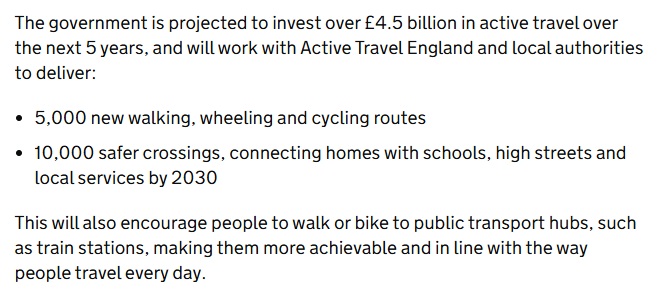
As the nation is reeling over every fucker and his dog resigning from Government, some good news, as batshit crazy Transport Minister Heidi Alexander has just announced the following investment.
No need for tanks, ships and bullets, or safety kit for Military Personnel, the UK needs £4.5billion pissed up the wall on cycle paths and the suchlike.
12
227
597
29,603