
Joined October 2016
- Tweets 6,675
- Following 2,027
- Followers 421
- Likes 40,175
424 Photos and videos



Pinned Tweet

Mar 1
All rely on WPATH SOC8 standard of care/affirmation model effectively trashed see @Real_YuanZhang et al link.springer.com/article/10…. @wesstreeting & @prof_standards must direct these alleged professional bodies to align with evidence based medicine @CanSG_org @biologyinmed
2
2
15
870
BendyBody&Brain retweeted

Jun 14
Dear Lush (cc Chelmsford City Council),
As a woman who had half a breast removed last year due to cancer, I am writing to raise my concerns about your “Proud of My Stripes” window display.
I am also, on behalf of other women who have experienced breast cancer, respectfully requesting its removal.
Because mastectomies are not a fashion statement, an identity marker or something to be celebrated.
They are something women undergo because they are ill, because they are frightened, because they are trying to stay alive.
Around 59,000 women are diagnosed with breast cancer in the UK every year. Many will undergo surgery - a mastectomy, lumpectomy or other procedure.
Others choose preventive mastectomies because they carry a high-risk BRCA gene mutation.
If a woman chooses to have her breasts removed to affirm a gender identity, that is her personal choice.
I honestly don’t know the number of women who have elective mastectomies for this reason.
What I do know is that it is a tiny number compared with those for whom breast surgery is medically necessary and not something to be celebrated.
I think I speak for many women who have experienced breast cancer - and for their families - when I say this:
Breast removal surgery is not something I regard as cute, playful or empowering.
Nor is it something I believe retailers should be celebrating.
For that reason, I am requesting that the display be removed and that @ChelmsCouncil apologise for promoting it on social media.
Yours sincerely,
Janet Murray
787
2,747
16,283
2,669,172
Jun 12
Reality is fact which makes up your life story.

25
BendyBody&Brain retweeted

19 Apr 2025
Remember, every person who says they are disgusted by the Supreme Court judgment is admitting that:
They’re disgusted that female sexual assault survivors might meet in a support group to open up about their trauma, without men being present.
They’re disgusted that lesbians can socialise exclusively with other lesbians, without men being present.
They’re disgusted by new mothers gathering together to discuss breastfeeding or post partum problems, without men being present.
They’re disgusted that girls can play sport with other girls and shower, change and dress, without boys being present.
They’re disgusted that organisations - which realise they are too male dominated - can’t fill any female quotas with other men.
They’re disgusted that vulnerable female prisoners and arrestees can’t be searched by men or kept in a cell with other men.
They’re disgusted that women can have their own things.
They’re disgusted by the Equality Act 2010.
They’re disgusted by the law.
Isn’t that disgusting?
275
3,675
14,694
526,926
BendyBody&Brain retweeted

Jun 11
Appalling 🧵
I want those who champion men in women’s sport to explain why they’re happy to put girls at risk like this.
Jun 11

This is a sexual assault—unknowingly captured by a mom filming her daughter’s wrestling match.
Kallie didn’t know her opponent was male. But she knew something was very wrong.
Today @ADFLegal helped Kallie sue the WA officials who placed gender ideology above her safety. 🧵⬇️
1,405
11,757
63,593
2,030,600
Jun 11
Interesting perspective and unfortunately true in my experience
10
BendyBody&Brain retweeted

Hope for the future 😆
167
2,002
15,796
569,082
BendyBody&Brain retweeted

Jun 8
I need the government to lock up criminals, defend the nation, build infrastructure, collect the bins, and a few other services - basic research etc. I’m not an anarchist or anything.
What I don’t need from the government is moral instruction. I don’t need them to tell me how to raise my kids. I don’t need them to nudge me into better dietary choices. I certainly don’t need them hamfistedly backdooring my devices to check I’m not doing anything they don’t like.
GTFO of my life, thank you. You’re not smarter than me, you aren’t qualified to manage me, please leave me alone.
232
2,142
8,369
88,758

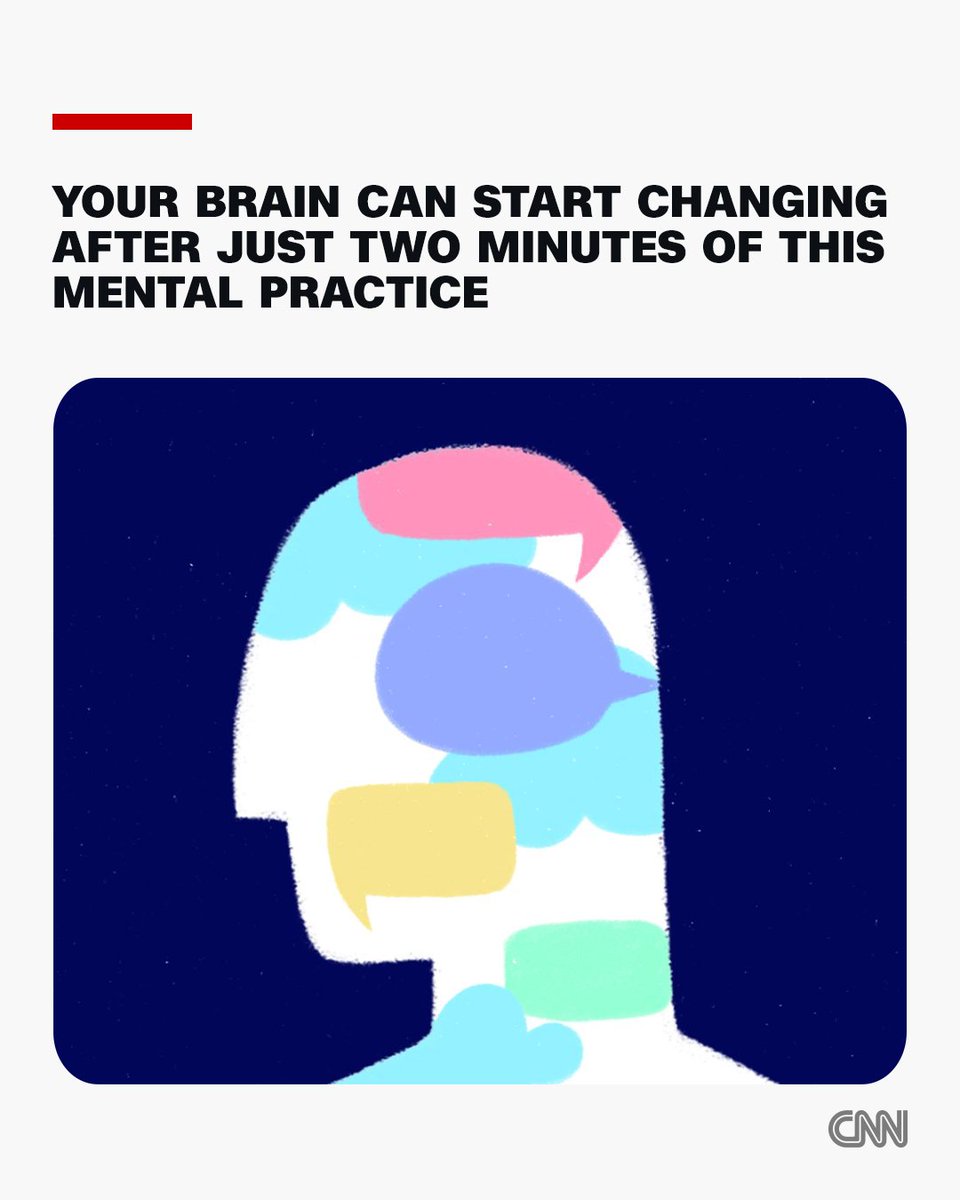
A growing body of research finds that meditation may help reduce anxiety, manage stress, ease pain and improve sleep quality, among other health benefits. The new study suggests that shifts in brain waves could play a hidden role in generating these benefits, and just a few minutes can start calming your brain. cnn.it/4vBWjTi
87
191
792
153,245
BendyBody&Brain retweeted

Jun 9
Isn't the comment below spot on?
"I for one would like to see Dorothy Bain, the Lord Advocate and head of the Crown Office and Procurator Fiscal Service (COPFS), interviewed under oath for
(a) deciding against charging Nicola Sturgeon, despite allegedly the police having every expectation she would be charged based on the evidence gathered
(b) deciding against charging Colin Beattie (the weaver), the SNP treasurer during much of this time
(c) deciding to focus on the Murrell embezzlement case, rather than also pursue the SNP’s illegal use of the money in the ring-fenced referendum fund
(d) taking an inordinate length of time to arrive at their decisions
(e) allowing Peter Murrell’s court case to be delayed until after the Holyrood election
(f) briefing John Swinney as Operation Branchform proceeded
If it looks like a duck etc......"
Reform of the Lord Advocate role can’t come soon enough if we want faith restored in Scotland’s prosecution service.

18
231
591
8,208
BendyBody&Brain retweeted

Written in 1720 and arguably the most popular piano piece in 2025. Passacaglia by Handel played by Houseman, a pianist and composer
7
131
545
15,545

“Faith is an emotion and does not listen to reason. Like love it is something we feel. Without it - faith in the ordered running of the world, faith in other people, faith in ourselves - we could scarcely survive. And so whatever happens, faith must be kept alive.” ~C.R.Milne

28
230
1,110
11,730
BendyBody&Brain retweeted

Jun 8
Some small things about @UniofOxford lectures:
i) They're not compulsory. And so they're not attendance-dependant. If only a handful turn up, then, so what? The lecture proceeds.
(I don't think this is likely in the case of MF, but it's irrelevant, anyway)
ii) there's *hundreds* of them
iii) You don't, generally, lecture 'to a syllabus.'
It's Higher Learning. Come, if you're interested. Don't, if you're not.
But don't disrupt. Turning up to a lecture is a sign of interest, not of 'complicity' or 'commitment'.
The outrage here rests in the threats to students, the time wasting, the entitlement, and the philistinism.
These people just don't understand what a university *is*.
42
226
1,415
31,030
Jun 9
Such an inspiration
Jun 9

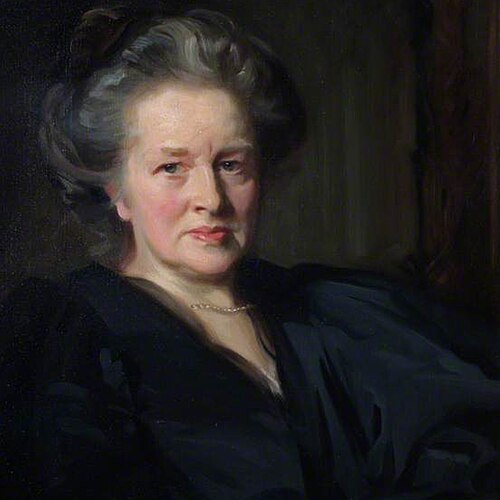
Woman of the Day Elizabeth Garrett Anderson, born OTD in 1836 in Whitechapel. First woman to qualify in Britain as a physician and surgeon, co-founder of the first hospital staffed by women, first woman Dean of a medical school, first woman elected to a school board, first woman Mayor. How did this remarkable woman manage to achieve all of that in her 81 years?
She was inspired by her meeting in 1859 with Bristol-born Elizabeth Blackwell who became the first woman doctor in the US some ten years earlier. The following year, 23 year old Elizabeth confided in her 13 year old sister Millie her friend, Emily Davies, as they were brushing their hair by the fireside at home.
Emily pointed out, “Women can get nowhere unless they are as well educated as men. I shall open the universities.” “Yes,” said Elizabeth, “we need education but we need an income too and we can't earn that without training and a profession. I shall start women in medicine. But what shall we do with Millie?” Emily knew exactly what was needed: “After these things are done, we must see about getting the vote. You are younger than we are, Millie, so you must attend to that."
Elizabeth’s first hurdle was to overcome the opposition of her parents. Her father believed “the whole idea was so disgusting that he could not entertain it for a moment”. That wasn’t uncommon. Victorian beliefs about women’s physical, mental, and emotional natures led to men — well, you know how expert they are on all matters pertaining to women — arguing that menstruation and education were incompatible.
She applied to the medical school at Middlesex Hospital. No women allowed, so she enrolled as a nursing student instead and employed a tutor privately to study anatomy and physiology three evenings a week. When she sat in on some medical classes, male students complained. In fact they raised a petition against her, so she was obliged to leave but did so with an honours certificate in chemistry and materia medica.
Next, Elizabeth tried applying to other medical schools. They turned her down, all of them, so armed with her certificate in anatomy and physiology, she applied to the Society of Apothecaries. Its charter meant it could not legally exclude her on account of her sex and so on 28 September 1865, she sat the exam in the Apothecaries Hall with 51 men. She was one of just three who passed. Top marks too. This meant she could lawfully practise medicine, so how did the SA celebrate this success? It immediately changed its rules to prevent other women from using the same loophole.
Elizabeth couldn’t persuade any hospital to offer her a post despite her excellent academic record so she opened her own practice in London. It took off when cholera broke out and people panicked. Well, even a mere woman was better than nothing. By then, she had opened St Mary's Dispensary for Women and Children, and in the first year, treated 3,000 new patients in 9,300 outpatient visits.
Learning that the Sorbonne was considering admitting women as medical students, Elizabeth studied French until she was fluent and finally obtained her much prized medical degree in 1870, at the age of 40.
In the same year, a letter was published in The Lancet representative of the views of many male medical practitioners, particularly specialists in gynaecology and obstetrics: that women lacked “the coolness and strength of nerves” required of a doctor, and “the constitutional variations of the female system, at the best are uncertain and not to be relied upon”.
Those pesky periods again, sapping our brains.
The British Medical Register refused to recognise Elizabeth’s degree.
Still unable to find a hospital post, Elizabeth did the only sensible thing she could do. In 1871, she opened the New Hospital for Women. It staffed entirely by women and Elizabeth Blackwell came on staff as a professor of gynecology. It was hugely popular and enjoyed an excellent reputation for patient outcomes.
In 1873, she became the first woman to be admitted to the British Medical Association. It immediately voted to bar any other women members and held that position for nearly twenty years.
Ever heard of Patriarchy Chicken? Welcome to Patriarchy Snakes and Ladders.
When one of the Edinburgh Seven, Sophia Jex-Blake, opened the London School of Medicine for Women in 1874, Elizabeth taught there and in a 1877 meeting in support of the school, said that there was "nothing injurious to the health, the morals, or the manners of women in a medical education, and that the results were likely to prove beneficial to the female sex and to the nation". The two women didn’t always see eye to eye but in 1883, Elizabeth was elected as Dean of the LSMW. She continued to lobby strenuously for women to enter the medical profession.
The British Medical Register eventually capitulated in 1877 and agreed to register women as medical practitioners. The BMA capitulated in 1893 because its members “needed no convincing of the justness of her demands…she had already by her professional and public life done this very thoroughly", and overwhelmingly voted in favour.
Six years after she retired in 1902, she became the first woman mayor in Britain, Mayor of Aldeburgh.
Elizabeth Garrett Anderson died in 1917 at 81, having kept her promise to Emily and to her sister, Millie. Millicent Garrett Fawcett.
"Women can less easily afford to be second-rate, their professional work will be more closely scrutinised; mistakes will ruin them more quickly than they will men.”
1
24
Jun 9
No matter what small success is achieved, it’s the micro fails that stick 😔
Jun 8

One of my favorite parts of having adhd is how failing yourself numerous times every single day on a micro level infinitely reinforces the self-hate neural pathways until they are so strong that even your high-achieving perfectionism and severe anxiety can’t balance them out so you’re just perpetually disappointed in yourself and convinced you’re incapable no matter what you achieve
15
BendyBody&Brain retweeted

Jun 8
I thought I'd have gender dysphoria forever, but I don't anymore
I used to hate my sex, my hair, my nose, well, my everything, really
I wanted to tear my body apart and emerge as a different person
I wasn't a secure person. Not for a long time
Now? I love it! Nothing anyone says can make me feel differently
I'm so grateful for my body
Insecurity doesn't have to last forever. Your body is always changing - aging, getting new scars, fat, muscle, etc
It's also doing amazing things every day to keep you alive to the best of its ability
I never thought I'd appreciate my sex and all the things I'm able to do because of it, but I do now.
I used to blame my abuse on my body. But my abusers are the only ones to blame for that. All my body did was exist. They were the ones who made the choice to abuse me
I used to feel so "validated" bonding over what I hated about my body with others who had gender dysphoria
But all it did was make me feel good about rejecting my body, which only made the self-loathing worse
I don't know who this will reach, but just know that the bad feelings don't have to be permanent
Being praised for self loathing is easier in the short term, I guess?
But in the long term, it eats at you and the depression gets worse, and the insecurity is like acid. The dopamine from the bonding over things you're dysphoric about get weaker over time
The best way forward is to learn to love yourself and just find contentment and gratefulness for things you have instead of chasing things you think you want your body to be in a fantasy
You'll never achieve that fantasy, and fantasies change over time quicker than bodies do
So, to every teenager who thinks like I did back then, you can get better and you don't need flags, pins, survey, and Rx to do it
16
64
328
7,973

“Gender identity” is often presented as a deep, innate psychological essence that exists independently of biological sex. However, the evidence for such a claim is far less clear than is commonly assumed.
At its most basic level, what is called “gender identity” can be understood as an individual’s perception, understanding, or subjective relationship to their biological sex. Neurologically, researchers do not directly observe a “gender identity” module in the brain. Rather, they identify statistical correlations between certain brain regions, networks, or patterns of activity and individuals’ self-reported feelings, beliefs, and experiences. This is no different in principle from studying political identity, religious identity, national identity, athletic identity, or any other self-concept. The fact that a mental state correlates with brain activity does not establish that it is an innate, biologically distinct entity.
The statement that “gender identity is in the brain” therefore risks overstating what neuroscience can actually demonstrate. Every thought, belief, preference, and self-conception is represented in the brain in some form. Saying that gender identity has neural correlates tells us little more than the fact that people think about themselves in sex-related ways.
At most, biological, developmental, psychological, and social factors may influence whether an individual feels comfortable with, identifies with, or rejects aspects of their sexed body. These influences are worthy of study. However, it does not follow that “gender identity” should be treated as a separate category that supersedes biological sex in law, medicine, or public policy.
Biological sex has direct physical, reproductive, and physiological consequences that are relevant in areas such as healthcare, sport, privacy, data collection, and scientific research. Any policy framework that elevates subjective identity above these objective realities bears the burden of demonstrating why such a departure is justified. Simply asserting that gender identity is real or that it has neural correlates does not, by itself, establish that it should take precedence over biological sex in legal or institutional decision-making.
17
107
341
12,366
Jun 9
I remember watching this on the news as a child and teen It’s amazing what influences your thinking
Jun 9

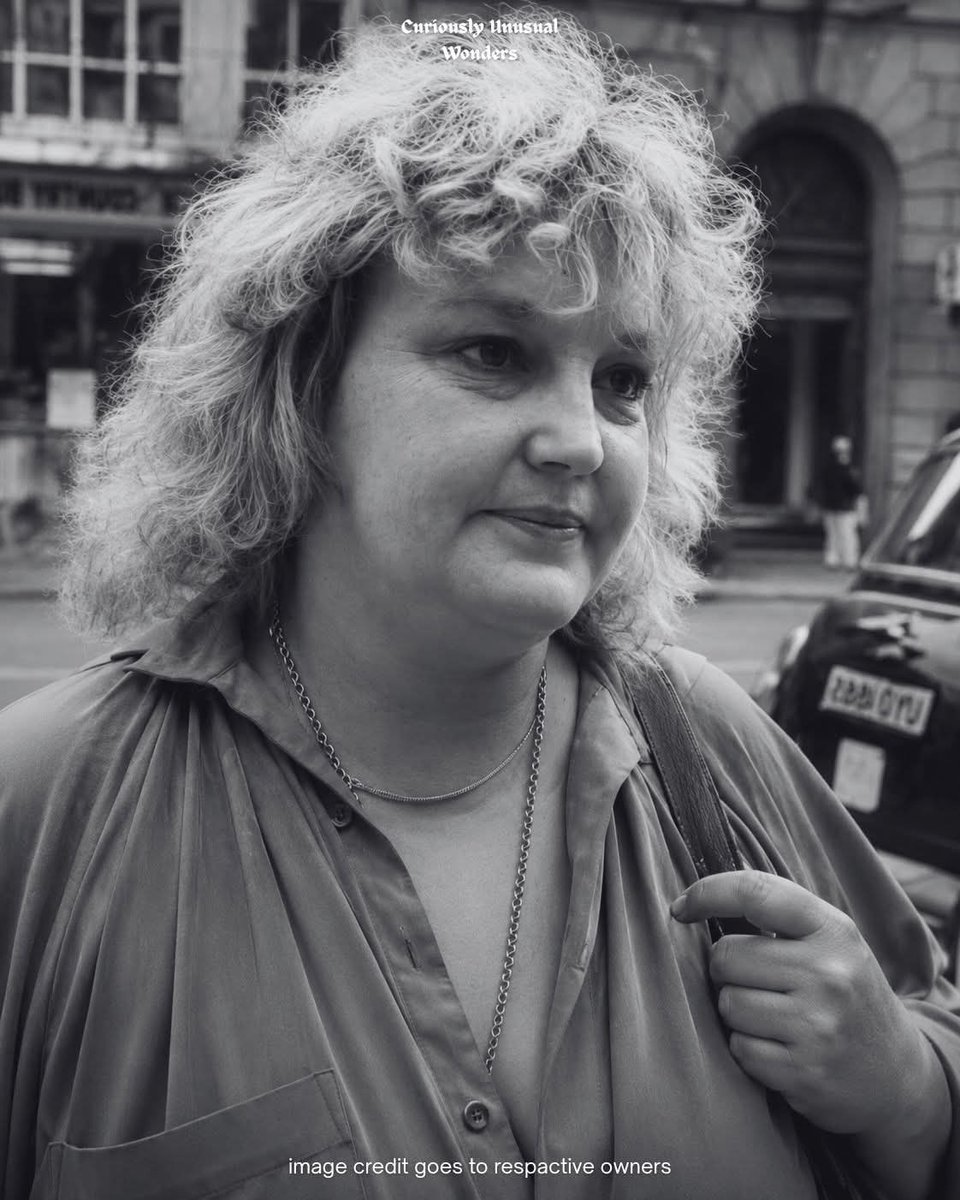
November 1971. Chiswick, West London.
Erin Pizzey is 32 years old. She is not a lawyer. Not a politician. Not a doctor.
She is a woman who talked Hounslow Council into lending her a cold, rundown building on Belmont Road — a former community hall — for almost nothing. Her original plan was modest. A warm room. A cup of tea. Somewhere for mothers with young children to simply get out of the house.
Then the door opened.
A woman stood in the entrance. She was covered, head to foot, in bruises. She was holding two small children. She was shaking.
She didn't want tea.
She needed somewhere to hide.
Erin let her in. She didn't turn her away. She didn't tell her to call the police.
Because Erin had already called the police. They told her the same thing they told every woman in Britain at the time: they could not enter a private home over a "domestic dispute." That was the law. The home was private. What happened inside it was a family matter.
When Erin contacted a female civil servant to report what she was seeing, the response was astonishing. The woman told her flatly: "There wasn't a problem of battered wives until you made one."
Erin put down the phone. Then she went back to her residents and made sure they were fed.
Within weeks, 40 mothers and children were sleeping in four tiny rooms. No funding. No staff. No legal authority.
She didn't stop.
By 1973, word had spread through quiet whisper networks — one woman telling another, "There is a place. Go to Chiswick. She won't turn you away." That same year, Erin hosted the first National Women's Aid Conference in the UK. Women from across Britain arrived, and they all recognized the same thing at once: what she had built needed to exist everywhere.
In 1974, the council set a maximum of 36 residents. At peak times, 150 women and children were living inside those walls — sleeping on floors, on chairs, in hallways. The building smelled of cooking, fear, and something else entirely: relief.
Erin was taken to court for overcrowding. She appealed all the way to the House of Lords.
She kept the doors open the entire time.
That same year, she wrote a book. Scream Quietly or the Neighbours Will Hear. It was the first published account of domestic violence in British history. It used real stories from real women inside the shelter. Overnight, a problem that had no official name was on front pages from London to New York.
The movement spread. Refuges opened across the UK. Then Australia. Then Canada. Then the United States. The pattern she created in four small rooms in West London — no blueprint, no permission, no funding — had been replicated in hundreds of shelters across the Western world.
MP Jack Ashley stood up in Parliament and said: "It was she who first identified the problem, who first recognised the seriousness of the situation and who first did something practical."
She was ranked 14th in a poll of the 100 women who shook the world. She was awarded the Italian Peace Prize. She received a CBE. The charity she founded — Chiswick Women's Aid, which became Refuge — grew into the largest domestic violence charity in the United Kingdom, with over 460 employees and an annual income of more than £33 million.
Erin Pizzey passed away on October 4, 2025, aged 86.
She never stopped.
It all began with one woman, one borrowed building, and an absolute refusal to say no.
Forty women and children showed up with nowhere to go.
She made room.
Share this if you believe one ordinary person, refusing to look away, can build a shelter that holds the whole world.
Follow us Lost in Yesterday
19
BendyBody&Brain retweeted

Addiction isn't disease, it's a way of managing a set of circumstances that you want to evade; that you don't want to fully experience. It's an escape from the unbearable - it's checking out. When we understand this, the proposed 'cure' looks very different.
29
41
229
12,648
BendyBody&Brain retweeted

Slightly longer tweet but so important to understand how biology & the sex we are actually effects our health, diagnosis & treatment. It is not safe or logical to pretend it doesn’t exist or matter.

I'm a cardiologist. A 42-year-old mother of two came to my office complaining of jaw pain and crushing fatigue. She ran half-marathons. Her EKG was normal. Another doctor had sent her home with anxiety medication.
When I got her into the cath lab, I found severe microvascular disease — plaque choking the tiniest vessels of her heart, the ones standard angiograms routinely miss.
Her heart had been starving in silence while everyone told her she was stressed.
She is alive today. Too many women like her are not.
Heart disease kills more women than every cancer combined. And medicine is still diagnosing it through a male lens.
84% of cardiologists report having patients in the past year whose heart disease was misdiagnosed by another physician. Women with a STEMI heart attack have a 59% greater chance of being misdiagnosed compared to men. Women with an NSTEMI — 41% greater chance.
The reason is structural. For decades, we screened, tested, and treated women using a template built for men.
Men's heart attacks announce themselves — the crushing chest pain, the clutched fist, the Hollywood collapse. Women's hearts whisper. Crushing fatigue that feels like wearing a lead vest. Jaw pain written off as TMJ. Nausea blamed on a stomach bug. An ache between the shoulder blades blamed on a long week. Shortness of breath blamed on being out of shape.
For years, medicine called these "atypical" symptoms. They are not atypical. They are female-typical. Half of humanity is not a variant.
And the biology runs deeper than symptoms.
Women have smaller hearts and narrower coronary arteries. Plaque doesn't only clog the big highway vessels — it hides in the microvasculature, the tiny branches feeding the heart muscle itself. A woman can have a heart attack with a completely "clean" standard angiogram.
SCAD — spontaneous coronary artery dissection — occurs 90% of the time in women. Often young, fit women with zero traditional risk factors. It's the leading cause of heart attack in women under 50, accounting for roughly one quarter of all cases in that age group. Most doctors have never diagnosed one.
And some of the most dangerous cardiac risk factors are hidden in women's medical histories where no one thinks to look:
Preeclampsia or gestational hypertension doubles to quadruples lifetime heart disease and stroke risk. Pregnancy is the body's first cardiac stress test — and these complications are early warning sirens, not closed chapters.
Autoimmune disease — lupus, rheumatoid arthritis, psoriasis — far more common in women, turbocharges inflammation and plaque formation at any age.
Cardiovascular disease in women aged 20-44 is projected to surge nearly 50% by 2050.
The youngest patients in my practice keep getting younger.
What every woman should ask her doctor — and what every doctor should be asking:
"Given my pregnancy history, autoimmune status, and family history — what is my full cardiovascular risk?" If they don't ask about preeclampsia or gestational diabetes, volunteer it.
"Should I have an Lp(a) test and a coronary calcium score?" Standard cholesterol panels miss too much. Lp(a) is genetic, one-time, and most women have never been tested.
"My tests came back normal but my symptoms haven't stopped — what's next?" Normal stress tests and angiograms can miss microvascular disease, spasm, and SCAD. Persistent symptoms warrant coronary CT angiography or cardiac MRI.
And if something feels wrong — say these exact words to your doctor: "I am concerned this could be my heart."
That single sentence changes the workup. Do not soften it. Do not apologize for it.
80% of heart disease is preventable. But the playbook has to be built for female biology.
Two decades ago, I wrote one of the first books warning that heart disease was the number one killer of women and that medicine was diagnosing it through a male lens. It was recognized by First Lady Laura Bush at the White House during the early years of the national conversation about women's heart health.
I'm haunted by how much of that book I could republish today unchanged.
The science has advanced. The awareness has grown. But the gap between what we know and what happens in the exam room is still costing women their lives.
Share this with every woman you love — and every doctor who treats them. READ MORE: open.substack.com/pub/afshin…
14
145
856
43,441
BendyBody&Brain retweeted

4. Female oppression is sex-based
Women are oppressed as a sex class. Patriarchy is not aimed at an inner identity called “womanhood.” Women are not discriminated against on the basis of their pronouns or fashion. Discrimination against wome and girls is organized around female embodiment: reproduction, pregnancy, childbirth, menstruation, female socialization, physical vulnerability, economic dependency, sexual exploitation, and male violence.
This is why sex matters in feminism. If the word “woman” is detached from female human beings, feminism loses the ability to name the class of people historically and materially subordinated under a male supremacist system.
5. Single-sex spaces and services are sometimes necessary
Gender-critical feminists do not argue that every space must be segregated by sex. They argue that sex matters in specific contexts where privacy, dignity, safeguarding, trauma, bodily vulnerability, or fairness are at stake.
Examples include prisons, rape crisis services, domestic violence shelters, changing rooms, intimate care, hospital wards, and female sports.
The argument is not that every male person is dangerous. The argument is that male-pattern violence, male physical advantage, and the privacy needs of female people are real enough that female-only provisions must remain lawful, meaningful, and enforceable.
A right to single-sex provision is not a right to harass anyone. It is not a femininity test. Masculine women, butch lesbians, and gender-nonconforming female people belong in female spaces. The category is sex, not appearance.
6. Sexual orientation is sex-based
Gender-critical feminists argue that homosexuality is same-sex attraction, not same-gender-identity attraction.
Lesbians are female people attracted to female people. Gay men are male people attracted to male people. Bisexual people are attracted to both sexes.
No one is entitled to another person’s attraction, validation, language, or sexual boundaries. Recognizing sex-based attraction is not hatred. It is basic respect for sexual orientation and consent.
7. Trans people have rights, but not the right to override sex-based rights
Gender-critical feminism does not require cruelty toward trans-identified people. It does not require denying housing, employment, medical care, ordinary public participation, or protection from violence.
The disagreement is narrower and more specific: gender identity should not override sex where sex is materially relevant.
The core objection is to compelled belief, compelled language, sex-category replacement, and policies that remove female-only boundaries without honest democratic debate.
8. DSDs do not erase the sex binary
People with differences of sex development deserve dignity, privacy, and accurate medical care. They should not be used as rhetorical loopholes.
DSDs are variations or disorders of sex development. They may complicate classification in rare individual cases, but they do not create a third reproductive sex or make male and female meaningless.
Ambiguity at the margins does not destroy the categories. It presupposes the categories exist in the first place.
3
65
403
4,534