
#LongCovid / worsening #MEcfs since 03-2020 #MEcfs since 1997, Surviving mostly alone, neglected by Dutch healthcare, friends, family, social care and politics.
Joined June 2011
- Tweets 72,331
- Following 4,929
- Followers 4,346
- Likes 77,954
3,677 Photos and videos


Pinned Tweet

2 Feb 2025
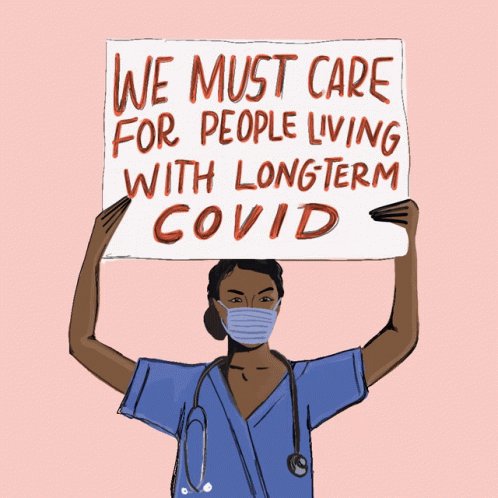
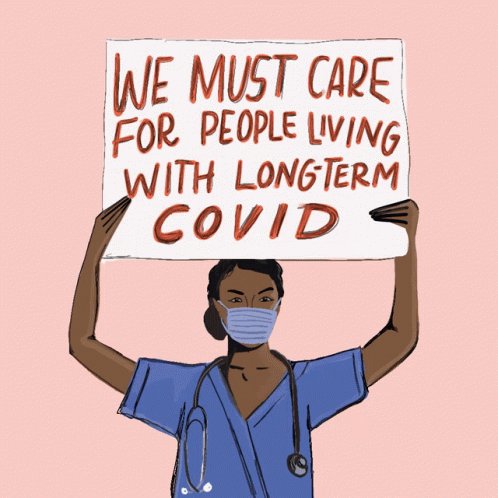
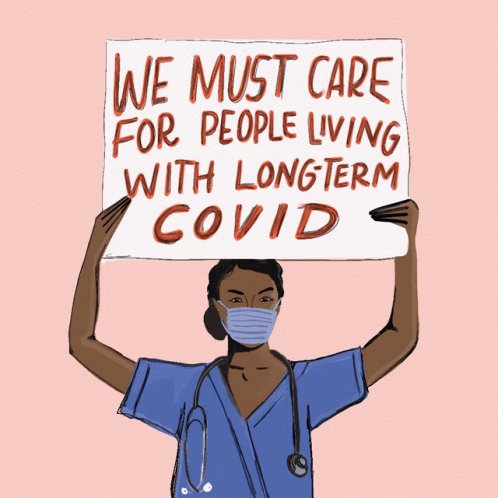
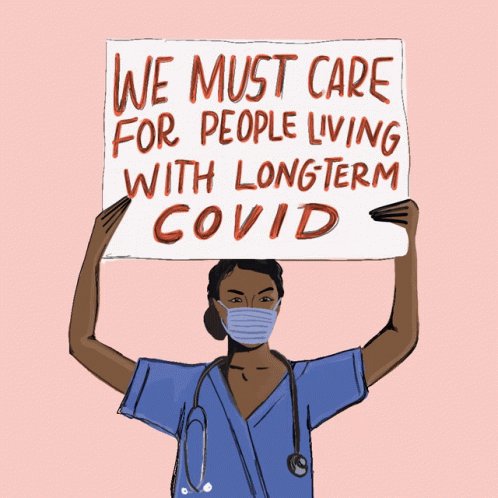
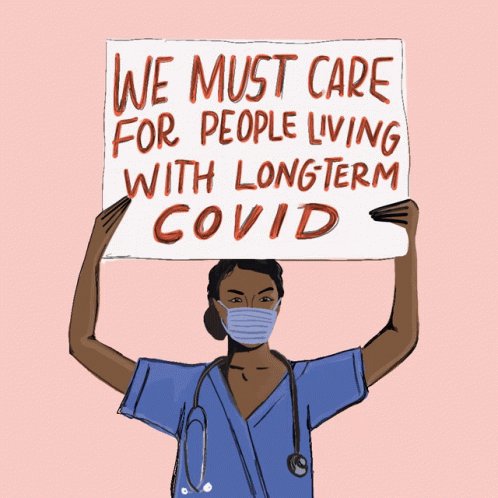
There I updated an old (80's?) #AIDS activism image.
Society is doing it again.... Neglecting and minimising millions of severely ill people, this time with MEcfs & LongCovid.
We need to address this asap. We need answers! We need HELP!
#LongCovid #MEcfs #Postcovid #PASC

2
19
47
4,304
Ntisec 𓆣 🏴 retweeted

Most People Do Not Have Long Covid, Just A Mysterious Illness Since Covid, Says Study
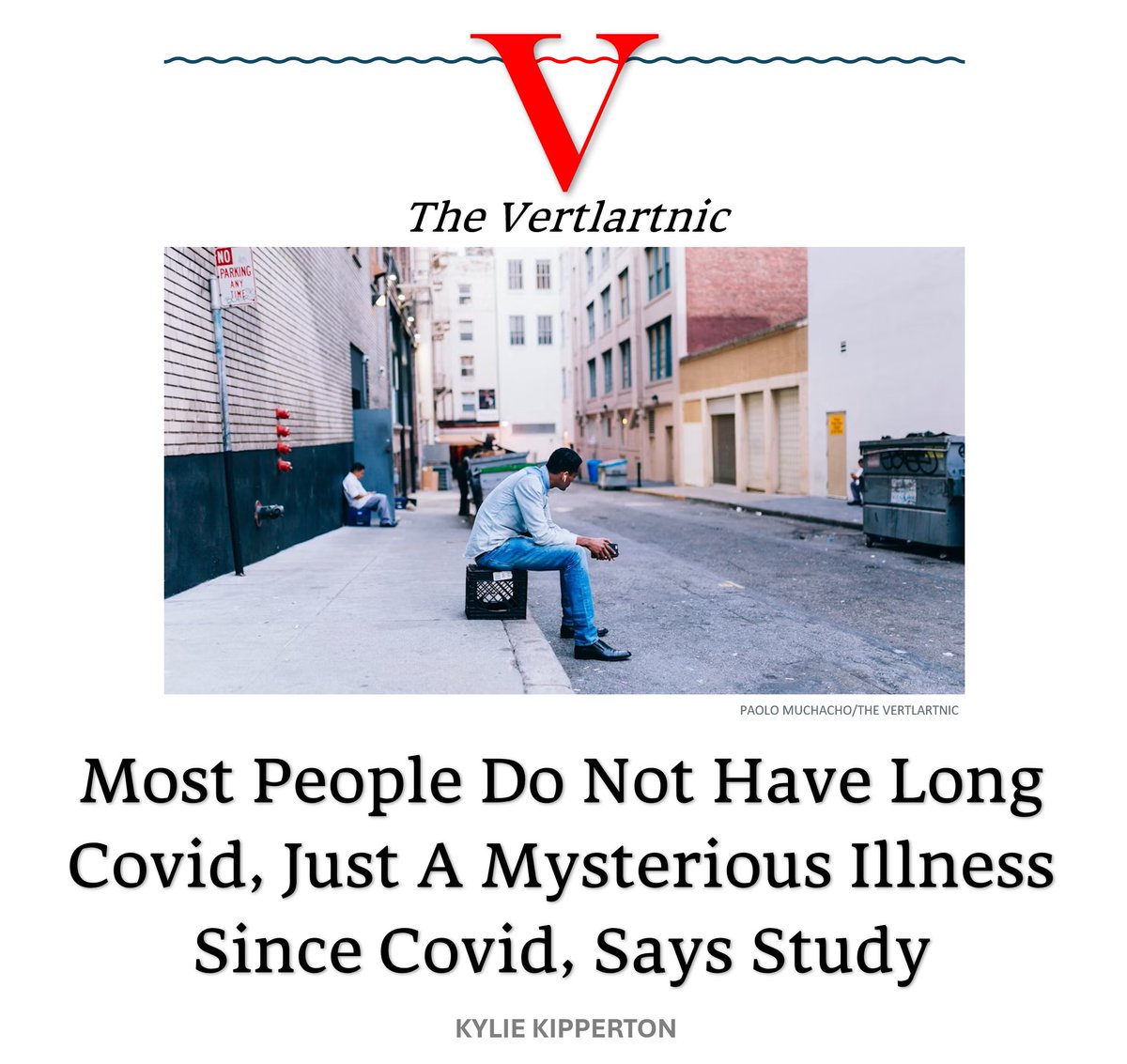
ALT Someone taking a rest for a minute, if that's ok. Headline: Most People Do Not Have Long Covid, Just A Mysterious Illness Since Covid, Says Study Story by Paolo Muchacho and Kylie Kipperton Photo from UNsplash
9
241
772
14,163
Ntisec 𓆣 🏴 retweeted

Today I had to file a Dutch police report for doxxing. Why?
Someone doxxed family in occupied Ukraine in 2022 as I myself was fleeing Kiev.
My family, extended cousins in Donetsk were arrested, tortured and their children stolen, taken to Russia for re-education. A war crime.
I might need amplification soon for the Dutch police to follow the EU 2024 criminal offense of doxxing a journalist.
My sources in various countries are also at risk as the doxxer has threatened more disclosures. Sources inside Iran, Venezuela and Sudan are now at risk.
Yes I am freaking out, good advice is welcomed. I have tried the NJV, EU press freedom legal line, zero response....
14
61
148
8,305
Ntisec 𓆣 🏴 retweeted

Jun 13
MinVWS Hans Hoogervorst, die eigenstandig, als medische leek, een gezondheidsraad rapport over 'CVS' negeerde, en het verder de psychosomatische hoek in duwde.
Want: anders zouden die mensen kans maken op een arbeidsongeschitkheidsuitkering.
trouw.nl/voorpagina/volksgez…
2
5
14
279
Ntisec 𓆣 🏴 retweeted

Jun 12
Another study shows cerebral hypometabolism in #LongCovid patients with PEM.
Cerebral hypometabolism is a decrease in the brain's ability to turn glucose into energy, leading to a severe cellular energy deficit.
journals.sagepub.com/doi/ful…
11
80
260
7,396
Ntisec 𓆣 🏴 retweeted
Jun 13
Wat vindt @martinvisser er van dat zijn krant telkens desinformatie plaatst op een onderwerp waar hij beter weet? We hebben in zijn column laatst gezien dat hij wel weet hoe het zit.
Is de eindredactie verblind door ideologie @KamranUllah?
Jun 13

Nederland op weg naar miljoen arbeidsongeschikten: ’Hoge uitkering motiveert niet om weer snel aan het werk te gaan’ telegraaf.nl/financieel/nede…
5
16
59
1,349
Ntisec 𓆣 🏴 retweeted
Jun 12
Long Covid in de parlementaire enquete.
Rutte zet een walgelijke karikatuur neer: als je Long Covid zou meewegen bij maatregelen, moet de hele samenleving op slot.
Dit terwijl ze NOOIT
-uitvraag deden naar aantallen, ernst, impact
-de bevolking informeerden over dit risico, hoe te herkennen, zorgstappen, etc
-serieus medische zorg of biomedisch onderzoek organiseerden
Heel die periode niet. En wat Rutte ook zegt, het was gewoon geen onderdeel van de afweging voor het aantal besmettingen, zoals Koopmans en Gommers, van Dissel zeiden, en de OVV in hun rapport concludeerde. Hoe had dat ook ooit gekund, zonder dara?
Heel erg voor de Long Covid patiënten die Rutte persoonlijk kent, 'hun' Mark heeft ze keihard laten vallen.
Vragen door @andre_poortman. Het blijft een open vraag of de parlementaire enquete nog aan *iemand* gaat vragen waarom bovenstaande pertinente punten nagelaten zijn.
37
74
167
22,434
Ntisec 𓆣 🏴 retweeted

Jun 12
Tegenspraak werd volgens Rutte in het Catshuis georganiseerd.
Ongenotuleerd en volstrekt oncontroleerbaar.
De strategie van groepsimmuniteit en rond laten gaan heeft na de speech of in het Catshuis nooit controleerbaar ter discussie gestaan.
Vandaar gedicht afscheid @C19RedTeam :

3
13
46
2,140
Jun 12
Amerikaanse handelsoorlog & export verbod op Nederlandse @ASMLcompany lithografie techniek (#EUV #DUV) heeft van Chinese chip fabrikanten zoals @Huawei een monster concurrent gemaakt.
53% chip density using a novel chip design approach #LogicFolding
youtu.be/8ekndZwyOzo?is=a1Zy…
58
Ntisec 𓆣 🏴 retweeted

Jun 11
Elon Musk is set to become a trillionaire within the next few months and a Karl Marx quote comes to mind.
"One day there will be trillionaires, but you will still have nothing."
Amazing powers of prediction.
Community note
The quoted statement is not from Karl Marx. en.wikiquote.org/wiki/Karl_Marx marxists.org/archive/marx/w…
576
8,050
44,134
354,015
Ntisec 𓆣 🏴 retweeted

Jun 11
Dieses Instagram Community Reel von #MEcfs Betroffenen aus dem deutschsprachigen Raum, das gestern gepostet wurde, geht gerade viral. Da nicht alle von euch Instagram nutzen, teile ich es hier.
instagram.com/reel/DZaUIawhn…
9
198
410
10,344
Ntisec 𓆣 🏴 retweeted

Jun 9
Als zelfs het NIBUD stelt dat dit D66 kabinet het veel slechter voor heeft met de zwakkeren in de samenleving dan het vorige kabinet Schoof, dan moet toch bij iedereen de ogen open gaan? Ik blijf t herhalen: dit is het meest asociale kabinet ooit. nos.nl/artikel/2617752-mense…
8
106
249
2,023
Jun 10
Ik baal van mijn #MEcvs hersenen. Dikke mist en trage verbinding met mijn ware ik.
Vooral ook omdat ik anders wellicht de mogelijkheid had gehad om online een niet fysieke job te vinden / of te creëren.....
Ik mis echt een doel op dit moment.
Stilstand is achteruitgang.
7
30
666
Ntisec 𓆣 🏴 retweeted

Jun 10
🚩That is not accurate.
You have not answered the strongest scientific criticisms of the @WIRED piece.
Several scientists and researchers have raised evidence-based objections about the article’s framing, its selective use of evidence, and its failure to properly engage with the biomedical abnormalities repeatedly reported in Long COVID and ME/CFS.
Replying to some critics is not the same as answering the central scientific criticisms.
The article still needs correction.
👇🏻
Jun 2

‼️⚠️Please read this until the end.
A widely shared article has presented a deeply misleading view of Long COVID, suggesting once again that cognitive behavioral therapy, exercise, and “mind-body” approaches may be the uncomfortable truth patients refuse to accept.
This needs to be challenged.
Not because the nervous system does not matter.
Not because psychological support cannot help.
But because confusing support with cure, physiology with psychology, and heterogeneity with “it might be in your head” is exactly how medicine has harmed post-infectious patients for decades.
There are articles about Long COVID that look like science journalism, but in reality they repackage, in modern language, a very old idea: if we do not fully understand a disease, maybe the problem is in the patient’s mind.
And that is not science. That is repeating history.
The article begins with a striking sentence:
“There isn’t a single approved pharmaceutical treatment, not even a test to verify the presence of the illness.”
This may sound forceful, but it is a very misleading way of presenting the problem.
The fact that there is still no drug specifically approved for Long COVID, or a single diagnostic test, does not mean that “nothing has been found.” It means that we are dealing with a heterogeneous disease, probably with several biological subgroups, and that medicine has not yet converted those findings into validated clinical tools.
“No single diagnostic biomarker” is not the same as “no biology.”
In just a few years, immunological, vascular, neurological, endocrine, and metabolic abnormalities have been described in subgroups of Long COVID patients: autonomic dysfunction, herpesvirus reactivations such as EBV/HHV-6, alterations in the cortisol axis, autoantibodies against GPCR receptors — including adrenergic and muscarinic receptors — persistent viral antigens, endothelial damage, muscle abnormalities after exertion, mitochondrial dysfunction, persistent inflammation, and differential immune changes.
Is everything settled? No.
Does that mean it is psychological? Also no.
Science does not work like that. Multiple sclerosis did not stop existing before we had MRI. Many autoimmune diseases do not show up in routine blood tests. If a complete blood count, a basic biochemistry panel, or an X-ray comes back “normal, normal, normal,” that does not prove the absence of disease. It only proves that you are looking with inadequate tools.
One of the article’s most serious mistakes is this: it confuses the absence of a simple clinical test with the absence of organic disease.
And that mistake has caused harm for decades.
The article also says:
“Almost $2 billion and half a decade of international effort have yielded little more than hypotheses about micro blood clots and spike proteins and mitochondrial dysfunction.”
No. That is not correct.
A hypothesis is a provisional explanation. But when you compare patients and controls and find significant differences in muscle tissue, metabolism, response to exertion, immune biomarkers, viral antigens, autoantibodies, or vascular dysfunction, you are no longer talking about “little more than hypotheses.” You are talking about lines of biomedical evidence that still need to be organized, replicated, stratified, and translated into treatments.
That is not scientific failure. That is research into a complex and new disease.
🔵Continued in the next post.👇🏻
(1/6)
27
148
2,949
Jun 9
#LongCOVID en #MEcvs patiënten betalen jarenlang premie zonder dat zij adequate zorg kunnen krijgen in NL. Omdat de zorg en politiek haar zaakjes niet op orde hebben. Er heerst hier een bewust kennis hiaat. Onderzoeks geld en zorg wordt hier wegbezuinigd.
Is dat ook Fraude?
Jun 8

Zorgfraude is volstrekt onacceptabel. Daarom gaan we dit met een stevig pakket maatregelen harder aanpakken. We gaan strenger controleren, sneller ingrijpen en we investeren in opsporing en handhaving van zorgfraude. Lees meer hierover in de Kamerbrief 👉 open.overheid.nl/details/27a…
2
7
35
735
Ntisec 𓆣 🏴 retweeted
Jun 8
‼️⚠️I sincerely appreciate that you acknowledged this mistake.
Recognizing errors publicly is not easy, and I respect that.
But I also think this is why I have to ask you to look again at the much bigger issue: the WIRED article itself.
Because the problem is not only one misread study. The broader framing of that article is already causing real harm.
I say this sincerely: I know there is a person behind every account, with their own intentions, limits, mistakes and blind spots. We can all get things wrong. I do not believe the right response is to destroy someone when they are willing to correct mistakes.
But the article needs correction.
Over the last few days, I have received comments and private messages from patients saying that family members, people around them, and even clinicians who do not understand Long COVID are now using this narrative against them.
They are being told that they are not recovering because they do not want to.
Because they are not exercising.
Because they are not doing psychological therapy.
Because they are “stuck” in the wrong mindset.
You may not fully realize the damage that kind of framing can do if you have not lived this disease closely.
For many patients, their environment had finally started to believe them because biomedical research was moving forward. Years of studies showing immune, vascular, autonomic, metabolic and muscular abnormalities were slowly helping people understand that this is a real organic disease.
And then a simple, attractive narrative appears again:
maybe it is mind-body.
maybe patients are afraid of exercise.
maybe recovery is being blocked by beliefs.
That kind of framing can erase years of progress in one family, one workplace, one clinic.
Because when a disease is complex and poorly understood, the easiest story is always the old one: maybe the problem is psychological.
ME/CFS patients have lived with this harm for decades. Many Long COVID patients are now experiencing the same thing.
And this pressure is not harmless.
Patients lose their health.
They lose their jobs.
They lose their social lives.
They lose their independence.
And then, when public narratives suggest that maybe they are not recovering because of their mindset, they can also lose the last thing they had left: being believed and supported.
That pressure can become unbearable.
Some patients end up taking their own lives because they feel abandoned, disbelieved and blamed for an illness they did not choose.
Those lives matter.
They matter as much as yours or mine.
And these patients deserve exactly the same dignity, seriousness and protection that we give to patients with any other recognized disease.
Today, nobody would tell a patient with multiple sclerosis that they remain ill because they do not want to recover, because they do not exercise enough, or because they have not done the right psychological therapy.
Nobody would frame MS as a failure of mindset just because fatigue, stress sensitivity, cognitive symptoms or depression can appear in the disease.
So why is this acceptable with Long COVID or ME/CFS?
This is not about rejecting psychological support.
It is not about denying that the nervous system is involved.
It is not about saying every recovery story is false.
It is about not confusing support with cure.
Not confusing subjective improvement with disease modification.
Not confusing heterogeneous biology with “it might be in your head.”
Not using recovery anecdotes to reframe a post-infectious disease in a way that patients will pay for socially, medically and personally.
I genuinely believe people can reconsider things. None of us has to know everything about every field. Mistakes happen.
But when a mistake has consequences for a vulnerable patient community, correction matters.
The same criticism I have made these days, I would gladly replace with support if you helped correct the framing and the harm caused by the article.
Patients deserve mechanisms.

Would like to note that I made a thread QTing a study that someone said showed 91% of people recovered from PAIS. The study did NOT say that, and I tweeted a misinformed thread that leaned into that incorrect reading. I deleted the tweets, but I will leave this tweet up with the thread I posted so people can see the mistake I made, as well as the original tweet that I QTed.
10
97
360
13,909
Ntisec 𓆣 🏴 retweeted

Jun 8
Just sharing again. It’s so good. Thanks Adam youtu.be/RiwX9Y0NbiQ
2
13
39
1,946
Ntisec 𓆣 🏴 retweeted

Die Autor:innen fanden bei Personen mit ME/CFS und Long COVID Hinweise auf einen zentralen Noradrenalinmangel, der mit typischen Symptomen – insbesondere der Belastungsverschlechterung (PEM) – zusammenhängt.
academic.oup.com/braincomms/…
7
65
223
8,162
Ntisec 𓆣 🏴 retweeted

Jun 7
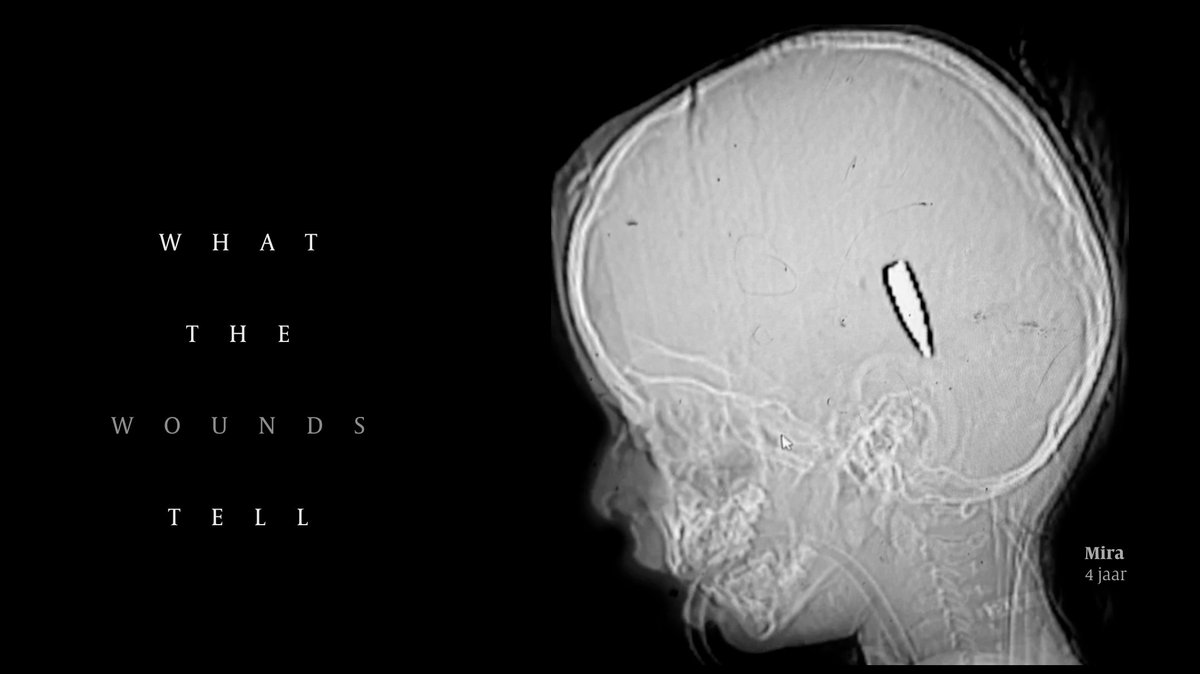
Crazy that this is getting barely any coverage. This year’s European Press Prize was just awarded to an investigative report by the Dutch newspaper De Volkskrant. It is entitled “What the Wounds Tell” and in it the journalists Maud Effting and Willem Feenstra document the cases of 114 children in Gaza under the age of 15 who were struck by a single bullet to the head or chest. Almost all of them died or were left severely disabled. They chose to document only the cases of boys and girls under the age of 15 (though often much younger: aged 3, 4 or 7) because these are children who can be immediately identified as such. “A single bullet in these parts of the body is a clear indication that these children were deliberately targeted“, the two journalists write.
This is the article: volkskrant.nl/kijkverder/v/2…
493
24,292
48,126
1,443,445

Ntisec 𓆣 🏴 retweeted

4
29
73
2,714