
Pathologist | Husband & Father.
Joined May 2011
- Tweets 801
- Following 104
- Followers 335
- Likes 425
56 Photos and videos
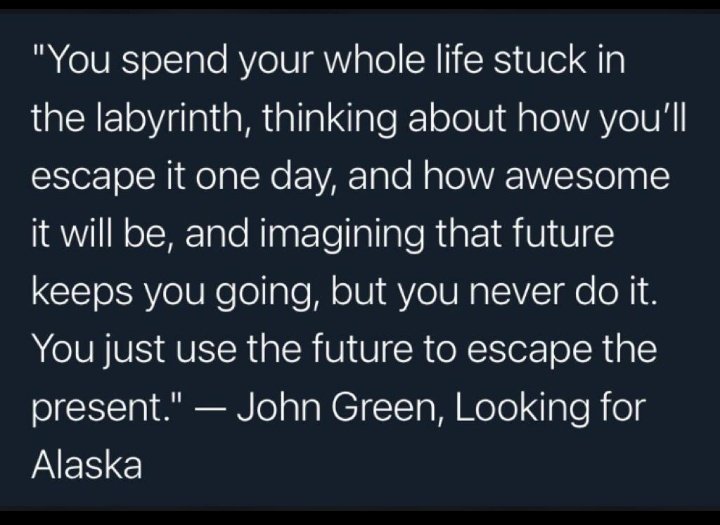
















It is very easy to lose your 'WHY' along the way becoming a mixture of your 'HOW' and 'WHAT'. That's why achievements are tasteless and unsatisfying.
Without a 'WHY', it's hard to actually compete against yourself which is the only competition that really matters.
2
1

I want a private life. A slow life away from the chaos. Cozy & comfortable in my own space. Thinking about life. Observing the world. Focusing on things that matter. A quiet day, sunlight, coffee, music, books, good food, good people and some silence. Depth over noise. That'll do
40
209
931
26,299
Couldn’t phrase it better 🎯

This guy said something that got me thinking.
He said students could probably learn more in 5 hours with better technology than they do in 8 hours of traditional school.
And honestly? He’s not wrong about that part.
But here’s where I think the conversation stops too early.
We’ve had educational TV since the 70s.
Khan Academy has been free for years.
YouTube has more tutorials than any school library on earth.
Kids already have all of that in their pockets, every single day.
And schools are still largely the same as they were when our parents were sitting in those same chairs.
So if technology was always the answer, why hasn’t it worked yet?
The real problem isn’t that lessons are delivered badly. The real problem is that a lot of what children are being forced to sit through has nothing to do with their actual lives.
And when that happens, the brain does something very specific. It shuts down.
Because the brain is wired to disengage from things that feel irrelevant to it.
I’ve seen this in my work with hundreds of children. The same child who “can’t pay attention” during a math lesson will spend two hours memorizing every football stat from the Premier League without anyone asking them to.
Their brain isn’t broken. It’s just selective. It engages deeply with what feels relevant and interesting, and it switches off when something doesn’t.
That’s not a technology problem. That’s a relevance problem.
The second thing missing from this conversation is what homeschooling has quietly gotten right for years.
It’s not the curriculum. It’s that the child’s interest actually shapes what gets taught.
A child obsessed with cooking can learn chemistry through recipes. A child who loves football can learn fractions through match statistics.
The learning happens faster, it sticks longer, and you don’t have to drag the child to the desk.
Interest isn’t a distraction from education. Interest is the engine of it.
So yes, I’m fully in support of making learning more engaging. Better videos, better formats, more interactive experiences. All of that is good.
But if we just swap boring textbooks for exciting videos about things children don’t care about, we haven’t solved anything.
We’ve just made the same problem look different.
The sequence that actually works is this.
First, make it relevant to where the child is right now, developmentally and personally.
Second, let their genuine interests lead the direction of learning.
Then, and only then, use every tool available to make it fun and engaging.
Technology is the vehicle. Relevance and interest are the destination.
MrBeast built one of the biggest audiences on earth by obsessing over one question:
“will people actually want to watch this?”
Imagine if that same question was asked about every child, every lesson, every day.
“Does this child actually want to learn this? Does it connect to something real in their world?”
13
Oracle retweeted

Structure builds high agency children.
Parenting becomes simple when it rests on a minimal set of principles.
All behavior can be evaluated through four rules.
1. Reciprocity Rule
Do not do to others what you would not accept done to you. Do for others what you expect from them. Be just and do not accept unjust treatment.
2. Truth Rule
Say only what you are willing to stand behind. Say what must be said.
3. Property Rule
You own yourself and your future. Protect your body, time, and work, and respect the body, time, and work of others.
4. Responsibility Rule
You are responsible for your actions, your words, your things, and your promises.
These four rules form the governing architecture of the home.
Every correction refers back to one of them.
When a child acts out, the question is simple.
Which rule did you violate?
The child learns to evaluate his own behavior against a stable standard.
Limits become self-generated.
Bedtime aligns with responsibility to tomorrow’s commitments.
Screen use aligns with stewardship of attention and respect for shared time.
Speech aligns with truth.
Conflict aligns with reciprocity.
Damage aligns with repair.
Young children require direct direction while reasoning develops.
As reasoning strengthens, correction becomes instruction.
Instruction strengthens judgment.
Judgment strengthens self-regulation.
The child learns to say, I know this violates reciprocity.
I know this disrespects property.
I know this avoids responsibility.
At that point, the parent assists with mindfulness and follow-through.
The standard remains constant.
The enforcement becomes increasingly internal.
Identity and principle must develop together.
The child sees himself as worthy of good treatment, and responsible for giving that treatment to himself.
He sees himself as part of something greater than himself, bound to family and future.
For the sake of those he is connected to, he maintains his body, his word, and his relationships.
He sees himself as virtuous, practicing honesty, discipline, fairness, and accountability.
Identity directs behavior.
Behavior reinforces identity.
A home built on these four rules produces high-agency adults.
High-agency adults reason from principle.
They evaluate authority.
They repair harm.
They govern themselves.
Structure is simple.
Four rules.
Consistent reference.
Long-term sovereignty.
Feb 24

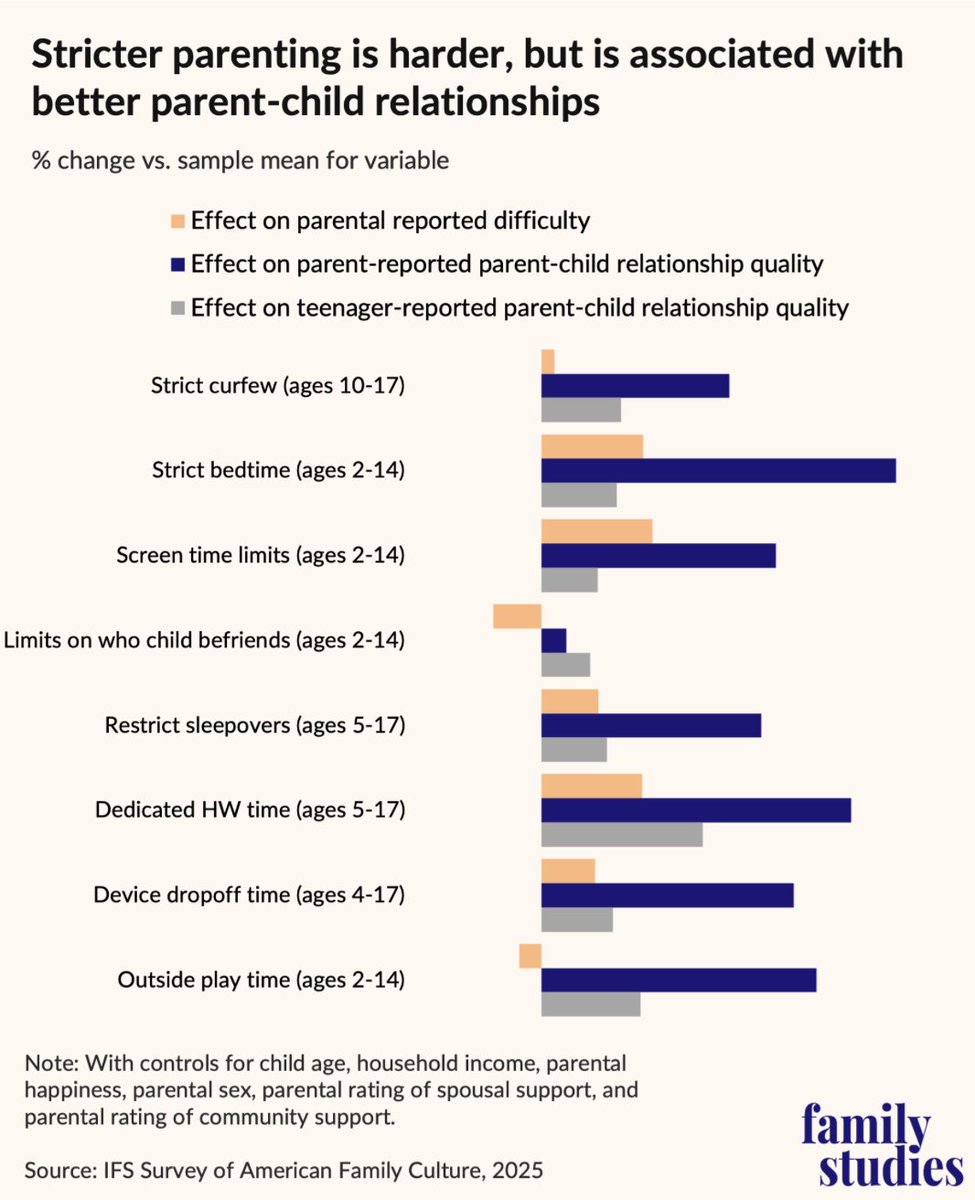
New @FamStudies: Almost "every rule a parent imposes makes parenting feel harder. But virtually every parental-enforced rule is linked to better parent-child relationships."
✔️ Strict bedtime
✔️ Screentime limits
✔️ Dedicated HW time
= Happier teen. @lymanstoneky's latest:
12
125
1,018
89,256
Oracle retweeted

I saw this post and it stopped me because this is something I’ve been teaching for a long time.
The data isn’t surprising to me. Structure improves relationships. We’ve seen it over and over again with the families we work with at Tensai.
But here’s what I want to add to the conversation.
The reason most parents struggle with structure isn’t because they don’t believe in it. It’s because structure requires something from them first.
Whatever standard you set for your child, you have to keep it yourself. That’s where it falls apart for a lot of families.
You tell your child “no cursing” but they hear you curse.
You tell them “put the phone down” but you’re scrolling through yours at dinner.
You set a bedtime for them but you have no discipline around your own sleep.
Children are watching. And when they spot the gap between what you say and what you do, they stop taking the rules seriously.
Not because they’re rebellious. Because they’re honest.
They see the hypocrisy and they call it out. And most parents aren’t ready for that conversation.
So the first step to building structure for your child is building it for yourself.
Now here’s the part that connects to what I teach daily.
A lot of parents come to us wanting their child to perform better academically. “My child doesn’t want to read.” “My child can’t focus.” “My child hates studying.”
But when we look at the home, there’s no structure supporting that outcome. No dedicated study time. No screen limits. No homework routine.
The child has unfettered access to devices, entertainment, distractions.
Everything in the environment is working against the very thing the parent is asking for.
You can’t demand academic performance in a home that’s structured for entertainment.
Structure is what makes everything else possible. The bond. The discipline. The academic results. It all falls to the level of structure you have in place.
And yes, I agree with the original post. High warmth plus high structure is the winning formula.
You can absolutely have a deep, loving bond with your child while maintaining firm boundaries. Those two things aren’t in conflict. They strengthen each other.
But I’ll add one thing.
Structure alone doesn’t build a child who wants to learn. It creates the environment where learning can happen.
The desire comes from something else. It comes from how the child feels when they study. From what happens after the effort.
From whether the experience is rewarding or punishing.
That’s a whole other conversation. And I’ll share more on that soon.
Feb 24

We now have evidence that gentle parenting doesn’t work.
Here’s an uncomfortable truth about parenting no one wants to say out loud:
The data is not kind to gentle parenting.
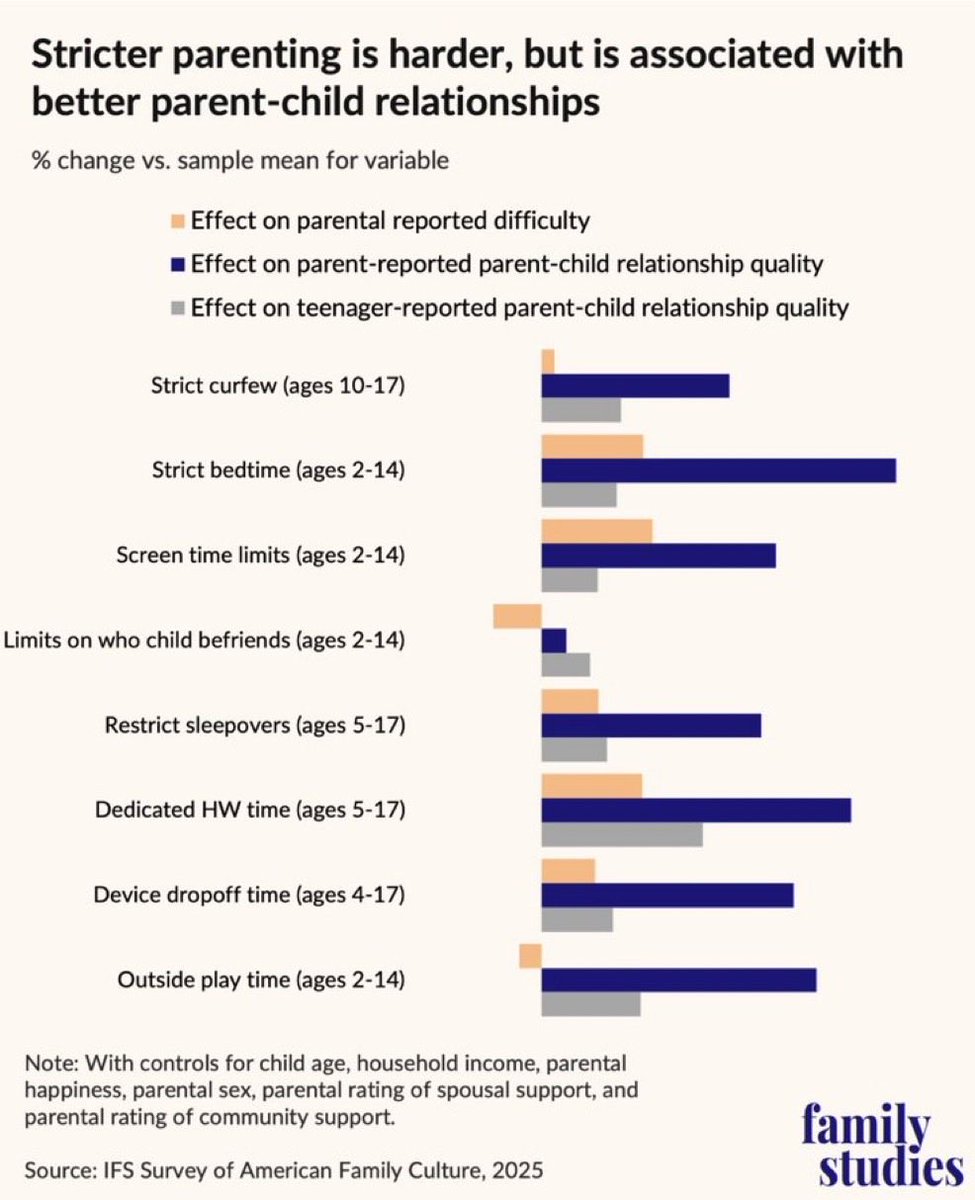
According to teenagers, strict curfews. strict bedtimes, screen limits, device drop off times, dedicated homework blocks, and sleepover restrictions IMPROVE higher relationship quality.
And yes, parenting difficulty goes up.
Of course it does. Leadership is harder than appeasement.
For the past decade we have been sold a watered down, Instagram friendly version of “gentle parenting” that often collapses into boundary avoidance, endless negotiation and emotional processing without enforcement. Parents terrified of saying no because they do not want to rupture connection.
But connection without authority is not connection. It is dependency.
When parents impose structure, the relationship improves.
Teenagers report better parent child relationship quality in homes with curfews and rules. Younger kids report better relationships in homes with screen limits and bedtimes. Even device drop off times correlate positively.
Why?
Because structure is not cruelty. Structure is love made visible.
A bedtime says: your brain matters more than your entertainment.
A screen limit says: your dopamine system is not fully developed and I will guard it until it is.
A curfew says: your safety matters more than your social standing.
That is not authoritarianism. That is caring.
Boundaries create friction. Friction creates growth. The parent absorbs the short term discomfort so the child does not pay the long term cost.
Children do not experience well calibrated limits as rejection. They experience them as stability. The human brain craves predictability. Predictability reduces anxiety. Reduced anxiety strengthens attachment.
That is why relationship quality goes up.
Notice something else in the data. The strongest effects are around time structure. Bedtime. Homework. Devices. Outside play. These are environmental constraints. They scaffold executive function.
The winning formula is not tyranny.
It is high warmth plus high structure.
The modern failure mode is high warmth plus low structure. That is just abdication of responsibility wrapped in empathy.
Children need leadership, not negotiation. They need adults who can tolerate their anger. They need boundaries that do not move every time emotions spike. They need someone whose prefrontal cortex is fully myelinated.
The harder path produces the stronger bond.
Because when a child feels that someone is strong enough to hold the line, they relax. And relaxed nervous systems build durable relationships.
22
300
1,467
331,887
Oracle retweeted

30 Dec 2025
108
188
2,112
521,233



Oracle retweeted

21 Aug 2025
Chronic lying rewires your mind, wrecks trust, and may even open the door to Alzheimer’s.
Here’s what the science says about why we keep lying, and what it does to us.🧵
3
17
78
10,832
Here for it!
16 Jun 2025

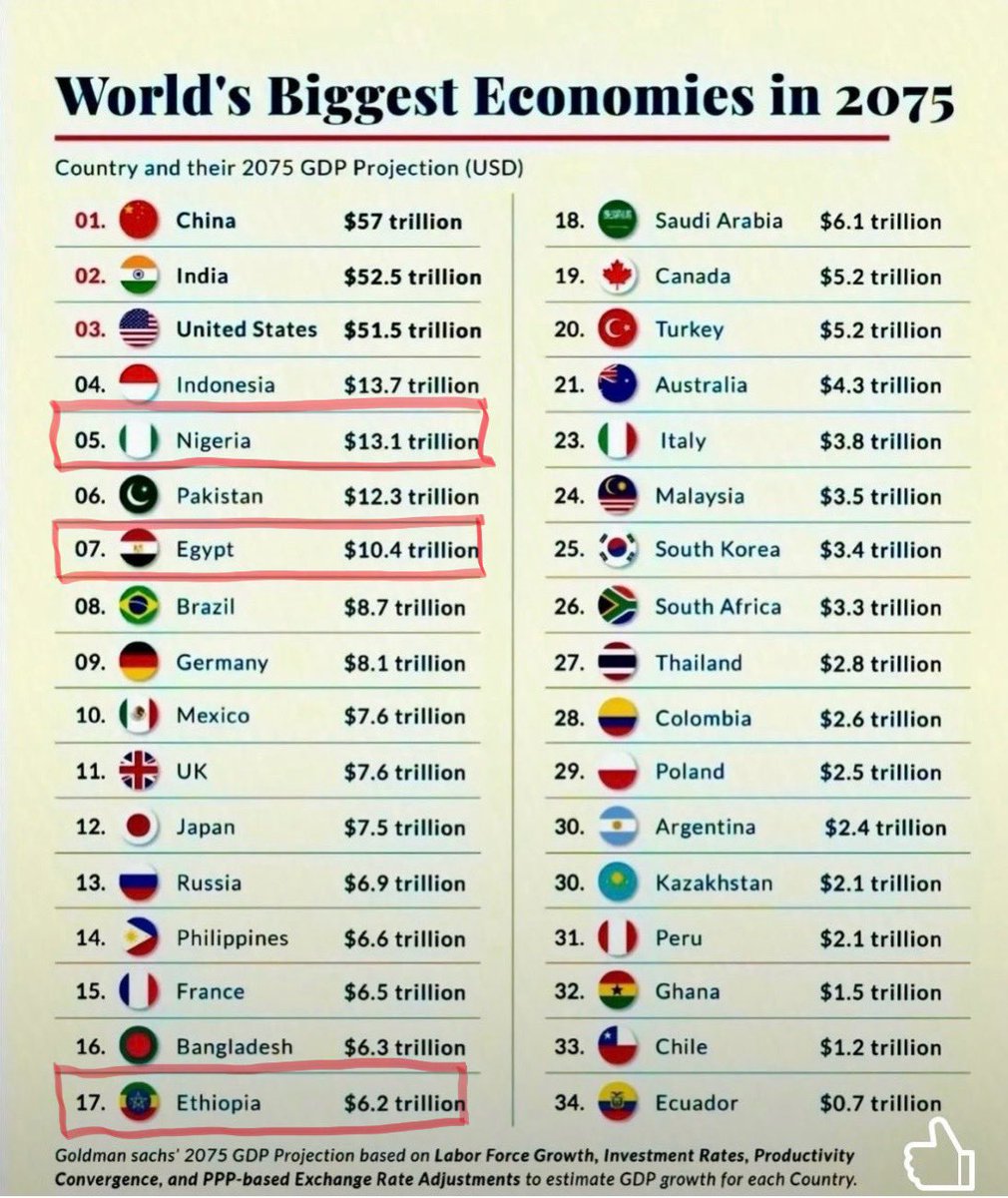
Three African countries forecast amongst the world’s 20 largest economies with a combined GDP of $30 trillion. Source: @GoldmanSachs
#Nigeria
#Egypt
#Ethiopia
The most astonishing growth is Ethiopia. Its GDP, which was only $8.6 billion at the beginning of this century, forecast to top $6.2 trillion.
Two other African countries - #Southafrica and #Ghana - are included amongst the 34 largest economies.
Every time I see this data, it reaffirms my confidence and keeps me optimistic about Africa’s future despite the challenges, which I have discussed previously in my speeches, media appearances and social media platforms.
29
Looking at my kids now and I can see the little things that made my parents proud!
10 May 2025

My father told me recently, there are different types of people within his level at his office:
One, those that don't care about their children or a legacy. Didn't build a home instead have rented for years but own expensive cars. They don't cater properly for their children.
34
Oracle retweeted

6 Nov 2024
📖 Read a new article on an exciting pilot program to improve death notification and registration in Lagos state, Nigeria, supported by the @BloombergDotOrg #Data4Health Initiative’s Global Grants Program and published in @JGLOBHEALTH.
jogh.org/2024/jogh-14-03036

1
2
218

Oracle retweeted

1 Jul 2023
Join me today, July 1st, at 12:00PM GMT as I talk about my journey as a Software Engineer and how you can build your career in the field, at the alx_africa Expert Sessions. #alxafrica #alxexpertsession
Register at lnkd.in/ddDZsZ9R lnkd.in/ef36Vjya
2
2
74
Oracle retweeted

13 Jun 2023
In 1985, Nike held a 24-hour shoe design contest.
Nike was struggling. Their stock dropped 50%. They had to lay off people. Adidas, Converse, & Reebok were all selling more shoes.
So in a panicked attempt to find creative talent, Nike held a shoe design contest.
The winner was
A corporate architect named Tinker Hatfield.
"Two days after the competition," he said, "I wasn't even asked—I was told that I was now a footwear designer for Nike."
As he got to work on his first official shoe design, he thought about a building he had studied in architecture school: The Centre Pompidou in Paris.
The Centre Pompidou is an inside-out building, meaning that the structural, mechanical, and circulation systems are all exposed.
“That building,” Tinker said, “was describing what it was to the people of Paris. And I thought, ‘Well why not do that with a shoe? Let’s cut a hole in the side and show what’s in the shoe.’”
So Tinker designed an inside-out shoe:
The Air Max 1.
The Air Max 1 was a massive success, and it steered Nike's design direction from then on.
"To this day," Tinker says, "Phil Knight says I saved Nike."
Takeaway 1:
Had he not studied that building in Paris, Tinker says, he couldn’t have created the Air Max.
Creativity, he says, is a function of the “library in your head."
“When you sit down to create something...what you create is a culmination of everything you’ve seen and done previous to that point.”
Takeaway 2:
Tinker Hatfield went to architecture school and then he was a corporate architect for 4.5 years. Then, literally overnight, he became one of the best shoe designers in the world.
This makes me think of a counter-intuitive discovery made by psychologist Charles Spearman in 1904.
Before Spearman, the natural assumption was that the more you specialize in one thing, the worse you’ll be at other things.
Instead, Spearman discovered "the positive manifold" phenomenon.
He found that different abilities tend to be positively correlated. That the expertise gained through specialization is transferrable. That the cognitive and creative abilities cultivated as an architect could positively correlate with being a shoe designer.
- - -
"Creativity is a function of the previous work you put in." — Robert Greene
Follow @bpoppenheimer for more content like this!

239
4,143
21,676
5,913,487
Oracle retweeted

12 Oct 2022
Female Athlete of the Year nominee 🇳🇬
Retweet to vote for @Evaglobal01 in the #AthleticsAwards.

2,582
55,663
44,201
Oracle retweeted

11 Jan 2022
"How many successful people do you admire that are painfully normal? Zero. They’re weirdos, misfits, and they live life by odd rules."
~@Tim_Denning
Nine Reasons Why Intelligent, Hardworking People Won't Become Successful This Year, by @Tim_Denning timdenning.substack.com/p/ni…
7
21
148
Oracle retweeted

11 Dec 2021
10 common mental errors that derail decision-making:
150
2,920
10,808
Oracle retweeted
6 Apr 2021
Please does anyone know anyone who works in @AllianzNigeria . Customer care is currently ghosting me.
cc : @Allianz
1
1