
Eliminate the guesswork 🧬 and get on the right medication 💊 the first time. Pillcheck combines DNA analysis with #telemedicine by expert pharmacists.
Joined March 2013
- Tweets 2,457
- Following 1,723
- Followers 705
- Likes 3,673
94 Photos and videos

Pinned Tweet

13 Dec 2025
Medications work differently for everyone. 🏹 youtube.com/shorts/QCi4DzR_a…
1
111
Jun 9
A raised resting heart rate is an indicator that your body is working harder, a sustained increase warrants medical attention.
Jun 7

Something I didn't expect in the wearable data. GLP-1 agonists raise resting heart rate 1 to 4 bpm even after major weight loss. Lubberding et al. (Cardiovasc Res 2024) found it's a direct sinus node effect, not autonomic. SELECT still showed 20% MACE reduction despite the bump.
16
Pillcheck retweeted

The hopeful part:
Insulin resistance is highly reversible with the right nutrition and lifestyle changes. Inflammation drops dramatically when you fix metabolism. Imaging lets you actually track whether you’re making progress — not just chasing numbers.
Many people can stabilize plaque and dramatically lower their real risk.
You don’t have to wait for symptoms or surgery.
7/8
1
13
100
15,095
May 26
How safe are ADHD medications for children? Balancing the benefits and health risks
pillcheck.ca/2019/11/14/how-…
4
May 24
Two nuns could have identical brain damage on autopsy. 1 would have lived her last years confused, lost. The other lucid and intact. only meaningful difference? depth of the cognitive and emotional architecture each had built across the decades before the damage arrived.
1
58
Pillcheck retweeted

May 23
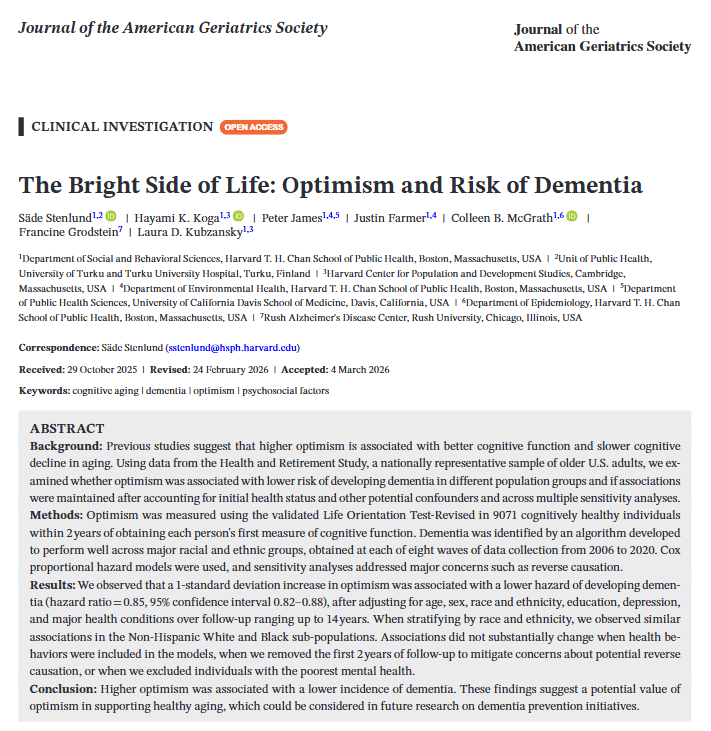
Being optimistic is associated with a lower risk of dementia.
28
387
2,138
220,266
May 23
Genetics, endometriosis and mental health: There is a strong link between genetic predisposition to endometriosis and mental health issues. pillcheck.ca/2025/07/07/unde…
6
May 23
Antidepressants come in many different types, and they can have unique impacts on an individual’s sexual health and well-being. Using pharmacogenetics, DNA testing can help identify which medications are the best fit for you personally. pillcheck.ca/2026/03/20/anti…
13
May 23
Antidepressants and sexual health - How pharmacogenetics can help find the right medication for you podbean.com/ep/pb-f8zc4-1a79…
16
May 23
What is the one orientation question your patients almost never get a clear answer to before they leave the room?
🎯
May 22

Medicine has quietly confused two very different things: closing a chart and finishing a visit.
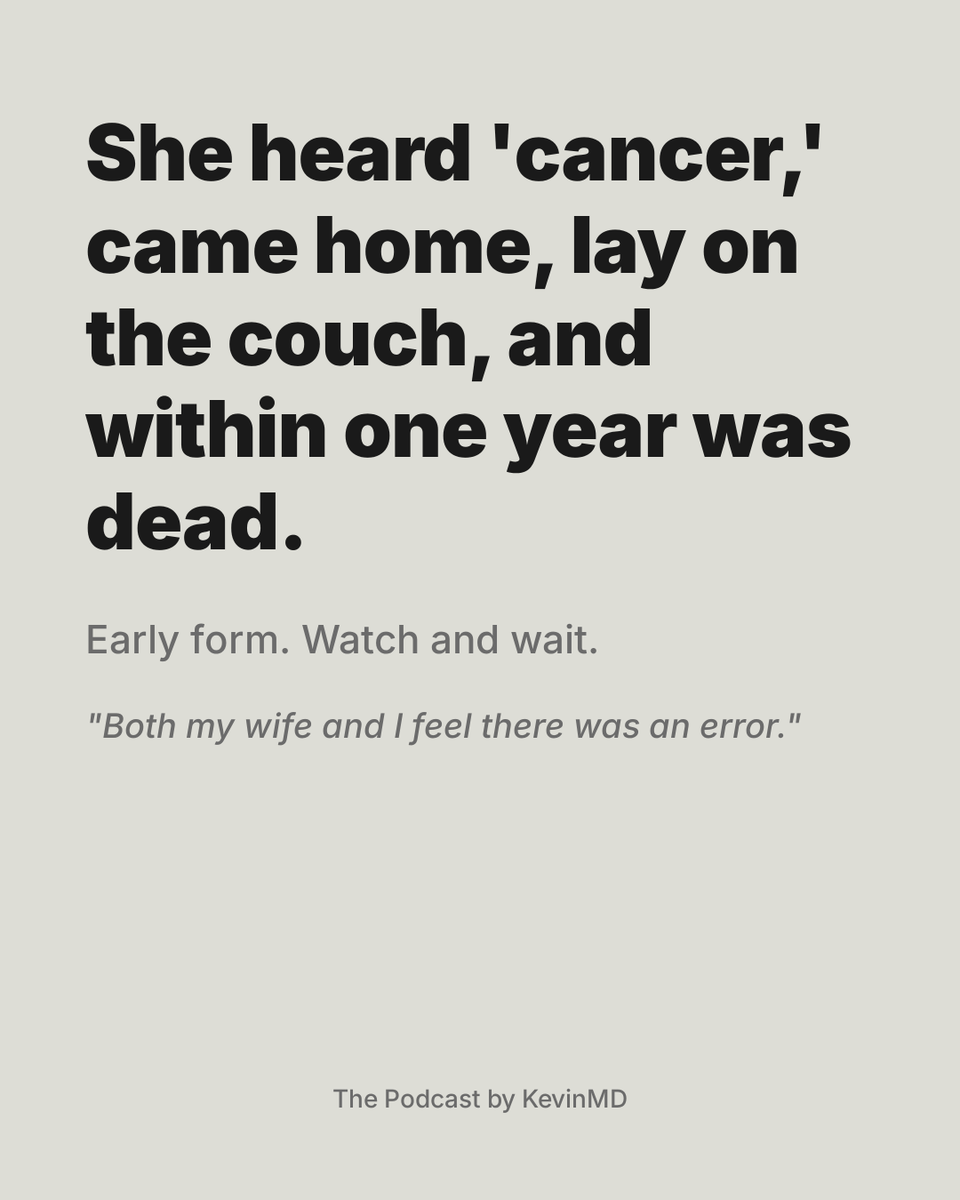
Alan P. Feren, MD watched what happens in the gap between them. His mother-in-law came in with a very high white blood cell count and walked out with one word: cancer. The cancer did not kill her. The visit did.
The diagnosis was a very early form of chronic lymphocytic leukemia. Asymptomatic. Slowly progressive. The textbook approach is watch and wait, with targeted treatment only when the disease starts moving. None of that crossed the room. She left the office with one word and went home to die from a disease she could have lived with for years.
He calls this unfinishedness. It is the gap between administrative closure and clinical closure. The chart says the encounter is complete. The patient does not know what is most likely, what has been reasonably excluded, what would change the plan, or who to call if something shifts.
Most physicians have been the doctor on both sides of that gap. We have all walked out of a busy day and felt the small uneasy thought that one of those visits did not actually finish. It is not because we did not care. It is because the system pays for documentation, not for orientation. The after-visit summary is a legal artifact. It is not a treatment plan a frightened person can repeat back to you in their own words.
Feren has been clear about what his family carried out of that office. "Both my wife and I feel that there was an error in not giving the diagnosis in a way that showed the clinical rationale." Not a malpractice error. A communication error that the chart did not record and the law does not name. It is the kind of error that does not show up in any quality metric we currently measure, and it is the kind of error that quietly kills people who were never supposed to die.
Feren's prescription is structural, not sentimental. Before a patient leaves the room, they should be able to answer five things. What is most likely. What has been reasonably excluded. What remains possible. What would change the plan. Who to call if something changes. If they cannot answer all five, the visit is not finished. Charting it as finished does not make it finished.
I am writing this for the physician who has felt that uneasiness at the end of a long day and wondered whether the case was actually closed. The answer is usually: not yet.
Listen to the full conversation on The Podcast by KevinMD. Link in the replies.
What is the one orientation question your patients almost never get a clear answer to before they leave the room?
#PhysicianCommunication #ThePodcastbyKevinMD
18
May 23
The single strongest predictor of who would be happy, healthy, and mentally sharp at 80 was the depth and quality of their close relationships. who had at least one person they could call in the middle of the night were measurably healthier 30 years later.
13
May 22
How cholesterol-lowering medications and precision medicine improve psoriasis treatment
pillcheck.ca/2026/04/15/how-…
10
May 22
How do we know that cholesterol-lowering medications are effective for psoriasis?
podbean.com/ep/pb-4mkc8-1a9d…
18
Pillcheck retweeted

May 21
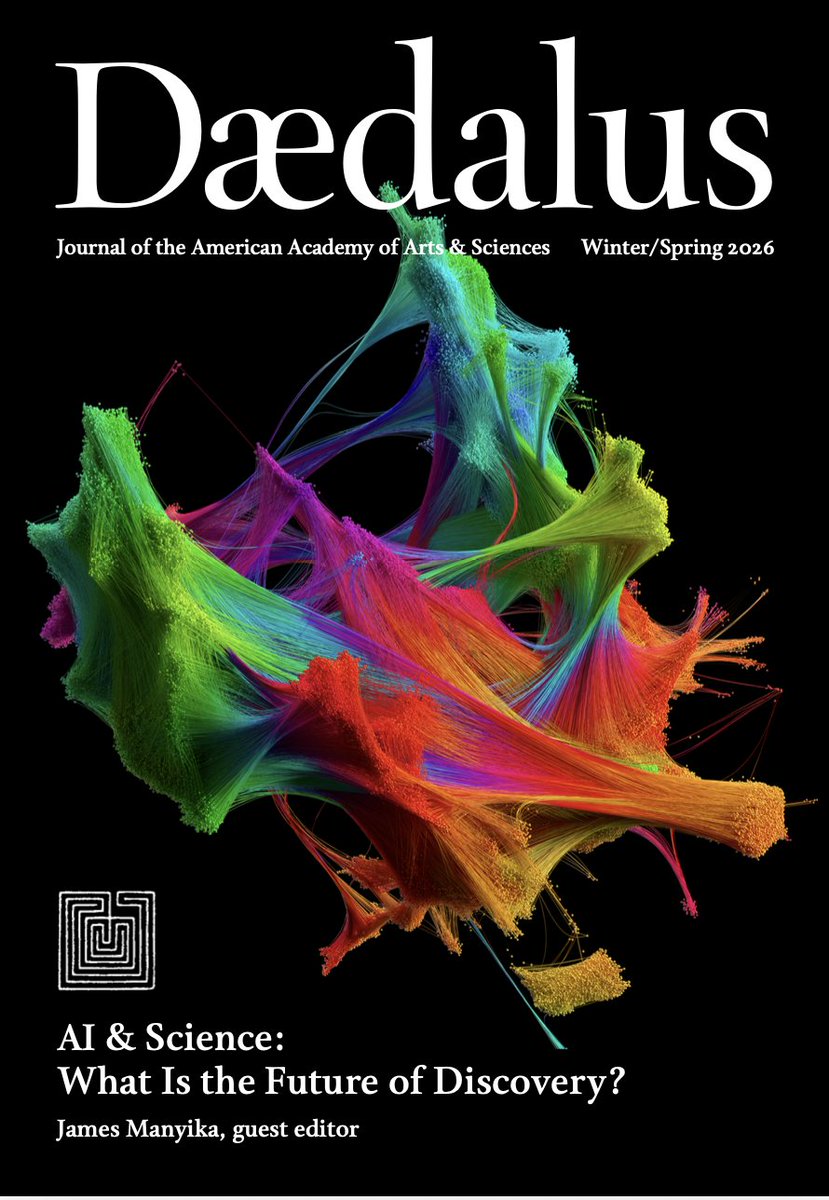
The new issue of Daedalus, the open-access Journal of the American Academy of Arts and Sciences, is chock full of good material on AI. w/@demishassabis @ylecun @alondra @pushmeet and so many others
I wrote about the future of AI-facilitated medicine
amacad.org/daedalus/ai-scien…
16
69
274
43,221
May 22
Red flags: Should you consider genetic testing before anesthesia?
pillcheck.ca/2026/05/07/how-…
11
May 22
podbean.com/ep/pb-4znwf-1aba… Have you or anyone in your family experienced complications from medical anesthesia? Overall, estimated rates of perioperative complications from anesthesia are between 3% to 16% dependant on a variety of factors.
21
May 11
1
18
May 11
•Withdrawal symptoms occur in almost half of people when they stop an antidepressant.
•The higher the dose and the longer the treatment duration, the greater the risk of withdrawal symptoms during standard tapering.
1
18
May 11
Discuss recent medication changes with your pharmacist, as some supplements and medicines can influence antidepressant levels in your blood and lead to a setback.
22
Pillcheck retweeted

May 11
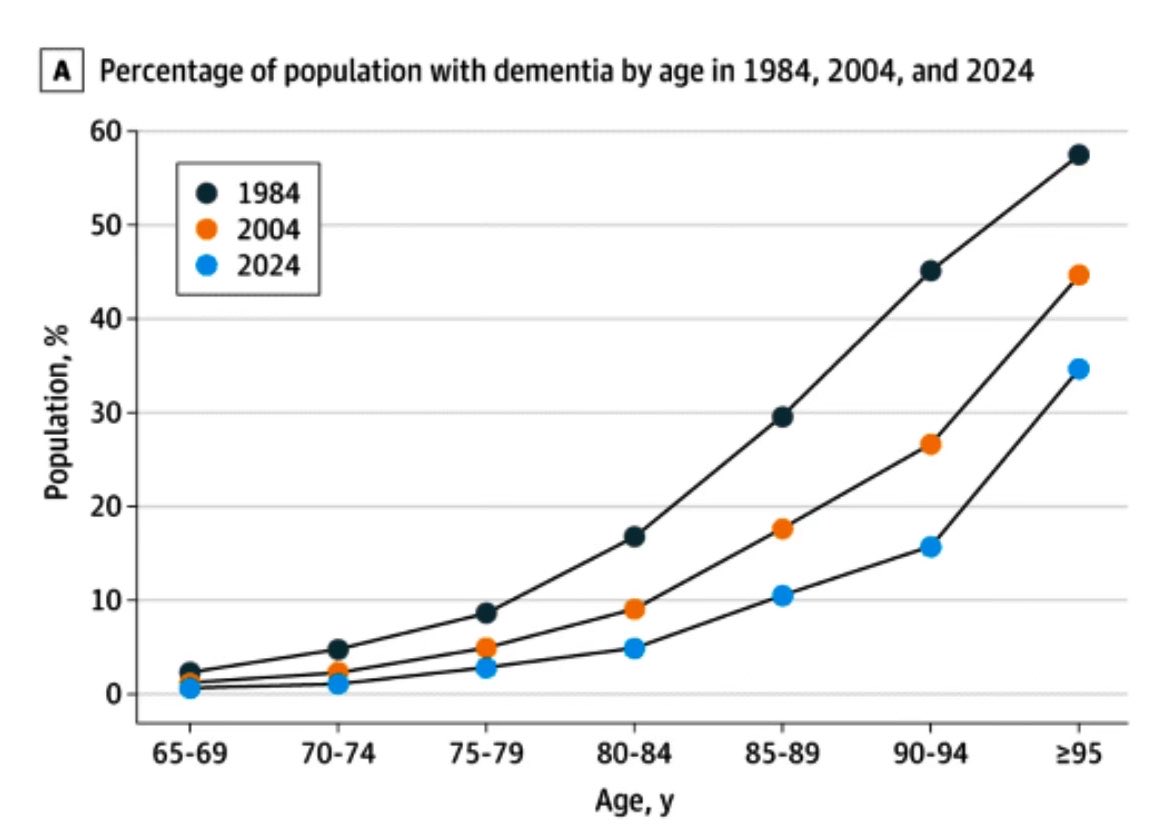
The odds of having dementia at age 85 were close to 1 in 3 in the 80s; now they are 1 in 10.
I don’t think we have a great explanation: better cardiovascular health, diet, and education are often mentioned. Good news nonetheless.
Carnall Farrar. (2025, March 27). Dementia trends.
205
1,010
4,918
681,463
May 11
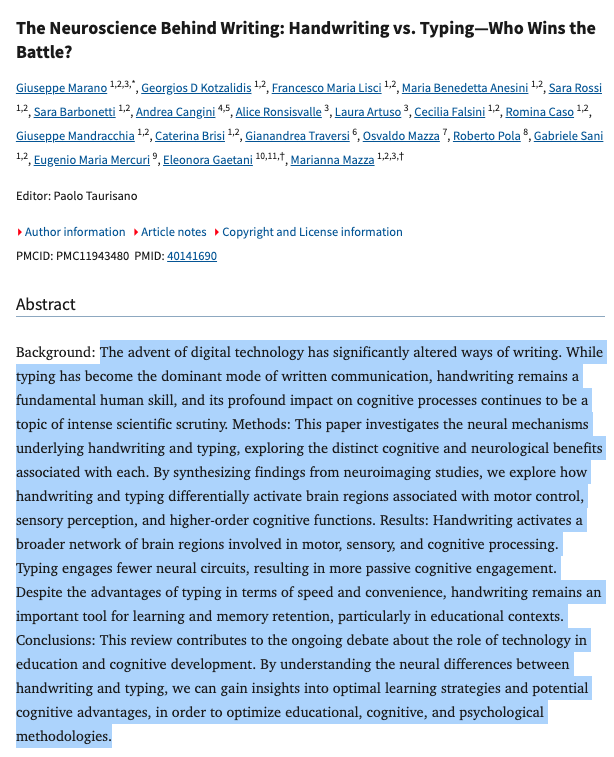
The act of forming letters by hand forces deeper processing at the moment of information encounter. The effort required to form each word creates additional memory traces that typing does not generate.
May 10

Your brain physically rewrites itself every time you pick up a pen.
Neuroscientists at Norwegian University scanned students' brains while they handwrote letters versus typing the same letters on a keyboard.
The results shattered decades of assumptions about how we process information.
Handwriting activated massive networks in the sensorimotor cortex, the visual processing centers, and the hippocampus simultaneously. Complex neural symphonies lit up across multiple brain regions, creating rich interconnected pathways between motor control, visual recognition, and memory formation.
Typing the same letters? The brain activity looked like someone had dimmed the lights across entire cognitive districts. The neural networks that flourished during handwriting simply went dark.
The difference?
When you form letters by hand, your brain constructs elaborate spatial maps of each character. The motor cortex learns the precise pressure, angle, and trajectory needed to create an 'A' versus a 'B.' Your visual system tracks the ink flowing from pen to paper in real time. Your parietal lobe integrates hand position with eye movement. Your hippocampus encodes not just what you wrote, but how the writing felt, where you paused, which words required more pressure.
Typing activates almost none of that circuitry. You press a key, a letter appears. The motor movement is binary. The visual feedback is uniform. The spatial relationship between thought and symbol gets mediated by a machine that standardizes every character into identical fonts and spacing.
Your brain treats these as fundamentally different cognitive tasks.
The evolutionary context makes this obvious once you see it. Human hands developed for manipulation, creation, and fine motor control over millions of years. We painted on cave walls, carved bone tools, and shaped clay vessels long before we invented written language. When writing emerged 5,000 years ago, it built on top of existing neural infrastructure that already connected hand movement with symbolic thinking.
Keyboards appeared 150 years ago. Touchscreen typing maybe 20 years ago. From an evolutionary timeline perspective, we started using them approximately yesterday. Our brains are still running ancient software that expects physical engagement with symbols.
That software produces dramatically different learning outcomes.
Students who take handwritten notes consistently outperform students who type the same information on memory tests, comprehension assessments, and creative applications of the material. The difference persists even when researchers account for typing speed, note length, and time spent studying.
The act of forming letters by hand forces deeper processing at the moment of information encounter. You cannot handwrite as fast as someone speaks, so your brain must actively filter, summarize, and prioritize information in real time. The motor effort required to form each word creates additional memory traces that typing does not generate.
Children who learn to write letters by hand develop reading skills faster than children who learn letters primarily through typing or screen interaction. The sensorimotor experience of creating letterforms helps their brains recognize those same letterforms when they encounter them in text.
Adults who handwrite shopping lists, daily schedules, or meeting notes remember the information better than adults who type identical lists into phones or computers. The spatial memory of where you wrote something on a page provides retrieval cues that digital text does not offer.
These findings collide directly with how education and work environments have evolved over the past two decades. Schools replaced handwriting instruction with typing classes. Offices converted from paper systems to fully digital workflows. Students take notes on laptops. Professionals draft documents on screens.
We optimized for speed and efficiency while accidentally severing the neural pathways that evolution spent millions of years developing.
The implications reach beyond memory and learning into fundamental questions about human cognition. If the physical act of forming symbols changes how your brain processes ideas, what happens to thinking itself when you remove the physical component?
Digital text is infinitely searchable, instantly editable, and perfectly shareable. But it may be creating brains that process information more superficially, store memories less durably, and connect ideas more weakly than brains that regularly engage in handwriting.
The neuroscience suggests we traded cognitive depth for technological convenience without realizing what we were giving up.
Some of the most innovative thinkers across history were obsessive handwriters. Darwin kept detailed handwritten journals. Einstein worked through complex theories in handwritten notebooks. Virginia Woolf wrote her novels by hand before transcribing them. Steve Jobs famously took handwritten notes during Apple meetings even as he was building the most advanced computers on Earth.
Perhaps they intuited something about the relationship between hand, brain, and insight that we measured in brain scanners but somehow forgot in practice.
Your pen is literally a cognitive enhancement device that activates neural networks digital keyboards cannot reach.
29