
The leading provider of innovative Protocol Analysis & Test solutions for mainstream and emerging technologies like UFS 4.0, PCIe, I3C, SPMI, RFFE, JTAG etc.
Joined September 2019
- Tweets 208
- Following 17
- Followers 33
- Likes 5
192 Photos and videos








eMMC webinar recording now available.
HS400, electrical validation, protocol analysis & debug workflows covered.
Watch : youtube.com/watch?v=LUjPcilu…
#eMMC #Semiconductor #Validation
14
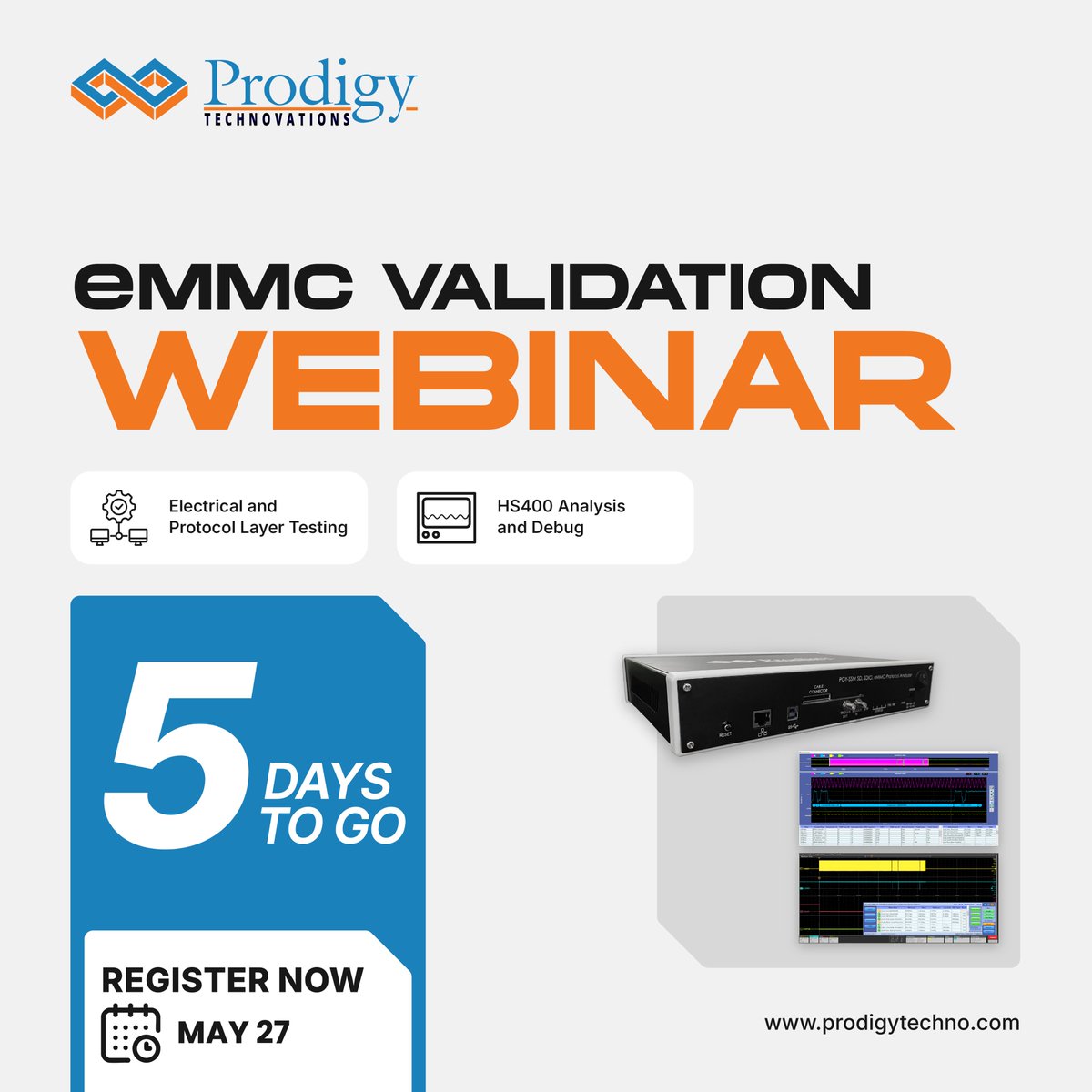
5 Days to Go!
Join our eMMC Validation Webinar to explore HS200/HS400 analysis, protocol debugging, and live demos.
prodigytechno.com/emmc-valid…
#eMMC #HS400 #ProtocolAnalysis #EmbeddedSystems #Semiconductor
22
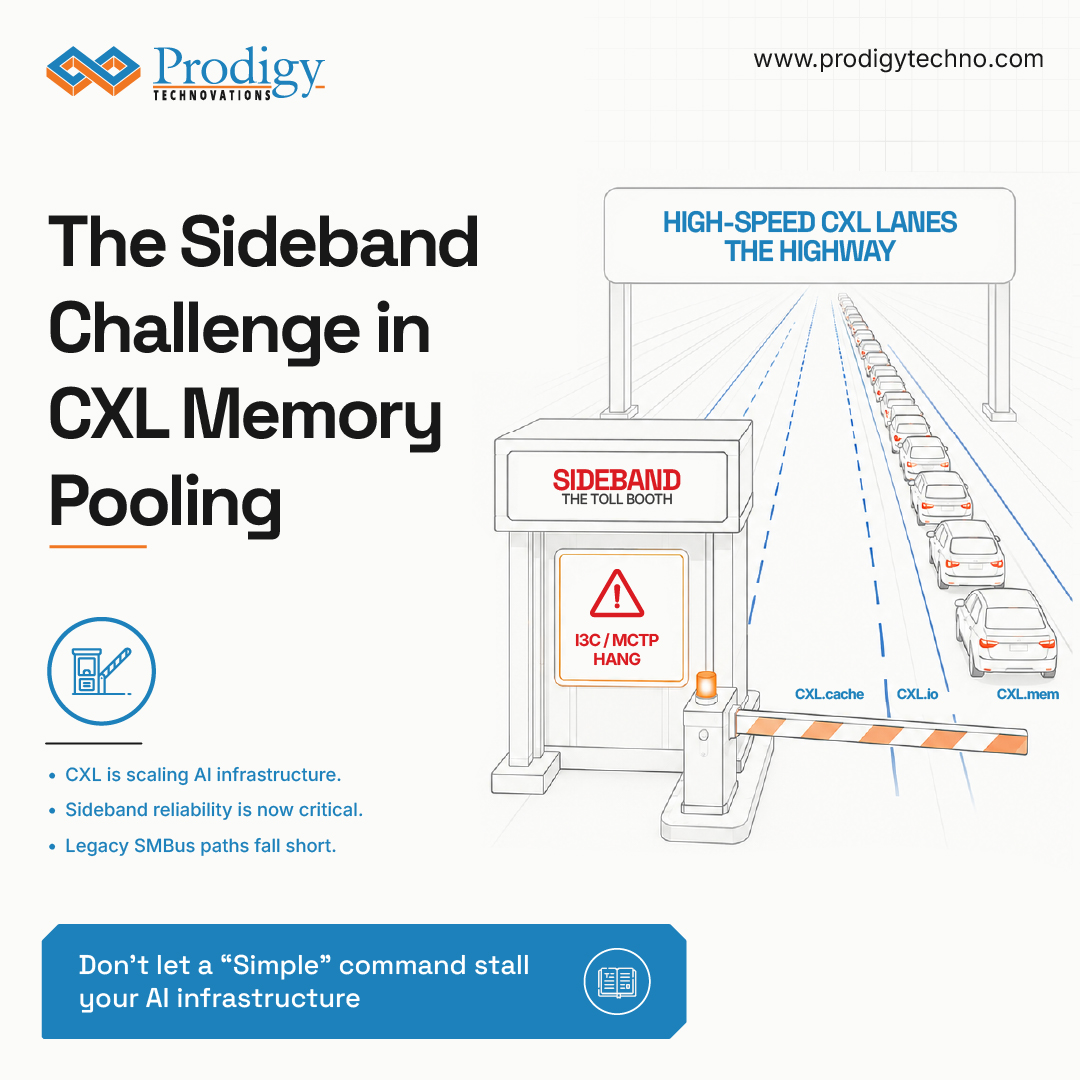
CXL is reshaping AI infrastructure, but sideband management can’t be ignored. A stalled I3C/MCTP path can break memory coherency in pooled-memory systems.
At Prodigy, we help validate the sideband before it becomes the bottleneck.
prodigytechno.com/
#CXL #I3C #PCIeGen5
8
UFS 4.1 at 23.2 Gbps demands next-gen validation. Traditional probing can introduce false errors and SI issues. Read our latest blog on Active Probing and advanced UFS validation.
Read our blog: prodigytechno.com/blog/proto…
#UFS41 #SignalIntegrity #ProtocolAnalyzer
9
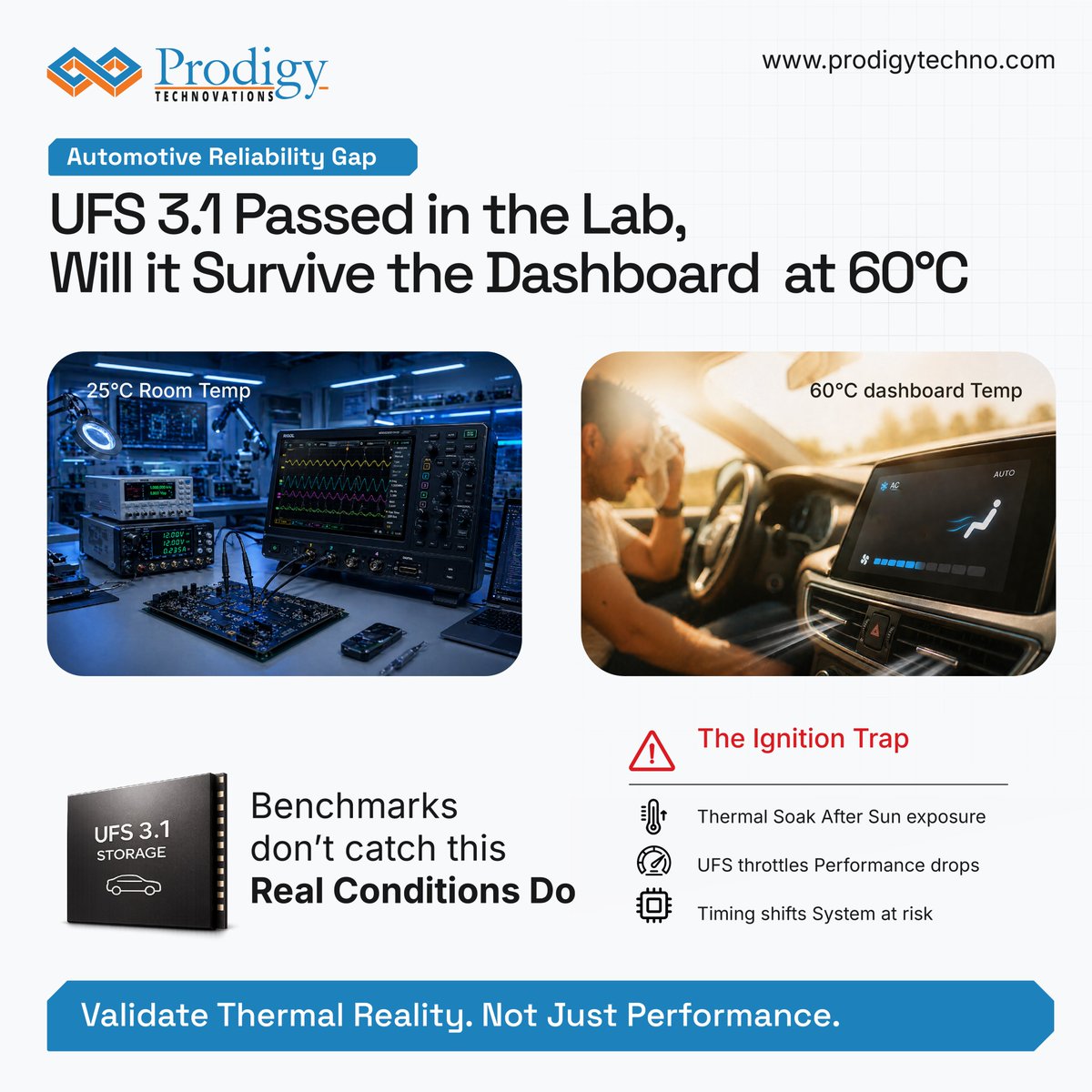
UFS 3.1 passed at room temperature, but at 60°C?
Failures happen after thermal soak. If you’re not validating throttling timing shifts, you’re risking field issues.
#AutomotiveElectronics #UFS3 #Reliability
5
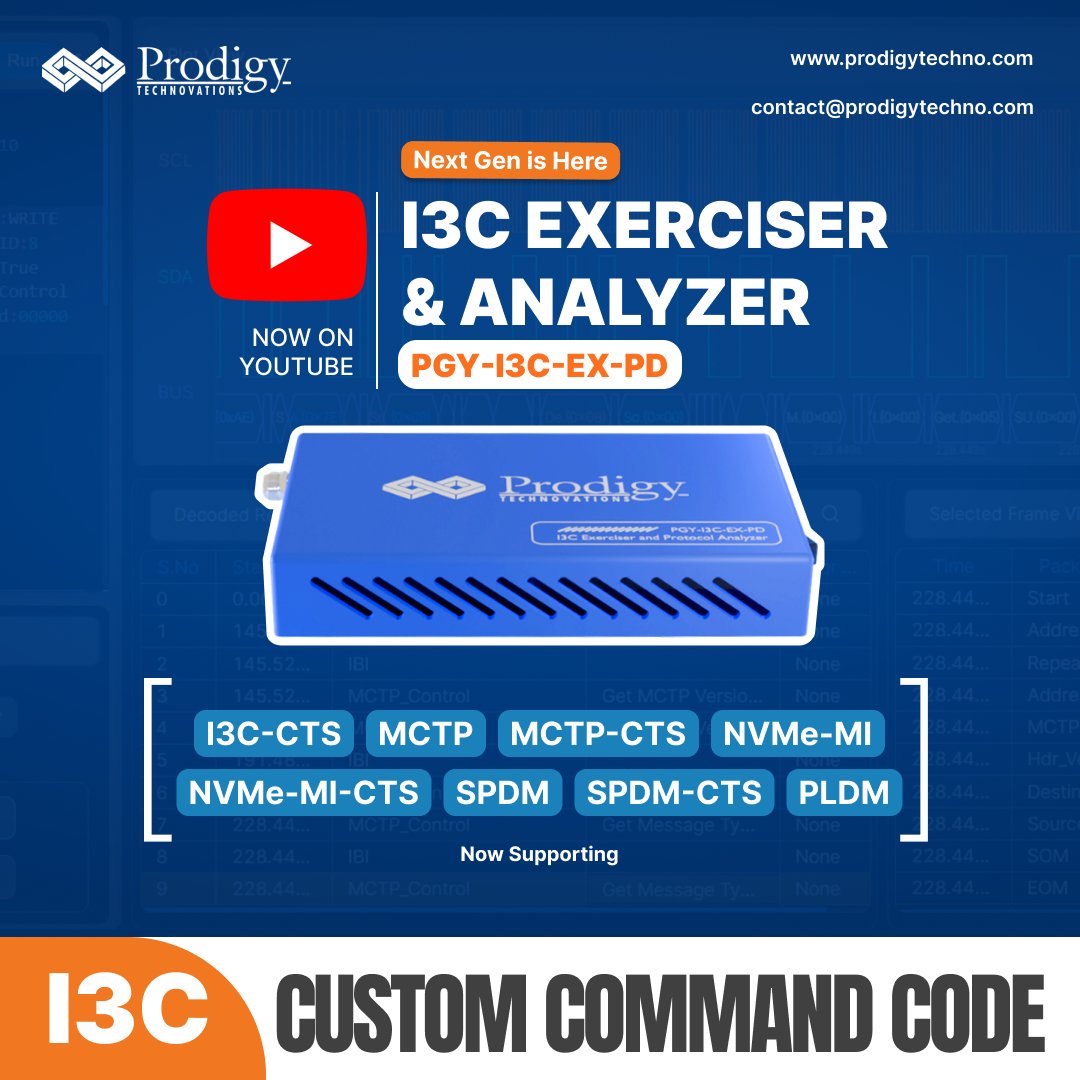
Extend I3C validation beyond standards with Custom CCCs. Learn to create & execute vendor-defined commands and validate non-standard behavior using PGY-I3C-EX-PD.
youtube.com/watch?v=1le3LoIG…
#I3C #EmbeddedSystems #ProtocolValidation
25
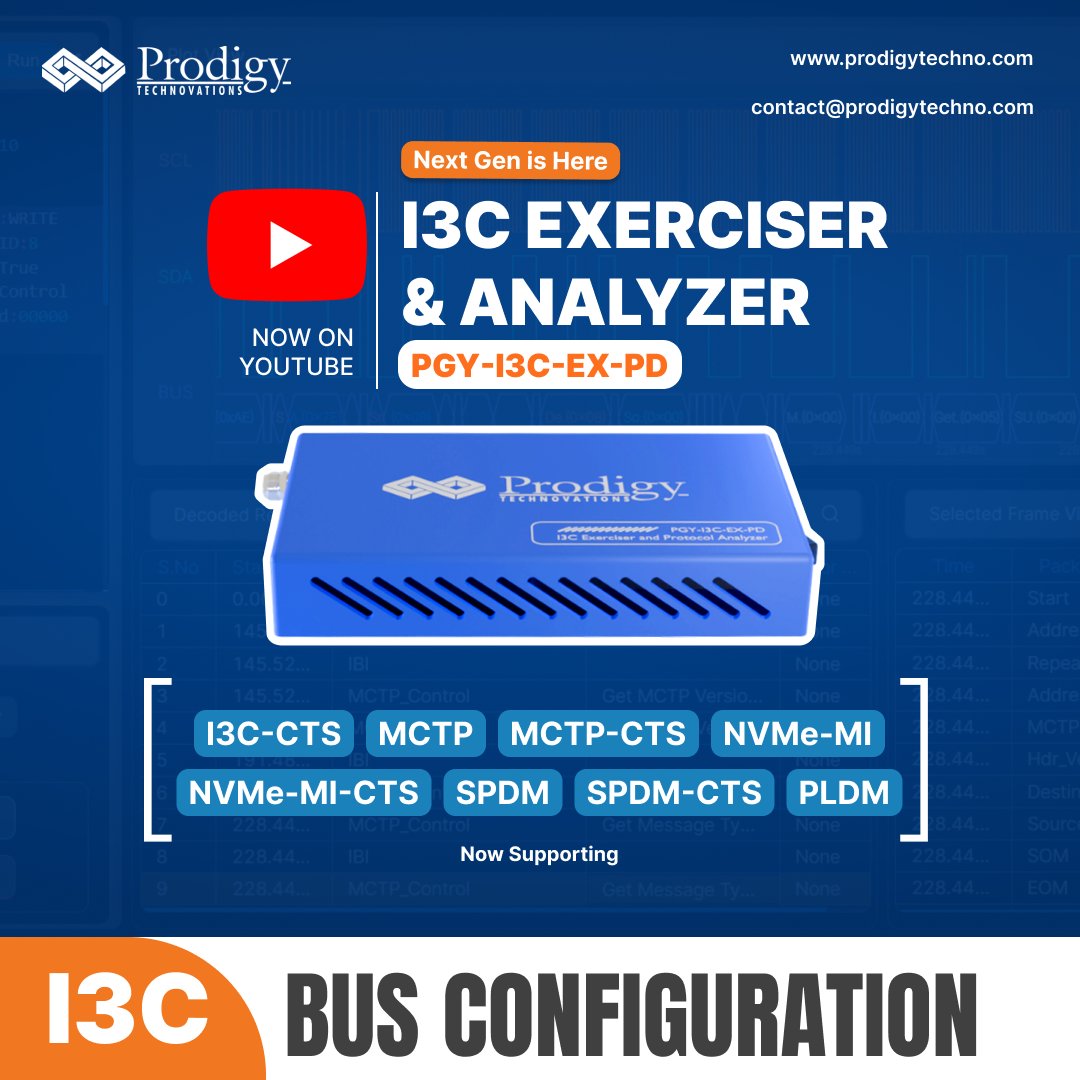
Getting I3C configuration right is the first step to reliable validation and debug. This video walks through controller & target setup, bus configuration, addressing, and building a complete I3C network using the PGY-I3C-EX-PD.
youtube.com/watch?v=qMz8YQ6s…
#EmbeddedSystems #I3C
20
Our I2C, SPI & UART Validation Webinar is now live on YouTube!
Learn practical debugging, protocol decode & electrical validation.
youtube.com/watch?v=JoiggMp8…
#EmbeddedSystems #HardwareDebugging #TechWebinar
13
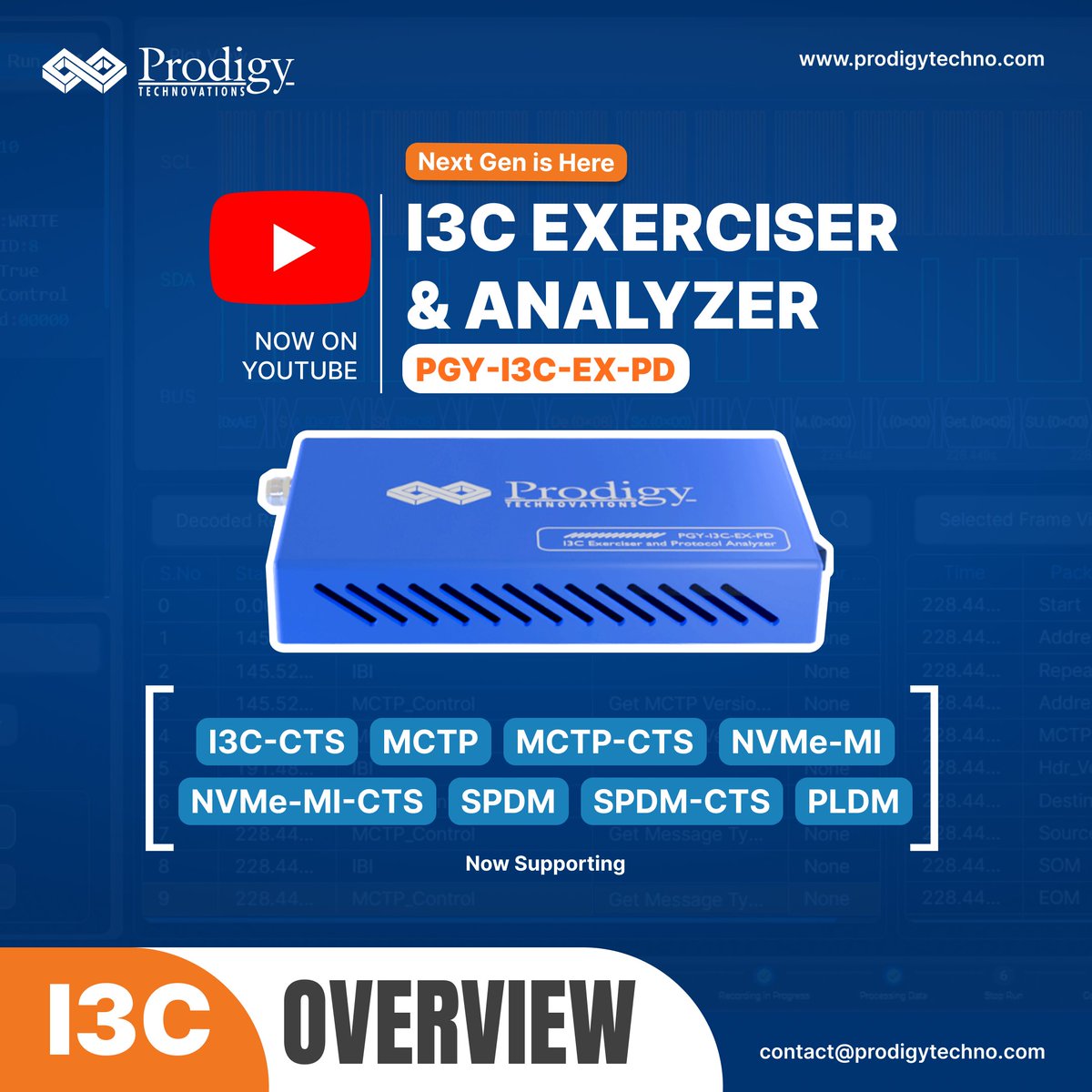
Debugging low-speed protocols like I3C doesn’t have to be trial and error. This video shows a smarter way to approach protocol-level issues, faster visibility, quicker root cause, and less guesswork.
Watch here: youtube.com/watch?v=XAsznLXl…
#EmbeddedSystems #Debugging
6
Only 13 days left ⏳
Join our webinar on I2C, SPI & UART validation covering electrical & protocol-level analysis for real-world debugging.
📅 Mar 31
👉 prodigytechno.com/webinar-i2…
#EmbeddedSystems #I2C #SPI #UART
104
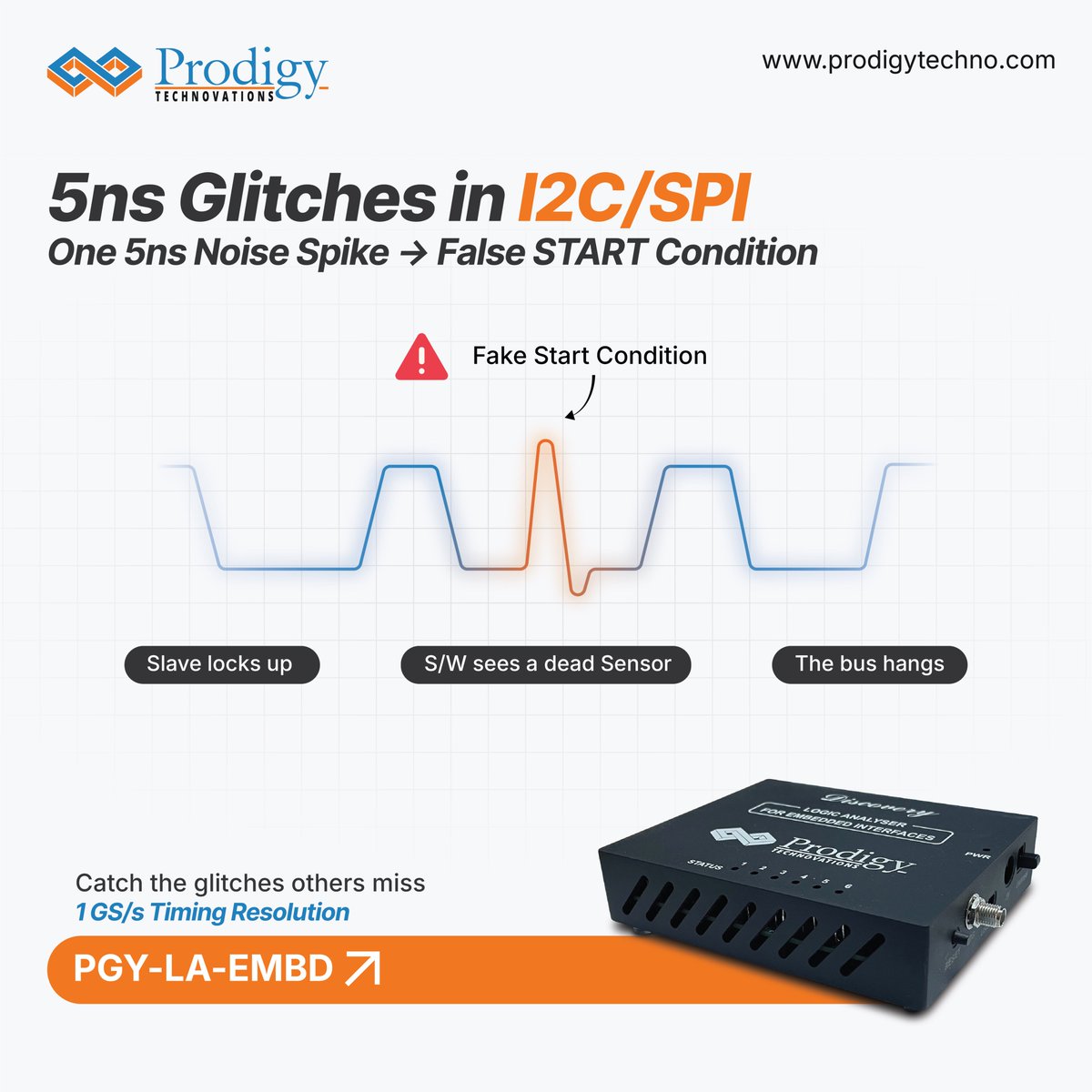
Why obsess over 5ns glitches in “simple” I2C/SPI?
Failures don’t come from PCIe/5G, they come from tiny noise spikes.
A 5ns glitch can fake a START, hang a slave, and deadlock the bus.
Debug the signal, not just the protocol.
#EmbeddedSystems
21
Bulk Writes can break your Cloud SLAs.
Without proper NVMe command arbitration, large writes can starve high-priority metadata queues, causing latency spikes customers will notice.
Cloud performance = deterministic latency, not just throughput.
#NVMe #PCIeGen5 #DataCenter
8
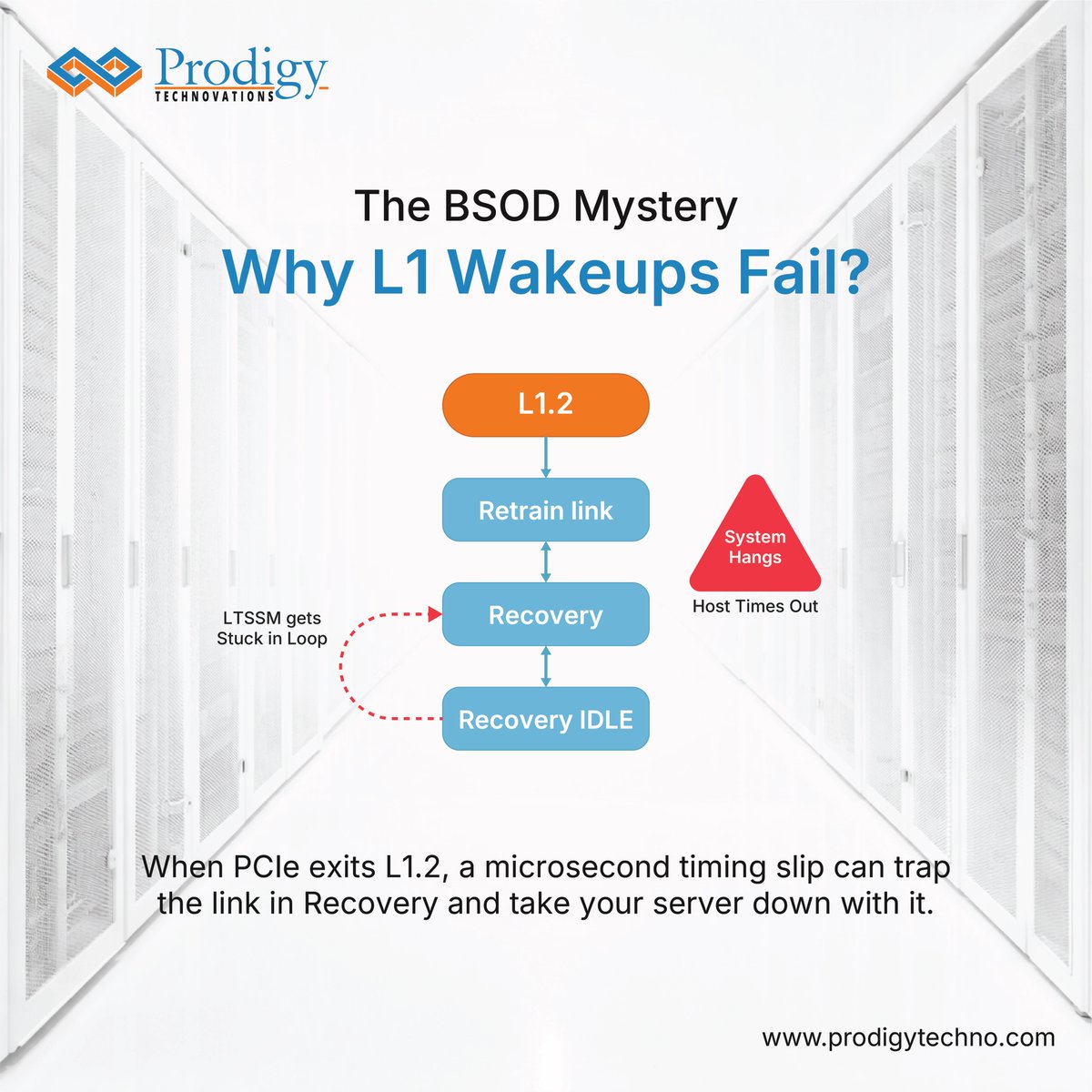
“Sleep” → Server Crash?
L1.2 saves power, but wakeup can fail:
• LTSSM stuck in Recovery
• CLKREQ# / REFCLK timing mismatch
• No L0 → NVMe hang → BSOD
Power bugs live in sideband timing.
#PCIeGen5 #NVMe #DataCenter #BSOD
12
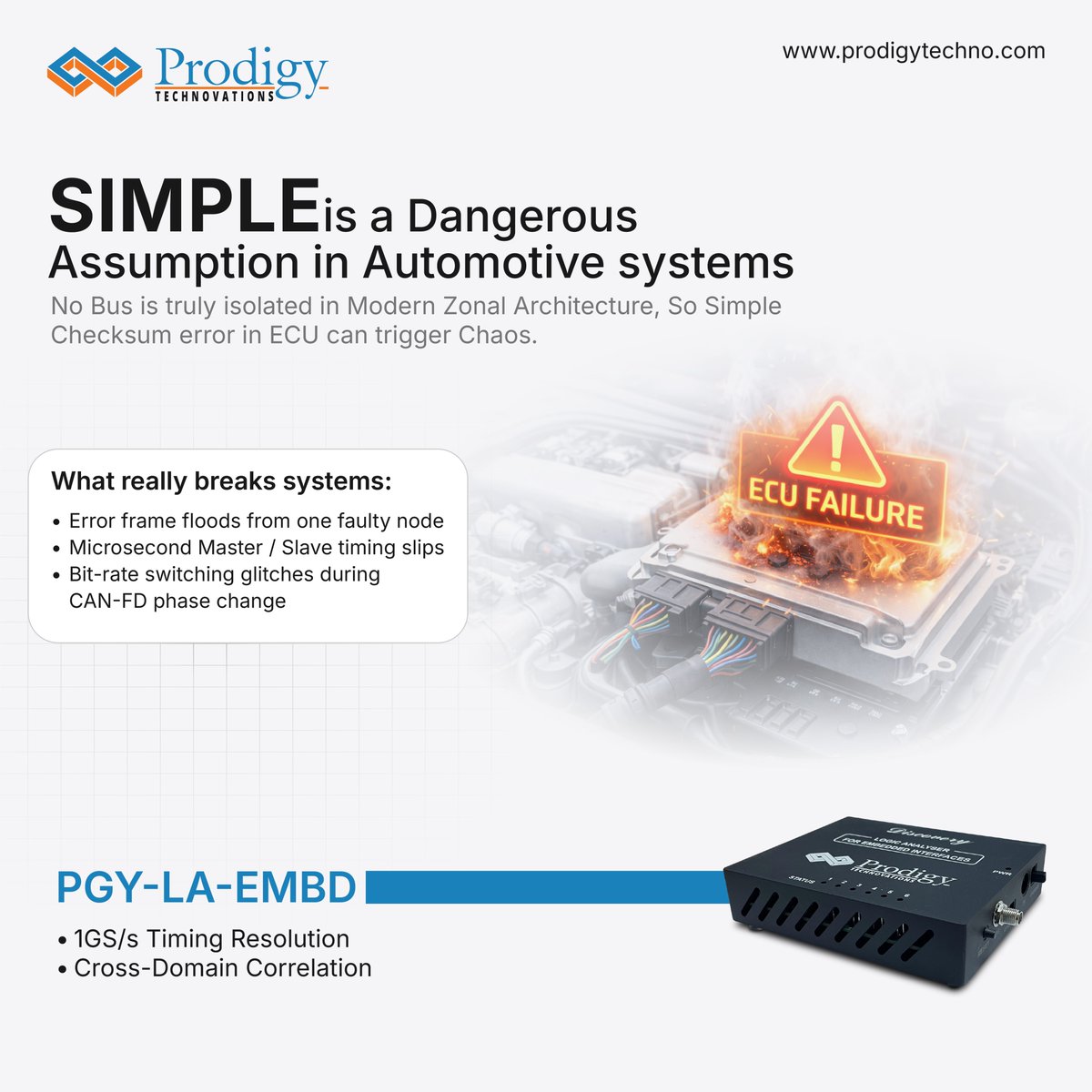
In automotive, “simple” kills.
Many crashes start in CAN-FD/LIN not Ethernet.
A tiny checksum error can cause:
• Error frame floods
• Master timeouts
• BRS glitches from ns noise
Logs show the crash.
Not the cause.
See protocol physical layer together.
#AutomotiveEngineering
4
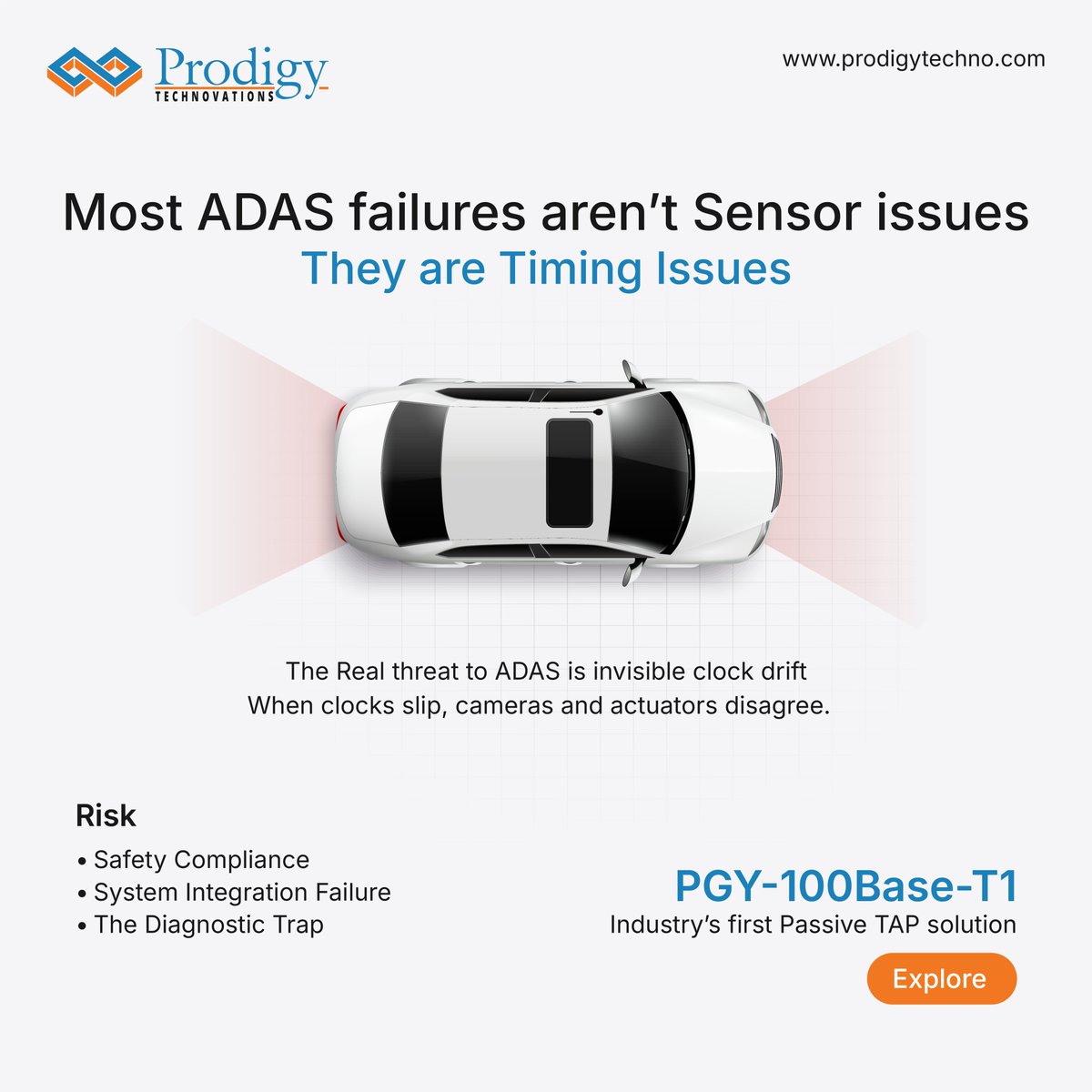
Most ADAS failures aren’t bad sensors; they’re bad clocks.
Microsecond PTP sync between ECUs is critical. Clock drift breaks sensor fusion, risks ISO 26262 compliance, and causes A/V desync.
Active taps add latency. Passive TAP = zero latency, true timing visibility.
#ADAS
9
SLC cache boosts speed.
Flushing it tests real engineering.
When full, background flushes can trigger latency spikes & long-term slowdowns, benchmarks won’t show it.
Read: prodigytechno.com/blog/why-i…
#Storage #FlashMemory #UFS #eMMC #EmbeddedSystems

62
Real storage maturity isn’t about the latest spec.
It’s about surviving every transition from eMMC to UFS 4.1 without surprises.
Speed is easy.
Legacy behaviour, UniPro states, and MCQ/HPB complexity aren’t.
#UFS4

11
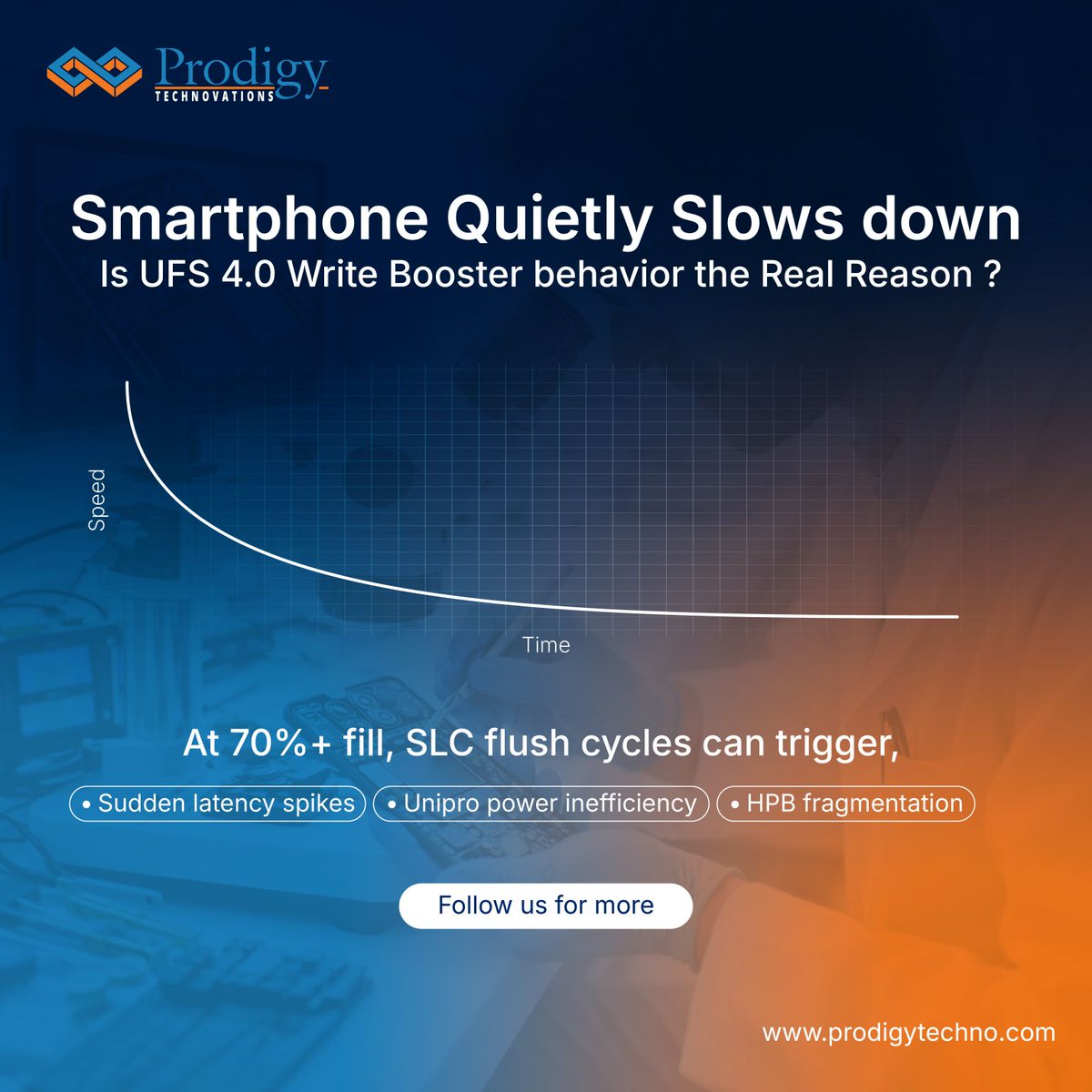
Phones don’t slow down because of CPUs; they decay because of storage behaviour.
UFS 4.0 Write Booster wins Day-1 benchmarks, but later causes:
• Latency spikes
• App lag
• Battery drain
Predictability > peak speed.
#UFS4 #WriteBooster #StorageValidation
30