
38 Photos and videos











Jun 15
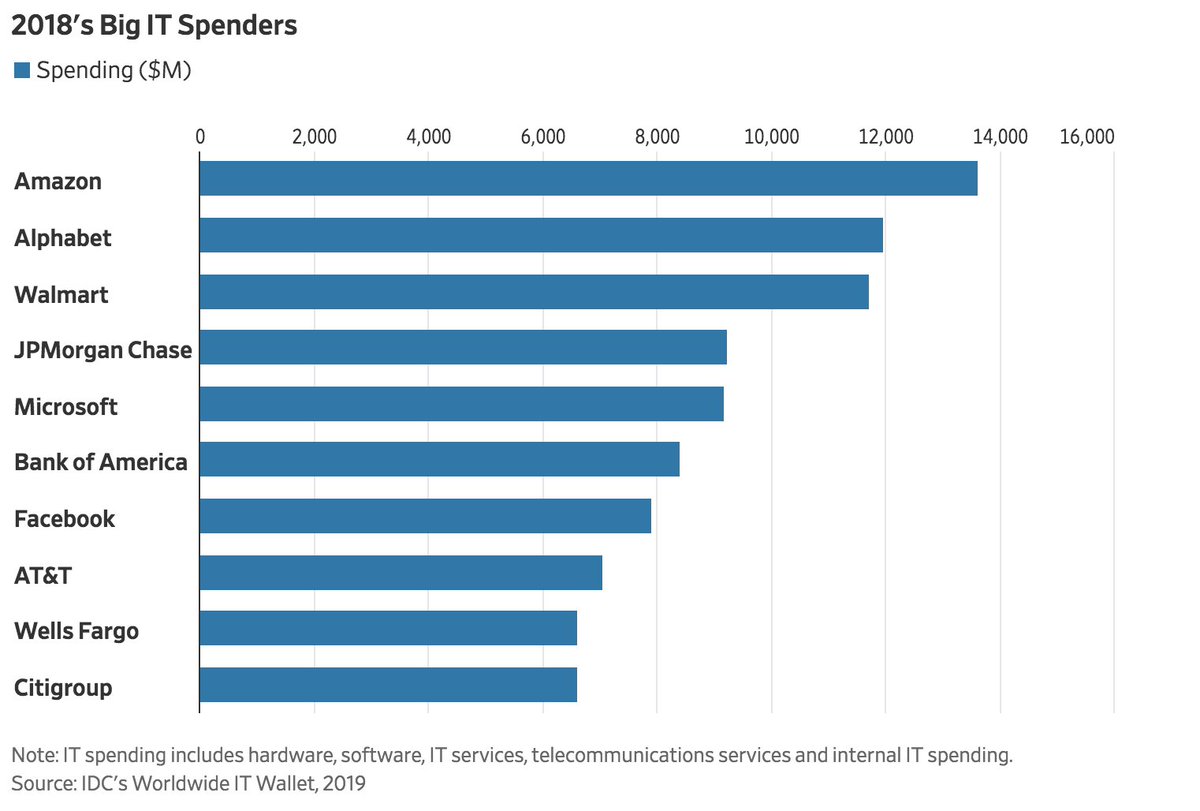
100% the future ahead. Custom for mission-critical functions. Package tech for enabling functions. Will be a time of great innovation and productivity.
Jun 15

We are headed towards a future where custom built in house AI tools will replace the generic frontier models at most companies
This is probably the first of many, and already quietly happening across many large enterprises
15
May 28
Professional Services as humans AI platforms. A new reality that is great for these Firms' clients, for professionals in these Firms, and for the economics of these Firms -- all thanks to AI. Renaissance > Apocalypse.

Kirkland & Ellis, the world's highest-grossing law firm, is setting aside $500M to build its own AI platform rather than rely on tools available to its rivals (Financial Times)
(Visit Techmeme dot com for the link and full context!)
50
May 27
Glad to see CEOs like Matt speaking up about the ridiculousness of junior talent jobs apocalypse. Need more of that, including on high school and university campuses.
May 27

"We think that with AI we can replace all of our Jr developers in our company"
AWS CEO Matt Garman: "That's the dumbest thing I've ever heard"
62
May 17
Yep. The ability to participate in the ecosystem while shaping partnerships in your / your customers interests is a new source of competitive advantage.
May 17

If you are running a consulting business and you are deploying Anthropic or OpenAI directly into your organization (I’m looking at you PwC and Accenture) you are letting the fox into the hen house.
OpenAI and Anthropic are openly funding and starting competitors to you while also using your usage to drive more success for them.
This is not a failure on their part but a failure on your part.
Consulting businesses that understand this are adopting a control plane that allows them to arbitrate where tokens go and who generates tokens for them.
Controlling the tokens is controlling the spice (Dune).
This was a key pillar of 8090’s global partnership with EY and they key feature of our Software Factory. We control token generation and can direct them to any model provider.
We are close to another global partnership and will announce it soon.
These organizations refuse to accept the disruption standing still or, even worse, by adopting and accelerating the companies who want to disrupt them.
91
May 17
A couple years before making Partner, a senior Partner was coaching me on a variety of topics. He concluded, “… and you’re tall and good looking, so that’ll make up for any missteps.” It was jarring to hear in the moment, but I’ll never forget it.
May 17
The biggest source of alpha in career success is looking better and being in shape
Anyone who tells you that looks don’t matter is blatantly lying to your face
Studies have proven, time and time again, that looking better leads to better monetary outcomes

120

May 4
🎯
May 3

Whether it’s existing consulting firms, new ones that emerge, FDEs from agent vendors, or new internal agent engineering roles, the amount of work that is going to be created to implement agents in enterprises will exceed anything we imagine today.
The complexity of implementing agents in any existing organizations is very real. When I talk to large enterprises, as you move from a chat paradigm to agents that participate in meaningful workflows, there are a number of things they need to do.
First, you have to get agents to be able to talk to your data securely across your systems. In many cases, enterprises have decades of legacy infrastructure that contain the valuable context for AI agents. That’s going to take a ton of work to go modernize and move to systems that work well with agents.
Then, you need to ensure that you’ve implemented agents with the right access controls and entitlements, the right scopes to be safely used, and have ways of monitoring, logging, and securing the work that they do.
Next, you need to actually document the processes in the organization in a way that agents can utilize for doing the work. You also need to figure out what the new workflow looks like when agents and people are working together on a process, and who steps in where. Just replicating the old workflow will mute the gains. Oh and you likely need to create evals for your top new end-state processes.
Finally, you have to keep up with a rapidly changing set of best practices and architectural shifts happening in the agent space. While it’s fun for people to change their personal productivity tools on a dime, it’s 100X harder to do this in a business process. The speed of change is a blessing and a curse right now for anyone trying to keep a stable system design.
All of this means that individuals and companies that develop expertise on the above set of components (and more) are going to be needed to help organizations actually implement agents at scale. This is also the rationale for vertical AI agents right now that can go in deep on a business domain and help bring automation to it.
This is a huge opportunity right now whether you’re doing this internally or as an external business provider.
60
May 2
This exactly why I’m so confident and bullish about the consulting profession into the future. A great time to be innovating and leading.
May 2

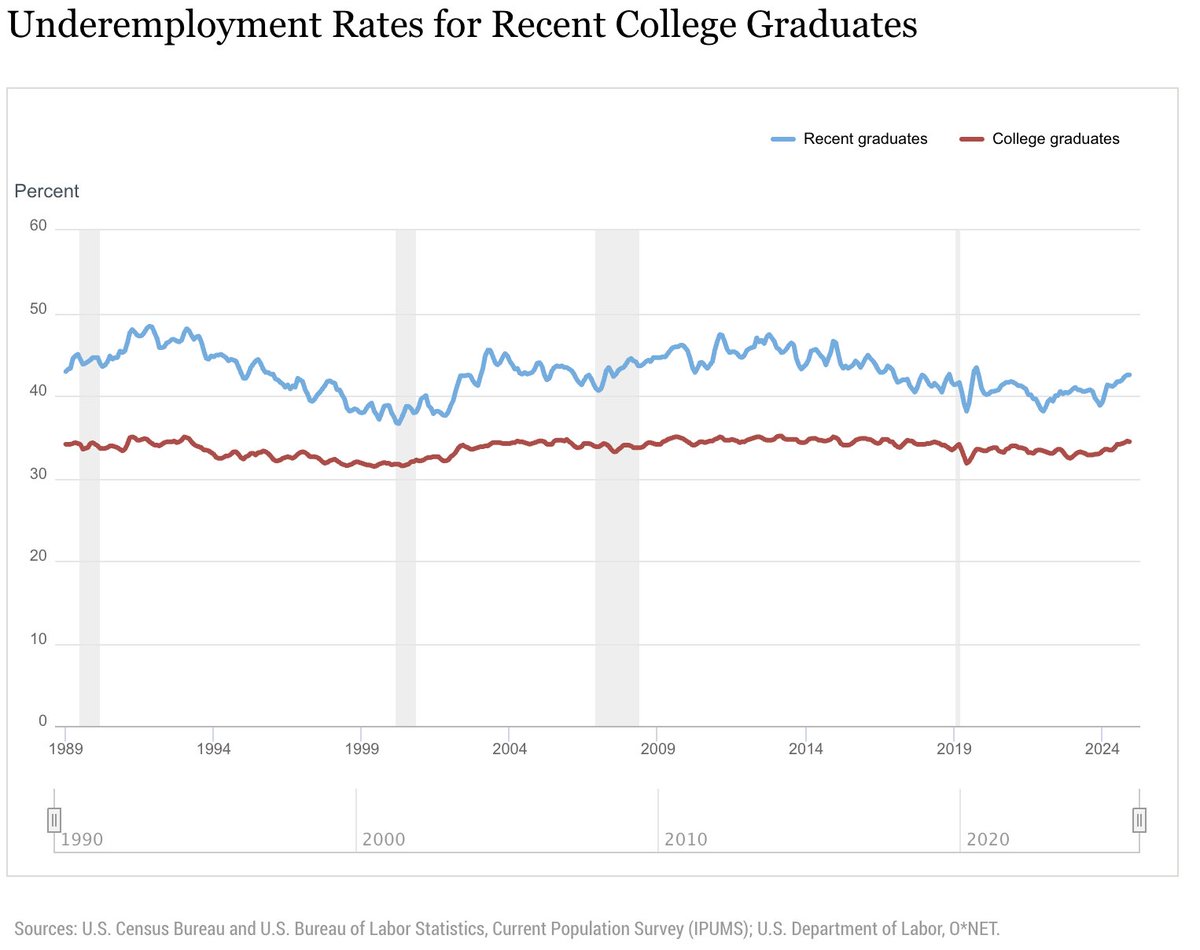
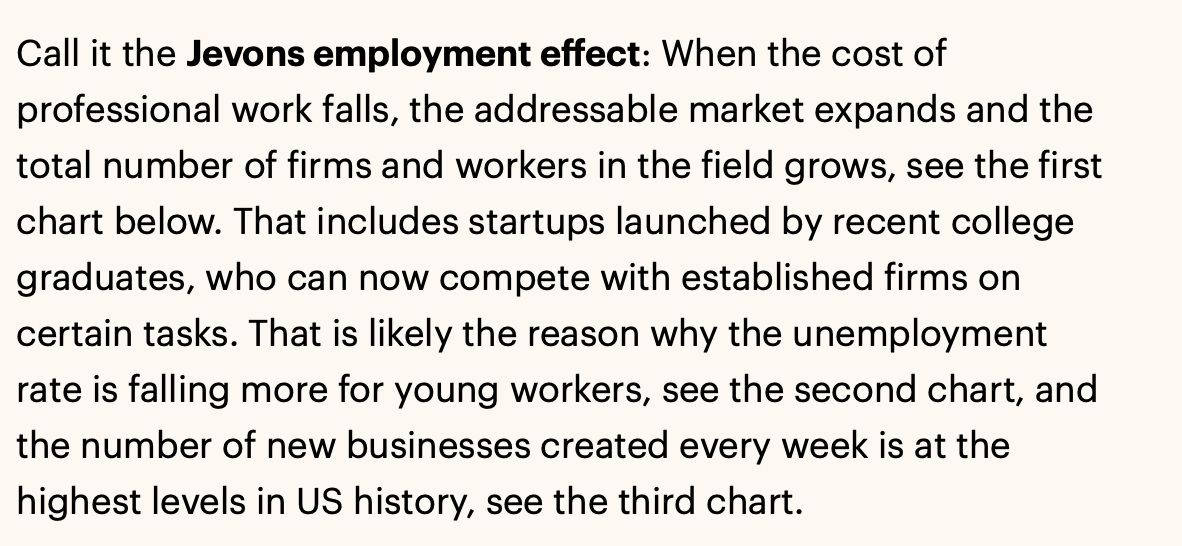
The Jevons Employment Effect From AI apollo.com/wealth/the-daily-… // While AI might make it seem like professional services (law, consulting, finance) get easily replaced, the opposite is happening already including recent graduates. (charts)
44
Apr 25
This. AI the great job creator.
Apr 24

I have changed my mind on how AI will impact jobs in America.
Previously, I believed AI would replace many entry level roles typically filled by young employees. The technology would then work its way up the organization and eventually reduce the total number of jobs in a company.
The data is saying something different, so when I get new information I am willing to change my mind.
The number of software engineers being hired has been increasing. The number of open software engineer roles is growing.
The number of new college grads who get hired has increased 5.6% over the last 12 months. The unemployment level for people aged 20-24 years old who have a college degree has fallen from nearly 9% to almost 5% as well.
The Wall Street Journal recently wrote “AI created 640,000 jobs between 2023 and 2025 in the U.S., according to an analysis by LinkedIn of job posting data, including new white-collar positions such as Head of AI and AI engineer.”
And I am starting to see companies throughout our portfolio aggressively hiring to keep up with the demand for their products and services.
If AI can make employees more productive, which is widely accepted as fact, then companies are going to want as many productive units of labor as possible. This is a key reason why I am changing my mind.
AI appears to be a magical technology that will make companies more productive and more profitable. The net result will be more corporations, more startups, and more jobs.
All three are big, positive wins for the American economy.
27
Apr 22
AI is incredible. While it will create unforeseen opportunity, it will also follow well understood technology diffusion and productivity patterns. A great time to be in the playing field.
Apr 22
If you read this and don’t understand why it’s happening it’s an opportunity to reset your understanding of how the real world works.
The real world will need a ton of help actually getting agents going in the enterprise. Companies have legacy tech stacks they need to modernize, data in tons of fragmented tools, knowledge that isn’t captured or digitized, and change management needed to actually utilize agents effectively. And they have to do all this while still running their business day-to-day, unlike startups.
This is why there is so much opportunity for companies (software or services) to actually deploy agents in specific domains and workflows. This remains a big opportunity for both existing services providers but also tons of new startups as well. Every new technology wave produces a new era of consulting firms that can deliver on that technology.
It’s also why the FDE model is going to be alive and well for a long time because companies will want to have their vendor actually help drive the change management and implementation for their new workflows.
The people aren’t going away. Far from it.
39
Rich Nanda retweeted

Apr 19
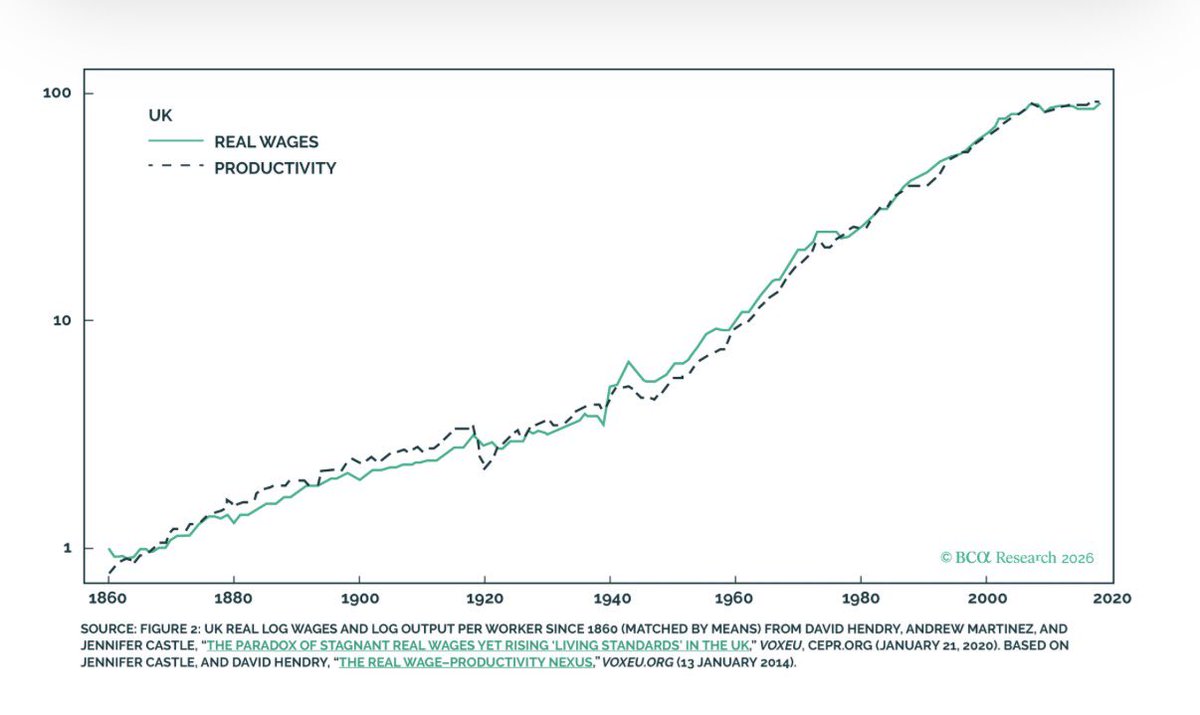
I think AI economic doomers don’t realize just how strong a “this time is different” argument they are making.
47
41
560
188,708
Apr 18
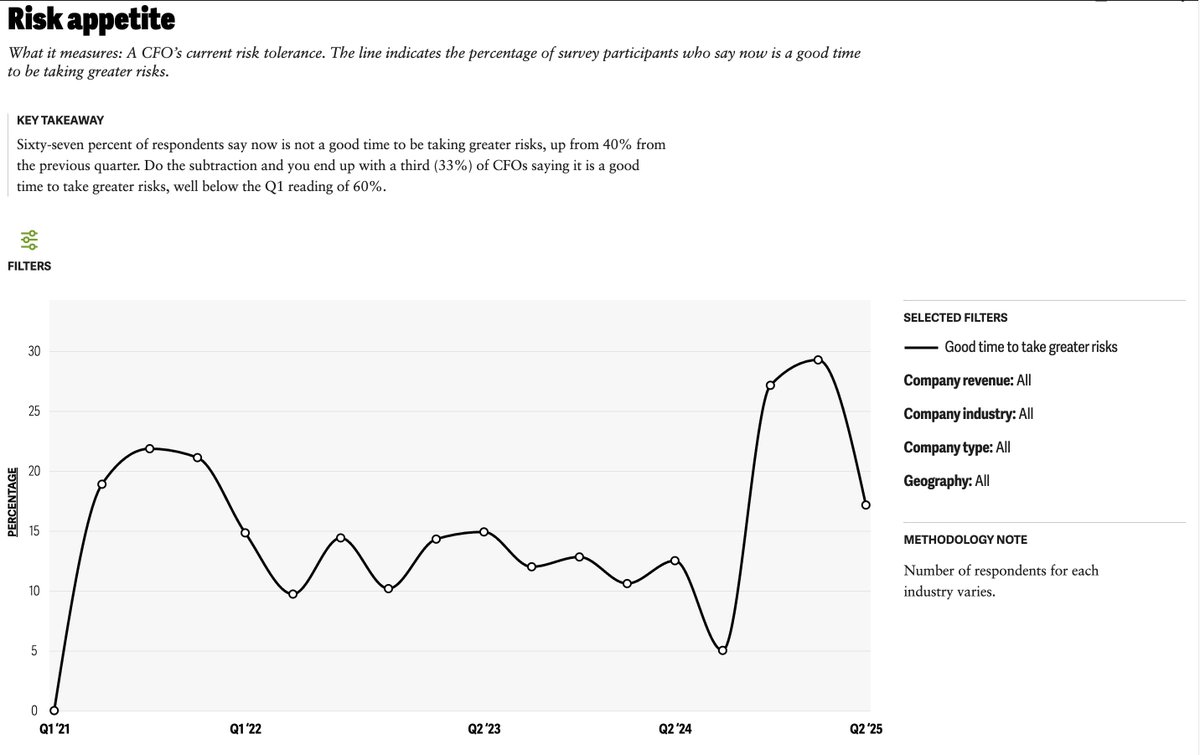
The cost of early (and often inefficient) innovation. Enterprises and their employees will get better and better with AI and business results will follow. As market results drive growth and performance, budgets for human and token intelligence will grow. But this is the jagged early innings.
Apr 17

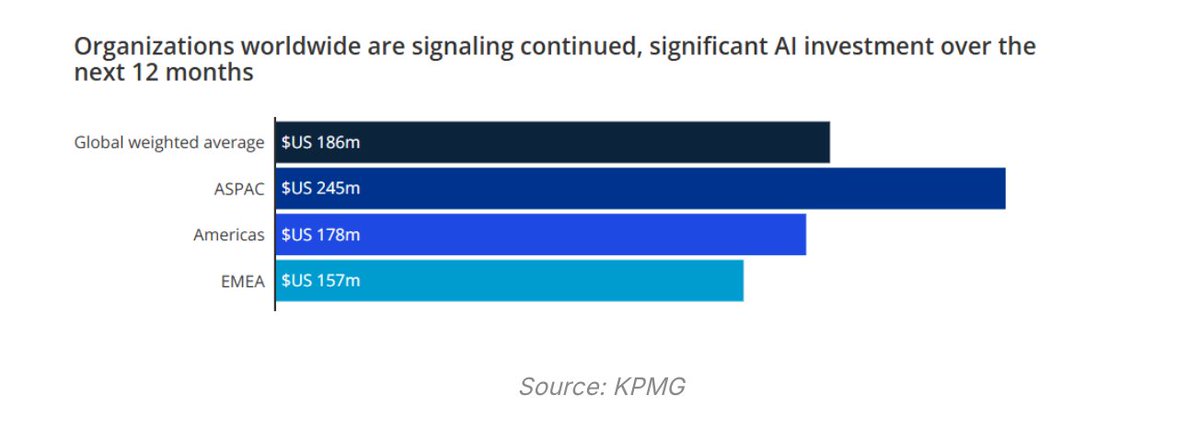
🦔Goldman Sachs reports that companies are blowing past their AI inference budgets by orders of magnitude, with inference costs in engineering now approaching 10% of total headcount costs and potentially reaching parity with salaries within several quarters. KPMG surveyed 2,100 senior leaders and found US companies plan to spend an average of $178 million on AI over the next 12 months, with Asia-Pacific firms budgeting $245 million and EMEA $157 million. The two reports together show companies are spending more than planned and intend to spend even more.
My Take
Inference costs approaching headcount parity is an extraordinary number that most finance teams did not model when they approved their AI strategies twelve months ago. The compute crunch, electrical component shortages, and GPU spot prices up 48% in two months are all flowing into corporate operating costs faster than anyone budgeted for, and Goldman's trajectory suggests it accelerates from here.
What I find hard to reconcile is that $178 million average sitting alongside enterprise data showing eight in ten workers are either avoiding AI tools or not using them at all. Companies are committing to nine-figure inference budgets while their own employees aren't using what's already been deployed.
I've watched this dynamic build all year and my honest read is that a significant portion of this spending is driven by competitive fear rather than demonstrated returns. Nobody wants to be the company that didn't invest in AI when everyone else did. That's how bubbles get funded, and at some point boards are going to demand a number that justifies it.
Hedgie🤗
1
47
Apr 18
This is not how it’s going to play out. AI will create more jobs not destroy them. Anthropic is a good, perhaps great, company. Dario is wrong and a horrible spokesperson.

Anthropic CEO Dario Amodei: “50% of all tech jobs, entry-level lawyers, consultants, and finance professionals will be completely wiped out within 1–5 years.”
63
Apr 18
Exactly the case. AI is a job multiplier.
Apr 18
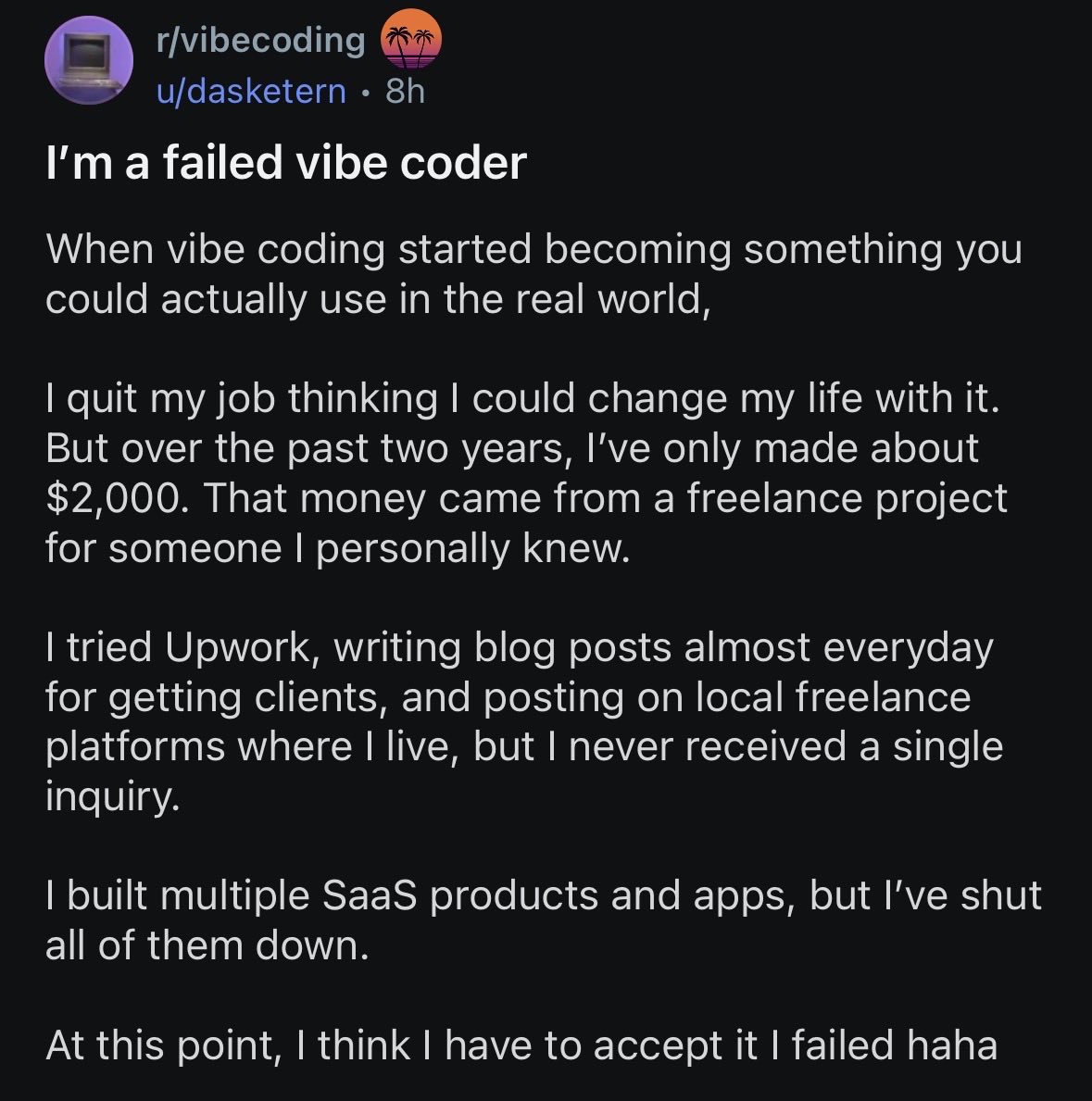
People are waking up to the fact that AI is a complementary tool for your skill set, and not a complete replacement for a skill
If you are already a good coder or writer, AI tools can enhance that skill and make you more productive
But if you bad at it, AI is not going to magically solve your deficiency
This is the primary reason why I think the fears around AI replacement of labor are overblown
1
39
Rich Nanda retweeted

Apr 18
People are waking up to the fact that AI is a complementary tool for your skill set, and not a complete replacement for a skill
If you are already a good coder or writer, AI tools can enhance that skill and make you more productive
But if you bad at it, AI is not going to magically solve your deficiency
This is the primary reason why I think the fears around AI replacement of labor are overblown
58
40
573
40,989
Apr 7
Jevons Paradox again and again.
Apr 7

There's kind of an analogy with what spreadsheets did with a lot of quantitative work. For example, it used to be that it was a chore to run different school aid formulas in our office. Now that you can do it effortlessly, you're just expected to do far more analyses.
1
19
Rich Nanda retweeted

Fro @stlouisfed: "Industries with higher AI adoption have experienced faster productivity growth, both in Europe and the U.S. As of now, we do not find evidence that AI adoption is associated with job losses at the industry level."

1
4
12
7,808
Mar 25
Can't come up with a better list. And then you have to add AI model company "jobspocaplyspe rhetoric" as fuel to the fire -- serves their purposes but doesn't square with the reality of the 4-5 scenarios outlined by @rodriscoll
Mar 24

AI has become the justification for every layoff. It's the perfect excuse card, but there is a lot of spin involved. Every layoff is some combo of the following five very different AI stories.
1. Nothing changed, we just realized we have too many people. We are going to blame AI, but we are bullshitting. This is the AI as an excuse; it was really sloppy hiring, and we are just blaming AI. (See Block)
2. Growth has gone away so now we have too many people. This may be because of AI if you are a SaaS company. All the customer love is now going to AI. But it's less AI as a productivity lift, and more about you just building a less ambitious growth company. (See Salesforce and most every SaaS company)
3. We spent our money on capex to build AI so now we can’t afford as many people. Management may say it’s about AI making us productive (4 below) but my gut is a lot of it is about Nvidia getting our money so now there is none for you. (See Meta and Oracle)
4 We are really using AI the way god intended us to. We don't need as many people. This is the ONLY version of the story that is actually about a productivity increase. It's real, it's happening, but I wonder if it is even the majority of the layoffs. (See some software engineering departments right now)
@jasonlk raised a fifth reason that doesn't get talked about enough: we just have the wrong people. Maybe we don't need 20 engineers who all know C , but rather eight who have strong AI skills. This I think should be happening everywhere.
Every time a layoff announcement comes out, I try and mentally categorize per the above.
41
Mar 24
#33 gets it.
Mar 24

AGI isn’t scary. Being late is.
29
Rich Nanda retweeted

Mar 19
My latest conversation with the always incredible @benedictevans: OpenAI’s moat problem, the rise of ephemeral and improvised sofware, OpenClaw & agents.
00:00 Intro
01:06 OpenAI's Focus Shift
03:12 ChatGPT usage: a "mile wide, inch deep"
09:03 Why better models do not solve the real problem
13:58 Why AI product teams are strategy takers, not strategy setters
15:38 Do agents help create defensibility?
20:06 OpenClaw and the "Desktop Linux" moment for AI
25:52 Why "everyone will build their own software" is completely wrong
28:09 Improvised software vs. institutionalized software
29:23 Why there will be more software, not less
36:15 Are we heading toward value destruction before value creation?
38:03 Circular revenue, leverage, and AI bubble dynamics
38:53 Big Tech's Trillion-Dollar CapEx Crisis & Financial Gravity
45:23 Why AI job exposure charts can be misleading
52:15 How Fortune 500 Execs are actually deploying AI today
56:45 The White Space: What this means for founders and investors
19
32
251
36,607