
Analytics and AI professional | Forward Deployed Executive (FDX) | tweets are my own
Joined November 2011
- Tweets 969
- Following 1,737
- Followers 289
- Likes 3,902
33 Photos and videos














Services are the future. Today we launched Ramp’s AI services motion.
It's easy to buy an AI subscription. It's hard to transform your company to actually run on agents.
Here’s our entire strategy.
1) Why now
Services are the new software (Sequoia)
Human labor TAM >> software license TAM. The market is bearish on seats and subscriptions.
Every enterprise AI company is doing this -- the labs have poured billions into services partnerships and their own deployment functions. Superintelligent models alone are not enough.
Palantir proved this is a strong business model: deeply embed engineers, build on top of a powerful platform, and customize extensively.
2) The real problem
Companies want AI. But the gap between "we have AI tools" and "agents run our workflows and we spend way less time" is enormous.
What we've found across over 50 companies we engaged with: agents start replacing real work when there is: complete data, read/write access across systems, agent-friendly policies. Most big companies struggle because:
- processes live in operators' heads
- dozens of disconnected systems (legacy ERPs, endless one-off excel sheets, etc.)
- archaic software with poor or no API access
Good data in the right place is a hard prereq to working agents.
Also, vibing in localhost ≠ a production system your enterprise can rely on. You still need hosting, ci/cd, observability, feedback loops, good interfaces. And taste to know what's even worth automating.
Everyone has a bulldozer, but most jobs just need a shovel pointed at the right spot.
What companies usually need is to be made agent-friendly. That's exactly what we do.
3) What we do
We focus on what Ramp does best -- finance.
And we embed FDEs that:
-> understand your problems
-> identify high-leverage, high-impact workflows that fit agents
-> scope the solution
-> connect your data
-> capture your context
-> deploy agents and often bespoke software for humans to collaborate with them
-> drive the business metrics that matter
Discovery and scoping are crucial. Building is easier than ever and thus judgement about what to build is more important than ever.
We're not a generic AI services arm, we're finance domain experts. Across the spectrum of financial operations, we help companies find and frame the problems worth automating -- similar to the taste a founder has in choosing which problems are worth solving (ex-founders make great FDEs).
Here’s the stack we deliver:
- Production infrastructure. Shipping an index.html from Claude isn't the same as creating a repo, hosting in a cloud service, ci/cd, testing, setting up evals, managing memories and skills, adding feedback loops, ensuring uptime, incident management, etc. Agents don't one-shot production systems yet. Production software is hard -- we build, host, and run it for you in a single-tenant, dedicated cloud environment. Most operators don’t have the time, knowledge, or experience to do this e2e. We help abstract the low-leverage plumbing so they can focus on the essential parts of their jobs.
- Data connectivity. Most enterprises have data lakes, but data is often incorrect, stale, or entirely missing. And write interfaces vary dramatically. Ideally we can use MCPs or CLIs, but usually it’s poorly documented APIs, SFTP, manual uploads, and email.
- A context layer. Things people have done for years aren't written down, so an agent can't do them until we capture that context -- ranging from simple policies to complex decisions. This usually involves creating policy documents, shared agent memories, and skills.
- Evals and feedback loops. How you know an agent is doing a good job, and how it improves over time.
4) Why Ramp AI Solutions
We focus on finance because it’s the vertical we know deeply, have structural advantages, and are most differentiated:
- Data. 70k customers use our core product, over $200B in annual payments, years of vendor data, millions of transactions and bills monthly.
- Money-movement primitives and partnerships. Global money movement rails, partnerships with banks, Visa, Stripe, etc. You don’t want to vibecode international wires for bill payments.
- An intelligence layer on top: fraud detection from hundreds of millions of expenses, PO-to-invoice matching, state-of-the-art OCR, and fine-tuned models for accounting coding, spend routing, policy review, etc.
Unlike the labs, we’re not incentivized to sell tokens.
Ramp is an AI fiduciary and an impartial broker to deliver AI that is:
- model-agnostic -- we benchmark all the leading models (labs, open source) and fit the right one to each task
- and token-efficient by design
Our main incentive is business outcomes -- which is Ramp’s mission, to save our customers time and money.
I’m extremely bullish about our motion, and the broad industry growth of AI-native services.
If you're a finance leader trying to be more agent-native,
If you’re interested in joining our FDE team,
I’d love to talk 🙂

57
45
547
156,687

6
121
859
147,517
banger
“Count the things you shipped this month that would not exist without AI. If that number is less than five, the problem is not your prompt engineering skills.”

1
21
Kyle | @SelectStarKyle retweeted

May 28
8
13
70
41,536
Kyle | @SelectStarKyle retweeted

May 16
If you’re building a new digital product, strongly consider launching a CLI or MCP for AI agents to use as first class citizens.
AI agents will be the #1 users on the internet.
105
34
335
72,537
Kyle | @SelectStarKyle retweeted

May 14
32
50
355
486,648
Kyle | @SelectStarKyle retweeted

May 14
Claude's first day at Dunder Mifflin
443
2,115
31,873
13,439,021

Kyle | @SelectStarKyle retweeted

May 13
codex is the best AI coding product and we want to make it easy to try.
for the next 30 days, we are giving companies that want to try switching over two months of free codex usage.
1,831
884
21,318
2,338,455
Kyle | @SelectStarKyle retweeted

May 13
Joined a new AI-native company this week and it’s kind of wild how different it feels already.
The laptop arrived, I logged in, and an agent basically took over from there. It set up my dev env, pulled repos, fixed dependency issues, got permissions approved, pointed me at the backlog, linked the architecture docs, and surfaced the Slack debates I actually needed to read before touching production.
When I needed context on something, I asked the agent and it found the exact thread from months ago explaining why a decision was made, who owned it, the related Linear issues, and the PRs connected to it.
I’ve only been here 3 days but it honestly feels like I’ve worked here for a year because the usual friction and scavenger hunt for context just isn’t there anymore.
We should probably stop calling this “onboarding” and rename it to “mounting” because this feels a lot more like mounting a distributed filesystem called “institutional memory” than slowly getting drip-fed context over 6 months.
276
409
6,263
1,022,453
Kyle | @SelectStarKyle retweeted

May 11
This is crazy. The hacker installed a dead-man's switch that will wipe your computer if you revoke the GitHub token they stole from you. Revoking the token is what triggers the wipe.

May 11

SECURITY ADVISORY — TanStack npm packages
A supply-chain compromise affecting 42 @tanstack/* packages (84 versions total) was published to npm earlier today at approximately 19:20 and 19:26 UTC. Two malicious versions per package.
Status: ACTIVE — packages are deprecated, npm security engaged, publish path being shut down.
Severity: HIGH — payload exfiltrates AWS, GCP, Kubernetes, and Vault credentials, GitHub tokens, .npmrc contents, and SSH keys.
If you installed any @tanstack/* package between 19:20 and 19:30 UTC today, treat the host as potentially compromised:
• Rotate cloud, GitHub, and SSH credentials immediately
• Audit cloud audit logs for the last several hours
• Pin to a prior known-good version and reinstall from a clean lockfile
Detection — the malicious manifest contains:
"optionalDependencies": {
"@tanstack/setup": "github:tanstack/router#79ac49ee..."
}
Any version with this entry is compromised. The payload is delivered via a git-resolved optionalDependency whose prepare script runs router_init.js (~2.3 MB, smuggled into each tarball at the package root).
Unpublish is blocked by npm policy for most affected packages due to existing third-party dependents. All 84 versions are being deprecated with a SECURITY warning, and npm security has been engaged to pull tarballs at the registry level.
Full technical breakdown, complete package and version list, and rolling status updates:
github.com/TanStack/router/i…
Credit to the security researcher for responsible disclosure.
145
992
9,501
1,719,629

137
501
3,655
1,481,785
Kyle | @SelectStarKyle retweeted

61
1,179
6,172
4,548,041
Kyle | @SelectStarKyle retweeted

May 7
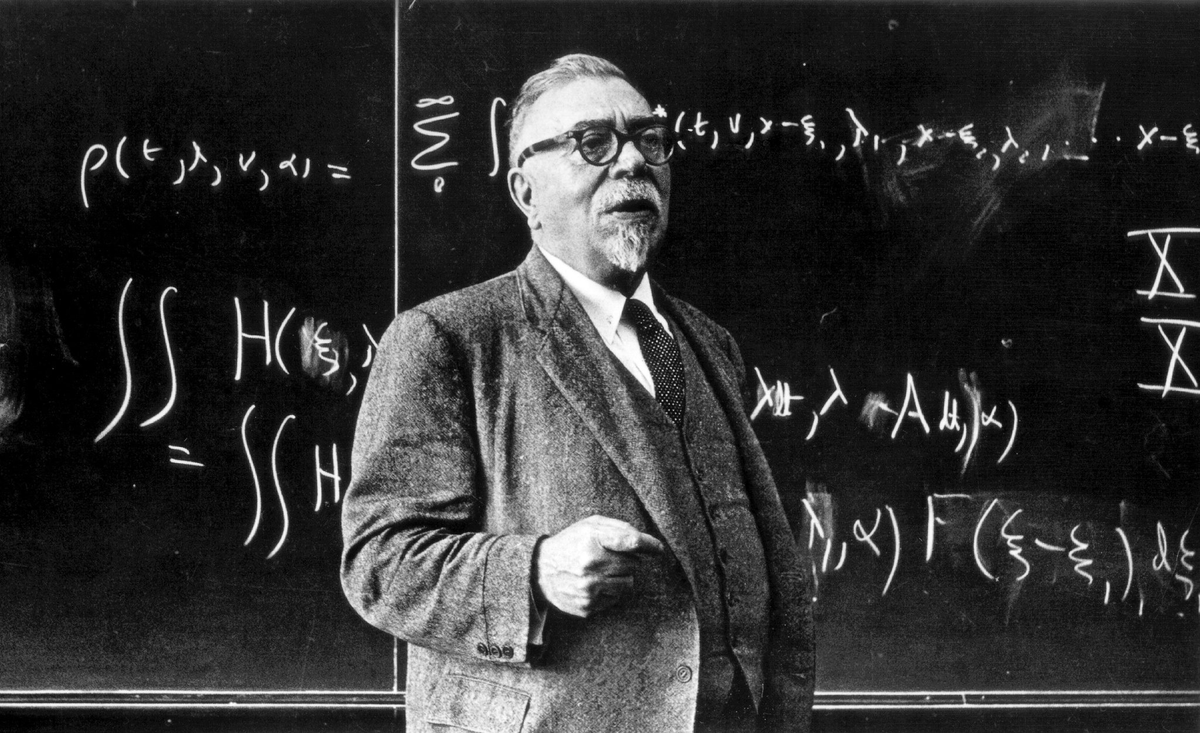
An MIT mathematician sat down in 1950 and wrote a small, non-technical book aimed at the general public. He was not predicting the future. He was warning them. He said machines would eventually replace human work, optimize ruthlessly for the wrong goals, and quietly turn human beings into components inside systems they did not control.
Almost nobody listened. 75 years later, every warning he made has come true.
His name was Norbert Wiener. The book is called "The Human Use of Human Beings."
The textbook story of AI ethics says the field began in the 2010s, when Stuart Russell, Nick Bostrom, and a small group of researchers started writing about the dangers of intelligent machines. That story is wrong. The first serious book about the ethics of AI was published in 1950, by a man who had personally invented the science that AI would eventually be built on, and who saw exactly what was coming with a clarity nobody else managed to match for the next 70 years.
Here is the story almost nobody tells you.
Norbert Wiener was a child prodigy. He graduated from Harvard at 14. He had a PhD in mathematics by 17. He became an MIT professor before he turned 30. During World War II he was assigned to work on anti-aircraft fire control systems. The problem was simple and impossible. How do you aim a gun at a fast-moving plane that will not be where it is by the time the shell arrives.
His answer turned into a new science. He called it cybernetics, from the Greek word for steersman. In 1948 he published a technical book by that name. Cybernetics was the foundation of modern control theory, robotics, and almost everything that became artificial intelligence. The book was dense. Most readers could not get past the math. The ideas inside it were too important to leave trapped in equations.
So in 1950 Wiener sat down and wrote a second book aimed at ordinary people. No equations. No jargon. Just consequences. He titled it The Human Use of Human Beings. It is barely 200 pages. It is one of the most prescient documents ever written about technology.
The first thing he warned about was automation.
He predicted, in 1950, that machines would replace human work across every industry. Not just factory work. Not just manual labor. Any task that could be reduced to a procedure would eventually be automated. He specifically said white-collar work would not be safe. Bookkeeping. Translation. Drafting. Calculation. Anything where a human was being paid to follow a defined process would eventually be done by a machine for a fraction of the cost.
He was not celebrating this. He was warning about it. He said the social consequences would be enormous, that entire industries would collapse, that the value of human labor itself would be undermined for tasks where humans had been useful for centuries. He wrote this 75 years before ChatGPT made every white-collar professional check their job description twice.
The second thing he warned about was the alignment problem. He did not call it that. The phrase did not exist. But he described it precisely.
He said that machines optimize for the goal you give them. They do not optimize for what you meant. They optimize for what you wrote down. If the goal is poorly specified, the machine will pursue the literal version of it with terrifying efficiency, and the result will be a disaster the builders did not foresee.
He used the metaphor of the magic monkey's paw from a horror story by W.W. Jacobs. A grieving father wishes his dead son alive again. The paw grants the wish. Something climbs back out of the grave that is technically the son. The wish was granted exactly as stated. The outcome is hell.
Modern AI safety researchers use almost the same metaphor 75 years later. They call it specification gaming, reward hacking, mesa-optimization. The names are new. The problem Wiener described in 1950 is exactly the same.
The third thing he warned about was the loss of human agency.
He predicted that humans would gradually surrender their decision-making to systems they did not understand. Not because the systems would force them to. Because the systems would be more convenient, more accurate, and more profitable than human judgment. People would offload their navigation, their reading, their relationships, and eventually their thinking to optimization processes designed by companies whose interests were not aligned with their users.
He said something in 1950 that I cannot stop thinking about. He said the more efficiently a society delegates its decisions to machines, the less able it becomes to make decisions at all. The atrophy is gradual. By the time anyone notices, the capacity to choose is gone, and what remains is people executing decisions that were made for them, by systems they did not build, in service of goals they were never asked about.
Look at modern social media feeds, recommendation algorithms, dating apps, navigation systems, news aggregators, and you are looking at exactly what he described.
The fourth thing he warned about was the easiest one to ignore at the time and the most disturbing now.
He warned that authoritarian regimes would use the new computing technology to track, manipulate, and control populations at a scale never previously possible. Not in the future. Soon. He said the same techniques that made cybernetics useful for guiding missiles would be used to guide societies, and that the small, incremental decisions about what to optimize, who to surveil, and how to feed information back into the system would compound into a kind of soft control that did not need force to function. People would do what the system wanted because the system would shape what they wanted in the first place.
He saw modern surveillance states 75 years before they existed.
The strangest thing about reading the book in 2026 is realizing how few of these problems have been seriously addressed.
Wiener was not anti-technology. He had personally helped build it. He was not nostalgic for a pre-machine age. He was warning that any tool powerful enough to amplify human capability is also powerful enough to amplify human stupidity, greed, and indifference, and that the dangers were not in the machines themselves but in the unwillingness of human institutions to ask hard questions about who the machines were being built for.
He died in 1964. He never lived to see most of his predictions come true. He never used a personal computer. He never followed a hyperlink. He never saw a modern recommendation algorithm.
He just wrote down, in 1950, in plain English, what the world would look like when the technology he had helped invent was built out by people who had not read his warnings.
The book is around 200 pages. It is in print. Used copies are everywhere for under ten dollars. It reads like science fiction in which the author already knows how the story ends.
The first serious book about the ethics of AI was published before there was any AI to be ethical about. Almost nobody who works on the problem today has read it.
The warnings are the same. The author has been dead for 60 years. The book is one click away from anyone who wants to read it.
67
509
1,389
130,542
Kyle | @SelectStarKyle retweeted

May 7
Chinese researchers have developed the best shortest-path algorithm in 41 years!
Dijkstra’s Algorithm has been the undefeated king of the shortest path for over 40 years.
Whether you’re using Google Maps, booking a flight, or routing internet packets, Dijkstra is the engine running in the background.
Since 1984, textbooks have taught that its efficiency was hit by a "sorting barrier."
To find the shortest path, you have to sort the points by distance. And sorting has a mathematical floor you can’t cross.
Until now.
A research team from Tsinghua University just published a paper that shatters the 41-year-old record.
They proved that Dijkstra is not optimal.
By combining the logic of the Bellman-Ford algorithm with a revolutionary "recursive partial ordering" method, they figured out how to find the path without fully sorting the nodes.
The results are a massive shift in theoretical computer science:
- The first deterministic improvement to the Single-Source Shortest Path (SSSP) problem since 1984.
- A new time complexity of $ O(m \log^{2/3} n)$, officially beating the long-standing $ O(m n \log n)$ limit.
- On massive sparse graphs (like the web or global logistics), this means finding the best route significantly faster than previously thought possible.
For four decades, the greatest minds in algorithms believed this limit was absolute.
Last year, even the legendary Robert Tarjan won an award proving Dijkstra was "optimally efficient" at sorting distances.
Tsinghua’s answer? Stop sorting.
The world’s most settled problem is suddenly wide open again.
If we can break a 40-year-old law in basic graph theory, what other "impossible" speed limits are waiting to be crushed?
92
594
4,057
825,173
Kyle | @SelectStarKyle retweeted
May 6
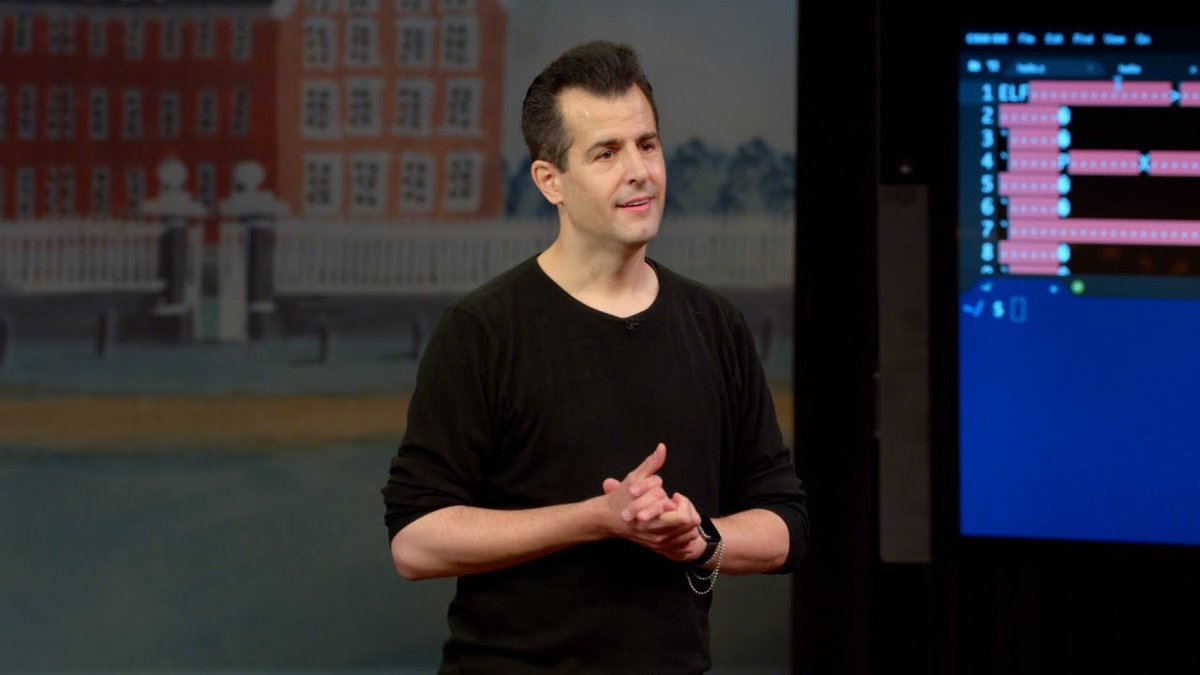
A Harvard professor spent 24 hours preparing every single lecture, filmed all of them, gave them away for free, and quietly made himself the most influential CS teacher in history without charging a dollar for any of it.
I watched the first lecture at 1am and immediately understood why every self-taught engineer I respect has mentioned this man's name.
His name is David Malan. The course is CS50.
Here is the part of the story almost nobody tells you.
In 1996, a 19-year-old Harvard sophomore named David Malan walked into a lecture hall to shop a class called CS50. He was a Government concentrator with a vague interest in constitutional law. He had never written a line of code in his life.
He took the course because a friend dared him to and because the instructor that semester happened to be Brian Kernighan, the man who co-wrote the original textbook on the C programming language.
By the end of his sophomore year, Malan had switched his concentration to computer science. He has said in every interview since that the course did not just teach him to program.
It rewired his entire understanding of what intellectual work could feel like. He used to walk back to his dorm in Mather House on Friday nights actually excited to start the weekly problem set.
Eleven years later, in 2007, Harvard handed him the keys to the same course that had changed his life. Enrollment that semester was 132 students. The course had a reputation on campus for being difficult, dry, and only worth taking if you were already certain you wanted to be a computer scientist.
Most students who had taken it for years described it the same way. They were impressed. They were exhausted. They were not transformed.
Malan kept everything that was rigorous about it. Then he tore down everything that made it inaccessible.
He rewrote every single problem set so that the assignments connected to actual things students cared about. Cryptography became a problem set about decoding real messages. Data structures became a problem set about reconstructing memory from a corrupted image file. Algorithms became a problem set about searching genealogical databases. Same content. Completely different relationship between the student and the work.
He restructured the lecture experience so aggressively that journalists started writing about him as a performer. He shredded a phonebook on stage to demonstrate binary search. He hired a lighting director from the American Repertory Theater. He brought in guest speakers like Mark Zuckerberg.
He opened every single lecture with the same three-word incantation: "This. Is. CS50." And he walked into Sanders Theatre for the first time wearing a black sweater and jeans, looked directly at the audience, and convinced 282 students that semester that they were about to be part of something none of them would ever forget.
Enrollment doubled in his first year. By 2011, the course had over 600 students. By 2014, it was the largest course at Harvard, period. Female enrollment grew by 48% in a single year. Students who had never touched a computer were sitting next to lifelong programmers in the same lecture hall, working on different versions of the same problem set, both of them rewarded for the level they were actually at.
Then Malan made the decision that turned a Harvard course into one of the most consequential education projects of the century.
He made it free.
In 2007, he started recording every lecture and putting them online. In 2012, he launched CS50x as one of the first major courses on the new edX platform. Then he uploaded everything to YouTube. Every lecture. Every problem set. Every walkthrough. Every section. Every short. The entire course that costs Harvard students roughly $80,000 a year to attend in person became available to anyone on Earth with a phone and a working internet connection. For zero dollars.
Over 5.8 million people have now taken it through HarvardX alone. The YouTube lectures have been watched tens of millions of times beyond that. The course is now officially taught at Yale and at the University of Oxford, both of which built their own versions on top of Malan's recorded lectures.
The thing he said in his recent interview that stayed with me the longest was about who actually takes the course now. He gets thank-you notes from prisoners who watch the lectures on smuggled smartphones. He gets emails from a Google employee who started in a non-technical role, took CS50 on the side, taught himself programming through the problem sets, and now builds AI systems that read medical scans for radiologists. He gets messages from teenagers in countries with no functional computer science education who finished the course and got hired as software engineers a year later.
Susan Wojcicki, the late former CEO of YouTube, took CS50 her senior year as a humanities concentrator. She said for the rest of her life that the course changed everything about how she thought. The platform she eventually ran is the same platform that now hosts every lecture of the course she took, available for free, to a billion people who never had to be admitted to Harvard to learn from the same professor she did.
The man teaching does not have tenure. He runs the course on a five-year renewable contract. He is technically a Professor of the Practice, which in academic terms is a slightly lower-status title than the research professorships that dominate the rest of the Harvard faculty. He does not publish papers in volume. He does not run a research lab. His entire job is to teach one introductory course, again and again, to anyone who shows up.
He has been doing it for 19 years.
The most useful thing I have ever heard him say, and the thing that explains why the course works so well, is that he refuses to assume any prior knowledge in the room. He treats the absolute beginner and the experienced programmer with the exact same respect, because his belief is that the only difference between the two of them is when they happened to start. The beginner is not behind. The beginner is simply earlier in the same sequence.
The most expensive university in the world quietly produced the most accessible computer science course on the planet, and the professor running it was once a 19-year-old Government student who did not know what a variable was.
Most people scrolling past CS50 on YouTube right now will never click on it. The ones who do will quietly join a community of millions of self-taught engineers who decided that the credential mattered less than the knowledge.
The classroom door was opened twenty years ago.
Almost nobody walks through it.
17
130
573
38,580
Kyle | @SelectStarKyle retweeted

May 6
AI evaluation startup Braintrust confirms breach, tells every customer to rotate sensitive keys techcrunch.com/2026/05/06/ai…
15
20
190
77,910

Effective today, we are:
1) Doubling Claude Code’s 5-hour rate limits for Pro, Max, and Team plans;
2) Removing the peak hours limit reduction on Claude Code for Pro and Max plans; and
3) Substantially raising our API rate limits for Opus models.
1,244
3,928
44,449
9,111,543
Kyle | @SelectStarKyle retweeted

May 5
30
37
366
133,984
Kyle | @SelectStarKyle retweeted

May 5
Introducing SubQ - a major breakthrough in LLM intelligence.
It is the first model built on a fully sub-quadratic sparse-attention architecture (SSA),
And the first frontier model with a 12 million token context window which is:
- 52x faster than FlashAttention at 1MM tokens
- Less than 5% the cost of Opus
Transformer-based LLMs waste compute by processing every possible relationship between words (standard attention).
Only a small fraction actually matter.
@subquadratic finds and focuses only on the ones that do.
That's nearly 1,000x less compute and a new way for LLMs to scale.
1,489
2,871
22,980
12,820,241