
Asst Prof @UConn, PhD @psupolisci. Research on affective polarization, intergroup relations, state/local politics. Nutmeg State native. 🗽 🗳️ ⚾
Joined September 2018
- Tweets 2,852
- Following 354
- Followers 539
- Likes 7,295
265 Photos and videos

Pinned Tweet

25 Sep 2025
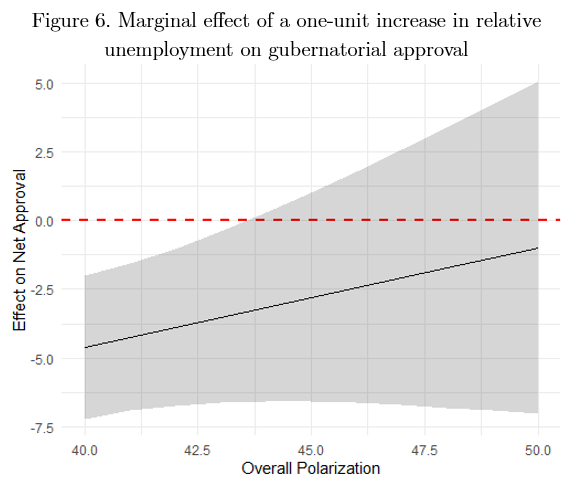
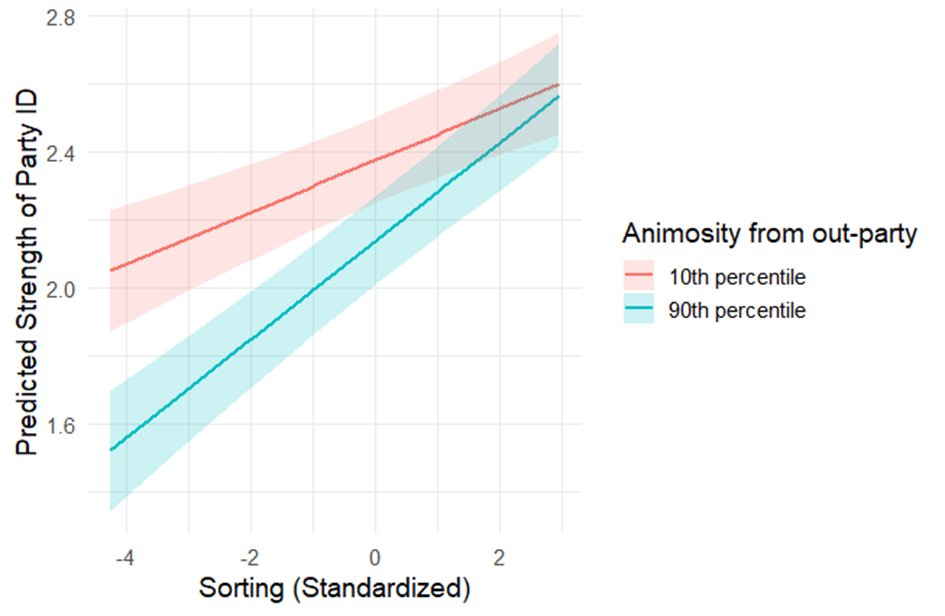
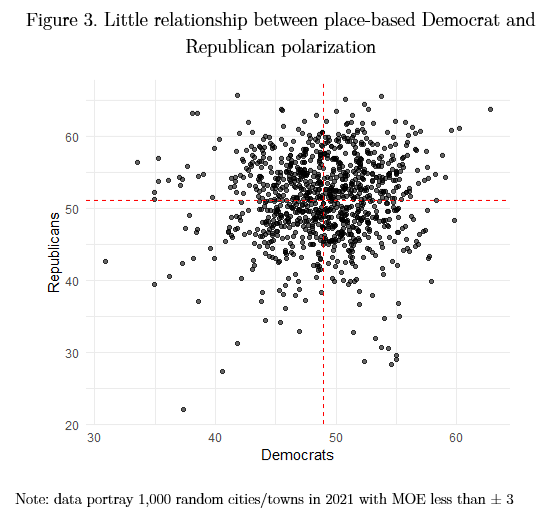
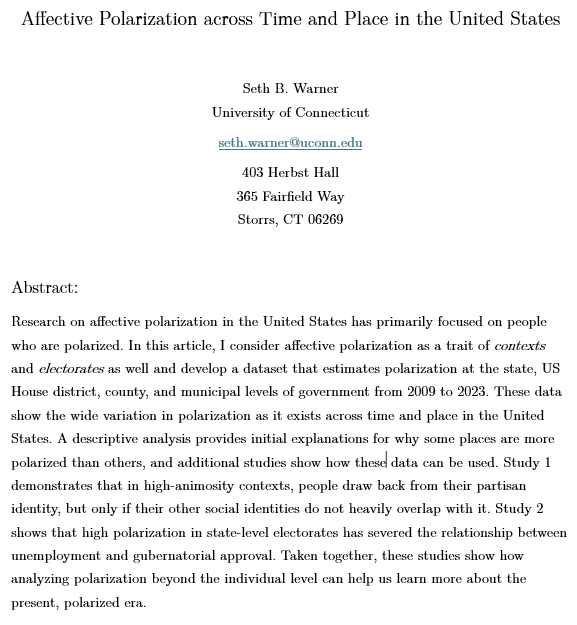
🚨 New working paper! 🚨
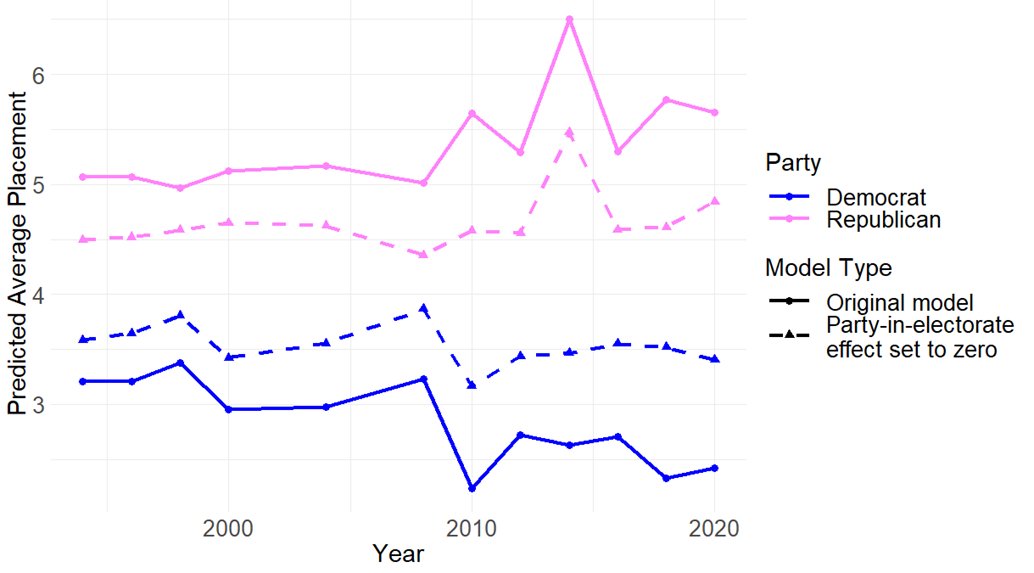
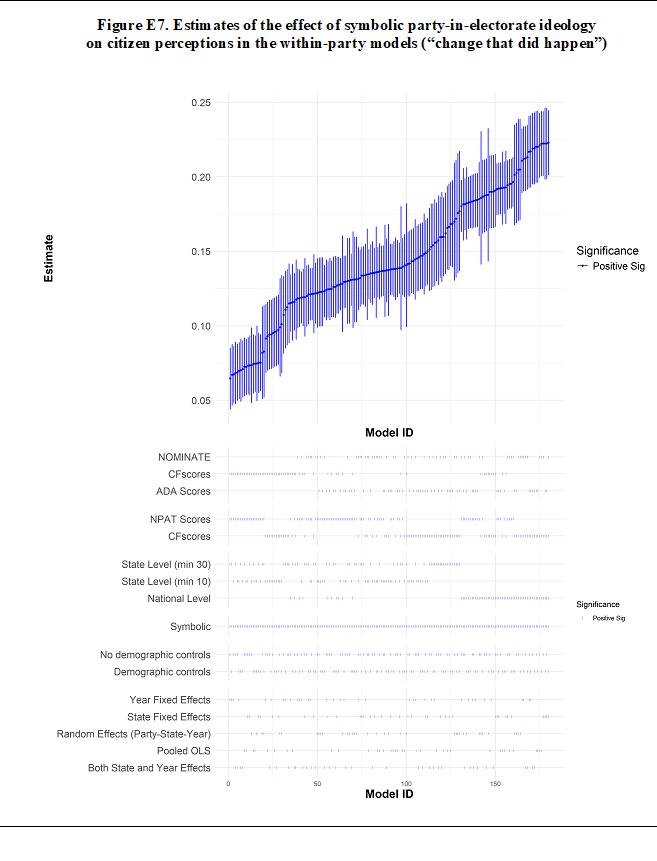
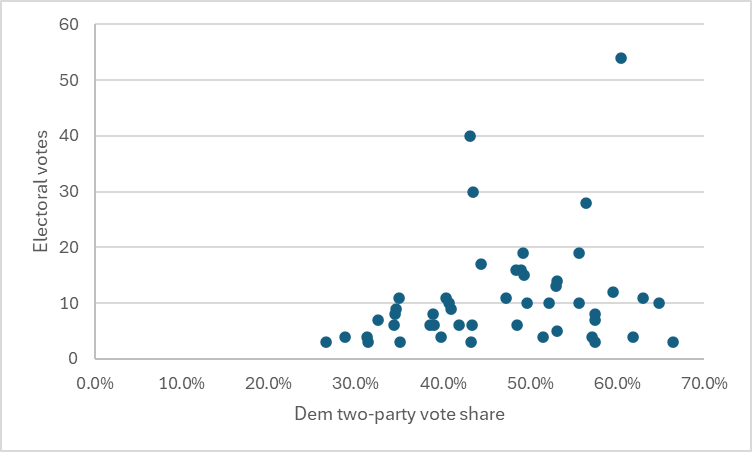
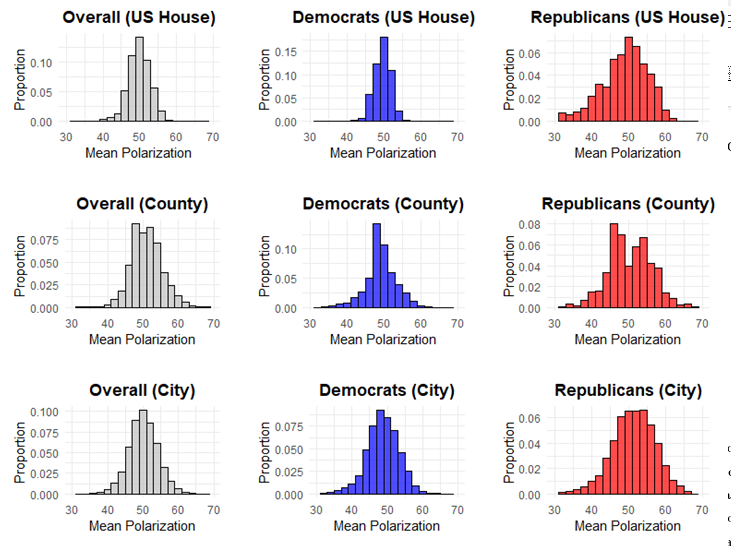
Happy to share my new data on affective polarization by party across states, CDs, counties, and towns from 2009-23.
Key point: polarization is not just an individual trait... contexts and electorates can be "polarized" too! 1/
papers.ssrn.com/sol3/papers.…
1
15
61
7,160
Seth Warner retweeted

May 22
I almost hesitate to promote this, because it wasn't really intended to be a piece. I just sort of sat down and it came out. Maybe someone else out there has the same type of day today, and it'll speak to them.
realclearpolitics.com/articl…
643
944
6,357
2,346,228
May 22
For me, that's why decoupling #1 and 2 (e.g. with "merit points") is best. I genuinely believe that 90% (50%) of Harvard (UConn) students achieve what is expected for bachelor's level expertise in a class. But to make it harder, so they learn more, requires tougher grading... 1/
May 21

The grade inflation debate comes down to three different views of what grades are for:
1 - differentiating between students within a school
2 - demonstrating the quality of student regardless of school
3 - a service to students to help them get jobs/into grad programs
1
245
May 22
... and (re #3) I don't want to put hard-working students at a disadvantage relative to their peers in different classes or universities.
Part of that is empathetic, but part of that -- to break the omertá of this debate -- is bc the students would hold it against me!!
26
May 7
Dittoing this. All my high-value assessments are in person. If I were teaching a writing heavy course, I'd set aside class time for the writing, either by hand or in an AI-proof browser.
Yes, this requires some adaptation, but no, AI is not especially difficult to counter.

I find this discourse perplexing because the solution seems straigthforward: make university marks almost entirely dependent on lengthy in-person exams that combine handwritten essays with oral questioning.
Why is this even a conversation? Are there implementation barriers or something?
189
Apr 25
Moreover, we need vocabulary for studies in-between the descriptive "what?" and causal "why?" There are too many important outcomes we can't get causal traction on, but still need to explain.
Apr 25

In much of social science, “descriptive work” is a faintly pejorative label, because explanation is considered the real stuff. Why settle for dusty old “What?” questions when you can jump into the sexier “Why?”
I get why this is so and am not innocent of the tendency. But I think this is a mistake, particularly in a period of dense and disorienting social change. The trouble with focusing on causality (or more often, pseudo-causality) is it necessarily forces us to attend to a narrow slice of empirical reality that we can get some traction on, and therefore cuts out a whole lot of context (which is usually brought in via assumption or assertion to make the our claims intelligible rather than accountable).
Maybe we take some time to paint a more fleshed out picture of what’s going and, and then turn our attention to which theories or explanations might help us make sense of it taken as a larger whole.
1
4
488
Apr 23
Our MPSA panel tomorrow (9:50am on 6th Floor) is 🔥
@maxallamong et al: measuring polarization via text, 1964-present
Aytac & Teas: experiments show polarization undermines democracy!
Jenke & Mutz: we need to include true indies!
more from *me* and Jieun Lee. Can't wait! 😄
9
638
Apr 19
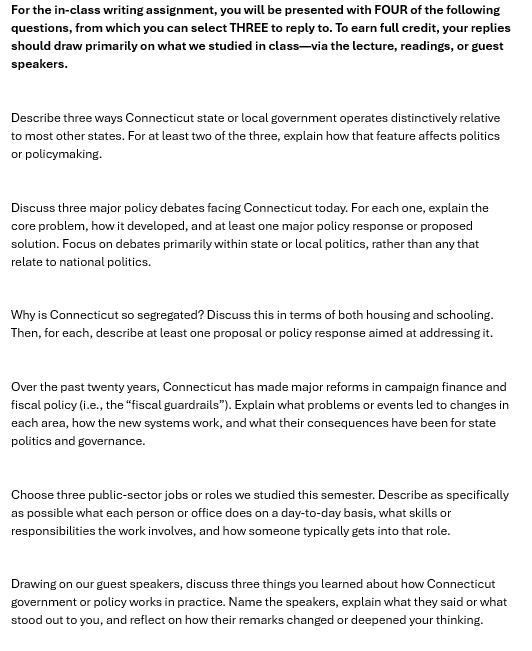
I had a great time developing and teaching CT Govt this semester. Much of the effort was not mine: @CTMirror provided a lot of readings, and folks like @AGWilliamTong, @jrojas9, @JillianG_CT, @CRCOG1 came to speak. Here's the final assignment... excited to see what they learned!
1
4
181
Apr 7
Dan Hurley doesn't lose when it matters, only when it doesn't. He's the anti-James Franklin.
1
105
Apr 5
While we're posting ideas, take IRB exempt determinations out of the hands of the IRB.
It makes sense we can't self-determine. But letting *them* decide whether *they* get to review is, in the big-picture, a conflict of interest too.
Guaranteed bureaucratic entrenchment.
Apr 5

Proposal: there should be a University-wide office whose job it is to manage student absences.
If you have a good reason for being absent, you talk to them; and they inform the relevant faculty (passively through some dashboard) what students have good reasons to be gone.
2
161
Apr 5
From what I'm seeing, if I ever need to advertise a product, the correct play is to hire a few of the less-famous actors from The Office.
54
Mar 27
Alright, now that we're past the initial frenzy, what skills should I give Claude Code and what prompting habits should I adopt to get as much out of it as research norms and my risk tolerance will allow? (Anyone?) 😅
1
118
Mar 25
Spent the day talking with the esteemed @shirokuriwaki about how issue importance is the hidden behemoth of political behavior. Very cool to see others thinking along the same lines... 😁
Mar 25

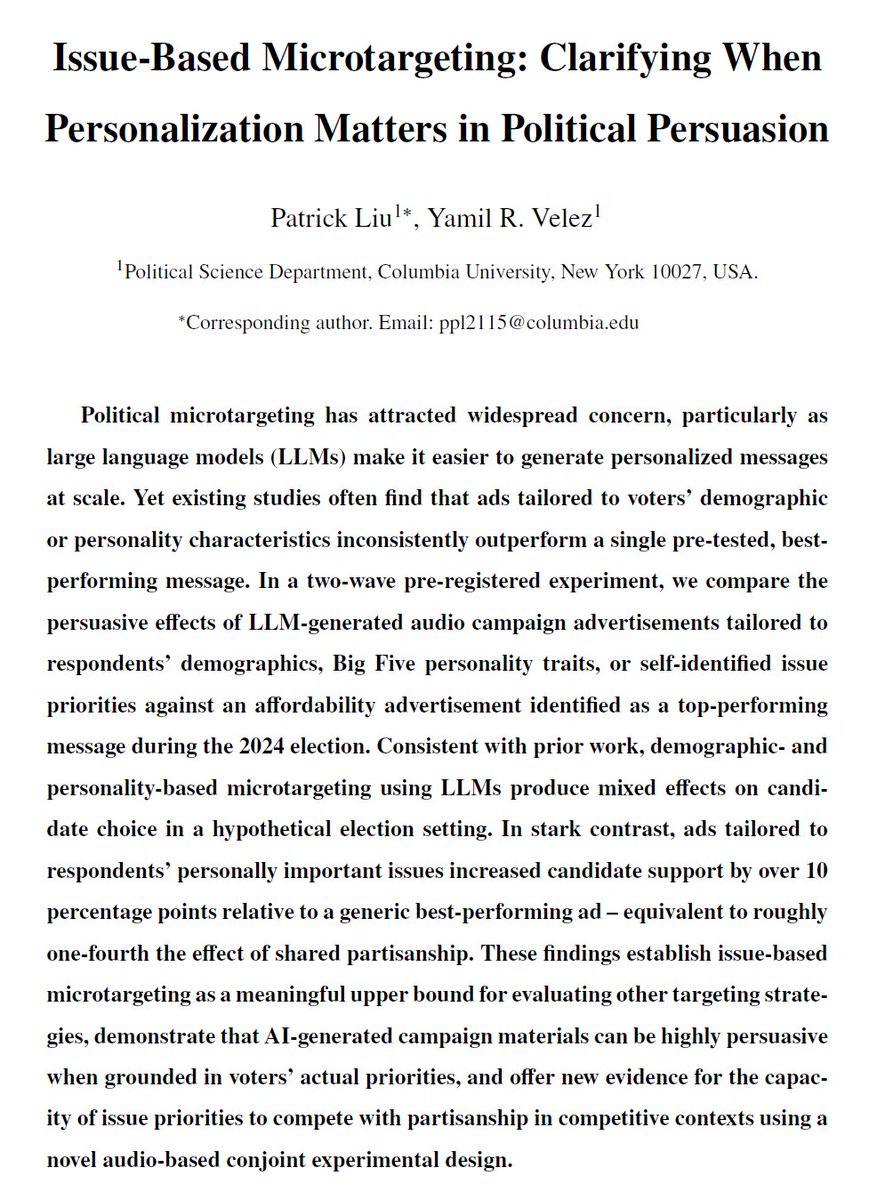
New paper w/ @YamilRVelez! A lot of great research on political microtargeting discounts personalization: tailored ads (using AI or not) rarely beat a single-best message. We define two types of microtargeting, clarify when tailoring matters, & showcase a novel audio-based design
1
1
5
963
Mar 21
I love to hear some positive points from time to time. Honestly, I agree!
Mar 21

Department dependent, but the thing about poli sci is that we shamelessly hoover up anything that works: stats, Econ, psychology, sociology, history, comp sci…. It’s a perfect launch pad.
2
266
Mar 9
Twice, I've prepped my students well for a test, saw a 72% average and wondered what happened.
"Huh... The toughest Qs were fair! The discrimination scores are high?"
Slowly, I realize it's actually a great test and I add a curve with a smile. This is what the SAT needs to do.
Mar 7

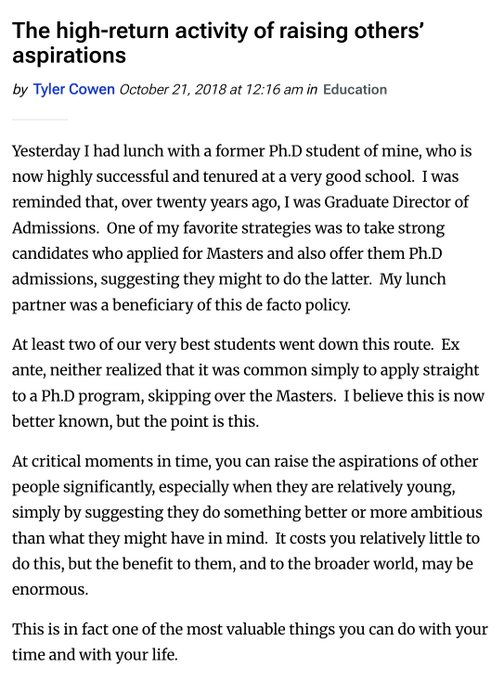
As a former uni prez...Best higher ed reform no one talks about: raise the ceiling on standardized tests - a lot! Too many top students max out, then compete on expensive pseudo-extracurriculars instead of actual merit. Wider score distribution fixes this.
148
Mar 2
Data request: does anyone know where I can find out which US jurisdictions use partisan vs nonpartisan elections? Primarily focused on local elections...
2
1
179
Seth Warner retweeted

Jan 30
New essay in @TheForumJournal: Policies and institutions created decades ago solved problems and did some good. The challenge, though, is that after half a century of this – of these groups pushing in one direction, helped by institutions – society has lost its balance. It has led to bad outcomes that now need to be corrected, and new problems that need to be solved. And today’s policymakers are not starting with a blank slate. They must confront the interest groups and institutions that are in place, and those can make for some formidable political obstacles to problem solving. degruyterbrill.com/document/….
10
27
3,947
Feb 26
And this is why the one project folder that I've set up for Claude Code looks the way it does (orphan files everywhere). 😬😅

Deep irony about AI teaching/learning in universities: the most useful AI skills right now are essentially *people management* skills which most academics (myself included) are pretty bad at.
215
Feb 23
Contra the discourse, I think disciplinary change will be gradual amid AI...
- Many faculty are still out of the loop on causal inference, "big data"
- Qual/theory may not see disruption
- Being front line, journals will probably adapt first, hiring/tenure committees years later
1
1
139
Feb 23
That said... it will massively change how we research, and to some degree, how cutting-edge scholars view one another's research.
36