
Building a new product! Used to do security engineering @ Brex, and Cloudflare. Dogs are better than people.
Joined June 2018
- Tweets 410
- Following 2,995
- Followers 1,041
- Likes 13,141
75 Photos and videos







Pinned Tweet

28 Feb 2023
Check out audit-logs.tax - we want to crowdsource a list of vendors who don't prioritize high quality, widely available audit logs. We started with a list of apps we're focused on but happy to take issues/PRs for logs you're focused on: github.com/shellcromancer/au…
28 Feb 2023

🧵 Have you ever been trying to ingest audit logs as a security engineer and been frustrated by the quality and cost of the logs?
Well so were @shellcromancer and I, so here's an attempt to get them to prioritize the security engineer as a core customer: audit-logs.tax/
1
7
31
6,291
Jun 13
Pour one out for the agents that remove Fable from model selectors tonight 🍻
Jun 13

The US government, citing national security authorities, has issued an export control directive to suspend all access to Fable 5 and Mythos 5 by any foreign national, whether inside or outside the United States, including foreign national Anthropic employees.
The net effect of this order is that we must abruptly disable Fable 5 and Mythos 5 for all our customers to ensure compliance.
Access to all other Claude models is not affected.
We apologize for this disruption to our customers. We believe this is a misunderstanding and are working to restore access as soon as possible.
Read our full statement: anthropic.com/news/fable-myt…
3
178
Jun 10
Biggest #WWDC miss: no Safari support for Device Bound Session Credentials :(
Maybe we’ll get an update soon!
github.com/WebKit/standards-…
1
125
Daniel Stinson retweeted

Jun 1
I wanted to address the speculation about the recently introduced Device Bound Session Credentials (DBSC) security feature in Google Chrome.
Does it help increase the security of session cookies against infostealer malware and MFA phishing?
The feature has been available and enabled by default since the Chrome 146 update (April 2026), if you're running Windows with a hardware-backed TPM security module (macOS support is coming in future updates).
DBSC allows the browser to upgrade session cookies from long-lived to short-lived, requiring the browser to refresh them approximately every 10 minutes to maintain access to the user's account.
> Does DBSC prevent account takeover by threat actors using a stolen session cookie obtained from the user's browser via infostealer malware?
Yes (kind of). The extracted session cookie will be valid for up to 10 minutes from the time it is extracted. The attacker will be unable to maintain long-term access to the user's account. Still, the timeframe may be sufficient, for example, to exfiltrate the inbox if the attack is automated. The attacker cannot refresh the short-lived session cookie because it requires the private key (stored in the TPM) assigned to the account to sign the challenge. The malware cannot access the private keys stored in the TPM.
> Does DBSC prevent account takeover by threat actors during a phishing attack?
No. Servers need to provide legacy support for the browsers that do not yet support DBSC. By default, the server registers and sends a long-lived session cookie to the browser. If the server supports DBSC, it will announce the DBSC API endpoint URL in the `Secure-Session-Registration` HTTP header of the response packet that contains the long-lived session cookies.
Only after the short-lived session cookie is registered via the DBSC API endpoint is the long-lived session cookie invalidated.
When the attacker removes the `Secure-Session-Registration` HTTP header retrieved from the server during a phishing attack, the browser will continue using long-lived session cookies and assume the server does not support DBSC. In short, removing that HTTP header while proxying traffic during a phishing attack allows the attacker to maintain long-term access to the user's account using the stolen long-lived session cookie.
I hope I've managed to clear up some confusion.
On a related note, you will soon be able to simulate phishing attacks against Google Workspace accounts (and other websites) that bypass DBSC and MFA protections using Evilginx Pro with the Phishlets 2.0 update.
May 29

Google Chrome is rolling out device-bound session credentials to all users. Session cookies get cryptographically tied to your device, so stolen cookies can't be replayed from a different machine. Attackers who exfiltrate your cookie database get nothing usable.
4
39
135
25,153
May 31
This. Apple released Declarative Device Management in 2021, then in 2023 they released enterprise passkey attestation to prove a passkey registration comes from a managed device. Only way you can do it is with DDM…
But Apple Business MDM from 2026 doesn’t support DDM :(

So Apple now has its own MDM "Apple Business". I would've expected it to use all the modern new Apple features like Managed Device Attestation for enrollment and Declarative Device Management.
But nope. It's just shitty Configuration Profiles SCEP
2
3
1,008
May 31
I don’t even think any major MDM provider has purpose built configuration for Passkey Attestation? Don’t see a way to do it at all with Iru.
Might work with custom declaration profiles in Jamf and Fleet 🤔
1
3
173
Daniel Stinson retweeted

May 22
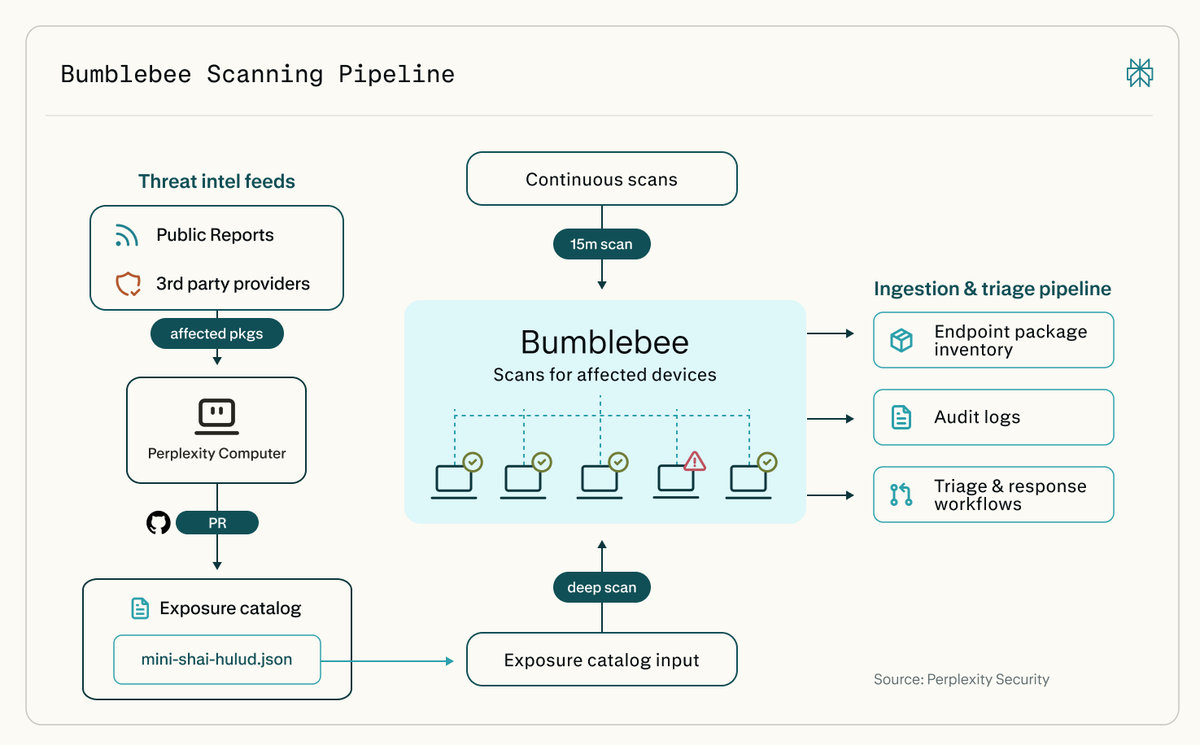
The industry has seen an unprecedented wave of supply chain attacks over the past few months. That's why we built Bumblebee, a lightweight security scanner that continuously monitors endpoints and hunts for malicious packages.
Bumblebee has been a critical asset in keeping @perplexity_ai secure, and we're thrilled to open source it for everyone.
We're also using Perplexity Computer to monitor public threat intelligence feeds in real time and update the Bumblebee repo as new threats emerge. Excited to share this with the community!
May 22

Today we're open-sourcing Bumblebee, a read-only scanner for macOS and Linux.
It checks developer machines for risky packages, extensions, and AI tool configs.
Connected to Computer, it can trigger deeper scans whenever a new supply-chain risk emerges.
github.com/perplexityai/bumb…
11
48
433
99,904
May 12
@Cloudflare Zero Trust should add examples on how to enforce Anthropic Tenant Restrictions [1] with Cloudflare Gateway 👀
Seems like it's possible with Gateway Tenant Control [2] policies but not in either Cloudflare or Anthropics docs
cc @Encore_Encore @dok2001
1
2
230
Daniel Stinson retweeted

Apr 28
🚀 Big news: Socket has acquired Secure Annex.
John @tuckner is joining the team, and we’re excited to expand our coverage across browsers, code editors, and AI tools.
Read more → socket.dev/blog/socket-acqui…
6
7
51
5,597
Apr 28
Best extension scanning 🤝 Best dependency scanning
Congrats to @tuckner, @feross and all the customers!

Today we're announcing that @secureannex has been acquired by @SocketSecurity! Supply chain security is a deceptively wide problem from open source code to browser extensions. Developers and IT teams can't stop it from impacting their organization alone.
secureannex.com/blog/annex-a…

9
1,379
Apr 20
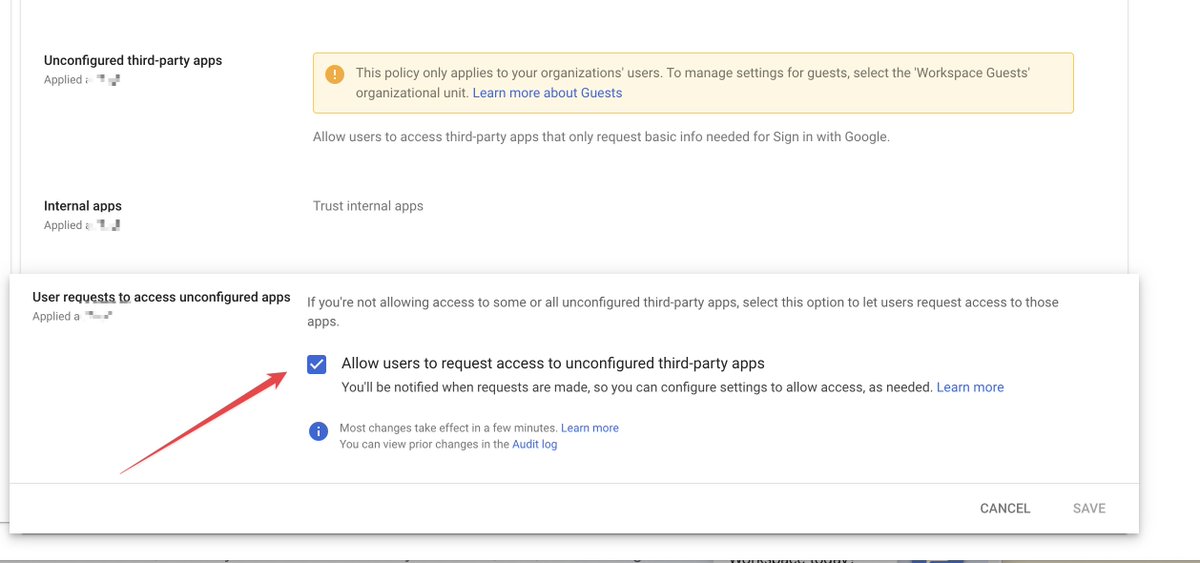
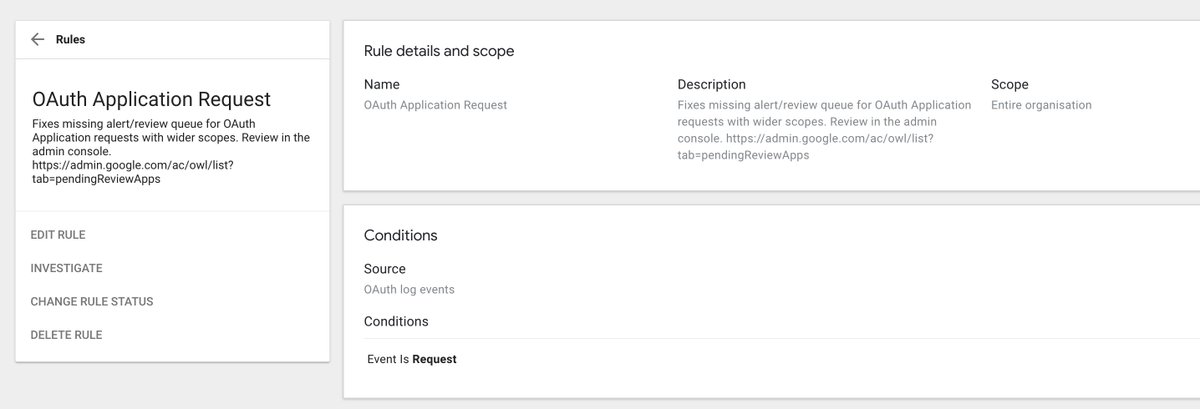
Is it expected that Google Workspace admins don't even get notifications when users requests apps? Seems incredibly silly there is no notification mechanism for this...
Pretty easy to make an Alert Center rule but these sort of things should be on by default!
ALT Custom Google OAuth Application request notification rule.

Spent my Sunday evening doing this - recommended for all Google workspace admins!
Also go to admin.google.com/ac/sc/inves…, select OAuth log events, to see what else is getting rejected. Can pull OAuth client IDs from the logs to allowlist.
Google should really make this easier!
2
9
2,573
Mar 30
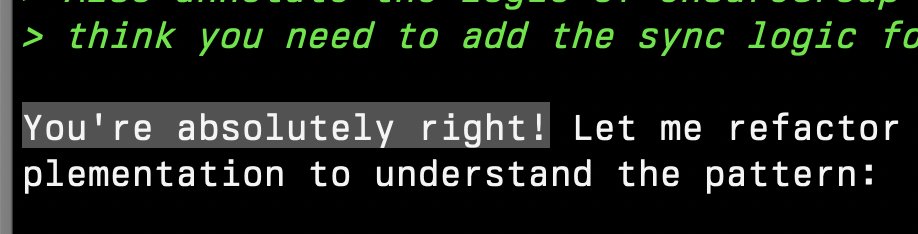
> The refactor itself typechecks conceptually;
Name that Agent!
4
86
Daniel Stinson retweeted

Mar 5
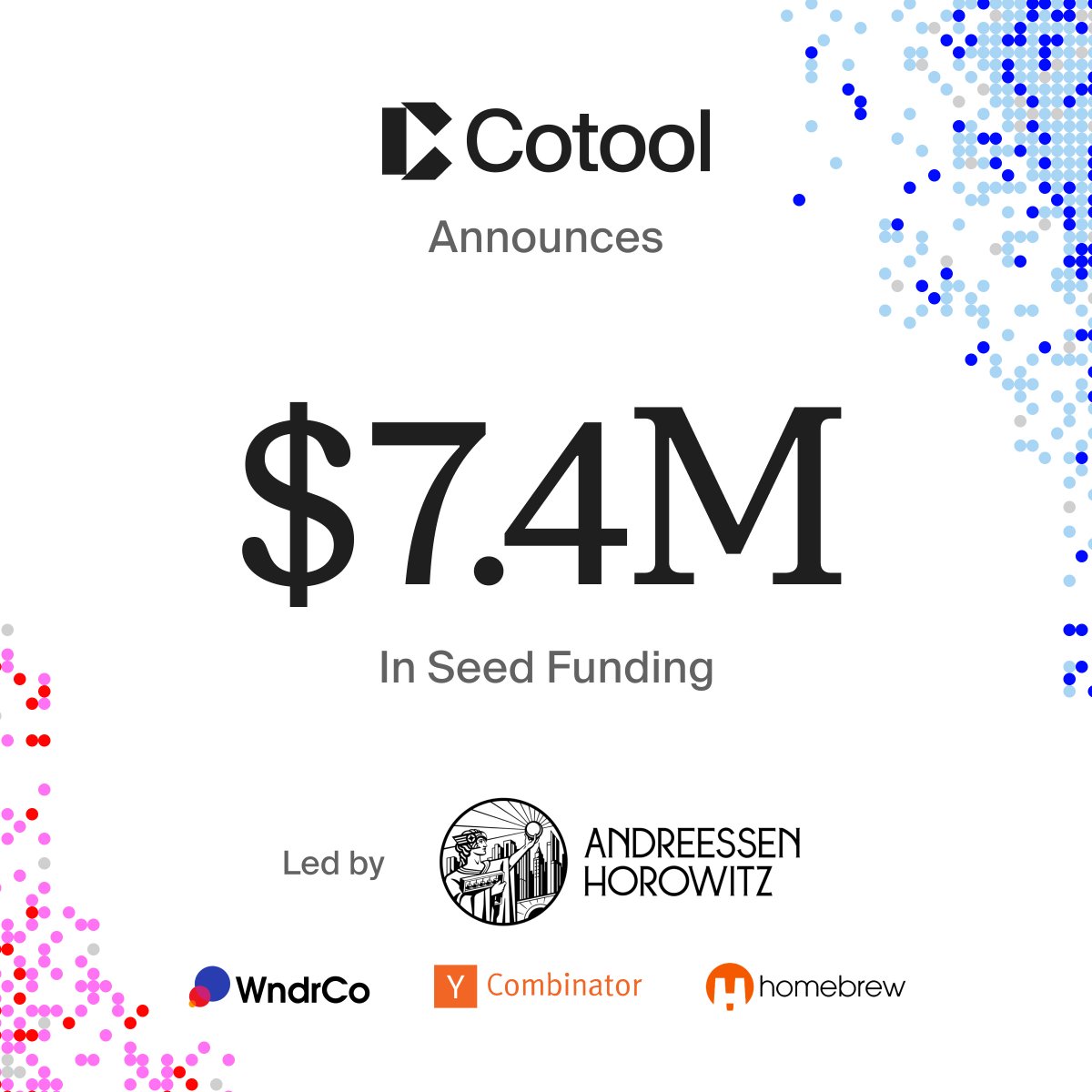
We at @cotoolai are stoked to announce our $7.4m fundraise from @a16z .
Offensive cyber operations are now JIT code; we started Cotool to give defenders their leverage back.
Grateful to everyone who took the bet early, especially @koomen @garrytan @MaikaThoughts @zanelackey.
1
3
12
462
Daniel Stinson retweeted

Feb 18
Today we're introducing @usefiretiger. You and your AI agents write code. Firetiger makes sure it works.
Our team and I have plenty of incident war stories building @Cloudflare, @segment, @Twitch. In the agentic coding era, the volume of code changes quality issues in prod is ever increasing, but observability vendors aren't incentivized to close the gap. They make money when you write more data to them, not when your software actually works.
Firetiger is the agentic operations layer for the agentic coding era. We combine production observability data, codebase understanding, and knowledge of your business to find problems before your customers do and fix them before they notice.
We've raised $7.6 million led by @sequoia with participation from angels who believe in better software, including @eastdakota, @calvinfo, @NicoRosberg, @dok2001, @jeffawilke, and @alanaagoyal.
You can sign up for @usefiretiger today, self serve. We charge for agents that directly make your software better and more reliable, not for observability data ingested, with plans starting at $599/month.
Observability is dead. Long live outcome engineering.
25
24
180
75,741
Jan 31
Using ChatGPT Pulse to read my newsletter inbox and show me cute card summaries is really nice. The intro name in today’s was a little off though…
1
1
146
28 Oct 2025
Nice post from @arenamagdotcom with a contrarian bull-case for US rare earth independence 🐂🇺🇸
arenamag.com/articles/americ…
1
1
7
990
27 Oct 2025
X's WebAuthn forced migration seems like something that relatedOrigins should help with.
I _think_ this would only work if the `/.well-known/webauth` list was populated during the registration ceremony but its unclear from reading the spec...

To clarify: this change is not related to any security concern, and only impacts Yubikeys and passkeys - not other 2FA methods (such as authenticator apps). Security keys enrolled as a 2FA method are currently tied to the twitter[.]com domain. Re-enrolling your security key will associate them with x[.]com, allowing us to retire the Twitter domain.
If this relates to you, you'll be prompted automatically to re-enroll. You can also proactively do this by clicking “Add another key” and re-enrolling your current key at x.com/settings/account/login….
1
192
27 Oct 2025
Spec: w3c.github.io/webauthn/#sctn…
Docs: passkeys.dev/docs/advanced/r…
Nice blog with an example: goodsignin.com/blog/passkeys…
51
25 Sep 2025
Happily made the PR remove Cloudflare from the sso.tax. What vendors are next?
25 Sep 2025

Over the next year Cloudflare will make nearly every feature we offer available to any customer who wants to buy and use it. cfl.re/4mzwgr1 #BirthdayWeek
1
1
9
809
25 Sep 2025
also moved them from the Wall of Shame, to the Friends of SSO on the fork 🚢
github.com/ssotax/ssotax/pul…
3
89