
Tweet about Social Science Tech Philosophy. Building Bell Labs of Social Science: social science on online data. Chief Scientist at MotiveMetrics.
Joined October 2009
- Tweets 3,134
- Following 3,244
- Followers 904
- Likes 10,036
78 Photos and videos










Kyle Thomas retweeted

Mar 29
My buddy @surfkt told me and @kevinrocci embeddings are just fancy factor analysis from 1904. This was news to me. I went and wrote some code. He was right.
new post: seanplusplus.github.io/2026/…
2
1
2
86
Kyle Thomas retweeted

Mar 16
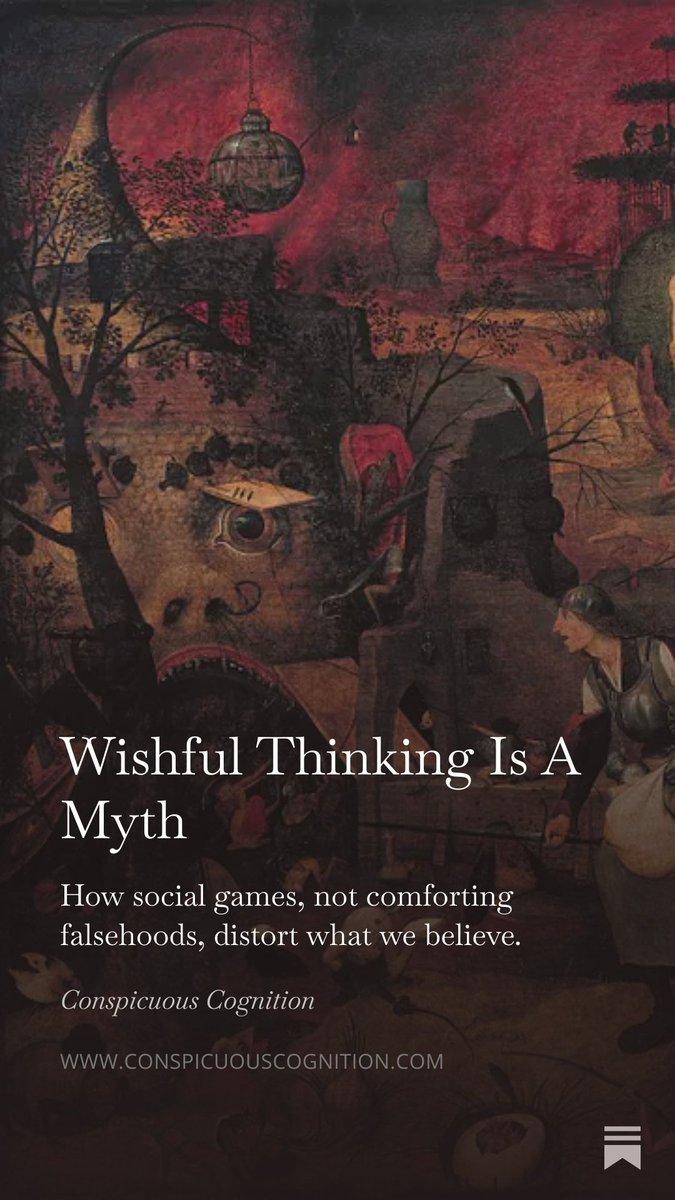
New post! Drawing on a wide range of sources, evidence, and arguments, I argue for a social model of motivated reasoning.
Put simply, the primary reason we convince ourselves of falsehoods in domains like politics, religion, and conspiracy theorising is not that we can’t handle the truth. It’s that holding accurate beliefs is often a losing move in social games involving advocacy, reputation management, and status competition.
I also argue that the “you can’t handle the truth!” model of human psychology is not just mistaken; it is pernicious. It encourages the view that when people accept “harsh” beliefs that they don’t want to be true, they are being rational and truth-seeking—even heroic. In reality, people are often motivated to convince themselves of negative, pessimistic beliefs, and it often takes courage and intellectual virtue to confront positive truths. conspicuouscognition.com/p/w…
11
36
148
10,827

30 Nov 2025
Seems to me like safetyism is a significantly bigger X-risk for multiple reasons than what X-risk folks wring their hands about in their hypotheticals. I’m curious what @gmiller take on this is…
17 Apr 2023

@ByrneHobart and I just published "Against Safetyism" in @PirateWires — a new piece that makes the case that safetyism — and not climate change or artificial intelligence — has become one of the biggest existential risks facing humanity: piratewires.com/p/against-sa…
1
151
Kyle Thomas retweeted

17 Apr 2023
@ByrneHobart and I just published "Against Safetyism" in @PirateWires — a new piece that makes the case that safetyism — and not climate change or artificial intelligence — has become one of the biggest existential risks facing humanity: piratewires.com/p/against-sa…
22
57
318
136,272
6 Oct 2025
New paper out on indirect speech and punishment. Love to see this finally make it to light of day! sciencedirect.com/science/ar…
9
577
7 Sep 2025
Always love opening my pod app to find a new episode of @EPthepod by @DavidPinsof & @DavePietrasz. Great stuff, highly recommend!
1
4
331
7 Sep 2025
Love the focus on coordination and common knowledge but of course I’m biased.
1
47
13 Aug 2025
Great TED talk by @sapinker on my PhD research: ted.com/talks/steven_pinker_…
1
4
18
1,445
4 Aug 2025
RT @sapinker: I've been thinking about common knowledge for years. It's the topic of my new book: bit.ly/3SMQ11N
38
24 Jul 2025
This is great!
24 Jul 2025

The Buckingham Manifesto for a Post-Progressive Social Science
A growing recognition of the excesses of the cultural left has created an opening in contemporary intellectual life. This moment requires a new research agenda, a post-progressive movement in the social sciences and humanities.
The ideals of progress and social justice had noble origins. By the 1960s, the exclusionary nature of western institutions, including universities, had become apparent. There was a need to overturn practices that had marginalized women and racial, ethnic, and sexual minorities.
The left-wing movement that came to be known as progressivism played a vital role in rectifying this exclusion. Yet as it began to achieve its goals, it shifted to new ones: from equality of opportunity to equality of outcomes, from greater inclusiveness to a hypersensitivity to ever-more-elusive forms of emotional harm, from the opening of new perspectives to the enforcement of rigid orthodoxies.
These shifts became institutionalized in policies such as racial and sexual preferences, mandatory diversity training, speech codes, and editorial policies that privilege the avoidance of perceived harm over scholarly and scientific rigour. And they were accompanied by a change in the norms of academic discourse, from vigorous debate to censorship, deplatforming, mobbing, and moralistic denunciation.
The unfortunate result of this progressivist overreach has been a decline of trust in cultural and academic institutions and growing political polarization, including a populist backlash.
These problems have prompted a rethink among many scholars. The challengers, who include conservatives, classical leftists and liberals, and eclectic pragmatists, retain the ideals of social progress, but yearn for a new glasnost—an intellectual openness—in the production and transmission of knowledge.
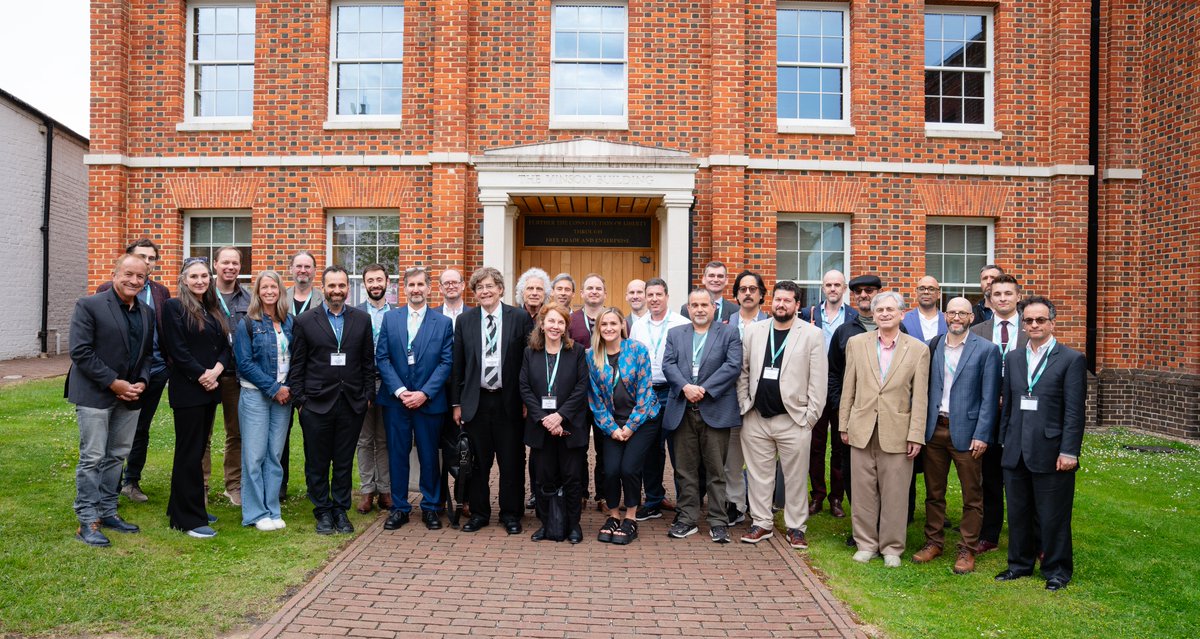
Accordingly, a group of concerned scholars and writers recently met at the University of Buckingham to advance new thinking about the humanities and social sciences. We call for an intellectual agenda with two thrusts.
Heterodox Social Science. Progressive dogmas have increasingly constricted the social sciences, including an obsession with race, gender, sexual orientation and identity, and an insistence that bias and oppression are the only acceptable explanations (to the exclusion of culture, history, and demographics). At the same time, deeper questions about human nature, and explanations that are consilient with the natural sciences, have been marginalized. We call for a new social science to free up inquiry, fill in blind spots, and render a richer and more accurate account of our social world. This does not require that every conceivable question be researched, only that those that are researched be treated with scientific objectivity and openness to multiple hypotheses.
Critical Woke Studies. In the second two decades of the 21st century, academic and cultural institutions were suddenly seized by a radical ideology known as Critical Social Justice, Intersectionality, the Identity Synthesis, the Successor Ideology, or most commonly, Wokeness. This takeover took many by surprise and remains unexplained. We hold that the wokeness revolution was not compelled by new discoveries or moral imperatives but is a contingent historical episode that needs to be studied, just as scholars have sought to explain the rise of nationalism, communism, neoliberalism, and populism.
Many questions have already been raised. Is wokeness a unique development of the 2010s, or do its roots lie earlier, in the 1960s or 1970s? Is it a recurring historical phenomenon, appearing in many periods, or something new? Do people adopt it out of self-interest and status competition, or from true belief and quasi-religious conviction? Did it emerge spontaneously, or was it the goal of a campaign of deliberate infiltration? Was it downstream of law, or of culture? We call for a range of scholars and scientists, diverse in methods and viewpoints, to shed light on this consequential development.
A post-progressive social science could be pursued in new universities and centres, among dissident scholars in the academic mainstream, in think tanks, or, best of all, in a future academia rededicated to open inquiry, viewpoint diversity, and civil discourse. We hope that sympathetic scholars, publishers, editors, funders, and professional associations will join us in forging a new, intellectually and politically inclusive social science.
Eric Kaufmann, University of Buckingham, conference organizer
Jonathan Anomaly, researcher
April Bleske-Rechek, University of Wisconsin
Cory Clark, University of Pennsylvania
Luke Conway, Grove City College
Frank Furedi, University of Kent (Emeritus)
Zach Goldberg, Florida State University
Matthew Goodwin, University of Buckingham
Jamin Haberstadt, University of Otago
J.D. Haltigan, University of Buckingham
Joshua Katz, American Enterprise Institute
Lee Jussim, Rutgers University
Lawrence Krauss, Origins Project Foundation
Claire Lehmann, Quillette Magazine
Robert Maranto, University of Arkansas
Kevin McCaffree, University of North Texas and Theory and Society journal
Richard McNally, Harvard University
Francesca Minerva, Journal of Controversial Ideas
Pamela Paresky, Harvard University
Neema Parvini, University of Buckingham
Lawrence Patihis, University of Portsmouth
Zachary Patterson, Concordia University
Steven Pinker, Harvard University
Wilfred Reilly, Kentucky State University
Christopher Rufo, Manhattan Institute
Gad Saad, Concordia University
Sally Satel, American Enterprise Institute
Jukka Savolainen, Wayne State University
Zvi Shalem, researcher
Michael Shermer, Skeptic Magazine
James Tooley, Vice Chancellor, University of Buckingham
Jan van de Beek, University of Buckingham
Colin Wright, Manhattan Institute
Wesley Yang, writer
Note: The above does not imply endorsement by an individual’s institution, apart from the University of Buckingham.
To sign, go to link in next slide
2
80
Kyle Thomas retweeted

21 Jul 2025
Usually when I see someone saying something awful is capitalism they are describing something that 1) is genuinely awful 2) is a consequence of material scarcity and 3) has gotten much much less bad under capitalism
75
379
5,797
204,145
Kyle Thomas retweeted

12 Jul 2025
My latest article is about a common concern for many young people today:
Whether they should avoid having kids to help the climate.
A new study suggests the answer is a firm "no"🧵
Go ahead and have those kids.

23
56
566
48,144
14 May 2025
Someone needs to write a paper about how traveling used to be weird but now it’s WEIRD.
Like going across many countries in b Europe 600 years ago must’ve been super weird. But now it’s normal for WEIRD folks.
1
68
4 May 2025
I would love to see @HumBehEvoSoc host a debate on how ev psych fits into these issues around what one could broadly characterize as “DEI”. I could tag the counter side here but don’t want to put them on blast. I would happily be a part of the anti panel in the debate.
1
8
363
3 May 2025
Excellent piece!
2 May 2025

John Halstead & Phil Thomson have compiled the most comprehensive (albeit necessarily spotty) evidence on prehistoric violence rates, updating and revising the estimates I gathered in The Better Angels of Our Nature 15 years ago. Here they review and analyze their findings | - Works in Progress Magazine worksinprogress.co/issue/the…
3
81
22 Mar 2025
RT @RuxandraTeslo: Since when do science magazine editors get to decide which policies are acceptable and which aren’t (& with strong words…
32
Kyle Thomas retweeted

28 Feb 2025
At some point "stop with the virtue signaling" became "stop with the virtue having"
54
526
4,636
151,884
19 Feb 2025
The Geneology of Morality is the best book on DEI that’s been written. Shocking presage 120 years too early.
3
145
Kyle Thomas retweeted

14 Feb 2025
If you want to understand the mindset of the Silicon valley barons who facilitated the regime change, you should listen to the Lex podcast with @pmarca, regardless of whether you agree youtube.com/watch?v=OHWnPOKh…
16
41
517
85,789
11 Feb 2025
RT @sapinker: I just turned in the page proofs of my next book, When Everyone Knows That Everyone Knows: Common Knowledge and the Mysteries…
87