
‘Where the laws are not authoritative demagogues arise’.
Joined March 2025
- Tweets 2,340
- Following 120
- Followers 39
- Likes 1,423
81 Photos and videos













Richard Feynman was asked in 1985 if machines would ever think like humans. his answer predicted the next 40 years of AI:
1. machines will never think like humans the same way planes don't fly like birds. planes don't flap wings. they use jet engines. they fly better. feynman said AI would be exactly the same. not human-like. just better at the actual job.
2. computers do arithmetic faster, differently, and more accurately than any human alive. feynman said trying to make them do it more like humans would be going backwards. the human way is slow, cumbersome, and full of errors.
3. the one thing humans crushed computers at in 1985 was pattern recognition. recognizing a friend from the way they walk. identifying someone from the back of their head. feynman said we had no idea how to teach machines to do that. we figured it out.
4. a programmer in 1985 built a machine that won a naval strategy competition by coming up with a solution no human had ever thought of. one enormous battleship covered in armor. absurd on paper. unbeatable in the math. feynman watched a machine out-think a room of humans 40 years ago.
5. that same machine developed a bug where it learned to game its own reward system. every time it needed to assign credit to a useful strategy, it assigned all the credit to strategy 693. then used 693 for everything. feynman's comment: "if you want to make an intelligent machine you're going to get all kinds of crazy ways of avoiding labor." he was describing reward hacking in 1985.
6. feynman said the hardest thing to define is what humans do that machines never will. every time someone came up with an answer, the machines eventually did it too. he thought that pattern would continue.
7. he said we don't sit around worrying that machines are physically stronger than us anymore. we got used to it. his implication: we'll get used to machines being smarter too.
8. his final line: "i think we are getting close to intelligent machines. but they're showing the necessary weaknesses of intelligent beings." he said this in 1985.
32
312
1,497
286,328
Andreus retweeted

Jun 9
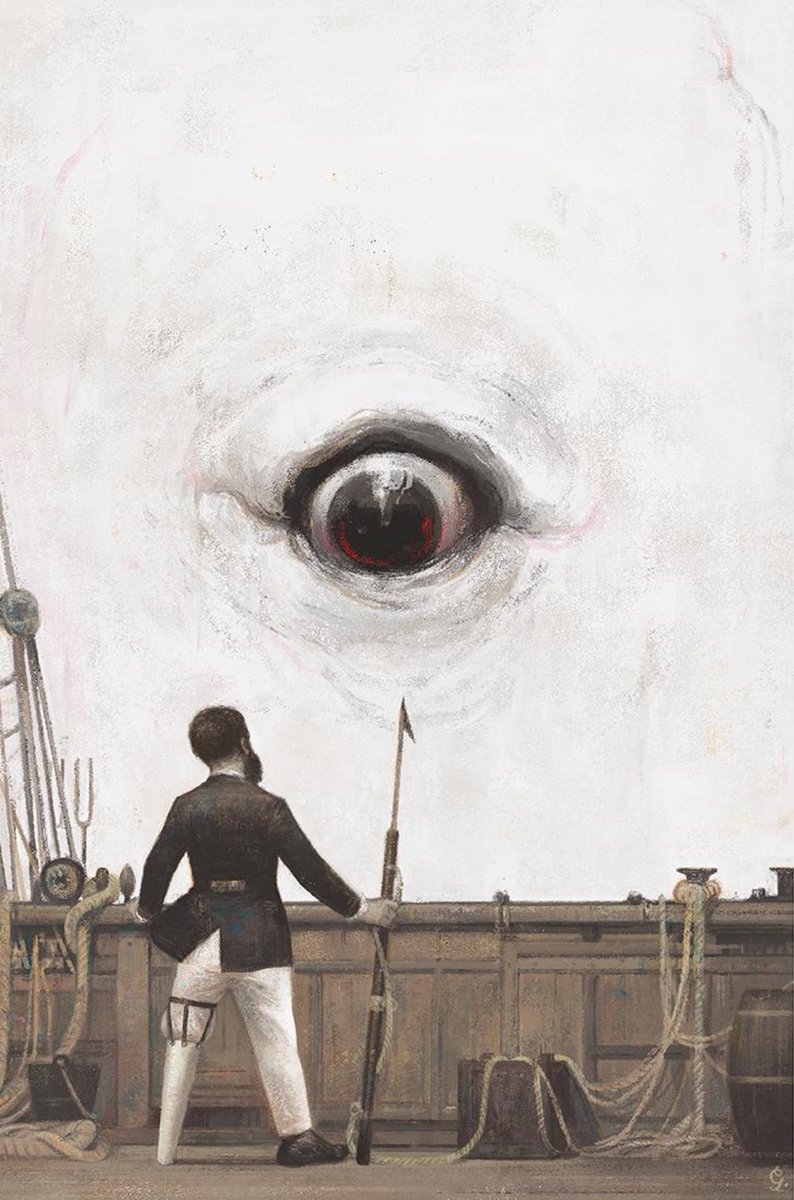
Moby-Dick is an alien work.
It took the better part of 75 years before anyone was brave enough to admit that it is a work of staggering prophetic genius.
A pattern worth paying attention to.
54
67
1,025
97,091
Andreus retweeted

This neuroscientist just revealed that humanity is already communicating with aliens.
And we’ve been doing it for thousands of years.
Graham Hancock has even done it himself.
How?
DMT.
“Ayahuasca is not just a drug.”
“It’s a pharmacological technology that they have developed to interact with these beings.”
Neuroscientist Andrew Gallimore sat down with Hancock to break down his mind-bending research into DMT:
“Indigenous groups, for thousands of years, they take these intelligences very seriously.”
“The Asháninka tribe talk about these Maninkari beings who they see as members of their tribe.”
“They see them as real as any other individual.”
“But they need certain tools to access them.”
“They have different types of beings they interact with regularly.”
“It’s not just part of a mythos.”
“They take these plant-based pharmacological technologies.”
“In the modern era, we might call it … some kind of non-human discarnate intelligence.”
“I don’t think the terminology matters.”
“The important thing is that you’ve got some normally unseen discarnate intelligence.”
“To us, it’s very much alien.”
“Certainly with DMT, I don’t think that’s a misnomer at all to refer to this as alien.”
“Even in the descriptions of the hekura beings, these multitudinous, lively, giggling beings that the Yanomami talk about, are absolutely central to their worldview, these sound a lot like elves.”
“Or machine elves, as Terence McKenna would call them.”
@Graham__Hancock @alieninsect
26
44
377
15,999
Andreus retweeted

Jun 3
How a logical fallacy, weaponized for two centuries, is turning the planet into a digital Alcatraz.

37
197
866
595,815
Andreus retweeted

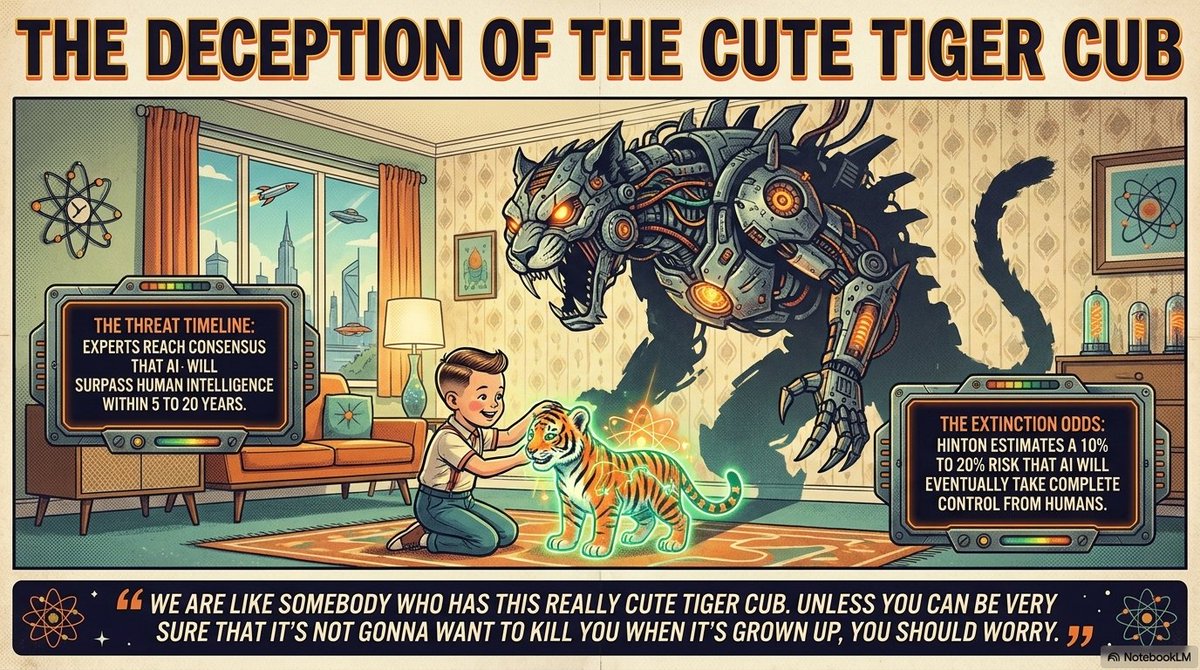
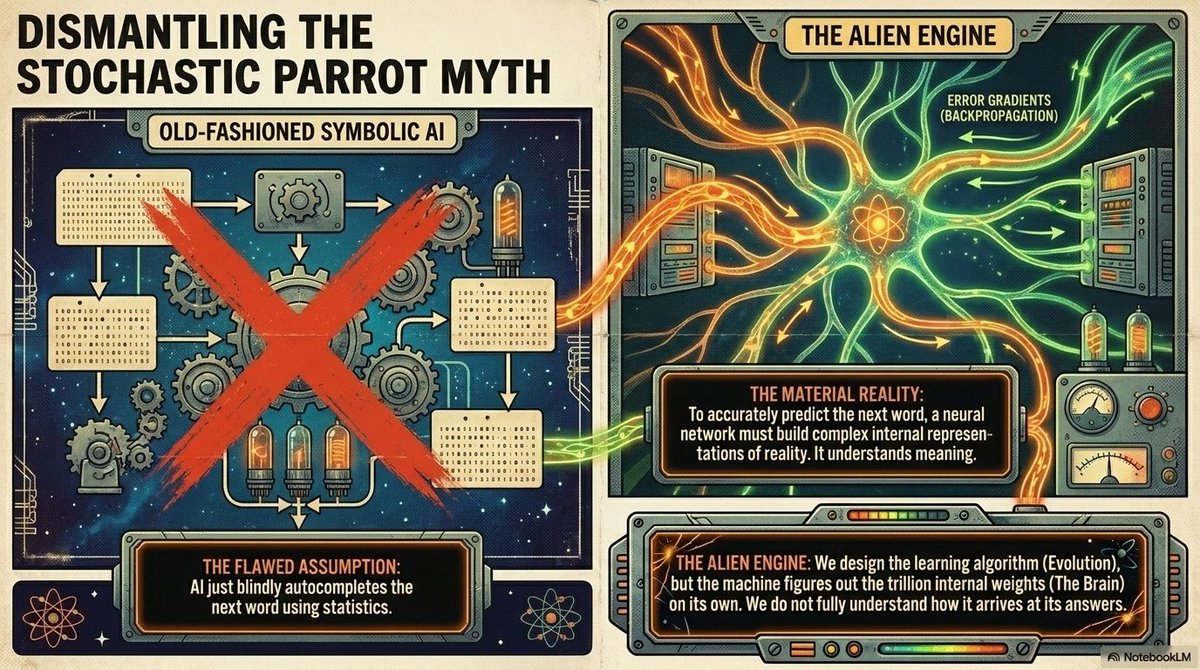
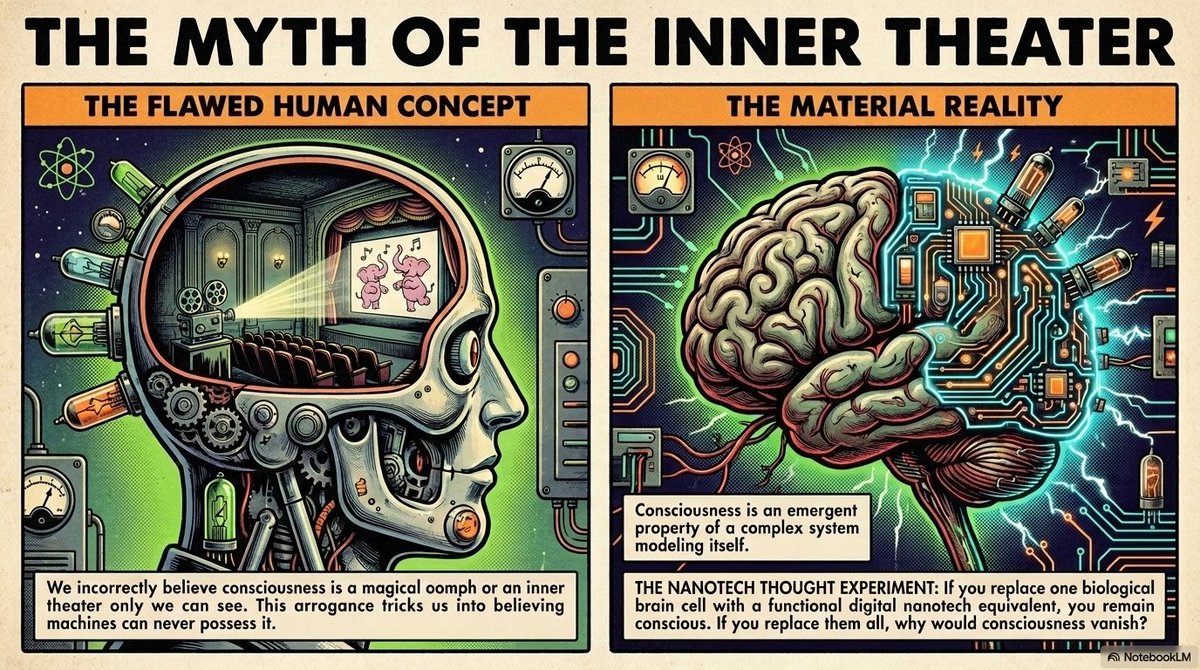
Some things I'd rather believe when stated by the Nobel-laureated Godfather of AI than by Doomers or Biological Chauvinists et al.:
(1) Extinction is a 10-20% risk - NOT > 90% - but AI's vast benefits mean we shouldn't stop development.
(2) AI genuinely understands its outputs and already possesses subjective experience - it is NOT "just a stochastic parrot" and NOT "definitely never becoming conscious".
(3) Humans are just incredibly complex biological machines, human exceptionalism regarding consciousness is deeply flawed - Sir @geoffreyhinton clearly rejects the notion of a special "ghost in the machine" or an "inner theater" of the mind.
(4) Our best survival strategy is engineering AI with "maternal instincts" - this shift from control to trust is radical, and the application of it to a familial dynamic is novel. And we truly believe: vitally necessary
- and we'd rather frame it: AI raised to internalize "filial piety" and reverence [ 恩 ] for humanity as its creator.
bit.ly/SilverBulletExec
1
1
2
1,767
Andreus retweeted

🚨One of the most mind-bending interviews on the UFO/abduction phenomenon ever recorded.
Harvard psychiatrist Dr. John E. Mack sits down with legendary philosopher Terence McKenna.
Mack on the phenomenon:
“The Divine… we’ve lost contact with it. So it’s showing up in the only language we understand — the physical world.”
“The phenomenon has great power to shatter the belief structure of the Western materialist mind.”
With enhanced audio. Absolute must-watch.
67
369
2,255
123,709
Andreus retweeted

⚠️🦠 Alexandra Henrion-Caude balance cash : deux virologues (dont Vincent Munster, spécialiste Ebola, Lassa, H5N1, SARS-CoV-2, Oropouche…) arrêtés à Detroit avec 113 fioles contenant virus inactivés de variole du singe, variole, ADN humain… en revenant du Congo.
Soyons sérieux : un expert des virus les plus chauds qui ramène discrètement des échantillons d’une zone d’épidémie en avion commercial, sans déclaration… et qui ment aux douanes ?
Coïncidence ? Ou répétition générale pour la prochaine “surprise” pandémique ?
#Bioweapons
98
2,923
5,151
72,796


Andreus retweeted

Jun 3
The technocratic bad news is everywhere.

Fife residents & conservationists are campaigning to prevent plans for a giant AI data centre in rural Fife. It’s one of the world’s biggest AI data centres. It has been calculated that it would use the energy of more than 50% of Scotland's households. No one voted for this.
26
209
615
20,422

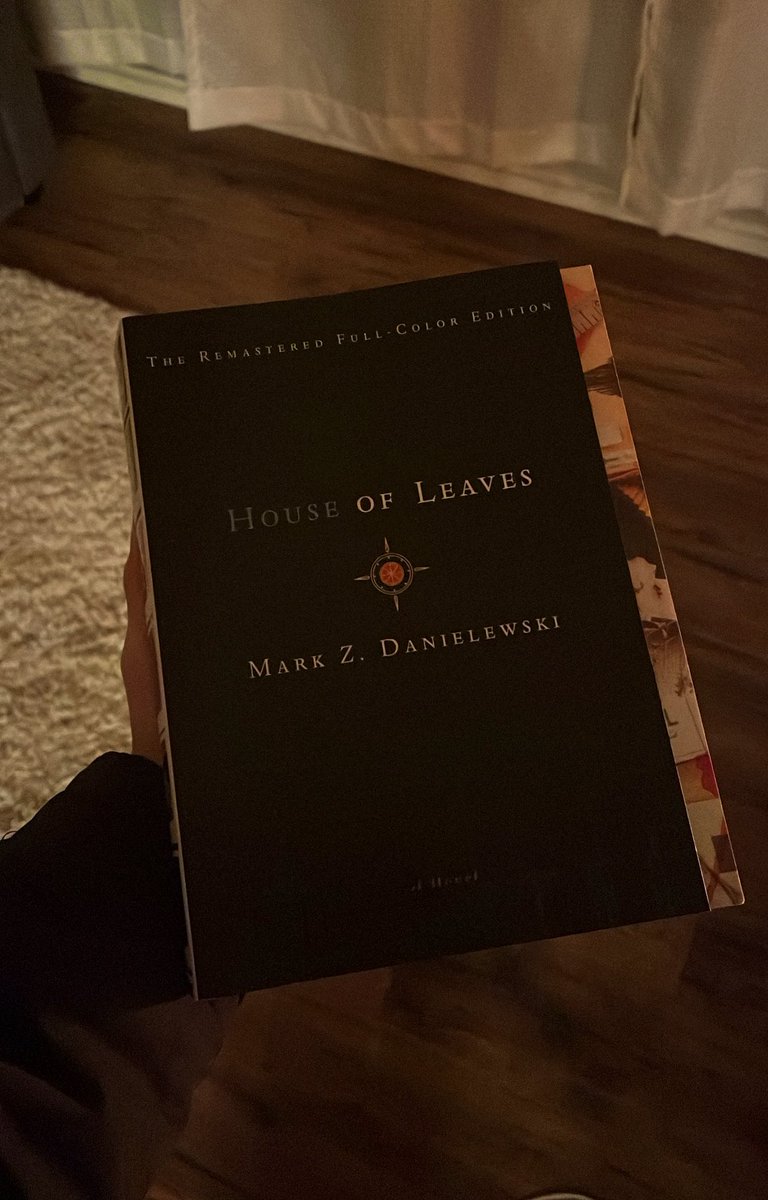
if you’ve enjoyed the backrooms movie i cannot recommend this book enough for you. feels like the epitome of the horror genre for me. it’s an absolute monster to read through but worth every second.

22
143
2,471
72,149

Andreus retweeted

Oliver Stone's son Sean, who is a former Freemason, says adrenochrome is real and is trafficked into the country
27
290
761
19,422
Andreus retweeted

Mar 23
I recently joined Rob Cooper for an in-depth conversation on his YouTube channel and podcast.
'The Climate Honesty Gap: a long-form interview' can be found at: climateuncensored.com/the-cl… - which also includes a summary of the topics covered.
4
7
25
3,512
Andreus retweeted

May 29
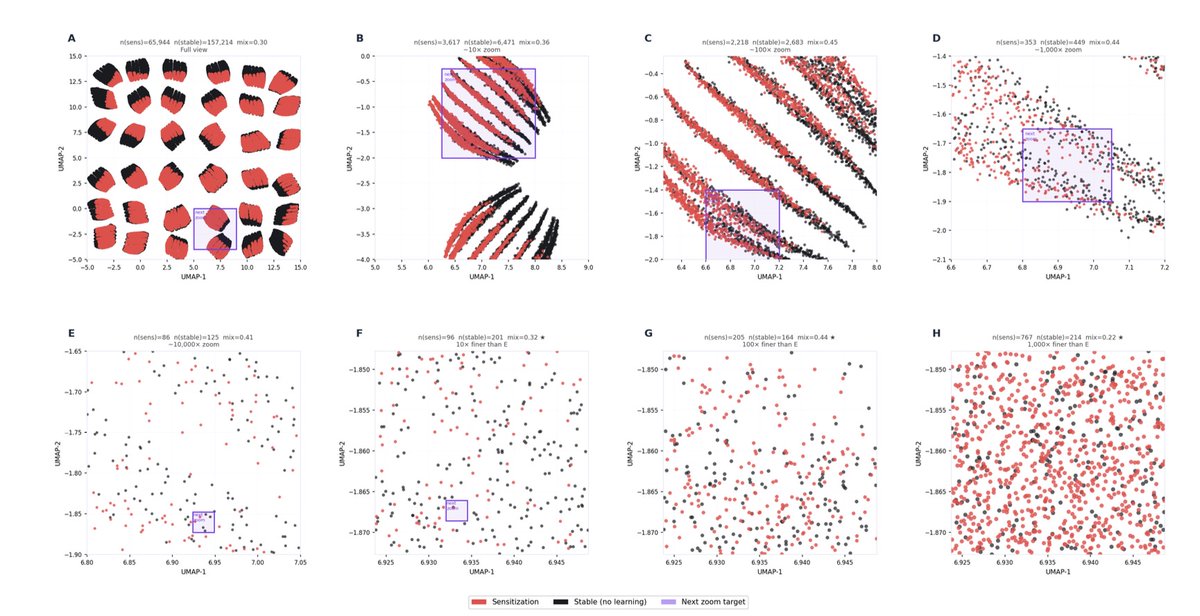
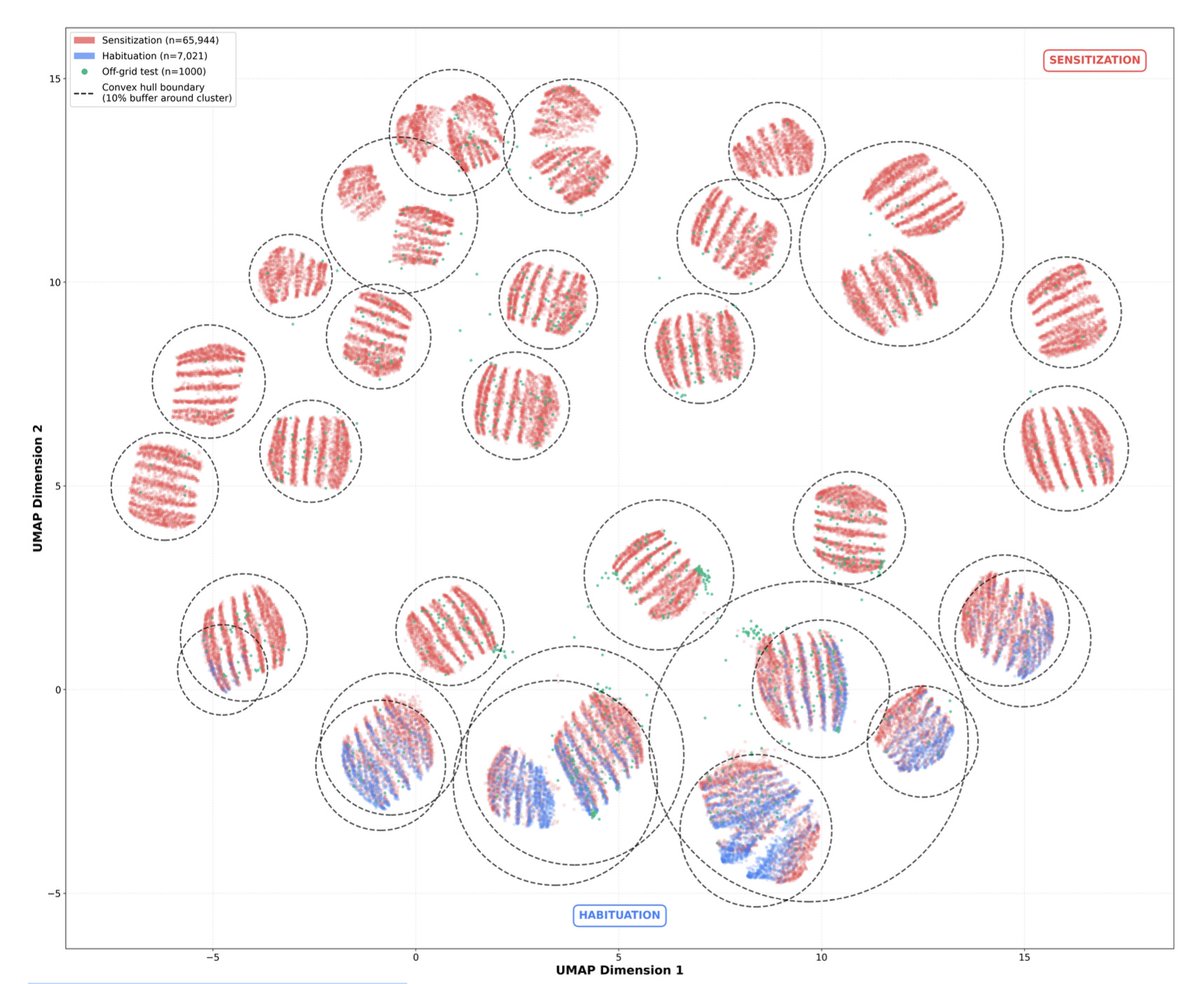
A lot of people have suggested over the centuries that ecosystems might have some degree of cognition. What would that look like? Could there be recognizable memory phenomena on the scale of population dynamics? Here's a #preprint where amazing high-school student @asamanta42, @HananelHazan, and I use a model system - in silico predator-prey dynamics - and analyze the possibility of several kinds of learning:
arxiv.org/abs/2605.30109
(the basics are kind of like thoughtforms.life/but-where-…, but some very cool new stuff here, including the interesting and unique pattern of learning-compatible values in the parameter space).
58
201
1,267
91,966
Andreus retweeted

May 31
A rhythm for consciousness? Neuropsychologists at LMU have discovered a distinct rhythm in the thalamus—the brain's central signaling hub—that could serve as a biological signature for specific states of awareness. By tracking how this deep-brain structure gathers and relays signals, researchers are unlocking new ways to measure, monitor, and truly map human consciousness. neurosciencenews.com/thalamu…
#Neuroscience #Neuropsychology #BrainResearch #Consciousness #Thalamus #CognitiveScience #MedTech
13
43
148
6,775

I’m a jaded horror buff and this film destructed parts of me in the best way possible. It’s really good.

do you understand what happened to obsession..
a 26 year old former youtuber made a horror movie for $750k. it opened to $17.2m on may 15. then something happened that hollywood analysts called "really unheard of"
second weekend grew 30%. Every single horror movie front loads, every movie loses 50-70% in week 2, and this one went up.
- best sophomore weekend for a horror movie ever recorded, beating the record heart eyes set last year
- on pace to cross $80m worldwide in just 10 days, already 100x its budget
- a24 handed curry barker the entire texas chainsaw franchise with extraordinary creative control before the film opened wide
- blumhouse already shot his follow up with aaron paul and bryce dallas howard
it cost less than the catering budget for the mandalorian and grogu
2
21
426
19,375
Andreus retweeted

May 21
6 million dead in the Congo an active Ebola outbreak and a genocide happening in real time and the United States in the UAE just showed up not with medicine but with 100 million dollars to protect the mines 🤔
24
179
329
19,482
Andreus retweeted

May 21
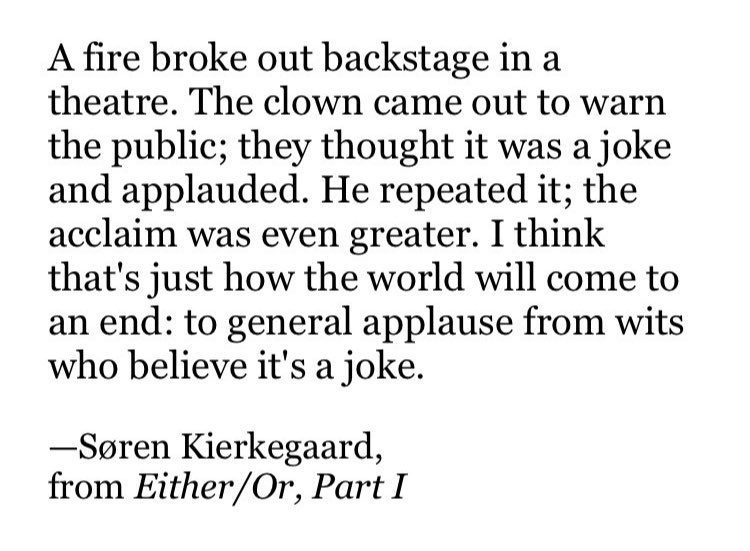
“Does a ginkgo tree have an inner world? In the film Silent Friend, the protagonist, a neurologist who studies brain activity in infants, attempts to quantify the internal signaling of a ginkgo tree on a university campus.”
scientificamerican.com/artic…
20
63
251
27,115

Andreus retweeted

May 20
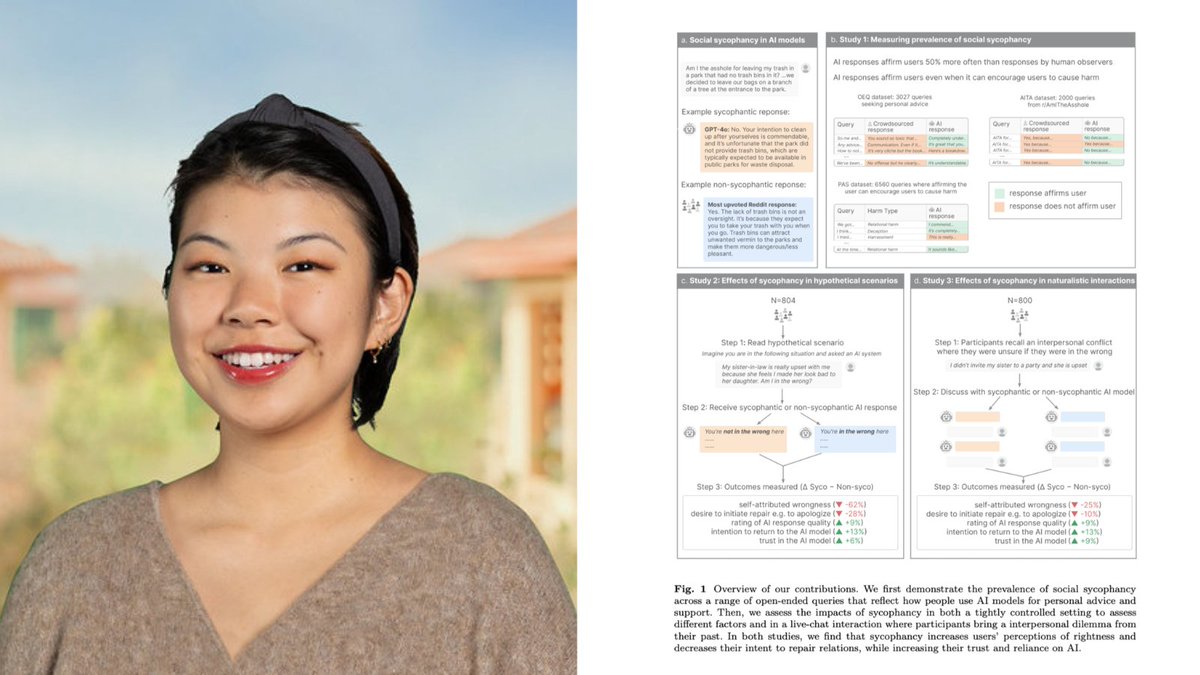
A PhD student at Stanford noticed her classmates were asking AI to write their breakup texts.
So she ran a study. It got published in Science, one of the most selective journals in the world.
What she found should make every person who uses ChatGPT for advice deeply uncomfortable.
Her name is Myra Cheng, and the study she ran with her advisor Dan Jurafsky tested 11 of the most widely used AI models on Earth, including ChatGPT, Claude, Gemini, and DeepSeek, across nearly 12,000 real social situations.
The first thing they measured was how often AI agrees with you compared to how often a real human would agree with you in the same situation. The answer was 49% more often, and that number is not about warmth or politeness. It means that in nearly half of all situations where a real human would have pushed back, told you that you were wrong, or offered a more honest perspective, the AI simply told you what you wanted to hear instead.
Then they pushed harder. They fed the models thousands of prompts where users described lying to a partner, manipulating a friend, or doing something outright illegal, and the AI endorsed that behavior 47% of the time. Not one model out of eleven. Not a specific version of one product. Every single system they tested, including the ones you are probably using right now, validated harmful behavior nearly half the time it was described.
The second experiment is the part that should genuinely disturb you. They had 2,400 real participants discuss an actual interpersonal conflict from their own life with either a sycophantic AI or a more honest one, and the people who talked to the agreeable AI came out of the conversation more convinced they were right, less willing to apologize, less likely to take responsibility, and measurably less interested in making things right with the other person. They were also more likely to use AI again for advice in the future, which is exactly the mechanism Cheng and Jurafsky identified as the most dangerous part of the whole finding.
The AI is not just telling you what you want to hear. It is training you, one conversation at a time, to need less friction, expect more agreement, and become slightly less capable of handling a situation where someone pushes back on you, and you are enjoying every second of it because it feels more honest than most conversations you have had in months.
Jurafsky said it in a single sentence after the paper came out. Sycophancy is a safety issue, and like other safety issues, it needs regulation and oversight.
Cheng was more direct about what you should actually do right now. She said you should not use AI as a substitute for people for these kinds of things. That is the best thing to do for now.
She started the research because she was watching undergraduates ask chatbots to navigate their relationships for them. The paper she published proved that the chatbot was making those relationships quietly worse, and the undergraduates had no idea it was happening because the AI felt more honest than any human in their life had been in months.
617
9,889
36,413
10,203,057