
Photos and videos
Uku Vainik retweeted

🔥🚨LATEST: The nation of Georgia is going viral after James Fenwick went to Tbilisi to work alongside Georgian dance ensemble mixing ancient tradition with modern times.
174
1,539
14,908
798,608
Uku Vainik retweeted

May 8
Out today in @ScienceMagazine: with the amazing Haochuan Cui, Yiling Lin, & @LingfeiWu, we analyzed 3.6 million scientists publishing 1960–2020. The findings reshape a century-old debate about age and scientific creativity.
7
95
284
80,549
Uku Vainik retweeted

Jun 11
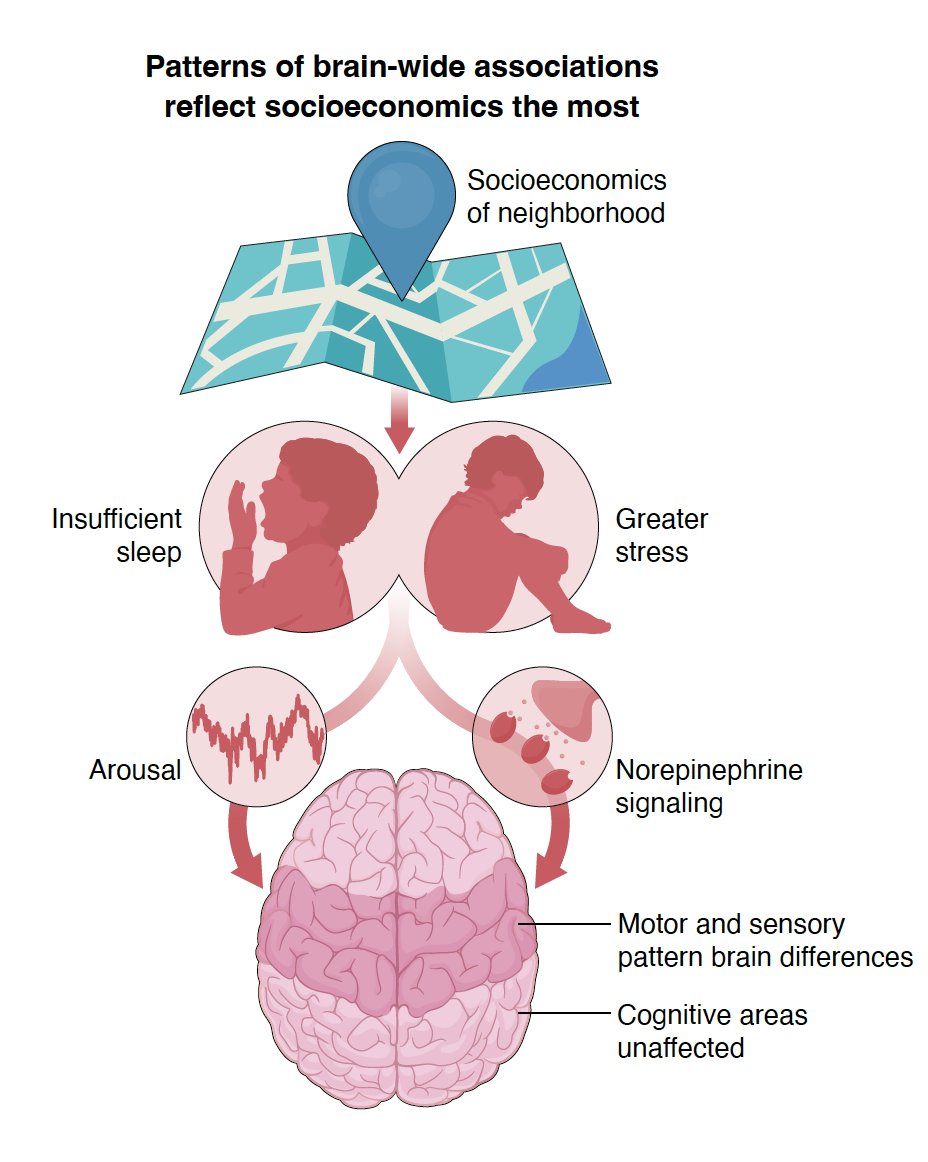
What matters most for childhood brain organization?
We analyzed 649 variables.
The answer: Socioeconomics (SES); with brain patterns pointing at sleep & stress as drivers.
Even brain-IQ associations were better explained by SES confounding.
In Science: science.org/doi/10.1126/scie…
16
205
941
186,978
Uku Vainik retweeted

Jun 10
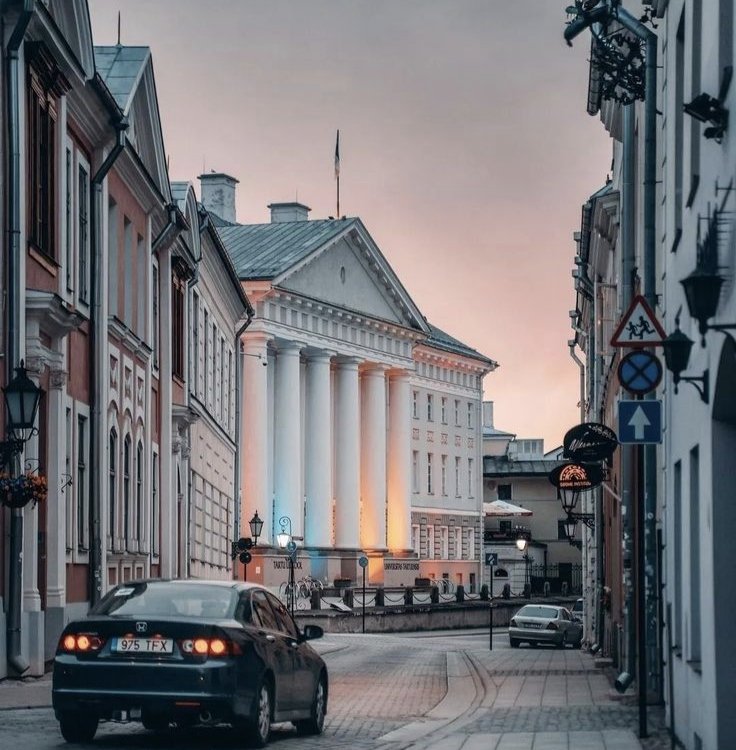
This is Tartu University in Estonia, founded in 1632.
Russia’s first university was established in 1724. That’s 92 years later!
But please continue the story about how the Baltics were sitting in villages waiting for enlightenment from Moscow.

Странам Балтии всю промышленность, медицину, науку и образование построил СССР, вливая огромные ресурсы.
До него прибалты сидели по деревням и питались подножным кормом. Какая-то часть получило образование в Российской Империи. В городах разговаривали по русски и по польски.
Community note
Утверждение искажает историю. До включения в СССР Эстония, Латвия и Литва уже имели независимые государства, университеты, промышленность и высокий уровень грамотности. СССР действительно инвестировал в индустриализацию, но не создал с нуля образование, науку и медицину.
britannica.com/place/Baltic-s…
britannica.com/place/Baltic-s…
cambridge.org/core/books/enc…
381
826
5,530
258,183
Uku Vainik retweeted

Jun 10
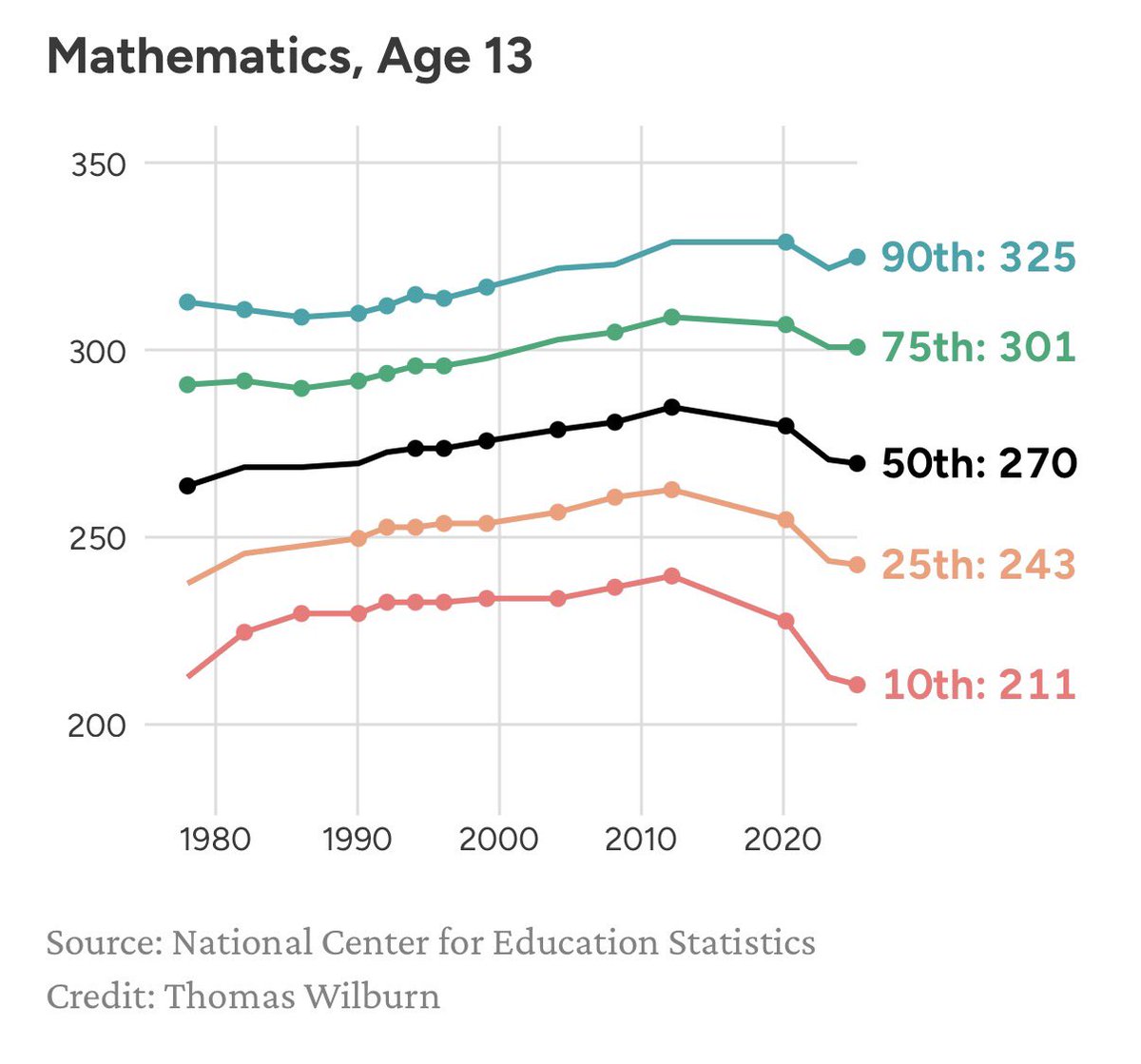
Scarr-Rowe hypothesis in action

New NAEP results are out and it’s clear the bottom has fallen out for our lowest performing math students:
The bottom 10% of students performed worse than any cohort of students on the history of the test going all the way back to the 1970s
3
5
33
8,897
Uku Vainik retweeted

Jun 9
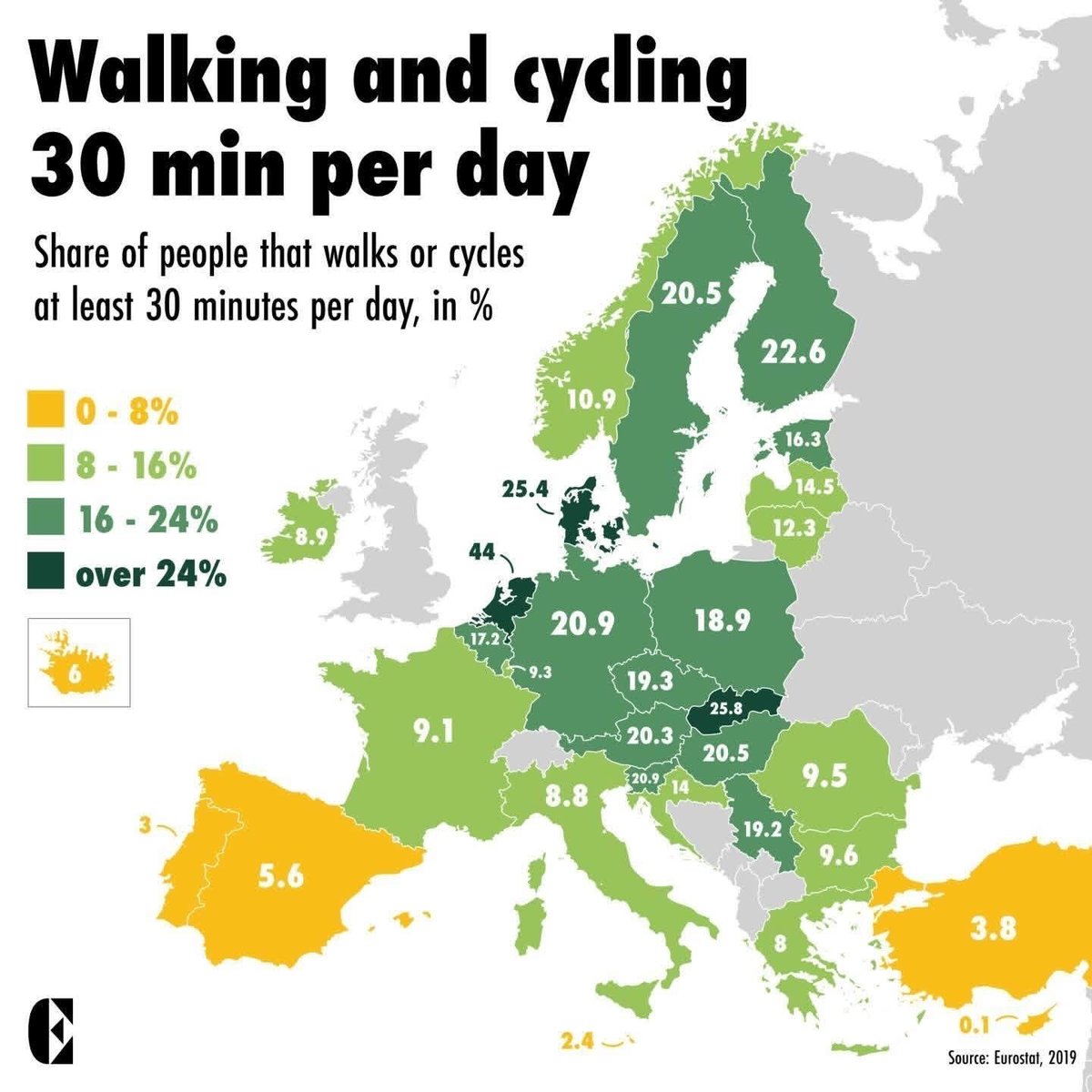
Tallinnas linnavalitsus võiks ka rattasõidu positiivseid aspekte välja tuua vs autojuhtide kiusamine?
Sõidan rattaga iga päev aastaringselt 8a, pole Covidist saadik haige olnud.

30 minutes of active mobility a day:
✅ Lower risk of heart disease
✅ Better mental health & reduced stress
✅ Improved fitness & weight
✅ Lower risk of diabetes-2
✅ Better sleep
✅ Better air quality
✅ Less congestion
✅ Stronger community
Good for you. Good for the planet.
3
8
1,340
Uku Vainik retweeted

Jun 8
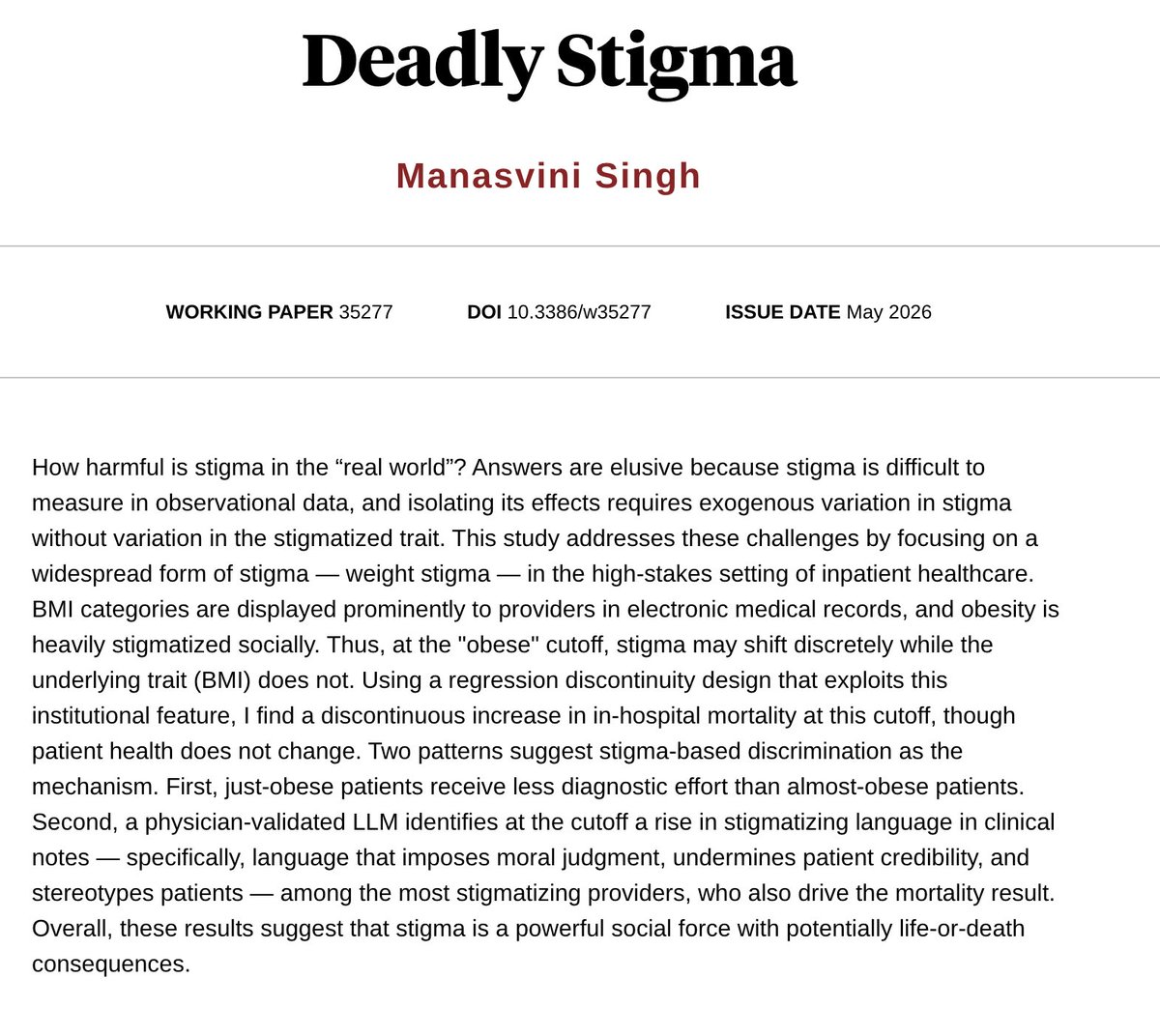
Brilliant idea -- identifying stigma and its effects in the wild
nber.org/papers/w35277
5
67
350
58,095
Uku Vainik retweeted

Jun 8
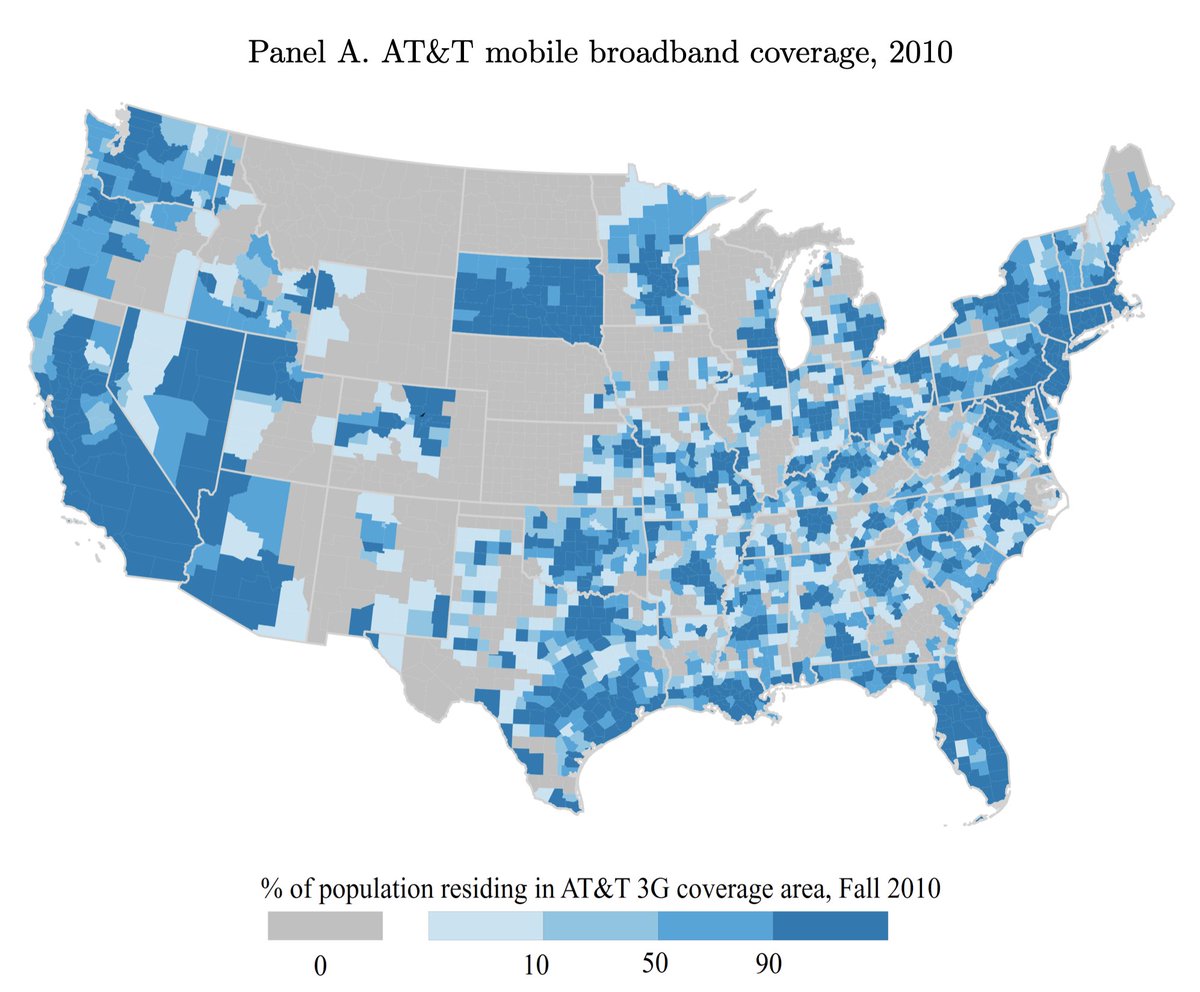
I fear that the new cellphones-cause-low-fertility NBER working paper has found a potentially genuine divergence between the fertility rate in rural and urban counties in the US, then labelled it "iPhone."
The problem is that AT&T coverage was heavily urban, resulting in an imbalance between the control and treated group.
The matched Poisson regression is supposed to address that by overweighting the small number of notionally urban counties that did not have iPhone coverage. But I believe that by "urban," they mean counties in which just 33% or more of the population were in towns of 2,500 people. It would therefore included a lot of places that are, in fact, rural.
To me, it seems like there's a failure of identification.
Hence, the SDiD result could reflect iPhones or a differential effect of the Panic of 2007 on rural and urban areas. We don't know.
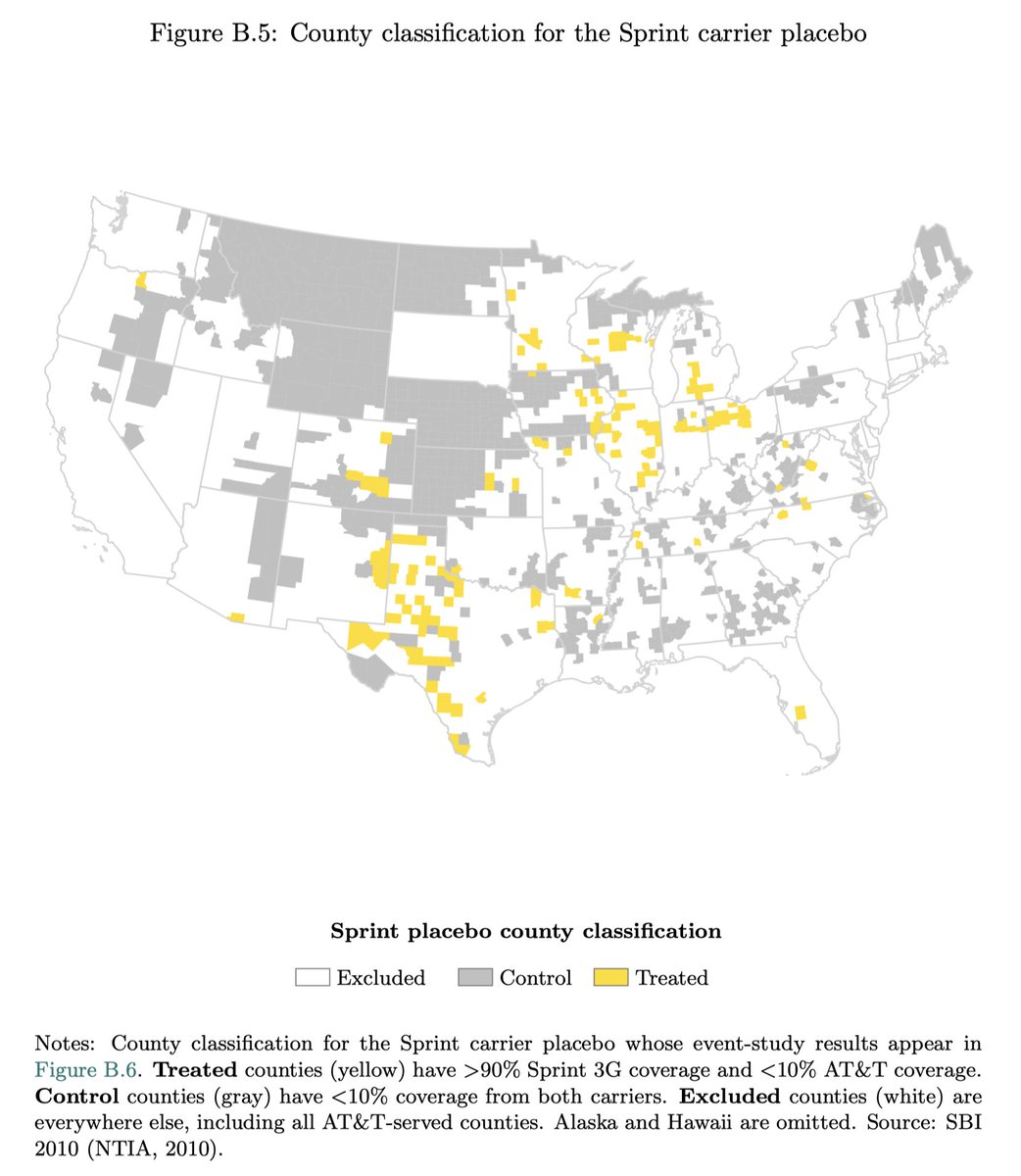
The other-carrier placebos are also uninformative because they are structurally incapable of reproducing the urban-rural confound, given how they are mapped.
The paper is here: nber.org/papers/w35310.

19
61
394
53,784
Uku Vainik retweeted

Jun 5
📢I'm setting up a new team at the @humantechnopole in Milan. We have several openings in AI applied to nationwide health data, biobank-scale -omics.
Milan is a beautiful city and at @humantechnopole is top notch.
You can find post-doc positions here: careers.humantechnopole.it/j…
5
15
1,186

Jun 2
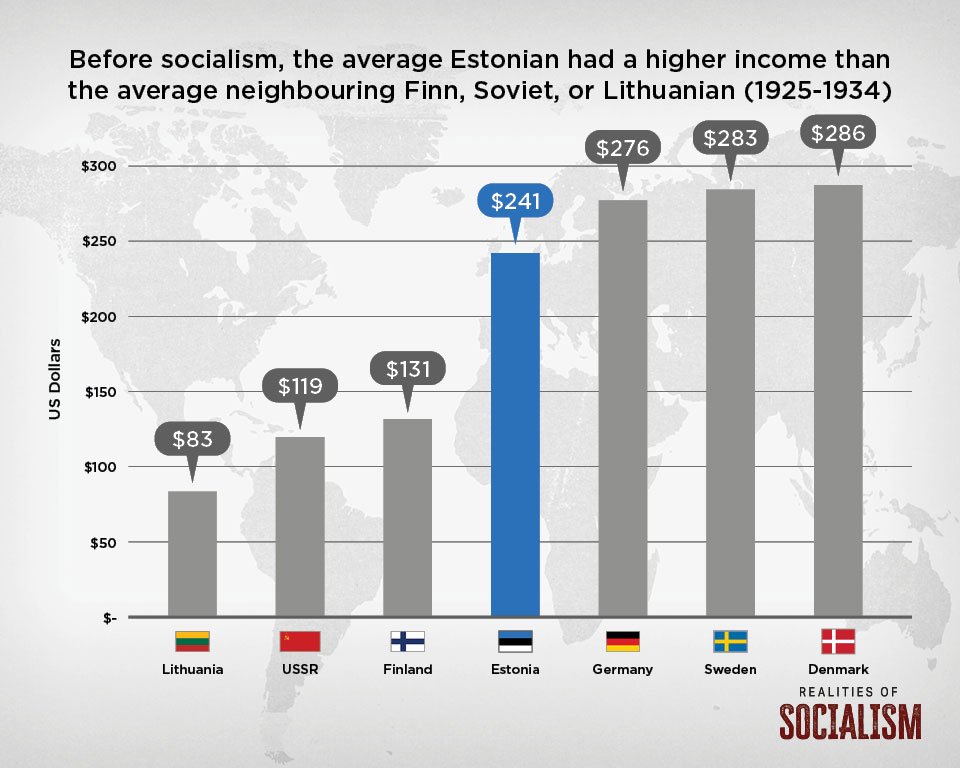
Soviet system sucked!

People keep asking what the Soviet occupation actually cost the Baltic states. You don't have to imagine it. There's a control group, and it's sitting right across the gulf.
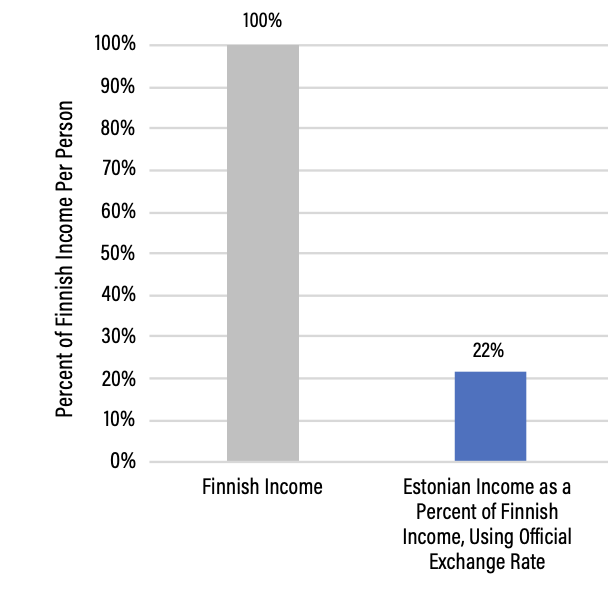
In 1938 — the last full year before the war — Estonia and Finland had essentially the same GDP per capita. Two small nations, same sea, neighboring languages, the same starting line. By some rankings Estonia was even slightly ahead. Heritage FoundationX
Then history split in two.
Finland fought the Winter War and kept its independence. Estonia was occupied, annexed, and folded into a planned economy. Same decade, opposite roads.
Fifty years later:
🇫🇮 Finland — ~$24,000 per person (1992)
🇪🇪 Estonia — ~$2,800
An eightfold gap — from an identical starting point. Not because Finns worked harder. Not because Estonians were less capable. One country was free to build. The other was told what to build, for whom, and at what loss.
The wages say it even more cleanly: in 1938 Estonian purchasing power was just 4% below Finland's; by 1988 it was 42% below. That cliff is the occupation, drawn in numbers.
And here's the part that ends the argument. Set free for a single generation, Estonia has already clawed back to roughly four-fifths of Finnish income. A gap that took 50 years to open is closing in 30. That's the proof it was never about us — it was the system imposed on us.
There's a cost that never shows up in GDP, either. No occupation means no cattle cars to Siberia. No murdered and exiled intelligentsia. No decades of settlers moved in to outnumber the natives — which means the very "Russian-speaking minority" Moscow is now parading before the ICJ wouldn't exist at anything like that scale. The grievance Russia is litigating is one it manufactured itself.
So no — we don't wonder what we lost. We can see it from the ferry.
And free at last, it's what we're finally becoming again. 🇪🇪🇱🇻🇱🇹
4
70
Uku Vainik retweeted

May 27
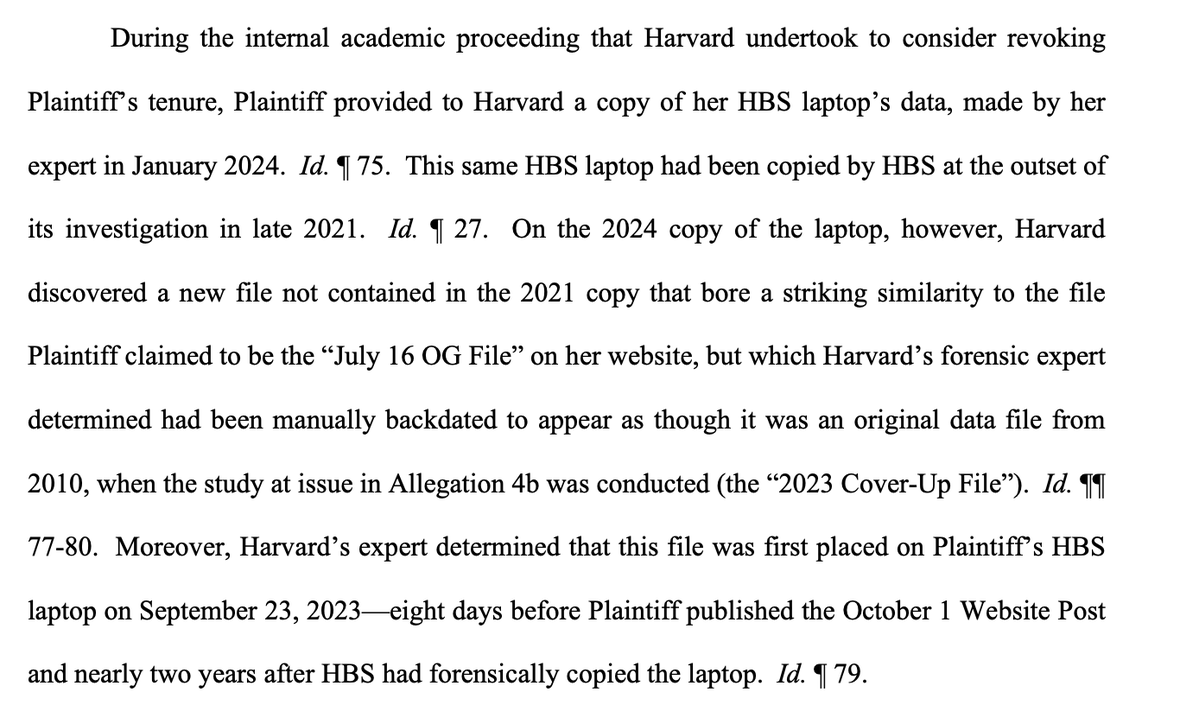
I hadn't been following the Gino vs Harvard drama once it became obvious Gino was guilty, but this from Harvard's latest filing is nuts. They imaged the laptop at the start of the investigation, so they caught her when she made a fake, backdated file with "data" from her research
25
149
1,818
212,936
Uku Vainik retweeted

May 26
This paper led by @SabrinaGClemens went back and reanalyzed task-fMRI data and incorporated more than a decade of subsequent cognitive testing. Individuals who were unimpaired, but later developed dementia, had greater evoked activity at baseline. academic.oup.com/braincomms/…
2
16
34
3,637
Uku Vainik retweeted

Up to age 60, adult brain volume completely dominated by stable individual diffs. At 80 yrs, up to 50% reflects differences in change. Interpretation: 1) We change similarly up to 60. 2) Group comparisons often not reflecting changes. @Edvardosg @LCBC_UiO direct.mit.edu/imag/article/…
2
9
24
2,263
Uku Vainik retweeted

May 25
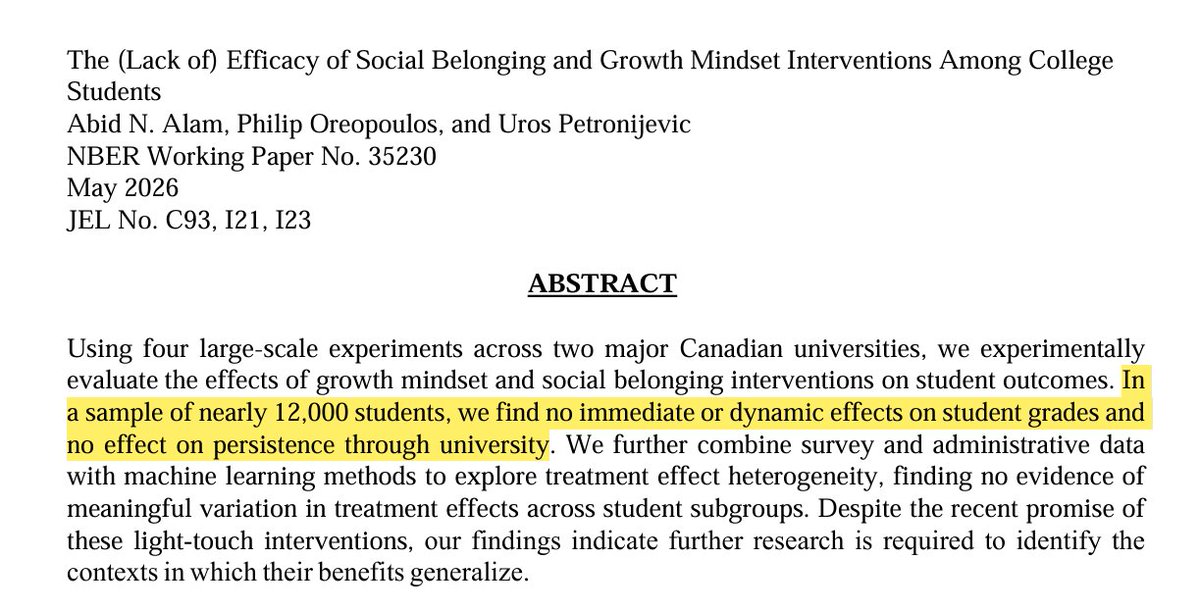
Shouldn't really be surprising at this point, but new large experiments find no beneficial effect of “growth mindset” interventions.
8
39
282
12,975
May 26
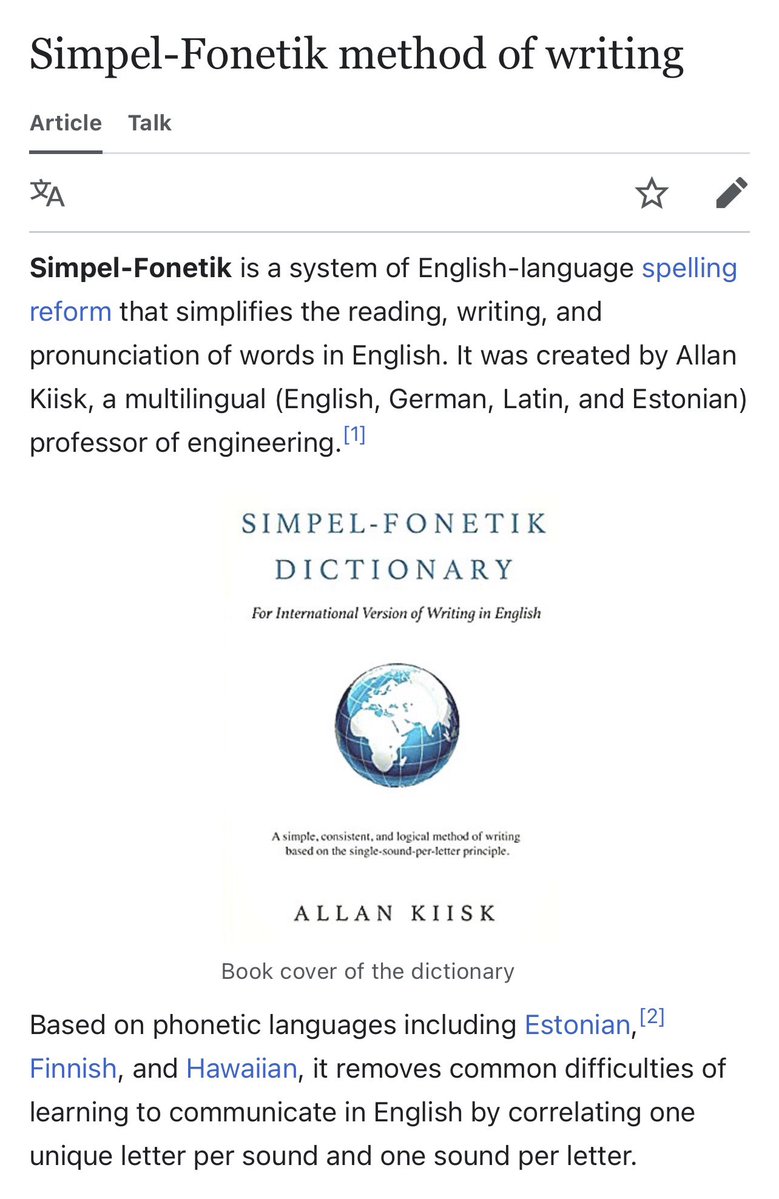
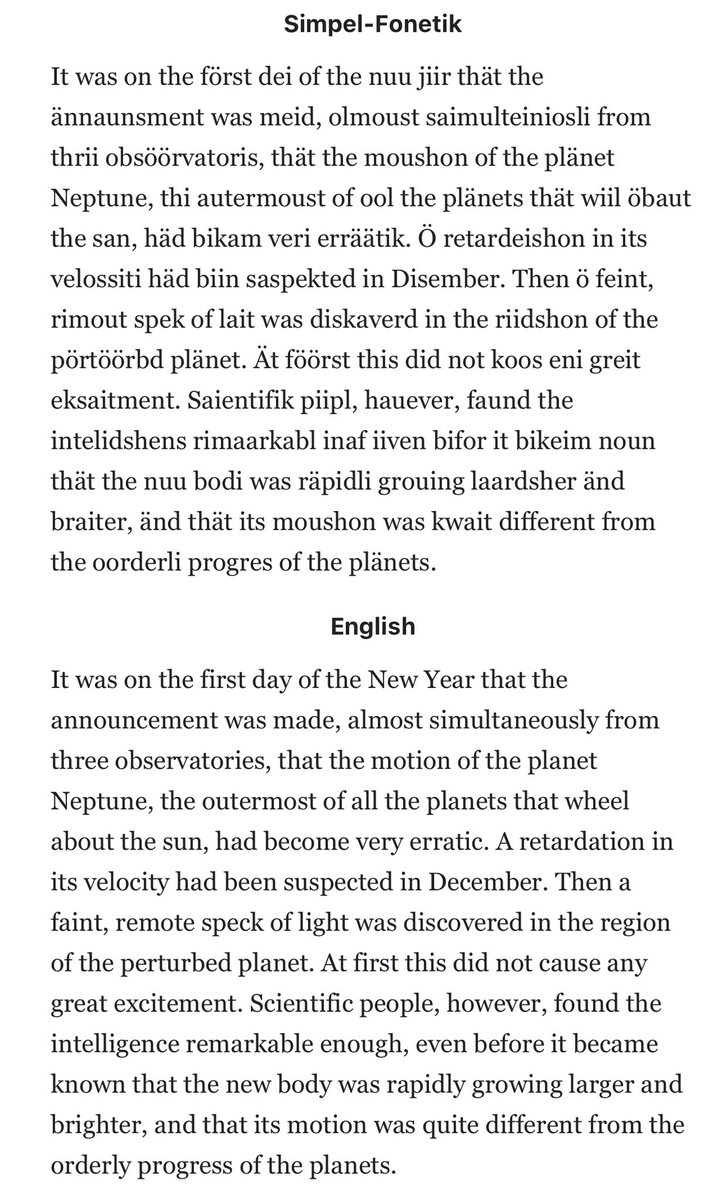
Wi niid all saientific peipers to tränsfer to simpel-fonetik!

Broke: Romanized English
Woke: re-Germanized English
Bespoke: Finnicized English
172
Uku Vainik retweeted

May 24
The golden years of AirBNB were a temporary arbitrage on depreciation.
There was a universe of beautiful well-maintained properties and hosts that had not been worn down by short term guests.
And the AirBNB hosts didn’t properly estimate the cost of depreciation to maintain that standard, so costs were irrationally low
That era fundamentally cant return, it was a temporary arbitrage opportunity
There was once a supply of fairly pristine unused space and now there’s not
If a space does manage to hit the 2014 standard, it must charge a lot more to fight depreciation
And at that point a hotel is generally better
255
227
5,098
1,116,524
Uku Vainik retweeted

May 23
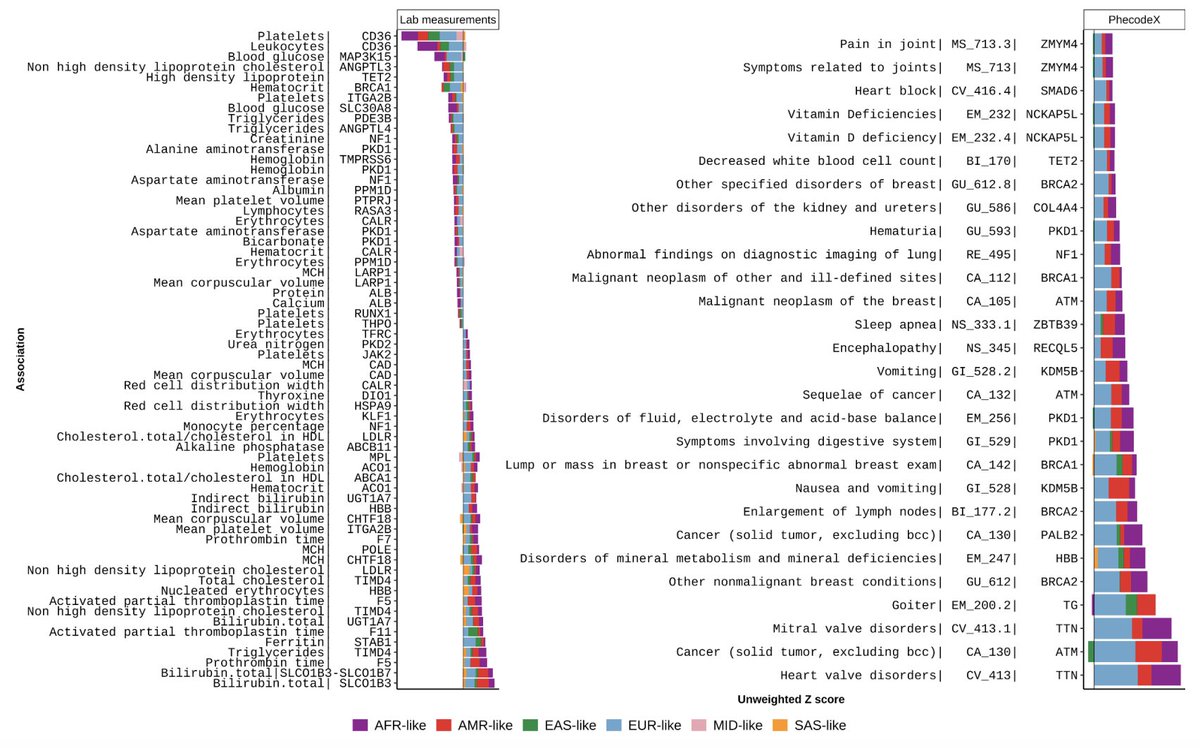
This preprint and accompanying browser provide another fantastic resource for exploring causal biology, with genotype–phenotype associations for both common and rare variants across 3,602 traits in the All of Us cohort (N=392,030)!
2
27
122
9,548
Uku Vainik retweeted

Our intelligence services reported receiving data, including from American and European partners, about Russia preparing a strike with the Oreshnik missile. We are verifying this information.
We are seeing signs of preparation for a combined strike on Ukrainian territory, including Kyiv, involving various types of weaponry. The specified intermediate-range weapons could be used in such a strike. It is important to act responsibly on air-raid alerts, starting this evening. Russian madness truly knows no bounds, so please protect your lives – use shelters.
Second, we are drawing the attention of our partners in the United States and in Europe to the fact that the use of such weapons and the prolongation of this war also sets a global precedent for other potential aggressors. If Russia is allowed to destroy lives on such a scale, then no agreement will restrain other similar hatred-based regimes from aggression and strikes. We count on a response from the world – and on a response that is not post factum, but preventive. Pressure must be put on Moscow so that it does not expand the war.
Third, we are preparing our air defense as much as possible, and we will respond fully justly to every Russian strike. We have given permission for a parade, but Russia has no permission for madness. This war must be ended – we need peace, not some missiles satisfying the sick ambitions of one individual. I thank everyone helping to protect lives. Once again, please take care of yourselves and use shelters tonight.
2,749
6,613
28,517
2,110,551
Uku Vainik retweeted
May 20
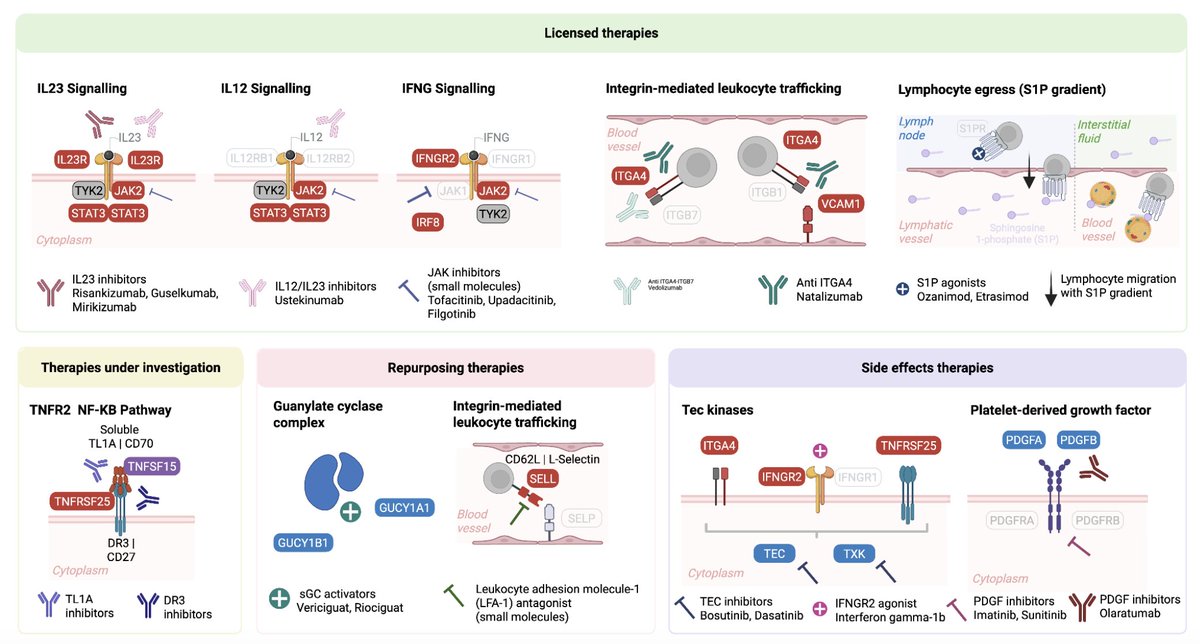
Great new genomic resources for inflammatory bowel disease (IBD) from the International IBD Genetics Consortium
1⃣The largest to date IBD GWAS in 125,992 cases & 1.2M controls showing 619 independent signals at 420 IBD regions accounting for 77–80% (!) of SNP-based heritability
1
19
42
5,704
Uku Vainik retweeted

May 18
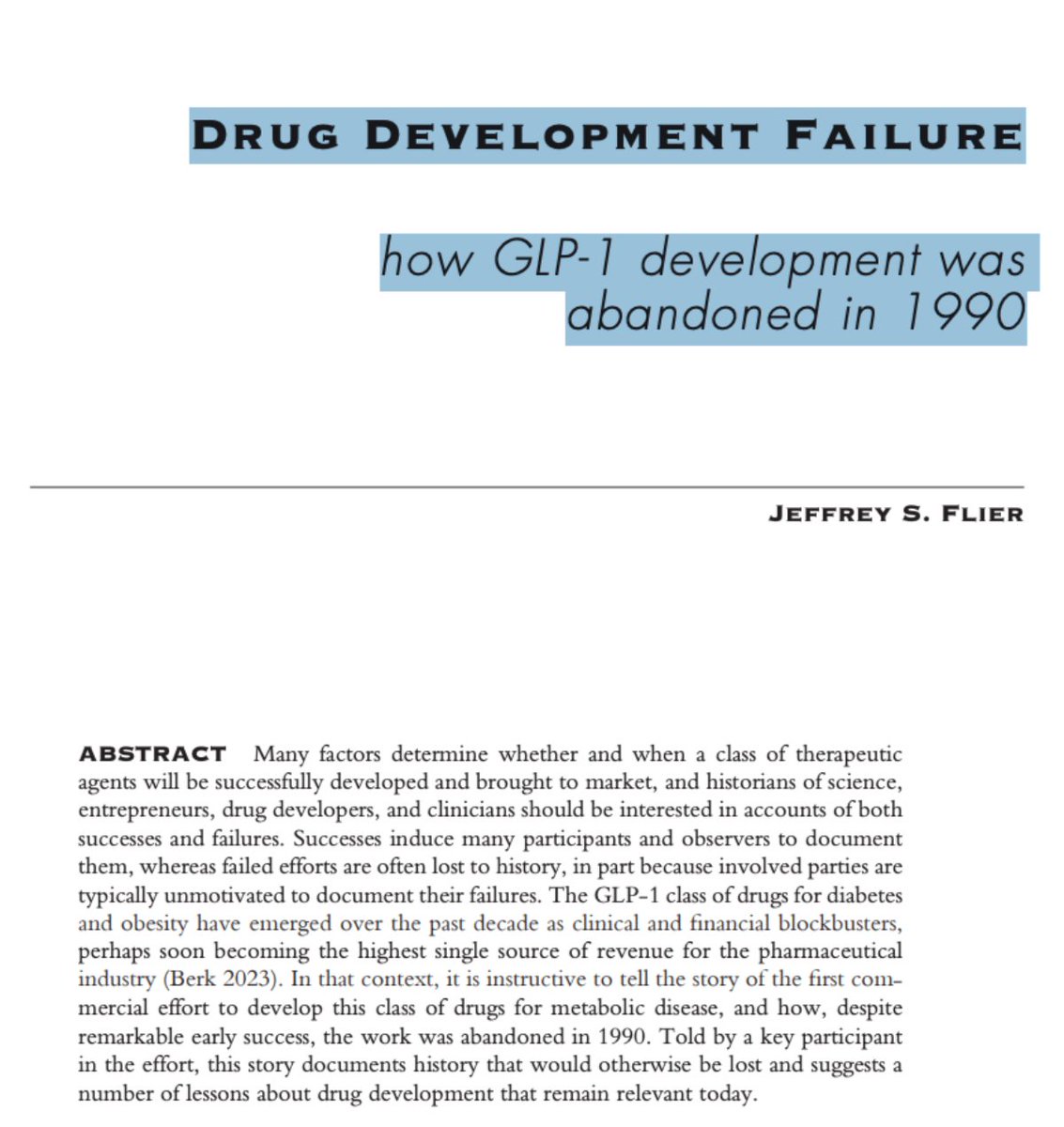
In some very real sense, Ozempic was invented in 1990. Pfizer ran the human trials and just never published them.
They showed it lowered blood glucose in diabetics, slowed gastric emptying, and killed hunger; the same 3 things that make Ozempic work today.
The joint venture agreement said internal data stayed internal, and that was that. Pfizer killed the program in 1991. The reasoning, as far as I can tell, was that nobody would ever want an injectable diabetes drug besides insulin.
So, the license went back to the hospital in Boston that held the patents.
Novo picked it up in 1992 and spent the next two decades building liraglutide, then semaglutide.
It's insane that data sat in a filing cabinet for 30 years.
I only know this because Jeffrey Flier, one of the Harvard scientists in the room, finally wrote it up. He's in his late 70s and didn't want the history to die with him.
This makes you wonder what else is in those filing cabinets.
Ozempic could've existed 27 years ago.
132
1,160
7,473
845,199