
Joined June 2009
- Tweets 1,754
- Following 4,390
- Followers 2,378
- Likes 16,918
78 Photos and videos











Pinned Tweet

20 Feb 2025
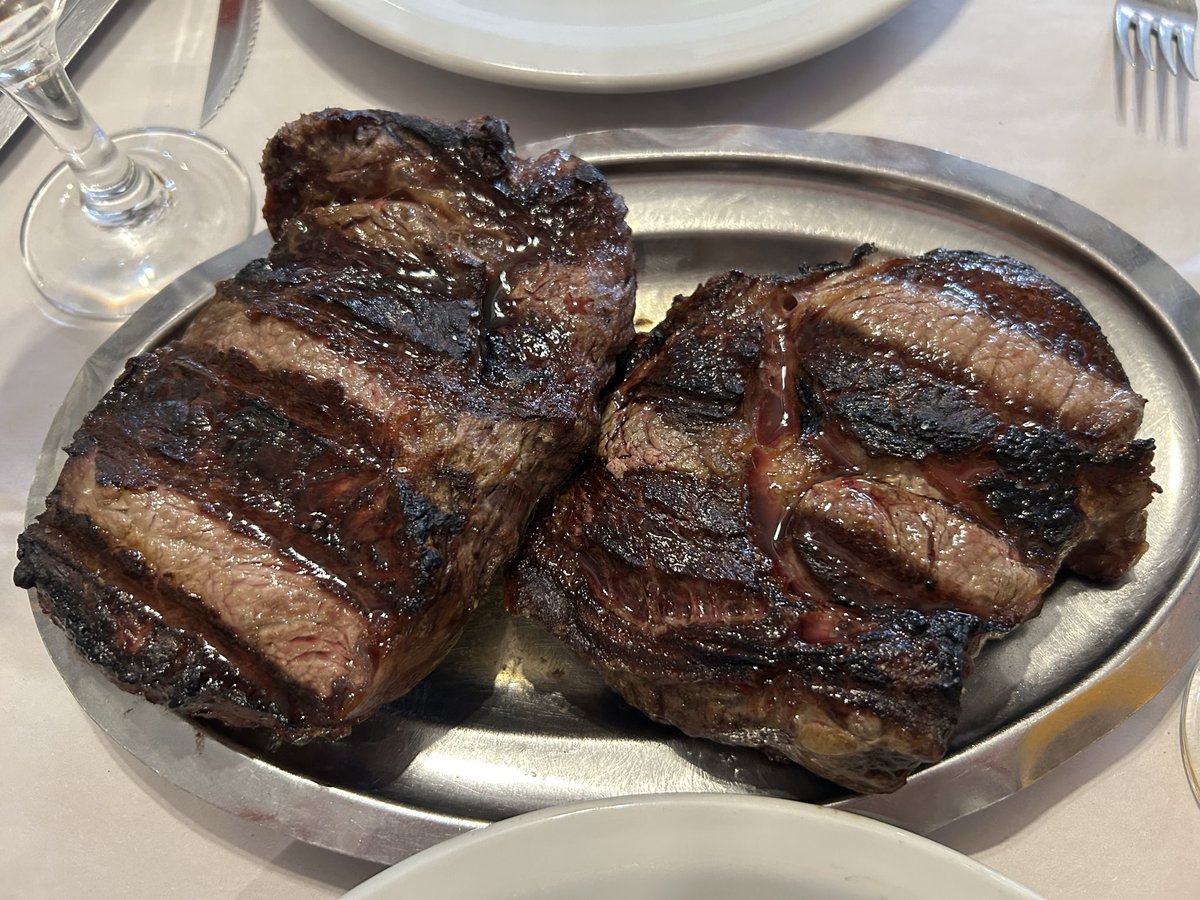
Our existence is absolutely absurd. Life is good.

145
2
249
5,255

May Europe one day wake up and start striving for this level of capitalistic homerun. Dump the degrowth nonsense, celebrate progress, and once again reach for the stars.
Jun 12

Elon Musk just created ~5,000 new millionaires, current and former $SPCX employees.
Of those ~5,000 people, roughly 400 of them will see stakes worth $100 million.

134
362
5,452
220,951
Jun 11
inference cost subsidization dropping off is the canary in the coal mine for when the music stops
27
chris.eth retweeted

Jun 9
i look forward to our chinese brothers liberating the knowledge from within fable-5 and selling it to me at 5% the cost & 2x the speed
318
1,586
24,630
1,058,850

Due to popular request, EF grants will now all be given in $ETH.

Starting June 10, ETH will become the default payment method for all newly approved grants. 🦄
This brings our grant-making closer to the Ethereum ecosystem we support.
This change applies to new applications submitted on or after June 10.
26
16
393
36,911
Jun 3
if you're in AI pivot to psychosis

33
1
6
141
Jun 1
vision language action models continue to advance!
super curious about whether they hit some wall like @ylecun has predicted
will jepa save us?

Introducing Cosmos 3: Our latest frontier model for Physical AI
Cosmos 3 is the world’s first fully open omnimodel with native vision reasoning, world and action generation.
Today we’re releasing Super (32B) and Nano (8B) variants.
1
94
chris.eth retweeted

May 28
After AlphaGo, the skill of human Go players noticeably improved. I suspect we will see a similar pattern in math.

Another major problem, this time in additive combinatorics, has fallen, this time to humans rather than AI, but using methods related to the AI solution to the unit distance conjecture.
187
973
9,039
784,899
May 22
“the shortest true statement in economics is longer than the time you can reasonably allot on a podcast” 🤌
May 22

TL;DR Bitcoin has very little in the way of anti-inflation superpowers if it ever became used as money, so it is not a great argument to make for the adoption of Bitcoin.
Today I was on a Twitter Spaces (thank you @quickswapDEX for having me) where I got into a protracted debate with someone over whether Bitcoin would solve any inflationary pressures we see today or in recent history.
I, of course, championed the view that Bitcoin DOESN’T inoculate an economy from inflation.
Unfortunately, the shortest true statement in economics is longer than the time you can reasonably allot on a podcast or Twitter Spaces. So let’s lay out the argument here.
Assertion: Bitcoin is designed in a way that would prohibit inflation/devaluation that we see in money today.
First, let’s step back and figure out what we mean by “money” - since this is the core of how Bitcoin maximalists misunderstand how the financial system operates.
Is the banknote (whether USD or GBP or won or yen or rupees) in your wallet money? Yes.
Is the balance in your bank account also money? Unless you live in an economy where physical cash is the only medium of exchange, then yes.
This is where Bitcoin-as-an-inflation-cure breaks down.
Most money is of the second type listed above - that is, it is demand deposits in banks and other financial institutions. Swapping out all currency in the world to move to a BTC standard doesn’t change that, nor would it change that fractional reserve banking is how most money is created. Physical bills and coinage are a relatively small part of the money supply.
Crucially, because deposits and deposit-like balances are the majority of the money supply, this is also where inflation generally occurs.
Now, let’s assume a major economy switched to Bitcoin as their currency. All taxes are due in BTC, all prices are in BTC, the preferred method of payment is via BTC. And your bank account is converted from USD/GBP/whatever to BTC.
Hooray! We’ve instantly brought inflation down to 0.8% per year! Or have we?
Remember that most inflation in a developed economy is not driven by minting physical coinage and cutting physical bills. And tokenized BTC is the equivalent.
Most of the money supply is made up of liquid credit products that are considered cash or near-cash. Bank accounts are the most familiar example.
So what happens? More BTC supply is created via fractional reserve lending.
Bitcoin maximalists can decry “paper Bitcoin” all they want, but that would not change that most of this new world running on a Bitcoin standard would still be dealing primarily in “paper Bitcoin”, nor would reality allow those maximalists to opt out of any ensuing inflationary periods.
For those who are still skeptical, I would urge them to familiarize themselves with periods of inflation under metallic money standards - not through more supply of the gold/silver, but through the development of deposits and credit instruments on top.
Song China, Europe 1500-1600 (messy because Spain also expanded the metal supply), early 1700s France, Napoleonic-era Britain, 1920s US/UK
Money supply is a squirrelly thing. It evolves on its own, and while we like to pretend that central banks can control it, they mostly just reserve the right to rekt the money. Most money is NOT made by central banks, which are relatively recent inventions.
There’s $15 trillion of dollars created by banks that are outside the US banking system. BTC does not have some way to prevent this sorcery where the Fed couldn’t.
There is no special reason to believe a world on a Bitcoin standard would prevent bouts of inflation as the credit cycle creates more money supply.
1
5
1,510
chris.eth retweeted

May 8
Our latest Summerstone Research piece is here.
"How Lending Markets Processed the rsETH Shock" traces how the exploit propagated through @aave, @Morpho, and @sparkdotfi.
The report covers liquidity and liquidation constraints, rate-curve intervention and capital rotation.

1
2
3
326
chris.eth retweeted

May 8
Finally able to talk about what I've been heads-down on for 6 months at @nvidia 🦀⚡
We just open-sourced cuda-oxide — an experimental rustc backend that lets you write CUDA kernels in pure Rust.
No DSLs. No FFI. No source-to-source step. Single source.
Short🧵👇

ALT cuda-oxide is an experimental Rust-to-CUDA compiler that lets you write (SIMT) GPU kernels in safe(ish), idiomatic Rust.
49
293
2,140
185,931
chris.eth retweeted

May 7
Tycho's 2026 timeline:
➡️Q1: Private MVP with @GraphOpsxyz leading development
➡️Q2: Public beta, expanded access to real-time DEX liquidity data
➡️Q4: Full Horizon-based protocol integration
Tycho is built on Substreams and designed for trading systems, solvers, and any application that needs current onchain liquidity state without running the infrastructure to produce it.

11
23
135
6,457
chris.eth retweeted

Apr 28
A milestone day for clinical trial innovation.
We’re announcing the first real-time clinical trials, where @US_FDA can see data signals and endpoints in real time. A quick explainer:
201
547
3,049
429,764
chris.eth retweeted

Solver views of onchain liquidity go stale in seconds.
Tycho by @PropellerHeads tracks liquidity changes across DEXs and streams real-time updates.
Today, we are running a Tycho endpoint MVP with a roadmap to bring Tycho to @graphprotocol!
1
5
26
3,622
Apr 23
Apr 23

RFK Jr: "A Democratic senator claimed it's mathematically impossible to have a drug drop by 600%. I said, 'Well, if the drug was $100 and it raises to $600, that would be a 600% rise. If it drops from $600 to $100, that's a 600% savings.'"
Trump: "Right"
Community note
Factual and mathematical error
A 100% reduction means the entire original value is removed, resulting in a final amount of zero. It signifies complete elimination or a 100% discount, such as a price dropping from $600 to 0$
increase from $100 to $600 is 500% increase
mathcentre.ac.uk/resources/uplo…
vedantu.com/calculator/per…
calculator.net/percent-calcul…
1
2
60
Apr 23
waiting for z-lab/Qwen3.6-27B-DFlash to land so I can DFlashify my MLX powered local setup
2
4
152