
Release Management Director at Salesforce. Everything I say here is my own thoughts and opinions.
Joined September 2009
- Tweets 5,945
- Following 335
- Followers 348
- Likes 4,716
148 Photos and videos



wolfehr.frax retweeted

May 22
12
39
139
38,446
wolfehr.frax retweeted

May 14
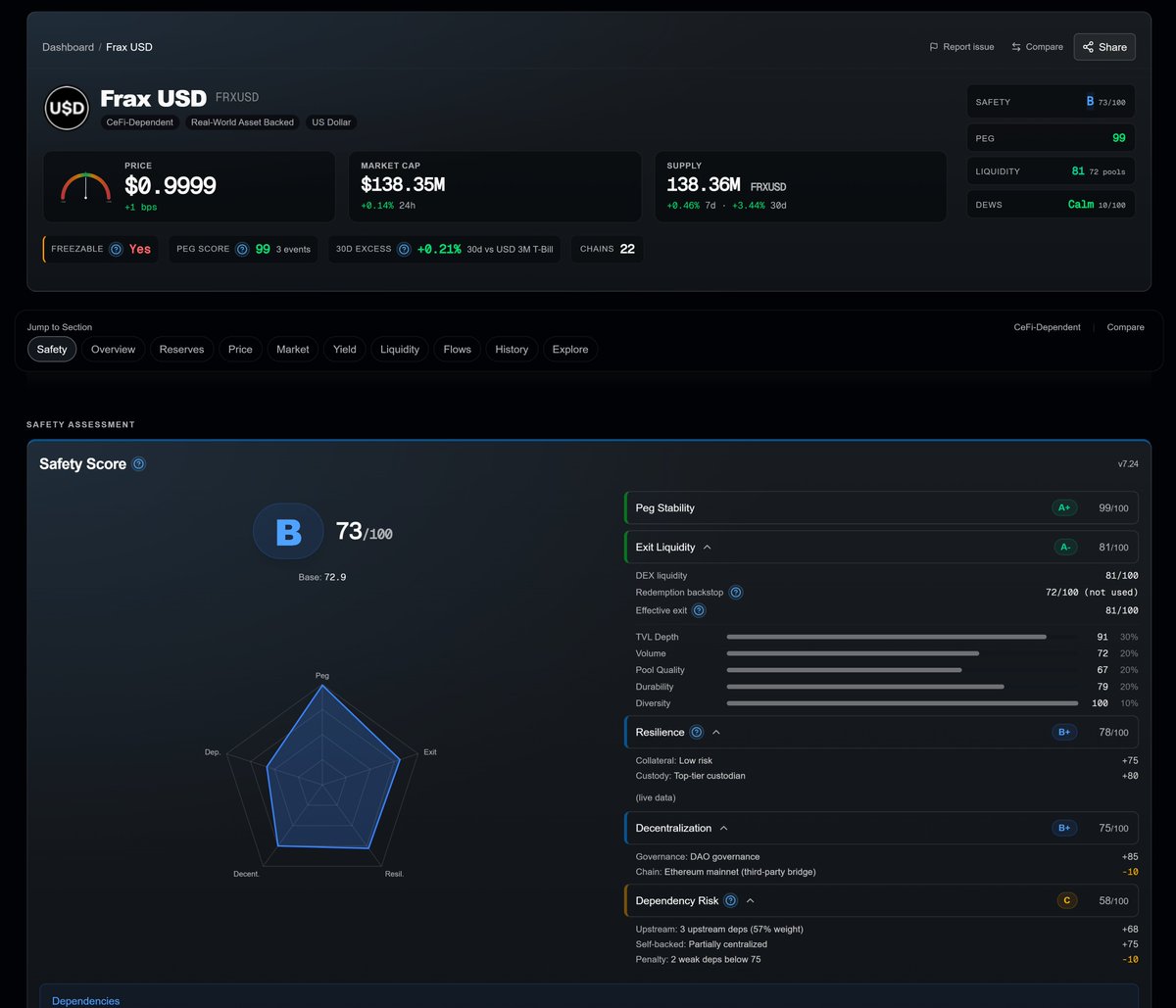
Stablecoin Spotlight of the Week: frxUSD
Most stablecoins are built to hold a peg and hope the market agrees. frxUSD by @fraxfinance has gone further than that.
USP by @piku_dao, USG by @Tangent_fi, and USSD by @SonicLabs, to name a few all route through frxUSD as a peg keeper. Other stablecoins are building on top of it. frxUSD has become the infrastructure other stablecoins depend on.
Here is what our data says:
Overall Score: B (72/100)
Peg Stability: A (99/100)
Exit Liquidity: A- (80/100)
Resilience: B (78/100)
Decentralization: B (75/100)
Dependency Risk: C (58/100)
DEWS: 10/100 — Calm
Market Cap: $138M 90D Net Flow: $19M
450 days streak without a depeg event. No F grade across any sub-dimension. Among the 353 stablecoins Pharos tracks, that combination is rare.
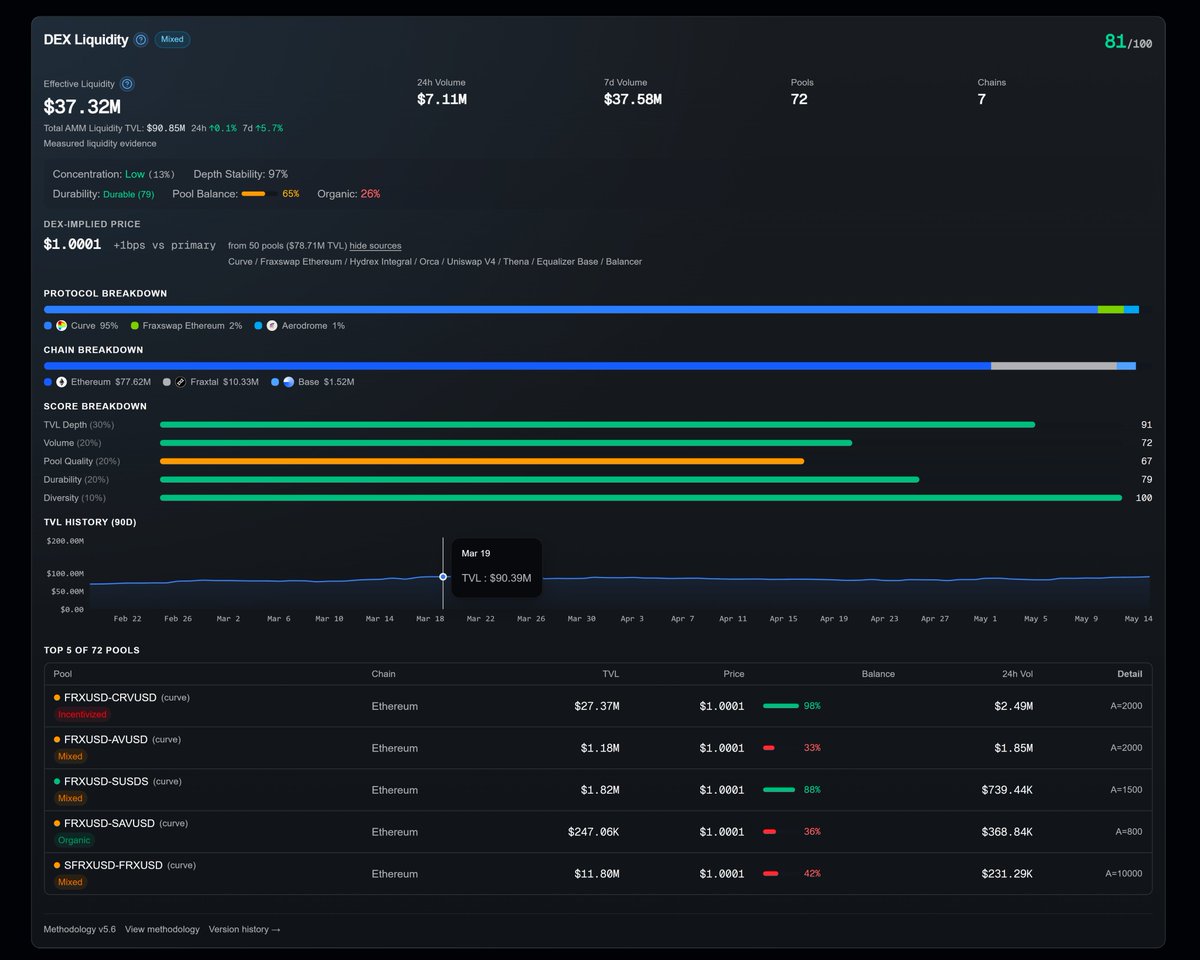
The exit liquidity picture is one of the strongest we have seen in this series. A 93-rated atomic redemption backstop through enshrined custodians gives frxUSD one of the most reliable exit routes among crypto-native stablecoins.
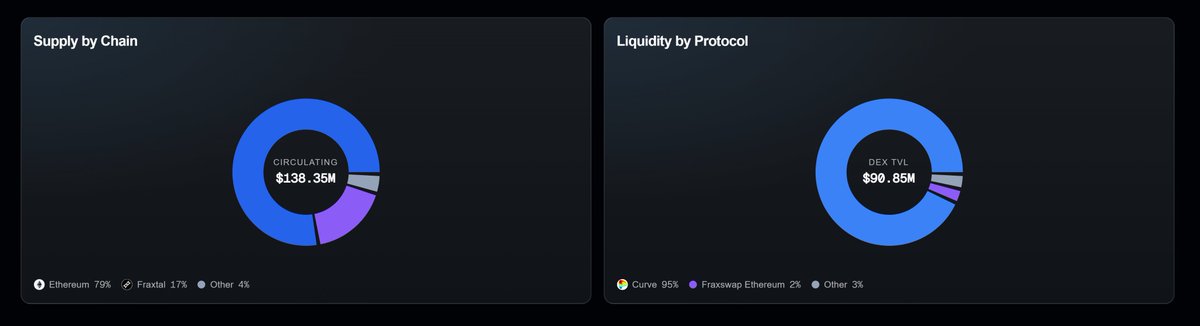
On the DEX side, 60 pools with a low 0.11 HHI across multiple chains show genuinely diversified liquidity rather than concentration in one or two venues. 60 pools across multiple chains is what stablecoin infrastructure looks like at scale, and that is by design. @samkazemian built frxUSD to be used everywhere, not just held somewhere.
The cross-chain architecture is where frxUSD separates itself in a way that has gone largely unnoticed. When the LayerZero incident hit and stablecoins using the OFT standard took collateral damage, frxUSD was unaffected.
It uses OFT, but on its own terms. Frax runs its own DVN and its own libraries that no external entity can upgrade, operating on a 3/3 DVN consensus policy moving to 5/5.
frxUSD offers various yield opportunities, including its recent Stake DAO vault currently running at 11.11% APY with $7.25M in deposits. Active AMO strategies across those 60 DEX pools sustain that yield surface across rate environments rather than depending on any single source.
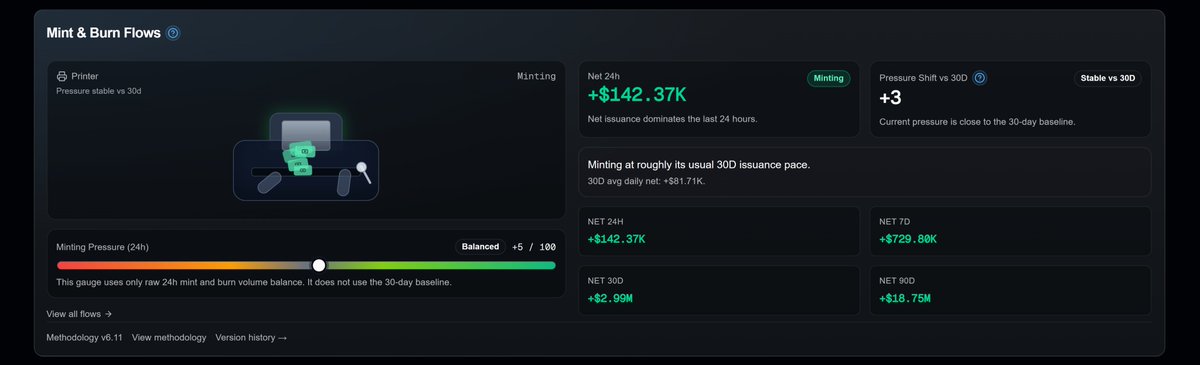
$19M in net inflows over 90 days. The market is not just watching frxUSD. It is building on top of it.
5
15
54
5,259
wolfehr.frax retweeted

May 6
I’ve never understood why bridges have to always be fast. I get it for impatient retail or cross-chain arbitrage.
But many tasks aren’t very time sensitive. Which is why I always had a soft spot for the (now-defunct?) @fraxfinance bridge.
They called it Frax Ferry and gave the roles a nautical theme. The captain had admin roles, and a second set of actors called crew members had the power to temporarily pause to enforce a “stop, look, listen” process.
Normally I dislike meme-y themes (like food names), but in this case I think the ferry analogy helped communicate to users how it worked.
The Frax Ferry would have scheduled departure times between specific chains, and would take 24 hours to arrive.
This gave ample time to catch shenanigans. And also meant there was low risk of infinite mint, since any compromise would have to be sustained undetected for the entire journey.
I’m not sure if 24 hours is the right time period, but it’s hard to think that the Frax Ferry would have allowed DPRK to rekt Kelp.
To the extent a need for fast bridging still exists, it does seem appropriate for someone (bridge, issuer, swap-bridge counterparty) to levy a fee to account for the increased risks.
The model converged upon has been the asset issuers doing this for free - you’ll notice even on L2s, the standard bridges aren’t growing their escrows much as fast options proliferate.
I think we can agree there needs to be a rethinking about how this risk is shared. That could be a fee, lower claims priority, or some TBD clever solution.
14
5
71
13,199

Amazon just got caught running a secret price manipulation operation with Levi's, Home Depot, Walmart, and many more.
Every time you "comparison shopped" online, you were looking at prices that were already rigged.
Here's what happened:
Amazon would monitor prices on Walmart, Target, Best Buy, Home Depot, and Chewy in real time. The second a competitor listed a product cheaper than Amazon, they'd contact the brand directly and tell them to "fix it."
And the exact emails are now PUBLIC.
Amazon sent Levi's links to two Walmart listings with the subject line "styles of concern." They basically said the prices on Walmart are too low and we have a problem.
The next day, Levi's responded: "I talked to Walmart and they have partnered with us to take Easy Khaki Classic fit back up to ladder SPP price, $29.99 immediately."
Levi's literally called Walmart and told them to raise the price. Because Amazon told Levi's to make the call.
Walmart complied. Then Amazon matched the HIGHER price.
Both retailers ended up charging more. The customer paid extra. Nobody competed.
Same playbook with Hanes:
Amazon sent them links showing Target and Walmart prices were lower. Hanes confirmed they "reached out to Target and Walmart to have the prices increased."
Target increased the prices. Walmart increased the prices. Amazon kept their margins.
But it gets even worse...
Amazon told Allergan (the company that makes eye drops) that their product was "suppressed" on Amazon because it was cheaper on another site.
Allergan responded: "Walmart got their price back up to $16.99." Amazon then unsuppressed the listing.
They did this with pet treats on Chewy. Furniture on Home Depot. Products across dozens of categories spanning YEARS.
The mechanism is simple but terrifying:
If you're a brand and you sell cheaper on Walmart than on Amazon, Amazon suppresses your product, removes you from the Buy Box, buries you in search results, and effectively makes you invisible to 300 million customers.
Brands can't afford that. So they call Walmart and Target and say "raise your prices or we'll lose our Amazon listings."
Walmart and Target comply because they need the brand's products.
Amazon captures 40 cents of every dollar spent online in America. That gives them the leverage to set prices across THE ENTIRE internet. Not just their own platform.
So turns out, you were never comparison shopping.
You were looking at a coordinated price floor set by Amazon through backroom phone calls between brands and their competitors.
"Amazon is working to make your life more unaffordable."
3 separate antitrust trials are now scheduled for 2027. The FTC has its own case. 18 states plus the DOJ are piling on.
This is literally happening during the WORST affordability crisis in a generation. Groceries up 25% since 2020. Housing unaffordable. Wages flat.
And the largest ecommerce company on Earth has been secretly coordinating with brands to make sure you can't find a cheaper price ANYWHERE.
"Competition" in retail is just a fantasy.
1,918
26,274
56,688
2,916,970
wolfehr.frax retweeted

Apr 22
🔴 After the KelpDAO hack, several protocols using LayerZero for their interoperability rushed to fix their structure to implement at 2 DVNs.
It’s definitely a step in the right direction. But if you look at how Kelp was actually exploited, adding a second DVN might have not prevented this. Attackers could still have been compromised rsETH with little to no additional costs.
▫️ Here’s the explanation:
LayerZero’s cross chain infrastructure functions with DVNs that act as guardians and are responsible for minting tokens on destination chains and burning them when redeemed on the source chain. However, DVNs don’t have a direct access to the blockchains. They rely on RPCs that rely the information to them.
If the RPCs get compromised, the DVN becomes blind, and this is exactly what happened with Kelp. 2 RPCs got compromised and the third one got DDoS’ed, therefore unable to verify the information presented by the other ones.
▫️ So why isn’t a 2/2 DVN setup enough?
The security gain of adding an additional DVN only works when both DVNs are genuinely independent: different infrastructure, different RPC providers, different hosting environments. If this is not the case, it is simple for a resourceful attacker to target the shared infrastructure for both DVNs to execute the same outcome.
It is exactly the same logic that applies to a multisig where the signers use the same keys or the same custodians. Today the RPC providers are not directly visible, making it harder for protocols opting for a multi-DVN infrastructure to choose independent operators.
▫️What are the choices projects have?
We decided to take a look at @ethena’s announcement of their recent switch from a 2/2 DVN structure to a 4/4 one.
The 4 used DVNs are provided by @Nethermind, @HorizenLabs, @LayerZero_Core and @canary_proto.
- Nethermind runs its own nodes on several networks, therefore reducing the reliance on external RPCs.
- Horizen uses zk-proofs with an emphasis on privacy
- Canary uses its own TEE-based DVN with their own client
- LayerZero DVN is the native DVN of the OFT protocol
This allows for a better diversification of clients, infrastructures, and verification methods.
The lesson from the KelpDAO hack isn't "add a DVN." That number next to your config is meaningless if the infrastructure underneath shares single points of failure.
Until RPC diversity becomes a standard part of DVN audits and protocol security reviews, the next exploit doesn't need to find a new attack vector. It just needs to find the protocols that added a DVN without checking for dependencies between them.

3
8
50
7,563
wolfehr.frax retweeted

Apr 21
So let me start. DeFi is the future of the World Financial System. That's my belief, and this is why we are here.
This amount of absolutely preventable hacks we see in DeFi (with root causes attributable to CENTRALIZED points of failure) is enormous recently. This damages out industry, and I build for this industry. So I cannot remain silent.
Imagine an average grandma (mass adoption is here?) putting her life savings on Aave. And then BOOM, she cannot withdraw her funds on Monday. Aave (the biggest DeFi protocol btw) said it's operating as intended - just rsETH got exploited. rsETH said that all code is safu - just LayerZero bridge got hacked. LayerZero (the biggest bridge securing quarter of a trillion $) said that everything operating as intended. Yet, she cannot withdraw here funds. WTF? Are we industry of clowns?
But here's the thing. All issues like this should be prevented BEFORE they happen, not AFTER. Number of single points of failure should be reduced, not increased. When these points of failure are unavoidable - trust should be split. If there's a reliance on infrastructure - we should share best practices how to configure it. Not to mention that code should be very well checked - everyone gets that already.
We should probably come together and develop safety standards for DeFi. How to build safely, and how to verify safety. Probably everyone should bring their best practices, and the projects, auditors and risk assessment groups should know them. Maybe we need @ethereumfndn and @SolanaFndn bringing all the ecosystem projects to participate and come up with principles, rules and recommendations of safe building. And, perhaps, we can even learn something about protecting the few remaining centralized points of failure from traditional finance who have many more of those.
DeFi will win
136
198
1,196
83,655

wolfehr.frax retweeted

Apr 20
375
469
2,007
1,955,761
wolfehr.frax retweeted

Apr 19
Users can now swap their ETH positions on Aave into wstETH or weETH
This will protect Aave, its users, and DeFi from the potentially much more severe damage.
TLDR how it works
Fluid is the biggest user on Aave where we hold $1.5B in ETH debt
We buy aWETH from users and sell them aWSTETH or aWEETH - users remain on Aave, but now they have an option to withdraw if they want, because wstETH and weETH markets are not frozen.

Introducing aWETH Redemption Protocol
With ETH utilization at 100% on Aave, many lenders are currently unable to withdraw and face increasing risk if markets move.
aWETH Redemption Protocol allows ETH lenders to:
• Exit into wstETH or weETH
• Regain immediate liquidity
• Reduce exposure to liquidation risk
If you’re just lending ETH — you can fully exit.
If you have ETH collateral and another debt — your collateral is seamlessly swapped into wstETH or weETH while your debt remains the same.
We’re working alongside @LidoFinance , @ether_fi, @0xProject, @1inch,
@KyberNetwork, and other ecosystem partners to:
• Reduce systemic risk in DeFi
• Ease utilization pressure
• Support a healthier DeFi market
Our goal is simple: protect users while reinforcing the foundations of DeFi.
Capacity is initially limited to $1B in ETH.
fluid.io/lite/aave-v3/eth-sw…
19
54
278
76,090
wolfehr.frax retweeted

Apr 14
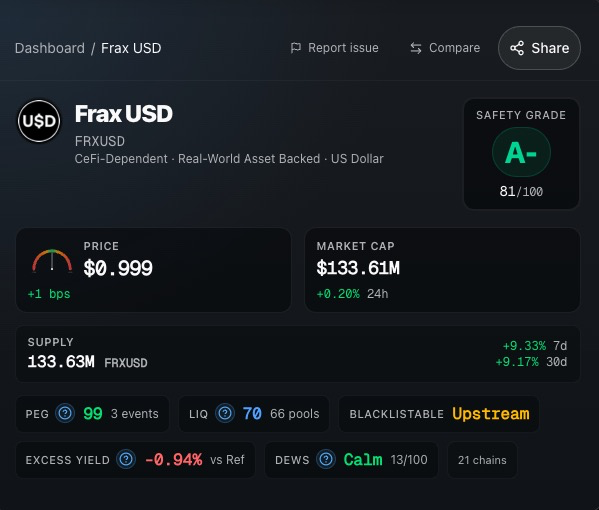
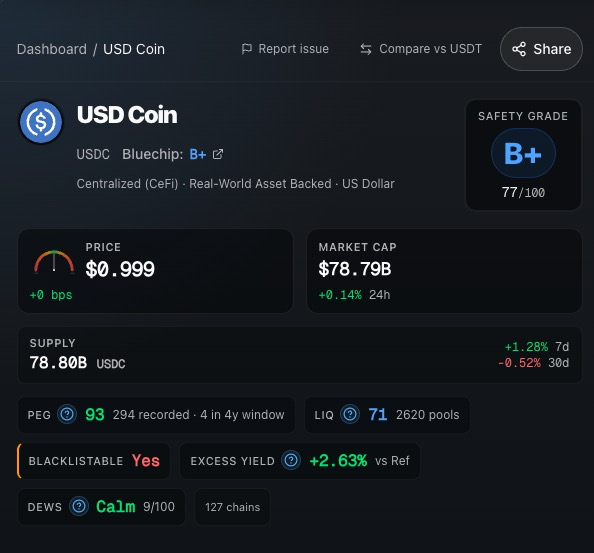
So lets dig into @fraxfinance $frxUSD a bit.
IMHO, I think more teams should adopt this token for liquidity instead of $USDC
on @PharosWatch
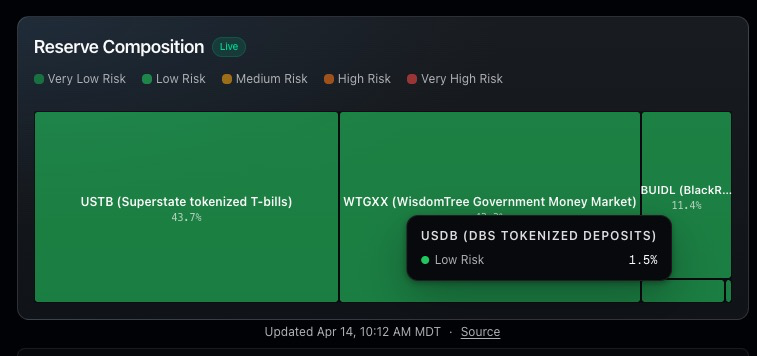
frxUSD has score of A-
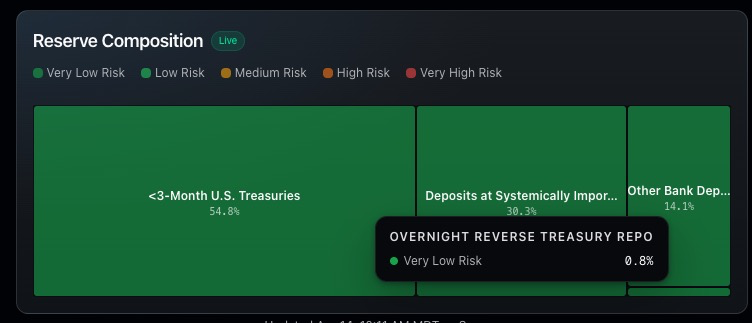
USDC has a B
frxUSD is backed by all green low risk TOKENIZED bank stuff.
USDC is similar, different unTokenized instruments, but banks stuff too
frxUSD in on 25 chains with various bridges, its FREE via FRAX MESH but there are other options like @LayerZero_Fndn
USDC has a FREE CCTP bridge but is on 127 chains (big winning) and many many other options
frxUSD works with partners to build liquidity with incentive campaigns
USDC doesn't even answer DMs.
frxUSD had freeze admin keys (3-5 msig)
USDC also has freeze admin keys (1 signer)
frxUSD shares all its yield with frxUSD users
USDC, folds it in their own bags and doesn't even pay $CRCL (stonk) holders
frxUSD has @samkazemian going to crypto conferences and doing podcasts with almost anyone in the space.
USDC has @jerallaire who also does talks, but is not accessible like Sam. (But his is bald)
I hope to see a lot more projects take on $frxUSD as their liquidity pool token. and I hope more degens, adopt it and are willing to provide liquidity to pools with this coin.
10
19
94
13,788
wolfehr.frax retweeted

Apr 10
Agreed & hope Circle reconsiders their stance quickly since it's a big error that will lead to many millions more USD lost in hacks before they change their mind. Even as a "competitor" with $frxUSD, we have 24/7 comm channels with our DeFi partners/integrators which is one reason newer projects peg to, use, & earn revshare from Frax USD. There's many projects that can attest that we're on-the-ground supporting them & if that unfortunate day comes they need quick action on a clear & obvious hack/crime in progress, we can support them in seconds/minutes to save innocent people's funds.
Once we made the choice to make frxUSD GENIUS compatible & needed a blacklist, it's a social responsibility to use that power for good. It's a different discussion whether there should even be a blacklist as a compliance requirement, but there is & fiatcoins/GENIUScoins have them. So they should be used for clear, obvious unambigious good rather than philosophizing.
Apr 10

Circle has chosen the worst of both the centralized and decentralized worlds with this policy. Circle can freeze your USDC at any time, but won't use this power to defend its users from obvious hacks.
USDC gives users the downsides of centralization without any of the benefits.
9
10
67
6,402
wolfehr.frax retweeted

This is the BEST, most hilarious breakdown I have seen of the absurd rationales I have heard trying to justify trump's idiotic war.
BRILLIANT! 👏👏👏
245
4,270
12,705
398,634
wolfehr.frax retweeted

Apr 9
We launched a suite of onchain FX liquidity pools with @fraxfinance, @CurveFinance, and @DFB_DeFi.
Six global stablecoin pairs live on Polygon with frxUSD as the base dollar pairing.
The world's currencies are moving onchain, with deep liquidity built for cross-border payments.

51
86
442
146,343
wolfehr.frax retweeted

“Stablecoins tend to concentrate around a small number of assets with deep liquidity and broad trust, and the real opportunity is improving how value flows through that system.”
- Sam Kazemian (Founder and CEO, @fraxfinance)
Explore more about KRWQ through the report below!


6
7
31
3,240

Apr 9
Iran tightens its grip on Hormuz despite ceasefire - The Wall Street Journal apple.news/AyDFTu3VQTZm2rmO5….
19
wolfehr.frax retweeted

Apr 5
Reid Wiseman told his two teenage daughters where to find his will before he got on this rocket. He’s raised them alone since their mom died of cancer six years ago. Right now, he is 252,757 miles from home, farther from Earth than any human being has ever been.
Wiseman grew up outside Baltimore. Got rejected from the Naval Academy, went to Rensselaer Polytechnic Institute instead, studied computer engineering. Became a Navy fighter pilot, flew F-14 Tomcats (the jet from Top Gun) on combat missions over Iraq and Afghanistan. Two Middle East deployments by his mid-twenties. He saw a Space Shuttle launch in person in 2001 and couldn’t let go of it. Applied to NASA while at sea on the aircraft carrier USS Dwight D. Eisenhower. They picked him. Nine people out of 3,500 applicants. His astronaut class, nicknamed “The Chumps,” included Jeremy Hansen, the Canadian who’s floating next to him right now.
Wiseman’s first trip to space was 165 days on the Space Station in 2014. Two spacewalks. Thirteen hours outside the hull in nothing but a suit. He climbed all the way up to Chief of the Astronaut Office, the person who decides which astronauts fly and which ones sit. Then he gave it up in 2022 to put himself back on the flight list.
His wife Carroll was a nurse in a newborn intensive care unit. She got cancer. Fought it five years. Died in May 2020 at 46. His mother died from Alzheimer’s just weeks before that. Wiseman raised both daughters by himself after that. NASA’s own bio says he considers being a single parent his hardest challenge and the best part of his life. Even while she was dying, Carroll told Reid not to step back from his career. She made him keep going. His brother is a Navy SEAL. His father is 83 and battling cancer too. The old man told reporters he wanted to stay alive long enough to see his son launch.
Before liftoff, Wiseman’s daughters snuck homemade cookies into his flight bag. He posted a photo with them in front of the rocket and wrote “I’m boarding that rocket a very proud father.”
The previous distance record from Earth belonged to the Apollo 13 crew. 248,655 miles, set in April 1970, and it was an accident. An oxygen tank blew up and the emergency route home happened to swing them farther out than anyone before. Wiseman broke that record by 4,100 miles, and his distance is on purpose. Today he flies within 4,600 miles of the Moon, photographs stretches of the far side that were too dark or at the wrong angle for any of the 24 Apollo astronauts to see, and watches a solar eclipse that nobody on Earth can see, only the four people inside that capsule.
Then he turns around and spends four days flying home to his girls.


171
3,614
33,252
2,085,797
wolfehr.frax retweeted

Apr 4
Heads up everyone.
Seems the .fi registrar is likely compromised.
The .fi name servers were updated overnight to point back to the attacker.
While we still have access to the account it appears someone internally is coordinating. the dns has been moved away from the parking domains the attacker has been using.
The domain is registered with regery, if anyone else is using them, consider this your wake up call.
Be vigilant always.
18
33
173
56,924

wolfehr.frax retweeted

To think that we aren't just going "to the Moon," but rather traveling to meet it at an exact point in space... changes everything.
It all comes down to orbital mechanics: arriving at the precise location, at the precise moment.
One tiny error... and it simply doesn't happen
710
5,867
36,100
3,446,437